GLOBAL SUPPLY
CHAIN MANAGEMENT
Presented by
Ayebare Eunice
Kato Hanifa Nabankema
Nangobi Rehema
Musuya Wananda Patricia
Focus points Introduction01
Content02
Conclusion03
Introduction
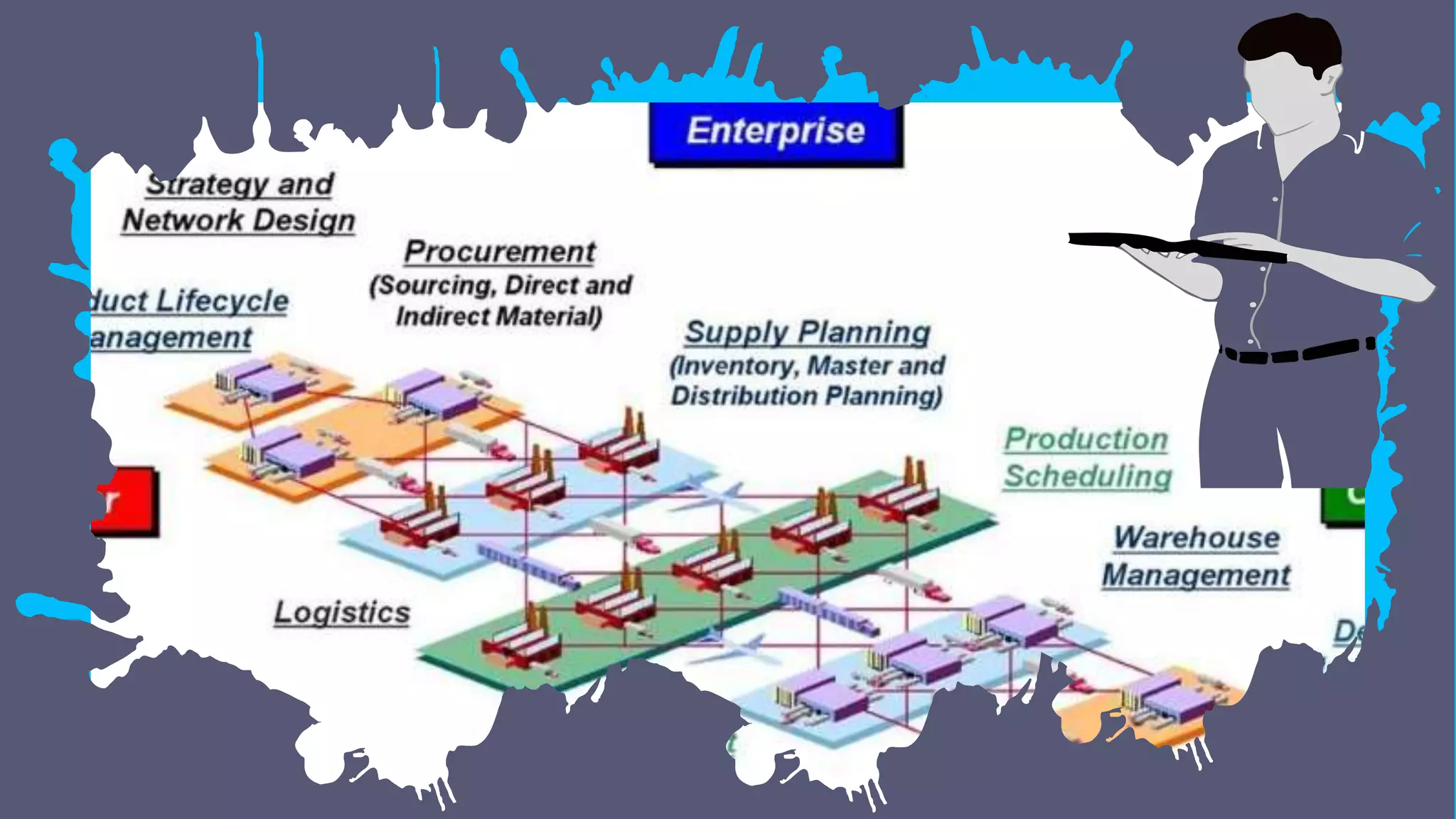
Global Supply chain : distribution of goods and services
through out a transnational company’s global network to
maximize profit and minimize waste. It involves
information, people , processes and resources involved
in the production, handling and distribution of ,materials
and finished products or providing a service to a customer.
Risk is the uncertainty that a loss may occur or not. It
implies future uncertainty about deviation from expected
earnings or out come.
suppliers
Parties in global supply chain
producers distributor
Provides the
raw material
needed by
the company
Major source
of providing
raw materials
Purchase
product from
manufacturer
s and sell
them to
customers.
Logistics
The main
company and
organization
purposes to
transform raw
materials to
finished
products
Planning,
implementation,
control of
forward and
reverse flow of
goods and
services and
information
between origin
and
consumption
customers
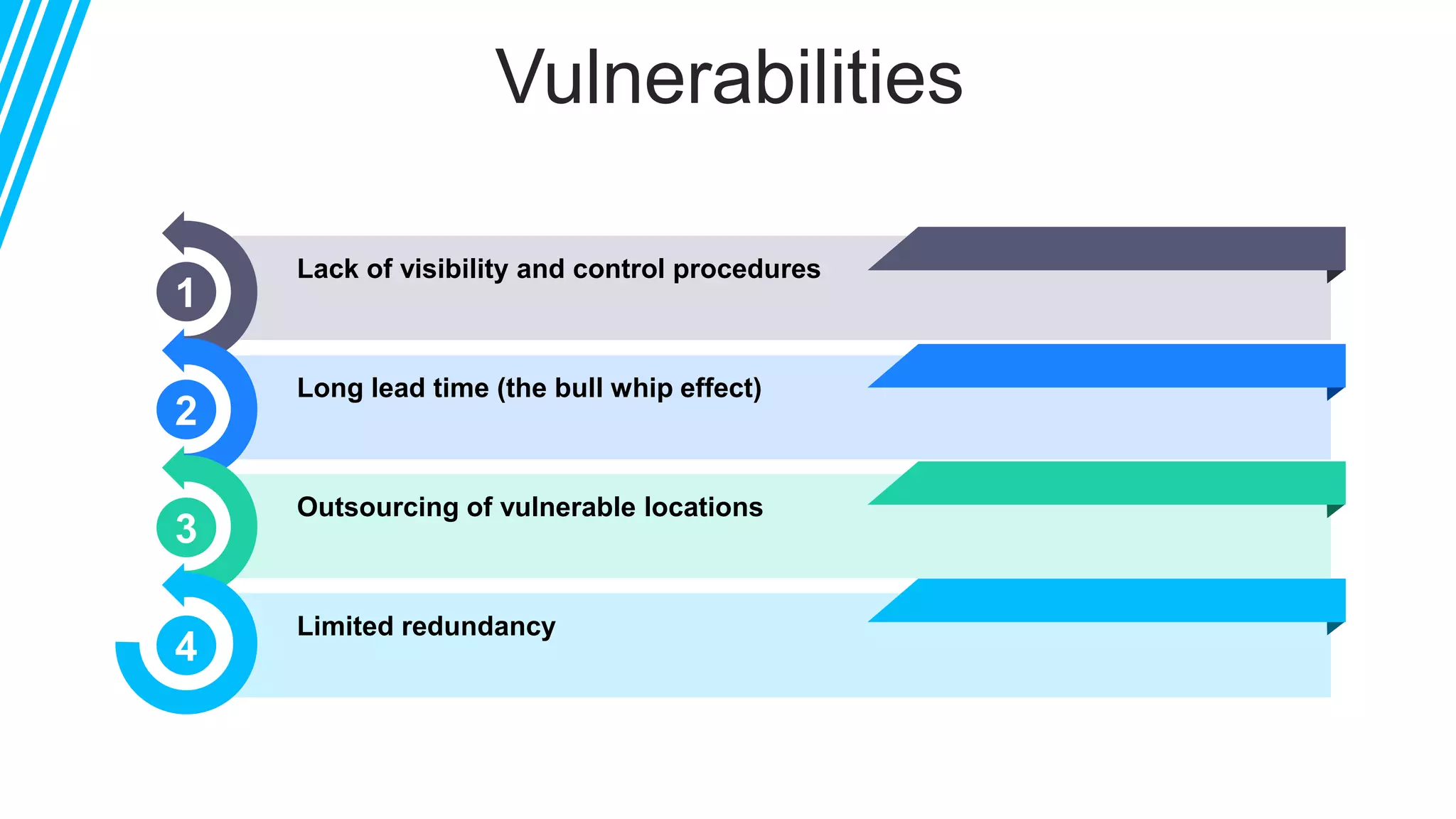
Vulnerabilities
1
2
3
4
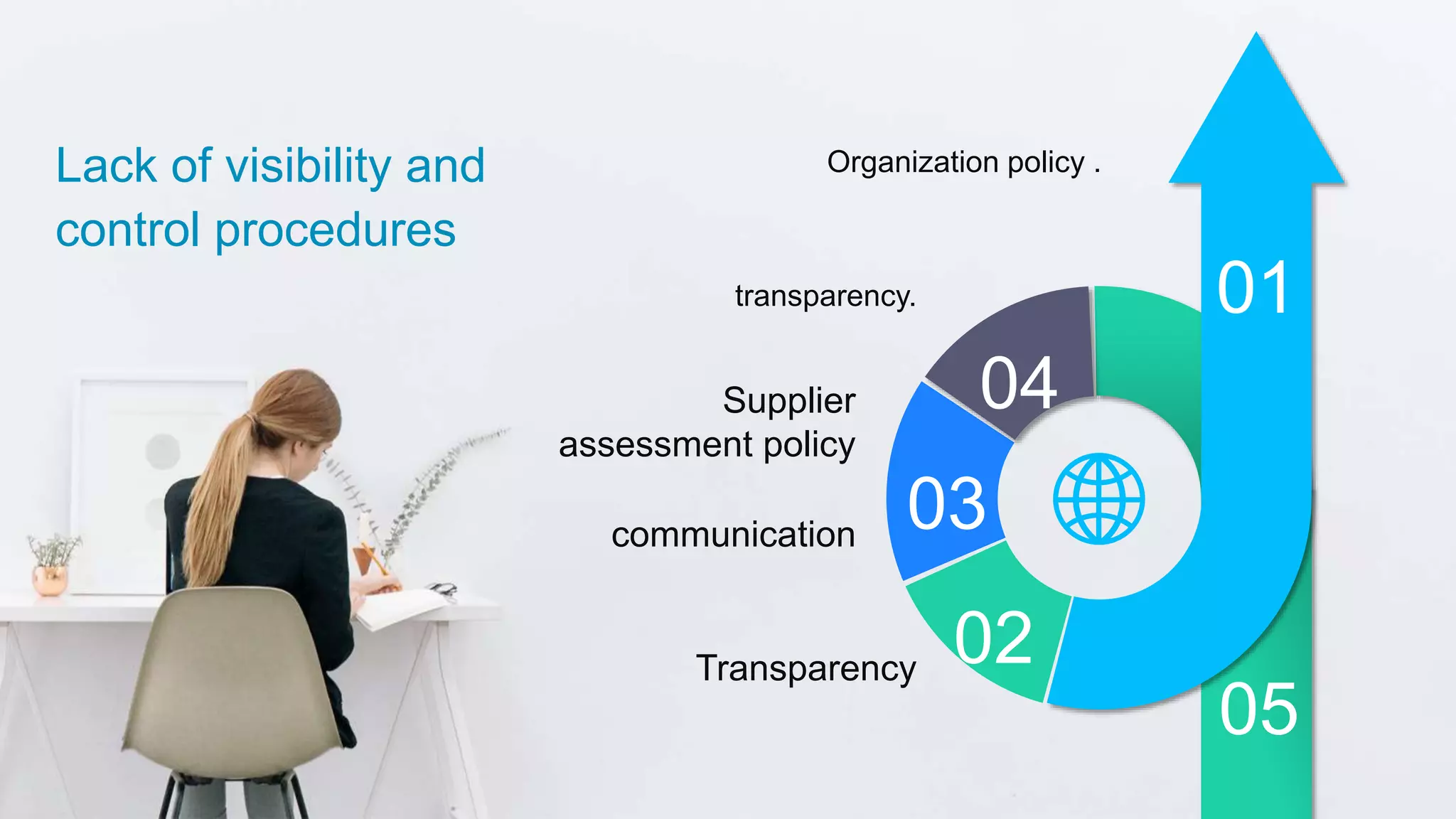
Lack of visibility and control procedures
Long lead time (the bull whip effect)
Outsourcing of vulnerable locations
Limited redundancy
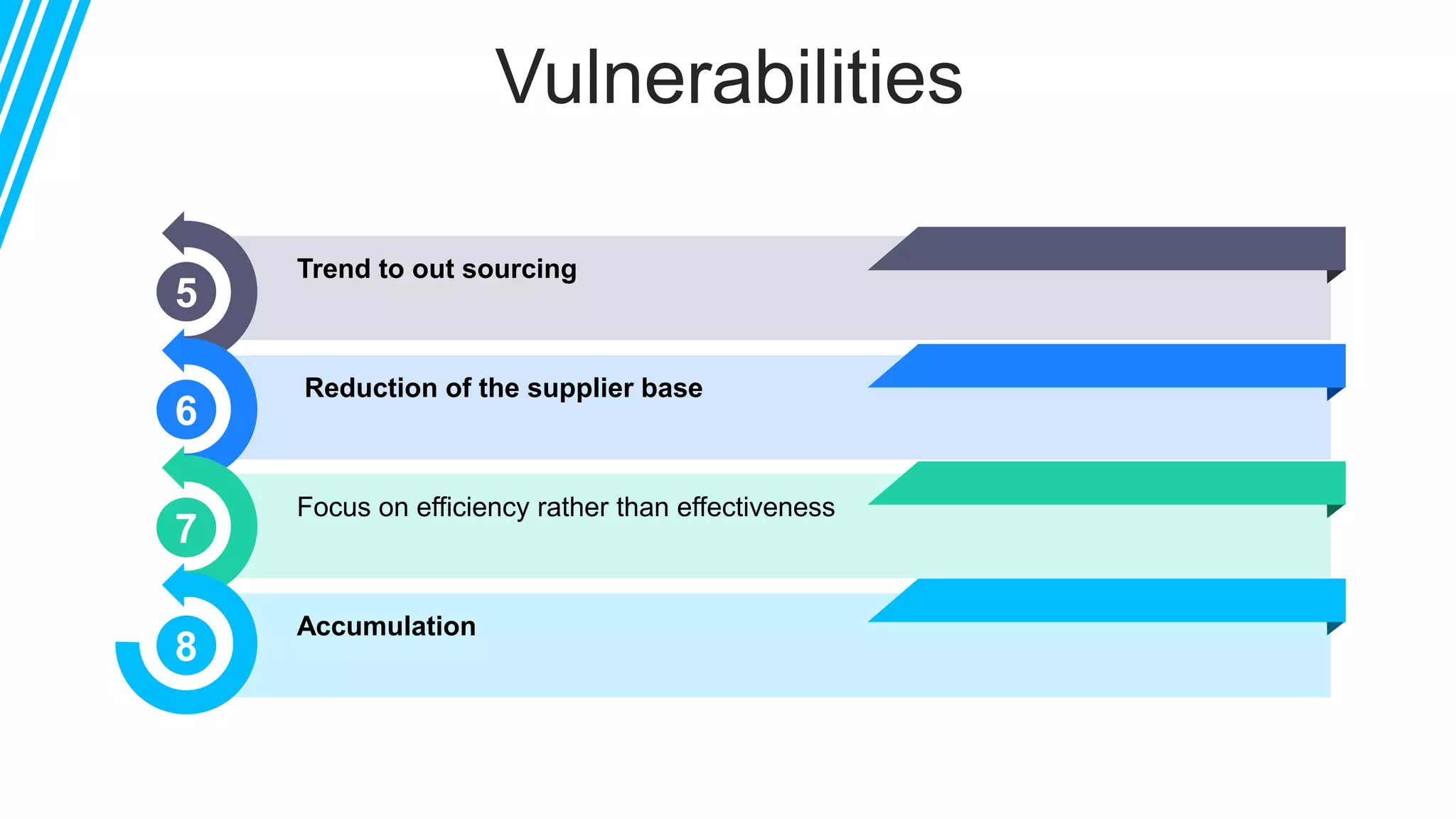
Vulnerabilities
5
6
7
8
Trend to out sourcing
Reduction of the supplier base
Focus on efficiency rather than effectiveness
Accumulation
CASES
KFC no chicken saga
.
Reduction of the supplier base
Apple out sourcing
Nike
Out sourcing
Inter related networks
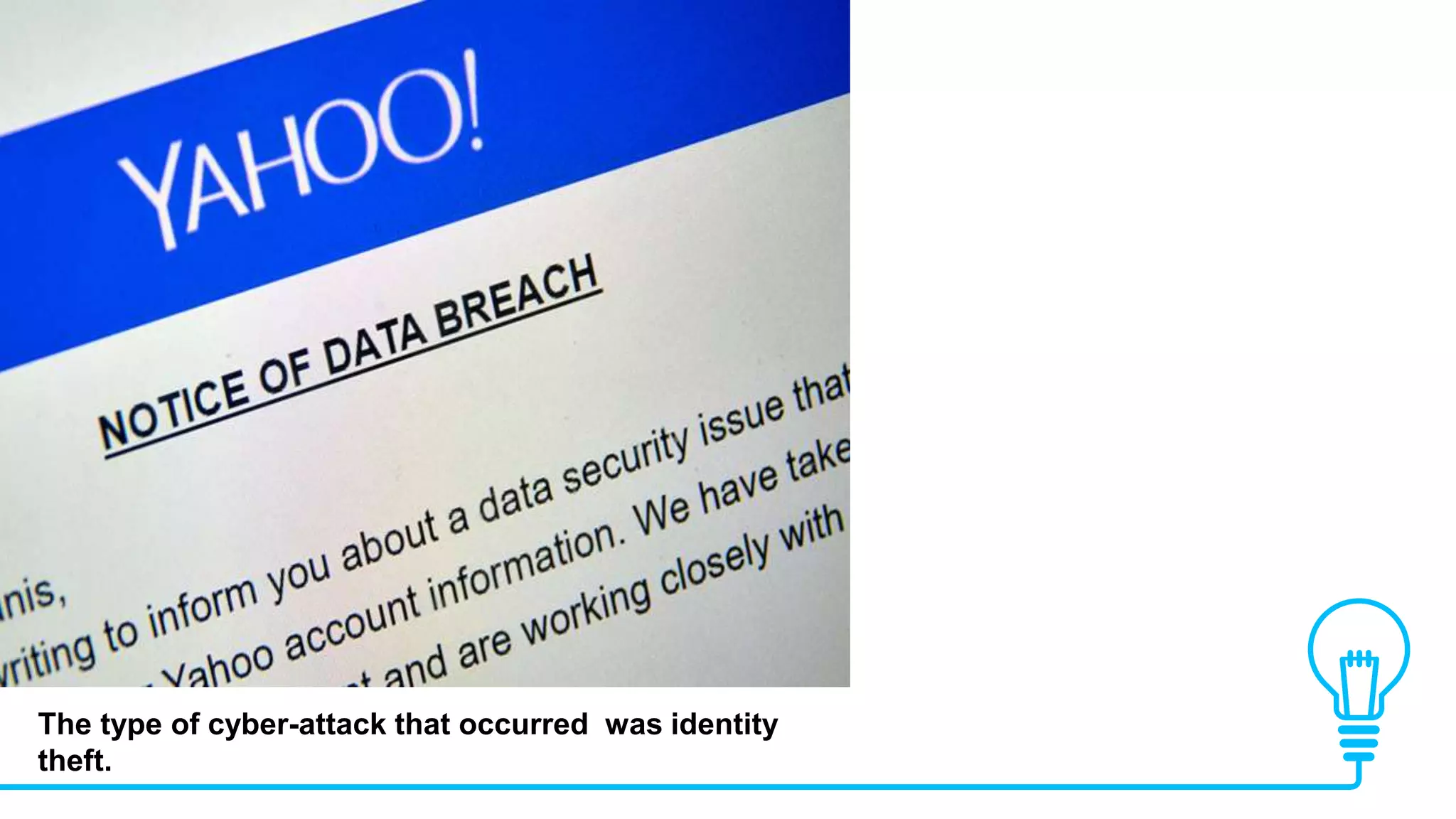
Yahoo > identity theft.
google
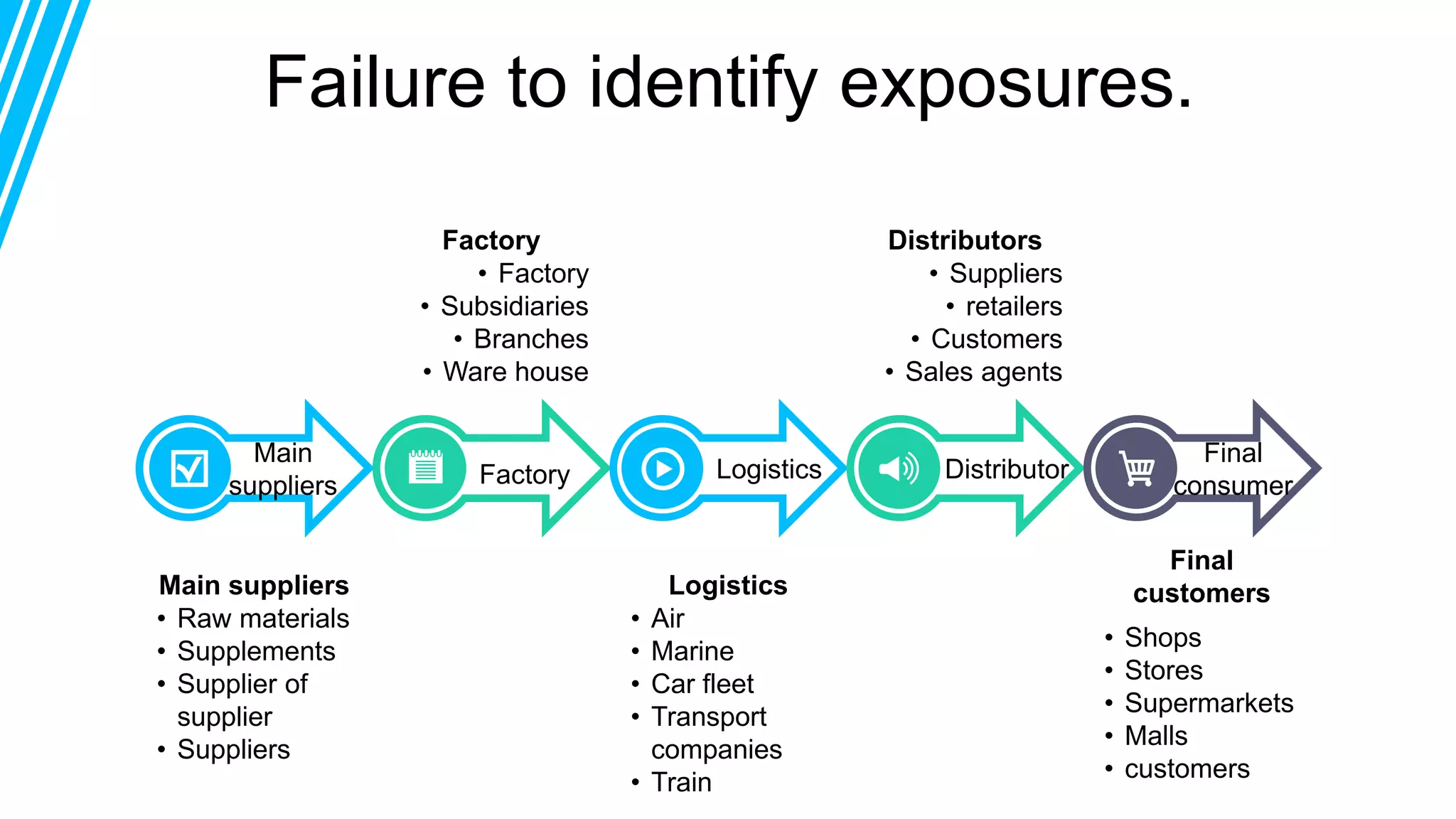
Failure to identify exposures.
Main
suppliers
Logistics Distributor
Distributors
• Suppliers
• retailers
• Customers
• Sales agents
Logistics
• Air
• Marine
• Car fleet
• Transport
companies
• Train
Factory
• Factory
• Subsidiaries
• Branches
• Ware house
Main suppliers
• Raw materials
• Supplements
• Supplier of
supplier
• Suppliers
Final
consumer
Final
customers
• Shops
• Stores
• Supermarkets
• Malls
• customers
Factory
Lack of information of finished goods
distributor
Discounts
Gifts
Customers
Feed back of customers
complaints.
New needs
prices
supplier
Lead time
Tastes and preferences.
producer
Market trends
supplier
Prices
transparency.
Supplier
assessment policy
communication
05
02
03
04
01
Lack of visibility and
control procedures
Transparency
Organization policy .
Accumulation
Accumulation of products .
Accumulation of suppliers.
Large levels of inventory .
Wide base of suppliers
Location of these suppliers .
Increasingly interrelated networks.
hackers - 11%
Data threats- 20%
viruses -9%
Soft wares - 60%
Complexity
Analysis
Presence of high levels of technology
Hackers
Data threats
Viruses
Soft wares
The type of cyber-attack that occurred was identity
theft.
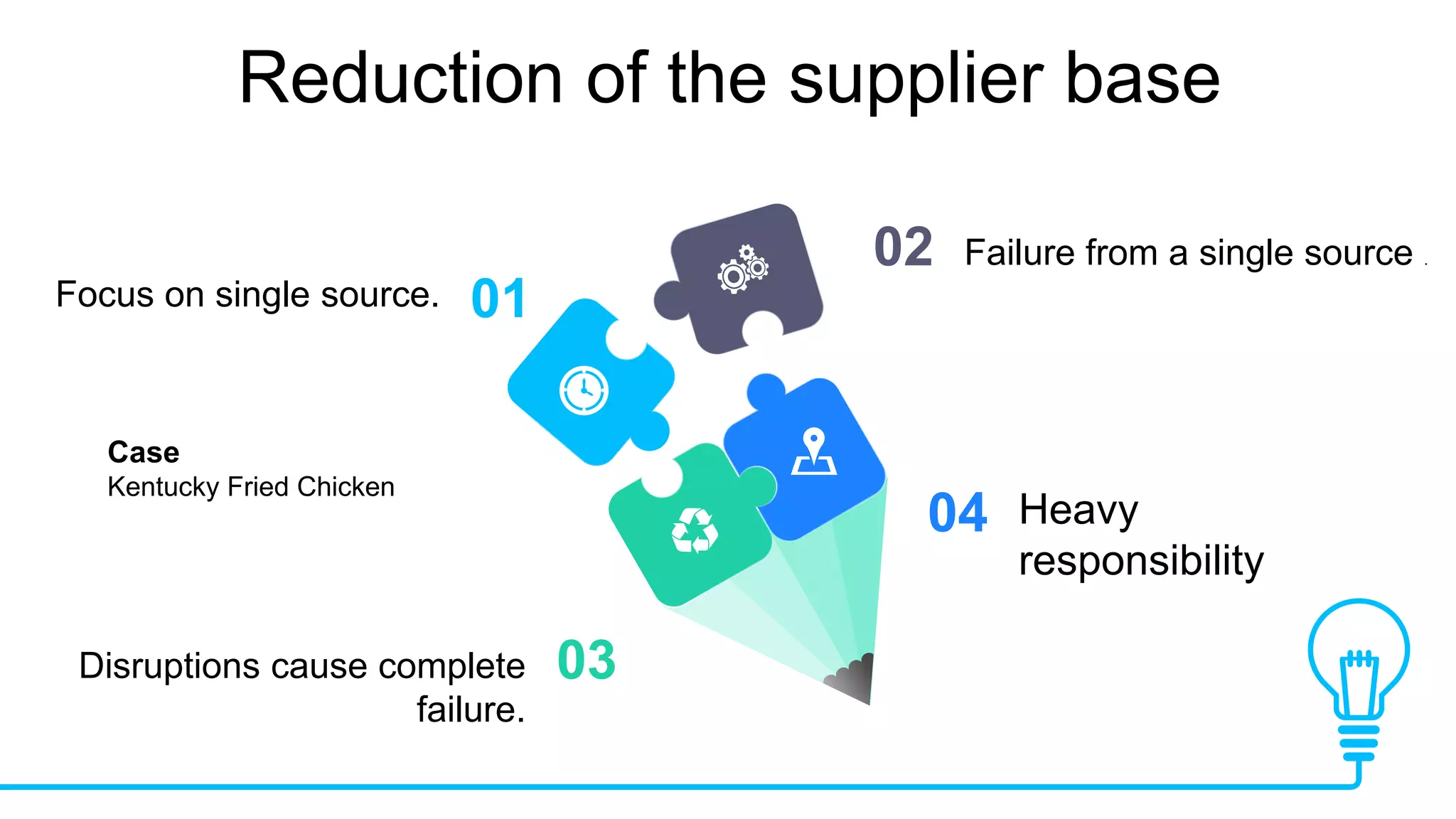
Reduction of the supplier base
01
02
03
04
Failure from a single source .
Heavy
responsibility
Focus on single source.
Disruptions cause complete
failure.
Case
Kentucky Fried Chicken
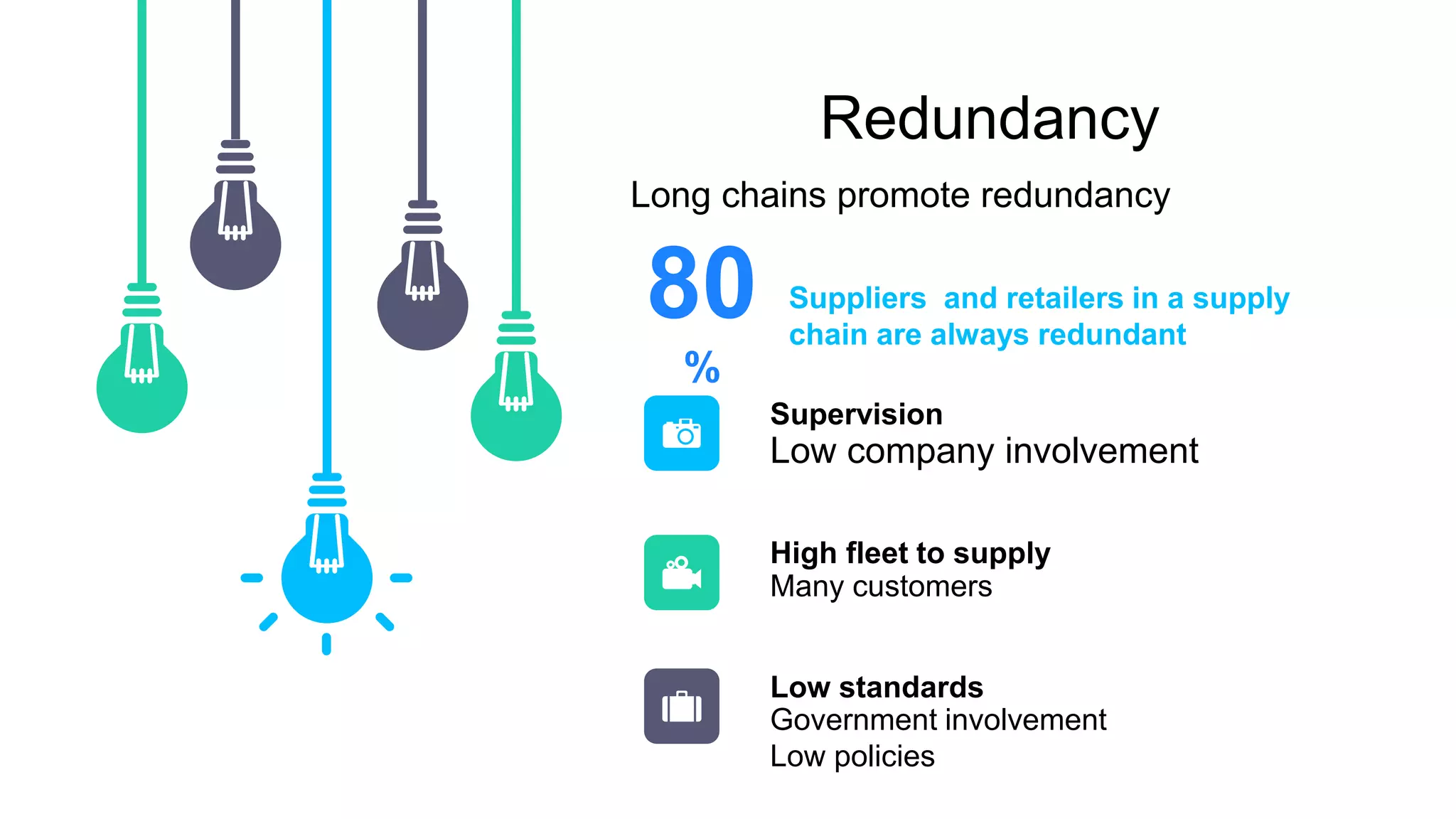
Redundancy
Long chains promote redundancy
80
%
Suppliers and retailers in a supply
chain are always redundant
Many customers
High fleet to supply
Government involvement
Low policies
Low standards
Low company involvement
Supervision
Focus on efficiency rather than effectiveness
30% 50%
10% 10%
What can I do.
What must I do.
Quantity production vs. quality production
Beat deadlines vs. meet taste
Transportation not delivery
Competitor vs. customer
Just in time (JIT)
No space to recollect
quality
Complaints are not
attended to in time
Repetitive manufacturing
functions
Decrease costs
Few suppliers
Inventory management.
Enough inventory to meet
immediate production
needs
Accurately forecast demand
Focused factories and centralized distribution
Miss calculation of
demand and supply
Over running of
machines.
Excessive production
.
Fraud
Timely production.
Supplier to supplier
Business to business
Distributor
Retailer
Raw materials
Long lead time (the bullwhip effect)
Chains involve cross country suppliers,
information about demand and supply takes
days, weeks or even months to be
communicated across the supply chain. This
causes demand elasticity to be amplified causing
one to move further away from the customer.
Causes Vulnerability
Bullwhip effect
• Delay to receive
news.
• Long Lead time.
• Supplier reluctance
.
• Trends in demand
• Information delay
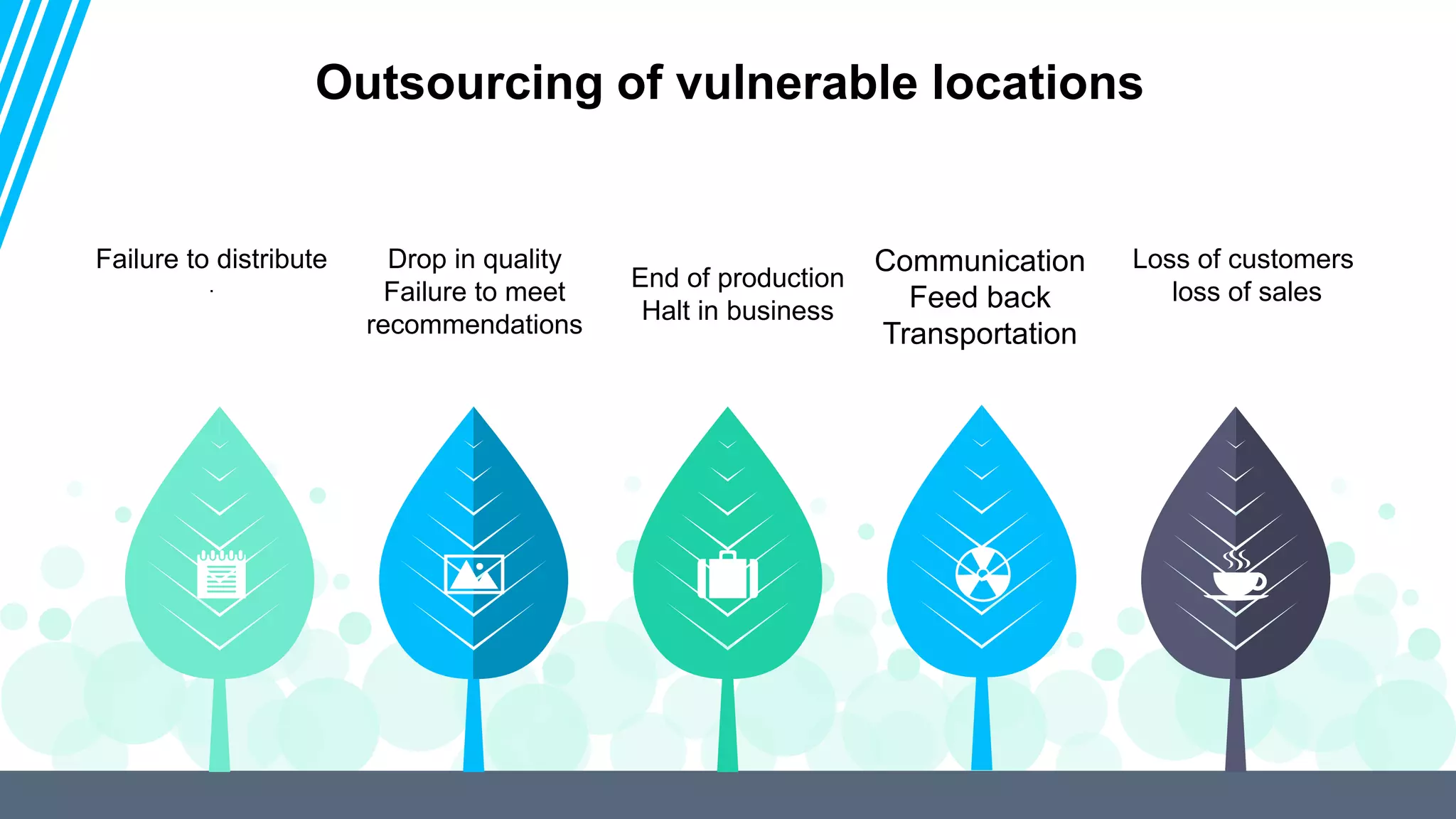
Outsourcing of vulnerable locations
Drop in quality
Failure to meet
recommendations
End of production
Halt in business
Communication
Feed back
Transportation
Loss of customers
loss of sales
Failure to distribute
.
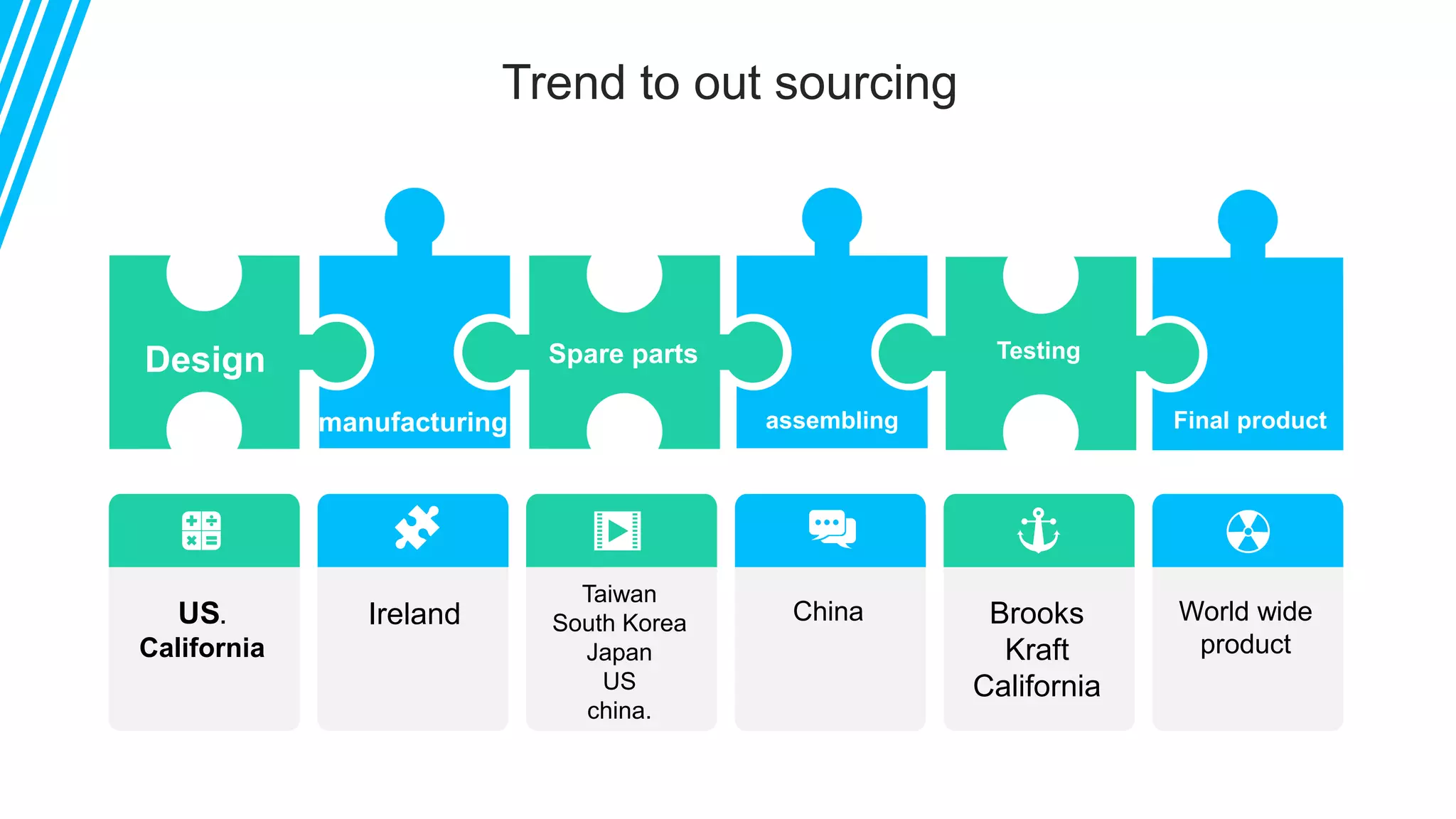
Trend to out sourcing
US.
California
China
Taiwan
South Korea
Japan
US
china.
World wide
product
Ireland
Design
manufacturing
Spare parts Testing
assembling Final product
Brooks
Kraft
California
Global supply chain vulnerabilities
The continuous globalization ,growth of
companies and increasing competition are the
main catalysts for heavy expansion and the
interconnectedness of Global supply chains.
This creates many loopholes in the supply
chain that may be under looked provoking
vulnerability in the supply chain
Summary
• Infographic Style
Queries
Inquiries comments
Thank You
Presentation by
Ayebare Eunice
Kato Hanifa Nabankema
Nangobi Rehema
Musuya Wananda Patricia

Supply chain vulnerability to risk

  • 1.
    GLOBAL SUPPLY CHAIN MANAGEMENT Presentedby Ayebare Eunice Kato Hanifa Nabankema Nangobi Rehema Musuya Wananda Patricia
  • 2.
  • 3.
  • 4.
    Global Supply chain: distribution of goods and services through out a transnational company’s global network to maximize profit and minimize waste. It involves information, people , processes and resources involved in the production, handling and distribution of ,materials and finished products or providing a service to a customer. Risk is the uncertainty that a loss may occur or not. It implies future uncertainty about deviation from expected earnings or out come.
  • 5.
    suppliers Parties in globalsupply chain producers distributor Provides the raw material needed by the company Major source of providing raw materials Purchase product from manufacturer s and sell them to customers. Logistics The main company and organization purposes to transform raw materials to finished products Planning, implementation, control of forward and reverse flow of goods and services and information between origin and consumption customers
  • 7.
    Vulnerabilities 1 2 3 4 Lack of visibilityand control procedures Long lead time (the bull whip effect) Outsourcing of vulnerable locations Limited redundancy
  • 8.
    Vulnerabilities 5 6 7 8 Trend to outsourcing Reduction of the supplier base Focus on efficiency rather than effectiveness Accumulation
  • 9.
    CASES KFC no chickensaga . Reduction of the supplier base Apple out sourcing Nike Out sourcing Inter related networks Yahoo > identity theft. google
  • 10.
    Failure to identifyexposures. Main suppliers Logistics Distributor Distributors • Suppliers • retailers • Customers • Sales agents Logistics • Air • Marine • Car fleet • Transport companies • Train Factory • Factory • Subsidiaries • Branches • Ware house Main suppliers • Raw materials • Supplements • Supplier of supplier • Suppliers Final consumer Final customers • Shops • Stores • Supermarkets • Malls • customers Factory
  • 11.
    Lack of informationof finished goods distributor Discounts Gifts Customers Feed back of customers complaints. New needs prices supplier Lead time Tastes and preferences. producer Market trends supplier Prices
  • 12.
    transparency. Supplier assessment policy communication 05 02 03 04 01 Lack ofvisibility and control procedures Transparency Organization policy .
  • 13.
    Accumulation Accumulation of products. Accumulation of suppliers. Large levels of inventory . Wide base of suppliers Location of these suppliers .
  • 14.
    Increasingly interrelated networks. hackers- 11% Data threats- 20% viruses -9% Soft wares - 60% Complexity Analysis Presence of high levels of technology Hackers Data threats Viruses Soft wares
  • 15.
    The type ofcyber-attack that occurred was identity theft.
  • 16.
    Reduction of thesupplier base 01 02 03 04 Failure from a single source . Heavy responsibility Focus on single source. Disruptions cause complete failure. Case Kentucky Fried Chicken
  • 18.
    Redundancy Long chains promoteredundancy 80 % Suppliers and retailers in a supply chain are always redundant Many customers High fleet to supply Government involvement Low policies Low standards Low company involvement Supervision
  • 19.
    Focus on efficiencyrather than effectiveness 30% 50% 10% 10% What can I do. What must I do. Quantity production vs. quality production Beat deadlines vs. meet taste Transportation not delivery Competitor vs. customer
  • 20.
    Just in time(JIT) No space to recollect quality Complaints are not attended to in time Repetitive manufacturing functions Decrease costs Few suppliers Inventory management. Enough inventory to meet immediate production needs Accurately forecast demand
  • 22.
    Focused factories andcentralized distribution Miss calculation of demand and supply Over running of machines. Excessive production . Fraud Timely production.
  • 23.
    Supplier to supplier Businessto business Distributor Retailer Raw materials
  • 24.
    Long lead time(the bullwhip effect) Chains involve cross country suppliers, information about demand and supply takes days, weeks or even months to be communicated across the supply chain. This causes demand elasticity to be amplified causing one to move further away from the customer. Causes Vulnerability Bullwhip effect • Delay to receive news. • Long Lead time. • Supplier reluctance . • Trends in demand • Information delay
  • 25.
    Outsourcing of vulnerablelocations Drop in quality Failure to meet recommendations End of production Halt in business Communication Feed back Transportation Loss of customers loss of sales Failure to distribute .
  • 27.
    Trend to outsourcing US. California China Taiwan South Korea Japan US china. World wide product Ireland Design manufacturing Spare parts Testing assembling Final product Brooks Kraft California
  • 28.
    Global supply chainvulnerabilities The continuous globalization ,growth of companies and increasing competition are the main catalysts for heavy expansion and the interconnectedness of Global supply chains. This creates many loopholes in the supply chain that may be under looked provoking vulnerability in the supply chain Summary
  • 29.
  • 30.
    Thank You Presentation by AyebareEunice Kato Hanifa Nabankema Nangobi Rehema Musuya Wananda Patricia