RETAIL SUPPLY CHAIN
MANAGEMENT
MMS (17-19)
Welingkar Institute Of Management
Supply Chain Management
 SCM is defined as the "design, planning, execution, control, and
monitoring of supply chain activities with the objective of creating net
value, building a competitive infrastructure, leveraging worldwide
logistics, synchronizing supply with demand and measuring
performance globally
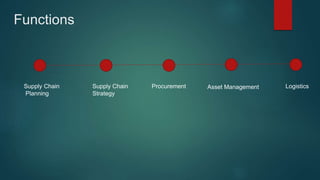
Functions
Supply Chain
Planning
Supply Chain
Strategy
Procurement Asset Management Logistics
Key Supply Chain Processes
 Customer Relationship Management
 Order Fulfillment
 Manufacturing Flow Management
 Supplier Relationship Management
 Repairs and Returns
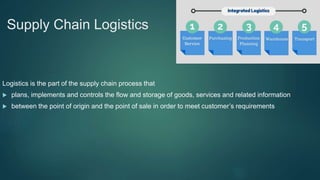
Supply Chain Logistics
Logistics is the part of the supply chain process that
 plans, implements and controls the flow and storage of goods, services and related information
 between the point of origin and the point of sale in order to meet customer’s requirements
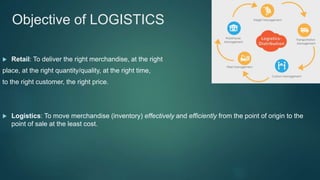
Objective of LOGISTICS
 Retail: To deliver the right merchandise, at the right
place, at the right quantity/quality, at the right time,
to the right customer, the right price.
 Logistics: To move merchandise (inventory) effectively and efficiently from the point of origin to the
point of sale at the least cost.
Functions of Logistics
 Inbound Logistics: Movement of goods and raw materials from suppliers to the manufacturer.
 Purchasing and obtaining raw materials, material management (handling, storing and transporting).
 Outbound Logistics: Movement of finished goods from the manufacturer to the customer.
 Packaging, Warehousing, Transportation, Distribution
Supply Chain & Logistics problems
with solutions
 Globalization
 Quality & Compliance
 Fast growing markets
 Weather / Natural disasters
 New Technology
 Cyber risks

Supply chain management

  • 1.
    RETAIL SUPPLY CHAIN MANAGEMENT MMS(17-19) Welingkar Institute Of Management
  • 2.
    Supply Chain Management SCM is defined as the "design, planning, execution, control, and monitoring of supply chain activities with the objective of creating net value, building a competitive infrastructure, leveraging worldwide logistics, synchronizing supply with demand and measuring performance globally
  • 3.
  • 4.
    Key Supply ChainProcesses  Customer Relationship Management  Order Fulfillment  Manufacturing Flow Management  Supplier Relationship Management  Repairs and Returns
  • 5.
    Supply Chain Logistics Logisticsis the part of the supply chain process that  plans, implements and controls the flow and storage of goods, services and related information  between the point of origin and the point of sale in order to meet customer’s requirements
  • 6.
    Objective of LOGISTICS Retail: To deliver the right merchandise, at the right place, at the right quantity/quality, at the right time, to the right customer, the right price.  Logistics: To move merchandise (inventory) effectively and efficiently from the point of origin to the point of sale at the least cost.
  • 7.
    Functions of Logistics Inbound Logistics: Movement of goods and raw materials from suppliers to the manufacturer.  Purchasing and obtaining raw materials, material management (handling, storing and transporting).  Outbound Logistics: Movement of finished goods from the manufacturer to the customer.  Packaging, Warehousing, Transportation, Distribution
  • 8.
    Supply Chain &Logistics problems with solutions  Globalization  Quality & Compliance  Fast growing markets  Weather / Natural disasters  New Technology  Cyber risks