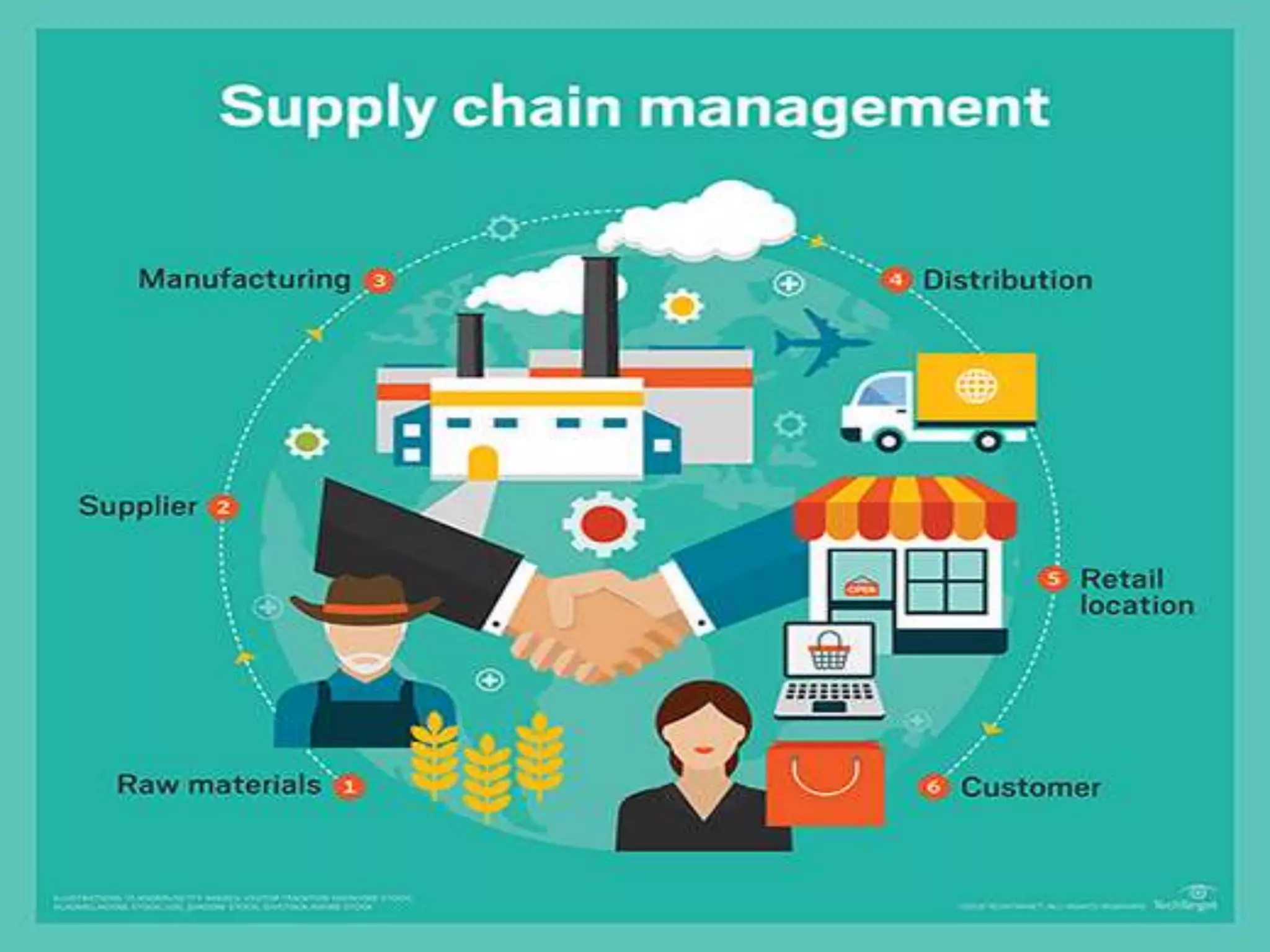
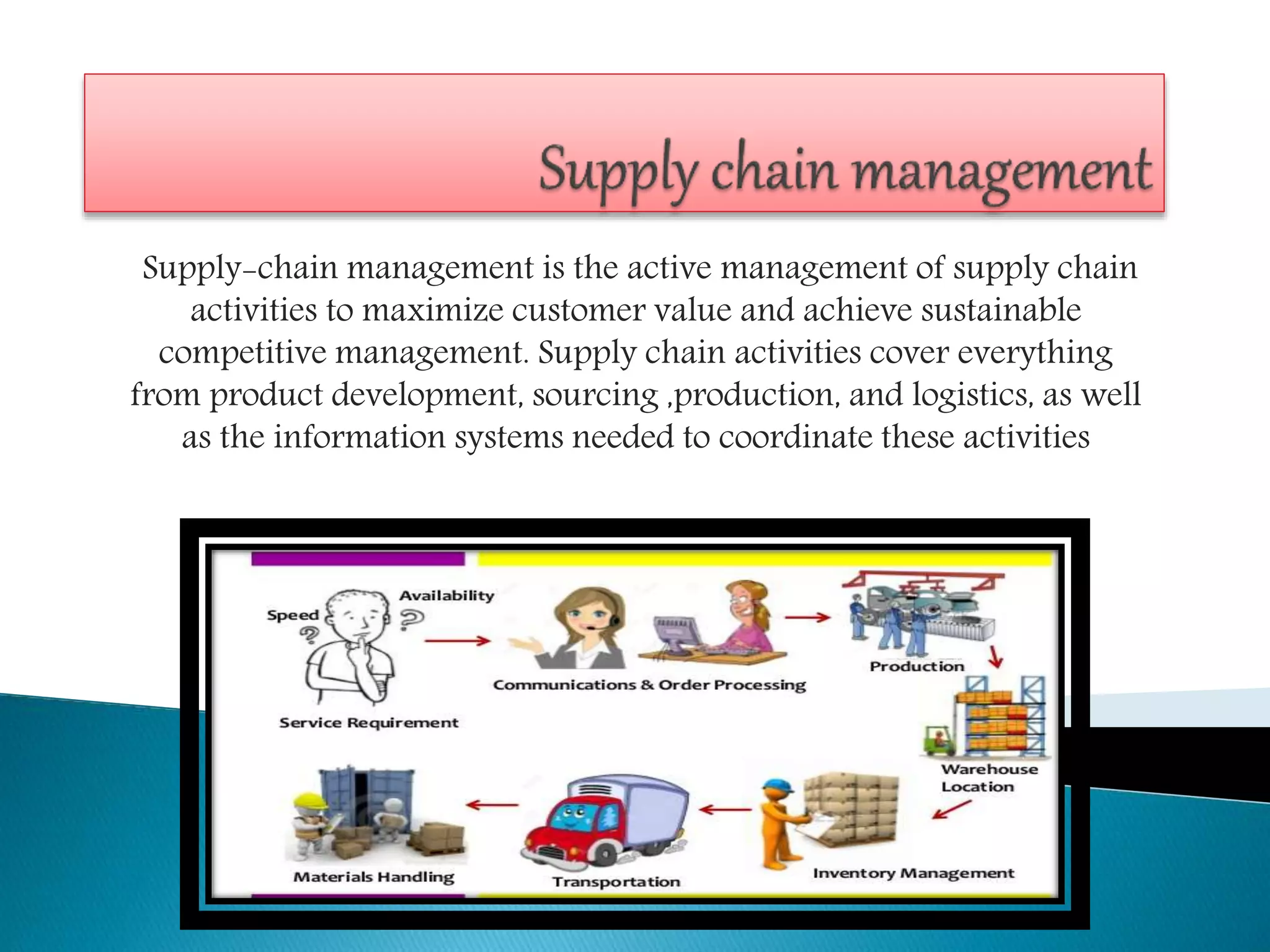
Supply-chain management is the active management of supply chain
activities to maximize customer value and achieve sustainable
competitive management. Supply chain activities cover everything
from product development, sourcing ,production, and logistics, as well
as the information systems needed to coordinate these activities
Boost Customer
Service
Reduce
Operating
Costs
Improve
financial
position
Increase cash
flow
Reduce
inventory cost
Improve
customer
satisfaction
Matching of
supply and
demand
Physical distribution is the set of activities concerned
with efficient movement of finished goods from the
end of the production operation to the consumer.
Physical distribution takes place within numerous
wholesaling and retailing distribution channels, and
includes such important decision areas as customer
service, inventory control, materials handling,
protective packaging, order procession, transportation,
warehouse site selection, and warehousing.
Logistics involve planning, delivering and controlling
the flow of physical goods, marketing materials and
information from the producer to the market. The aim
is to meet customer demands while still making a
satisfactory profit
Inbound logistics refers to the transport,
storage and delivery of goods coming into a
business. Outbound logistics refers to the
same for goods going out of a business.
Right Product
Right Customer
Right cost
Right Place
Right condition
Right Quantity
Right Time
Supply-chain professionals contribute to a company’s
bottom line by effectively and efficiently managing a
complex network of people, resources, activities, and
technology structures. An exceptional supply chain
creates efficiencies and can create a sustainable
competitive advantage. These efficiencies can increase
revenue while decreasing costs.
Effective supply-chain managers are able to:
 Strategically procure products, services, and e-commerce
solutions
 Deftly negotiate contracts with suppliers and distributors
 Implement effective strategies for streamlining supply-
chain management operations
 Maximize customer value through eliminating various
types of waste
 Manage a global supply chain
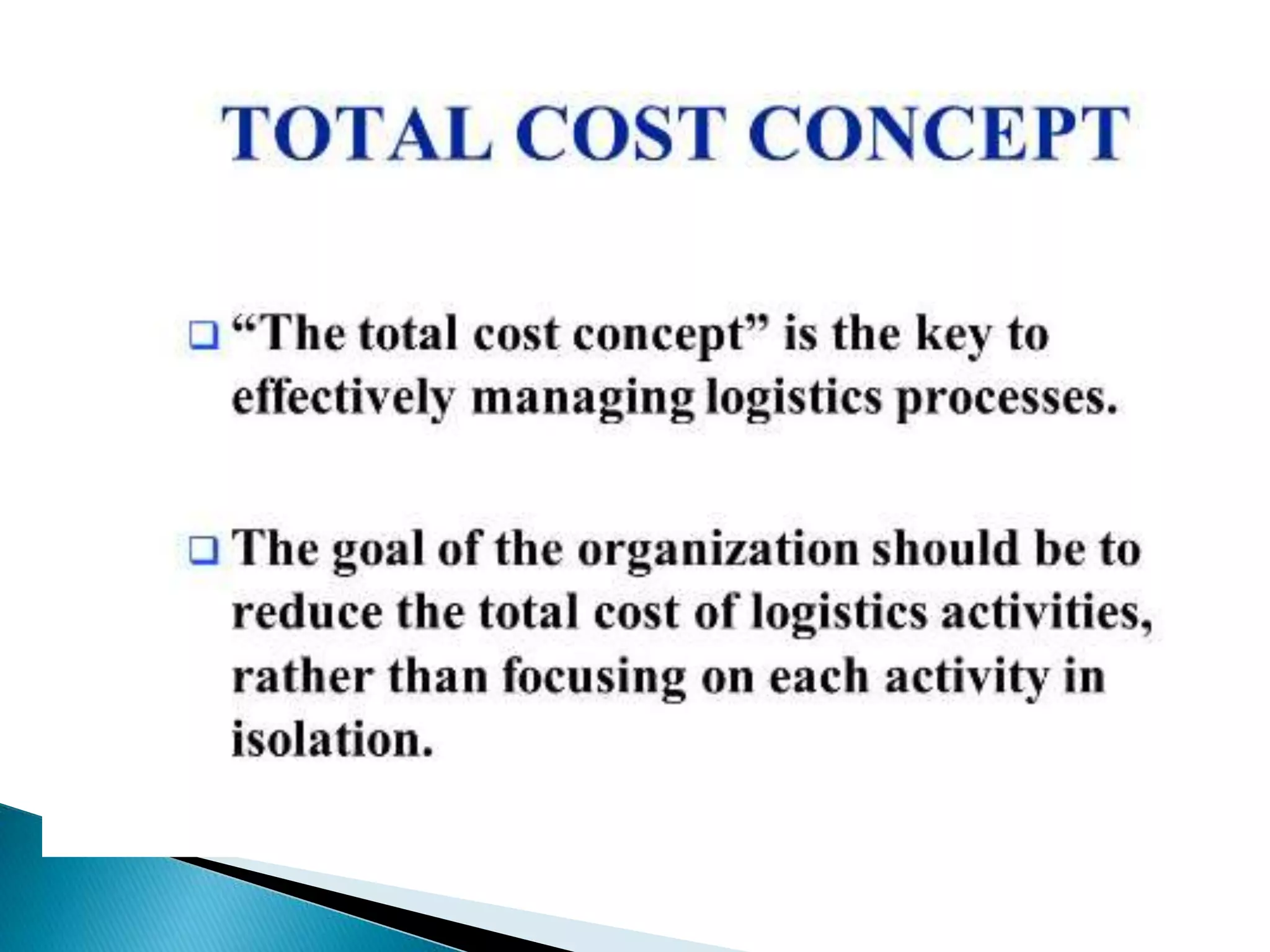
So we can say that if supply chain managements activities
are performed efficiently then we will able to decrease the
cost and increase the profits
Increase in customer service
Increase in production cost
Improve quality of product
Improve product and material flow
Enhanced financial flow
Improve bottom line
Maintain better trust among customers
Proper flow of information
Increase in
standard of
living
Job creation
Optimum
utilization of
resources
Economic
growth
Increase in
exports
SCM sustains
human life
Decrease in
pollution
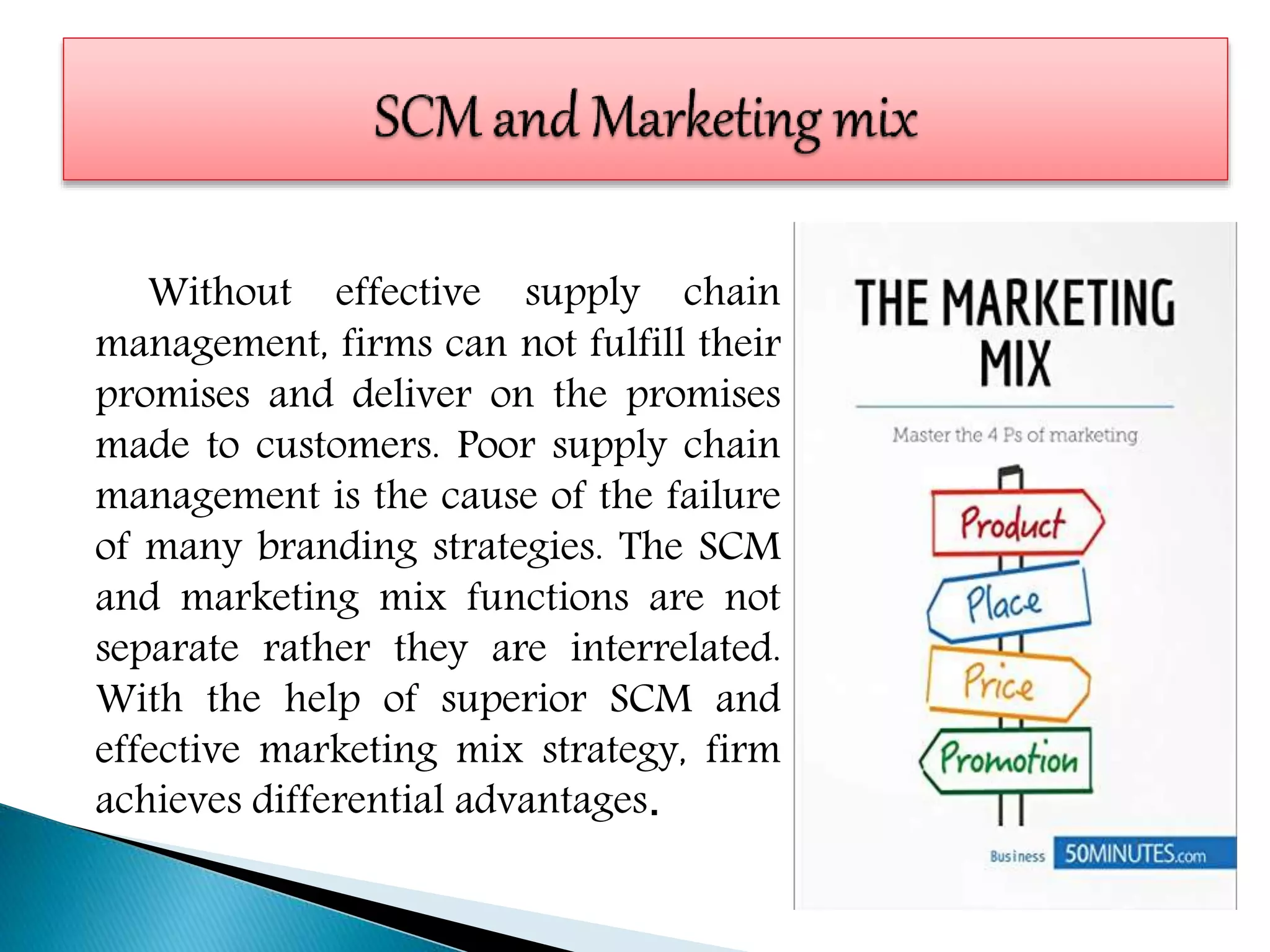
Without effective supply chain
management, firms can not fulfill their
promises and deliver on the promises
made to customers. Poor supply chain
management is the cause of the failure
of many branding strategies. The SCM
and marketing mix functions are not
separate rather they are interrelated.
With the help of superior SCM and
effective marketing mix strategy, firm
achieves differential advantages.
Various perspective of supply chain coordination are:-
 Collaborative
 Mutual exchange of information
 Integrated information system
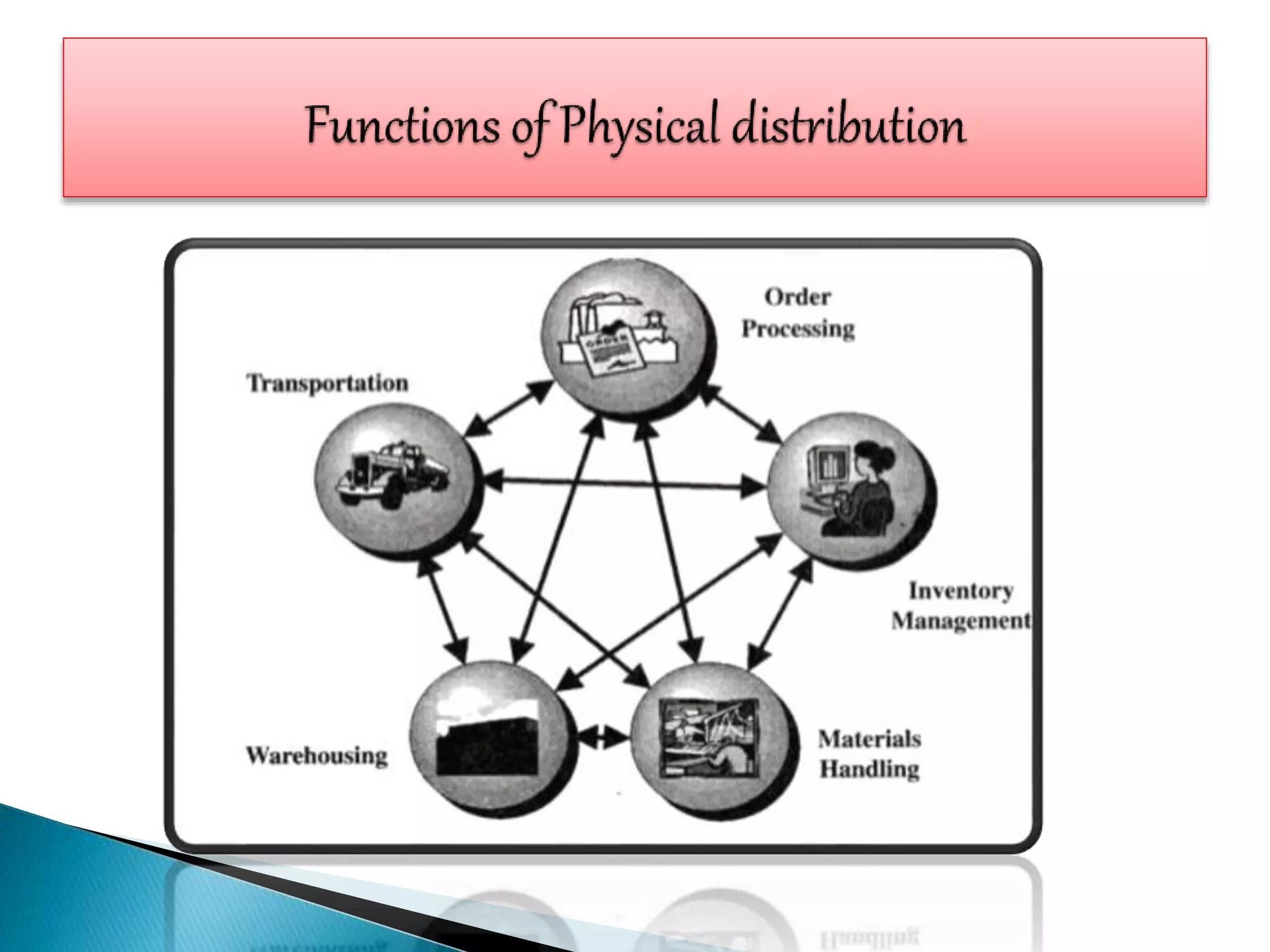
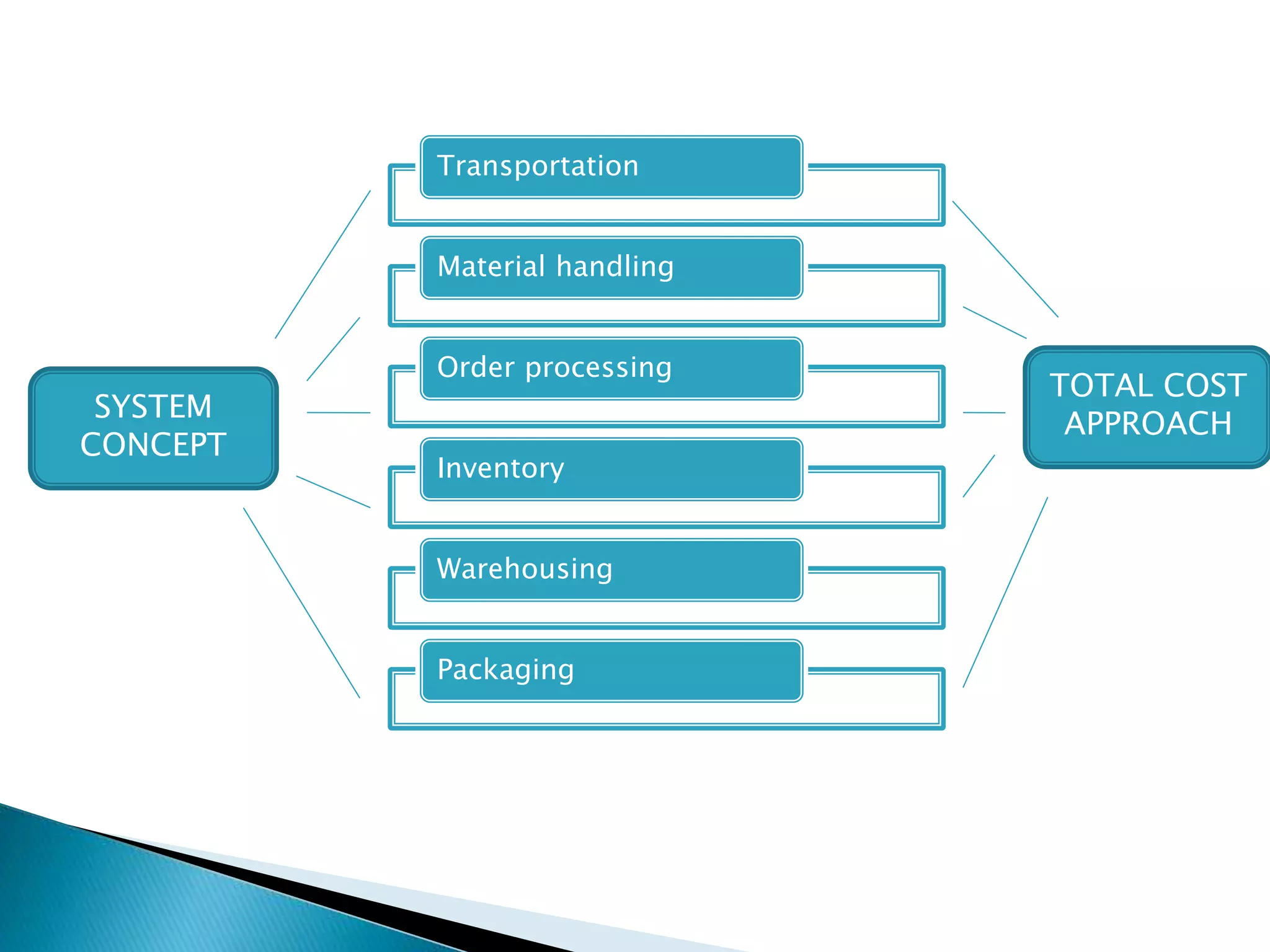
Transportation
Material handling
Order processing
Inventory
Warehousing
Packaging
SYSTEM
CONCEPT
TOTAL COST
APPROACH
The systems approach to analyzing supply chains and
improving their performance recognizes that the
process of generating improvements in supply chains
needs to be carried out in a logical and systematic
manner.
In practice, supply chain systems can be broken down
into subsystems. This aids understanding of the
operation of the system and facilitates systems
analysis. So that we can effectively manage all the
activities
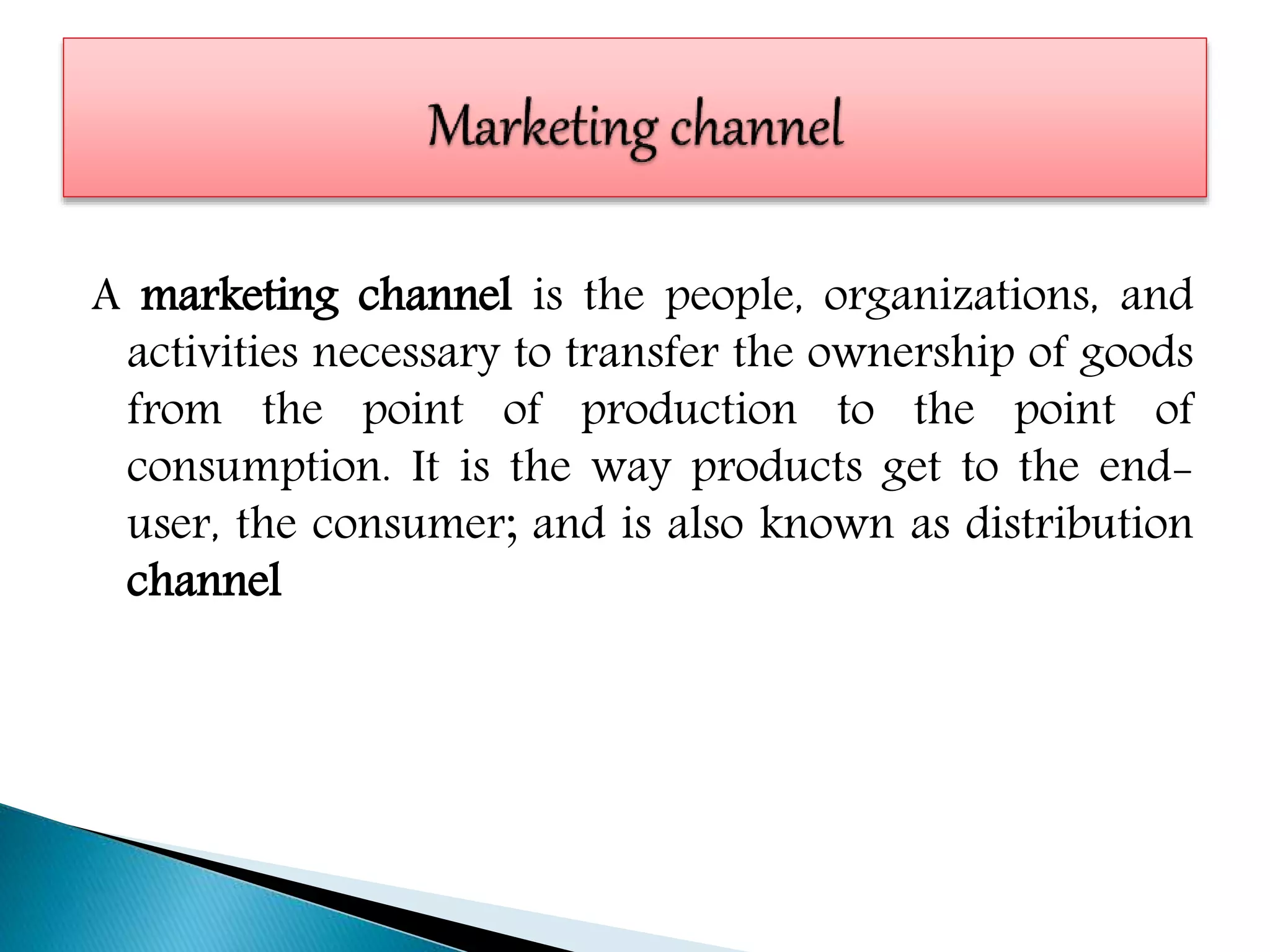
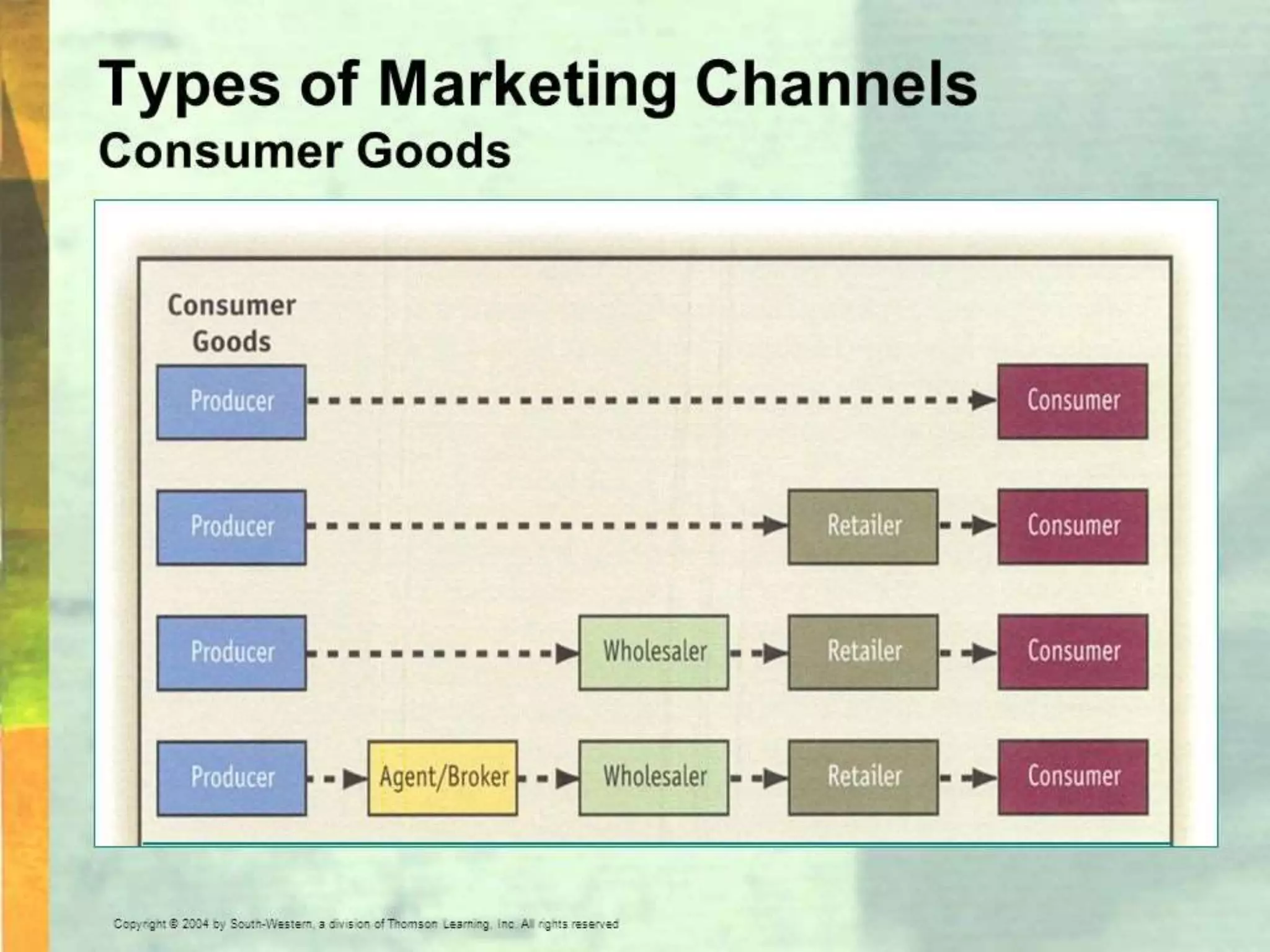
A marketing channel is the people, organizations, and
activities necessary to transfer the ownership of goods
from the point of production to the point of
consumption. It is the way products get to the end-
user, the consumer; and is also known as distribution
channel
Supply chain management and logistics management

Supply chain management and logistics management

  • 3.
    Supply-chain management isthe active management of supply chain activities to maximize customer value and achieve sustainable competitive management. Supply chain activities cover everything from product development, sourcing ,production, and logistics, as well as the information systems needed to coordinate these activities
  • 4.
  • 5.
    Physical distribution isthe set of activities concerned with efficient movement of finished goods from the end of the production operation to the consumer. Physical distribution takes place within numerous wholesaling and retailing distribution channels, and includes such important decision areas as customer service, inventory control, materials handling, protective packaging, order procession, transportation, warehouse site selection, and warehousing.
  • 7.
    Logistics involve planning,delivering and controlling the flow of physical goods, marketing materials and information from the producer to the market. The aim is to meet customer demands while still making a satisfactory profit
  • 8.
    Inbound logistics refersto the transport, storage and delivery of goods coming into a business. Outbound logistics refers to the same for goods going out of a business.
  • 10.
    Right Product Right Customer Rightcost Right Place Right condition Right Quantity Right Time
  • 13.
    Supply-chain professionals contributeto a company’s bottom line by effectively and efficiently managing a complex network of people, resources, activities, and technology structures. An exceptional supply chain creates efficiencies and can create a sustainable competitive advantage. These efficiencies can increase revenue while decreasing costs.
  • 14.
    Effective supply-chain managersare able to:  Strategically procure products, services, and e-commerce solutions  Deftly negotiate contracts with suppliers and distributors  Implement effective strategies for streamlining supply- chain management operations  Maximize customer value through eliminating various types of waste  Manage a global supply chain So we can say that if supply chain managements activities are performed efficiently then we will able to decrease the cost and increase the profits
  • 15.
    Increase in customerservice Increase in production cost Improve quality of product Improve product and material flow Enhanced financial flow Improve bottom line Maintain better trust among customers Proper flow of information
  • 16.
    Increase in standard of living Jobcreation Optimum utilization of resources Economic growth Increase in exports SCM sustains human life Decrease in pollution
  • 17.
    Without effective supplychain management, firms can not fulfill their promises and deliver on the promises made to customers. Poor supply chain management is the cause of the failure of many branding strategies. The SCM and marketing mix functions are not separate rather they are interrelated. With the help of superior SCM and effective marketing mix strategy, firm achieves differential advantages.
  • 20.
    Various perspective ofsupply chain coordination are:-  Collaborative  Mutual exchange of information  Integrated information system
  • 22.
  • 23.
    The systems approachto analyzing supply chains and improving their performance recognizes that the process of generating improvements in supply chains needs to be carried out in a logical and systematic manner.
  • 24.
    In practice, supplychain systems can be broken down into subsystems. This aids understanding of the operation of the system and facilitates systems analysis. So that we can effectively manage all the activities
  • 25.
    A marketing channelis the people, organizations, and activities necessary to transfer the ownership of goods from the point of production to the point of consumption. It is the way products get to the end- user, the consumer; and is also known as distribution channel