RETAIL SUPPLY CHAIN
MANAGEMENT
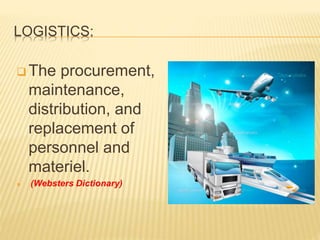
LOGISTICS:
 The procurement,
maintenance,
distribution, and
replacement of
personnel and
materiel.
 (Websters Dictionary)
SUPPLY CHAIN MANAGEMENT: (SCM)
DEFINITION:
SCM is the integration of
all the activities associated
with the flow and
transformation of goods
from raw materials
through to end users as
well as information flow,
through improved supply
chain relationships, to
achieve a sustainable
competitive advantage.
MISSION:
Getting the right goods
or services to the right
place, at the right time
and in the desired
condition at the lowest
cost and highest
return on investment.
KEY ACTIVITIES & PROCESSES:
PRIMARY:
 Setting customer service
goals
 Transportation
 Inventory management
 Location
SECONDARY:
 Warehousing
 Materials handling
 Acquisition(purchasing)
 Protective packing
 Product scheduling
 Order processing
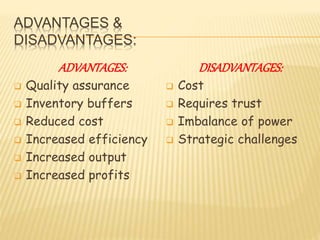
ADVANTAGES &
DISADVANTAGES:
ADVANTAGES:
 Quality assurance
 Inventory buffers
 Reduced cost
 Increased efficiency
 Increased output
 Increased profits
DISADVANTAGES:
 Cost
 Requires trust
 Imbalance of power
 Strategic challenges
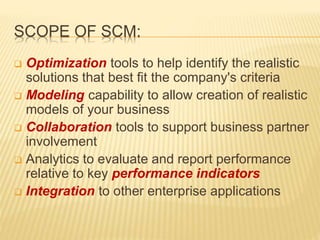
SCOPE OF SCM:
 Optimization tools to help identify the realistic
solutions that best fit the company's criteria
 Modeling capability to allow creation of realistic
models of your business
 Collaboration tools to support business partner
involvement
 Analytics to evaluate and report performance
relative to key performance indicators
 Integration to other enterprise applications
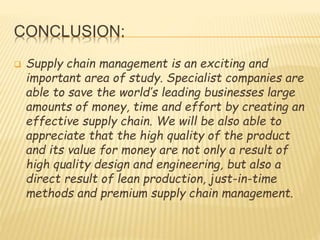
CONCLUSION:
 Supply chain management is an exciting and
important area of study. Specialist companies are
able to save the world’s leading businesses large
amounts of money, time and effort by creating an
effective supply chain. We will be also able to
appreciate that the high quality of the product
and its value for money are not only a result of
high quality design and engineering, but also a
direct result of lean production, just-in-time
methods and premium supply chain management.

Retail supply chain management

  • 1.
  • 2.
    LOGISTICS:  The procurement, maintenance, distribution,and replacement of personnel and materiel.  (Websters Dictionary)
  • 3.
    SUPPLY CHAIN MANAGEMENT:(SCM) DEFINITION: SCM is the integration of all the activities associated with the flow and transformation of goods from raw materials through to end users as well as information flow, through improved supply chain relationships, to achieve a sustainable competitive advantage. MISSION: Getting the right goods or services to the right place, at the right time and in the desired condition at the lowest cost and highest return on investment.
  • 4.
    KEY ACTIVITIES &PROCESSES: PRIMARY:  Setting customer service goals  Transportation  Inventory management  Location SECONDARY:  Warehousing  Materials handling  Acquisition(purchasing)  Protective packing  Product scheduling  Order processing
  • 5.
    ADVANTAGES & DISADVANTAGES: ADVANTAGES:  Qualityassurance  Inventory buffers  Reduced cost  Increased efficiency  Increased output  Increased profits DISADVANTAGES:  Cost  Requires trust  Imbalance of power  Strategic challenges
  • 6.
    SCOPE OF SCM: Optimization tools to help identify the realistic solutions that best fit the company's criteria  Modeling capability to allow creation of realistic models of your business  Collaboration tools to support business partner involvement  Analytics to evaluate and report performance relative to key performance indicators  Integration to other enterprise applications
  • 7.
    CONCLUSION:  Supply chainmanagement is an exciting and important area of study. Specialist companies are able to save the world’s leading businesses large amounts of money, time and effort by creating an effective supply chain. We will be also able to appreciate that the high quality of the product and its value for money are not only a result of high quality design and engineering, but also a direct result of lean production, just-in-time methods and premium supply chain management.