SUPERPOSITION THEOREM STATES THAT IN ANY LINEAR,
BILATERAL NETWORK WHERE MORE THAN ONE SOURCE IS
PRESENT, THE RESPONSE ACROSS ANY ELEMENT IN THE
CIRCUIT IS THE SUM OF THE RESPONSES OBTAINED FROM
EACH SOURCE CONSIDERED SEPARATELY. IN CONTRAST, ALL
OTHER SOURCES ARE REPLACED BY THEIR INTERNAL
RESISTANCE.
HOW TO APPLY SUPERPOSITION THEOREM?
*THE FIRST STEP IS TO SELECT ONE AMONG THE MULTIPLE SOURCES
PRESENT IN THE BILATERAL NETWORK. AMONG THE VARIOUS SOURCES IN
THE CIRCUIT, ANY ONE OF THE SOURCES CAN BE CONSIDERED FIRST.
*EXCEPT FOR THE SELECTED SOURCE, ALL THE SOURCES MUST BE
REPLACED BY THEIR INTERNAL IMPEDANCE.
*USING A NETWORK SIMPLIFICATION APPROACH, EVALUATE THE CURRENT
FLOWING THROUGH OR THE VOLTAGE DROP ACROSS A PARTICULAR ELEMENT
IN THE NETWORK.
*THE SAME CONSIDERING A SINGLE SOURCE IS REPEATED FOR ALL THE
OTHER SOURCES IN THE CIRCUIT.
*UPON OBTAINING THE RESPECTIVE RESPONSE FOR INDIVIDUAL SOURCE,
PERFORM THE SUMMATION OF ALL RESPONSES TO GET THE OVERALL
VOLTAGE DROP OR CURRENT THROUGH THE CIRCUIT ELEMENT.
SUPERPOSITION THEOREM SOLVED EXAMPLE
LET US UNDERSTAND HOW TO USE THE SUPERPOSITION THEOREM TO
ANALYZE CIRCUITS WITH THE HELP OF AN EXAMPLE.
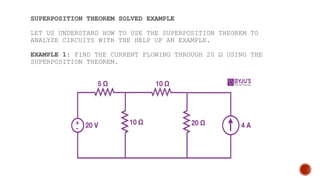
EXAMPLE 1: FIND THE CURRENT FLOWING THROUGH 20 Ω USING THE
SUPERPOSITION THEOREM.
 Solution:
 Step 1:
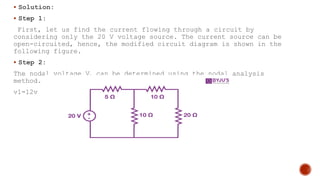
First, let us find the current flowing through a circuit by
considering only the 20 V voltage source. The current source can be
open-circuited, hence, the modified circuit diagram is shown in the
following figure.
 Step 2:
The nodal voltage V1 can be determined using the nodal analysis
method.
v1=12v
THE CURRENT FLOWING THROUGH THE 20 Ω RESISTOR CAN BE FOUND.
SUBSTITUTING THE VALUE OF THE V1 IN THE EQUATION, WE GET
I1 = 0.4 A
THEREFORE, THE CURRENT FLOWING THROUGH THE 20 Ω RESISTOR TO DUE 20
V VOLTAGE SOURCE IS 0.4 A.
STEP 3:
NOW LET US FIND OUT THE CURRENT FLOWING THROUGH THE 20 Ω RESISTOR
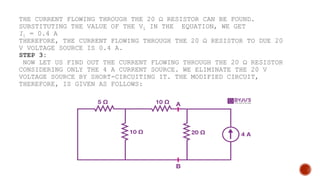
CONSIDERING ONLY THE 4 A CURRENT SOURCE. WE ELIMINATE THE 20 V
VOLTAGE SOURCE BY SHORT-CIRCUITING IT. THE MODIFIED CIRCUIT,
THEREFORE, IS GIVEN AS FOLLOWS:
In the above circuit, the resistors 5 Ω
and 10 Ω are parallel to each other, and
this parallel combination of resistors is
in series with the 10 Ω resistor.
Therefore, the equivalent resistance will
be:
𝑅𝐴𝐵=40/3Ω
The current flowing through the 20 Ω
resistor can be determined using the
current division principle.
Substituting the values, we get
𝐼2=1.6𝐴
Therefore, the current flowing through the
circuit when only 4 A current source is
1.6 A.
Step 4:
The summation of currents I1 and I2 will
give us the current flowing through the 20
Ω resistor. Mathematically, this is
represented as follows:
I = I1 + I2
Substituting the values of I1 and I2 in the
above equation, we get
 Limitations of Superposition Theorem
• The theorem does not apply to non-linear circuits. The requisite
of linearity indicates that the superposition theorem is only
applicable to determine voltage and current but not power. Power
dissipation is a nonlinear function that does not algebraically
add to an accurate total when only one source is considered at a
time.
• The application of the superposition theorem requires two or more
sources in the circuit.
superposition theorem power point presentation

superposition theorem power point presentation

  • 2.
    SUPERPOSITION THEOREM STATESTHAT IN ANY LINEAR, BILATERAL NETWORK WHERE MORE THAN ONE SOURCE IS PRESENT, THE RESPONSE ACROSS ANY ELEMENT IN THE CIRCUIT IS THE SUM OF THE RESPONSES OBTAINED FROM EACH SOURCE CONSIDERED SEPARATELY. IN CONTRAST, ALL OTHER SOURCES ARE REPLACED BY THEIR INTERNAL RESISTANCE.
  • 3.
    HOW TO APPLYSUPERPOSITION THEOREM? *THE FIRST STEP IS TO SELECT ONE AMONG THE MULTIPLE SOURCES PRESENT IN THE BILATERAL NETWORK. AMONG THE VARIOUS SOURCES IN THE CIRCUIT, ANY ONE OF THE SOURCES CAN BE CONSIDERED FIRST. *EXCEPT FOR THE SELECTED SOURCE, ALL THE SOURCES MUST BE REPLACED BY THEIR INTERNAL IMPEDANCE. *USING A NETWORK SIMPLIFICATION APPROACH, EVALUATE THE CURRENT FLOWING THROUGH OR THE VOLTAGE DROP ACROSS A PARTICULAR ELEMENT IN THE NETWORK. *THE SAME CONSIDERING A SINGLE SOURCE IS REPEATED FOR ALL THE OTHER SOURCES IN THE CIRCUIT. *UPON OBTAINING THE RESPECTIVE RESPONSE FOR INDIVIDUAL SOURCE, PERFORM THE SUMMATION OF ALL RESPONSES TO GET THE OVERALL VOLTAGE DROP OR CURRENT THROUGH THE CIRCUIT ELEMENT.
  • 4.
    SUPERPOSITION THEOREM SOLVEDEXAMPLE LET US UNDERSTAND HOW TO USE THE SUPERPOSITION THEOREM TO ANALYZE CIRCUITS WITH THE HELP OF AN EXAMPLE. EXAMPLE 1: FIND THE CURRENT FLOWING THROUGH 20 Ω USING THE SUPERPOSITION THEOREM.
  • 5.
     Solution:  Step1: First, let us find the current flowing through a circuit by considering only the 20 V voltage source. The current source can be open-circuited, hence, the modified circuit diagram is shown in the following figure.  Step 2: The nodal voltage V1 can be determined using the nodal analysis method. v1=12v
  • 6.
    THE CURRENT FLOWINGTHROUGH THE 20 Ω RESISTOR CAN BE FOUND. SUBSTITUTING THE VALUE OF THE V1 IN THE EQUATION, WE GET I1 = 0.4 A THEREFORE, THE CURRENT FLOWING THROUGH THE 20 Ω RESISTOR TO DUE 20 V VOLTAGE SOURCE IS 0.4 A. STEP 3: NOW LET US FIND OUT THE CURRENT FLOWING THROUGH THE 20 Ω RESISTOR CONSIDERING ONLY THE 4 A CURRENT SOURCE. WE ELIMINATE THE 20 V VOLTAGE SOURCE BY SHORT-CIRCUITING IT. THE MODIFIED CIRCUIT, THEREFORE, IS GIVEN AS FOLLOWS:
  • 7.
    In the abovecircuit, the resistors 5 Ω and 10 Ω are parallel to each other, and this parallel combination of resistors is in series with the 10 Ω resistor. Therefore, the equivalent resistance will be: 𝑅𝐴𝐵=40/3Ω The current flowing through the 20 Ω resistor can be determined using the current division principle. Substituting the values, we get 𝐼2=1.6𝐴 Therefore, the current flowing through the circuit when only 4 A current source is 1.6 A. Step 4: The summation of currents I1 and I2 will give us the current flowing through the 20 Ω resistor. Mathematically, this is represented as follows: I = I1 + I2 Substituting the values of I1 and I2 in the above equation, we get
  • 8.
     Limitations ofSuperposition Theorem • The theorem does not apply to non-linear circuits. The requisite of linearity indicates that the superposition theorem is only applicable to determine voltage and current but not power. Power dissipation is a nonlinear function that does not algebraically add to an accurate total when only one source is considered at a time. • The application of the superposition theorem requires two or more sources in the circuit.