Using virtual reality to create both
learning environments and online
communities
 The presentation will demonstrate ways this instructor has
used virtual reality (starting with Second Life and migrating to
open source) to create a safe, inviting learning environment.
She will give general examples that could apply to various
courses or departments and she will bring forth her own
examples from teacher education and from instructional
technologies. Some video clips will be included to illustrate
the type of interactions that are possible and information on
the cost and feasibility of such a venture will be considered
as well.
Eileen O’Connor, Ph.D. - Empire State College eileen.oconnor@esc.edu
Pictorial overview in conjunction with
presentation – January 2015
My
apps
VP 1st
time
Open
sourc
e
Fall
links
Fall
pix
Other
apps
My
apps
VP 1st
time
Open
source
Fall
links
Fall
pix
Other
apps
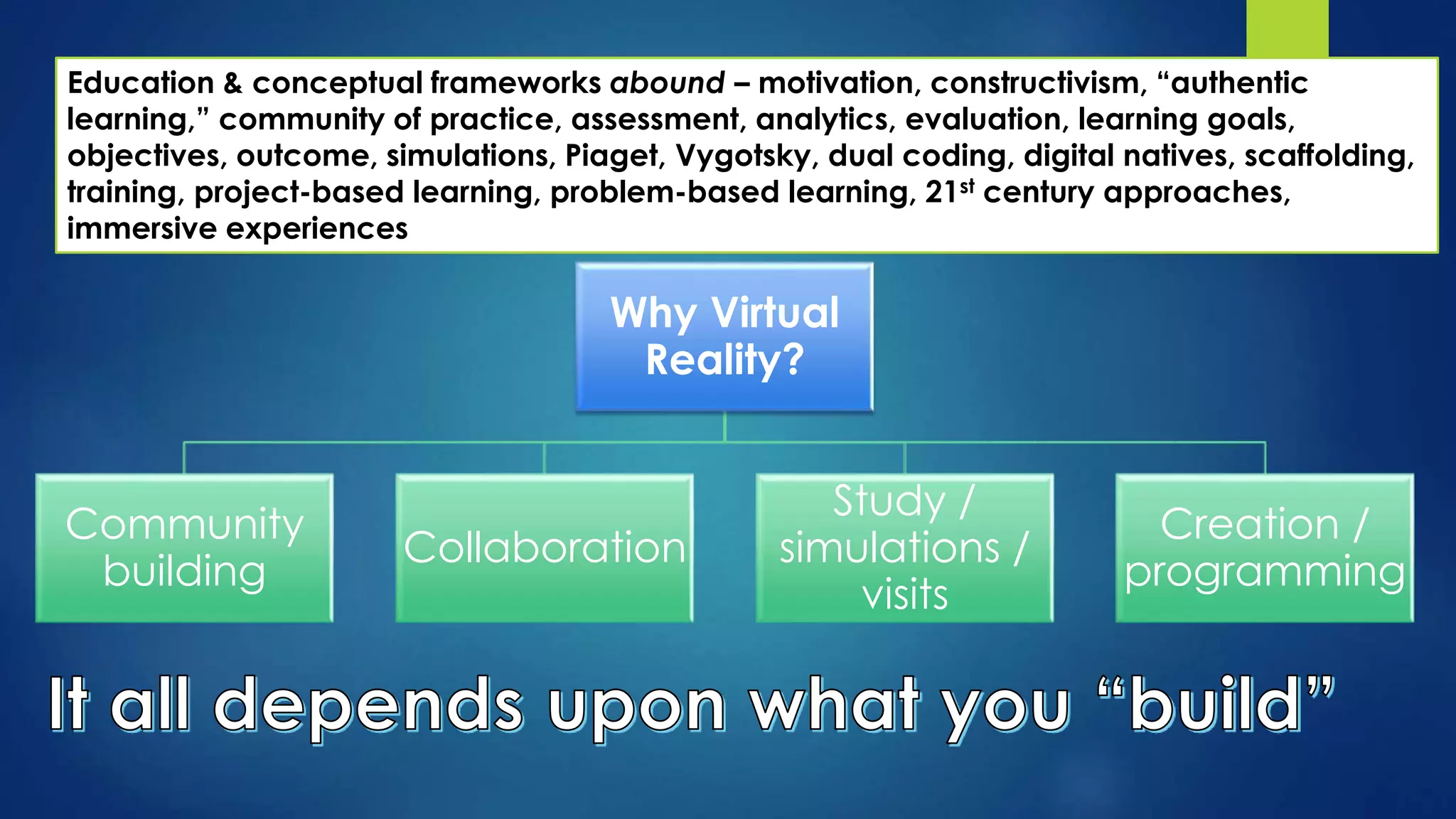
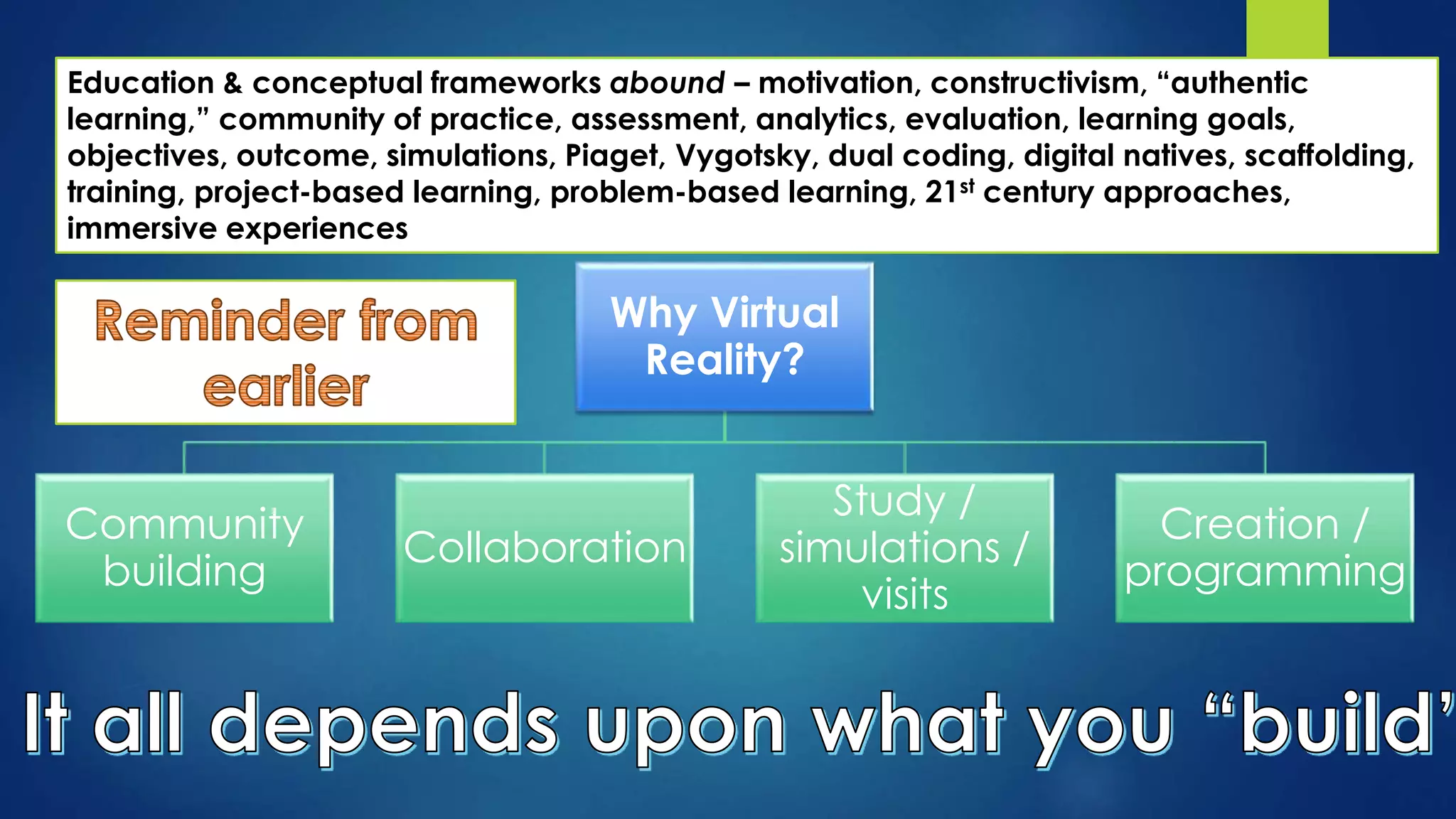
Why Virtual
Reality?
Community
building
Collaboration
Study /
simulations /
visits
Creation /
programming
Education & conceptual frameworks abound – motivation, constructivism, “authentic
learning,” community of practice, assessment, analytics, evaluation, learning goals,
objectives, outcome, simulations, Piaget, Vygotsky, dual coding, digital natives, scaffolding,
training, project-based learning, problem-based learning, 21st century approaches,
immersive experiences
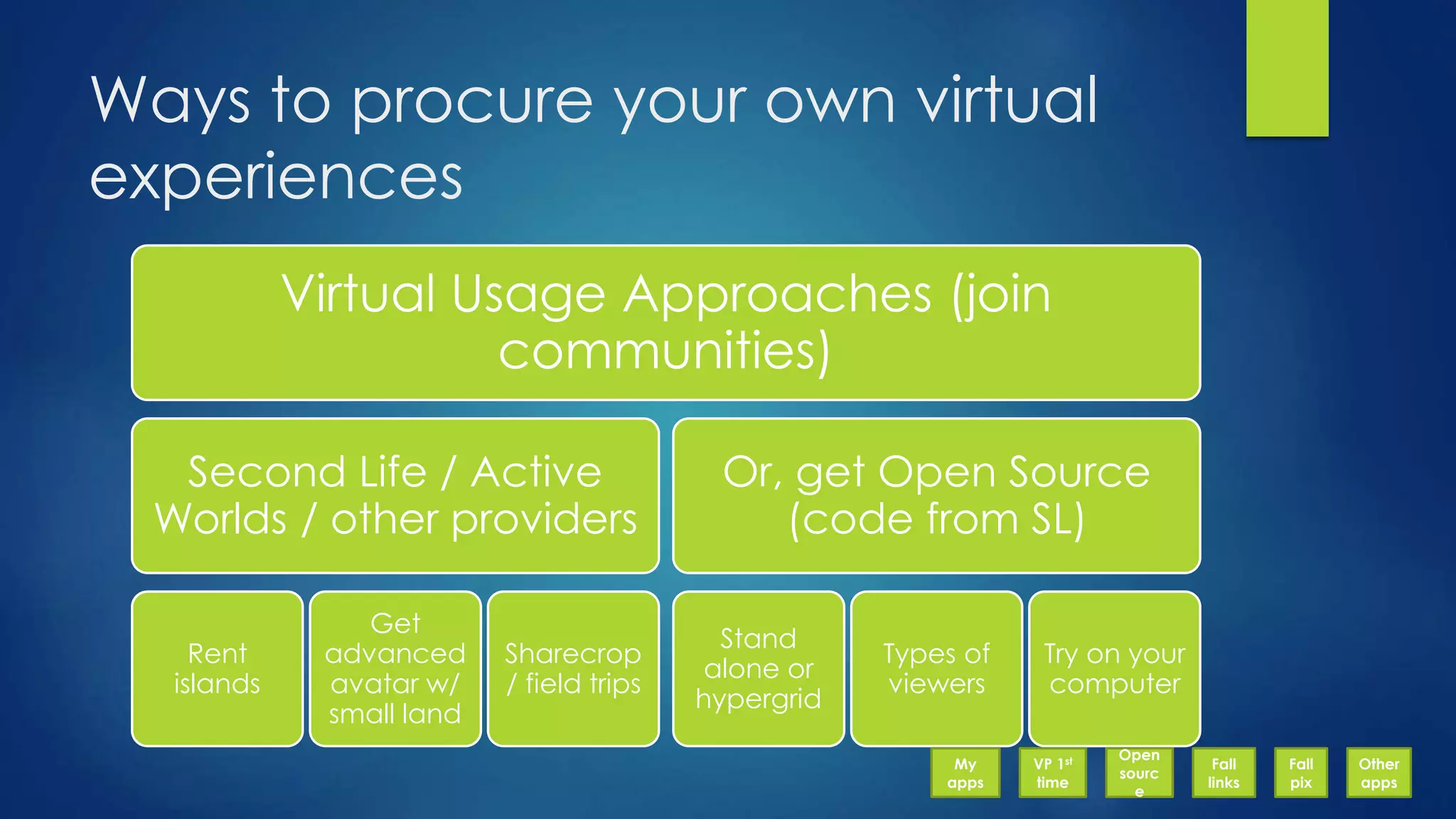
Ways to procure your own virtual
experiences
Virtual Usage Approaches (join
communities)
Second Life / Active
Worlds / other providers
Rent
islands
Get
advanced
avatar w/
small land
Sharecrop
/ field trips
Or, get Open Source
(code from SL)
Stand
alone or
hypergrid
Types of
viewers
Try on your
computer
My
apps
VP 1st
time
Open
sourc
e
Fall
links
Fall
pix
Other
apps
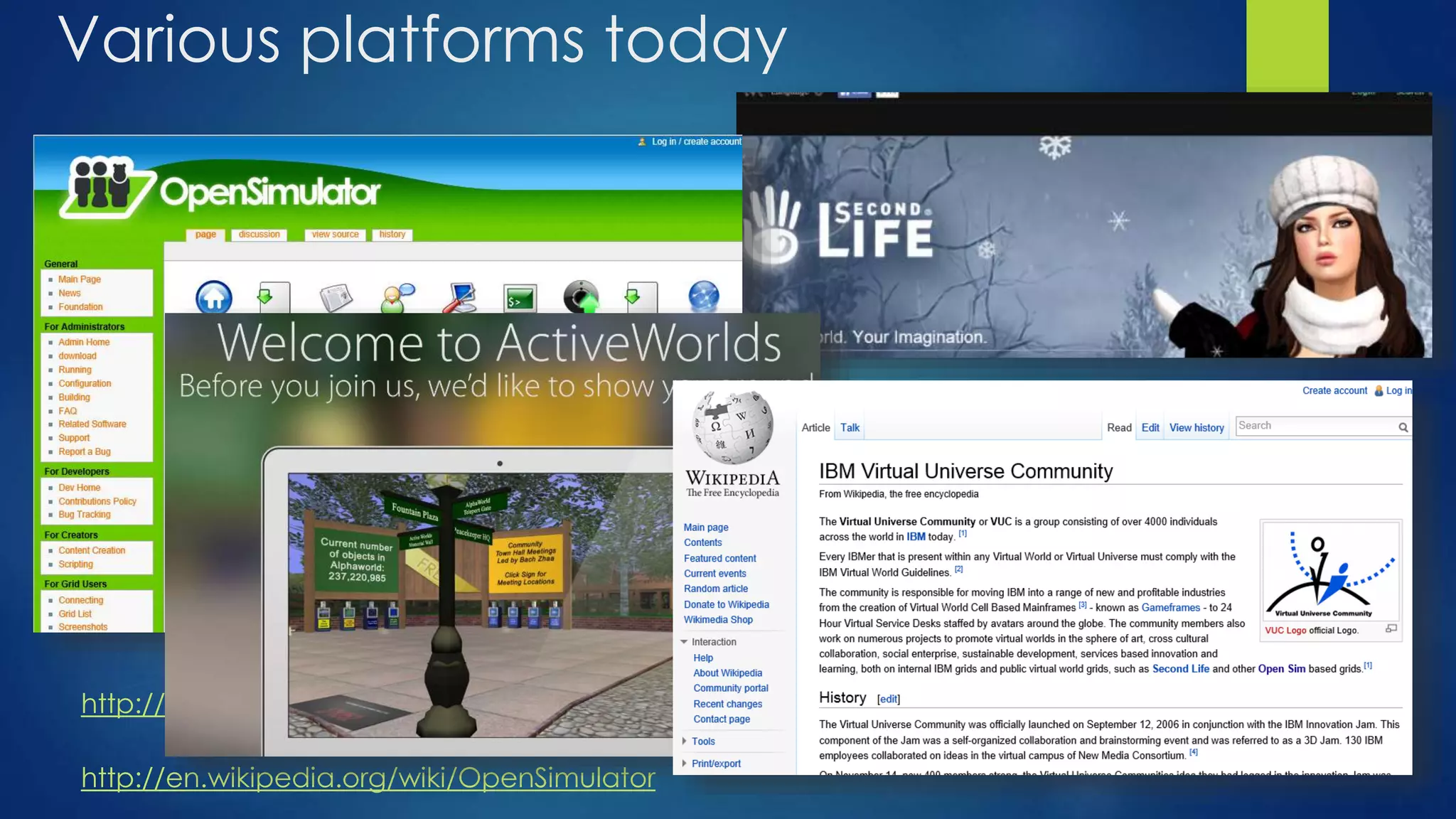
Various platforms today
http://en.wikipedia.org/wiki/OpenSimulator
http://opensimulator.org/wiki/Main_Page
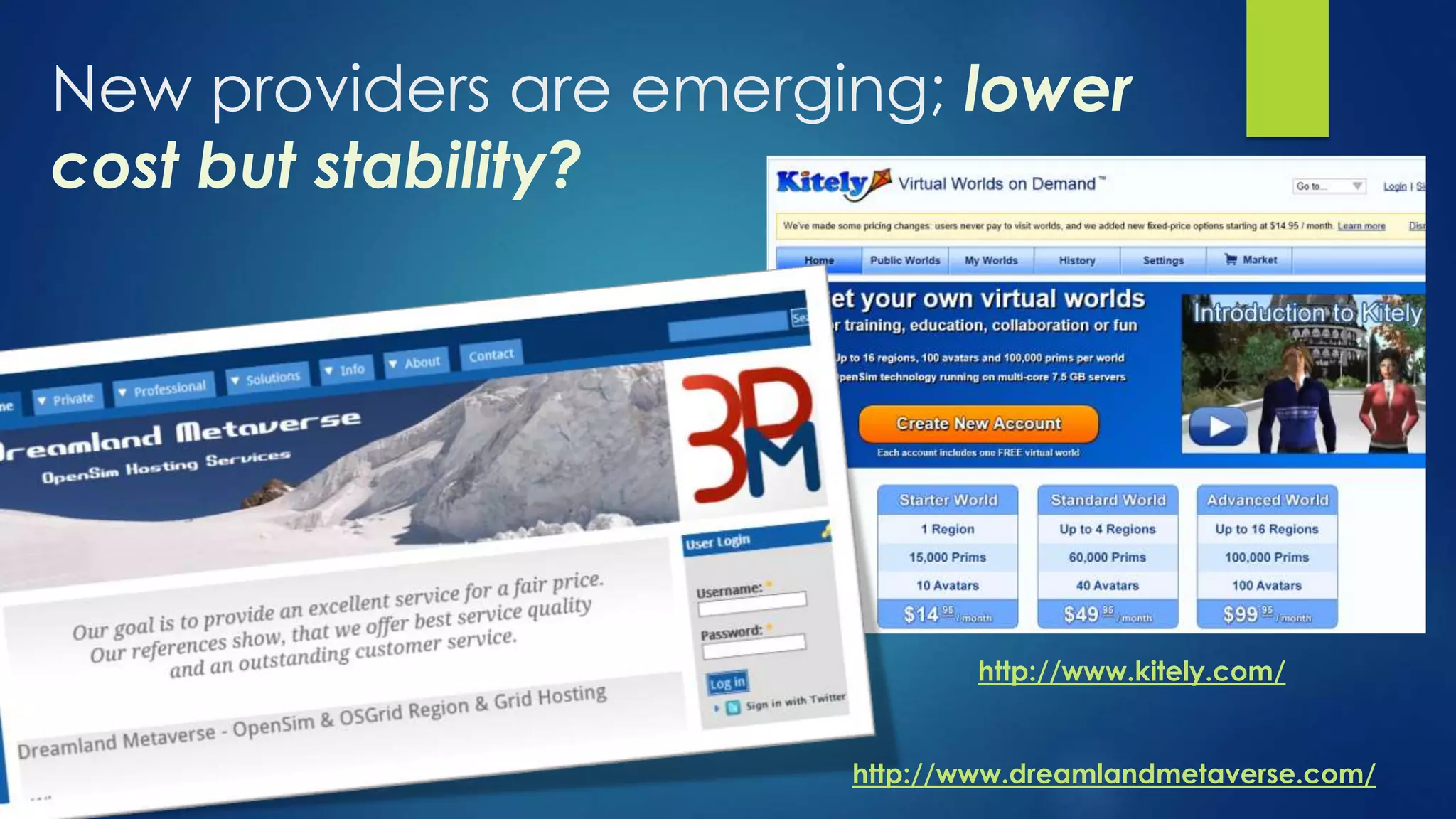
New providers are emerging; lower
cost but stability?
http://www.kitely.com/
http://www.dreamlandmetaverse.com/
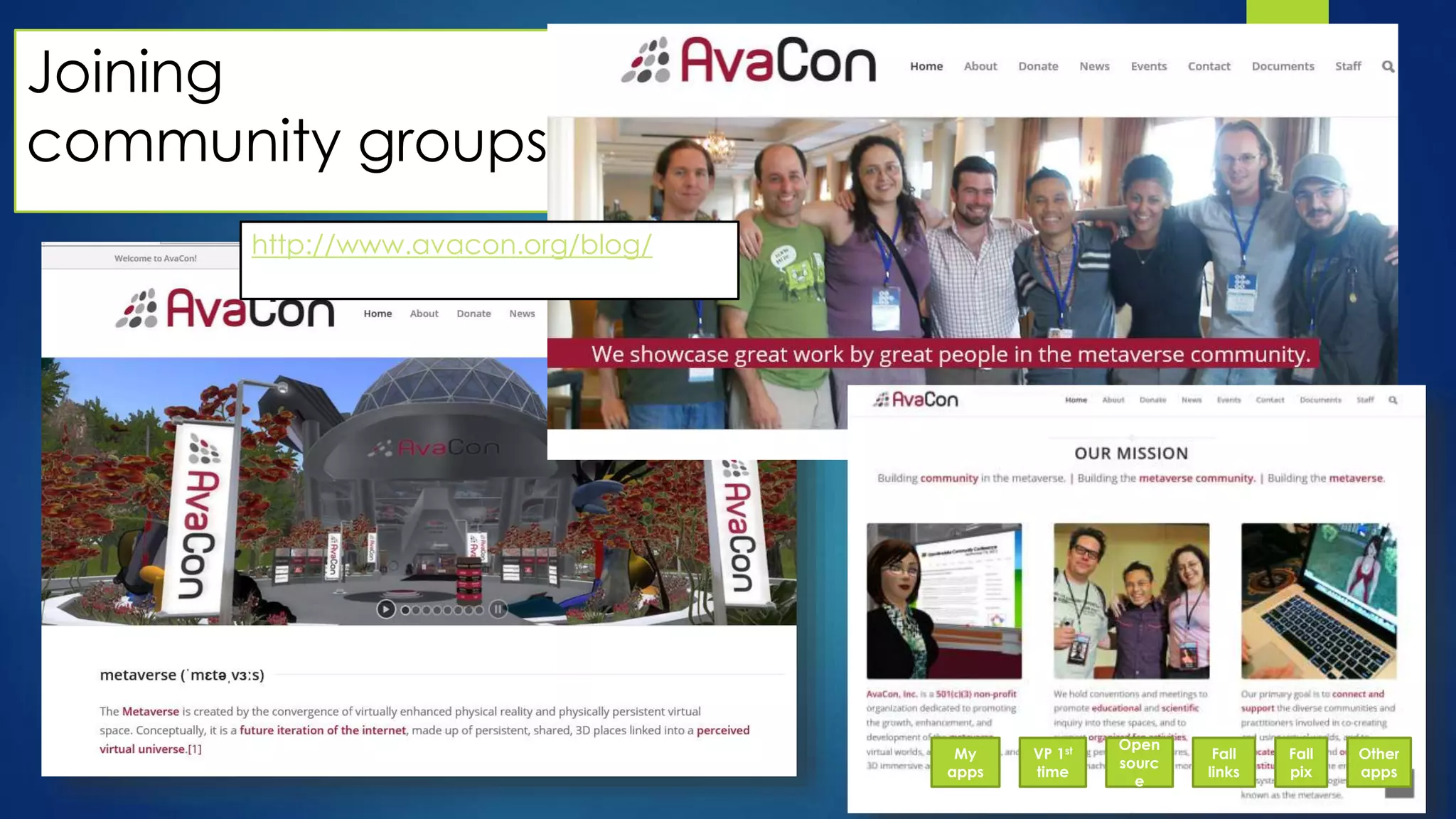
Joining
community groups
http://www.avacon.org/blog/
My
apps
VP 1st
time
Open
sourc
e
Fall
links
Fall
pix
Other
apps
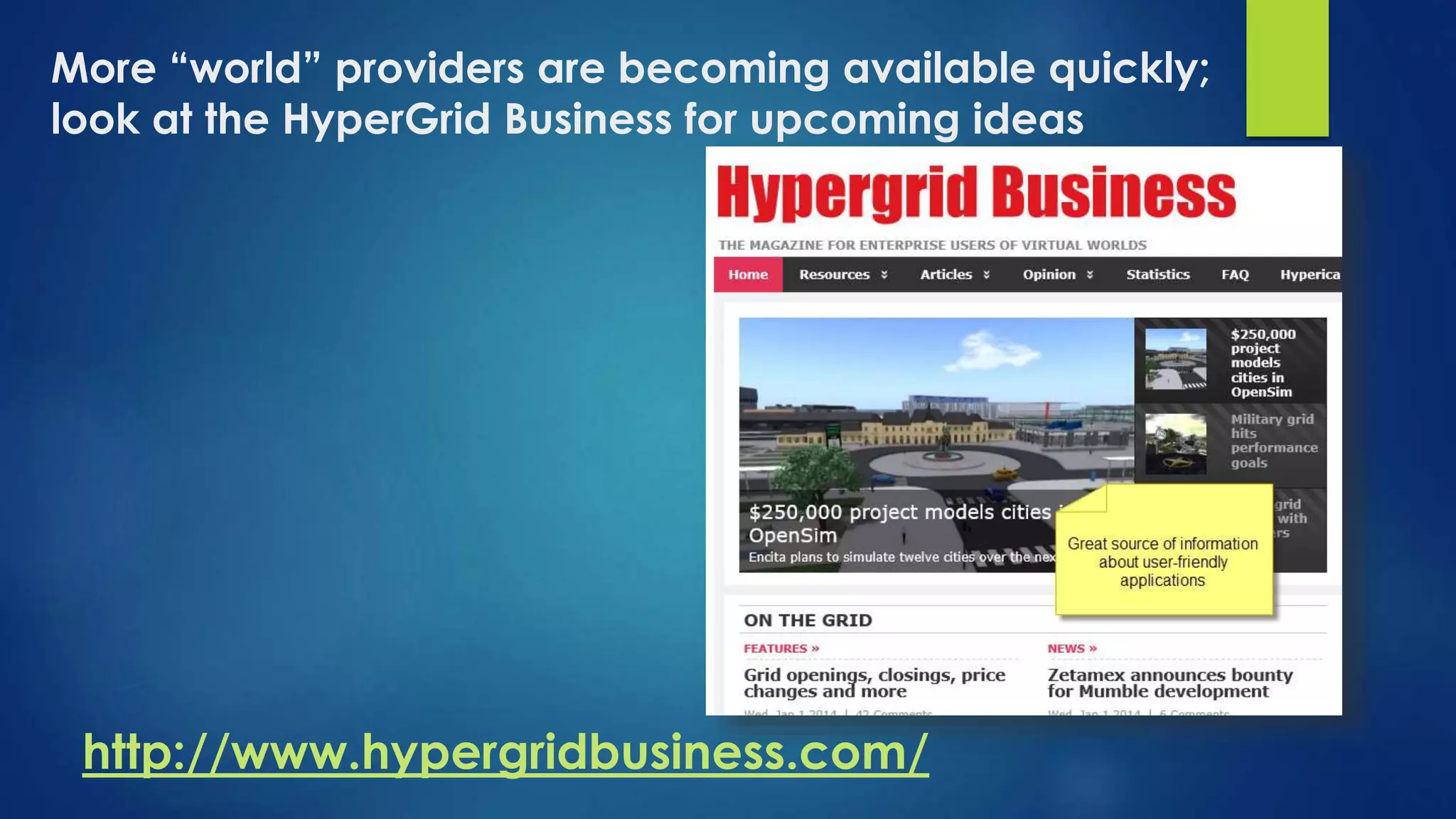
More “world” providers are becoming available quickly;
look at the HyperGrid Business for upcoming ideas
http://www.hypergridbusiness.com/
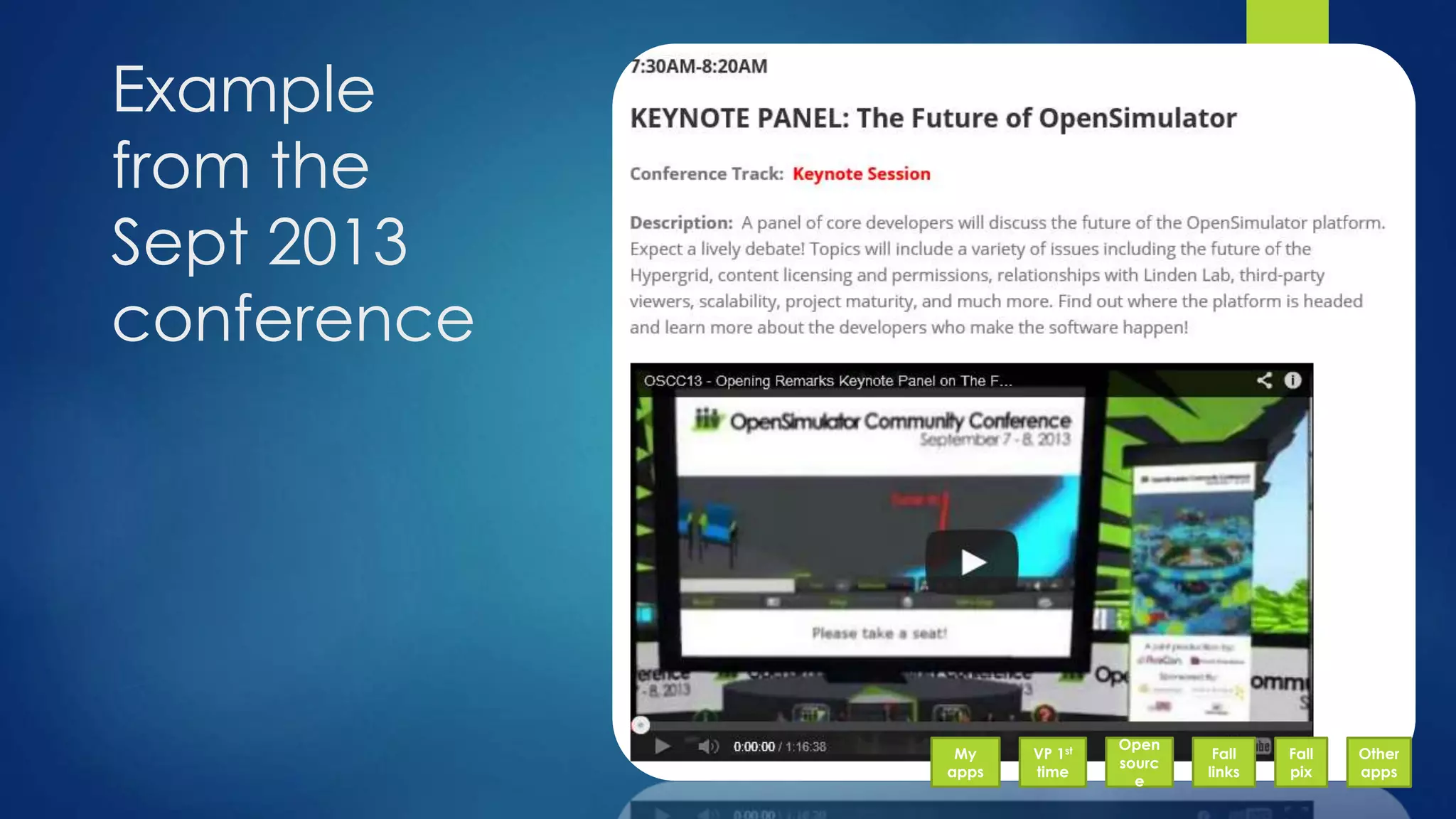
Example
from the
Sept 2013
conference
My
apps
VP 1st
time
Open
sourc
e
Fall
links
Fall
pix
Other
apps
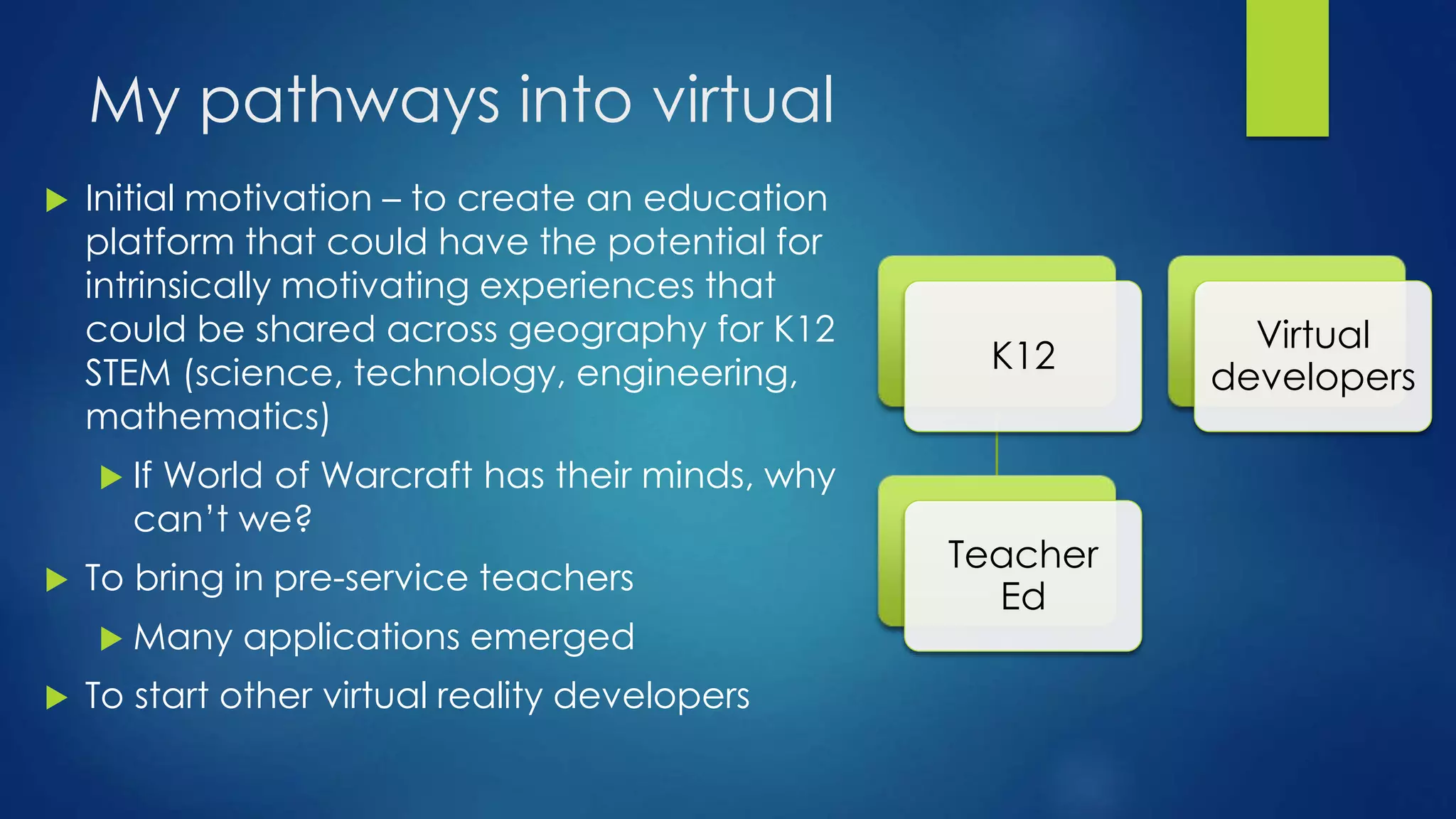
My pathways into virtual
 Initial motivation – to create an education
platform that could have the potential for
intrinsically motivating experiences that
could be shared across geography for K12
STEM (science, technology, engineering,
mathematics)
 If World of Warcraft has their minds, why
can’t we?
 To bring in pre-service teachers
 Many applications emerged
 To start other virtual reality developers
K12
Teacher
Ed
Virtual
developers
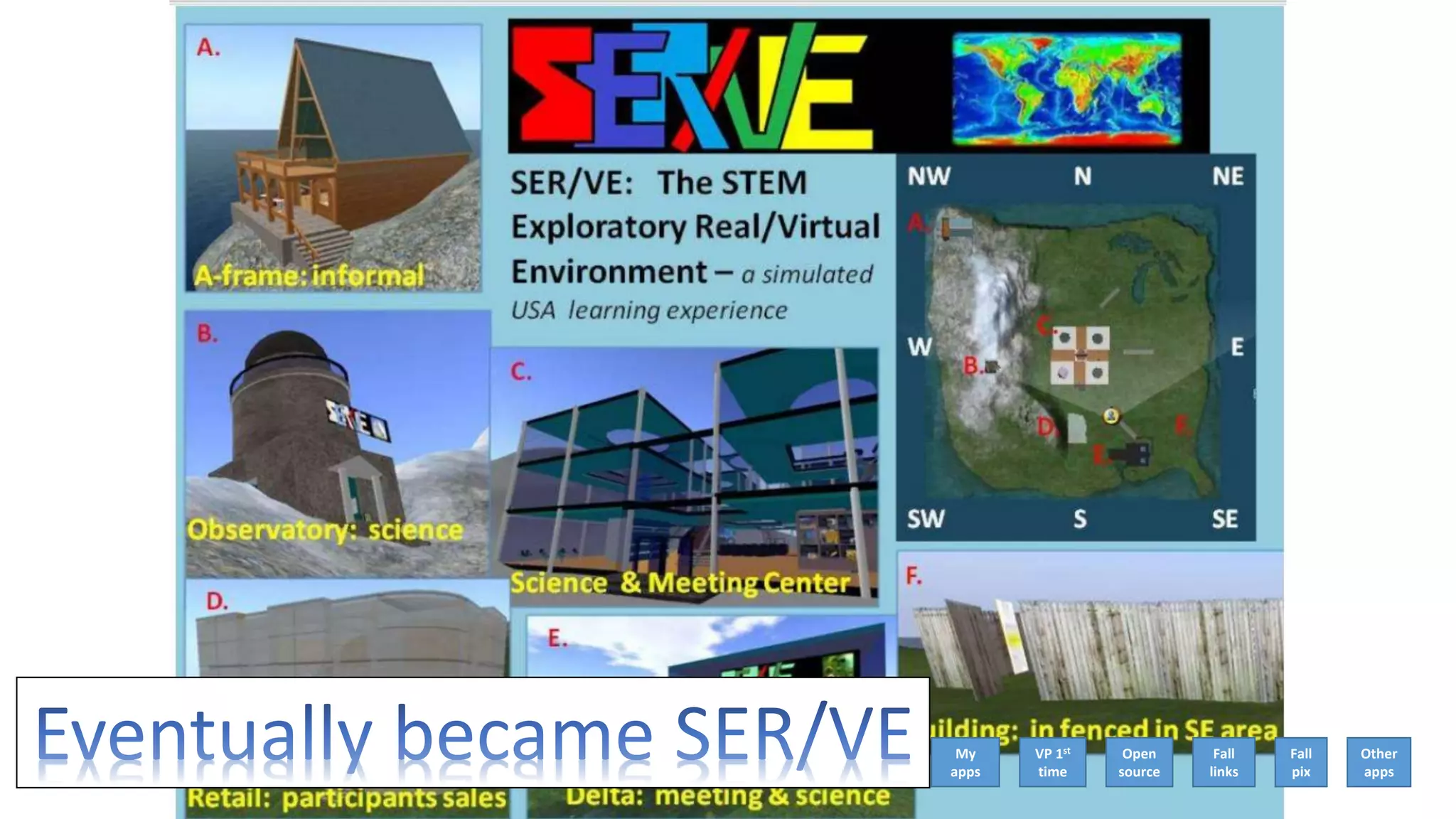
SER/VE Begins
My
apps
VP 1st
time
Open
source
Fall
links
Fall
pix
Other
apps
My
apps
VP 1st
time
Open
source
Fall
links
Fall
pix
Other
apps
My
apps
VP 1st
time
Open
source
Fall
links
Fall
pix
Other
apps
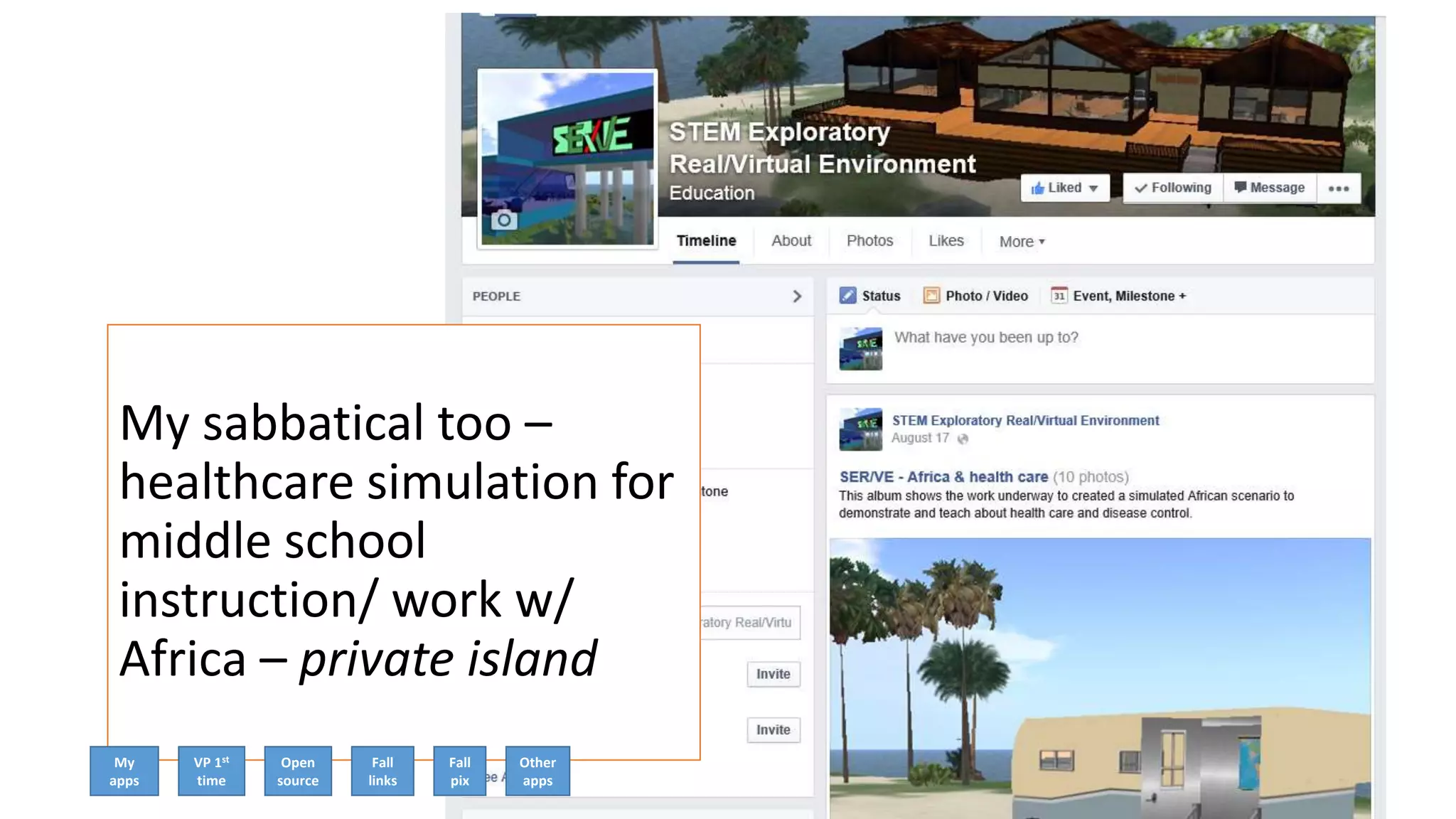
My sabbatical too –
healthcare simulation for
middle school
instruction/ work w/
Africa – private island
My
apps
VP 1st
time
Open
source
Fall
links
Fall
pix
Other
apps
Finally in spring 2014. . .
 I began teaching a class on working & designing in virtual
reality
 For the MALET program (Master of Arts in Learning and
Emerging Technology) at Empire State College
 Students are now creating / designing amazing new virtual
spaces
 Most are using some original design and some purchased
items
 Using ESC island
 Students developed focused, targeted areas of interest
My
apps
VP 1st
time
Open
sourc
e
Fall
links
Fall
pix
Other
apps
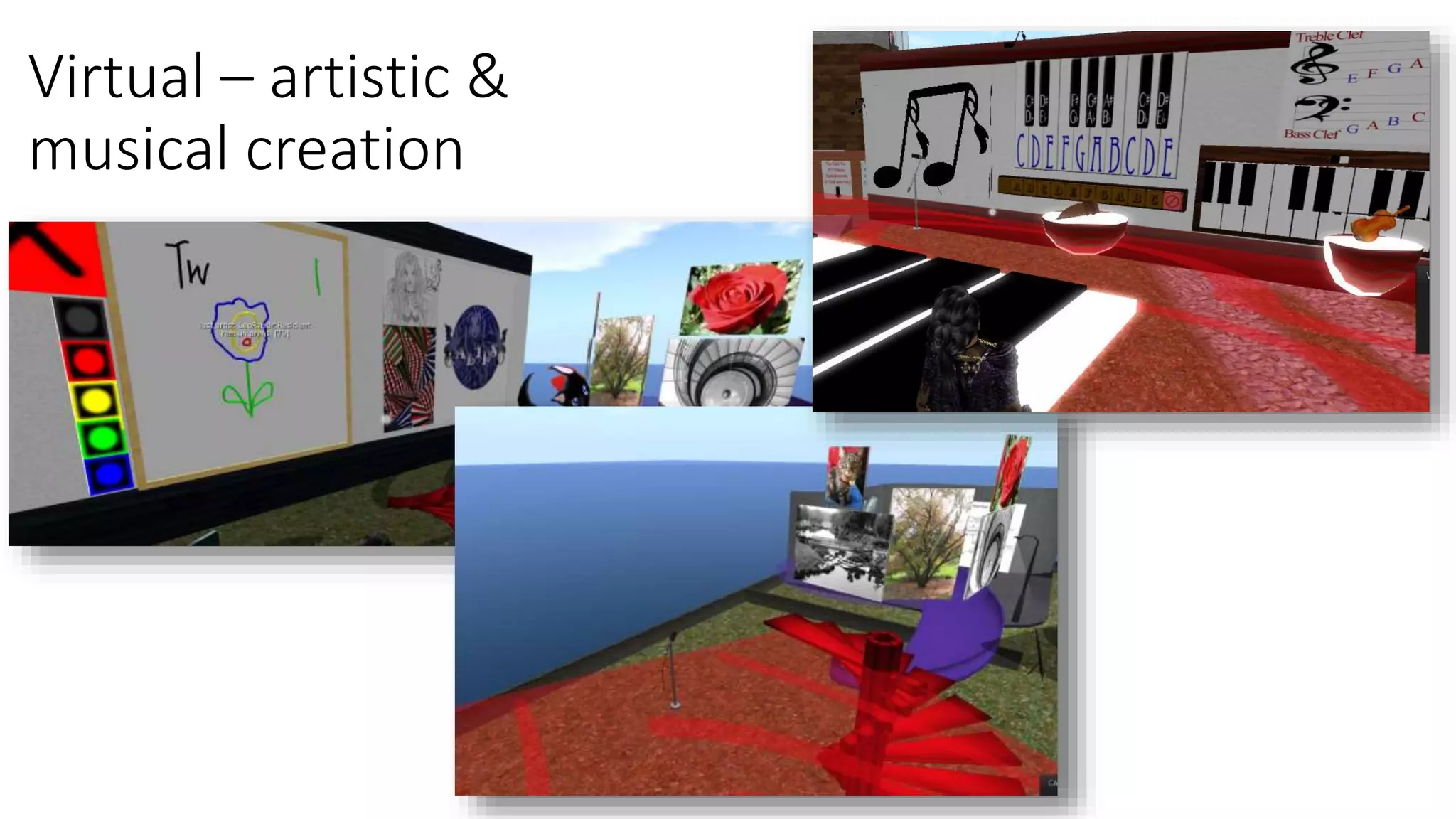
Virtual – artistic &
musical creation
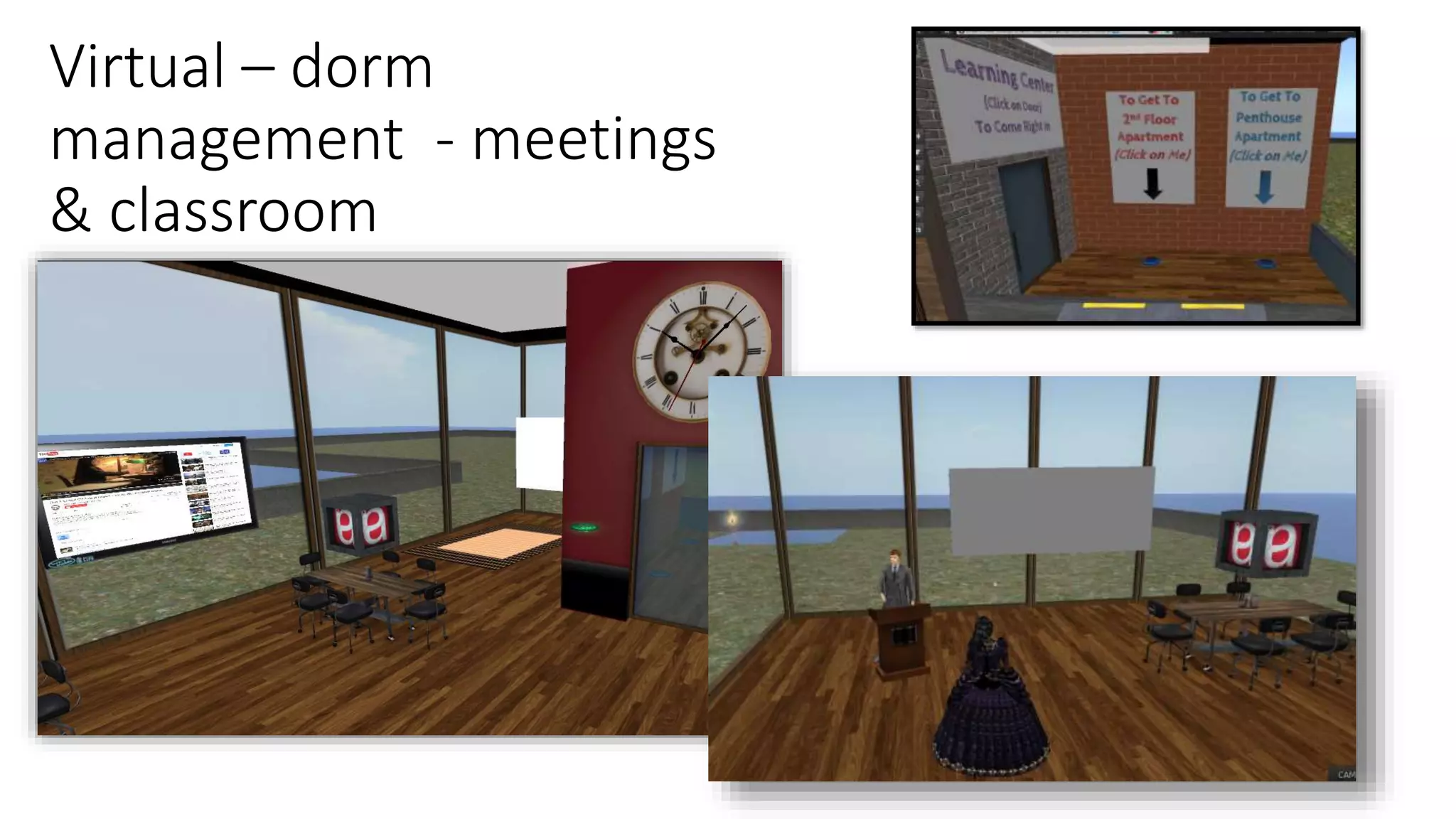
Virtual – dorm
management - meetings
& classroom
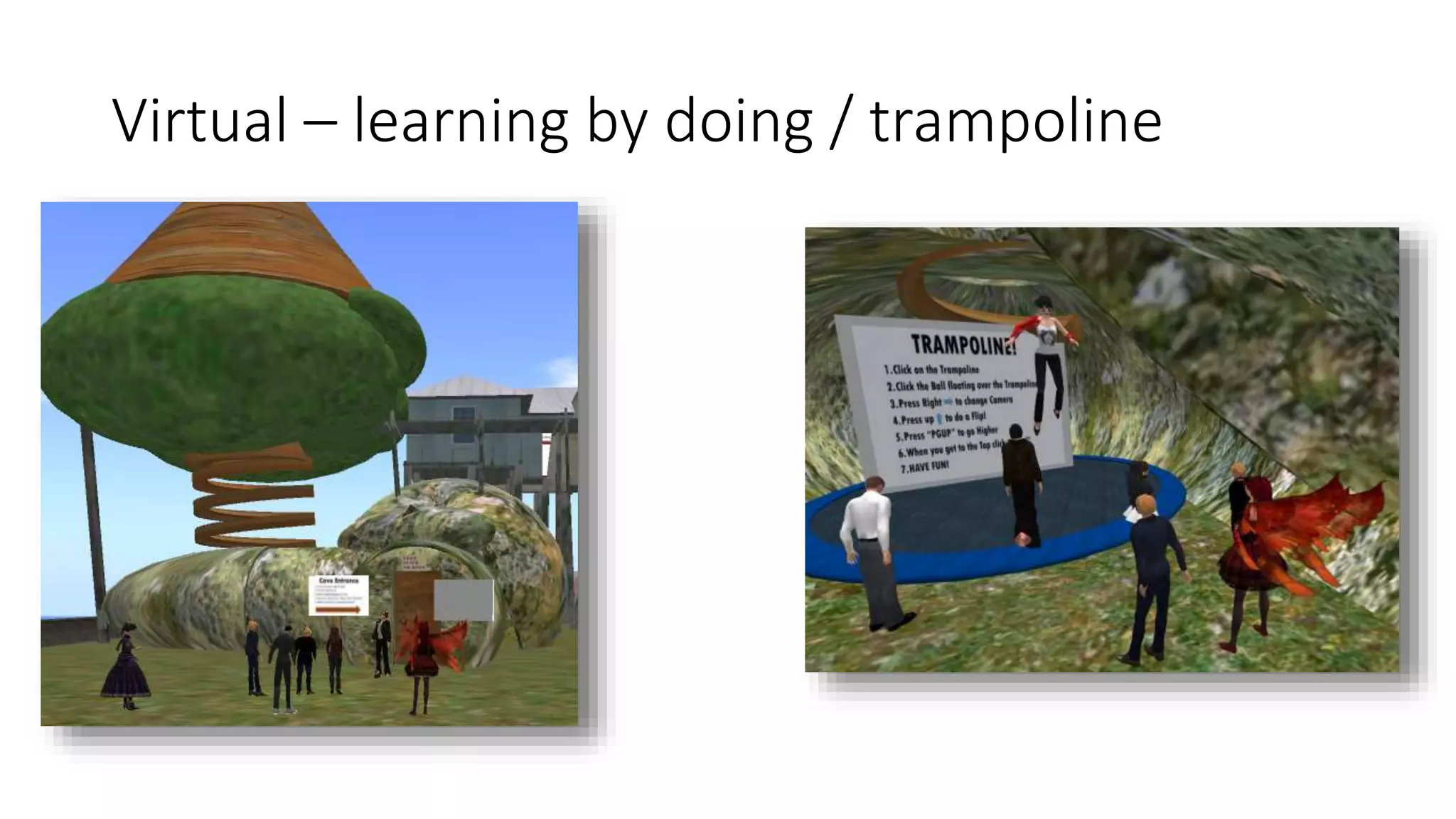
Virtual – learning by doing / trampoline
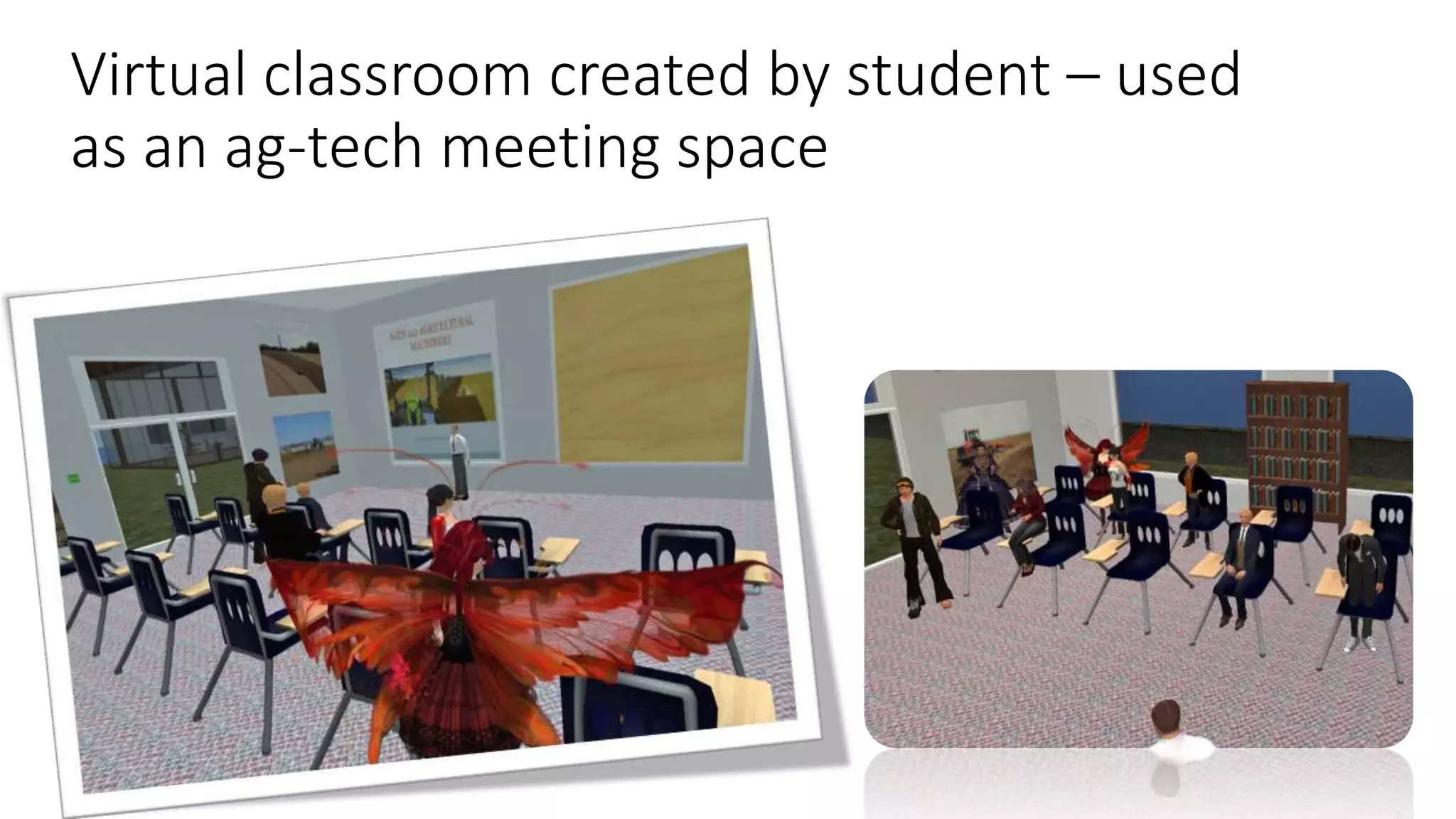
Virtual classroom created by student – used
as an ag-tech meeting space
But then things changed as the next
class came:
The islands in SL were too small – not
enough space for students to develop
their own work
So, we moved to new venues . . . which
changed us from limited use to virtual
development and design
My
apps
VP 1st
time
Open
source
Fall
links
Fall
pix
Other
apps
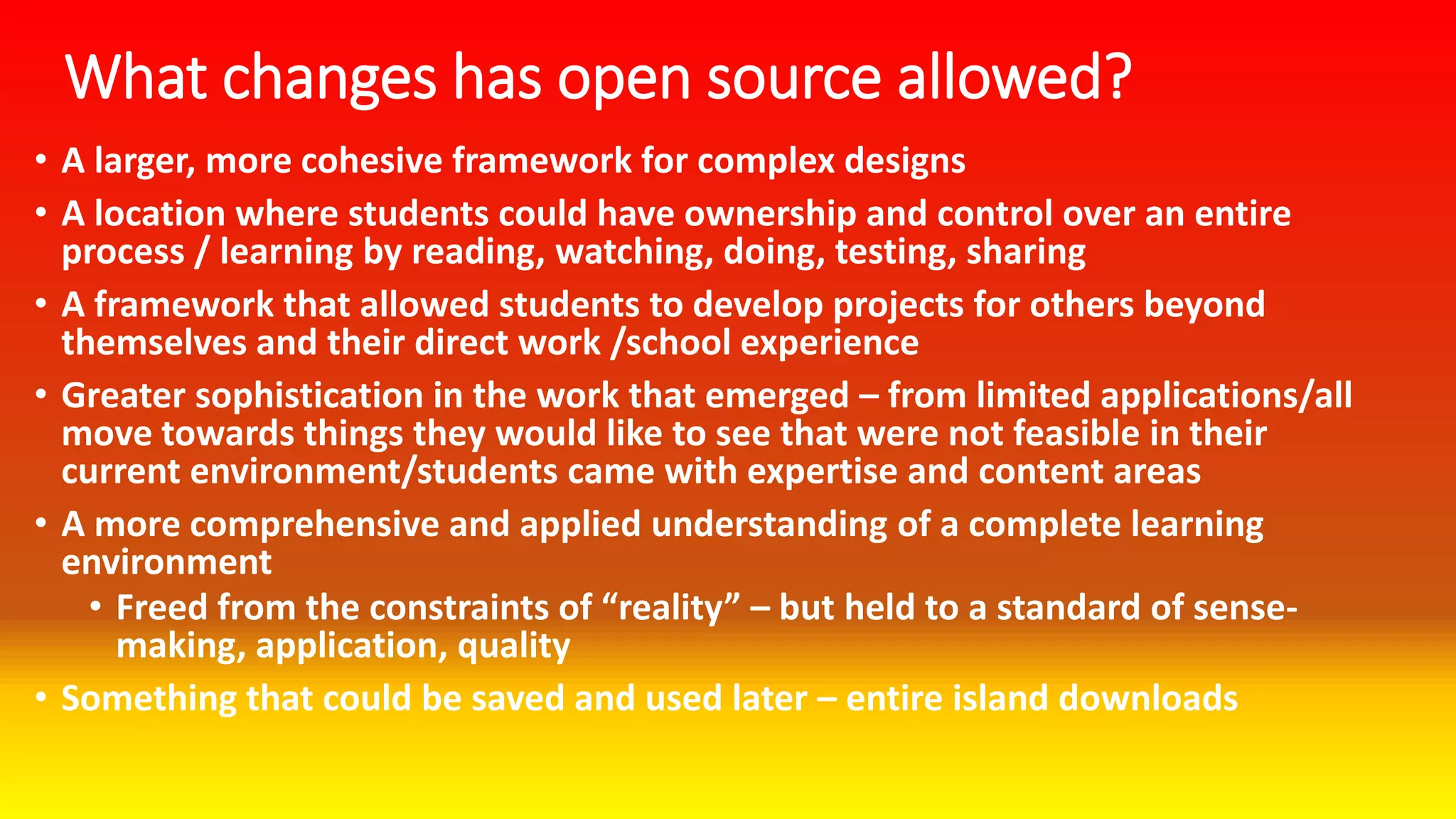
What changes has open source allowed?
• A larger, more cohesive framework for complex designs
• A location where students could have ownership and control over an entire
process / learning by reading, watching, doing, testing, sharing
• A framework that allowed students to develop projects for others beyond
themselves and their direct work /school experience
• Greater sophistication in the work that emerged – from limited applications/all
move towards things they would like to see that were not feasible in their
current environment/students came with expertise and content areas
• A more comprehensive and applied understanding of a complete learning
environment
• Freed from the constraints of “reality” – but held to a standard of sense-
making, application, quality
• Something that could be saved and used later – entire island downloads
Why Virtual
Reality?
Community
building
Collaboration
Study /
simulations /
visits
Creation /
programming
Education & conceptual frameworks abound – motivation, constructivism, “authentic
learning,” community of practice, assessment, analytics, evaluation, learning goals,
objectives, outcome, simulations, Piaget, Vygotsky, dual coding, digital natives, scaffolding,
training, project-based learning, problem-based learning, 21st century approaches,
immersive experiences
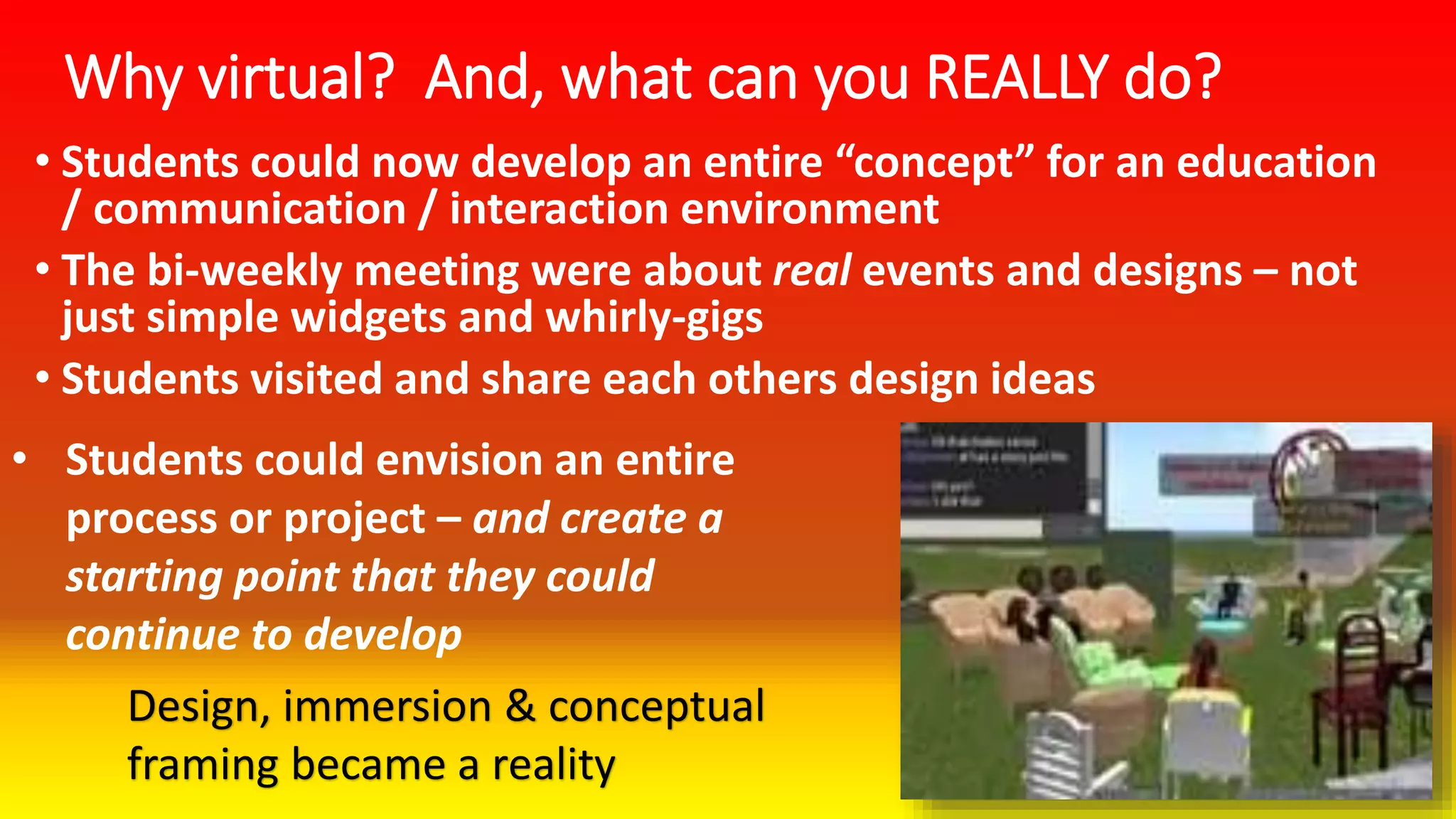
Why virtual? And, what can you REALLY do?
• Students could now develop an entire “concept” for an education
/ communication / interaction environment
• The bi-weekly meeting were about real events and designs – not
just simple widgets and whirly-gigs
• Students visited and share each others design ideas
• Students could envision an entire
process or project – and create a
starting point that they could
continue to develop
Design, immersion & conceptual
framing became a reality
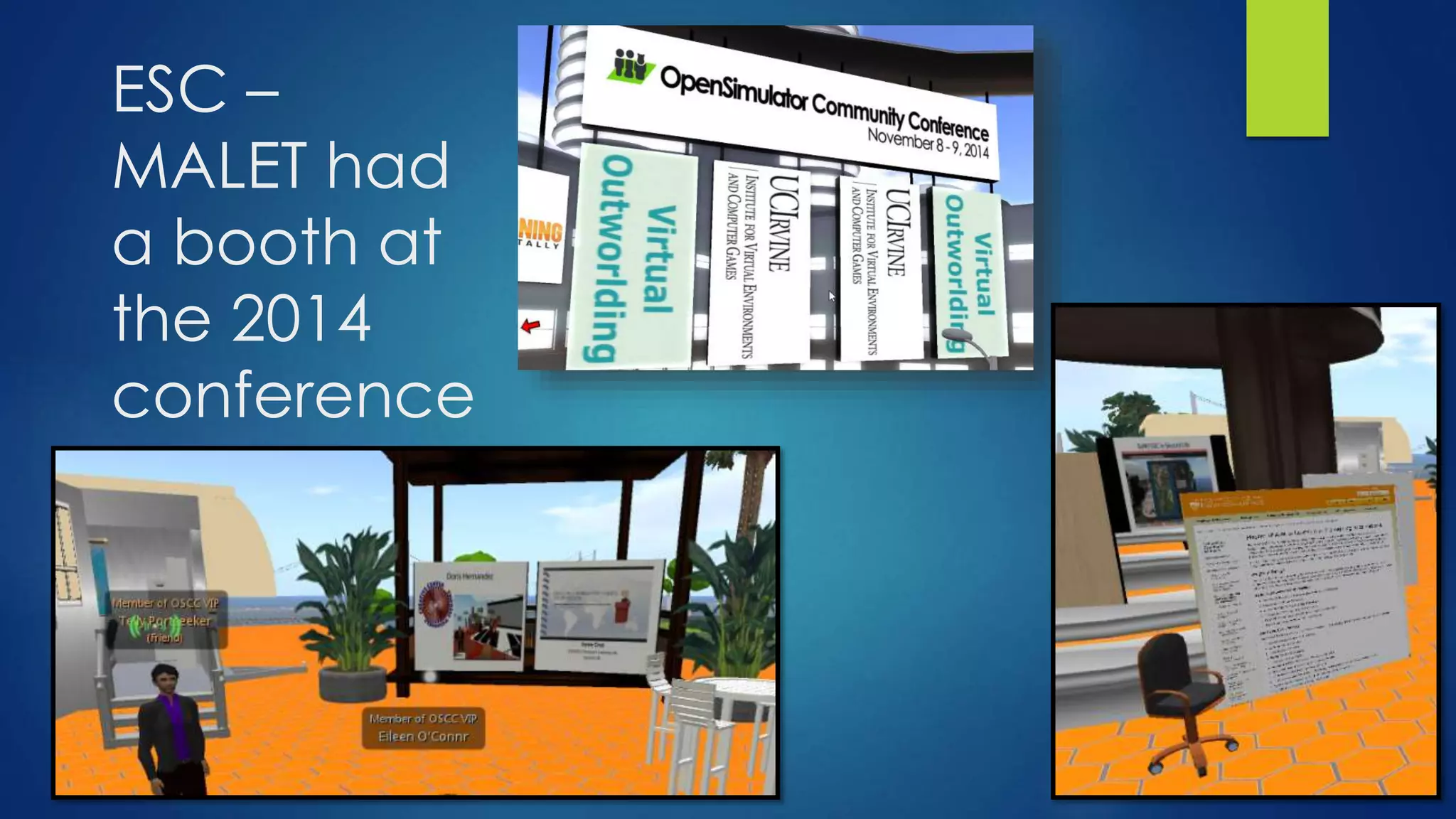
ESC –
MALET had
a booth at
the 2014
conference
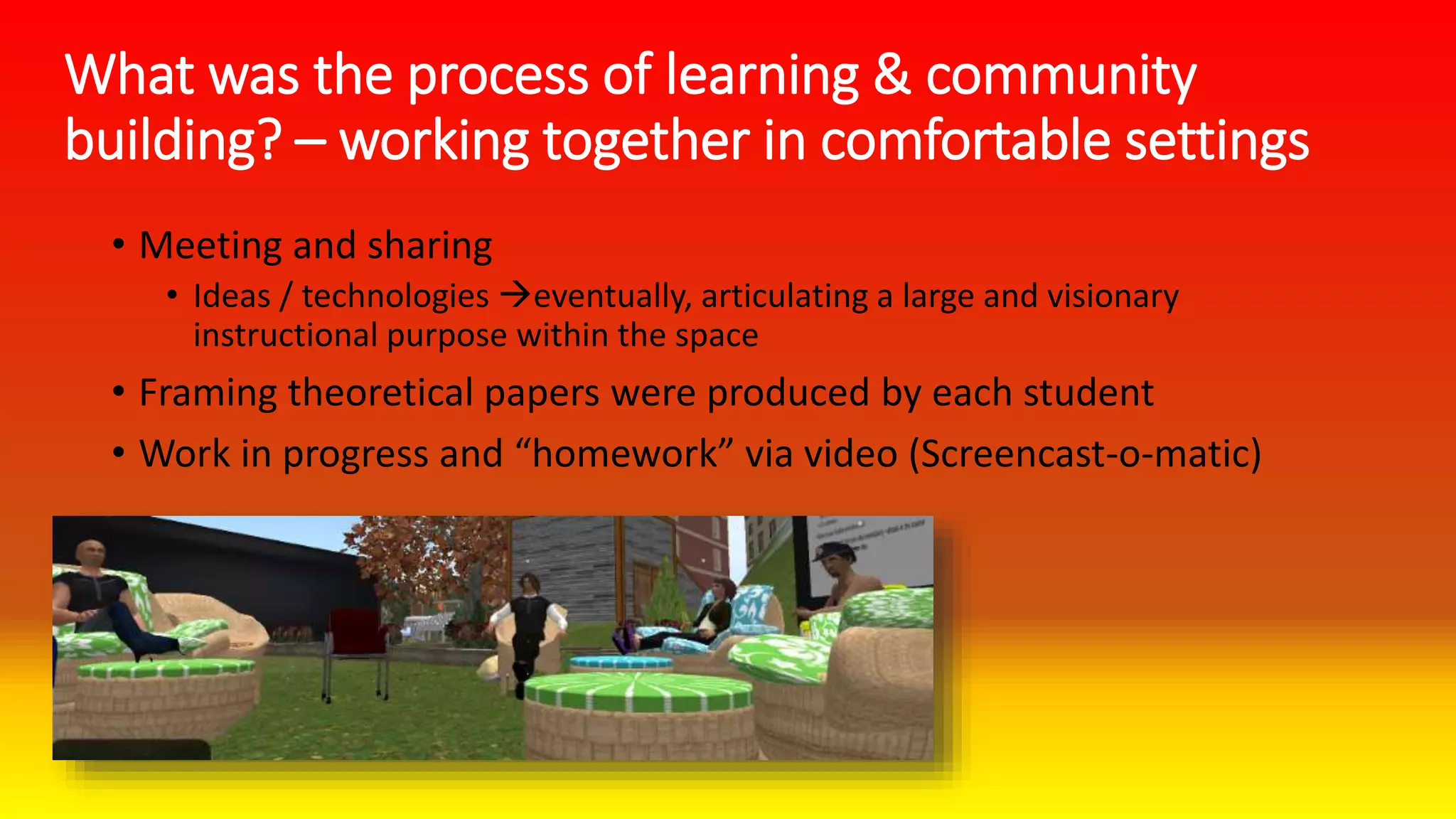
What was the process of learning & community
building? – working together in comfortable settings
• Meeting and sharing
• Ideas / technologies eventually, articulating a large and visionary
instructional purpose within the space
• Framing theoretical papers were produced by each student
• Work in progress and “homework” via video (Screencast-o-matic)
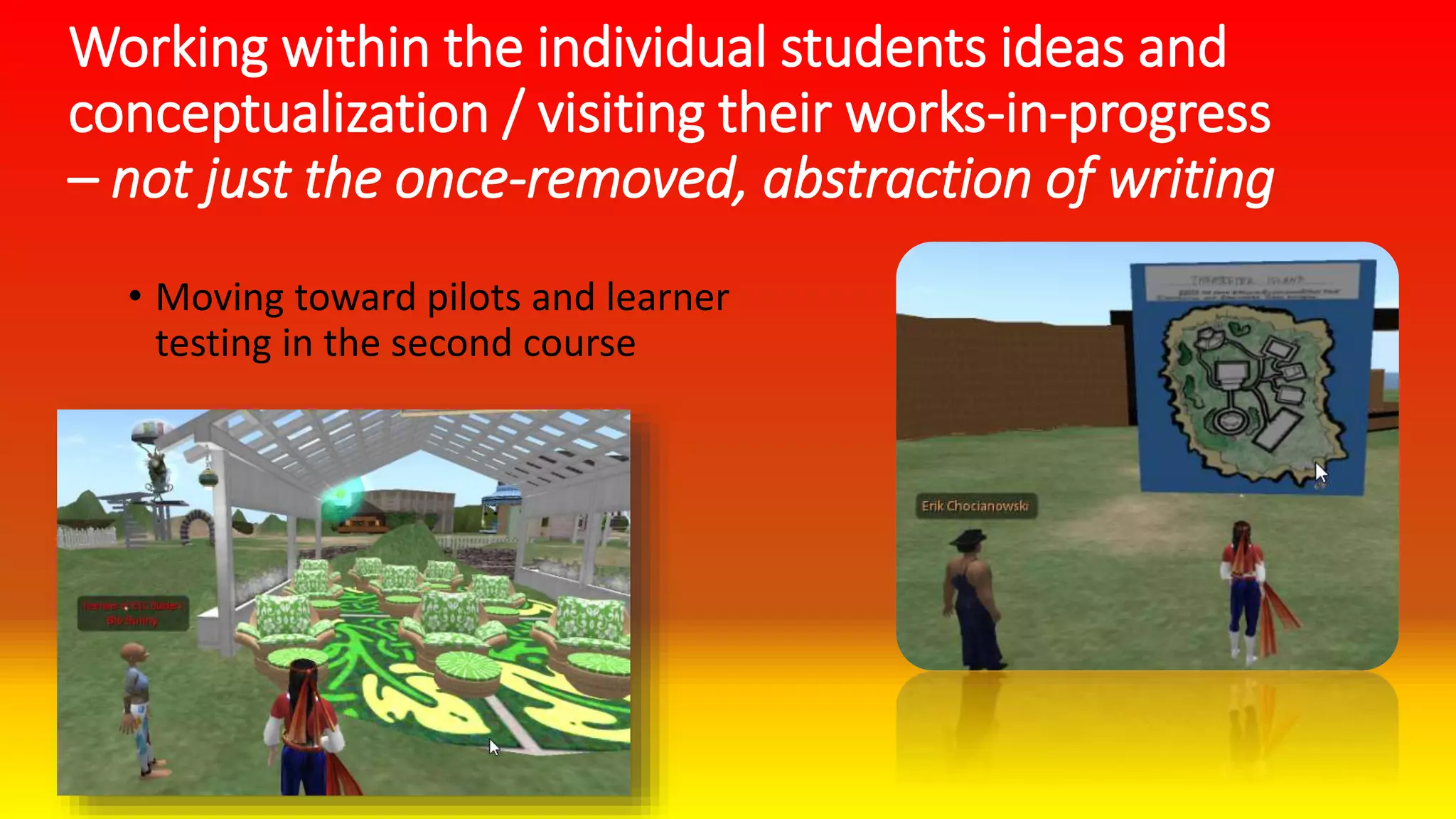
Working within the individual students ideas and
conceptualization / visiting their works-in-progress
– not just the once-removed, abstraction of writing
• Moving toward pilots and learner
testing in the second course
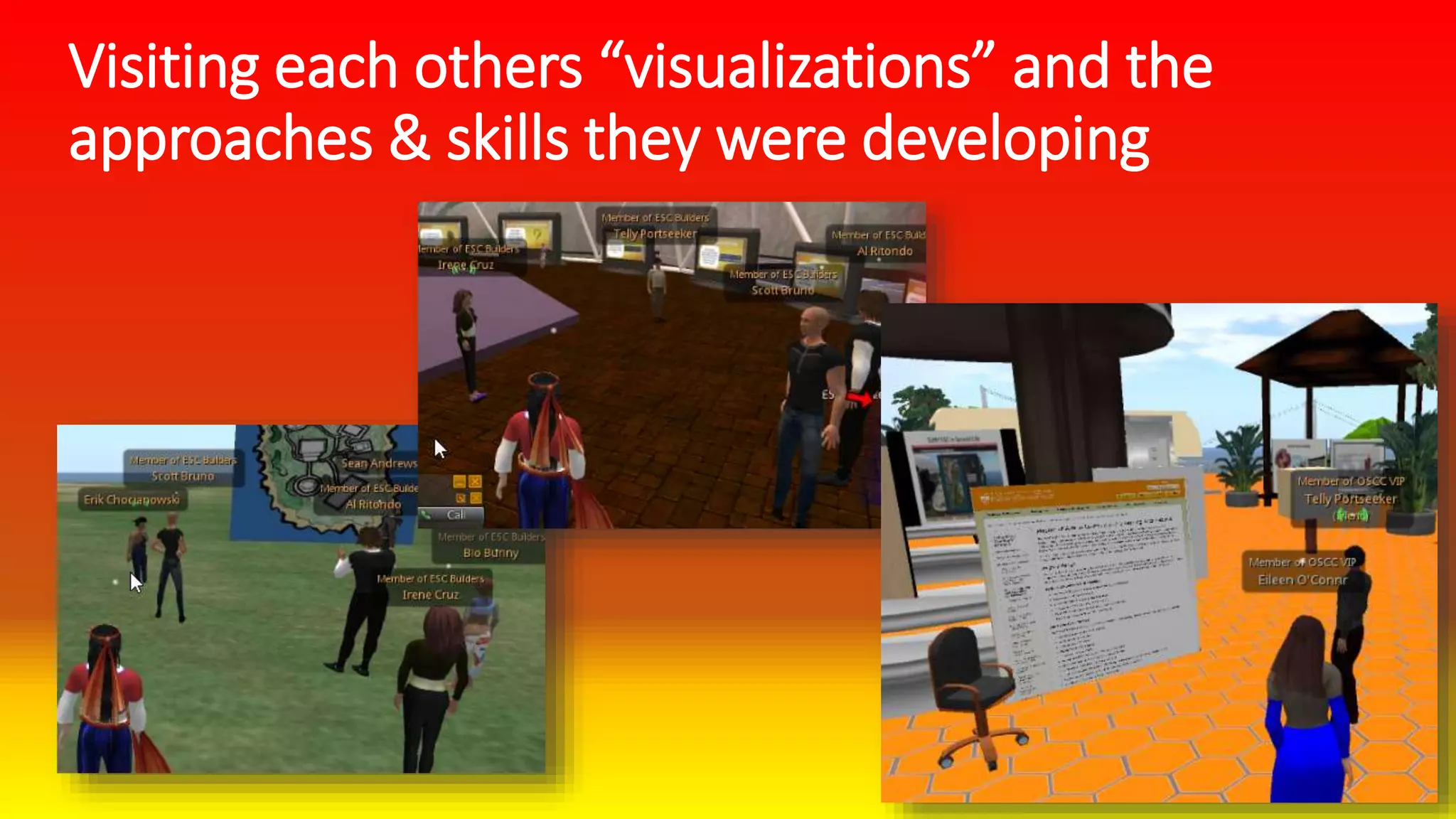
Visiting each others “visualizations” and the
approaches & skills they were developing
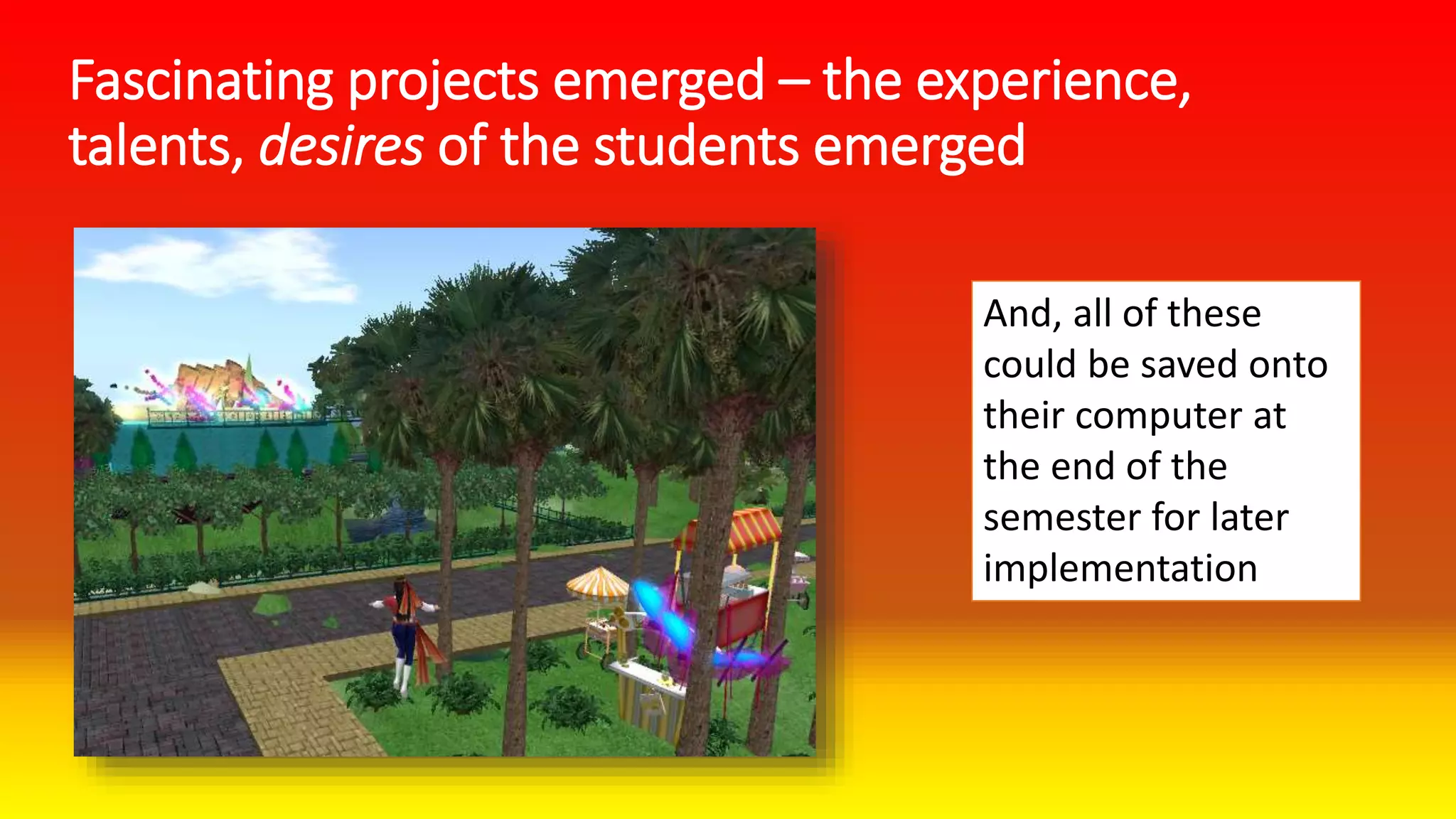
Fascinating projects emerged – the experience,
talents, desires of the students emerged
And, all of these
could be saved onto
their computer at
the end of the
semester for later
implementation
Meeting and visiting – again, learning from a
“reality” of a students’ thinking – not just talk
and/or text
• Collaborations among the students
• One student even choose to “officially” tutor other students -
https://www.youtube.com/watch?v=RhmnGi-8VxI&feature=youtu.be
• Another student brought an entire class to her island
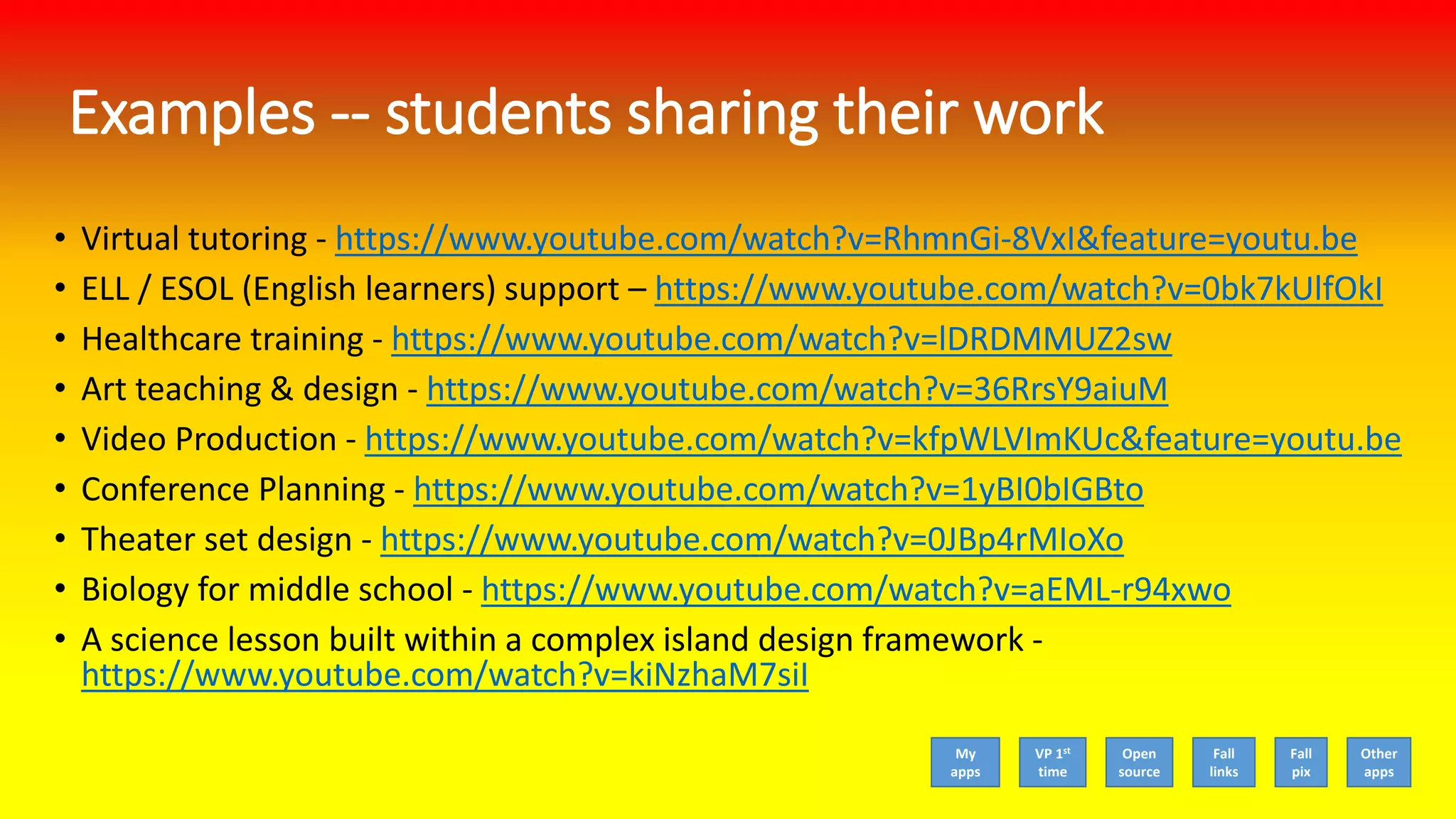
Examples -- students sharing their work
• Virtual tutoring - https://www.youtube.com/watch?v=RhmnGi-8VxI&feature=youtu.be
• ELL / ESOL (English learners) support – https://www.youtube.com/watch?v=0bk7kUlfOkI
• Healthcare training - https://www.youtube.com/watch?v=lDRDMMUZ2sw
• Art teaching & design - https://www.youtube.com/watch?v=36RrsY9aiuM
• Video Production - https://www.youtube.com/watch?v=kfpWLVImKUc&feature=youtu.be
• Conference Planning - https://www.youtube.com/watch?v=1yBI0bIGBto
• Theater set design - https://www.youtube.com/watch?v=0JBp4rMIoXo
• Biology for middle school - https://www.youtube.com/watch?v=aEML-r94xwo
• A science lesson built within a complex island design framework -
https://www.youtube.com/watch?v=kiNzhaM7siI
My
apps
VP 1st
time
Open
source
Fall
links
Fall
pix
Other
apps
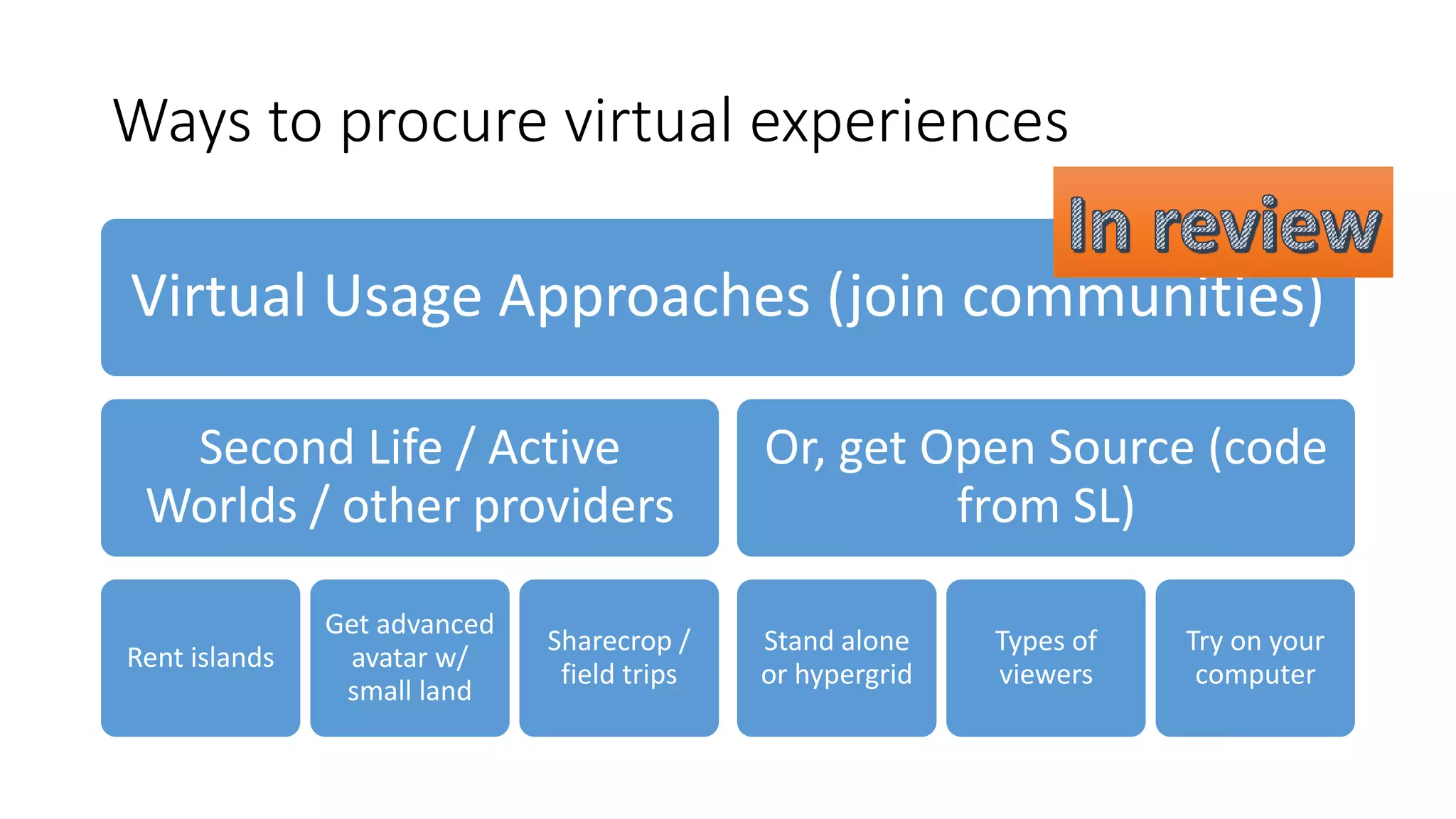
Ways to procure virtual experiences
Virtual Usage Approaches (join communities)
Second Life / Active
Worlds / other providers
Rent islands
Get advanced
avatar w/
small land
Sharecrop /
field trips
Or, get Open Source (code
from SL)
Stand alone
or hypergrid
Types of
viewers
Try on your
computer
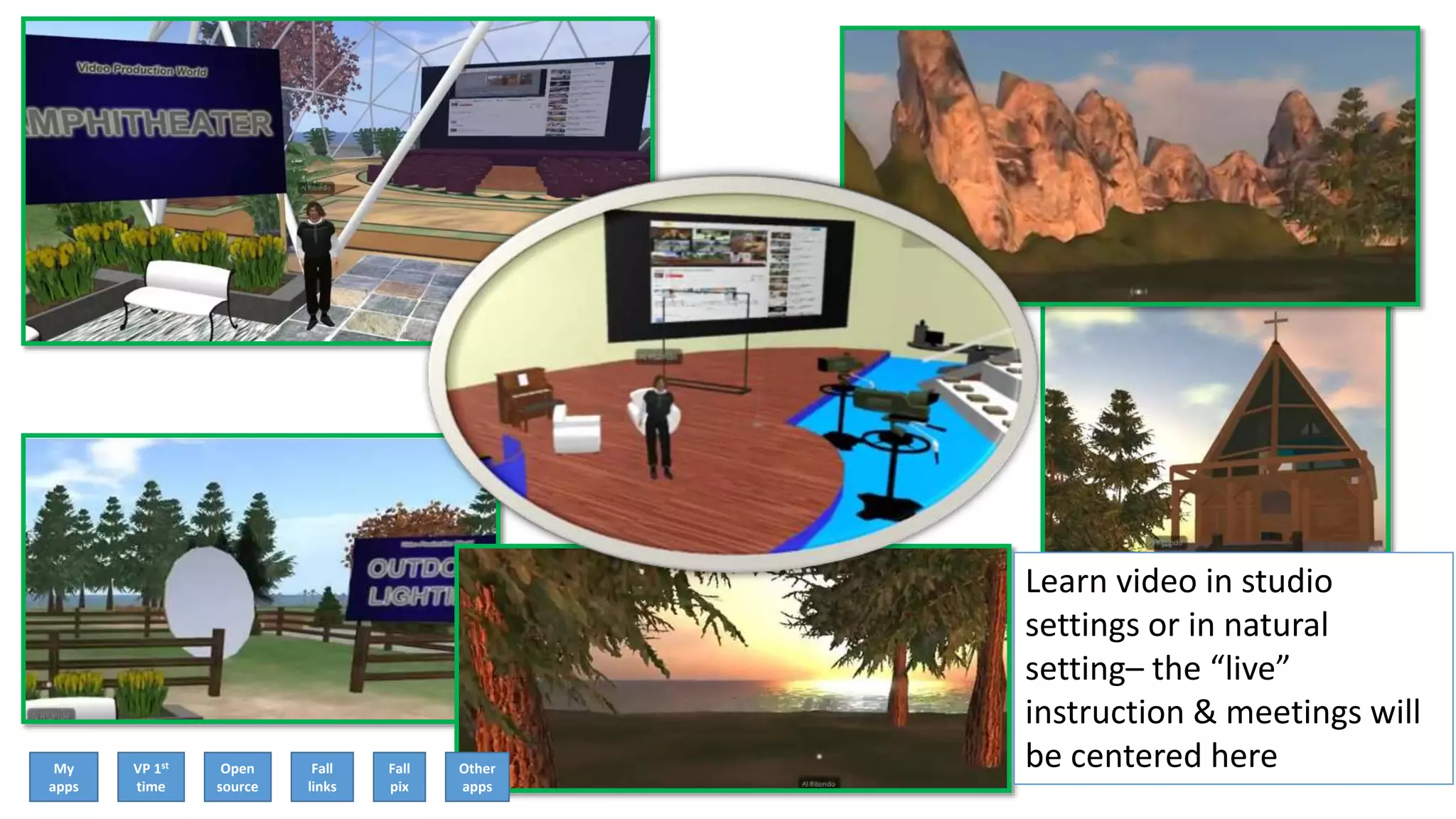
Learn video in studio
settings or in natural
setting– the “live”
instruction & meetings will
be centered hereMy
apps
VP 1st
time
Open
source
Fall
links
Fall
pix
Other
apps
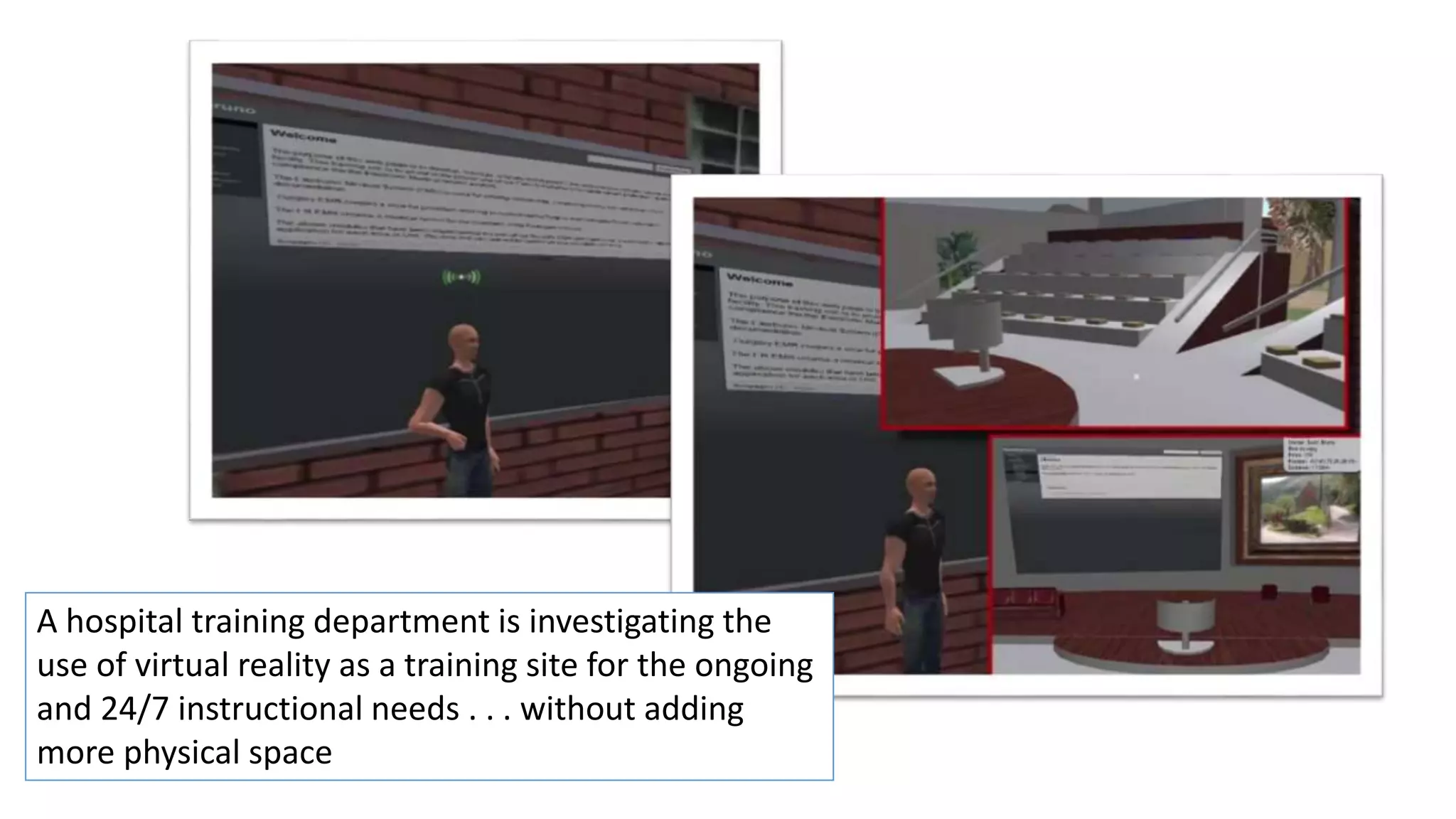
A hospital training department is investigating the
use of virtual reality as a training site for the ongoing
and 24/7 instructional needs . . . without adding
more physical space
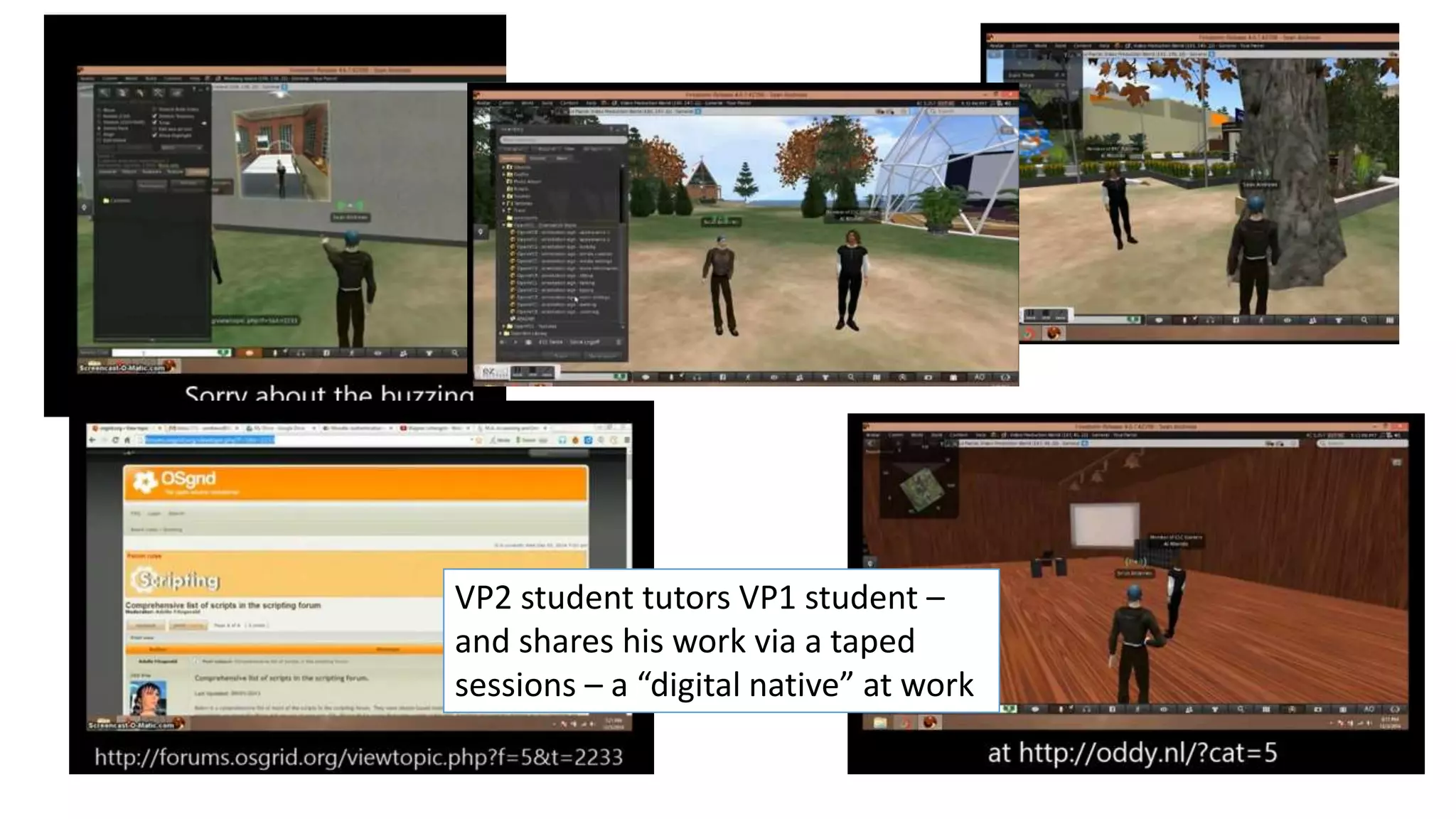
VP2 student tutors VP1 student –
and shares his work via a taped
sessions – a “digital native” at work
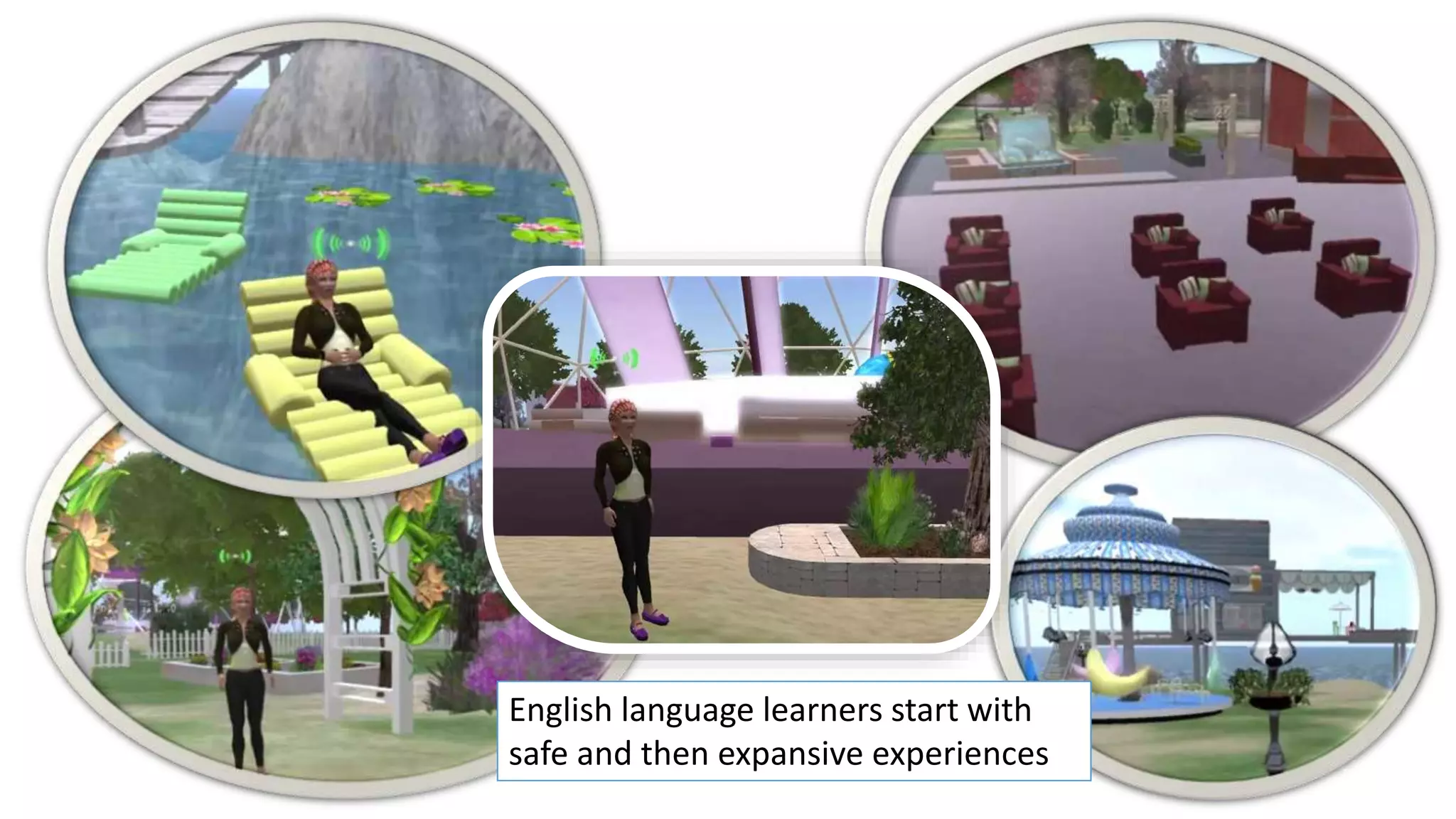
English language learners start with
safe and then expansive experiences
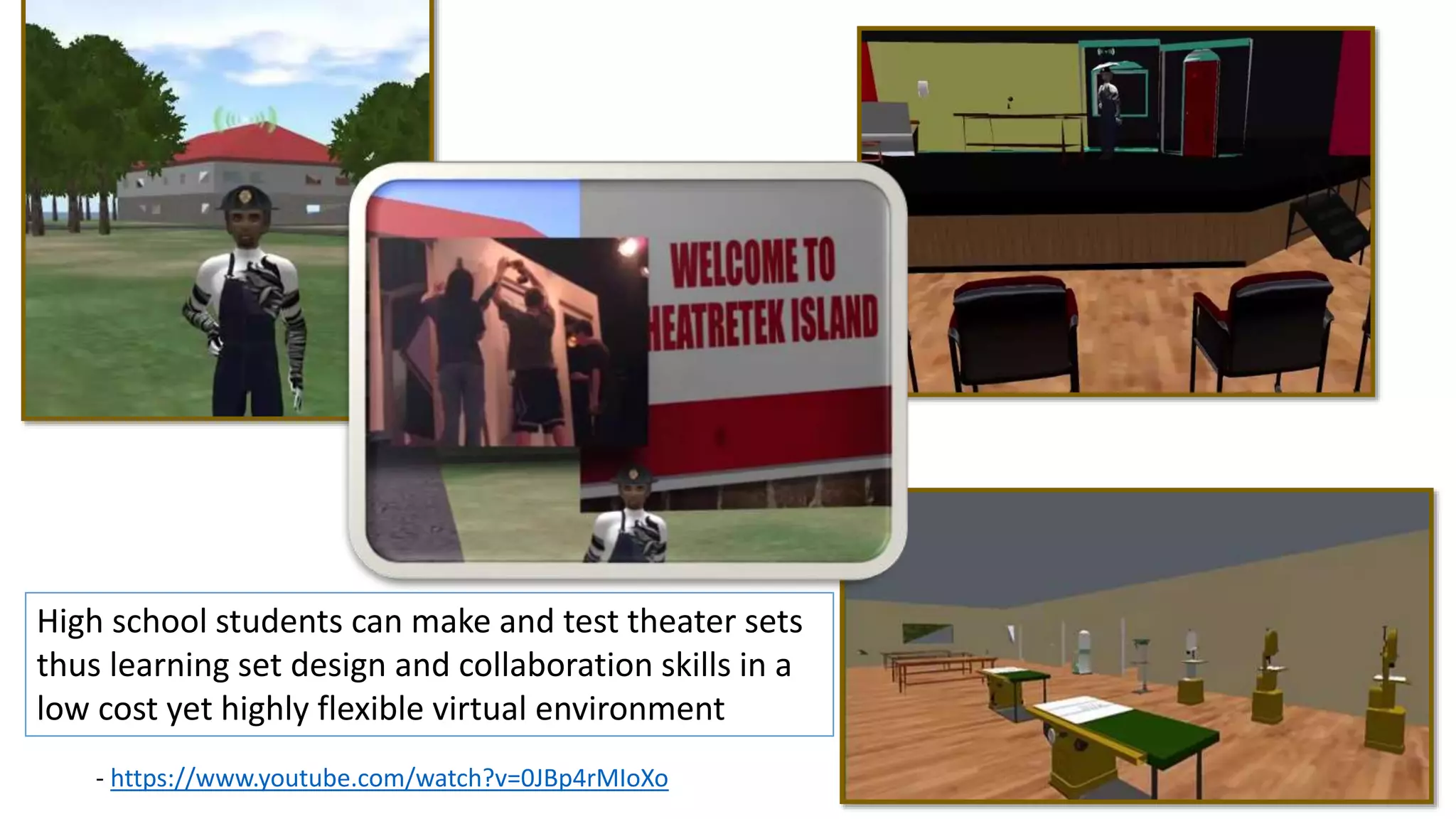
- https://www.youtube.com/watch?v=0JBp4rMIoXo
High school students can make and test theater sets
thus learning set design and collaboration skills in a
low cost yet highly flexible virtual environment
https://www.youtube.com/watch?v=36RrsY9aiuM
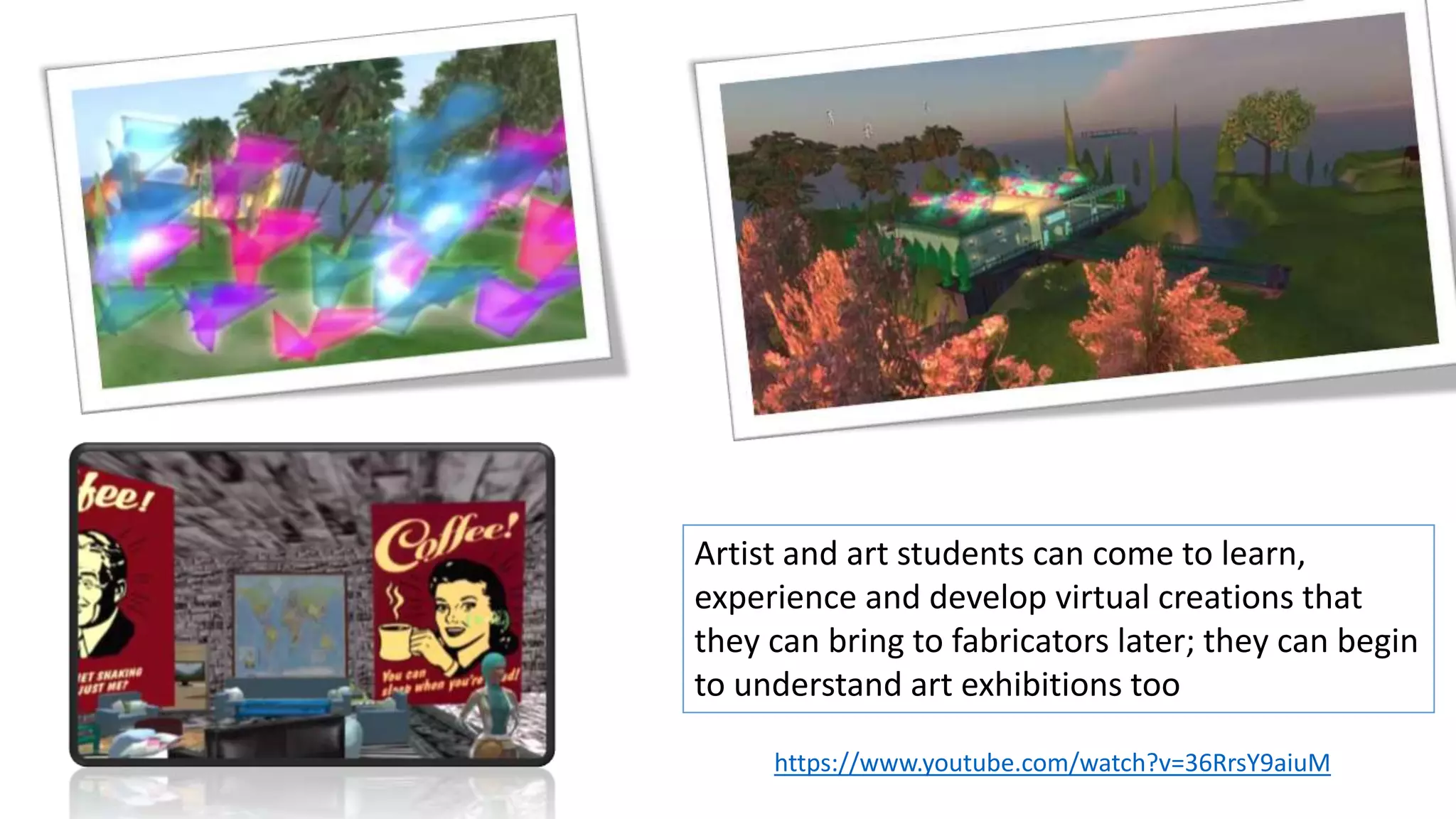
Artist and art students can come to learn,
experience and develop virtual creations that
they can bring to fabricators later; they can begin
to understand art exhibitions too
https://www.youtube.com/watch?v=1yBI0bIGBto
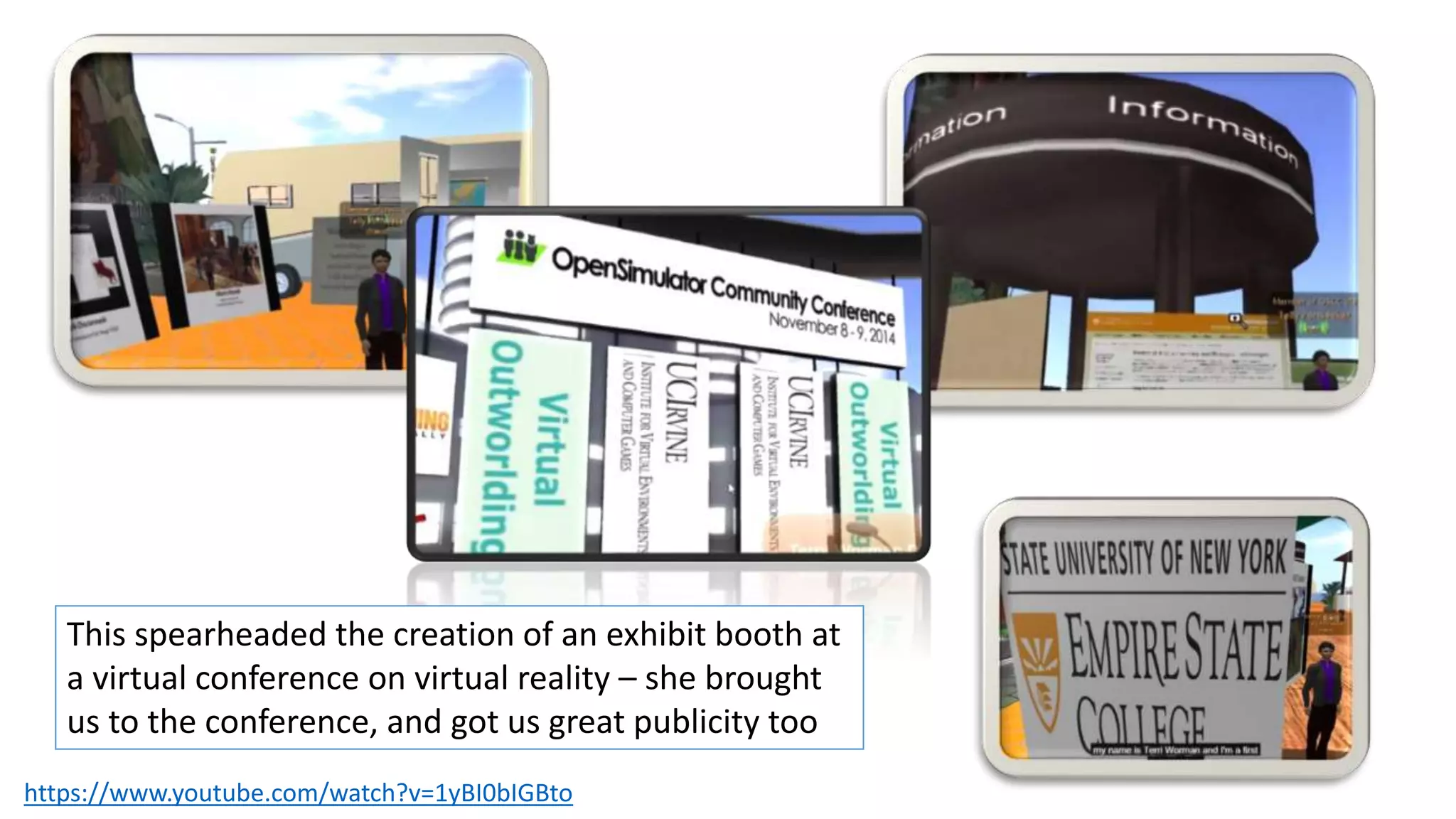
This spearheaded the creation of an exhibit booth at
a virtual conference on virtual reality – she brought
us to the conference, and got us great publicity too
https://www.youtube.com/watch?v=aEML-r94xwo
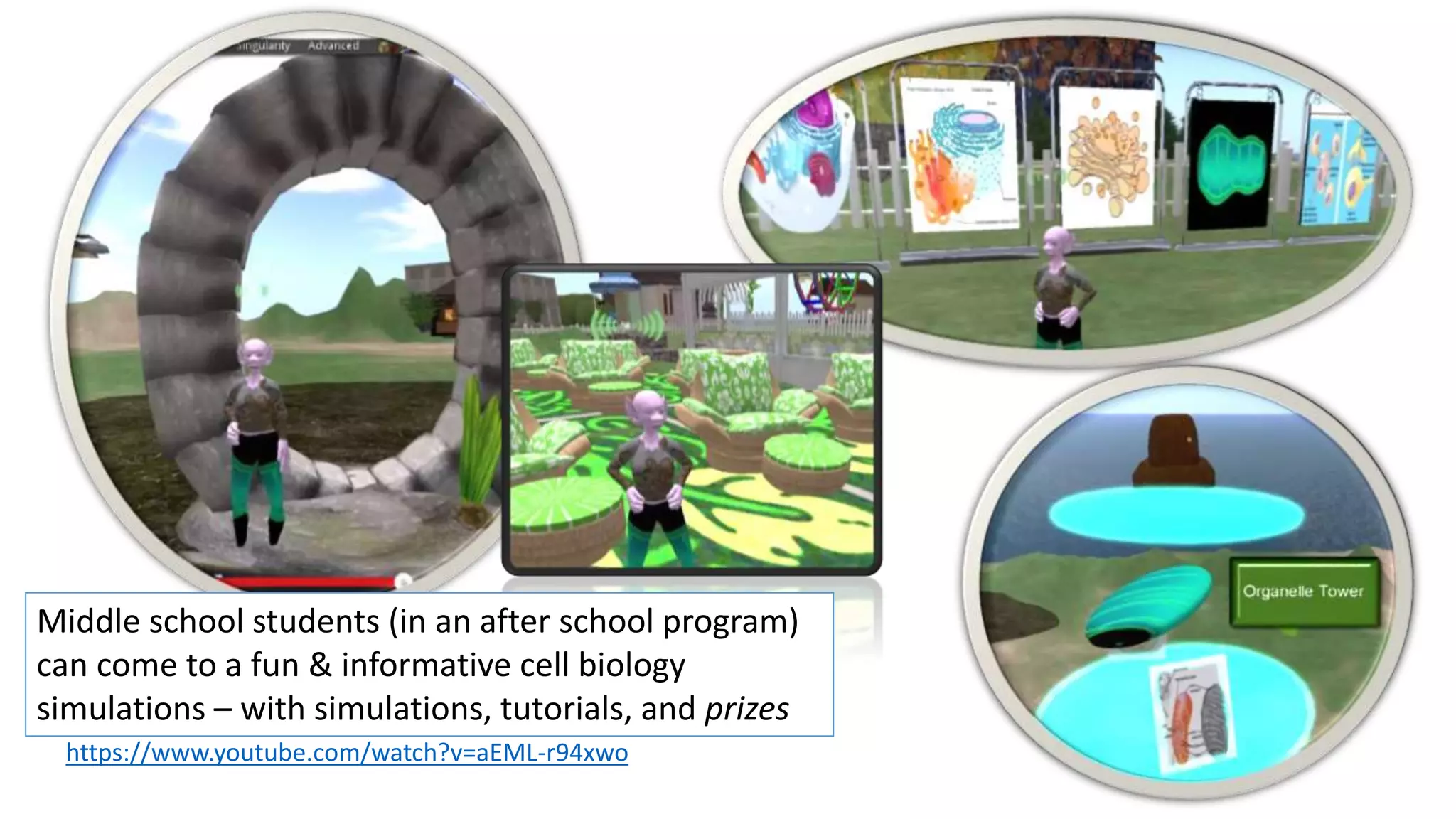
Middle school students (in an after school program)
can come to a fun & informative cell biology
simulations – with simulations, tutorials, and prizes
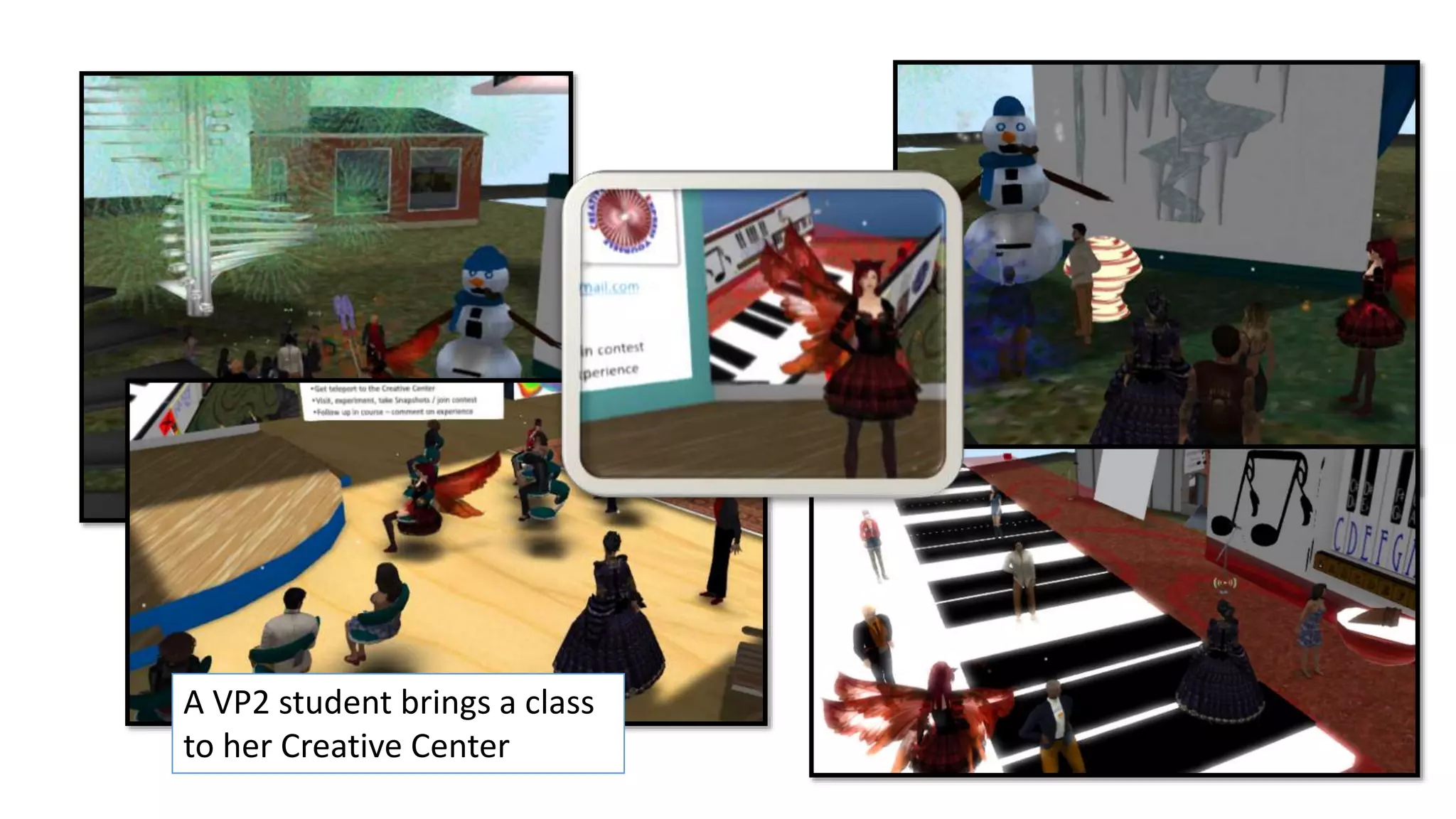
A VP2 student brings a class
to her Creative Center
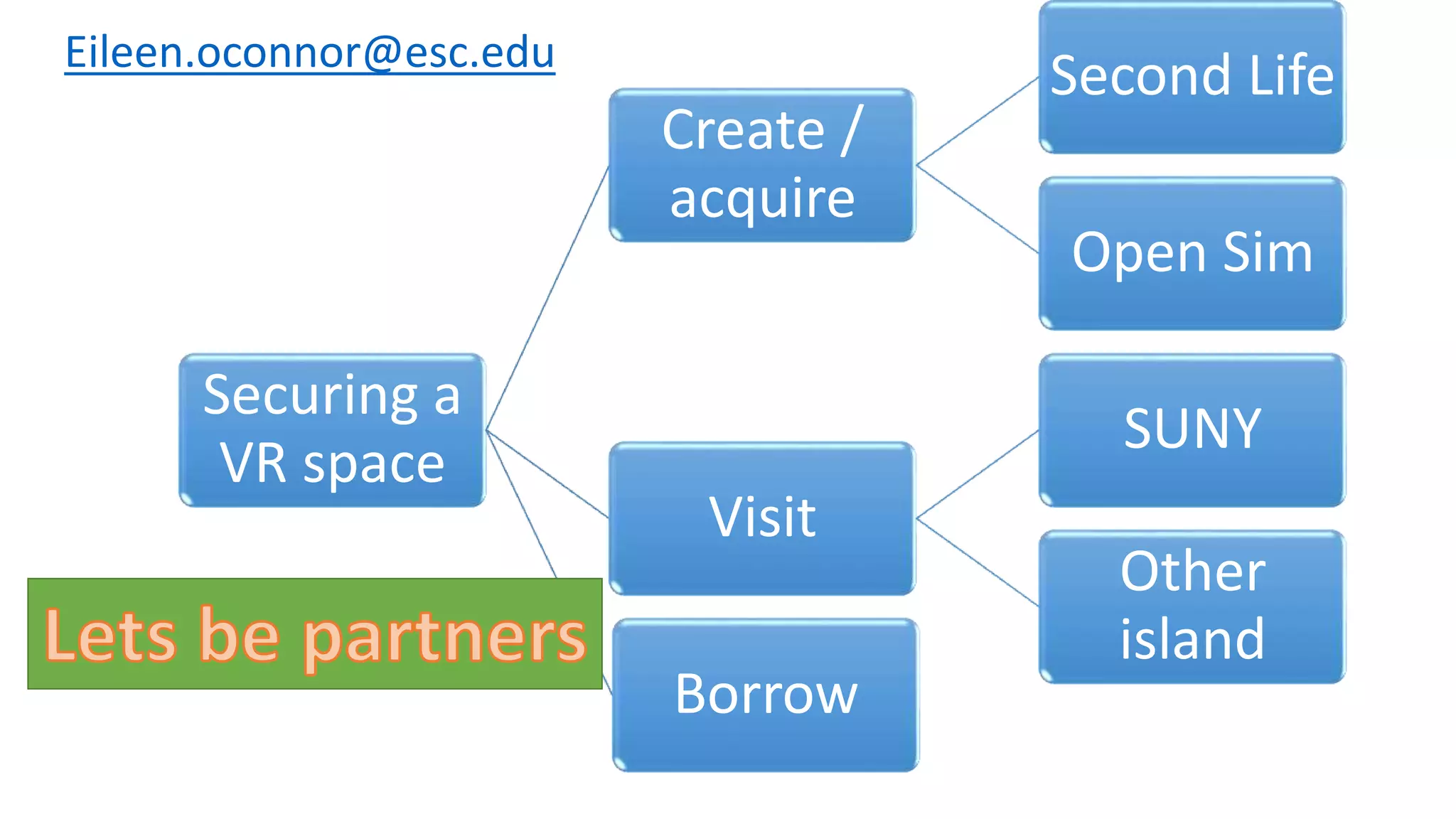
Securing a
VR space
Create /
acquire
Second Life
Open Sim
Visit
SUNY
Other
island
Borrow
Eileen.oconnor@esc.edu
Example places – student visits
• See some Second Life locations that students reported
My
apps
VP 1st
time
Open
source
Fall
links
Fall
pix
Other
apps
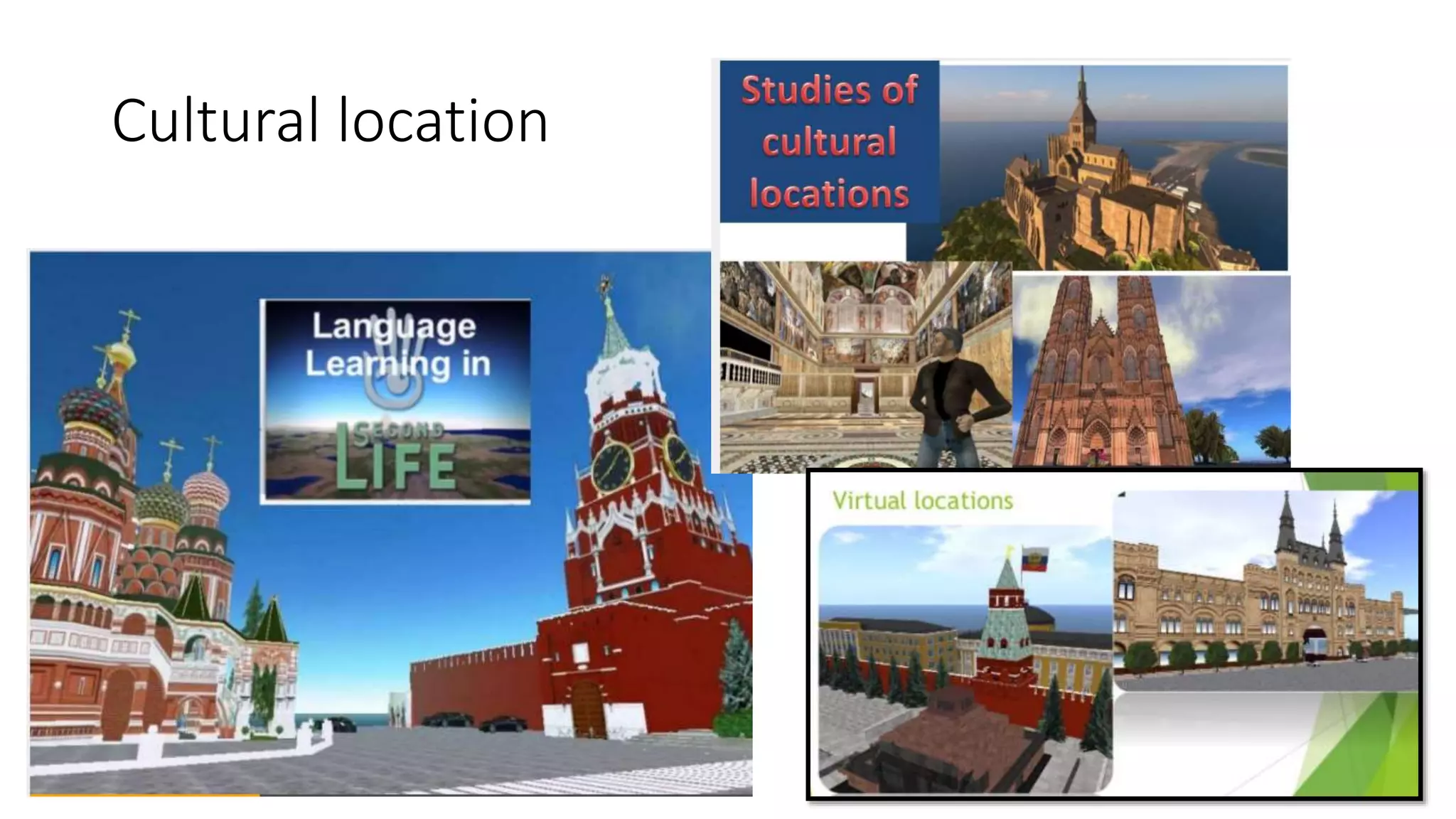
Cultural location
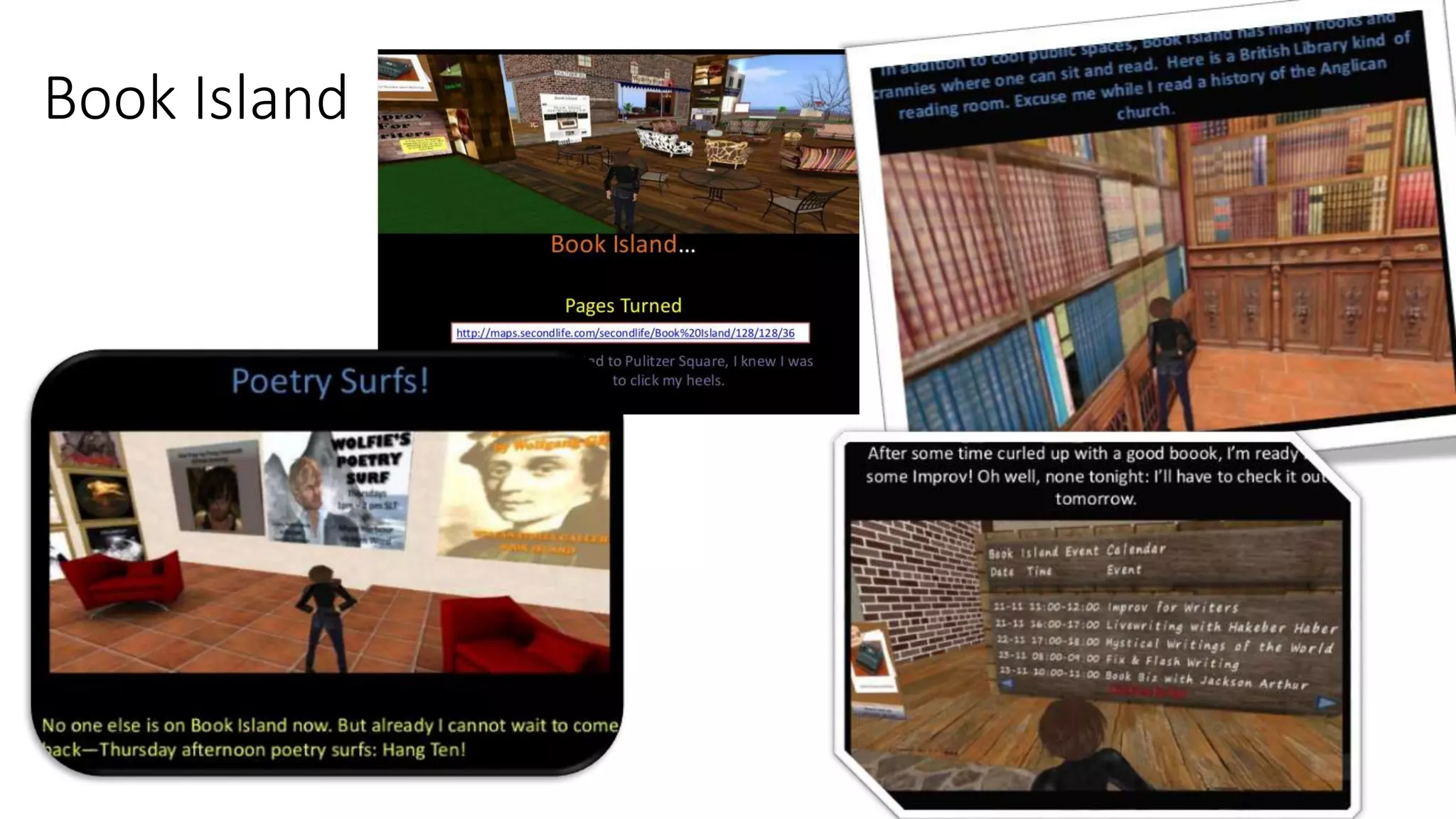
Book Island
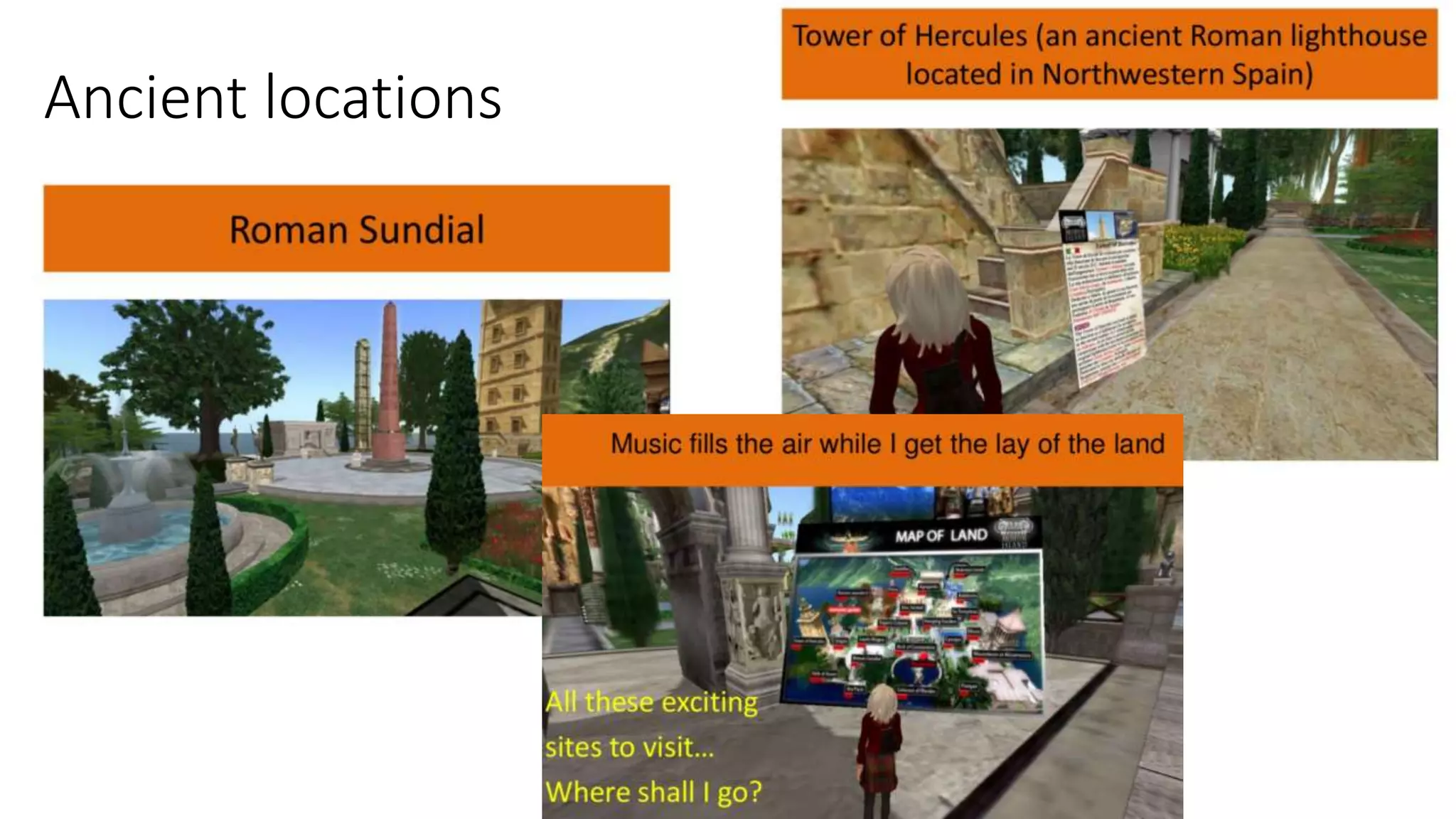
Ancient locations
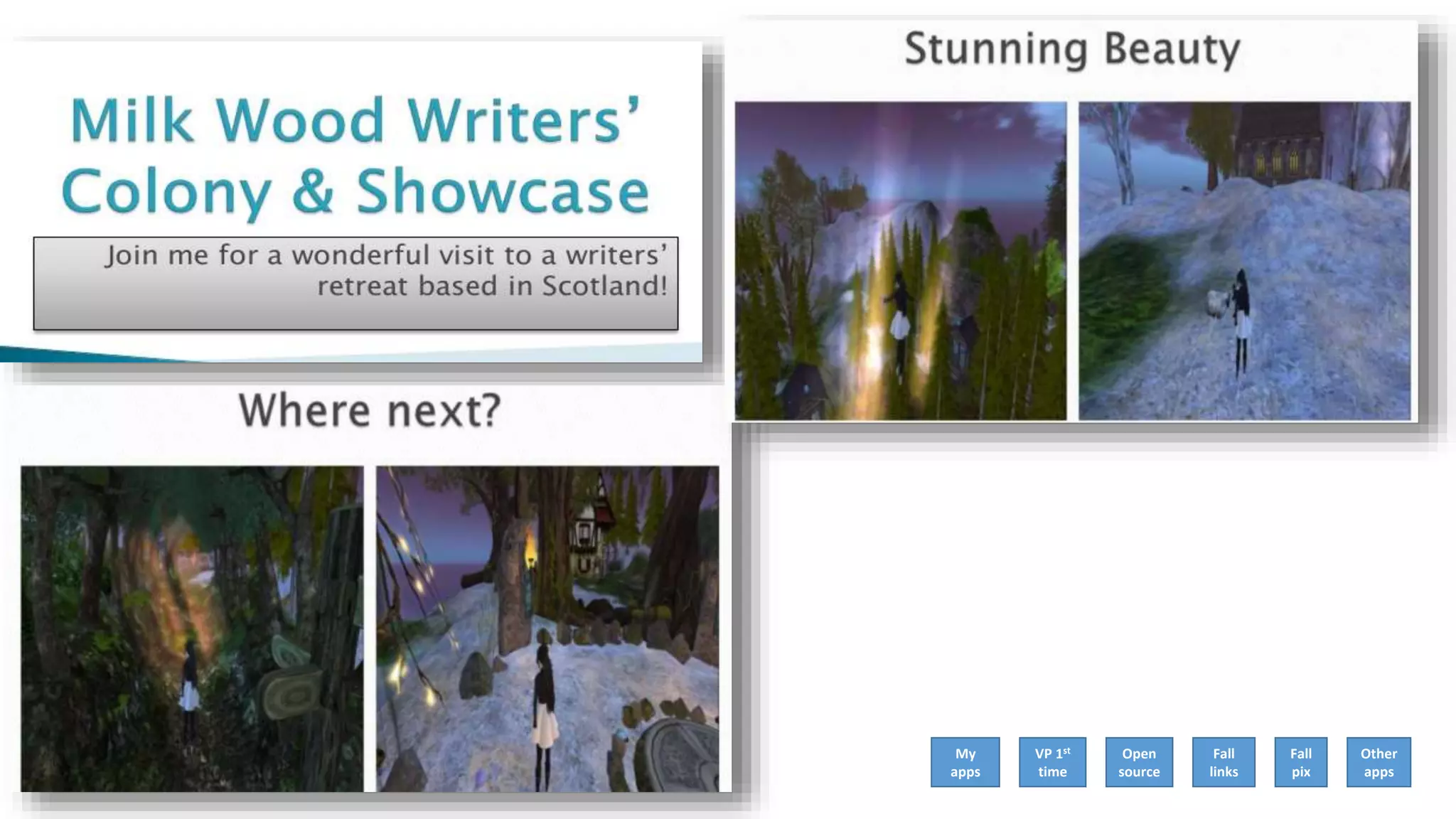
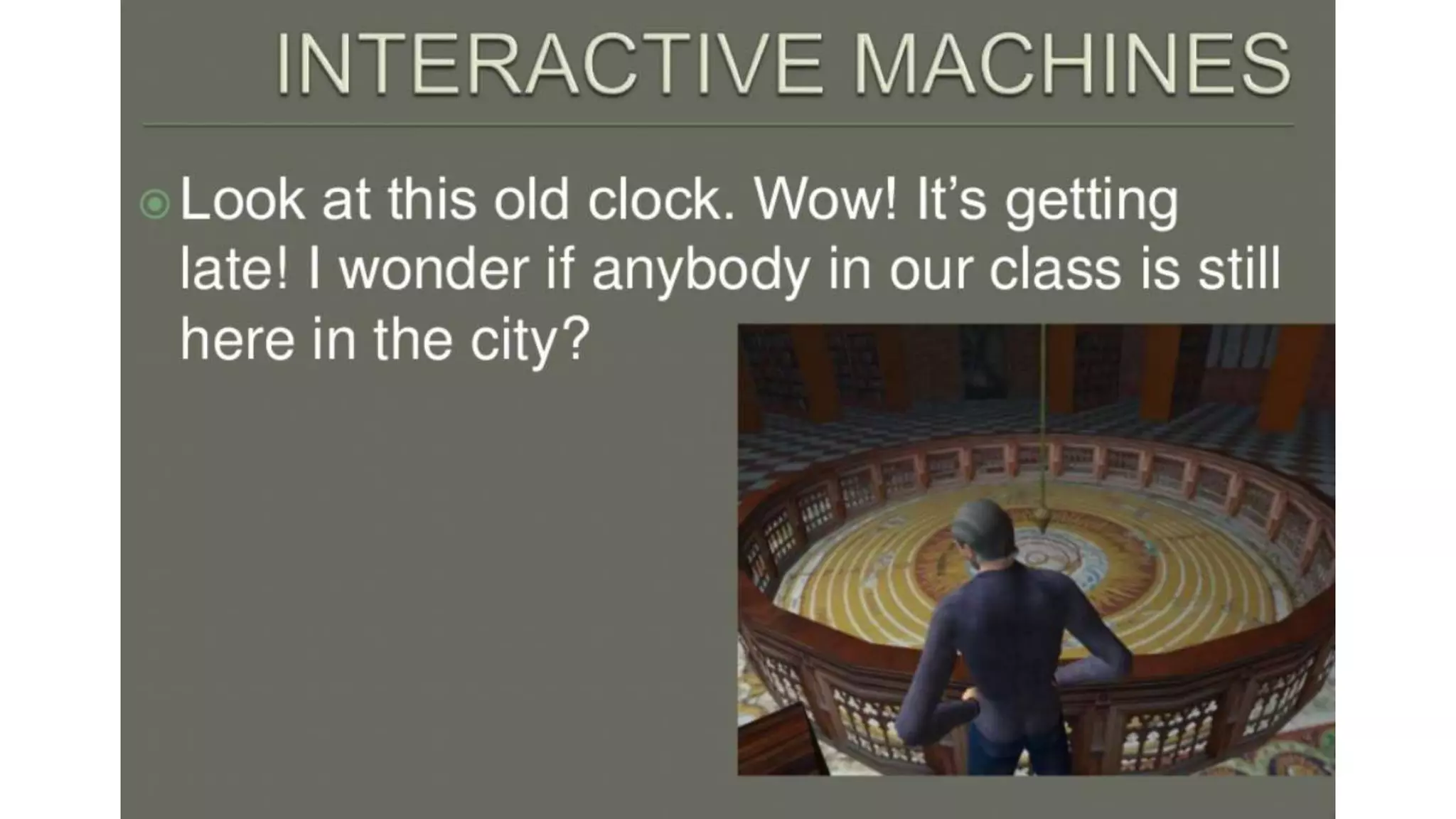
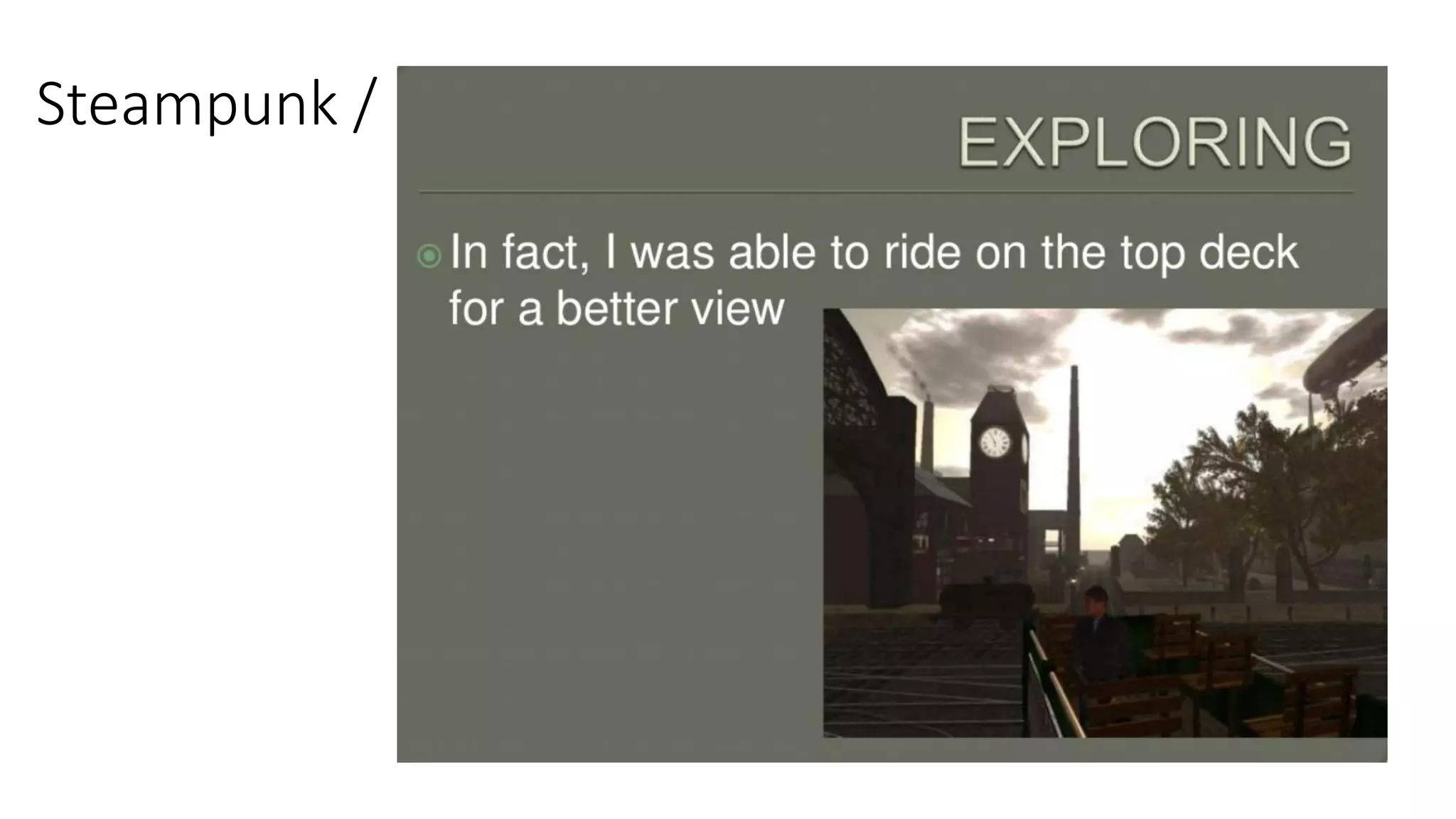
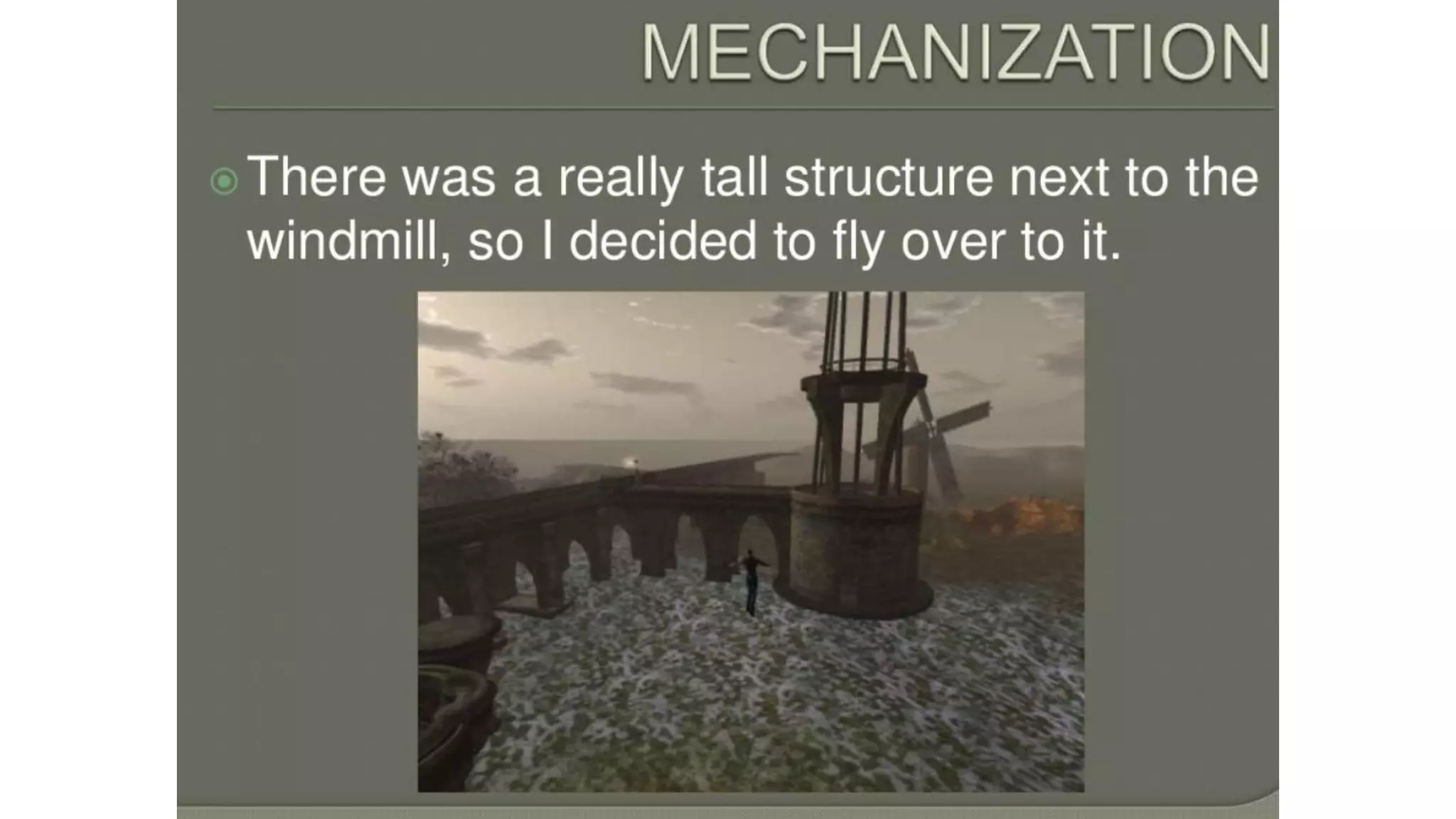
Steampunk / machines
SUNY Delhi - Virtual Reality Since Open Source

SUNY Delhi - Virtual Reality Since Open Source

  • 1.
    Using virtual realityto create both learning environments and online communities  The presentation will demonstrate ways this instructor has used virtual reality (starting with Second Life and migrating to open source) to create a safe, inviting learning environment. She will give general examples that could apply to various courses or departments and she will bring forth her own examples from teacher education and from instructional technologies. Some video clips will be included to illustrate the type of interactions that are possible and information on the cost and feasibility of such a venture will be considered as well. Eileen O’Connor, Ph.D. - Empire State College eileen.oconnor@esc.edu Pictorial overview in conjunction with presentation – January 2015 My apps VP 1st time Open sourc e Fall links Fall pix Other apps
  • 2.
  • 3.
    Why Virtual Reality? Community building Collaboration Study / simulations/ visits Creation / programming Education & conceptual frameworks abound – motivation, constructivism, “authentic learning,” community of practice, assessment, analytics, evaluation, learning goals, objectives, outcome, simulations, Piaget, Vygotsky, dual coding, digital natives, scaffolding, training, project-based learning, problem-based learning, 21st century approaches, immersive experiences
  • 4.
    Ways to procureyour own virtual experiences Virtual Usage Approaches (join communities) Second Life / Active Worlds / other providers Rent islands Get advanced avatar w/ small land Sharecrop / field trips Or, get Open Source (code from SL) Stand alone or hypergrid Types of viewers Try on your computer My apps VP 1st time Open sourc e Fall links Fall pix Other apps
  • 5.
  • 6.
    New providers areemerging; lower cost but stability? http://www.kitely.com/ http://www.dreamlandmetaverse.com/
  • 7.
  • 8.
    More “world” providersare becoming available quickly; look at the HyperGrid Business for upcoming ideas http://www.hypergridbusiness.com/
  • 9.
    Example from the Sept 2013 conference My apps VP1st time Open sourc e Fall links Fall pix Other apps
  • 10.
    My pathways intovirtual  Initial motivation – to create an education platform that could have the potential for intrinsically motivating experiences that could be shared across geography for K12 STEM (science, technology, engineering, mathematics)  If World of Warcraft has their minds, why can’t we?  To bring in pre-service teachers  Many applications emerged  To start other virtual reality developers K12 Teacher Ed Virtual developers
  • 11.
  • 13.
  • 16.
  • 18.
    My sabbatical too– healthcare simulation for middle school instruction/ work w/ Africa – private island My apps VP 1st time Open source Fall links Fall pix Other apps
  • 19.
    Finally in spring2014. . .  I began teaching a class on working & designing in virtual reality  For the MALET program (Master of Arts in Learning and Emerging Technology) at Empire State College  Students are now creating / designing amazing new virtual spaces  Most are using some original design and some purchased items  Using ESC island  Students developed focused, targeted areas of interest My apps VP 1st time Open sourc e Fall links Fall pix Other apps
  • 20.
    Virtual – artistic& musical creation
  • 21.
    Virtual – dorm management- meetings & classroom
  • 22.
    Virtual – learningby doing / trampoline
  • 23.
    Virtual classroom createdby student – used as an ag-tech meeting space
  • 24.
    But then thingschanged as the next class came: The islands in SL were too small – not enough space for students to develop their own work So, we moved to new venues . . . which changed us from limited use to virtual development and design My apps VP 1st time Open source Fall links Fall pix Other apps
  • 25.
    What changes hasopen source allowed? • A larger, more cohesive framework for complex designs • A location where students could have ownership and control over an entire process / learning by reading, watching, doing, testing, sharing • A framework that allowed students to develop projects for others beyond themselves and their direct work /school experience • Greater sophistication in the work that emerged – from limited applications/all move towards things they would like to see that were not feasible in their current environment/students came with expertise and content areas • A more comprehensive and applied understanding of a complete learning environment • Freed from the constraints of “reality” – but held to a standard of sense- making, application, quality • Something that could be saved and used later – entire island downloads
  • 26.
    Why Virtual Reality? Community building Collaboration Study / simulations/ visits Creation / programming Education & conceptual frameworks abound – motivation, constructivism, “authentic learning,” community of practice, assessment, analytics, evaluation, learning goals, objectives, outcome, simulations, Piaget, Vygotsky, dual coding, digital natives, scaffolding, training, project-based learning, problem-based learning, 21st century approaches, immersive experiences
  • 27.
    Why virtual? And,what can you REALLY do? • Students could now develop an entire “concept” for an education / communication / interaction environment • The bi-weekly meeting were about real events and designs – not just simple widgets and whirly-gigs • Students visited and share each others design ideas • Students could envision an entire process or project – and create a starting point that they could continue to develop Design, immersion & conceptual framing became a reality
  • 28.
    ESC – MALET had abooth at the 2014 conference
  • 29.
    What was theprocess of learning & community building? – working together in comfortable settings • Meeting and sharing • Ideas / technologies eventually, articulating a large and visionary instructional purpose within the space • Framing theoretical papers were produced by each student • Work in progress and “homework” via video (Screencast-o-matic)
  • 30.
    Working within theindividual students ideas and conceptualization / visiting their works-in-progress – not just the once-removed, abstraction of writing • Moving toward pilots and learner testing in the second course
  • 31.
    Visiting each others“visualizations” and the approaches & skills they were developing
  • 32.
    Fascinating projects emerged– the experience, talents, desires of the students emerged And, all of these could be saved onto their computer at the end of the semester for later implementation
  • 33.
    Meeting and visiting– again, learning from a “reality” of a students’ thinking – not just talk and/or text • Collaborations among the students • One student even choose to “officially” tutor other students - https://www.youtube.com/watch?v=RhmnGi-8VxI&feature=youtu.be • Another student brought an entire class to her island
  • 34.
    Examples -- studentssharing their work • Virtual tutoring - https://www.youtube.com/watch?v=RhmnGi-8VxI&feature=youtu.be • ELL / ESOL (English learners) support – https://www.youtube.com/watch?v=0bk7kUlfOkI • Healthcare training - https://www.youtube.com/watch?v=lDRDMMUZ2sw • Art teaching & design - https://www.youtube.com/watch?v=36RrsY9aiuM • Video Production - https://www.youtube.com/watch?v=kfpWLVImKUc&feature=youtu.be • Conference Planning - https://www.youtube.com/watch?v=1yBI0bIGBto • Theater set design - https://www.youtube.com/watch?v=0JBp4rMIoXo • Biology for middle school - https://www.youtube.com/watch?v=aEML-r94xwo • A science lesson built within a complex island design framework - https://www.youtube.com/watch?v=kiNzhaM7siI My apps VP 1st time Open source Fall links Fall pix Other apps
  • 35.
    Ways to procurevirtual experiences Virtual Usage Approaches (join communities) Second Life / Active Worlds / other providers Rent islands Get advanced avatar w/ small land Sharecrop / field trips Or, get Open Source (code from SL) Stand alone or hypergrid Types of viewers Try on your computer
  • 36.
    Learn video instudio settings or in natural setting– the “live” instruction & meetings will be centered hereMy apps VP 1st time Open source Fall links Fall pix Other apps
  • 37.
    A hospital trainingdepartment is investigating the use of virtual reality as a training site for the ongoing and 24/7 instructional needs . . . without adding more physical space
  • 38.
    VP2 student tutorsVP1 student – and shares his work via a taped sessions – a “digital native” at work
  • 39.
    English language learnersstart with safe and then expansive experiences
  • 40.
    - https://www.youtube.com/watch?v=0JBp4rMIoXo High schoolstudents can make and test theater sets thus learning set design and collaboration skills in a low cost yet highly flexible virtual environment
  • 41.
    https://www.youtube.com/watch?v=36RrsY9aiuM Artist and artstudents can come to learn, experience and develop virtual creations that they can bring to fabricators later; they can begin to understand art exhibitions too
  • 42.
    https://www.youtube.com/watch?v=1yBI0bIGBto This spearheaded thecreation of an exhibit booth at a virtual conference on virtual reality – she brought us to the conference, and got us great publicity too
  • 43.
    https://www.youtube.com/watch?v=aEML-r94xwo Middle school students(in an after school program) can come to a fun & informative cell biology simulations – with simulations, tutorials, and prizes
  • 44.
    A VP2 studentbrings a class to her Creative Center
  • 46.
    Securing a VR space Create/ acquire Second Life Open Sim Visit SUNY Other island Borrow Eileen.oconnor@esc.edu
  • 48.
    Example places –student visits • See some Second Life locations that students reported
  • 49.
  • 50.
  • 51.
  • 52.
  • 54.

Editor's Notes

  • #2 The presentation will demonstrate ways this instructor has used virtual reality (starting with Second Life and migrating to open source options) to create a safe, inviting learning environment. She will give general examples that could apply to various courses or departments and she will bring forth her own examples from teacher education and from instructional technologies. Some video clips will be included to illustrate the type of interactions that are possible and information on the cost and feasibility of such a venture will be considered as well.
  • #5 The field of virtual reality was initially limited to virtual providers – Second Life and Active Worlds being the key players. When Second Life opened the source code to developers, many new options began to emerge. You can now (with some talent, drive, and tolerance for testing-environments) develop your own virtual worlds that could simply reside on your own computer or could be networked to an audience that you invite. You now run into more choices if you are running your own virtual realities.
  • #7 These new vendors are making it easier to create your own islands, without having the heavy burden of knowing your own coding
  • #9 http://www.hypergridbusiness.com/ is a must-have resource if you want to gain your own basic and easy applications through the help of the growing hypergrid / virtual-reality community.
  • #13 Students, peer reviewers, and judges – presented at SUNY conferences ; listen to the conversations