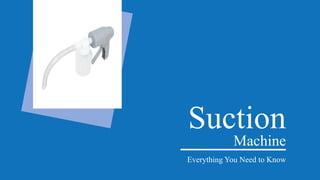
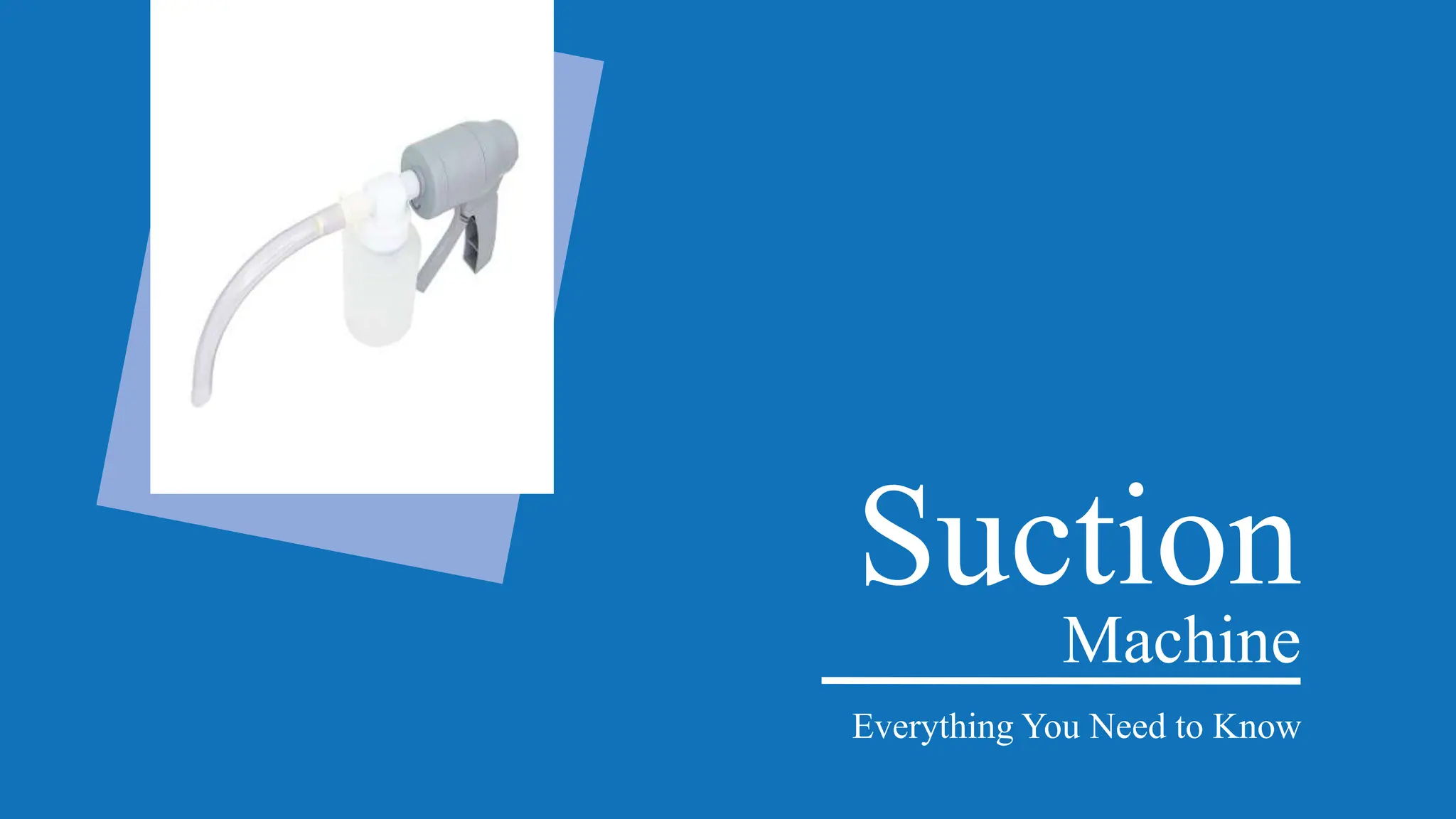

Suction
Machine
Everything You Need to Know
Introduction
Using a suction machine effectively and safely is essential for healthcare professionals and
caregivers when managing patients with respiratory issues or difficulty clearing secretions. This
step-by-step guide provides comprehensive instructions on how to operate a suction machine,
ensuring optimal patient care and safety.
Proper usage of a suction machine involves understanding the equipment, preparing the patient,
and executing the suctioning process with caution. By following this guide, healthcare providers can
enhance their skills in using a suction machine, ultimately promoting better respiratory health
outcomes for their patients.
What Is a Suction Machine?
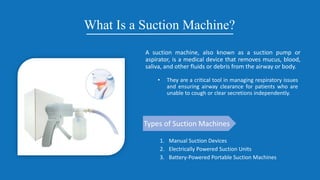
A suction machine, also known as a suction pump or
aspirator, is a medical device that removes mucus, blood,
saliva, and other fluids or debris from the airway or body.
• They are a critical tool in managing respiratory issues
and ensuring airway clearance for patients who are
unable to cough or clear secretions independently.
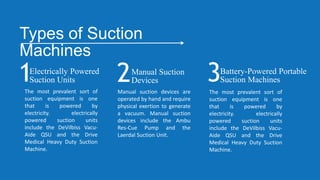
Types of Suction Machines
1. Manual Suction Devices
2. Electrically Powered Suction Units
3. Battery-Powered Portable Suction Machines
Types of Suction
Machines
1 2 3
The most prevalent sort of
suction equipment is one
that is powered by
electricity. electrically
powered suction units
include the DeVilbiss Vacu-
Aide QSU and the Drive
Medical Heavy Duty Suction
Machine.
Electrically Powered
Suction Units
Manual suction devices are
operated by hand and require
physical exertion to generate
a vacuum. Manual suction
devices include the Ambu
Res-Cue Pump and the
Laerdal Suction Unit.
Manual Suction
Devices
The most prevalent sort of
suction equipment is one
that is powered by
electricity. electrically
powered suction units
include the DeVilbiss Vacu-
Aide QSU and the Drive
Medical Heavy Duty Suction
Machine.
Battery-Powered Portable
Suction Machines
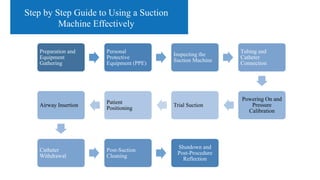
Preparation and
Equipment
Gathering
Personal
Protective
Equipment (PPE)
Inspecting the
Suction Machine
Tubing and
Catheter
Connection
Powering On and
Pressure
Calibration
Trial Suction
Patient
Positioning
Airway Insertion
Catheter
Withdrawal
Post-Suction
Cleaning
Shutdown and
Post-Procedure
Reflection
Step by Step Guide to Using a Suction
Machine Effectively
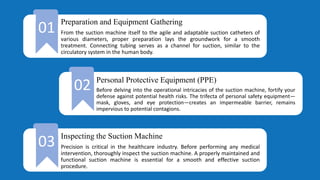
01
02
03
Preparation and Equipment Gathering
From the suction machine itself to the agile and adaptable suction catheters of
various diameters, proper preparation lays the groundwork for a smooth
treatment. Connecting tubing serves as a channel for suction, similar to the
circulatory system in the human body.
Personal Protective Equipment (PPE)
Before delving into the operational intricacies of the suction machine, fortify your
defense against potential health risks. The trifecta of personal safety equipment—
mask, gloves, and eye protection—creates an impermeable barrier, remains
impervious to potential contagions.
Inspecting the Suction Machine
Precision is critical in the healthcare industry. Before performing any medical
intervention, thoroughly inspect the suction machine. A properly maintained and
functional suction machine is essential for a smooth and effective suction
procedure.
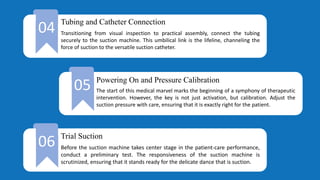
04
05
06
Tubing and Catheter Connection
Transitioning from visual inspection to practical assembly, connect the tubing
securely to the suction machine. This umbilical link is the lifeline, channeling the
force of suction to the versatile suction catheter.
Powering On and Pressure Calibration
The start of this medical marvel marks the beginning of a symphony of therapeutic
intervention. However, the key is not just activation, but calibration. Adjust the
suction pressure with care, ensuring that it is exactly right for the patient.
Trial Suction
Before the suction machine takes center stage in the patient-care performance,
conduct a preliminary test. The responsiveness of the suction machine is
scrutinized, ensuring that it stands ready for the delicate dance that is suction.
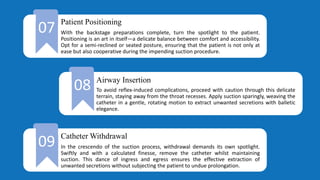
07
08
09
Patient Positioning
With the backstage preparations complete, turn the spotlight to the patient.
Positioning is an art in itself—a delicate balance between comfort and accessibility.
Opt for a semi-reclined or seated posture, ensuring that the patient is not only at
ease but also cooperative during the impending suction procedure.
Airway Insertion
To avoid reflex-induced complications, proceed with caution through this delicate
terrain, staying away from the throat recesses. Apply suction sparingly, weaving the
catheter in a gentle, rotating motion to extract unwanted secretions with balletic
elegance.
Catheter Withdrawal
In the crescendo of the suction process, withdrawal demands its own spotlight.
Swiftly and with a calculated finesse, remove the catheter whilst maintaining
suction. This dance of ingress and egress ensures the effective extraction of
unwanted secretions without subjecting the patient to undue prolongation.
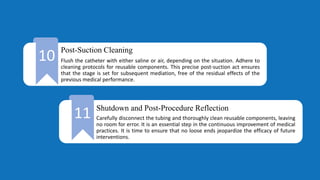
10
11
Post-Suction Cleaning
Flush the catheter with either saline or air, depending on the situation. Adhere to
cleaning protocols for reusable components. This precise post-suction act ensures
that the stage is set for subsequent mediation, free of the residual effects of the
previous medical performance.
Shutdown and Post-Procedure Reflection
Carefully disconnect the tubing and thoroughly clean reusable components, leaving
no room for error. It is an essential step in the continuous improvement of medical
practices. It is time to ensure that no loose ends jeopardize the efficacy of future
interventions.
Conclusion
In mastering the intricate art of using suction machines, this step-by-step guide unveils a
methodical approach where precision and safety converge. Navigating the delicate nuances
of this medical procedure ensures not only optimal patient care but also upholds the
highest standards of clinical practice. The suction machine, in the hands of a skilled
practitioner, becomes not just a tool but a symphony conductor orchestrating a
harmonious blend of technology and care.
Contact Details
melvin.lu@kdlnc.com +86-0791-8816-1216 7/F, Tower A, 77 Aixihu North
Road, High tech Zone,
Nanchang 330096
Jiangxi, China

Suction Machine Everything You Need to Know

  • 1.
  • 2.
    Introduction Using a suctionmachine effectively and safely is essential for healthcare professionals and caregivers when managing patients with respiratory issues or difficulty clearing secretions. This step-by-step guide provides comprehensive instructions on how to operate a suction machine, ensuring optimal patient care and safety. Proper usage of a suction machine involves understanding the equipment, preparing the patient, and executing the suctioning process with caution. By following this guide, healthcare providers can enhance their skills in using a suction machine, ultimately promoting better respiratory health outcomes for their patients.
  • 3.
    What Is aSuction Machine? A suction machine, also known as a suction pump or aspirator, is a medical device that removes mucus, blood, saliva, and other fluids or debris from the airway or body. • They are a critical tool in managing respiratory issues and ensuring airway clearance for patients who are unable to cough or clear secretions independently. Types of Suction Machines 1. Manual Suction Devices 2. Electrically Powered Suction Units 3. Battery-Powered Portable Suction Machines
  • 4.
    Types of Suction Machines 12 3 The most prevalent sort of suction equipment is one that is powered by electricity. electrically powered suction units include the DeVilbiss Vacu- Aide QSU and the Drive Medical Heavy Duty Suction Machine. Electrically Powered Suction Units Manual suction devices are operated by hand and require physical exertion to generate a vacuum. Manual suction devices include the Ambu Res-Cue Pump and the Laerdal Suction Unit. Manual Suction Devices The most prevalent sort of suction equipment is one that is powered by electricity. electrically powered suction units include the DeVilbiss Vacu- Aide QSU and the Drive Medical Heavy Duty Suction Machine. Battery-Powered Portable Suction Machines
  • 5.
    Preparation and Equipment Gathering Personal Protective Equipment (PPE) Inspectingthe Suction Machine Tubing and Catheter Connection Powering On and Pressure Calibration Trial Suction Patient Positioning Airway Insertion Catheter Withdrawal Post-Suction Cleaning Shutdown and Post-Procedure Reflection Step by Step Guide to Using a Suction Machine Effectively
  • 6.
    01 02 03 Preparation and EquipmentGathering From the suction machine itself to the agile and adaptable suction catheters of various diameters, proper preparation lays the groundwork for a smooth treatment. Connecting tubing serves as a channel for suction, similar to the circulatory system in the human body. Personal Protective Equipment (PPE) Before delving into the operational intricacies of the suction machine, fortify your defense against potential health risks. The trifecta of personal safety equipment— mask, gloves, and eye protection—creates an impermeable barrier, remains impervious to potential contagions. Inspecting the Suction Machine Precision is critical in the healthcare industry. Before performing any medical intervention, thoroughly inspect the suction machine. A properly maintained and functional suction machine is essential for a smooth and effective suction procedure.
  • 7.
    04 05 06 Tubing and CatheterConnection Transitioning from visual inspection to practical assembly, connect the tubing securely to the suction machine. This umbilical link is the lifeline, channeling the force of suction to the versatile suction catheter. Powering On and Pressure Calibration The start of this medical marvel marks the beginning of a symphony of therapeutic intervention. However, the key is not just activation, but calibration. Adjust the suction pressure with care, ensuring that it is exactly right for the patient. Trial Suction Before the suction machine takes center stage in the patient-care performance, conduct a preliminary test. The responsiveness of the suction machine is scrutinized, ensuring that it stands ready for the delicate dance that is suction.
  • 8.
    07 08 09 Patient Positioning With thebackstage preparations complete, turn the spotlight to the patient. Positioning is an art in itself—a delicate balance between comfort and accessibility. Opt for a semi-reclined or seated posture, ensuring that the patient is not only at ease but also cooperative during the impending suction procedure. Airway Insertion To avoid reflex-induced complications, proceed with caution through this delicate terrain, staying away from the throat recesses. Apply suction sparingly, weaving the catheter in a gentle, rotating motion to extract unwanted secretions with balletic elegance. Catheter Withdrawal In the crescendo of the suction process, withdrawal demands its own spotlight. Swiftly and with a calculated finesse, remove the catheter whilst maintaining suction. This dance of ingress and egress ensures the effective extraction of unwanted secretions without subjecting the patient to undue prolongation.
  • 9.
    10 11 Post-Suction Cleaning Flush thecatheter with either saline or air, depending on the situation. Adhere to cleaning protocols for reusable components. This precise post-suction act ensures that the stage is set for subsequent mediation, free of the residual effects of the previous medical performance. Shutdown and Post-Procedure Reflection Carefully disconnect the tubing and thoroughly clean reusable components, leaving no room for error. It is an essential step in the continuous improvement of medical practices. It is time to ensure that no loose ends jeopardize the efficacy of future interventions.
  • 10.
    Conclusion In mastering theintricate art of using suction machines, this step-by-step guide unveils a methodical approach where precision and safety converge. Navigating the delicate nuances of this medical procedure ensures not only optimal patient care but also upholds the highest standards of clinical practice. The suction machine, in the hands of a skilled practitioner, becomes not just a tool but a symphony conductor orchestrating a harmonious blend of technology and care.
  • 11.
    Contact Details melvin.lu@kdlnc.com +86-0791-8816-12167/F, Tower A, 77 Aixihu North Road, High tech Zone, Nanchang 330096 Jiangxi, China