
CARDIO PULMONARY RESUSCITATION
(CPR)
DR. ANURAG MITTAL
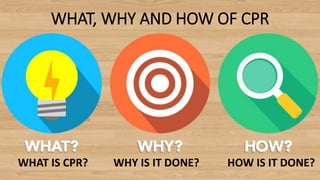
WHAT, WHY AND HOW OF CPR
WHAT IS CPR? HOW IS IT DONE?
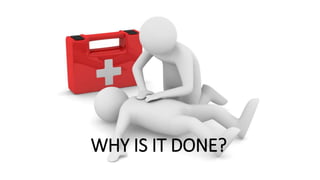
WHY IS IT DONE?
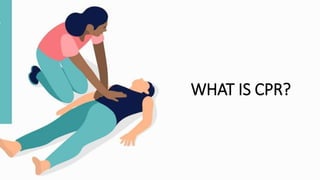
WHAT IS CPR?
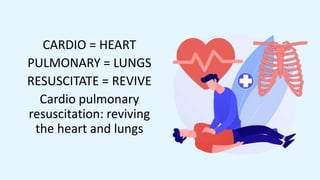
CARDIO = HEART
PULMONARY = LUNGS
RESUSCITATE = REVIVE
Cardio pulmonary
resuscitation: reviving
the heart and lungs
INTRODUCTION
• CPR is a life saving technique useful in many
emergencies in which someone breathing or heart
beat has stopped.
• CPR is a technique of basic life support for
oxygenating the brain and heart until appropriate,
definitive medical treatment (Advance Cardiac Life
Support: ACLS) can restore normal heart and
ventilatory action.
• Immediate CPR can double or triple chances of
survival after cardiac arrest.
• In CPR, chest compressions and pulmonary ventilation
are performed by ANYONE who knows how to do it,
ANYWHERE, IMMEDIATELY, WITHOUT ANY OTHER
EQUIPMENT.
WHY IS IT DONE?
PURPOSE: ABC of CPR
• A: Airway
• To maintain an open and clear airway
• B: Breathing
• To maintain breathing by external ventilation
• C: Circulation
• To maintain blood circulation by external cardiac message
• To save life of the patient
• To provide basic life support till medical and advanced life
support arrives
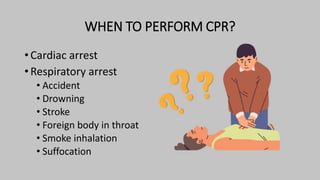
WHEN TO PERFORM CPR?
• Cardiac arrest
• Respiratory arrest
• Accident
• Drowning
• Stroke
• Foreign body in throat
• Smoke inhalation
• Suffocation
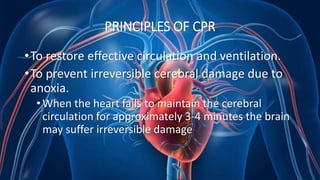
PRINCIPLES OF CPR
•To restore effective circulation and ventilation.
•To prevent irreversible cerebral damage due to
anoxia.
•When the heart fails to maintain the cerebral
circulation for approximately 3-4 minutes the brain
may suffer irreversible damage
HOW IS IT DONE?
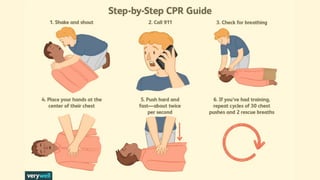
Steps of CPR: DR’S ABC
• D: DANGER. Approach safely
• R: RESPONSE. Check responses
• S: SHOUT for help
• A: AIRWAY. Open airway
• B: BREATHING. Check breathing
• Call 911 (local emergency number)
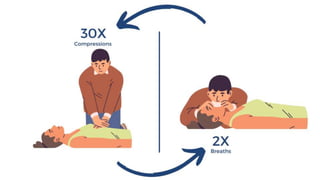
• C: CIRCULATION. 30 chest compressions AND 2 rescue
breaths
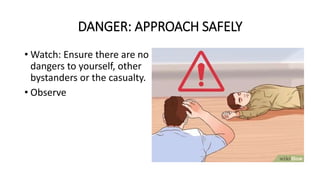
DANGER: APPROACH SAFELY
• Watch: Ensure there are no
dangers to yourself, other
bystanders or the casualty.
• Observe
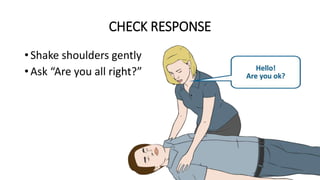
CHECK RESPONSE
• Shake shoulders gently
• Ask “Are you all right?”
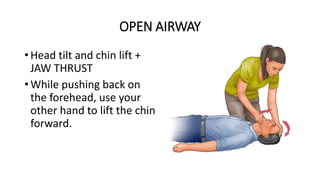
OPEN AIRWAY
• Head tilt and chin lift +
JAW THRUST
• While pushing back on
the forehead, use your
other hand to lift the chin
forward.
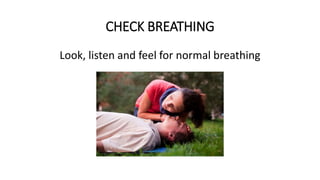
CHECK BREATHING
Look, listen and feel for normal breathing
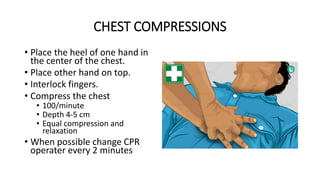
CHEST COMPRESSIONS
• Place the heel of one hand in
the center of the chest.
• Place other hand on top.
• Interlock fingers.
• Compress the chest
• 100/minute
• Depth 4-5 cm
• Equal compression and
relaxation
• When possible change CPR
operater every 2 minutes
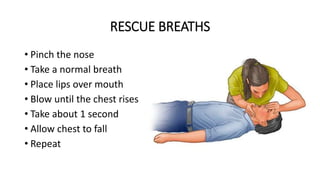
RESCUE BREATHS
• Pinch the nose
• Take a normal breath
• Place lips over mouth
• Blow until the chest rises
• Take about 1 second
• Allow chest to fall
• Repeat
BLS
Healthcare
Provider
Adult Cardiac
Arrest
Algorithm
CPR: Cardio Pulmonary Resuscitation

CPR: Cardio Pulmonary Resuscitation

  • 1.
  • 2.
    WHAT, WHY ANDHOW OF CPR WHAT IS CPR? HOW IS IT DONE? WHY IS IT DONE?
  • 3.
  • 4.
    CARDIO = HEART PULMONARY= LUNGS RESUSCITATE = REVIVE Cardio pulmonary resuscitation: reviving the heart and lungs
  • 5.
    INTRODUCTION • CPR isa life saving technique useful in many emergencies in which someone breathing or heart beat has stopped. • CPR is a technique of basic life support for oxygenating the brain and heart until appropriate, definitive medical treatment (Advance Cardiac Life Support: ACLS) can restore normal heart and ventilatory action.
  • 6.
    • Immediate CPRcan double or triple chances of survival after cardiac arrest. • In CPR, chest compressions and pulmonary ventilation are performed by ANYONE who knows how to do it, ANYWHERE, IMMEDIATELY, WITHOUT ANY OTHER EQUIPMENT.
  • 7.
    WHY IS ITDONE?
  • 8.
    PURPOSE: ABC ofCPR • A: Airway • To maintain an open and clear airway • B: Breathing • To maintain breathing by external ventilation • C: Circulation • To maintain blood circulation by external cardiac message • To save life of the patient • To provide basic life support till medical and advanced life support arrives
  • 9.
    WHEN TO PERFORMCPR? • Cardiac arrest • Respiratory arrest • Accident • Drowning • Stroke • Foreign body in throat • Smoke inhalation • Suffocation
  • 10.
    PRINCIPLES OF CPR •Torestore effective circulation and ventilation. •To prevent irreversible cerebral damage due to anoxia. •When the heart fails to maintain the cerebral circulation for approximately 3-4 minutes the brain may suffer irreversible damage
  • 11.
    HOW IS ITDONE?
  • 12.
    Steps of CPR:DR’S ABC • D: DANGER. Approach safely • R: RESPONSE. Check responses • S: SHOUT for help • A: AIRWAY. Open airway • B: BREATHING. Check breathing • Call 911 (local emergency number) • C: CIRCULATION. 30 chest compressions AND 2 rescue breaths
  • 13.
    DANGER: APPROACH SAFELY •Watch: Ensure there are no dangers to yourself, other bystanders or the casualty. • Observe
  • 14.
    CHECK RESPONSE • Shakeshoulders gently • Ask “Are you all right?”
  • 15.
    OPEN AIRWAY • Headtilt and chin lift + JAW THRUST • While pushing back on the forehead, use your other hand to lift the chin forward.
  • 16.
    CHECK BREATHING Look, listenand feel for normal breathing
  • 17.
    CHEST COMPRESSIONS • Placethe heel of one hand in the center of the chest. • Place other hand on top. • Interlock fingers. • Compress the chest • 100/minute • Depth 4-5 cm • Equal compression and relaxation • When possible change CPR operater every 2 minutes
  • 19.
    RESCUE BREATHS • Pinchthe nose • Take a normal breath • Place lips over mouth • Blow until the chest rises • Take about 1 second • Allow chest to fall • Repeat
  • 21.