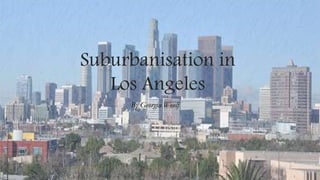
Suburbanisation in
Los Angeles
By Georgia Woolf
Suburbs and Suburbanisation
Suburb:
Is a residential area or a mixed use area, either existing as part of a city or urban area or as a
separate residential community within commuting distance of a city
Suburbanisation:
The growth of a suburb
The outward growth of urban development which may engulf surrounding villages and towns
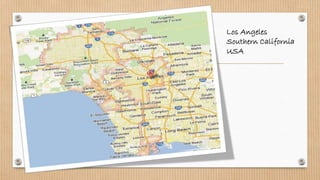
Los Angeles
Southern California
USA
History of growth in Los Angeles
 Good Transport links – The transcontinental railway in 1876, Los Angeles air port – 6th
busiest in the world
 Employment opportunities – The discovery of oil, manufacturing industries (Ford car plant)
and the aircraft industry in the early and late 20th century – lots of employment opportunities, city
began to grow and so did the population
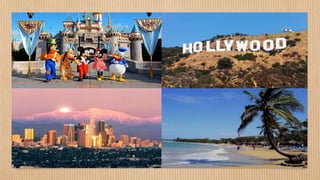
 Image – The Development of the film industry in Hollywood created a glamourous image of
the city in the 1920s. Film theme parts (Disneyland and Universal Studios) attracted tourists,
making it a great holiday destination. This also increased employment.
 Affluence – Increase of wealth and the area became a destination of choice In 2013, 3.884 million
were living in Los
Angeles making it the
second largest city in
the USA!
By the 1970’s, Los
Angeles was the
USA’s fastest-
growing city
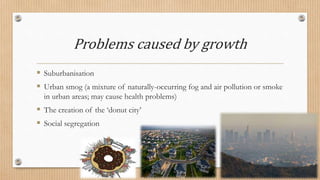
Problems caused by growth
 Suburbanisation
 Urban smog (a mixture of naturally-occurring fog and air pollution or smoke
in urban areas; may cause health problems)
 The creation of the ‘donut city’
 Social segregation
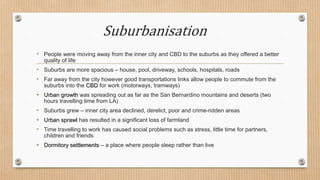
Suburbanisation
• People were moving away from the inner city and CBD to the suburbs as they offered a better
quality of life
• Suburbs are more spacious – house, pool, driveway, schools, hospitals, roads
• Far away from the city however good transportations links allow people to commute from the
suburbs into the CBD for work (motorways, tramways)
• Urban growth was spreading out as far as the San Bernardino mountains and deserts (two
hours travelling time from LA)
• Suburbs grew – inner city area declined, derelict, poor and crime-ridden areas
• Urban sprawl has resulted in a significant loss of farmland
• Time travelling to work has caused social problems such as stress, little time for partners,
children and friends
• Dormitory settlements – a place where people sleep rather than live
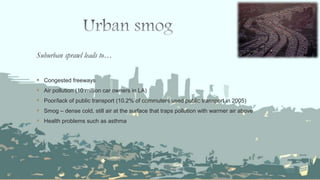
Suburban sprawl leads to…
 Congested freeways
 Air pollution (10 million car owners in LA)
 Poor/lack of public transport (10.2% of commuters used public transport in 2005)
 Smog – dense cold, still air at the surface that traps pollution with warmer air above
 Health problems such as asthma
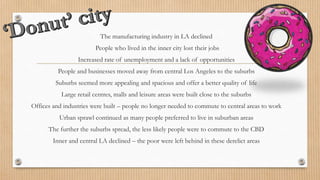
The manufacturing industry in LA declined
People who lived in the inner city lost their jobs
Increased rate of unemployment and a lack of opportunities
People and businesses moved away from central Los Angeles to the suburbs
Suburbs seemed more appealing and spacious and offer a better quality of life
Large retail centres, malls and leisure areas were built close to the suburbs
Offices and industries were built – people no longer needed to commute to central areas to work
Urban sprawl continued as many people preferred to live in suburban areas
The further the suburbs spread, the less likely people were to commute to the CBD
Inner and central LA declined – the poor were left behind in these derelict areas
 The poor are left behind in the inner city as they cannot afford to move – deprivation, crime
and social issues
 TNC’s have located to fill the downtown ‘hole’ of the donut city
 Wealthy live amongst the poor
 High income earners may live in central LA – secure, attractive housing blocks
 Mexican migrants locate here – add to the poor population as the cannot afford to pay for
health services and higher education
Sustainable future for Los Angeles
‘PLAN’ (Progressive Los Angeles Network) intends to help LA become a sustainable city…
• Increase urban parks and clean up contaminated brownfield sites
• Promote clean fuel vehicles and green energy
• Improve public transport (lower fares, rapid bus lines)
• Promote safe neighbourhoods
• Introduce bike lanes
• Require developers to build affordable housing in all new residential developments

Suburbanisation in los angeles

  • 1.
  • 2.
    Suburbs and Suburbanisation Suburb: Isa residential area or a mixed use area, either existing as part of a city or urban area or as a separate residential community within commuting distance of a city Suburbanisation: The growth of a suburb The outward growth of urban development which may engulf surrounding villages and towns
  • 3.
  • 5.
    History of growthin Los Angeles  Good Transport links – The transcontinental railway in 1876, Los Angeles air port – 6th busiest in the world  Employment opportunities – The discovery of oil, manufacturing industries (Ford car plant) and the aircraft industry in the early and late 20th century – lots of employment opportunities, city began to grow and so did the population  Image – The Development of the film industry in Hollywood created a glamourous image of the city in the 1920s. Film theme parts (Disneyland and Universal Studios) attracted tourists, making it a great holiday destination. This also increased employment.  Affluence – Increase of wealth and the area became a destination of choice In 2013, 3.884 million were living in Los Angeles making it the second largest city in the USA! By the 1970’s, Los Angeles was the USA’s fastest- growing city
  • 6.
    Problems caused bygrowth  Suburbanisation  Urban smog (a mixture of naturally-occurring fog and air pollution or smoke in urban areas; may cause health problems)  The creation of the ‘donut city’  Social segregation
  • 7.
    Suburbanisation • People weremoving away from the inner city and CBD to the suburbs as they offered a better quality of life • Suburbs are more spacious – house, pool, driveway, schools, hospitals, roads • Far away from the city however good transportations links allow people to commute from the suburbs into the CBD for work (motorways, tramways) • Urban growth was spreading out as far as the San Bernardino mountains and deserts (two hours travelling time from LA) • Suburbs grew – inner city area declined, derelict, poor and crime-ridden areas • Urban sprawl has resulted in a significant loss of farmland • Time travelling to work has caused social problems such as stress, little time for partners, children and friends • Dormitory settlements – a place where people sleep rather than live
  • 8.
    Suburban sprawl leadsto…  Congested freeways  Air pollution (10 million car owners in LA)  Poor/lack of public transport (10.2% of commuters used public transport in 2005)  Smog – dense cold, still air at the surface that traps pollution with warmer air above  Health problems such as asthma
  • 9.
    The manufacturing industryin LA declined People who lived in the inner city lost their jobs Increased rate of unemployment and a lack of opportunities People and businesses moved away from central Los Angeles to the suburbs Suburbs seemed more appealing and spacious and offer a better quality of life Large retail centres, malls and leisure areas were built close to the suburbs Offices and industries were built – people no longer needed to commute to central areas to work Urban sprawl continued as many people preferred to live in suburban areas The further the suburbs spread, the less likely people were to commute to the CBD Inner and central LA declined – the poor were left behind in these derelict areas
  • 10.
     The poorare left behind in the inner city as they cannot afford to move – deprivation, crime and social issues  TNC’s have located to fill the downtown ‘hole’ of the donut city  Wealthy live amongst the poor  High income earners may live in central LA – secure, attractive housing blocks  Mexican migrants locate here – add to the poor population as the cannot afford to pay for health services and higher education
  • 11.
    Sustainable future forLos Angeles ‘PLAN’ (Progressive Los Angeles Network) intends to help LA become a sustainable city… • Increase urban parks and clean up contaminated brownfield sites • Promote clean fuel vehicles and green energy • Improve public transport (lower fares, rapid bus lines) • Promote safe neighbourhoods • Introduce bike lanes • Require developers to build affordable housing in all new residential developments