STRUCTURE OF THE PROCARYOTIC CELL WALL. COMPLETE METHODS OF STAINING.
GRAM’S METHOD AS THE METHOD TO REVEAL THE STRUCTURE OF THE CELL WALL.
I. THEORETICAL QUESTIONS
1. Structure of the cell wall. The chemical composition and functions of the cell wall.
2. The main differences between Gram-positive cell wall and Gram-negative cell envelope.
3. Features of the morphological organization of protoplasts, spheroplasts and L-forms of bacteria.
4. Complete staining methods: Gram’s method:
a - to give definition of complete staining methods;
b - procedure and mechanism of Gram’s staining;
c - practical value of Gram’s staining;
d - Gram’s staining by Sinev’s.
1. Structure of the cell wall (covering).
The surface layers of bacteria are:
- capsules and loose slime,
- the cell wall of Gram-positive bacteria and the complex cell envelope of Gram-negative bacteria,
- plasma (cytoplasmic) membranes,
In bacteria, the cell wall forms a rigid structure around the cell. The bacterial cell wall surrounds the cell
membrane. Inside the cell wall (or rigid peptidoglycan layer) is the plasma (cytoplasmic) membrane; this is
usually closely apposed to the wall layer. Outside of cell wall some bacteria have a capsule or a loose slime.
Although it is not present in every bacterial species, the cell wall is very important as a cellular component.
The main functions of the cell wall:
- Cell wall is responsible for the characteristic shape of the cell (rod, coccus, or spiral).
- The strength of the wall is responsible for keeping the cell from bursting when the intracellular
osmolarity is much greater than the extracellular osmolarity
- It has got receptors for chemicals and for bacteriophages (reception function)
- The chemical components of bacterial cell are antigens
- The cell envelope of the Gram-negative bacteria includes endotoxin
- It is a rigid platform for surface appendages- flagella, fimbriae, and pili
2. The main differences between Gram-positive cell wall and Gram-negative cell envelope.
The cell walls of all bacteria are not identical. In fact, cell wall composition is one of the most important factors in
bacterial species analysis and differentiation. There are two major types of walls: Gram-positive and Gram-
negative. The main differences between cell wall structures are shown in the table.
Gram-positive cell wall Gram-negative cell envelope
Thickness is about 20 to 80 nm Thickness is about 5 to 10 nm
It consists of many polymer layers of
peptidoglycan connected by amino acid bridges.
It has three layers: peptidoglycan; outer membrane;
lipopolysaccharide
It is composed largely of peptidoglycan (90%) and
other polymers such as the teichoic acids,
polysaccharides, and peptidoglycolipids
It is composed of 20% peptidoglycan, 40% lipids
(lipoproteins, phospholipids, lipopolysaccharides)
and 40% proteins
Cell wall contains of teichoic acids (unique
structure, which appears only for Gram-positive
bacteria
Within the cell envelope, the periplasmic space
presents between outer plasma membrane and
peptidoglycan layer.
A schematic diagram provides the best explanation of the structure.
The short characteristics of the main cell wall components.
Peptidoglicane. Unique features of almost all prokaryotic cells (except for mycoplasmas) are cell wall
peptidoglycan (also known as mucopeptide or murein). The peptidoglycan polymer is composed of an alternating
sequence of N-acetylglucosamine and N-acetyl-muraminic acid. It is a lot easier to remember NAG and NAMA.
Each peptidoglycan layer is connected, or crosslinked, to the other by a bridge made of amino acids and amino acid
derivatives. The structure of the peptidoglycan is illustrated in Figure 5.
The cross linked peptidoglycan molecules form a network, which covers the cell like a grid.
1
Teichoic Acids. Wall teichoic acid is found only in certain Gram-positive bacteria, so far, they have not
been found in gram-negative organisms. The teichoic acid from a particular bacterial species can act as a
specific antigenic determinant. Molecules of the teichoic acids are covalently linked to the peptidoglycan.
These highly negatively charged polymers of the bacterial wall can serve as a cation-sequestering mechanism.
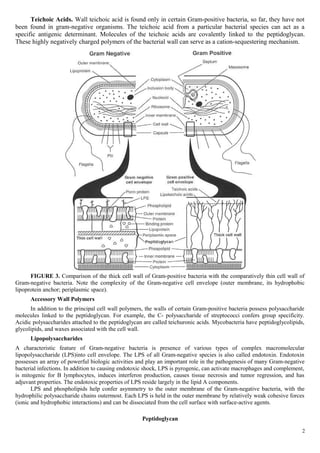
FIGURE 3. Comparison of the thick cell wall of Gram-positive bacteria with the comparatively thin cell wall of
Gram-negative bacteria. Note the complexity of the Gram-negative cell envelope (outer membrane, its hydrophobic
lipoprotein anchor; periplasmic space).
Accessory Wall Polymers
In addition to the principal cell wall polymers, the walls of certain Gram-positive bacteria possess polysaccharide
molecules linked to the peptidoglycan. For example, the C- polysaccharide of streptococci confers group specificity.
Acidic polysaccharides attached to the peptidoglycan are called teichuronic acids. Mycobacteria have peptidoglycolipids,
glycolipids, and waxes associated with the cell wall.
Lipopolysaccharides
A characteristic feature of Gram-negative bacteria is presence of various types of complex macromolecular
lipopolysaccharide (LPS)into cell envelope. The LPS of all Gram-negative species is also called endotoxin. Endotoxin
possesses an array of powerful biologic activities and play an important role in the pathogenesis of many Gram-negative
bacterial infections. In addition to causing endotoxic shock, LPS is pyrogenic, can activate macrophages and complement,
is mitogenic for B lymphocytes, induces interferon production, causes tissue necrosis and tumor regression, and has
adjuvant properties. The endotoxic properties of LPS reside largely in the lipid A components.
LPS and phospholipids help confer asymmetry to the outer membrane of the Gram-negative bacteria, with the
hydrophilic polysaccharide chains outermost. Each LPS is held in the outer membrane by relatively weak cohesive forces
(ionic and hydrophobic interactions) and can be dissociated from the cell surface with surface-active agents.
Peptidoglycan
2
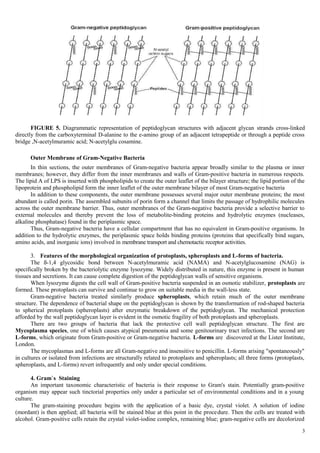
FIGURE 5. Diagrammatic representation of peptidoglycan structures with adjacent glycan strands cross-linked
directly from the carboxyterminal D-alanine to the e-amino group of an adjacent tetrapeptide or through a peptide cross
bridge ,N-acetylmuramic acid; N-acetylglu cosamine.
Outer Membrane of Gram-Negative Bacteria
In thin sections, the outer membranes of Gram-negative bacteria appear broadly similar to the plasma or inner
membranes; however, they differ from the inner membranes and walls of Gram-positive bacteria in numerous respects.
The lipid A of LPS is inserted with phospholipids to create the outer leaflet of the bilayer structure; the lipid portion of the
lipoprotein and phospholipid form the inner leaflet of the outer membrane bilayer of most Gram-negative bacteria
In addition to these components, the outer membrane possesses several major outer membrane proteins; the most
abundant is called porin. The assembled subunits of porin form a channel that limits the passage of hydrophilic molecules
across the outer membrane barrier. Thus, outer membranes of the Gram-negative bacteria provide a selective barrier to
external molecules and thereby prevent the loss of metabolite-binding proteins and hydrolytic enzymes (nucleases,
alkaline phosphatase) found in the periplasmic space.
Thus, Gram-negative bacteria have a cellular compartment that has no equivalent in Gram-positive organisms. In
addition to the hydrolytic enzymes, the periplasmic space holds binding proteins (proteins that specifically bind sugars,
amino acids, and inorganic ions) involved in membrane transport and chemotactic receptor activities.
3. Features of the morphological organization of protoplasts, spheroplasts and L-forms of bacteria.
The ß-1,4 glycosidic bond between N-acetylmuramic acid (NAMA) and N-acetylglucosamine (NAG) is
specifically broken by the bacteriolytic enzyme lysozyme. Widely distributed in nature, this enzyme is present in human
tissues and secretions. It can cause complete digestion of the peptidoglycan walls of sensitive organisms.
When lysozyme digests the cell wall of Gram-positive bacteria suspended in an osmotic stabilizer, protoplasts are
formed. These protoplasts can survive and continue to grow on suitable media in the wall-less state.
Gram-negative bacteria treated similarly produce spheroplasts, which retain much of the outer membrane
structure. The dependence of bacterial shape on the peptidoglycan is shown by the transformation of rod-shaped bacteria
to spherical protoplasts (spheroplasts) after enzymatic breakdown of the peptidoglycan. The mechanical protection
afforded by the wall peptidoglycan layer is evident in the osmotic fragility of both protoplasts and spheroplasts.
There are two groups of bacteria that lack the protective cell wall peptidoglycan structure. The first are
Mycoplasma species, one of which causes atypical pneumonia and some genitourinary tract infections. The second are
L-forms, which originate from Gram-positive or Gram-negative bacteria. L-forms are discovered at the Lister Institute,
London.
The mycoplasmas and L-forms are all Gram-negative and insensitive to penicillin. L-forms arising "spontaneously"
in cultures or isolated from infections are structurally related to protoplasts and spheroplasts; all three forms (protoplasts,
spheroplasts, and L-forms) revert infrequently and only under special conditions.
4. Gram`s Staining
An important taxonomic characteristic of bacteria is their response to Gram's stain. Potentially gram-positive
organism may appear such tinctorial properties only under a particular set of environmental conditions and in a young
culture.
The gram-staining procedure begins with the application of a basic dye, crystal violet. A solution of iodine
(mordant) is then applied; all bacteria will be stained blue at this point in the procedure. Then the cells are treated with
alcohol. Gram-positive cells retain the crystal violet-iodine complex, remaining blue; gram-negative cells are decolorized
3
completely by alcohol. As a last step, a counter stain such as the red dye fuchsine is applied so that the decolorized gram-
negative (cells will take on a contrasting color; the gram-positive cells now appear purple.
Gram-staining Procedure
STEP 1: Cover the entire slide with crystal violet. Let the crystal violet stand for about 60 seconds. When the time
has elapsed, wash off your slide for 5 seconds with the tap water. The specimen should appear blue-violet when observed
with the naked eye.
STEP 2: Now, flood your slide with the iodine solution (mordant). Let it stand about a minute as well. When time
has expired, rinse the slide with water for 5 seconds. At this point, the specimen should still be blue-violet.
STEP 3: This step involves addition of the decolorizer, ethanol. Add the ethanol drop wise until the blue-violet
color is no longer emitted from your specimen (but don`t it more for 30 seconds). As in the previous steps, rinse with the
water for 5 seconds.
STEP 4: The final step involves applying the counterstain, fuchsin. Flood the slide with the dye as you did in steps
1 and 2. Let this stand for about a minute to allow the bacteria to incorporate the fuchsin. Again, rinse with water for 5
seconds to remove any excess of dye.
After you have completed steps 1 through 4, you should dry the slide before viewing it under the microscope
The Gram-Positive Cell
As it is previously mentioned, Gram-positive bacteria are characterized by their blue-violet color reaction in the
Gram-staining procedure. The blue-violet color reaction is caused by crystal violet, the primary Gram-stain dye reacted
with the iodine mordant. When the decolorizer is applied, a slow dehydration of the crystal-violet/iodine complex is
observed due to the closing of pores running through the cell wall. Because the crystal-violet is still present in the cell, the
counter stain is not incorporated, thus maintaining the cell's blue-violet color.
The Gram-Negative Cell
Unlike Gram-positive bacteria, which assume a violet color in Gram staining, Gram-negative bacteria incorporate
the counter stain rather than the primary stain. Because the cell wall of Gram(-) bacteria is high in lipid content and low in
peptidiglycan content, the primary crystal-violet escapes from the cell when the decolorizer is added. STAINING
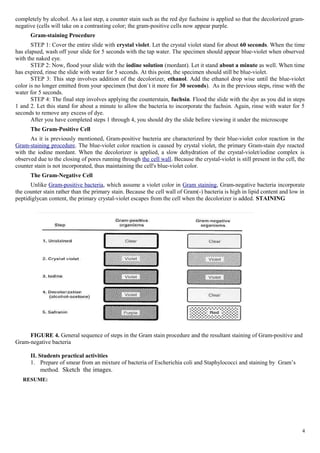
FIGURE 4. General sequence of steps in the Gram stain procedure and the resultant staining of Gram-positive and
Gram-negative bacteria
ІI. Students practical activities
1. Prepare of smear from an mixture of bacteria of Escherichia coli and Staphylococci and staining by Gram’s
method. Sketch the images.
RESUME:
4

Structure of prokaryotic cell wall

  • 1.
    STRUCTURE OF THEPROCARYOTIC CELL WALL. COMPLETE METHODS OF STAINING. GRAM’S METHOD AS THE METHOD TO REVEAL THE STRUCTURE OF THE CELL WALL. I. THEORETICAL QUESTIONS 1. Structure of the cell wall. The chemical composition and functions of the cell wall. 2. The main differences between Gram-positive cell wall and Gram-negative cell envelope. 3. Features of the morphological organization of protoplasts, spheroplasts and L-forms of bacteria. 4. Complete staining methods: Gram’s method: a - to give definition of complete staining methods; b - procedure and mechanism of Gram’s staining; c - practical value of Gram’s staining; d - Gram’s staining by Sinev’s. 1. Structure of the cell wall (covering). The surface layers of bacteria are: - capsules and loose slime, - the cell wall of Gram-positive bacteria and the complex cell envelope of Gram-negative bacteria, - plasma (cytoplasmic) membranes, In bacteria, the cell wall forms a rigid structure around the cell. The bacterial cell wall surrounds the cell membrane. Inside the cell wall (or rigid peptidoglycan layer) is the plasma (cytoplasmic) membrane; this is usually closely apposed to the wall layer. Outside of cell wall some bacteria have a capsule or a loose slime. Although it is not present in every bacterial species, the cell wall is very important as a cellular component. The main functions of the cell wall: - Cell wall is responsible for the characteristic shape of the cell (rod, coccus, or spiral). - The strength of the wall is responsible for keeping the cell from bursting when the intracellular osmolarity is much greater than the extracellular osmolarity - It has got receptors for chemicals and for bacteriophages (reception function) - The chemical components of bacterial cell are antigens - The cell envelope of the Gram-negative bacteria includes endotoxin - It is a rigid platform for surface appendages- flagella, fimbriae, and pili 2. The main differences between Gram-positive cell wall and Gram-negative cell envelope. The cell walls of all bacteria are not identical. In fact, cell wall composition is one of the most important factors in bacterial species analysis and differentiation. There are two major types of walls: Gram-positive and Gram- negative. The main differences between cell wall structures are shown in the table. Gram-positive cell wall Gram-negative cell envelope Thickness is about 20 to 80 nm Thickness is about 5 to 10 nm It consists of many polymer layers of peptidoglycan connected by amino acid bridges. It has three layers: peptidoglycan; outer membrane; lipopolysaccharide It is composed largely of peptidoglycan (90%) and other polymers such as the teichoic acids, polysaccharides, and peptidoglycolipids It is composed of 20% peptidoglycan, 40% lipids (lipoproteins, phospholipids, lipopolysaccharides) and 40% proteins Cell wall contains of teichoic acids (unique structure, which appears only for Gram-positive bacteria Within the cell envelope, the periplasmic space presents between outer plasma membrane and peptidoglycan layer. A schematic diagram provides the best explanation of the structure. The short characteristics of the main cell wall components. Peptidoglicane. Unique features of almost all prokaryotic cells (except for mycoplasmas) are cell wall peptidoglycan (also known as mucopeptide or murein). The peptidoglycan polymer is composed of an alternating sequence of N-acetylglucosamine and N-acetyl-muraminic acid. It is a lot easier to remember NAG and NAMA. Each peptidoglycan layer is connected, or crosslinked, to the other by a bridge made of amino acids and amino acid derivatives. The structure of the peptidoglycan is illustrated in Figure 5. The cross linked peptidoglycan molecules form a network, which covers the cell like a grid. 1
  • 2.
    Teichoic Acids. Wallteichoic acid is found only in certain Gram-positive bacteria, so far, they have not been found in gram-negative organisms. The teichoic acid from a particular bacterial species can act as a specific antigenic determinant. Molecules of the teichoic acids are covalently linked to the peptidoglycan. These highly negatively charged polymers of the bacterial wall can serve as a cation-sequestering mechanism. FIGURE 3. Comparison of the thick cell wall of Gram-positive bacteria with the comparatively thin cell wall of Gram-negative bacteria. Note the complexity of the Gram-negative cell envelope (outer membrane, its hydrophobic lipoprotein anchor; periplasmic space). Accessory Wall Polymers In addition to the principal cell wall polymers, the walls of certain Gram-positive bacteria possess polysaccharide molecules linked to the peptidoglycan. For example, the C- polysaccharide of streptococci confers group specificity. Acidic polysaccharides attached to the peptidoglycan are called teichuronic acids. Mycobacteria have peptidoglycolipids, glycolipids, and waxes associated with the cell wall. Lipopolysaccharides A characteristic feature of Gram-negative bacteria is presence of various types of complex macromolecular lipopolysaccharide (LPS)into cell envelope. The LPS of all Gram-negative species is also called endotoxin. Endotoxin possesses an array of powerful biologic activities and play an important role in the pathogenesis of many Gram-negative bacterial infections. In addition to causing endotoxic shock, LPS is pyrogenic, can activate macrophages and complement, is mitogenic for B lymphocytes, induces interferon production, causes tissue necrosis and tumor regression, and has adjuvant properties. The endotoxic properties of LPS reside largely in the lipid A components. LPS and phospholipids help confer asymmetry to the outer membrane of the Gram-negative bacteria, with the hydrophilic polysaccharide chains outermost. Each LPS is held in the outer membrane by relatively weak cohesive forces (ionic and hydrophobic interactions) and can be dissociated from the cell surface with surface-active agents. Peptidoglycan 2
  • 3.
    FIGURE 5. Diagrammaticrepresentation of peptidoglycan structures with adjacent glycan strands cross-linked directly from the carboxyterminal D-alanine to the e-amino group of an adjacent tetrapeptide or through a peptide cross bridge ,N-acetylmuramic acid; N-acetylglu cosamine. Outer Membrane of Gram-Negative Bacteria In thin sections, the outer membranes of Gram-negative bacteria appear broadly similar to the plasma or inner membranes; however, they differ from the inner membranes and walls of Gram-positive bacteria in numerous respects. The lipid A of LPS is inserted with phospholipids to create the outer leaflet of the bilayer structure; the lipid portion of the lipoprotein and phospholipid form the inner leaflet of the outer membrane bilayer of most Gram-negative bacteria In addition to these components, the outer membrane possesses several major outer membrane proteins; the most abundant is called porin. The assembled subunits of porin form a channel that limits the passage of hydrophilic molecules across the outer membrane barrier. Thus, outer membranes of the Gram-negative bacteria provide a selective barrier to external molecules and thereby prevent the loss of metabolite-binding proteins and hydrolytic enzymes (nucleases, alkaline phosphatase) found in the periplasmic space. Thus, Gram-negative bacteria have a cellular compartment that has no equivalent in Gram-positive organisms. In addition to the hydrolytic enzymes, the periplasmic space holds binding proteins (proteins that specifically bind sugars, amino acids, and inorganic ions) involved in membrane transport and chemotactic receptor activities. 3. Features of the morphological organization of protoplasts, spheroplasts and L-forms of bacteria. The ß-1,4 glycosidic bond between N-acetylmuramic acid (NAMA) and N-acetylglucosamine (NAG) is specifically broken by the bacteriolytic enzyme lysozyme. Widely distributed in nature, this enzyme is present in human tissues and secretions. It can cause complete digestion of the peptidoglycan walls of sensitive organisms. When lysozyme digests the cell wall of Gram-positive bacteria suspended in an osmotic stabilizer, protoplasts are formed. These protoplasts can survive and continue to grow on suitable media in the wall-less state. Gram-negative bacteria treated similarly produce spheroplasts, which retain much of the outer membrane structure. The dependence of bacterial shape on the peptidoglycan is shown by the transformation of rod-shaped bacteria to spherical protoplasts (spheroplasts) after enzymatic breakdown of the peptidoglycan. The mechanical protection afforded by the wall peptidoglycan layer is evident in the osmotic fragility of both protoplasts and spheroplasts. There are two groups of bacteria that lack the protective cell wall peptidoglycan structure. The first are Mycoplasma species, one of which causes atypical pneumonia and some genitourinary tract infections. The second are L-forms, which originate from Gram-positive or Gram-negative bacteria. L-forms are discovered at the Lister Institute, London. The mycoplasmas and L-forms are all Gram-negative and insensitive to penicillin. L-forms arising "spontaneously" in cultures or isolated from infections are structurally related to protoplasts and spheroplasts; all three forms (protoplasts, spheroplasts, and L-forms) revert infrequently and only under special conditions. 4. Gram`s Staining An important taxonomic characteristic of bacteria is their response to Gram's stain. Potentially gram-positive organism may appear such tinctorial properties only under a particular set of environmental conditions and in a young culture. The gram-staining procedure begins with the application of a basic dye, crystal violet. A solution of iodine (mordant) is then applied; all bacteria will be stained blue at this point in the procedure. Then the cells are treated with alcohol. Gram-positive cells retain the crystal violet-iodine complex, remaining blue; gram-negative cells are decolorized 3
  • 4.
    completely by alcohol.As a last step, a counter stain such as the red dye fuchsine is applied so that the decolorized gram- negative (cells will take on a contrasting color; the gram-positive cells now appear purple. Gram-staining Procedure STEP 1: Cover the entire slide with crystal violet. Let the crystal violet stand for about 60 seconds. When the time has elapsed, wash off your slide for 5 seconds with the tap water. The specimen should appear blue-violet when observed with the naked eye. STEP 2: Now, flood your slide with the iodine solution (mordant). Let it stand about a minute as well. When time has expired, rinse the slide with water for 5 seconds. At this point, the specimen should still be blue-violet. STEP 3: This step involves addition of the decolorizer, ethanol. Add the ethanol drop wise until the blue-violet color is no longer emitted from your specimen (but don`t it more for 30 seconds). As in the previous steps, rinse with the water for 5 seconds. STEP 4: The final step involves applying the counterstain, fuchsin. Flood the slide with the dye as you did in steps 1 and 2. Let this stand for about a minute to allow the bacteria to incorporate the fuchsin. Again, rinse with water for 5 seconds to remove any excess of dye. After you have completed steps 1 through 4, you should dry the slide before viewing it under the microscope The Gram-Positive Cell As it is previously mentioned, Gram-positive bacteria are characterized by their blue-violet color reaction in the Gram-staining procedure. The blue-violet color reaction is caused by crystal violet, the primary Gram-stain dye reacted with the iodine mordant. When the decolorizer is applied, a slow dehydration of the crystal-violet/iodine complex is observed due to the closing of pores running through the cell wall. Because the crystal-violet is still present in the cell, the counter stain is not incorporated, thus maintaining the cell's blue-violet color. The Gram-Negative Cell Unlike Gram-positive bacteria, which assume a violet color in Gram staining, Gram-negative bacteria incorporate the counter stain rather than the primary stain. Because the cell wall of Gram(-) bacteria is high in lipid content and low in peptidiglycan content, the primary crystal-violet escapes from the cell when the decolorizer is added. STAINING FIGURE 4. General sequence of steps in the Gram stain procedure and the resultant staining of Gram-positive and Gram-negative bacteria ІI. Students practical activities 1. Prepare of smear from an mixture of bacteria of Escherichia coli and Staphylococci and staining by Gram’s method. Sketch the images. RESUME: 4