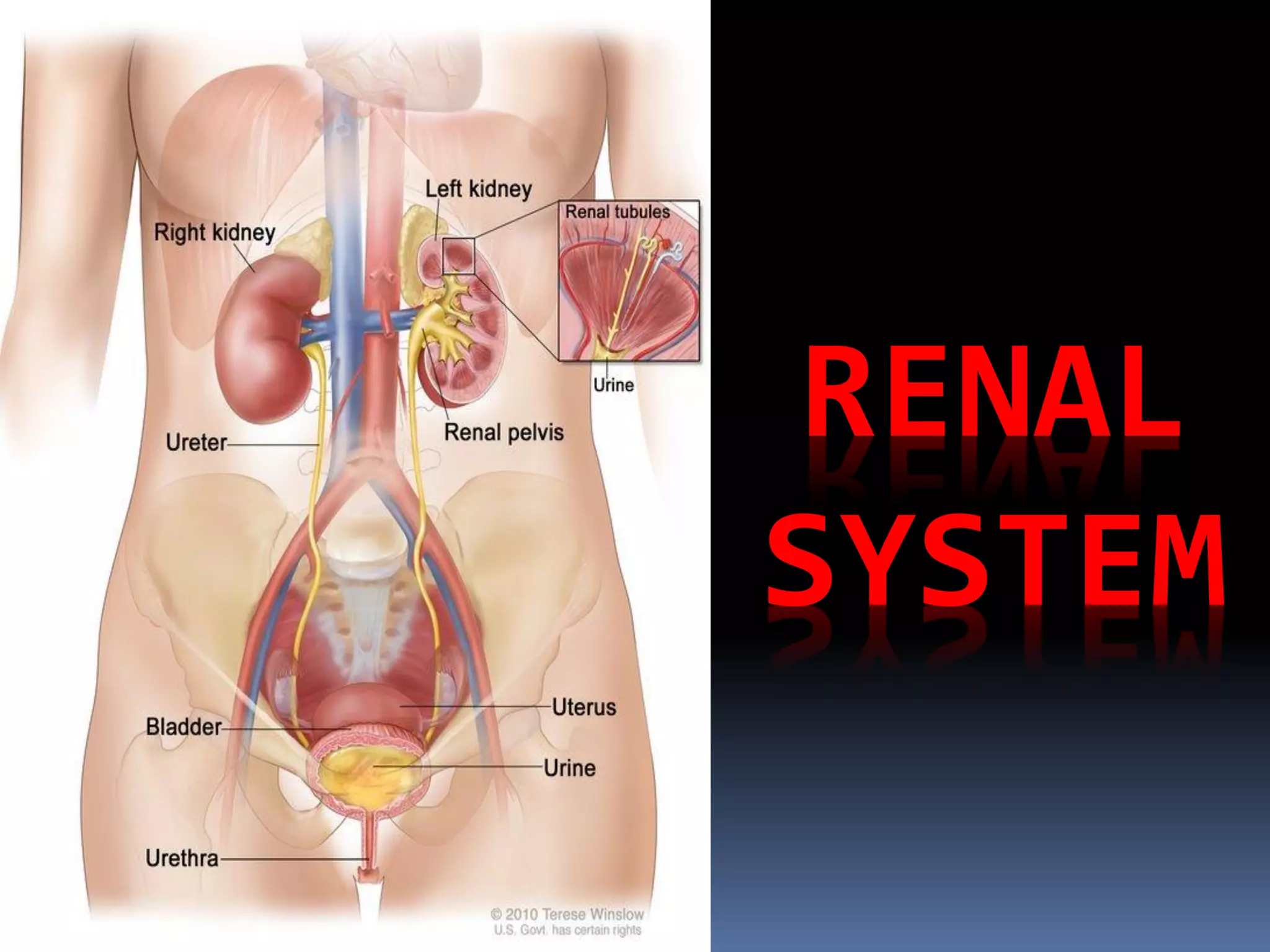
RENAL
SYSTEM
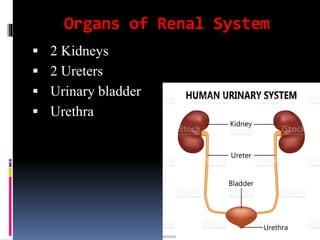
Organs of Renal System
▪ 2 Kidneys
▪ 2 Ureters
▪ Urinary bladder
▪ Urethra
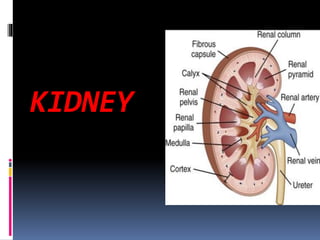
KIDNEY
LOCATION
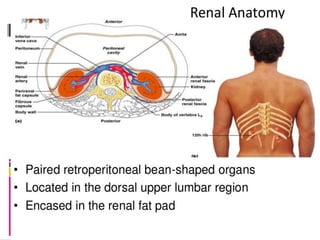
▪ The kidneys are located behind the peritoneum,
and so are called retroperitoneal organs.
▪ They lie in the back of the abdomen between
the levels of theT12 and L3 vertebrae.
▪ The right kidney is slightly lower than the left
kidney to accommodate the liver.
▪ Both kidneys are bean-shaped and about the
size of an adult fist.
COLOR & SHAPE
▪ Reddish brown in colour and bean shaped
HEIGHT & WEIGHT
▪ Each kidney is 11 cm (4-5”) long, 6 cm (2-3”)
broad and 3 cm (1”) thick,
▪ Weight 150 grams in males and 135 g in females.
Cont..
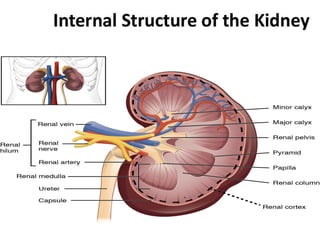
▪ The kidney is a bean-shaped structure with
a convex and a concave border. A recessed area
on the concave border is the renal hilum, where
the renal artery enters the kidney and the renal
vein and ureter leave.
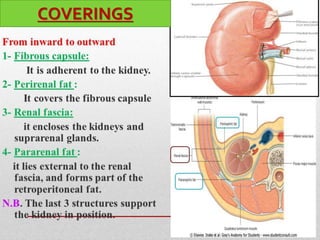
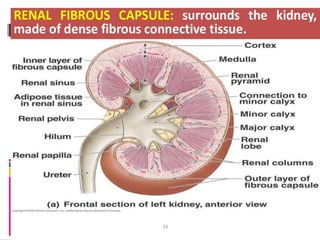
▪ The kidney is surrounded by tough fibrous
tissue, the renal (fibrous) capsule, perirenal
fat, renal fascia, and pararenal fat.
COVERINGS
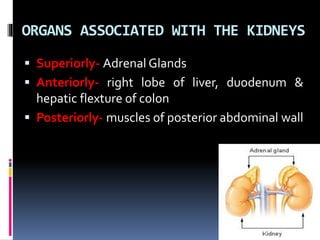
ORGANS ASSOCIATED WITH THE KIDNEYS
▪ Superiorly- Adrenal Glands
▪ Anteriorly- right lobe of liver, duodenum &
hepatic flexture of colon
▪ Posteriorly- muscles of posterior abdominal wall
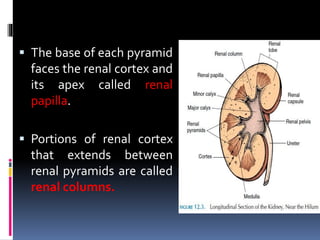
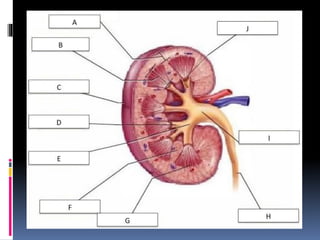
▪ The base of each pyramid
faces the renal cortex and
its apex called renal
papilla.
▪ Portions of renal cortex
that extends between
renal pyramids are called
renal columns.
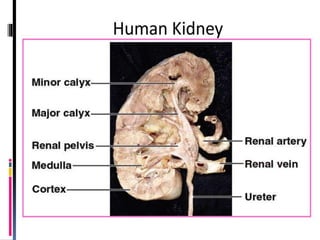
▪ Each kidney have 2-3 major calyx & 8-18
minor calyx.
▪ Urine formed in the kidney passes through
papilla at the apex of the pyramid into minor
calyx then into major calyx before passing
through the pelvis into the ureter.
▪ The walls of the pelvis contains smooth
muscle and are lined with transitional
epithelium
▪ Peristalsis of smooth muscle in the walls of
the calyces propels urine through the pelvis,
ureters to the bladder.
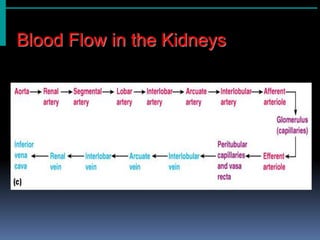
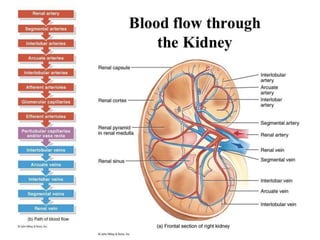
Blood Flow in the Kidneys
FUNCTIONS OF KIDNEYS
▪ Regulation of blood ionic composition: The
kidneys help regulate the blood levels of several
ions, most importantly sodium ions, potassium
ions, calcium ions, chloride ions and phosphate
ions.
▪ Regulation of blood pH: The kidneys excrete a
variable amount of hydrogen ions into the urine
and conserve bicarbonate ions, which are an
important buffer of H+ in the blood. Both of these
activities help regulate blood pH.
Cont..
▪ Regulation of blood volume: The kidneys adjust
blood volume by conserving or eliminating water
in urine.
▪ Regulation of blood pressure: The kidneys also
help regulate blood pressure by secreting enzyme
renin, which activates renin-angiotensin-
aldosterone pathway.
Cont..
▪ Maintainance of blood osmolarity: By
separately regulating loss of water and loss of
solutes in the urine, the kidneys maintain a
relatively constant blood osmolarity close to 300
milli-osmoles per liter.
▪ Production of hormones: The kidneys produce
two hormones. Calcitriol, the active form of
vitamin D, helps regulate calcium homeostasis,
and Erythropoietin stimulates the production of
red blood cells.
Cont..
▪ Excretion of waste and foreign substances: the
kidneys excrete a number of end products of
metabolism in urine. In addition to the metabolic
wastes, the kidneys also excrete foreign substances
from the body, such as drugs, pesticides, and other
chemicals ingested in food.
RAS OR RAAS
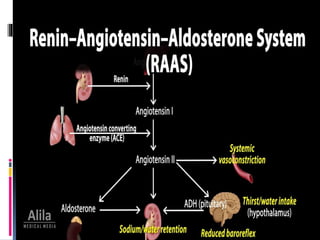
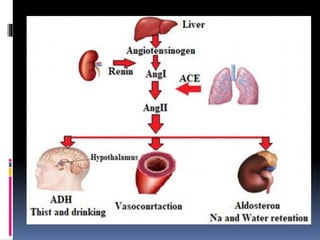
▪ It is a hormone system which regulates blood
pressure and fluid and electrolyte balance.
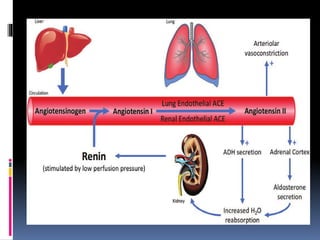
▪ When renal blood flow is reduced
juxtaglomerular cells in kidneys convert the
precursor prorenin into renin and secrete it
directly into circulation.
▪ Plasma renin then carries out the conversion of
angiotensinogen released by liver to
angiotensin-I.
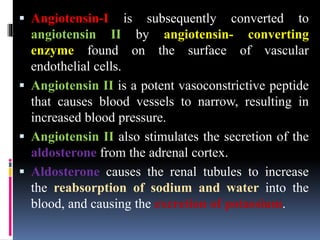
▪ Angiotensin-I is subsequently converted to
angiotensin II by angiotensin- converting
enzyme found on the surface of vascular
endothelial cells.
▪ Angiotensin II is a potent vasoconstrictive peptide
that causes blood vessels to narrow, resulting in
increased blood pressure.
▪ Angiotensin II also stimulates the secretion of the
aldosterone from the adrenal cortex.
▪ Aldosterone causes the renal tubules to increase
the reabsorption of sodium and water into the
blood, and causing the excretion of potassium.
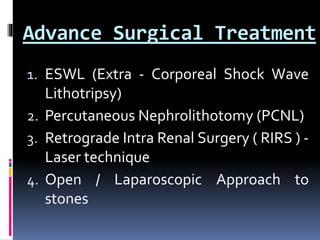
Advance Surgical Treatment
1. ESWL (Extra - Corporeal Shock Wave
Lithotripsy)
2. Percutaneous Nephrolithotomy (PCNL)
3. Retrograde Intra Renal Surgery ( RIRS ) -
Laser technique
4. Open / Laparoscopic Approach to
stones
structure of kidney.pdf

structure of kidney.pdf

  • 1.
  • 2.
    Organs of RenalSystem ▪ 2 Kidneys ▪ 2 Ureters ▪ Urinary bladder ▪ Urethra
  • 3.
  • 4.
    LOCATION ▪ The kidneysare located behind the peritoneum, and so are called retroperitoneal organs. ▪ They lie in the back of the abdomen between the levels of theT12 and L3 vertebrae. ▪ The right kidney is slightly lower than the left kidney to accommodate the liver. ▪ Both kidneys are bean-shaped and about the size of an adult fist.
  • 6.
    COLOR & SHAPE ▪Reddish brown in colour and bean shaped HEIGHT & WEIGHT ▪ Each kidney is 11 cm (4-5”) long, 6 cm (2-3”) broad and 3 cm (1”) thick, ▪ Weight 150 grams in males and 135 g in females.
  • 7.
    Cont.. ▪ The kidneyis a bean-shaped structure with a convex and a concave border. A recessed area on the concave border is the renal hilum, where the renal artery enters the kidney and the renal vein and ureter leave. ▪ The kidney is surrounded by tough fibrous tissue, the renal (fibrous) capsule, perirenal fat, renal fascia, and pararenal fat.
  • 8.
  • 9.
    ORGANS ASSOCIATED WITHTHE KIDNEYS ▪ Superiorly- Adrenal Glands ▪ Anteriorly- right lobe of liver, duodenum & hepatic flexture of colon ▪ Posteriorly- muscles of posterior abdominal wall
  • 16.
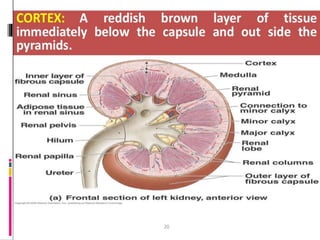
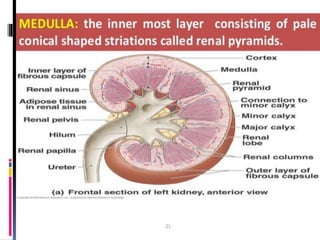
    ▪ The baseof each pyramid faces the renal cortex and its apex called renal papilla. ▪ Portions of renal cortex that extends between renal pyramids are called renal columns.
  • 17.
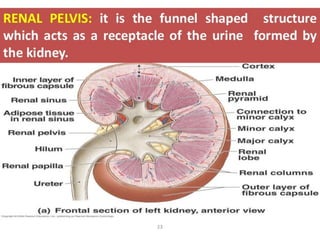
    ▪ Each kidneyhave 2-3 major calyx & 8-18 minor calyx. ▪ Urine formed in the kidney passes through papilla at the apex of the pyramid into minor calyx then into major calyx before passing through the pelvis into the ureter. ▪ The walls of the pelvis contains smooth muscle and are lined with transitional epithelium ▪ Peristalsis of smooth muscle in the walls of the calyces propels urine through the pelvis, ureters to the bladder.
  • 18.
    Blood Flow inthe Kidneys
  • 20.
    FUNCTIONS OF KIDNEYS ▪Regulation of blood ionic composition: The kidneys help regulate the blood levels of several ions, most importantly sodium ions, potassium ions, calcium ions, chloride ions and phosphate ions. ▪ Regulation of blood pH: The kidneys excrete a variable amount of hydrogen ions into the urine and conserve bicarbonate ions, which are an important buffer of H+ in the blood. Both of these activities help regulate blood pH.
  • 21.
    Cont.. ▪ Regulation ofblood volume: The kidneys adjust blood volume by conserving or eliminating water in urine. ▪ Regulation of blood pressure: The kidneys also help regulate blood pressure by secreting enzyme renin, which activates renin-angiotensin- aldosterone pathway.
  • 22.
    Cont.. ▪ Maintainance ofblood osmolarity: By separately regulating loss of water and loss of solutes in the urine, the kidneys maintain a relatively constant blood osmolarity close to 300 milli-osmoles per liter. ▪ Production of hormones: The kidneys produce two hormones. Calcitriol, the active form of vitamin D, helps regulate calcium homeostasis, and Erythropoietin stimulates the production of red blood cells.
  • 23.
    Cont.. ▪ Excretion ofwaste and foreign substances: the kidneys excrete a number of end products of metabolism in urine. In addition to the metabolic wastes, the kidneys also excrete foreign substances from the body, such as drugs, pesticides, and other chemicals ingested in food.
  • 25.
    RAS OR RAAS ▪It is a hormone system which regulates blood pressure and fluid and electrolyte balance. ▪ When renal blood flow is reduced juxtaglomerular cells in kidneys convert the precursor prorenin into renin and secrete it directly into circulation. ▪ Plasma renin then carries out the conversion of angiotensinogen released by liver to angiotensin-I.
  • 26.
    ▪ Angiotensin-I issubsequently converted to angiotensin II by angiotensin- converting enzyme found on the surface of vascular endothelial cells. ▪ Angiotensin II is a potent vasoconstrictive peptide that causes blood vessels to narrow, resulting in increased blood pressure. ▪ Angiotensin II also stimulates the secretion of the aldosterone from the adrenal cortex. ▪ Aldosterone causes the renal tubules to increase the reabsorption of sodium and water into the blood, and causing the excretion of potassium.
  • 36.
    Advance Surgical Treatment 1.ESWL (Extra - Corporeal Shock Wave Lithotripsy) 2. Percutaneous Nephrolithotomy (PCNL) 3. Retrograde Intra Renal Surgery ( RIRS ) - Laser technique 4. Open / Laparoscopic Approach to stones