CYTOSKELETON
Cytoskeleton
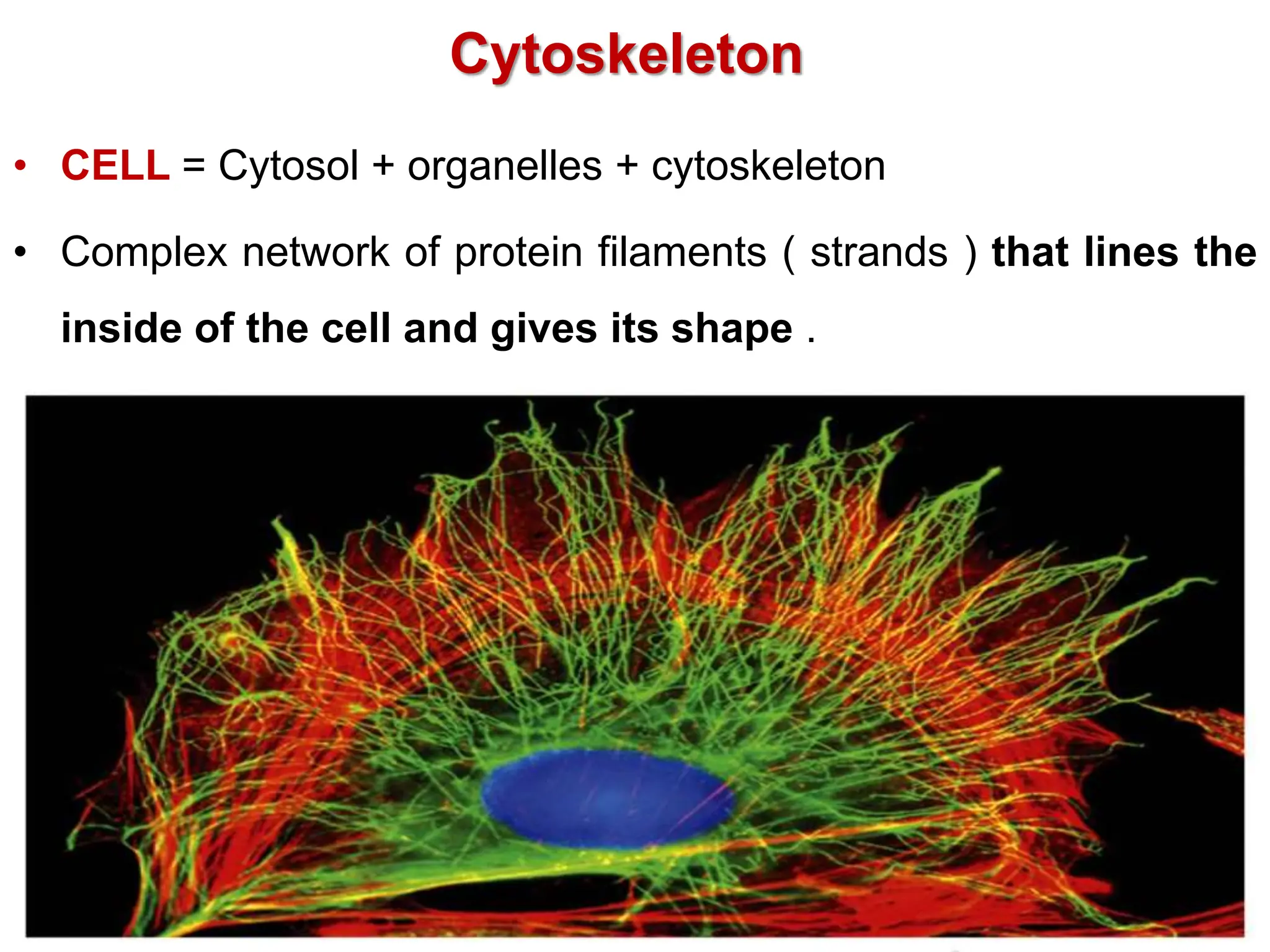
• CELL = Cytosol + organelles + cytoskeleton
• Complex network of protein filaments ( strands ) that lines the
inside of the cell and gives its shape .
Funtions
• Determination and preservation of Cell/Nucleus shape and
placement (elasticity, strength)
• Movement of the cell (migration, diapedesis [leakage of
blood cells from the vessel walls into tissues], etc.),
movement of a part of the cell ( cilia , tail, etc.)
• Phagocytosis, endocytosis , exocytosis
• Cytokinesis
• Intracellular transport
• Contraction
• Supporting cell-cell and cell-extracellular media relationships
• Creating a structural framework within the cytoplasm
• Effective regulation of cell cytoplasm
• Stabilization of intercellular connections
Basic Elements of the Cytoskeleton
The cytoskeleton consists of 3 well-defined filament
structures:
1. MICRTUBULES (25 nm )
Tubulin (alpha, beta, gamma)
2. MICROFILAMENTS (7 nm )
Actin (F and G)
3. INTERMEDIATE FILAMENTS (10 nm )
Localizations
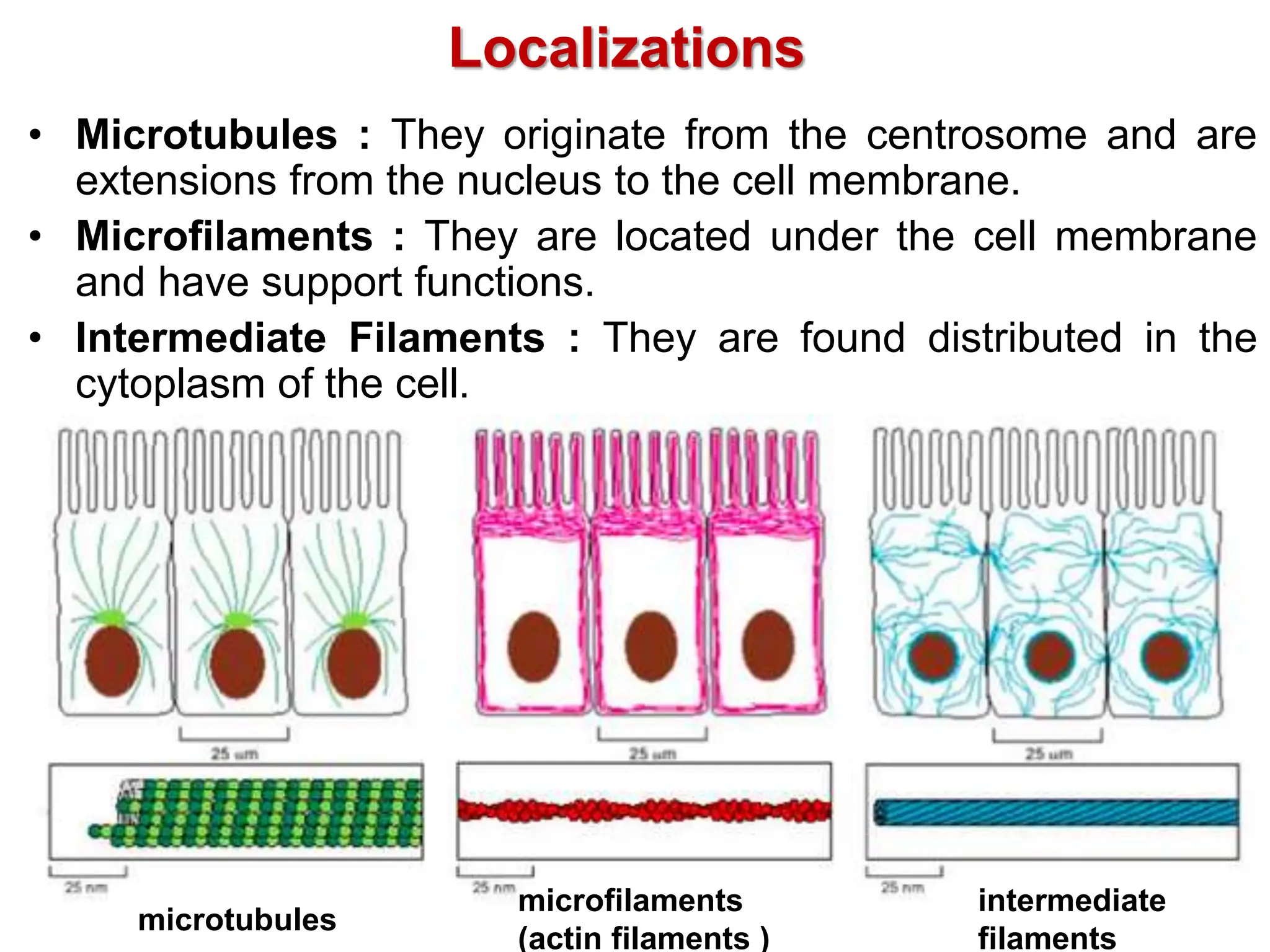
• Microtubules : They originate from the centrosome and are
extensions from the nucleus to the cell membrane.
• Microfilaments : They are located under the cell membrane
and have support functions.
• Intermediate Filaments : They are found distributed in the
cytoplasm of the cell.
microtubules
microfilaments
(actin filaments )
intermediate
filaments
1. MICROTUBULES
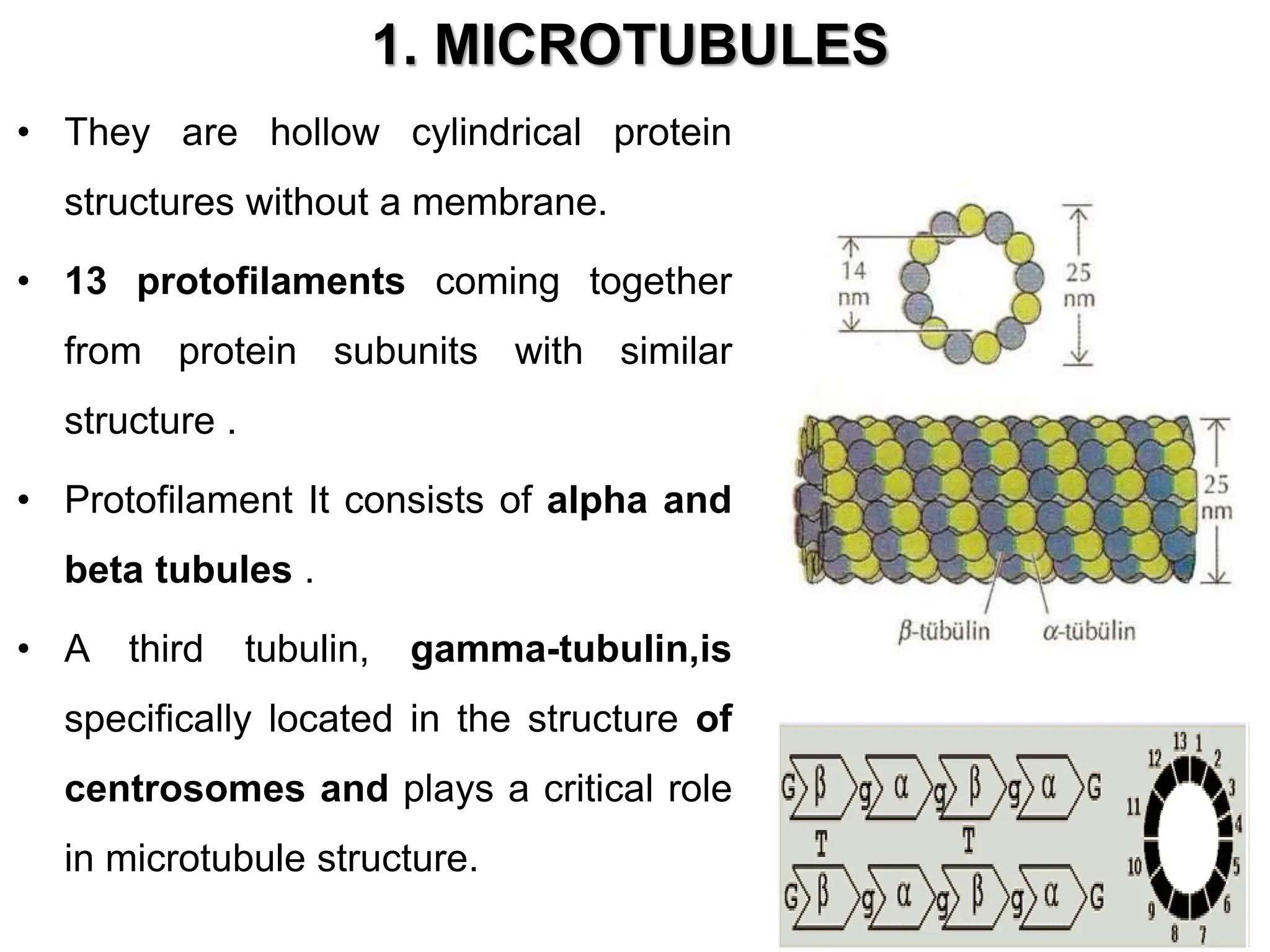
• They are hollow cylindrical protein
structures without a membrane.
• 13 protofilaments coming together
from protein subunits with similar
structure .
• Protofilament It consists of alpha and
beta tubules .
• A third tubulin, gamma-tubulin,is
specifically located in the structure of
centrosomes and plays a critical role
in microtubule structure.
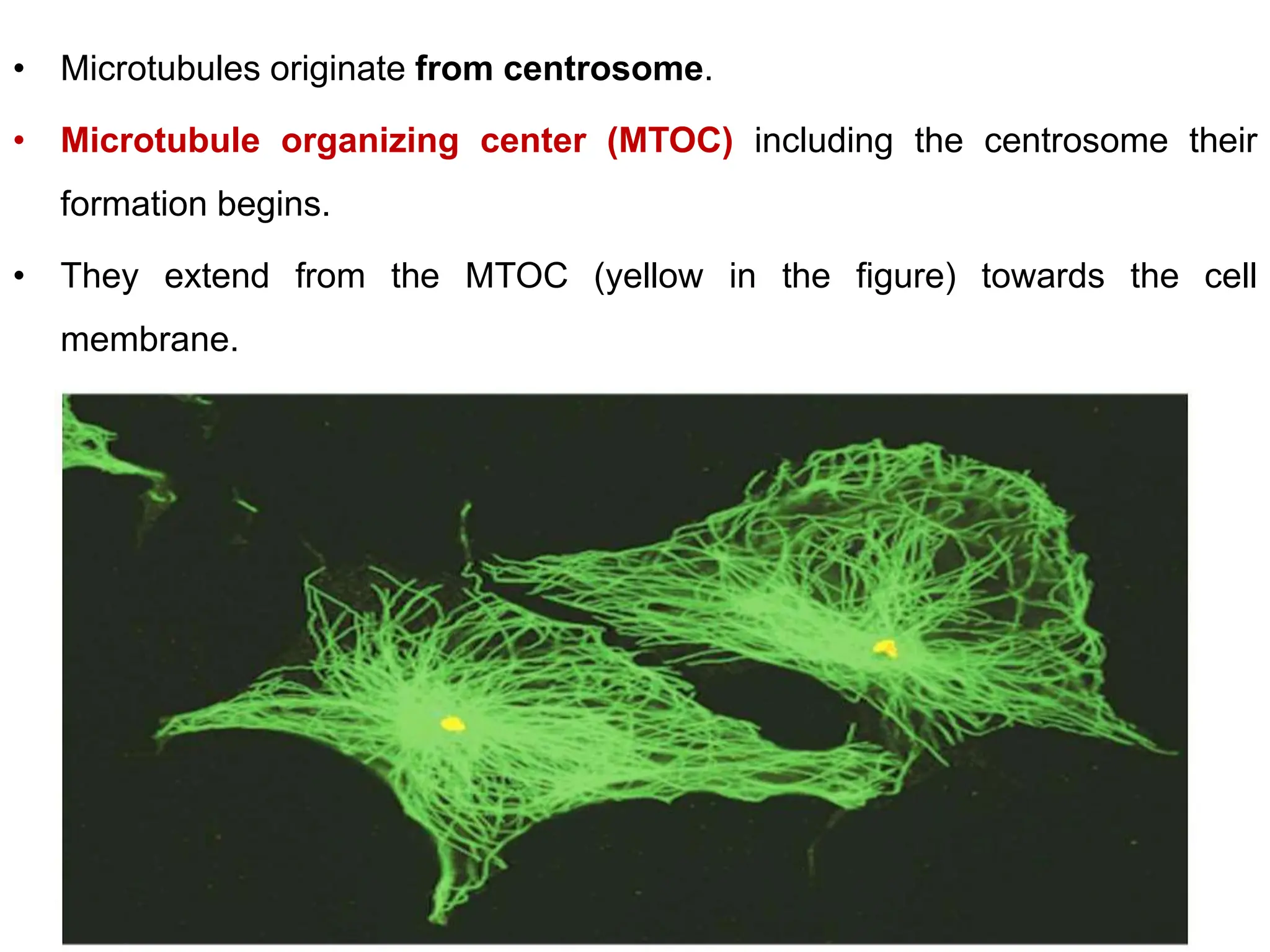
• Microtubules originate from centrosome.
• Microtubule organizing center (MTOC) including the centrosome their
formation begins.
• They extend from the MTOC (yellow in the figure) towards the cell
membrane.
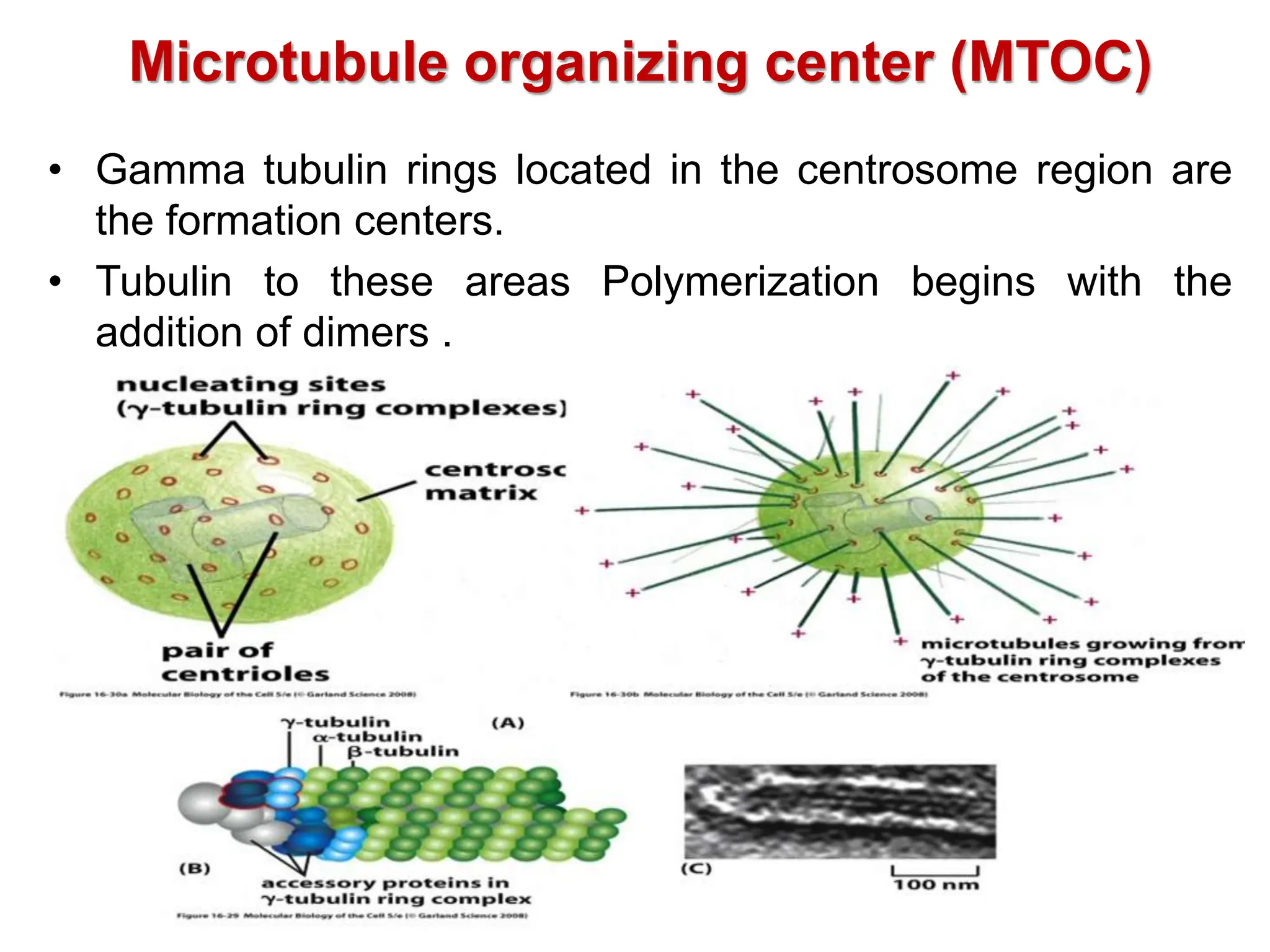
Microtubule organizing center (MTOC)
• Gamma tubulin rings located in the centrosome region are
the formation centers.
• Tubulin to these areas Polymerization begins with the
addition of dimers .
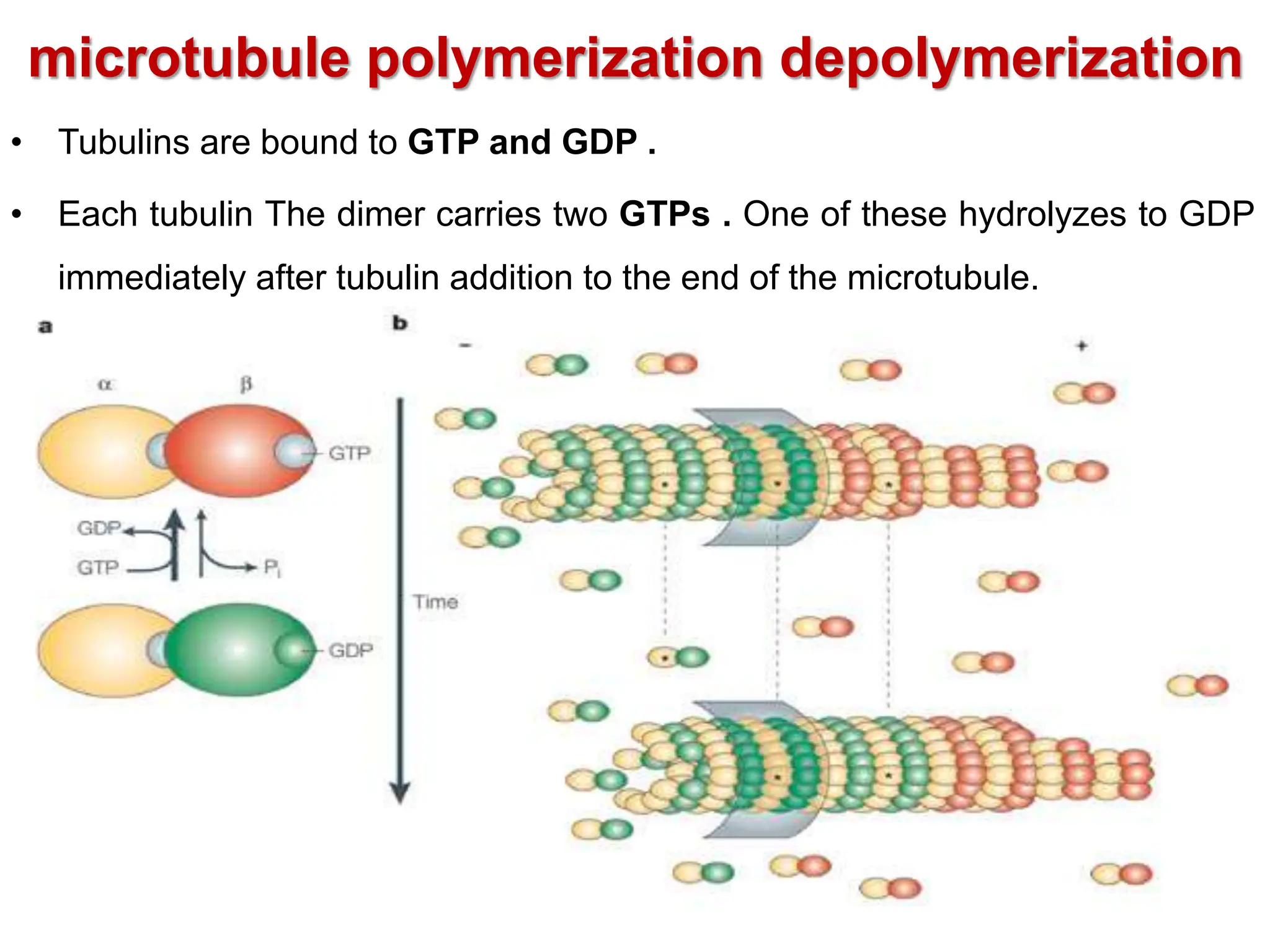
microtubule polymerization depolymerization
• Tubulins are bound to GTP and GDP .
• Each tubulin The dimer carries two GTPs . One of these hydrolyzes to GDP
immediately after tubulin addition to the end of the microtubule.
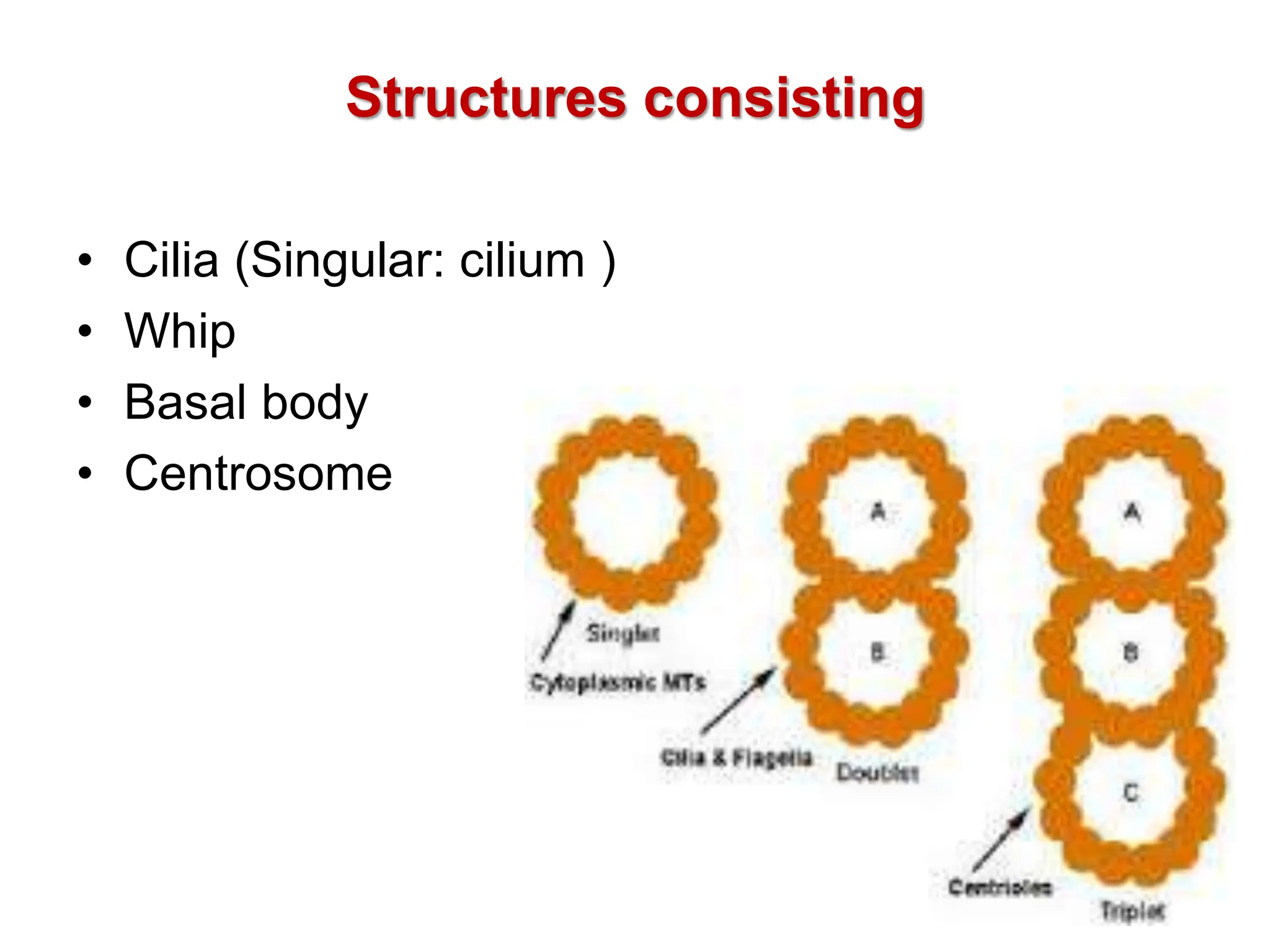
Structures consisting
• Cilia (Singular: cilium )
• Whip
• Basal body
• Centrosome
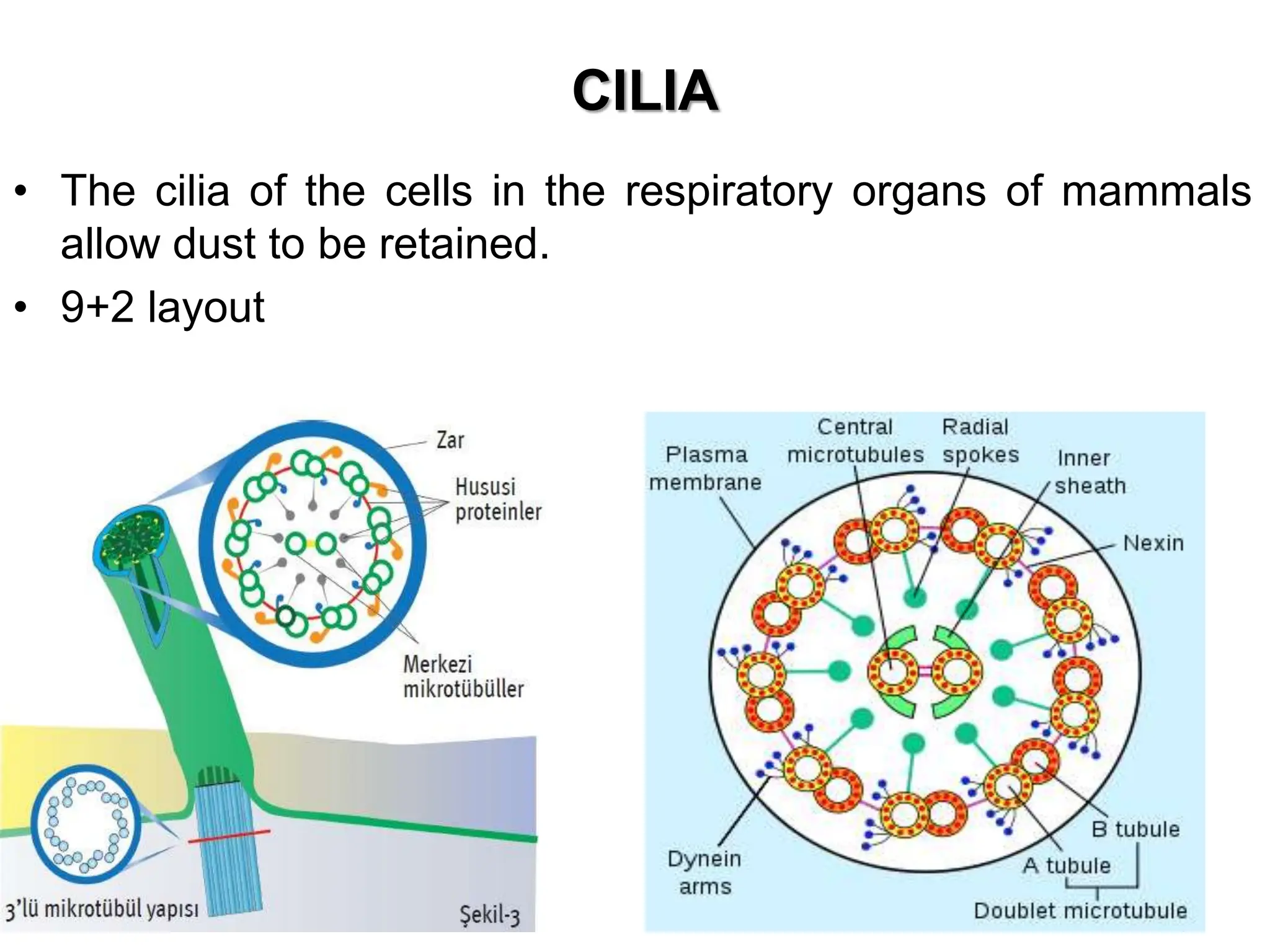
CILIA
• The cilia of the cells in the respiratory organs of mammals
allow dust to be retained.
• 9+2 layout
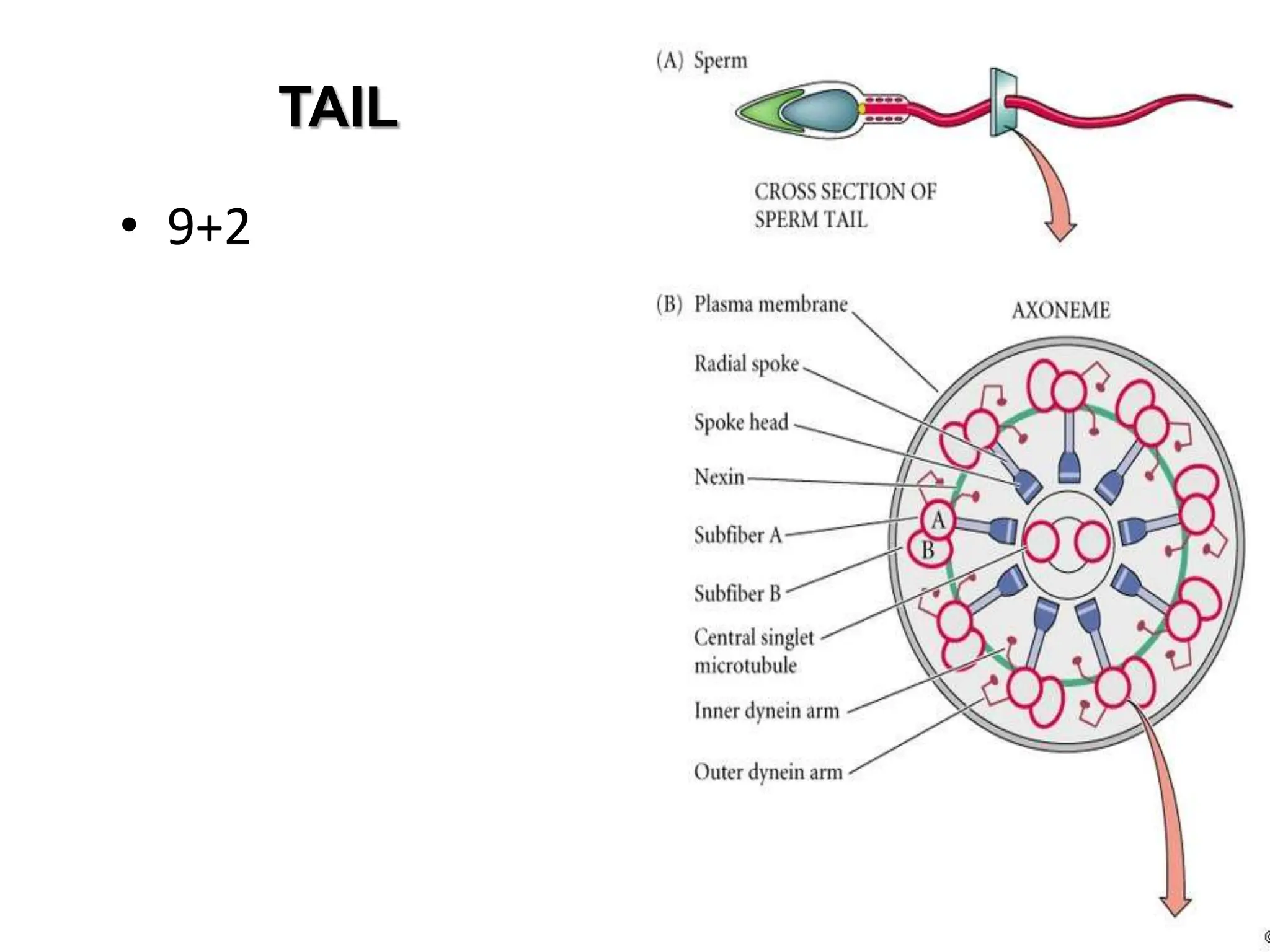
TAIL
• 9+2
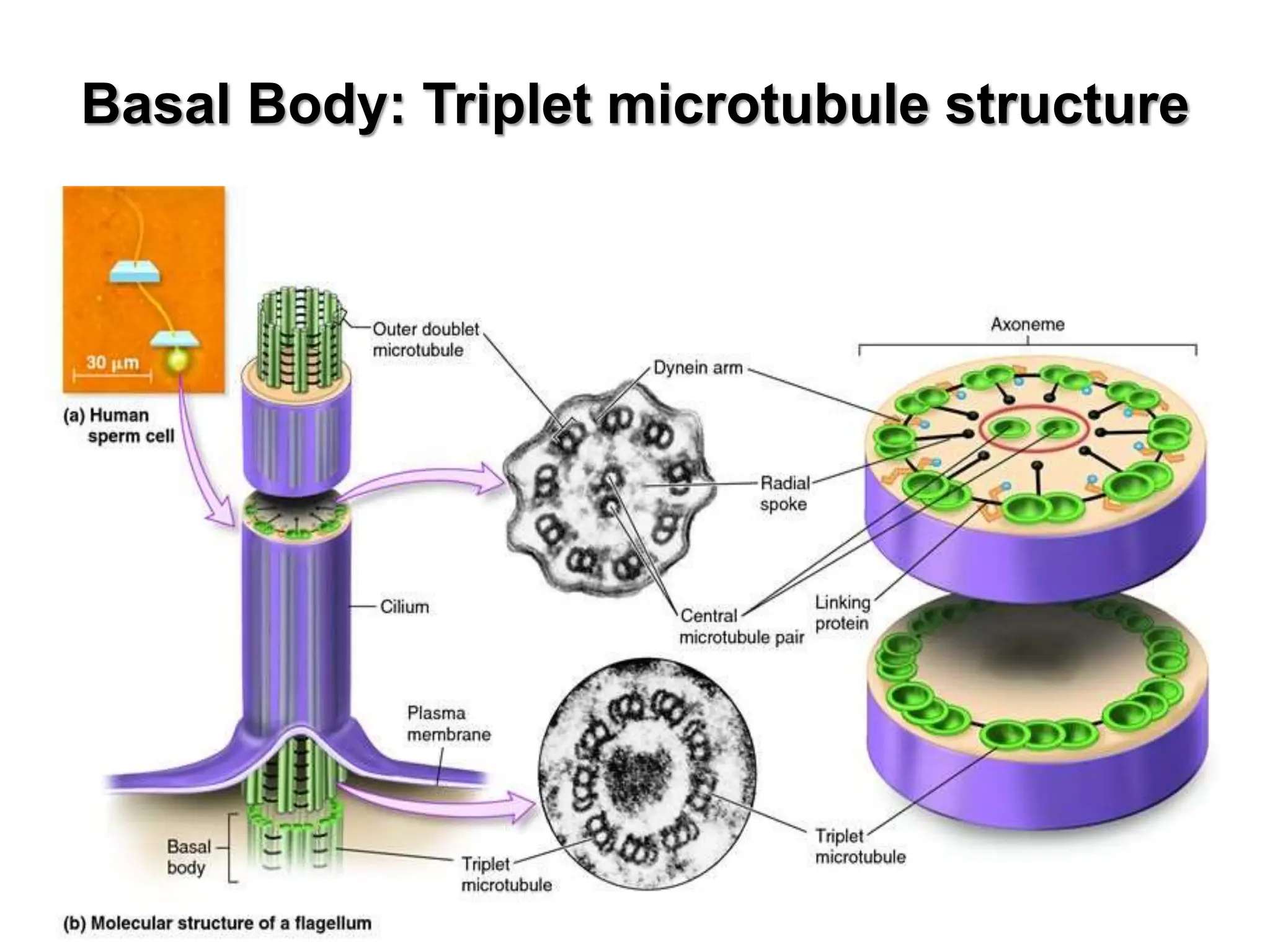
Basal Body: Triplet microtubule structure
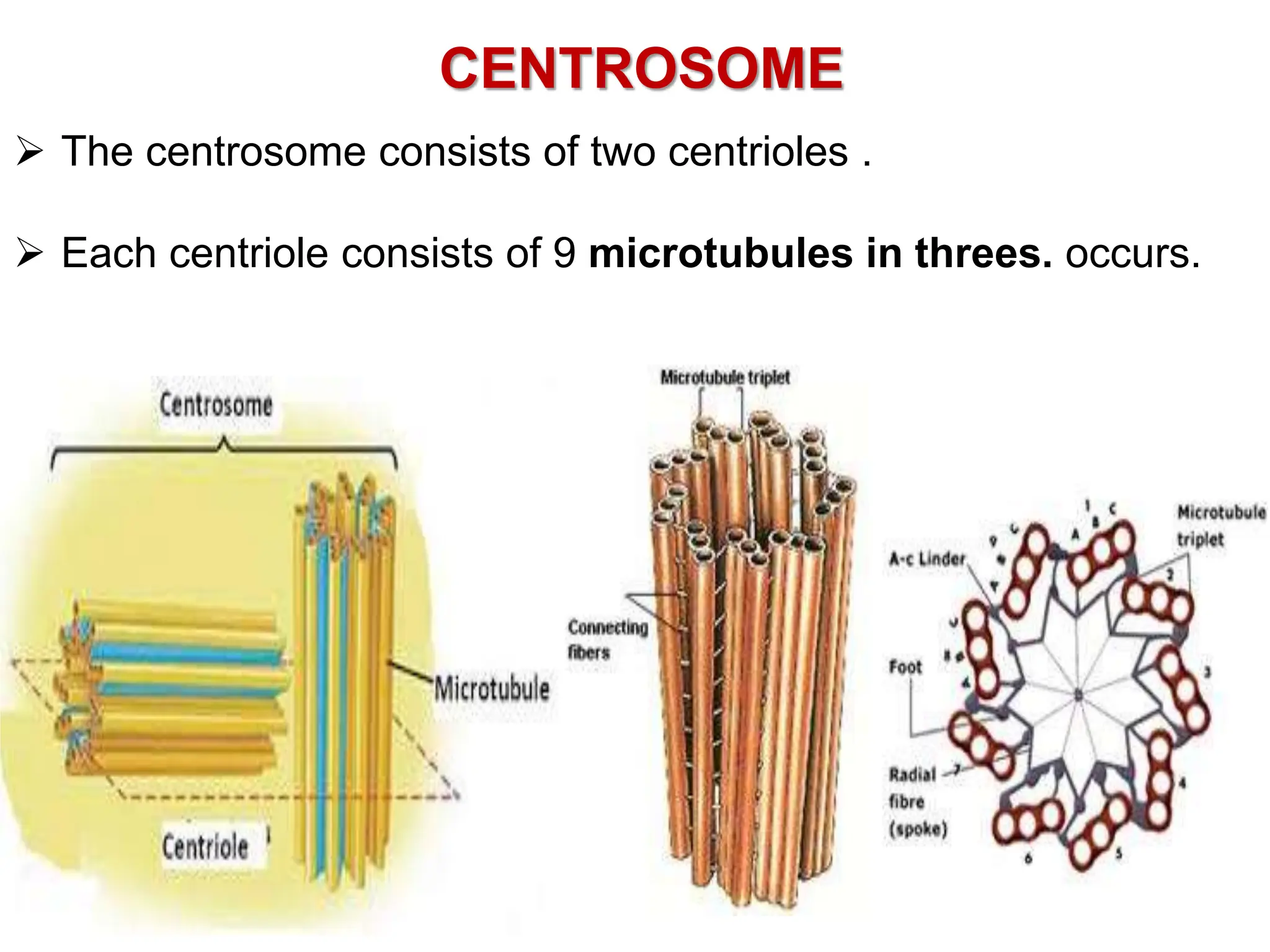
CENTROSOME
 The centrosome consists of two centrioles .
 Each centriole consists of 9 microtubules in threes. occurs.
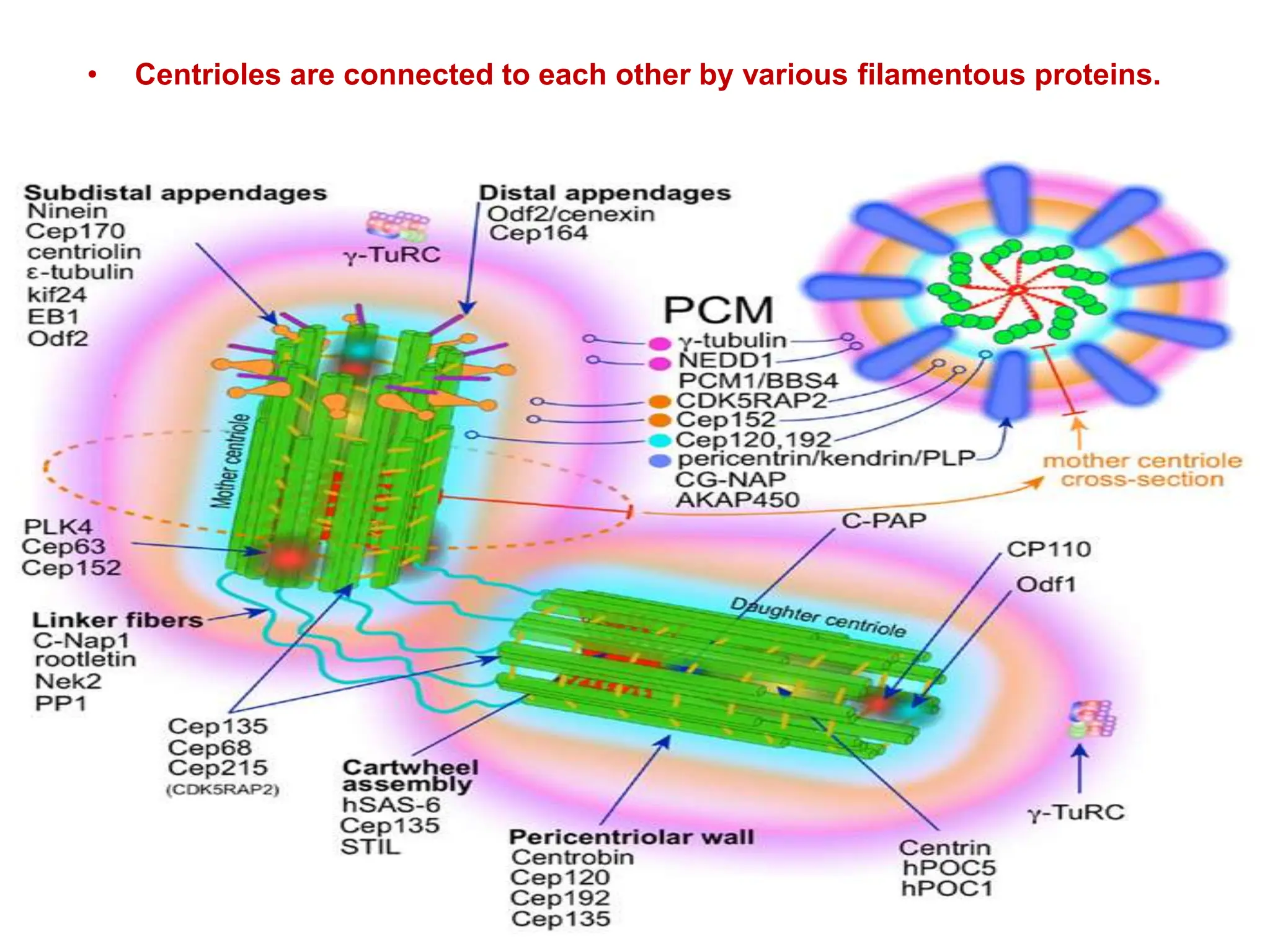
• Centrioles are connected to each other by various filamentous proteins.
Centrosome
• Centrosome is the microtubule regulatory center that binds to the
minus ends of microtubules .
• In the center of the interphase cells, adjacent to the nucleus.
• It plays a major role in determining the intracellular organization of
microtubules.
• It has an initiating role in the assembly of microtubules growing
from the centrosome towards the periphery of the cell..
• They become two pairs by pairing before cell division.
• During mitosis, they move to opposite poles and form spindle fibers.
cytoplasmic Structures of Microtubules and
Their Functions
1- Intracellular transport
– Organelle and vesicle transport
– axonal convection
– Transport of pigment granules
2- Organelle stability ( Golgi -ER)
3- Mitosis Shuttle Formation and Chromosome Movements
Participation in Cellular Structures as Stable Microtubules
– Cilia-Flagella and Movement
– Centriole -Basal Body
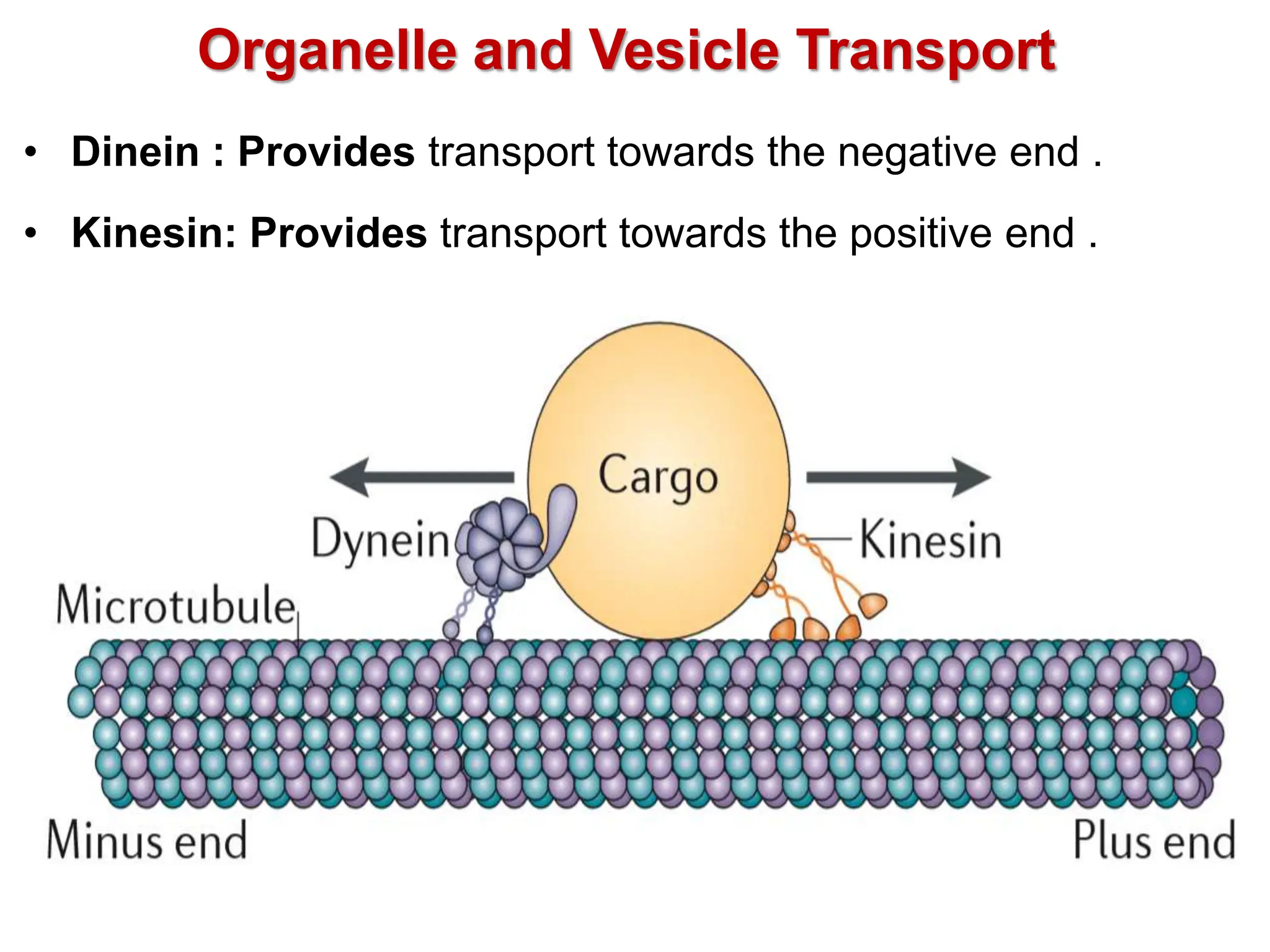
Organelle and Vesicle Transport
• Dinein : Provides transport towards the negative end .
• Kinesin: Provides transport towards the positive end .
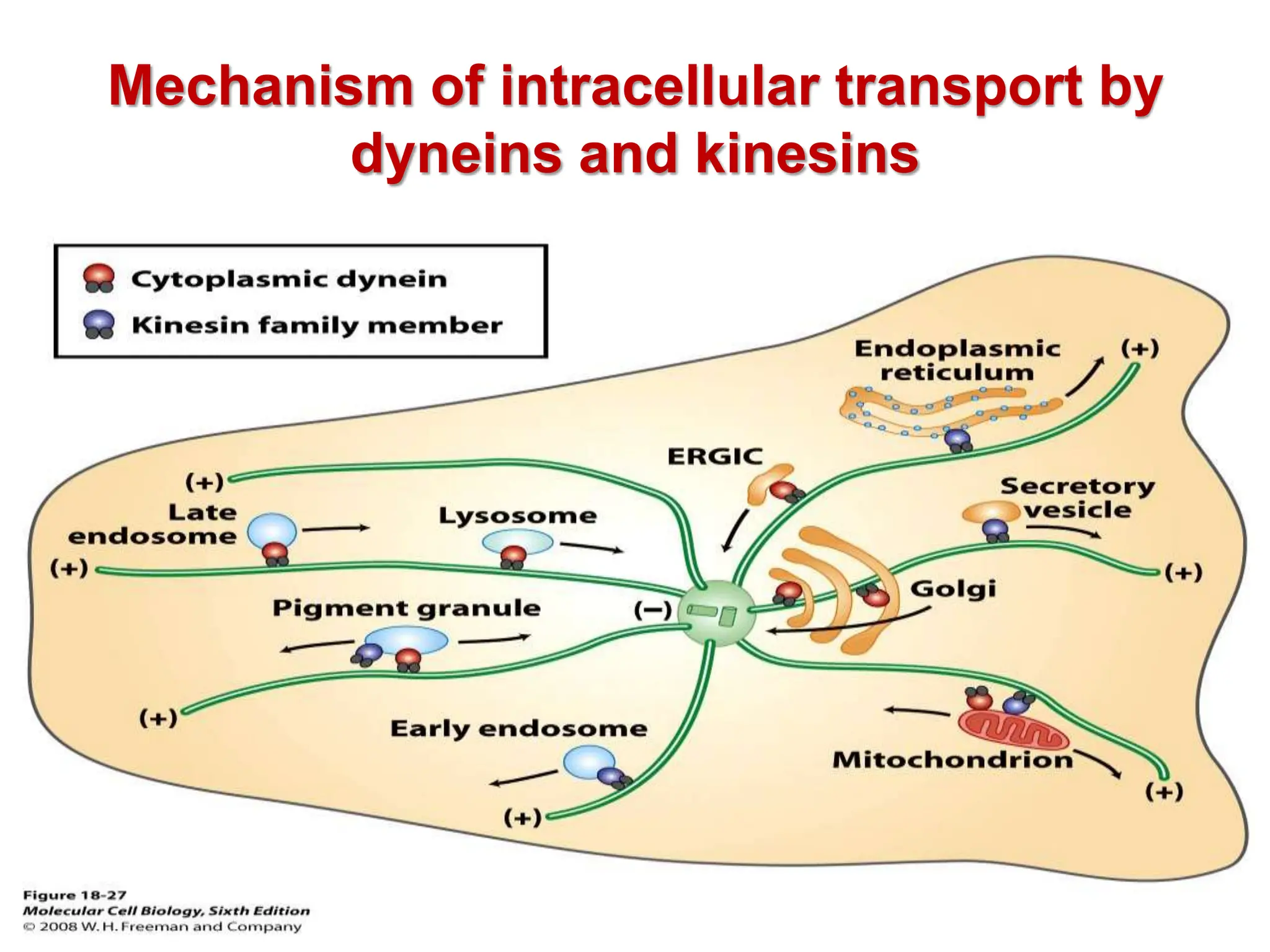
Mechanism of intracellular transport by
dyneins and kinesins
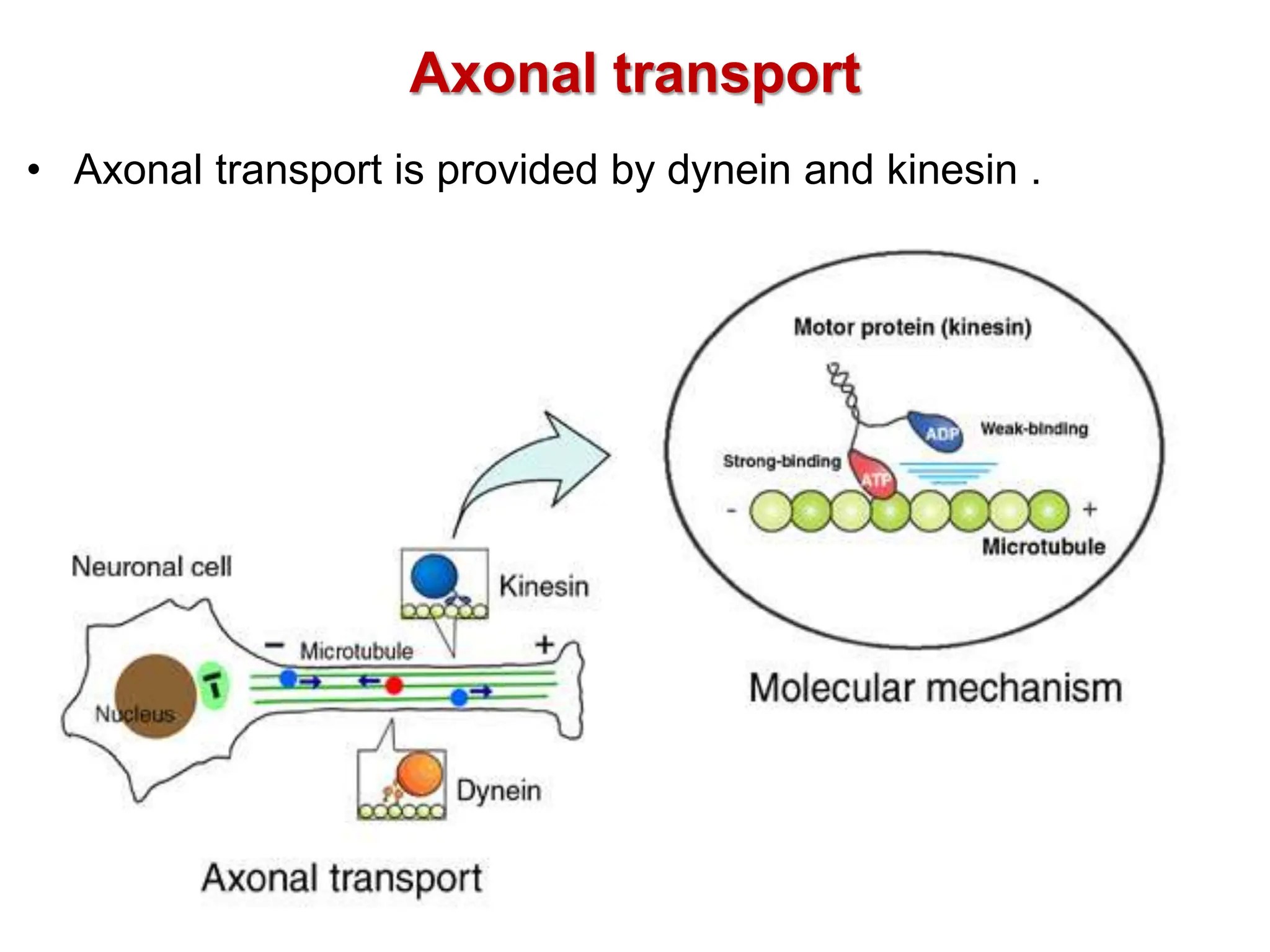
Axonal transport
• Axonal transport is provided by dynein and kinesin .
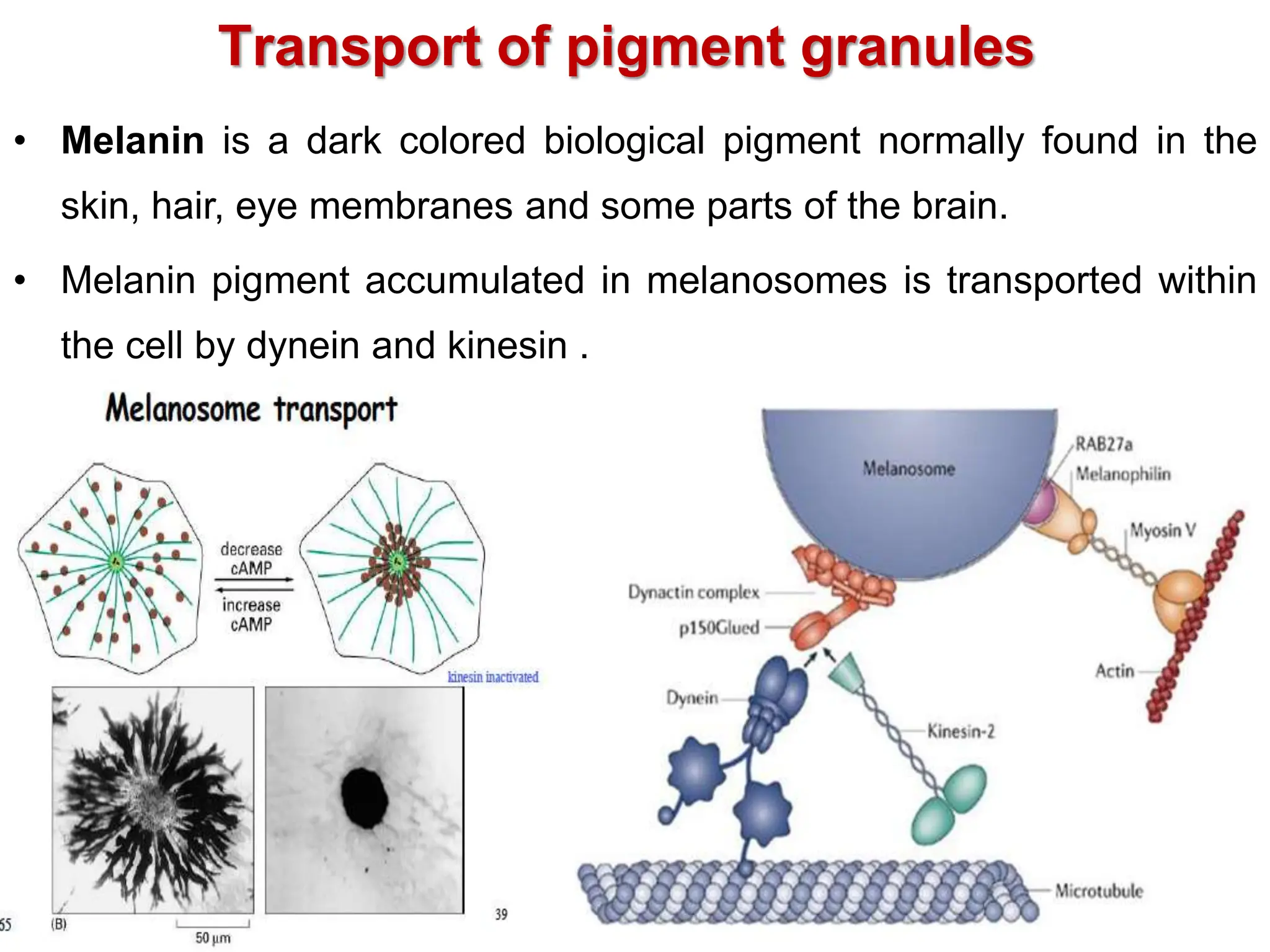
Transport of pigment granules
• Melanin is a dark colored biological pigment normally found in the
skin, hair, eye membranes and some parts of the brain.
• Melanin pigment accumulated in melanosomes is transported within
the cell by dynein and kinesin .
Formation during Mitosis and Chromosome
Movements
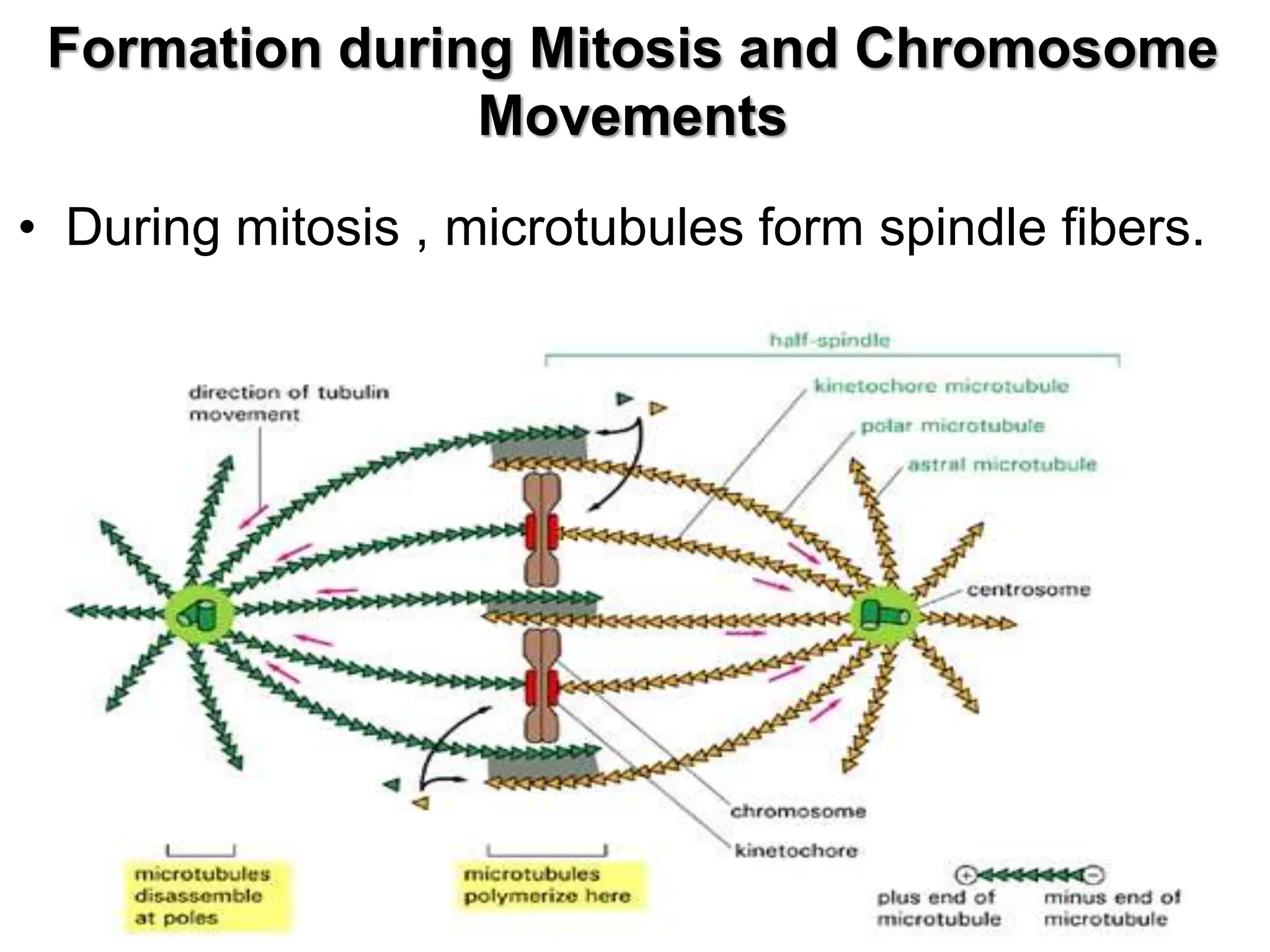
• During mitosis , microtubules form spindle fibers.
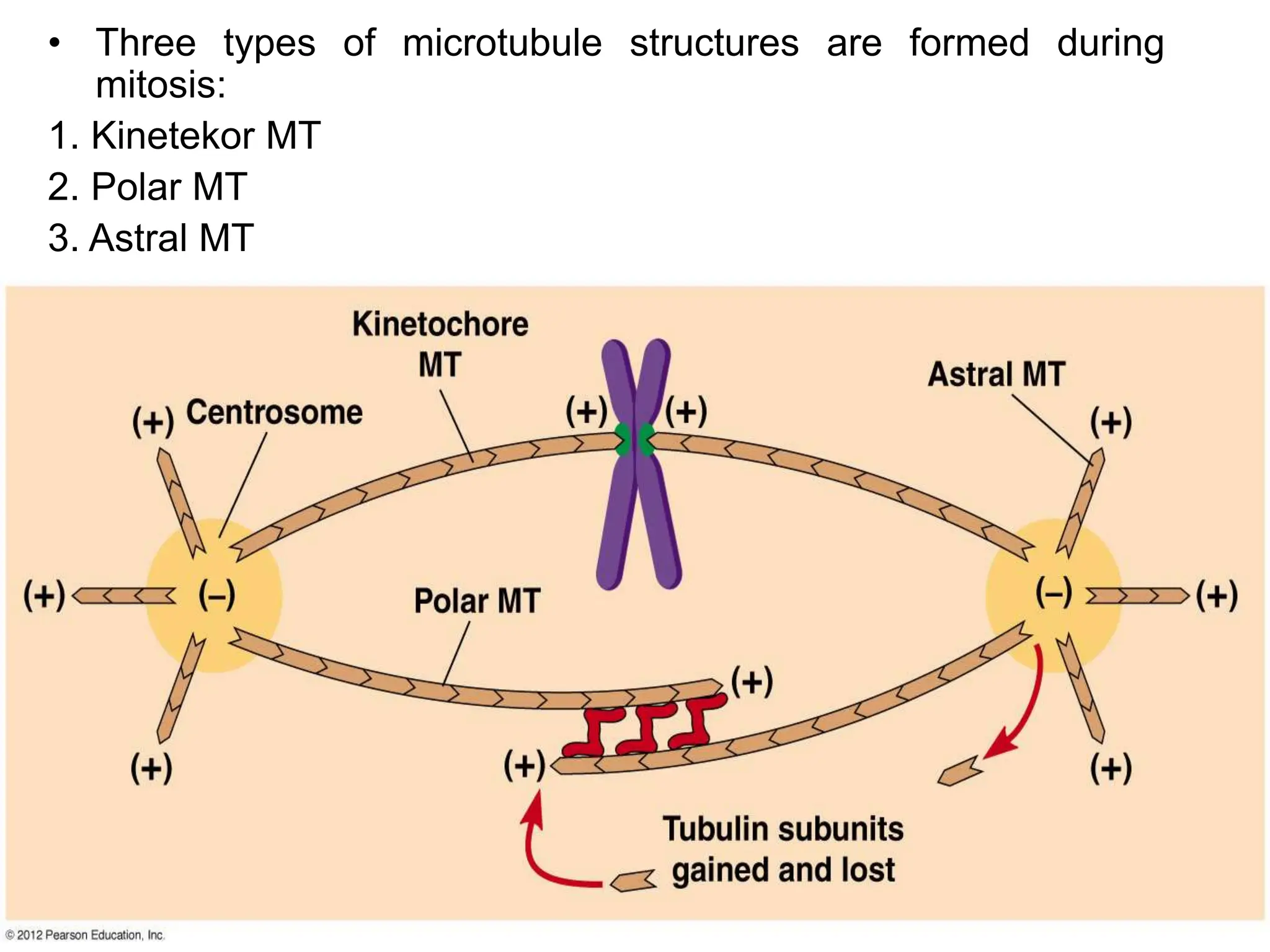
• Three types of microtubule structures are formed during
mitosis:
1. Kinetekor MT
2. Polar MT
3. Astral MT
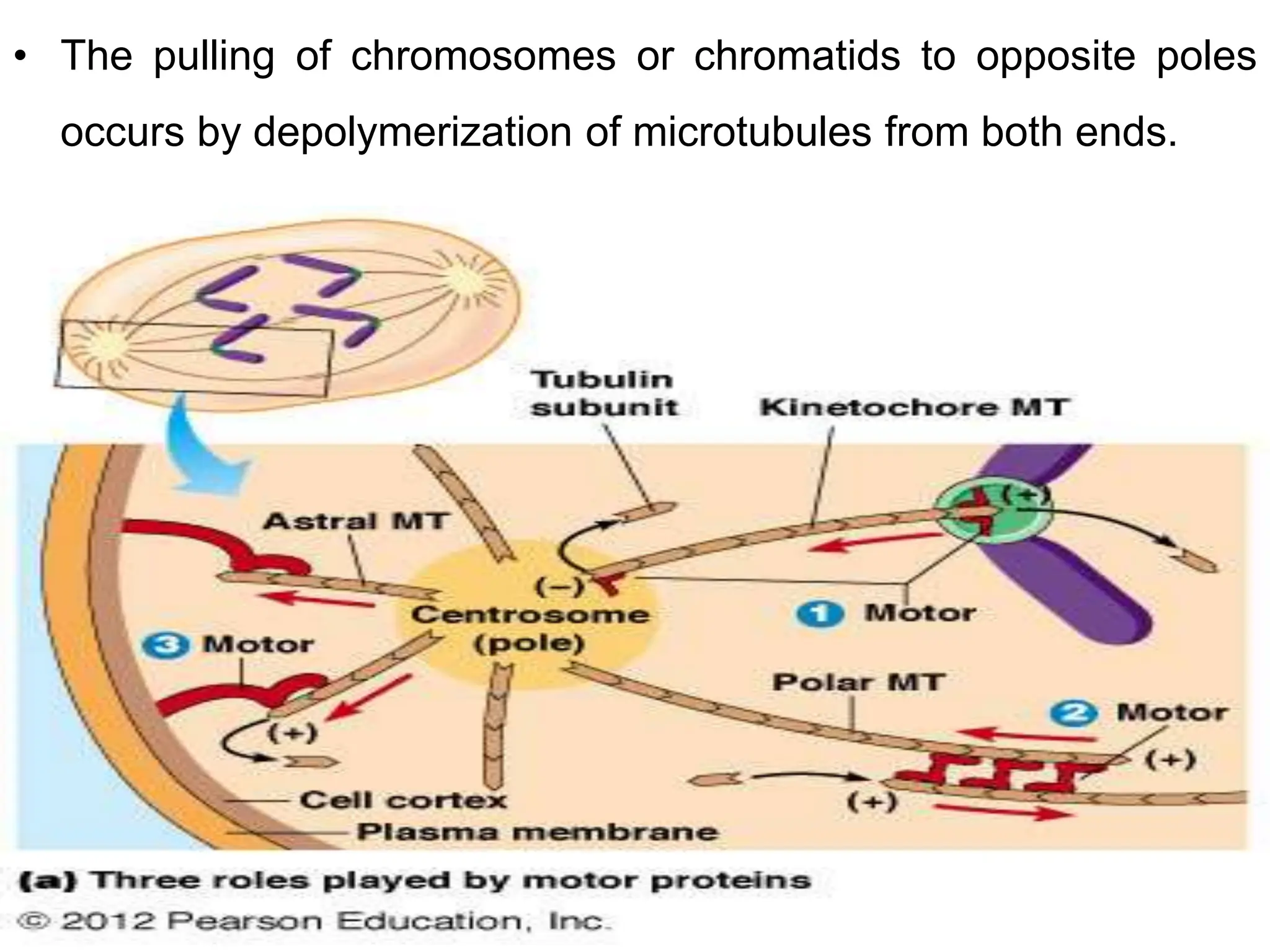
• The pulling of chromosomes or chromatids to opposite poles
occurs by depolymerization of microtubules from both ends.
Microtubule associated proteins
• Microtubule- associated proteins (MAP) bind microtubules
and increase their stability .
• microtubules to connect to other cell components and
intermediate filaments .
• A large number of MAPs were detected.
• The most studied are MAP-1, MAP-2 and Tau
(tubulin associated unit) , and MAP-4 in non-neuronal cells .
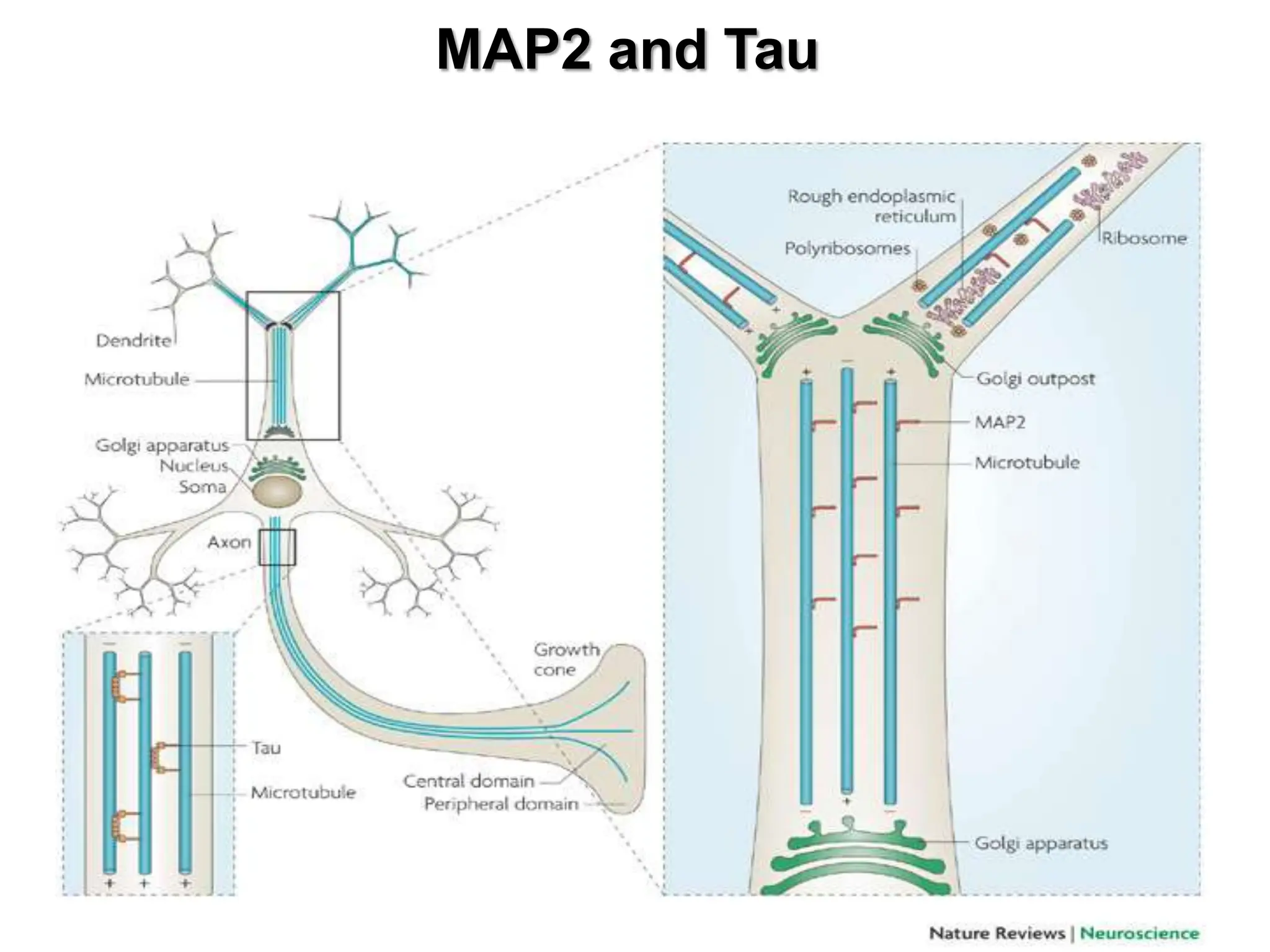
• A neuron; It has a cell body, an axon and dendrites .
• Axons and dendrites contain microtubules of certain polarity .
• Tau protein is a major component of the characteristic lesions
found in the brains of Alzheimer's patients.
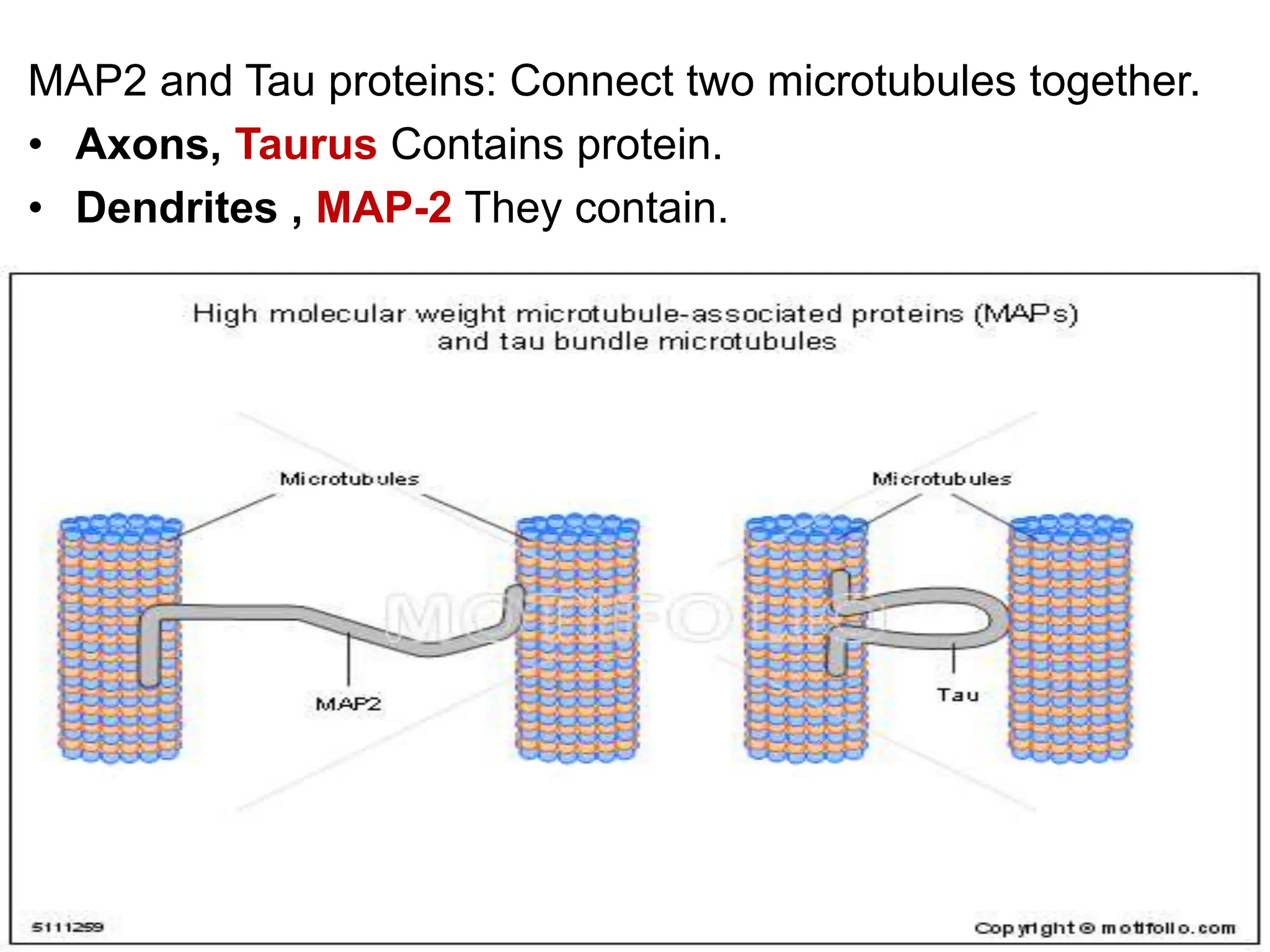
MAP2 and Tau proteins: Connect two microtubules together.
• Axons, Taurus Contains protein.
• Dendrites , MAP-2 They contain.
MAP2 and Tau

structure and functions of cytoskeletons

  • 1.
  • 2.
    Cytoskeleton • CELL =Cytosol + organelles + cytoskeleton • Complex network of protein filaments ( strands ) that lines the inside of the cell and gives its shape .
  • 3.
    Funtions • Determination andpreservation of Cell/Nucleus shape and placement (elasticity, strength) • Movement of the cell (migration, diapedesis [leakage of blood cells from the vessel walls into tissues], etc.), movement of a part of the cell ( cilia , tail, etc.) • Phagocytosis, endocytosis , exocytosis • Cytokinesis • Intracellular transport • Contraction • Supporting cell-cell and cell-extracellular media relationships • Creating a structural framework within the cytoplasm • Effective regulation of cell cytoplasm • Stabilization of intercellular connections
  • 4.
    Basic Elements ofthe Cytoskeleton The cytoskeleton consists of 3 well-defined filament structures: 1. MICRTUBULES (25 nm ) Tubulin (alpha, beta, gamma) 2. MICROFILAMENTS (7 nm ) Actin (F and G) 3. INTERMEDIATE FILAMENTS (10 nm )
  • 5.
    Localizations • Microtubules :They originate from the centrosome and are extensions from the nucleus to the cell membrane. • Microfilaments : They are located under the cell membrane and have support functions. • Intermediate Filaments : They are found distributed in the cytoplasm of the cell. microtubules microfilaments (actin filaments ) intermediate filaments
  • 6.
    1. MICROTUBULES • Theyare hollow cylindrical protein structures without a membrane. • 13 protofilaments coming together from protein subunits with similar structure . • Protofilament It consists of alpha and beta tubules . • A third tubulin, gamma-tubulin,is specifically located in the structure of centrosomes and plays a critical role in microtubule structure.
  • 7.
    • Microtubules originatefrom centrosome. • Microtubule organizing center (MTOC) including the centrosome their formation begins. • They extend from the MTOC (yellow in the figure) towards the cell membrane.
  • 8.
    Microtubule organizing center(MTOC) • Gamma tubulin rings located in the centrosome region are the formation centers. • Tubulin to these areas Polymerization begins with the addition of dimers .
  • 9.
    microtubule polymerization depolymerization •Tubulins are bound to GTP and GDP . • Each tubulin The dimer carries two GTPs . One of these hydrolyzes to GDP immediately after tubulin addition to the end of the microtubule.
  • 10.
    Structures consisting • Cilia(Singular: cilium ) • Whip • Basal body • Centrosome
  • 11.
    CILIA • The ciliaof the cells in the respiratory organs of mammals allow dust to be retained. • 9+2 layout
  • 12.
  • 13.
    Basal Body: Tripletmicrotubule structure
  • 14.
    CENTROSOME  The centrosomeconsists of two centrioles .  Each centriole consists of 9 microtubules in threes. occurs.
  • 15.
    • Centrioles areconnected to each other by various filamentous proteins.
  • 16.
    Centrosome • Centrosome isthe microtubule regulatory center that binds to the minus ends of microtubules . • In the center of the interphase cells, adjacent to the nucleus. • It plays a major role in determining the intracellular organization of microtubules. • It has an initiating role in the assembly of microtubules growing from the centrosome towards the periphery of the cell.. • They become two pairs by pairing before cell division. • During mitosis, they move to opposite poles and form spindle fibers.
  • 17.
    cytoplasmic Structures ofMicrotubules and Their Functions 1- Intracellular transport – Organelle and vesicle transport – axonal convection – Transport of pigment granules 2- Organelle stability ( Golgi -ER) 3- Mitosis Shuttle Formation and Chromosome Movements Participation in Cellular Structures as Stable Microtubules – Cilia-Flagella and Movement – Centriole -Basal Body
  • 18.
    Organelle and VesicleTransport • Dinein : Provides transport towards the negative end . • Kinesin: Provides transport towards the positive end .
  • 19.
    Mechanism of intracellulartransport by dyneins and kinesins
  • 20.
    Axonal transport • Axonaltransport is provided by dynein and kinesin .
  • 21.
    Transport of pigmentgranules • Melanin is a dark colored biological pigment normally found in the skin, hair, eye membranes and some parts of the brain. • Melanin pigment accumulated in melanosomes is transported within the cell by dynein and kinesin .
  • 22.
    Formation during Mitosisand Chromosome Movements • During mitosis , microtubules form spindle fibers.
  • 23.
    • Three typesof microtubule structures are formed during mitosis: 1. Kinetekor MT 2. Polar MT 3. Astral MT
  • 24.
    • The pullingof chromosomes or chromatids to opposite poles occurs by depolymerization of microtubules from both ends.
  • 25.
    Microtubule associated proteins •Microtubule- associated proteins (MAP) bind microtubules and increase their stability . • microtubules to connect to other cell components and intermediate filaments . • A large number of MAPs were detected. • The most studied are MAP-1, MAP-2 and Tau (tubulin associated unit) , and MAP-4 in non-neuronal cells . • A neuron; It has a cell body, an axon and dendrites . • Axons and dendrites contain microtubules of certain polarity . • Tau protein is a major component of the characteristic lesions found in the brains of Alzheimer's patients.
  • 26.
    MAP2 and Tauproteins: Connect two microtubules together. • Axons, Taurus Contains protein. • Dendrites , MAP-2 They contain.
  • 27.