Structure & Function of Lipoproteins
Mohmmad Amil Rahman
S.R.
Department of Biochemistry
Dr. R.P.G.M.College Kangra at Tanda(H.P.)
LIPOPROTEINS
• The serum lipoproteins are complexes of lipids and
specific proteins called "apoproteins".
• A lipoprotein is a biochemical assembly whose
primary function is to transport hydrophobic lipid (also
known as fat) molecules in water, as in blood plasma or
other extracellular fluids.
• The lipoproteins play a key role in the absorption and
transport of dietary lipids by the small intestine, in the
transport of lipids from the liver to peripheral tissues,
and the transport of lipids from peripheral tissues to the
liver and intestine (reverse cholesterol transport).
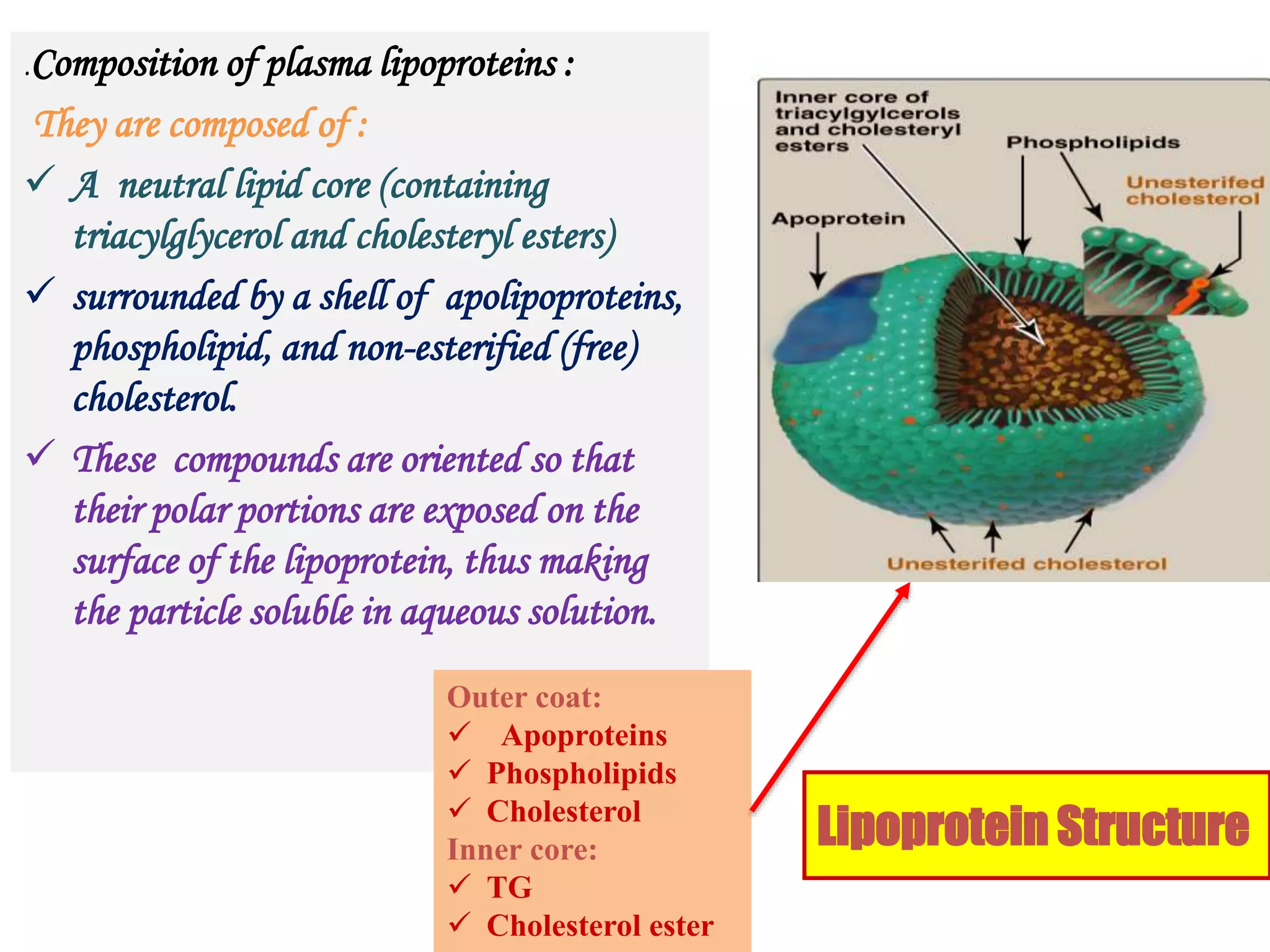
.Composition of plasma lipoproteins :
They are composed of :
 A neutral lipid core (containing
triacylglycerol and cholesteryl esters)
 surrounded by a shell of apolipoproteins,
phospholipid, and non-esterified (free)
cholesterol.
 These compounds are oriented so that
their polar portions are exposed on the
surface of the lipoprotein, thus making
the particle soluble in aqueous solution.
Outer coat:
 Apoproteins
 Phospholipids
 Cholesterol
Inner core:
 TG
 Cholesterol ester
Lipoprotein Structure
Classification of Lipoproteins:
• Depending on the density (by ultra centrifugation) or on the electrophoretic
mobility, the lipoproteins in plasma are classified into five major types –
• Chylomicrons (CM)-Lowest in density due to high lipid/protein ratio.
• Very-low-Density Lipoproteins (VLDL),
• low-Density Lipoproteins (LDL),
• Intermediate Density Lipoproteins
• High-Density Lipoproteins (HDL)- highest in density due to high
protein/lipid ratio.
• They differ in lipid and protein composition, size, density , and site of origin.
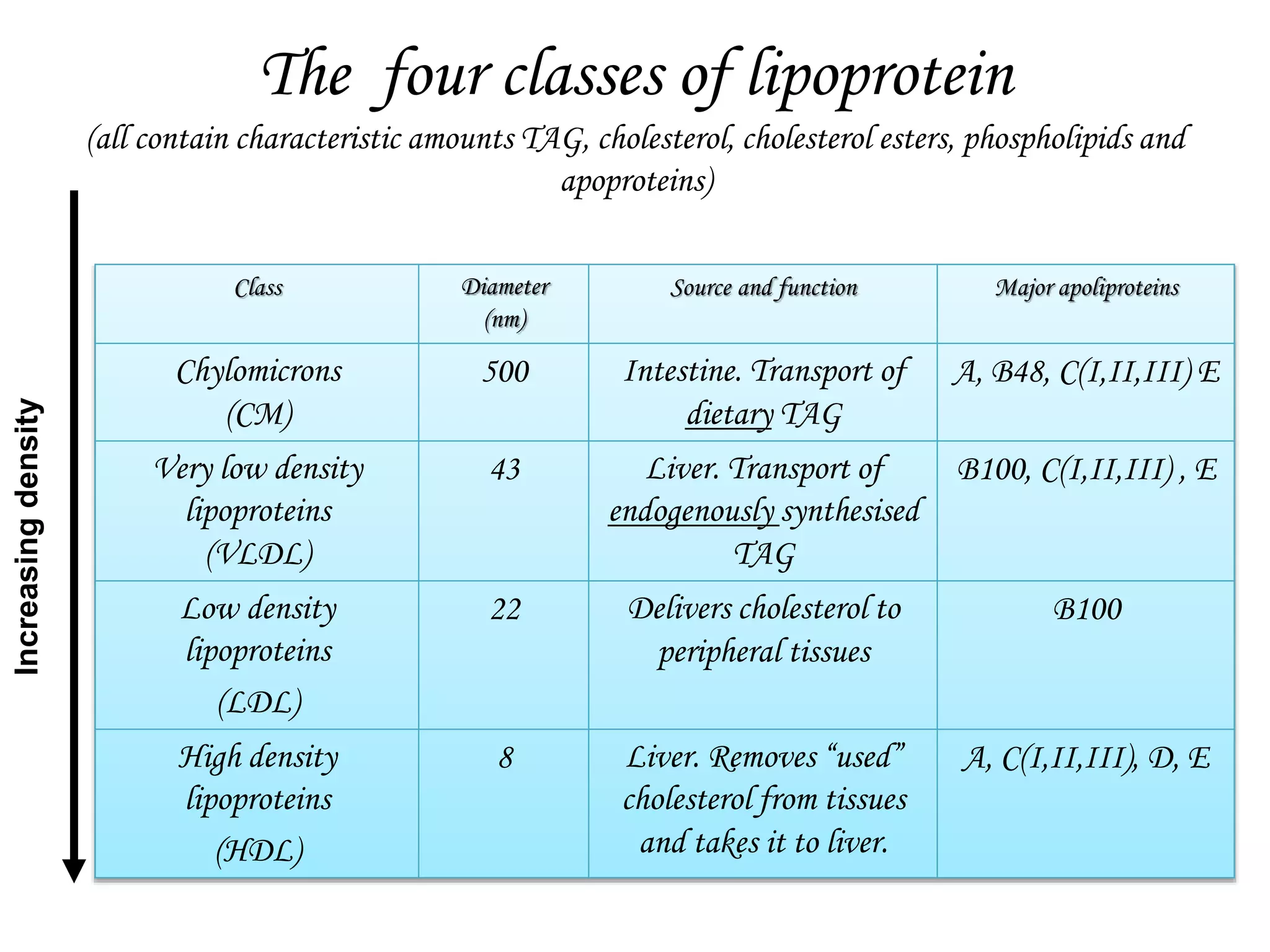
The four classes of lipoprotein
(all contain characteristic amounts TAG, cholesterol, cholesterol esters, phospholipids and
apoproteins)
Class Diameter
(nm)
Source and function Major apoliproteins
Chylomicrons
(CM)
500 Intestine. Transport of
dietary TAG
A, B48, C(I,II,III) E
Very low density
lipoproteins
(VLDL)
43 Liver. Transport of
endogenously synthesised
TAG
B100, C(I,II,III) , E
Low density
lipoproteins
(LDL)
22 Delivers cholesterol to
peripheral tissues
B100
High density
lipoproteins
(HDL)
8 Liver. Removes “used”
cholesterol from tissues
and takes it to liver.
A, C(I,II,III), D, E
Increasing
density
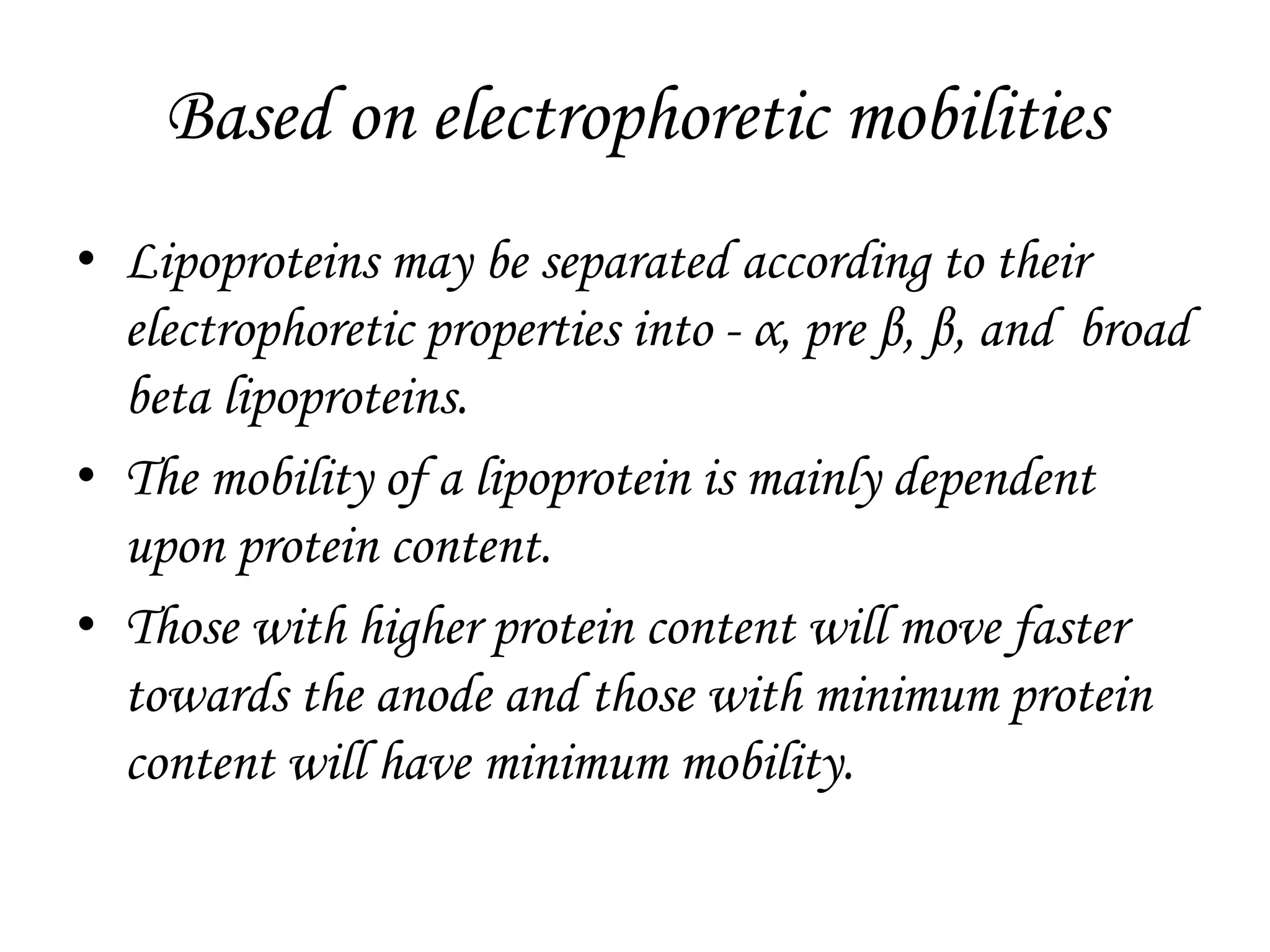
Based on electrophoretic mobilities
• Lipoproteins may be separated according to their
electrophoretic properties into - α, pre β, β, and broad
beta lipoproteins.
• The mobility of a lipoprotein is mainly dependent
upon protein content.
• Those with higher protein content will move faster
towards the anode and those with minimum protein
content will have minimum mobility.
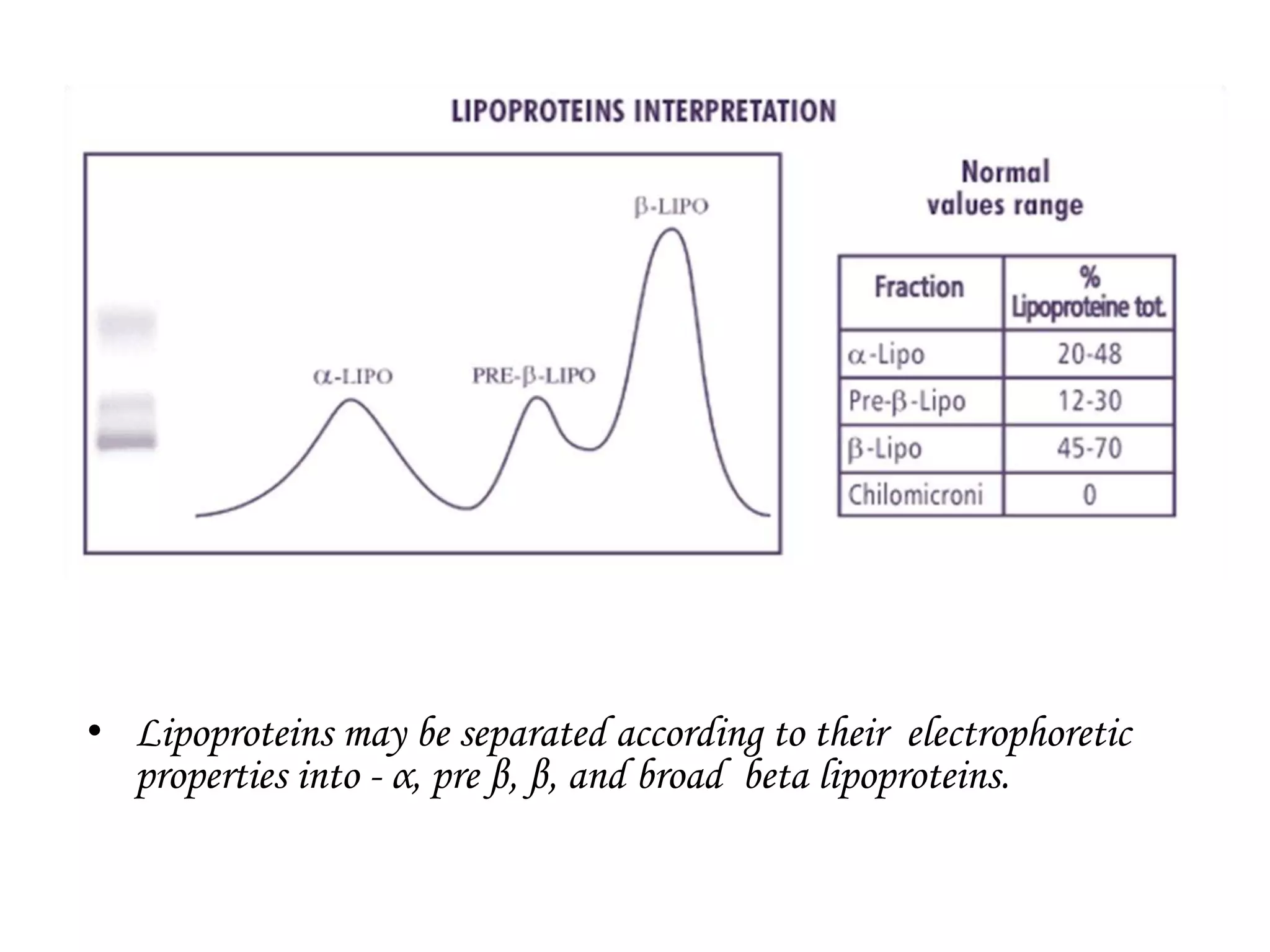
• Lipoproteins may be separated according to their electrophoretic
properties into - α, pre β, β, and broad beta lipoproteins.
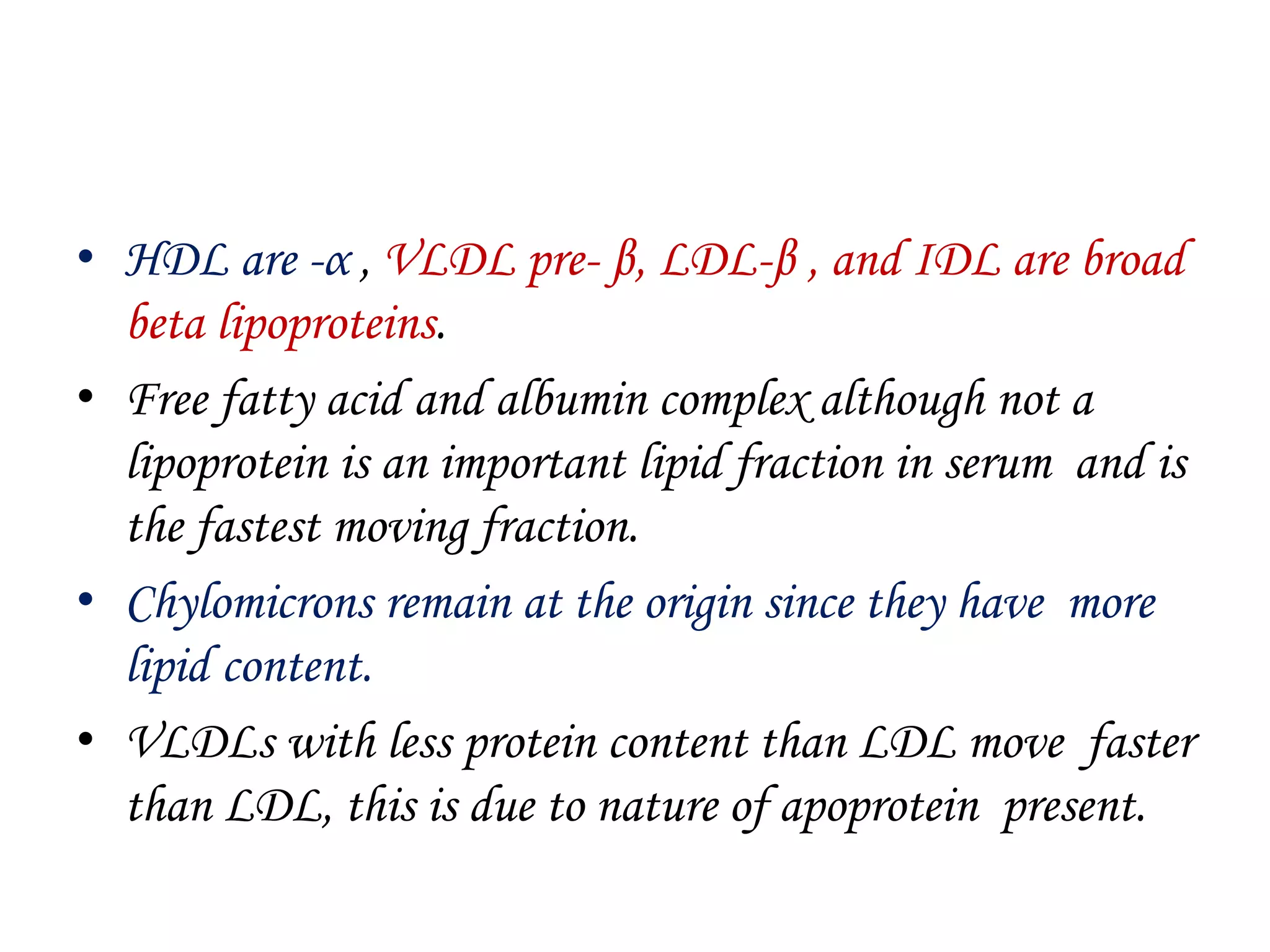
• HDL are -α , VLDL pre- β, LDL-β , and IDL are broad
beta lipoproteins.
• Free fatty acid and albumin complex although not a
lipoprotein is an important lipid fraction in serum and is
the fastest moving fraction.
• Chylomicrons remain at the origin since they have more
lipid content.
• VLDLs with less protein content than LDL move faster
than LDL, this is due to nature of apoprotein present.
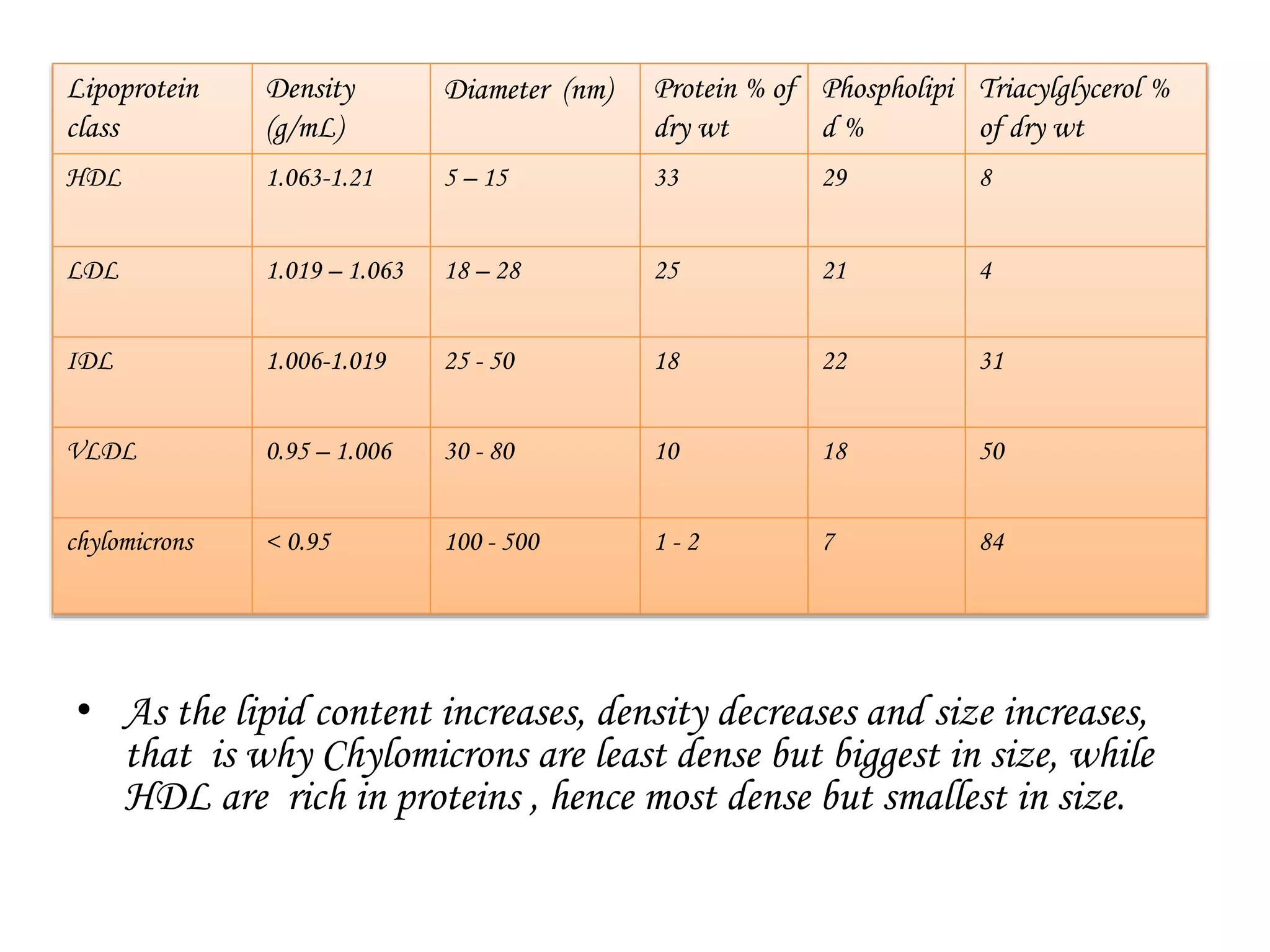
• As the lipid content increases, density decreases and size increases,
that is why Chylomicrons are least dense but biggest in size, while
HDL are rich in proteins , hence most dense but smallest in size.
Lipoprotein
class
Density
(g/mL)
Diameter (nm) Protein % of
dry wt
Phospholipi
d %
Triacylglycerol %
of dry wt
HDL 1.063-1.21 5 – 15 33 29 8
LDL 1.019 – 1.063 18 – 28 25 21 4
IDL 1.006-1.019 25 - 50 18 22 31
VLDL 0.95 – 1.006 30 - 80 10 18 50
chylomicrons < 0.95 100 - 500 1 - 2 7 84
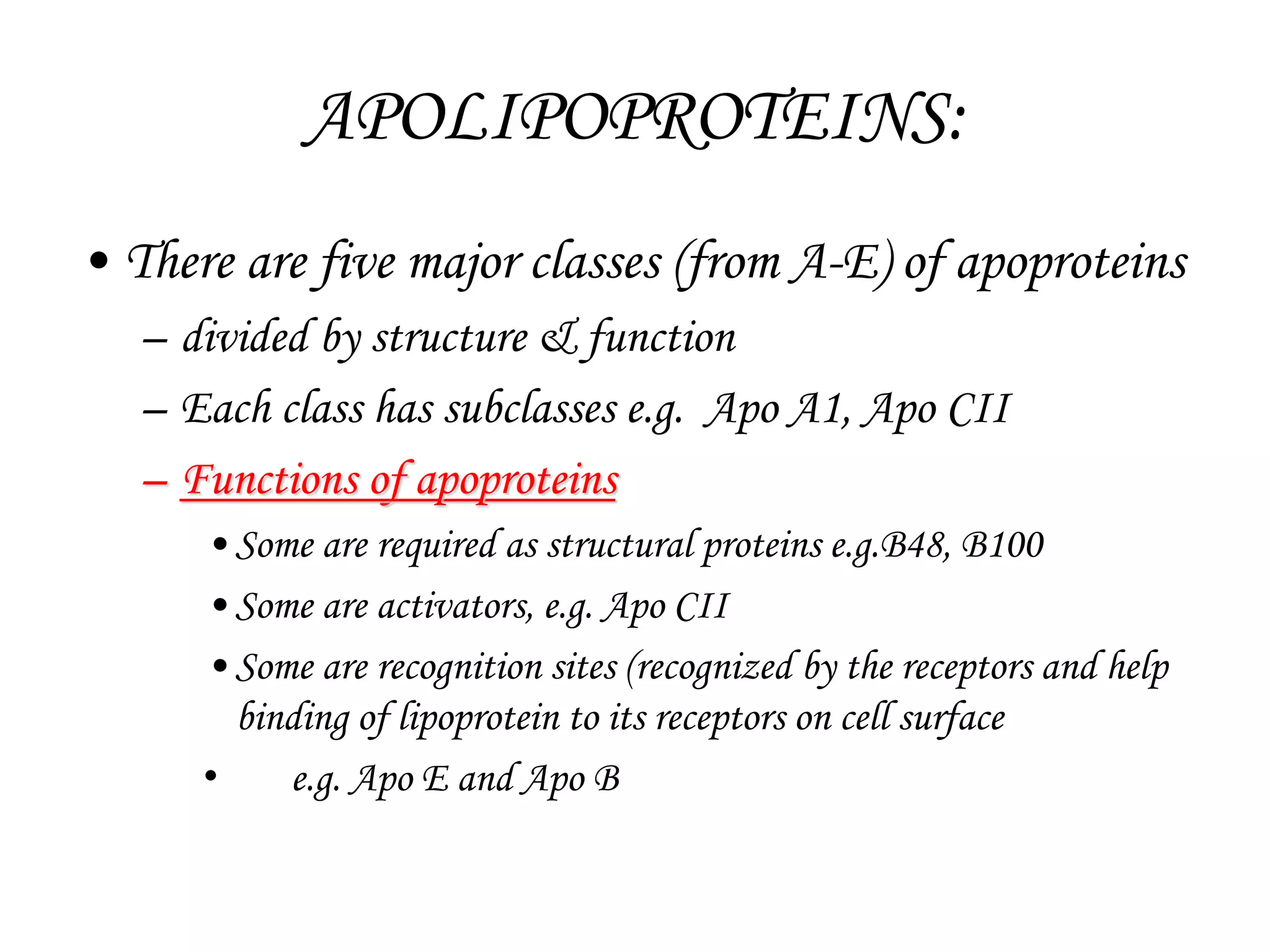
APOLIPOPROTEINS:
• There are five major classes (from A-E) of apoproteins
– divided by structure & function
– Each class has subclasses e.g. Apo A1, Apo CII
– Functions of apoproteins
•Some are required as structural proteins e.g.B48, B100
•Some are activators, e.g. Apo CII
•Some are recognition sites (recognized by the receptors and help
binding of lipoprotein to its receptors on cell surface
• e.g. Apo E and Apo B
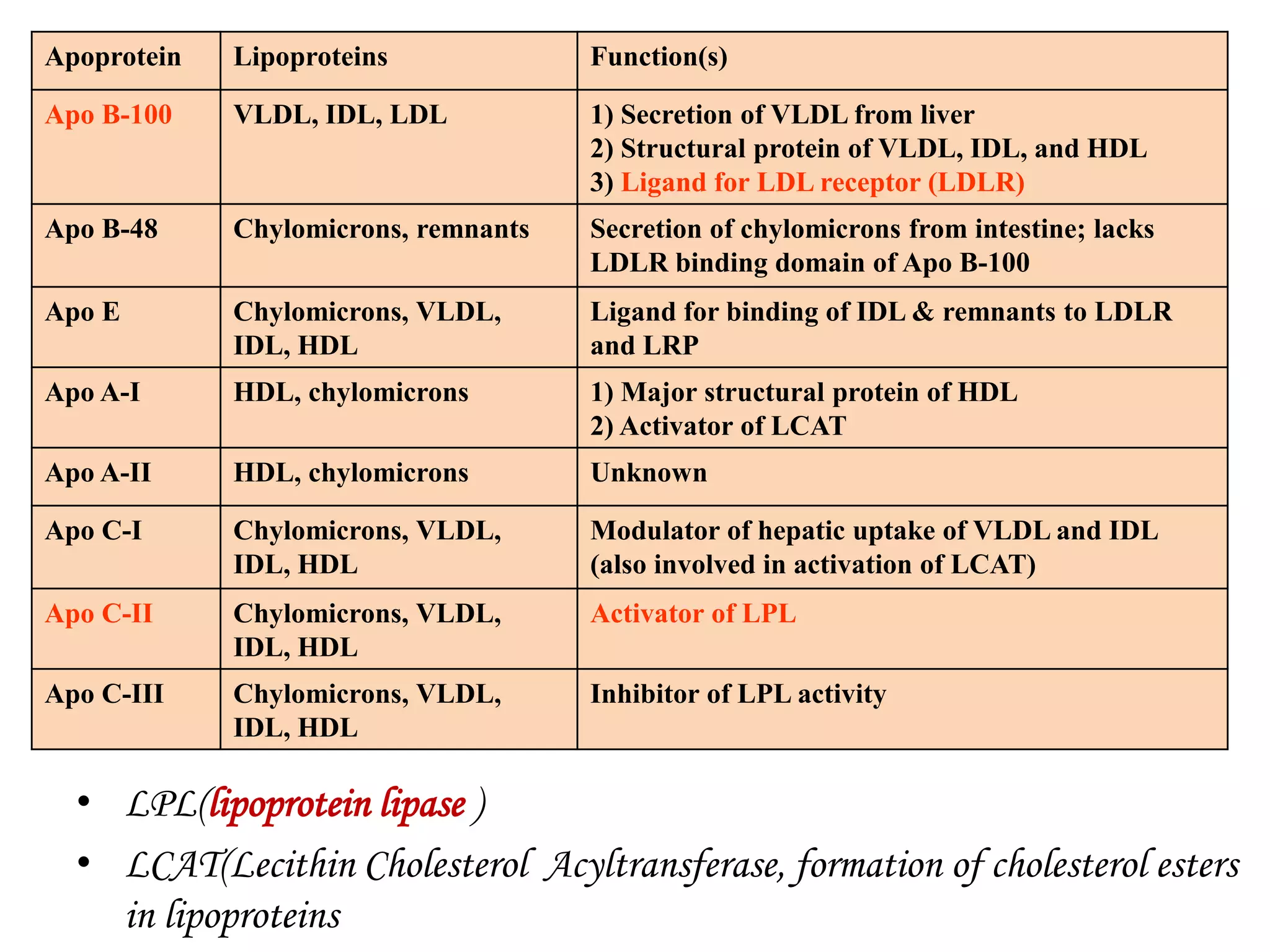
• LPL(lipoprotein lipase )
• LCAT(Lecithin Cholesterol Acyltransferase, formation of cholesterol esters
in lipoproteins
Apoprotein Lipoproteins Function(s)
Apo B-100 VLDL, IDL, LDL 1) Secretion of VLDL from liver
2) Structural protein of VLDL, IDL, and HDL
3) Ligand for LDL receptor (LDLR)
Apo B-48 Chylomicrons, remnants Secretion of chylomicrons from intestine; lacks
LDLR binding domain of Apo B-100
Apo E Chylomicrons, VLDL,
IDL, HDL
Ligand for binding of IDL & remnants to LDLR
and LRP
Apo A-I HDL, chylomicrons 1) Major structural protein of HDL
2) Activator of LCAT
Apo A-II HDL, chylomicrons Unknown
Apo C-I Chylomicrons, VLDL,
IDL, HDL
Modulator of hepatic uptake of VLDL and IDL
(also involved in activation of LCAT)
Apo C-II Chylomicrons, VLDL,
IDL, HDL
Activator of LPL
Apo C-III Chylomicrons, VLDL,
IDL, HDL
Inhibitor of LPL activity
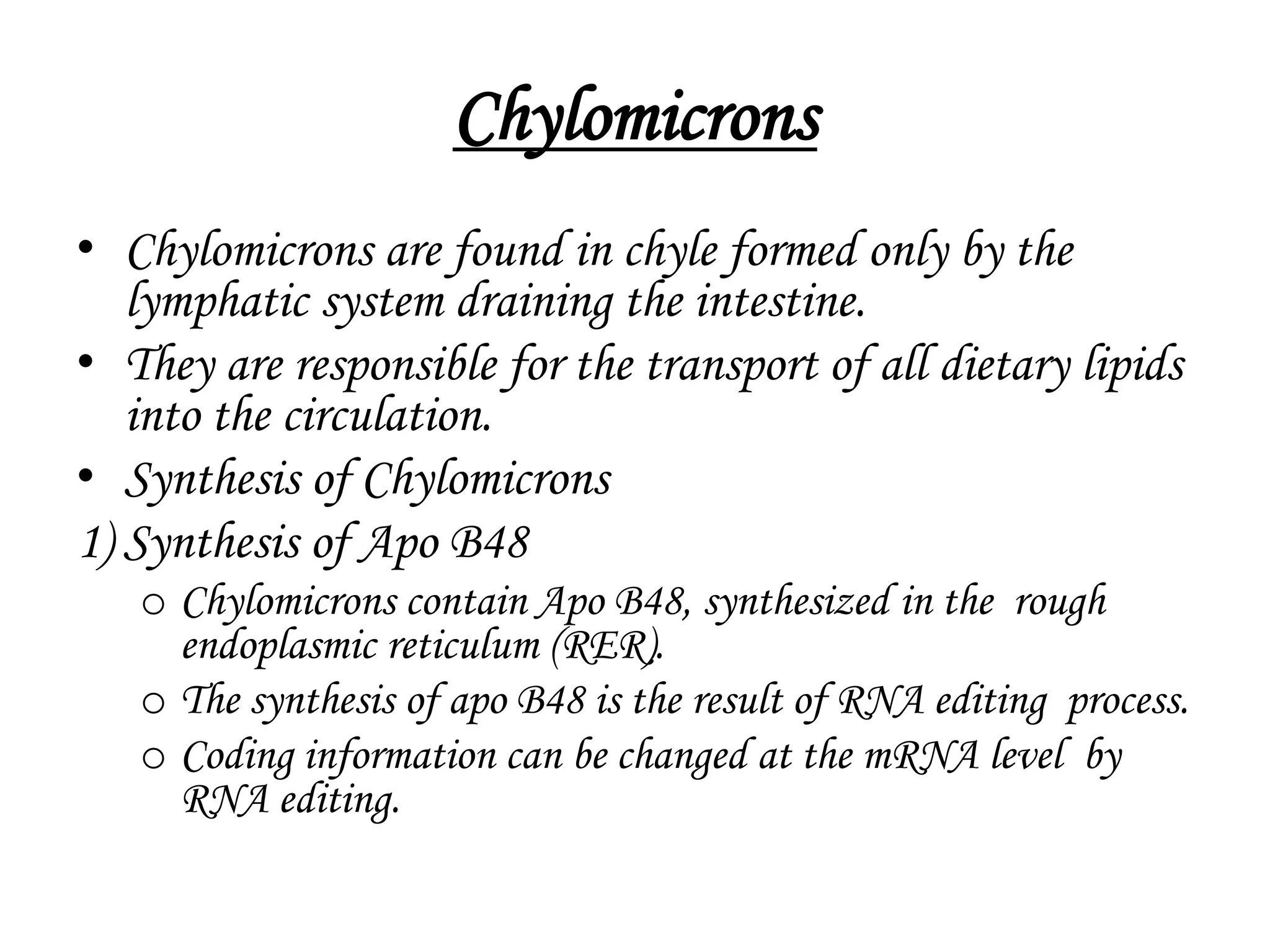
Chylomicrons
• Chylomicrons are found in chyle formed only by the
lymphatic system draining the intestine.
• They are responsible for the transport of all dietary lipids
into the circulation.
• Synthesis of Chylomicrons
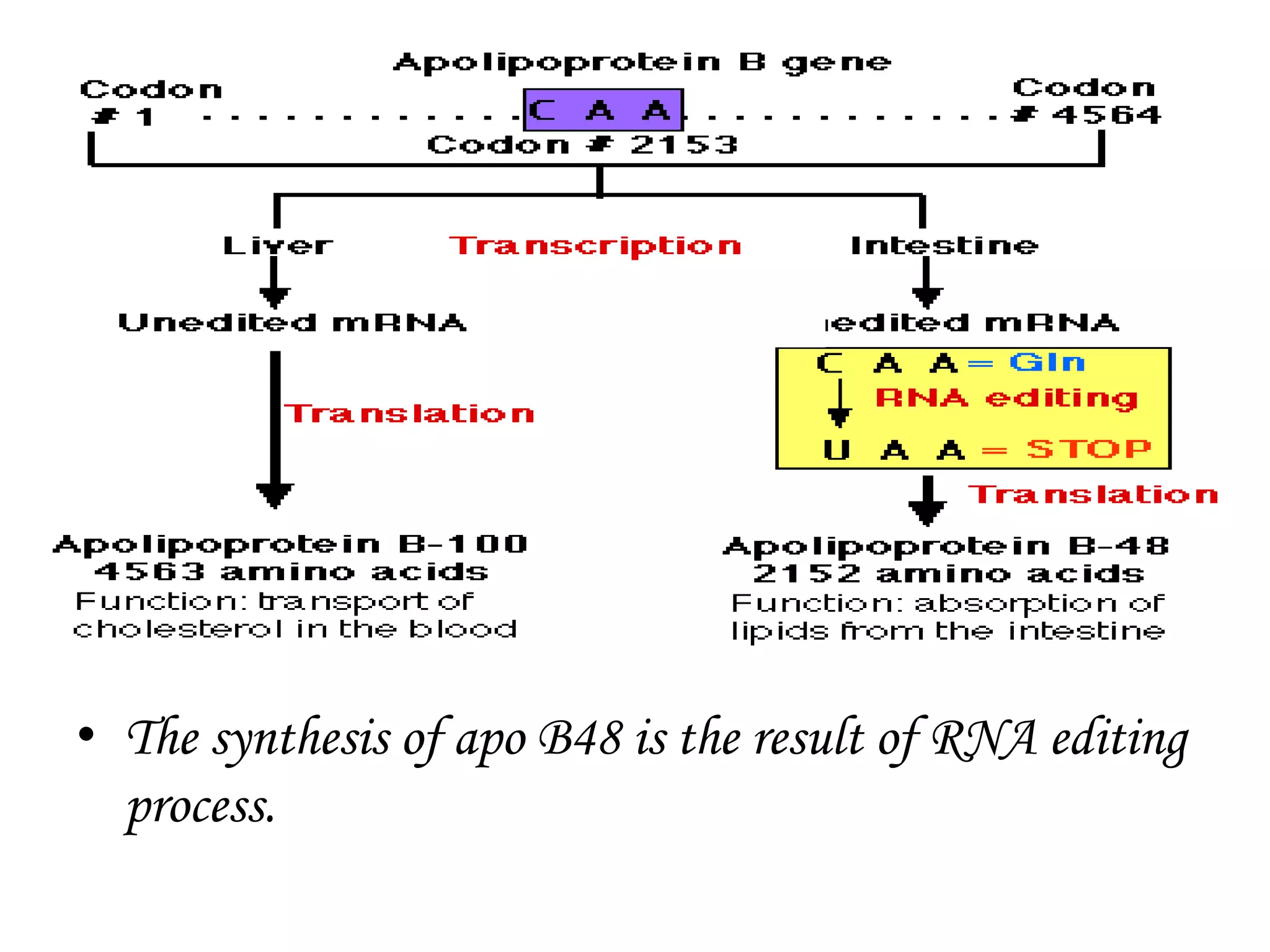
1) Synthesis of Apo B48
o Chylomicrons contain Apo B48, synthesized in the rough
endoplasmic reticulum (RER).
o The synthesis of apo B48 is the result of RNA editing process.
o Coding information can be changed at the mRNA level by
RNA editing.
• The synthesis of apo B48 is the result of RNA editing
process.
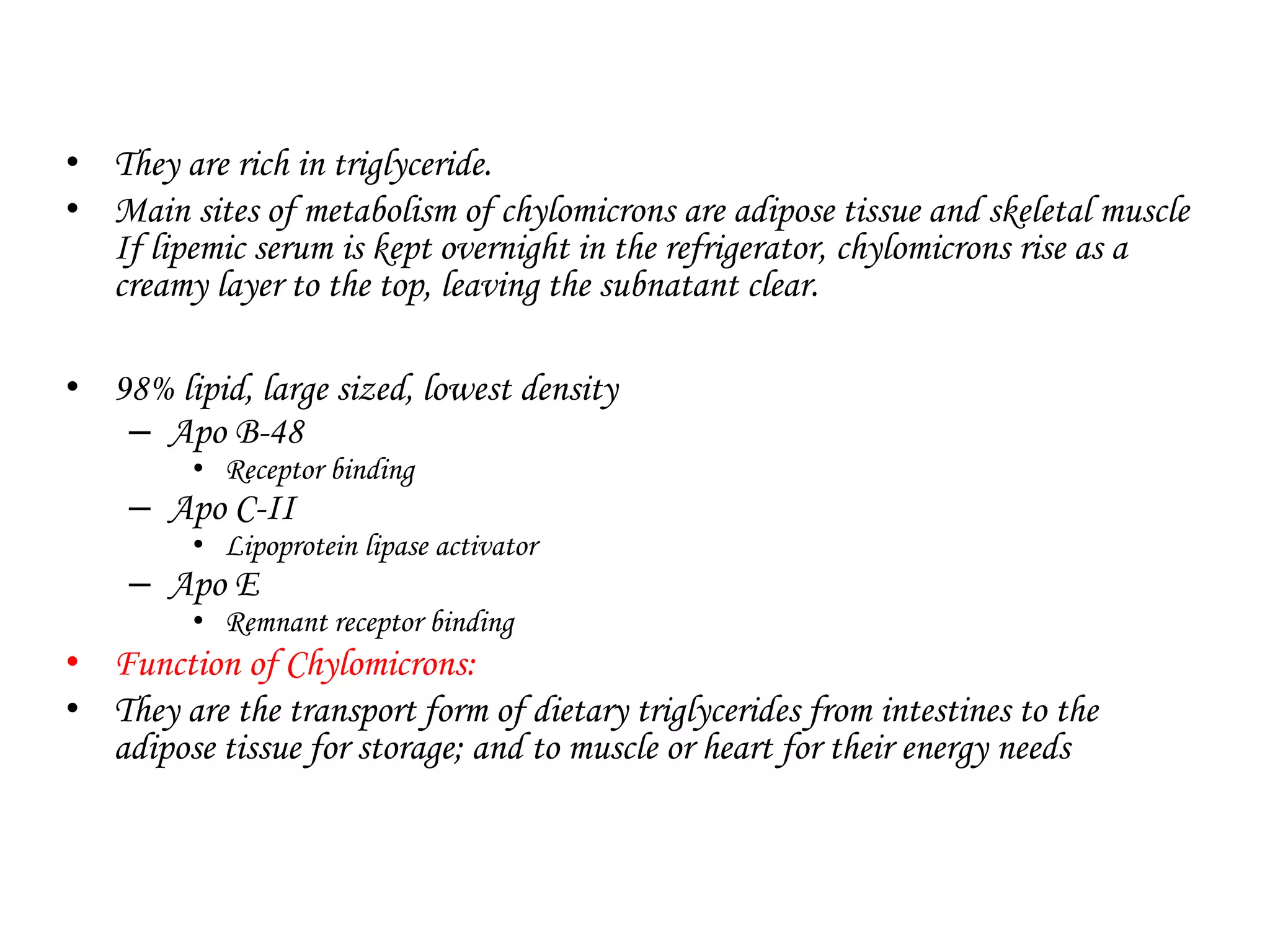
• They are rich in triglyceride.
• Main sites of metabolism of chylomicrons are adipose tissue and skeletal muscle
If lipemic serum is kept overnight in the refrigerator, chylomicrons rise as a
creamy layer to the top, leaving the subnatant clear.
• 98% lipid, large sized, lowest density
– Apo B-48
• Receptor binding
– Apo C-II
• Lipoprotein lipase activator
– Apo E
• Remnant receptor binding
• Function of Chylomicrons:
• They are the transport form of dietary triglycerides from intestines to the
adipose tissue for storage; and to muscle or heart for their energy needs
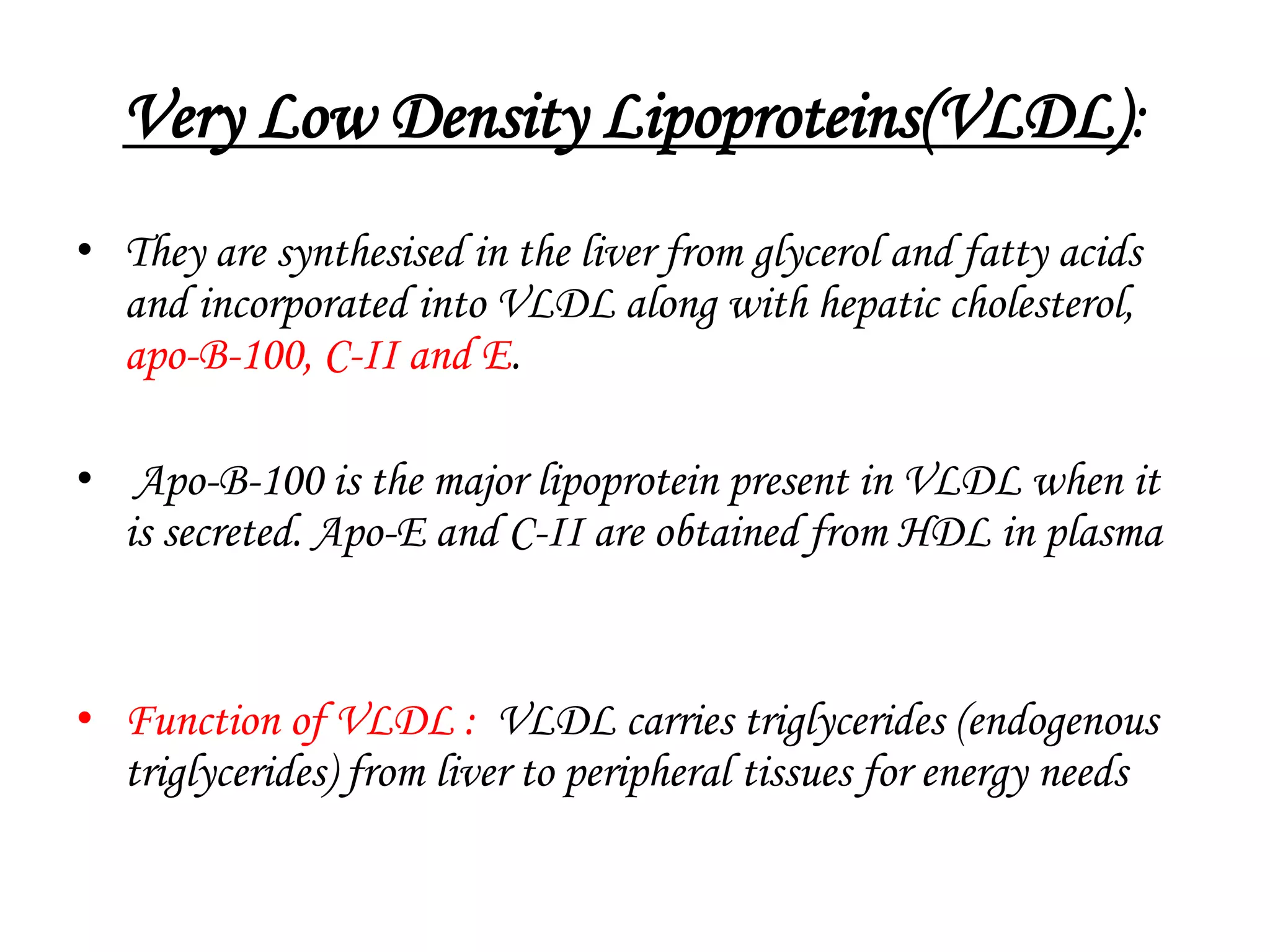
Very Low Density Lipoproteins(VLDL):
• They are synthesised in the liver from glycerol and fatty acids
and incorporated into VLDL along with hepatic cholesterol,
apo-B-100, C-II and E.
• Apo-B-100 is the major lipoprotein present in VLDL when it
is secreted. Apo-E and C-II are obtained from HDL in plasma
• Function of VLDL : VLDL carries triglycerides (endogenous
triglycerides) from liver to peripheral tissues for energy needs
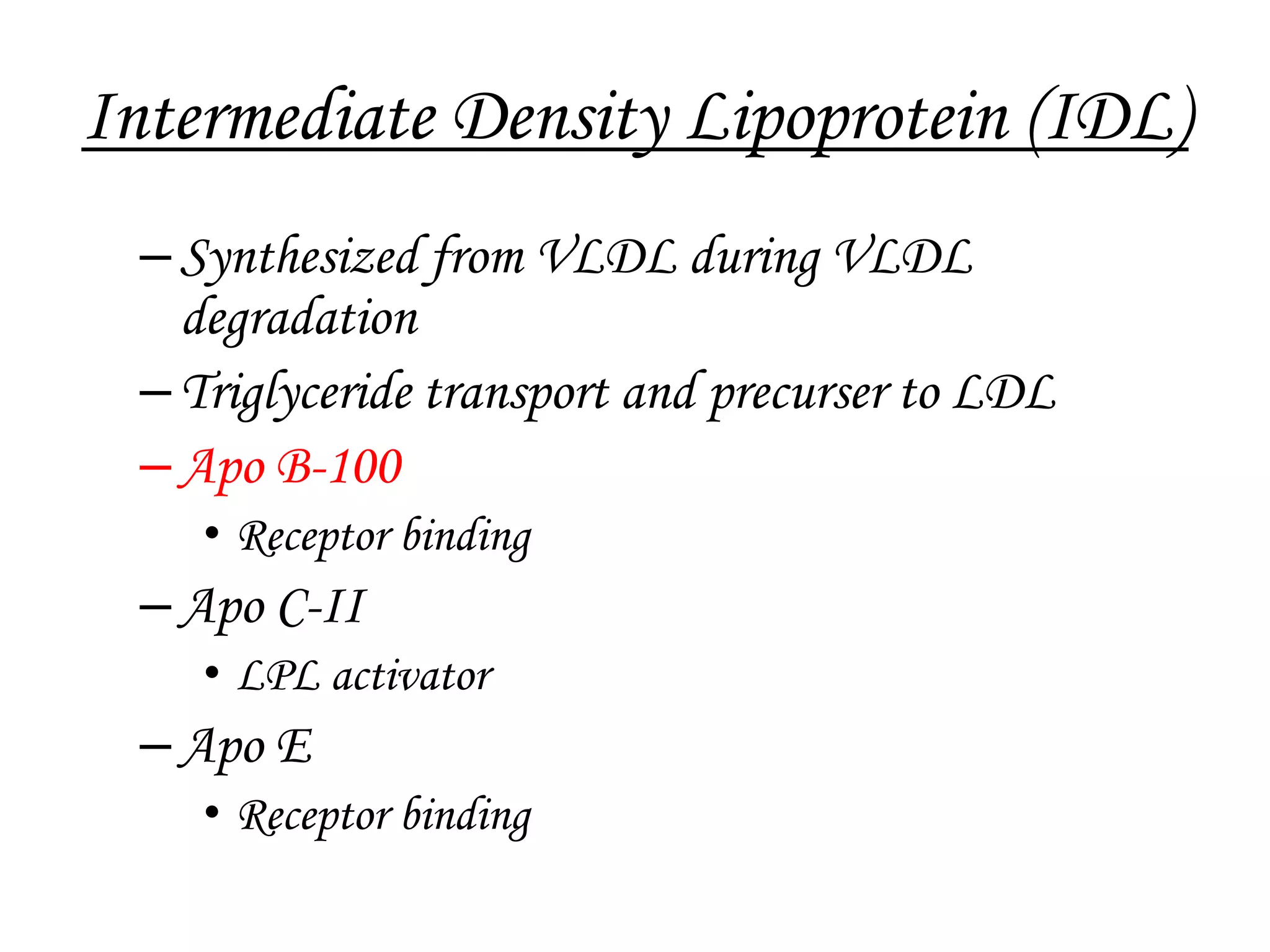
Intermediate Density Lipoprotein (IDL)
–Synthesized from VLDL during VLDL
degradation
–Triglyceride transport and precurser to LDL
–Apo B-100
• Receptor binding
–Apo C-II
• LPL activator
–Apo E
• Receptor binding
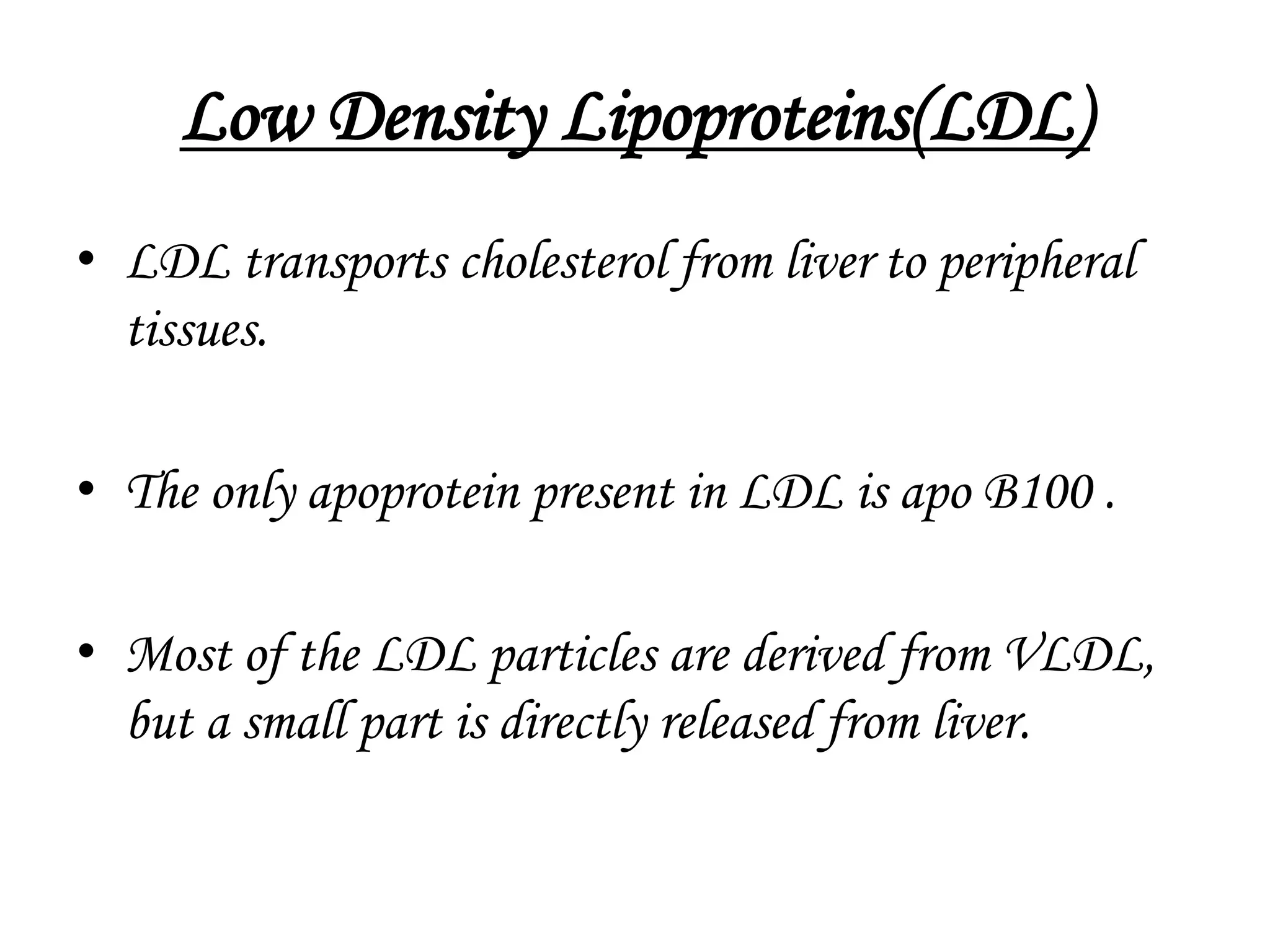
Low Density Lipoproteins(LDL)
• LDL transports cholesterol from liver to peripheral
tissues.
• The only apoprotein present in LDL is apo B100 .
• Most of the LDL particles are derived from VLDL,
but a small part is directly released from liver.
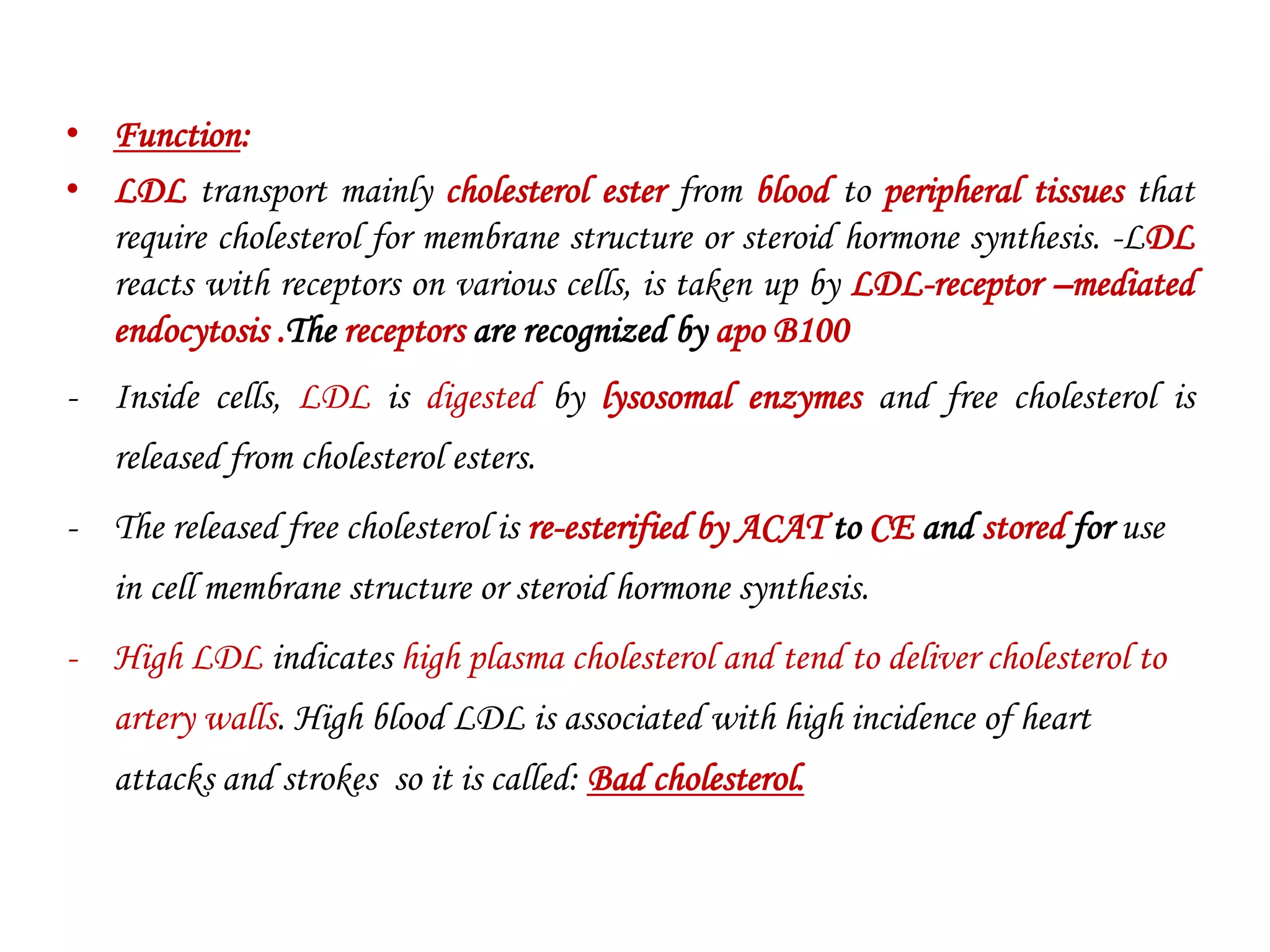
• Function:
• LDL transport mainly cholesterol ester from blood to peripheral tissues that
require cholesterol for membrane structure or steroid hormone synthesis. -LDL
reacts with receptors on various cells, is taken up by LDL-receptor –mediated
endocytosis .The receptors are recognized by apo B100
- Inside cells, LDL is digested by lysosomal enzymes and free cholesterol is
released from cholesterol esters.
- The released free cholesterol is re-esterified by ACAT to CE and stored for use
in cell membrane structure or steroid hormone synthesis.
- High LDL indicates high plasma cholesterol and tend to deliver cholesterol to
artery walls. High blood LDL is associated with high incidence of heart
attacks and strokes so it is called: Bad cholesterol.
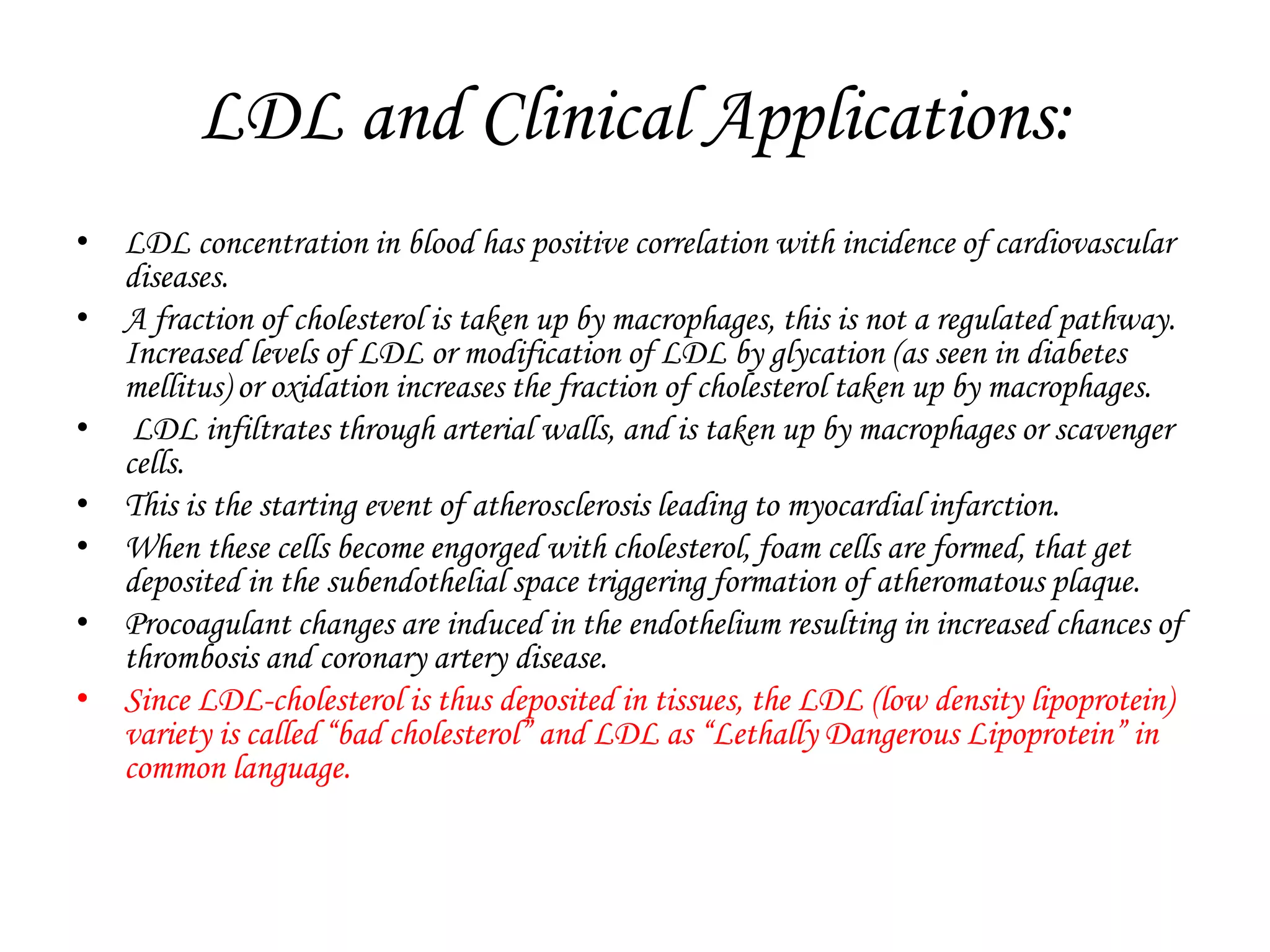
LDL and Clinical Applications:
• LDL concentration in blood has positive correlation with incidence of cardiovascular
diseases.
• A fraction of cholesterol is taken up by macrophages, this is not a regulated pathway.
Increased levels of LDL or modification of LDL by glycation (as seen in diabetes
mellitus) or oxidation increases the fraction of cholesterol taken up by macrophages.
• LDL infiltrates through arterial walls, and is taken up by macrophages or scavenger
cells.
• This is the starting event of atherosclerosis leading to myocardial infarction.
• When these cells become engorged with cholesterol, foam cells are formed, that get
deposited in the subendothelial space triggering formation of atheromatous plaque.
• Procoagulant changes are induced in the endothelium resulting in increased chances of
thrombosis and coronary artery disease.
• Since LDL-cholesterol is thus deposited in tissues, the LDL (low density lipoprotein)
variety is called “bad cholesterol” and LDL as “Lethally Dangerous Lipoprotein” in
common language.
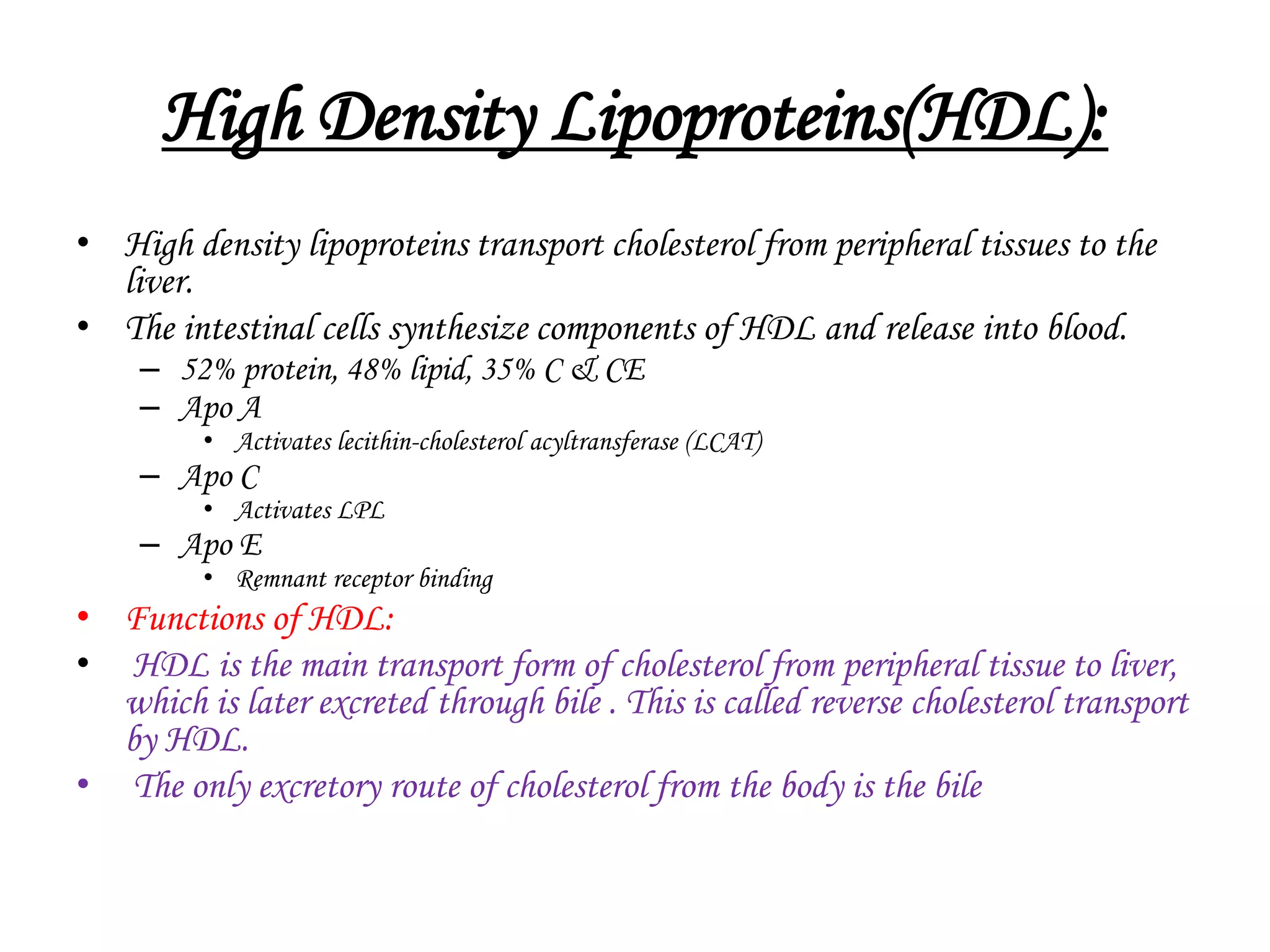
High Density Lipoproteins(HDL):
• High density lipoproteins transport cholesterol from peripheral tissues to the
liver.
• The intestinal cells synthesize components of HDL and release into blood.
– 52% protein, 48% lipid, 35% C & CE
– Apo A
• Activates lecithin-cholesterol acyltransferase (LCAT)
– Apo C
• Activates LPL
– Apo E
• Remnant receptor binding
• Functions of HDL:
• HDL is the main transport form of cholesterol from peripheral tissue to liver,
which is later excreted through bile . This is called reverse cholesterol transport
by HDL.
• The only excretory route of cholesterol from the body is the bile
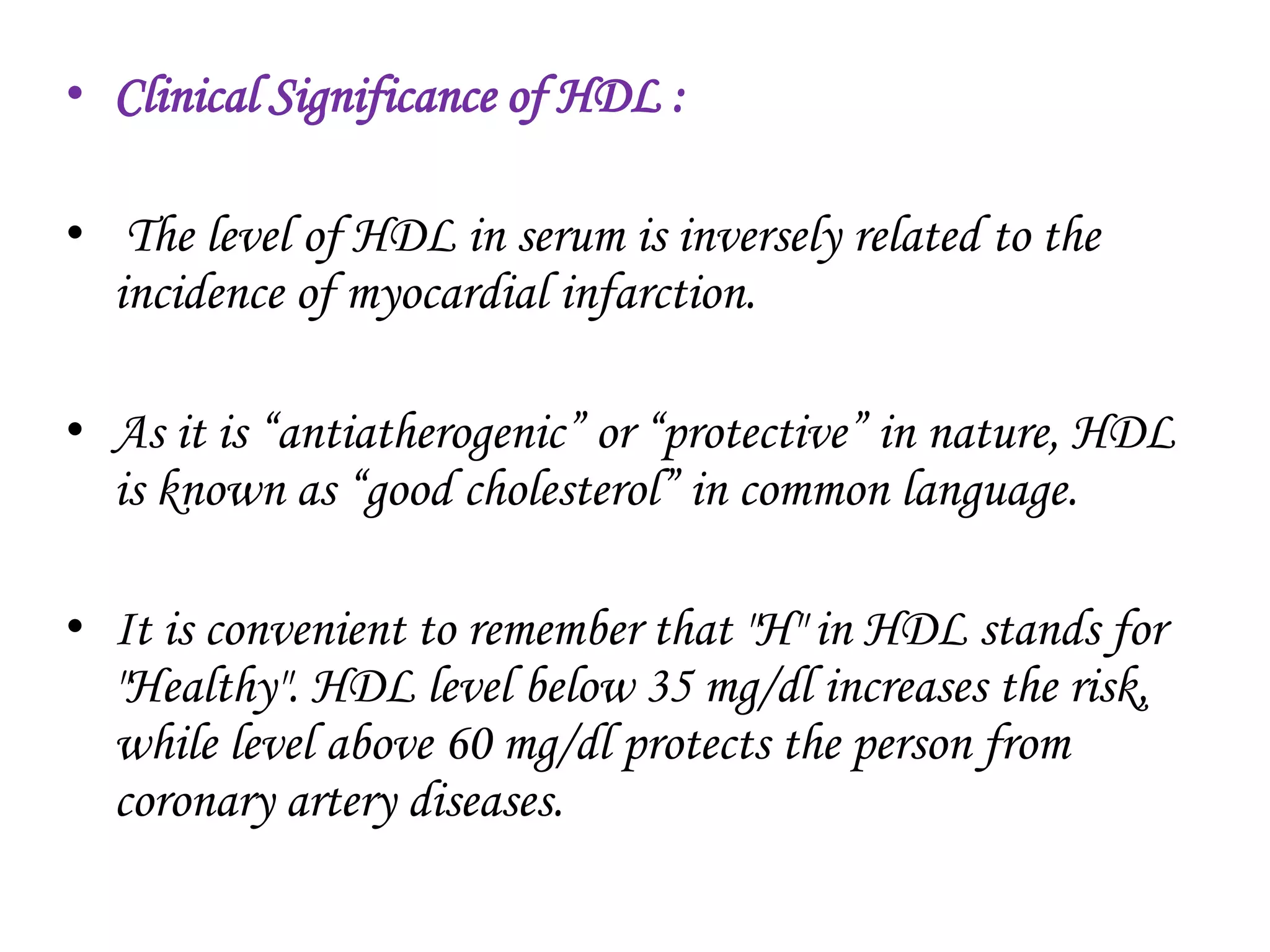
• Clinical Significance of HDL :
• The level of HDL in serum is inversely related to the
incidence of myocardial infarction.
• As it is “antiatherogenic” or “protective” in nature, HDL
is known as “good cholesterol” in common language.
• It is convenient to remember that "H" in HDL stands for
"Healthy". HDL level below 35 mg/dl increases the risk,
while level above 60 mg/dl protects the person from
coronary artery diseases.
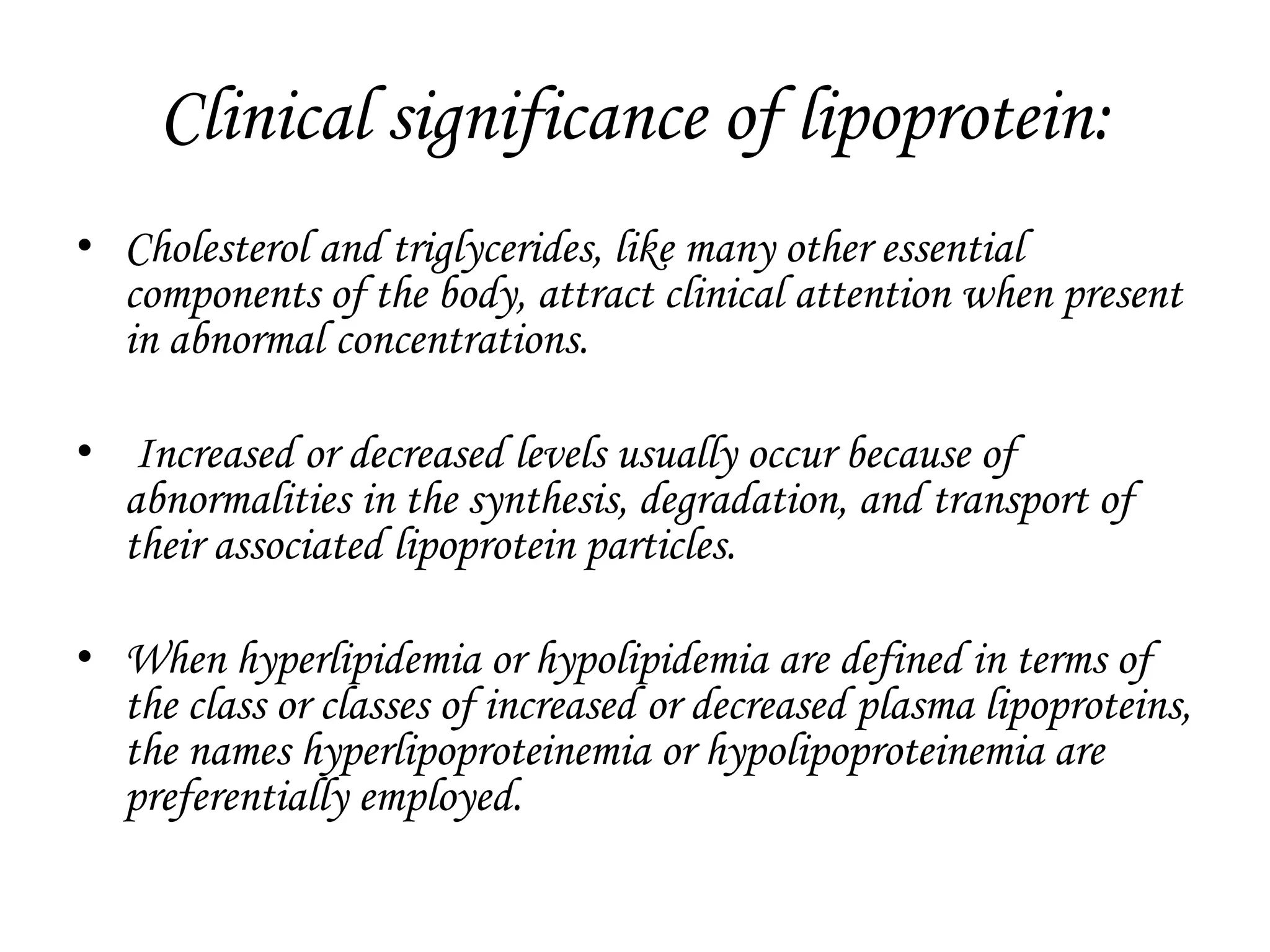
Clinical significance of lipoprotein:
• Cholesterol and triglycerides, like many other essential
components of the body, attract clinical attention when present
in abnormal concentrations.
• Increased or decreased levels usually occur because of
abnormalities in the synthesis, degradation, and transport of
their associated lipoprotein particles.
• When hyperlipidemia or hypolipidemia are defined in terms of
the class or classes of increased or decreased plasma lipoproteins,
the names hyperlipoproteinemia or hypolipoproteinemia are
preferentially employed.
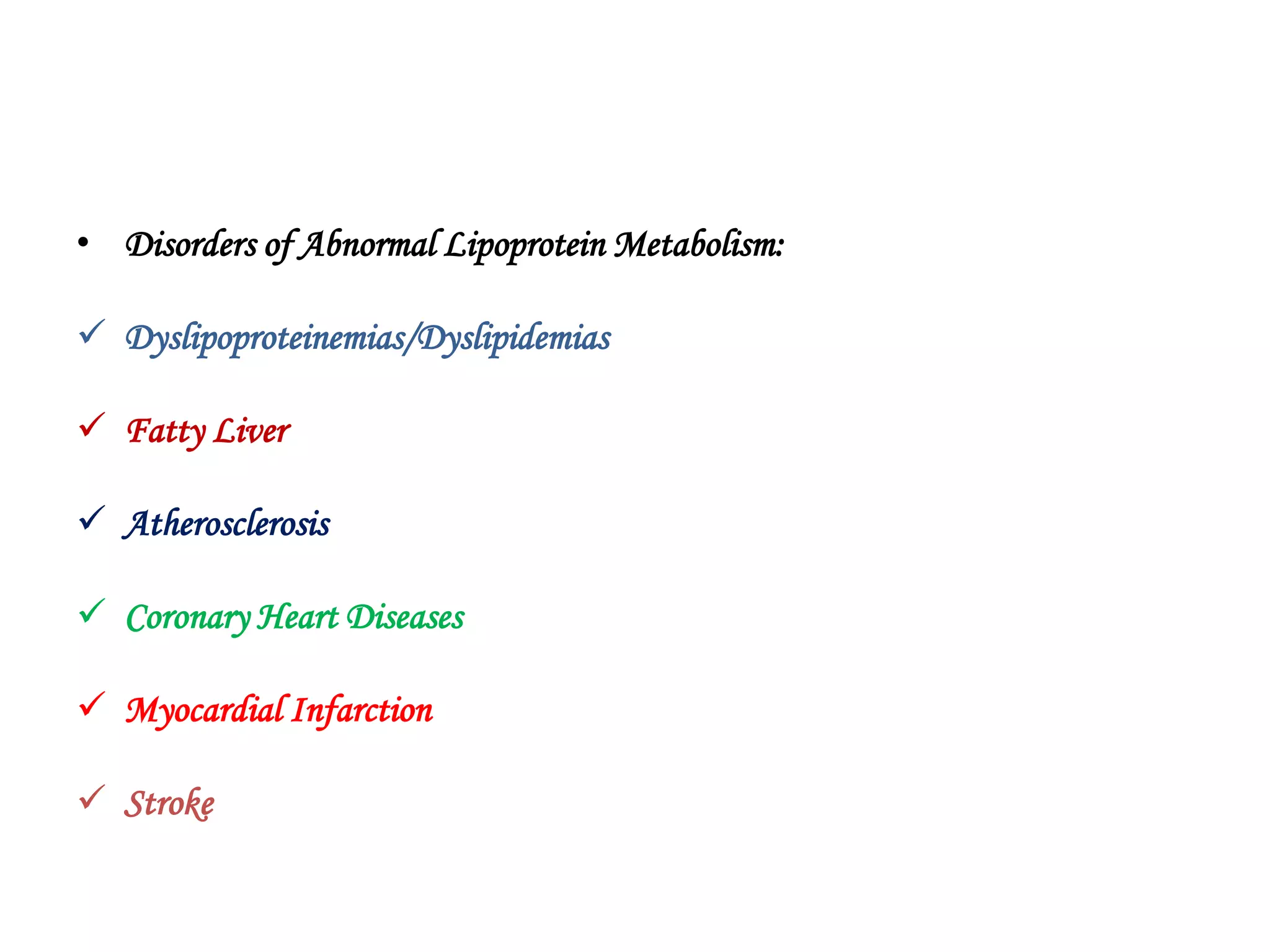
• Disorders of Abnormal Lipoprotein Metabolism:
 Dyslipoproteinemias/Dyslipidemias
 Fatty Liver
 Atherosclerosis
 Coronary Heart Diseases
 Myocardial Infarction
 Stroke
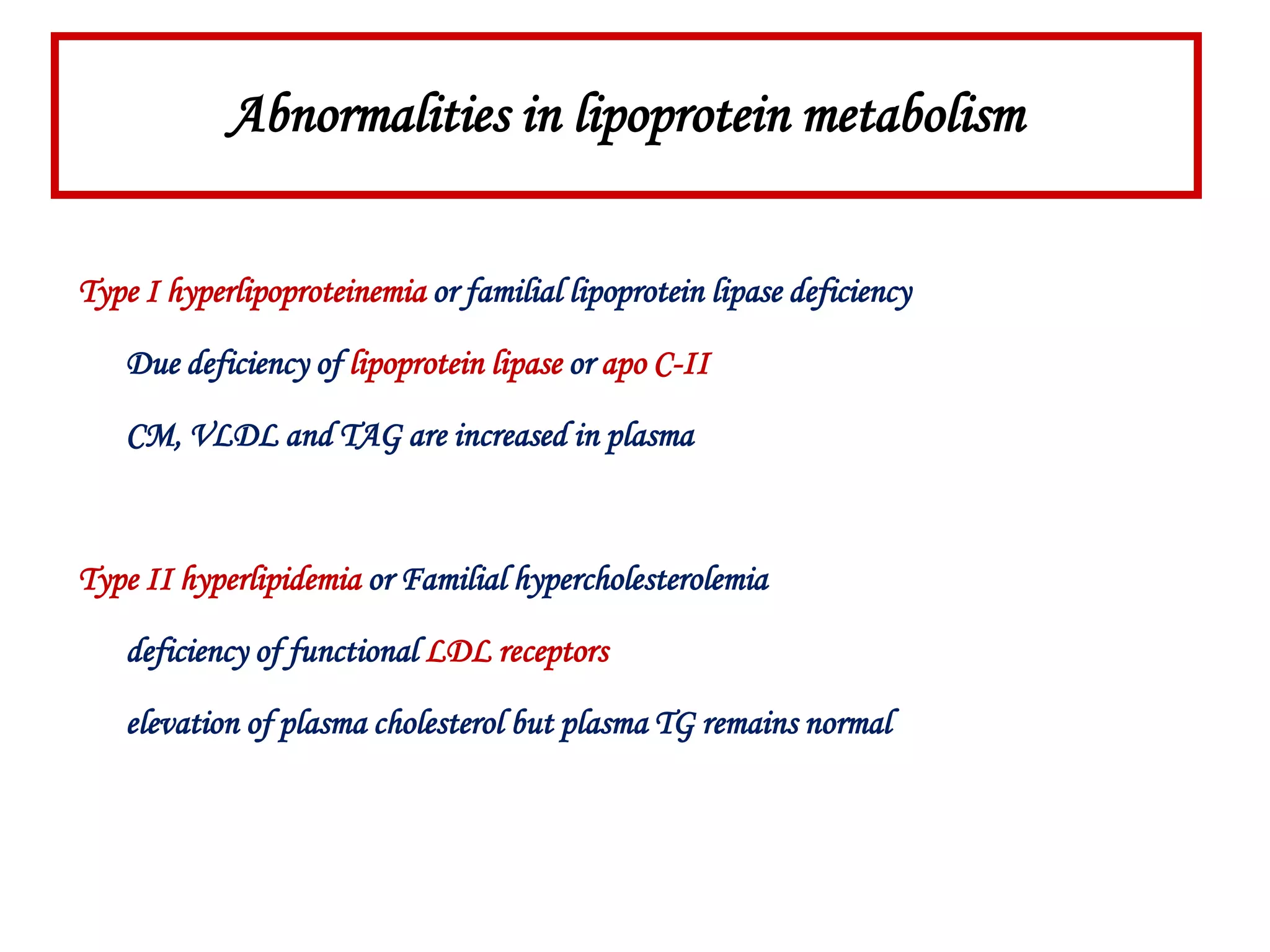
Type I hyperlipoproteinemia or familial lipoprotein lipase deficiency
Due deficiency of lipoprotein lipase or apo C-II
CM, VLDL and TAG are increased in plasma
Type II hyperlipidemia or Familial hypercholesterolemia
deficiency of functional LDL receptors
elevation of plasma cholesterol but plasma TG remains normal
Abnormalities in lipoprotein metabolism
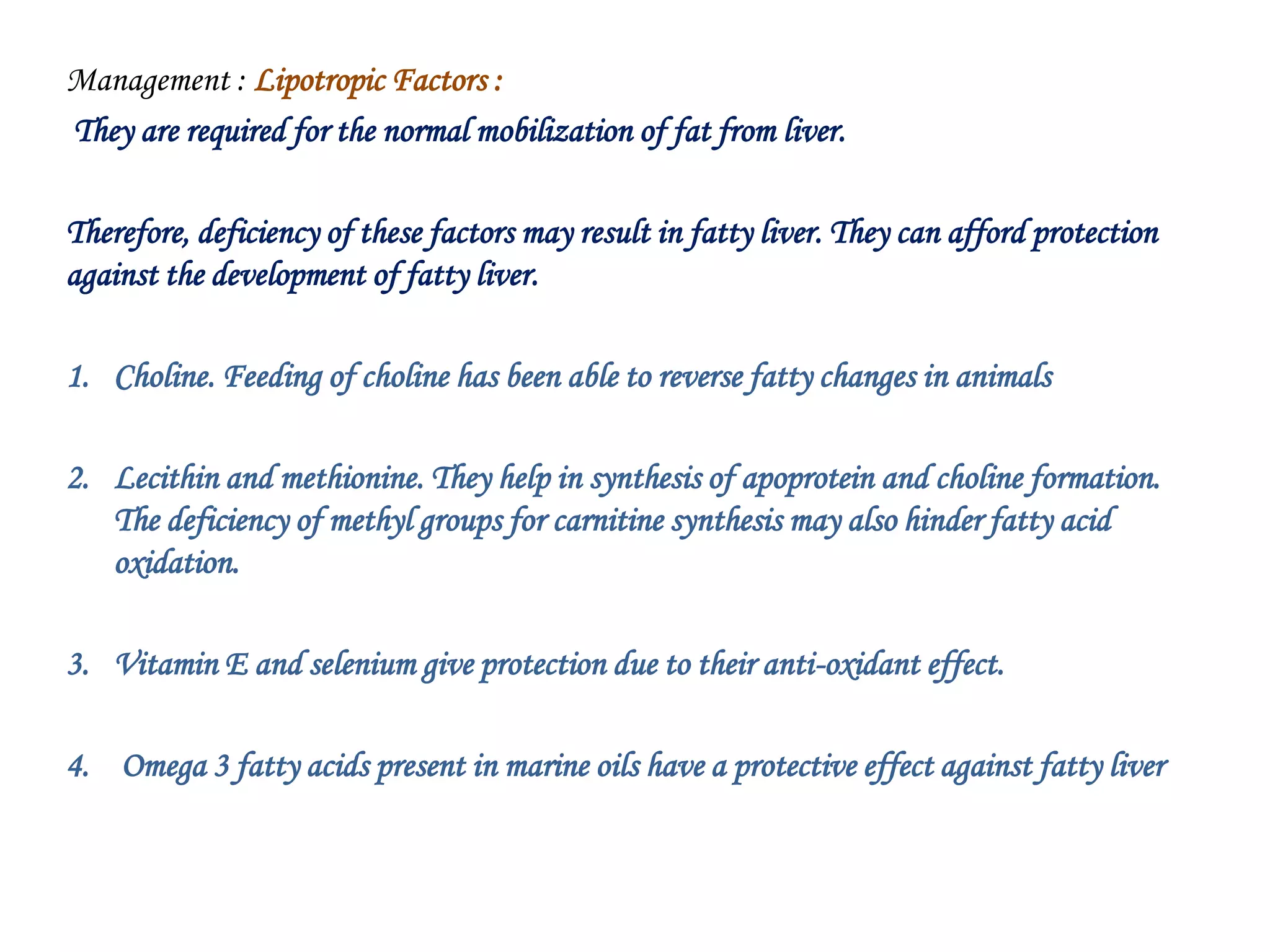
Management : Lipotropic Factors :
They are required for the normal mobilization of fat from liver.
Therefore, deficiency of these factors may result in fatty liver. They can afford protection
against the development of fatty liver.
1. Choline. Feeding of choline has been able to reverse fatty changes in animals
2. Lecithin and methionine. They help in synthesis of apoprotein and choline formation.
The deficiency of methyl groups for carnitine synthesis may also hinder fatty acid
oxidation.
3. Vitamin E and selenium give protection due to their anti-oxidant effect.
4. Omega 3 fatty acids present in marine oils have a protective effect against fatty liver

Structure and function of lipoproteins

  • 1.
    Structure & Functionof Lipoproteins Mohmmad Amil Rahman S.R. Department of Biochemistry Dr. R.P.G.M.College Kangra at Tanda(H.P.)
  • 2.
    LIPOPROTEINS • The serumlipoproteins are complexes of lipids and specific proteins called "apoproteins". • A lipoprotein is a biochemical assembly whose primary function is to transport hydrophobic lipid (also known as fat) molecules in water, as in blood plasma or other extracellular fluids. • The lipoproteins play a key role in the absorption and transport of dietary lipids by the small intestine, in the transport of lipids from the liver to peripheral tissues, and the transport of lipids from peripheral tissues to the liver and intestine (reverse cholesterol transport).
  • 3.
    .Composition of plasmalipoproteins : They are composed of :  A neutral lipid core (containing triacylglycerol and cholesteryl esters)  surrounded by a shell of apolipoproteins, phospholipid, and non-esterified (free) cholesterol.  These compounds are oriented so that their polar portions are exposed on the surface of the lipoprotein, thus making the particle soluble in aqueous solution. Outer coat:  Apoproteins  Phospholipids  Cholesterol Inner core:  TG  Cholesterol ester Lipoprotein Structure
  • 4.
    Classification of Lipoproteins: •Depending on the density (by ultra centrifugation) or on the electrophoretic mobility, the lipoproteins in plasma are classified into five major types – • Chylomicrons (CM)-Lowest in density due to high lipid/protein ratio. • Very-low-Density Lipoproteins (VLDL), • low-Density Lipoproteins (LDL), • Intermediate Density Lipoproteins • High-Density Lipoproteins (HDL)- highest in density due to high protein/lipid ratio. • They differ in lipid and protein composition, size, density , and site of origin.
  • 5.
    The four classesof lipoprotein (all contain characteristic amounts TAG, cholesterol, cholesterol esters, phospholipids and apoproteins) Class Diameter (nm) Source and function Major apoliproteins Chylomicrons (CM) 500 Intestine. Transport of dietary TAG A, B48, C(I,II,III) E Very low density lipoproteins (VLDL) 43 Liver. Transport of endogenously synthesised TAG B100, C(I,II,III) , E Low density lipoproteins (LDL) 22 Delivers cholesterol to peripheral tissues B100 High density lipoproteins (HDL) 8 Liver. Removes “used” cholesterol from tissues and takes it to liver. A, C(I,II,III), D, E Increasing density
  • 6.
    Based on electrophoreticmobilities • Lipoproteins may be separated according to their electrophoretic properties into - α, pre β, β, and broad beta lipoproteins. • The mobility of a lipoprotein is mainly dependent upon protein content. • Those with higher protein content will move faster towards the anode and those with minimum protein content will have minimum mobility.
  • 7.
    • Lipoproteins maybe separated according to their electrophoretic properties into - α, pre β, β, and broad beta lipoproteins.
  • 8.
    • HDL are-α , VLDL pre- β, LDL-β , and IDL are broad beta lipoproteins. • Free fatty acid and albumin complex although not a lipoprotein is an important lipid fraction in serum and is the fastest moving fraction. • Chylomicrons remain at the origin since they have more lipid content. • VLDLs with less protein content than LDL move faster than LDL, this is due to nature of apoprotein present.
  • 9.
    • As thelipid content increases, density decreases and size increases, that is why Chylomicrons are least dense but biggest in size, while HDL are rich in proteins , hence most dense but smallest in size. Lipoprotein class Density (g/mL) Diameter (nm) Protein % of dry wt Phospholipi d % Triacylglycerol % of dry wt HDL 1.063-1.21 5 – 15 33 29 8 LDL 1.019 – 1.063 18 – 28 25 21 4 IDL 1.006-1.019 25 - 50 18 22 31 VLDL 0.95 – 1.006 30 - 80 10 18 50 chylomicrons < 0.95 100 - 500 1 - 2 7 84
  • 10.
    APOLIPOPROTEINS: • There arefive major classes (from A-E) of apoproteins – divided by structure & function – Each class has subclasses e.g. Apo A1, Apo CII – Functions of apoproteins •Some are required as structural proteins e.g.B48, B100 •Some are activators, e.g. Apo CII •Some are recognition sites (recognized by the receptors and help binding of lipoprotein to its receptors on cell surface • e.g. Apo E and Apo B
  • 11.
    • LPL(lipoprotein lipase) • LCAT(Lecithin Cholesterol Acyltransferase, formation of cholesterol esters in lipoproteins Apoprotein Lipoproteins Function(s) Apo B-100 VLDL, IDL, LDL 1) Secretion of VLDL from liver 2) Structural protein of VLDL, IDL, and HDL 3) Ligand for LDL receptor (LDLR) Apo B-48 Chylomicrons, remnants Secretion of chylomicrons from intestine; lacks LDLR binding domain of Apo B-100 Apo E Chylomicrons, VLDL, IDL, HDL Ligand for binding of IDL & remnants to LDLR and LRP Apo A-I HDL, chylomicrons 1) Major structural protein of HDL 2) Activator of LCAT Apo A-II HDL, chylomicrons Unknown Apo C-I Chylomicrons, VLDL, IDL, HDL Modulator of hepatic uptake of VLDL and IDL (also involved in activation of LCAT) Apo C-II Chylomicrons, VLDL, IDL, HDL Activator of LPL Apo C-III Chylomicrons, VLDL, IDL, HDL Inhibitor of LPL activity
  • 12.
    Chylomicrons • Chylomicrons arefound in chyle formed only by the lymphatic system draining the intestine. • They are responsible for the transport of all dietary lipids into the circulation. • Synthesis of Chylomicrons 1) Synthesis of Apo B48 o Chylomicrons contain Apo B48, synthesized in the rough endoplasmic reticulum (RER). o The synthesis of apo B48 is the result of RNA editing process. o Coding information can be changed at the mRNA level by RNA editing.
  • 13.
    • The synthesisof apo B48 is the result of RNA editing process.
  • 14.
    • They arerich in triglyceride. • Main sites of metabolism of chylomicrons are adipose tissue and skeletal muscle If lipemic serum is kept overnight in the refrigerator, chylomicrons rise as a creamy layer to the top, leaving the subnatant clear. • 98% lipid, large sized, lowest density – Apo B-48 • Receptor binding – Apo C-II • Lipoprotein lipase activator – Apo E • Remnant receptor binding • Function of Chylomicrons: • They are the transport form of dietary triglycerides from intestines to the adipose tissue for storage; and to muscle or heart for their energy needs
  • 15.
    Very Low DensityLipoproteins(VLDL): • They are synthesised in the liver from glycerol and fatty acids and incorporated into VLDL along with hepatic cholesterol, apo-B-100, C-II and E. • Apo-B-100 is the major lipoprotein present in VLDL when it is secreted. Apo-E and C-II are obtained from HDL in plasma • Function of VLDL : VLDL carries triglycerides (endogenous triglycerides) from liver to peripheral tissues for energy needs
  • 16.
    Intermediate Density Lipoprotein(IDL) –Synthesized from VLDL during VLDL degradation –Triglyceride transport and precurser to LDL –Apo B-100 • Receptor binding –Apo C-II • LPL activator –Apo E • Receptor binding
  • 17.
    Low Density Lipoproteins(LDL) •LDL transports cholesterol from liver to peripheral tissues. • The only apoprotein present in LDL is apo B100 . • Most of the LDL particles are derived from VLDL, but a small part is directly released from liver.
  • 18.
    • Function: • LDLtransport mainly cholesterol ester from blood to peripheral tissues that require cholesterol for membrane structure or steroid hormone synthesis. -LDL reacts with receptors on various cells, is taken up by LDL-receptor –mediated endocytosis .The receptors are recognized by apo B100 - Inside cells, LDL is digested by lysosomal enzymes and free cholesterol is released from cholesterol esters. - The released free cholesterol is re-esterified by ACAT to CE and stored for use in cell membrane structure or steroid hormone synthesis. - High LDL indicates high plasma cholesterol and tend to deliver cholesterol to artery walls. High blood LDL is associated with high incidence of heart attacks and strokes so it is called: Bad cholesterol.
  • 19.
    LDL and ClinicalApplications: • LDL concentration in blood has positive correlation with incidence of cardiovascular diseases. • A fraction of cholesterol is taken up by macrophages, this is not a regulated pathway. Increased levels of LDL or modification of LDL by glycation (as seen in diabetes mellitus) or oxidation increases the fraction of cholesterol taken up by macrophages. • LDL infiltrates through arterial walls, and is taken up by macrophages or scavenger cells. • This is the starting event of atherosclerosis leading to myocardial infarction. • When these cells become engorged with cholesterol, foam cells are formed, that get deposited in the subendothelial space triggering formation of atheromatous plaque. • Procoagulant changes are induced in the endothelium resulting in increased chances of thrombosis and coronary artery disease. • Since LDL-cholesterol is thus deposited in tissues, the LDL (low density lipoprotein) variety is called “bad cholesterol” and LDL as “Lethally Dangerous Lipoprotein” in common language.
  • 20.
    High Density Lipoproteins(HDL): •High density lipoproteins transport cholesterol from peripheral tissues to the liver. • The intestinal cells synthesize components of HDL and release into blood. – 52% protein, 48% lipid, 35% C & CE – Apo A • Activates lecithin-cholesterol acyltransferase (LCAT) – Apo C • Activates LPL – Apo E • Remnant receptor binding • Functions of HDL: • HDL is the main transport form of cholesterol from peripheral tissue to liver, which is later excreted through bile . This is called reverse cholesterol transport by HDL. • The only excretory route of cholesterol from the body is the bile
  • 21.
    • Clinical Significanceof HDL : • The level of HDL in serum is inversely related to the incidence of myocardial infarction. • As it is “antiatherogenic” or “protective” in nature, HDL is known as “good cholesterol” in common language. • It is convenient to remember that "H" in HDL stands for "Healthy". HDL level below 35 mg/dl increases the risk, while level above 60 mg/dl protects the person from coronary artery diseases.
  • 22.
    Clinical significance oflipoprotein: • Cholesterol and triglycerides, like many other essential components of the body, attract clinical attention when present in abnormal concentrations. • Increased or decreased levels usually occur because of abnormalities in the synthesis, degradation, and transport of their associated lipoprotein particles. • When hyperlipidemia or hypolipidemia are defined in terms of the class or classes of increased or decreased plasma lipoproteins, the names hyperlipoproteinemia or hypolipoproteinemia are preferentially employed.
  • 23.
    • Disorders ofAbnormal Lipoprotein Metabolism:  Dyslipoproteinemias/Dyslipidemias  Fatty Liver  Atherosclerosis  Coronary Heart Diseases  Myocardial Infarction  Stroke
  • 24.
    Type I hyperlipoproteinemiaor familial lipoprotein lipase deficiency Due deficiency of lipoprotein lipase or apo C-II CM, VLDL and TAG are increased in plasma Type II hyperlipidemia or Familial hypercholesterolemia deficiency of functional LDL receptors elevation of plasma cholesterol but plasma TG remains normal Abnormalities in lipoprotein metabolism
  • 25.
    Management : LipotropicFactors : They are required for the normal mobilization of fat from liver. Therefore, deficiency of these factors may result in fatty liver. They can afford protection against the development of fatty liver. 1. Choline. Feeding of choline has been able to reverse fatty changes in animals 2. Lecithin and methionine. They help in synthesis of apoprotein and choline formation. The deficiency of methyl groups for carnitine synthesis may also hinder fatty acid oxidation. 3. Vitamin E and selenium give protection due to their anti-oxidant effect. 4. Omega 3 fatty acids present in marine oils have a protective effect against fatty liver