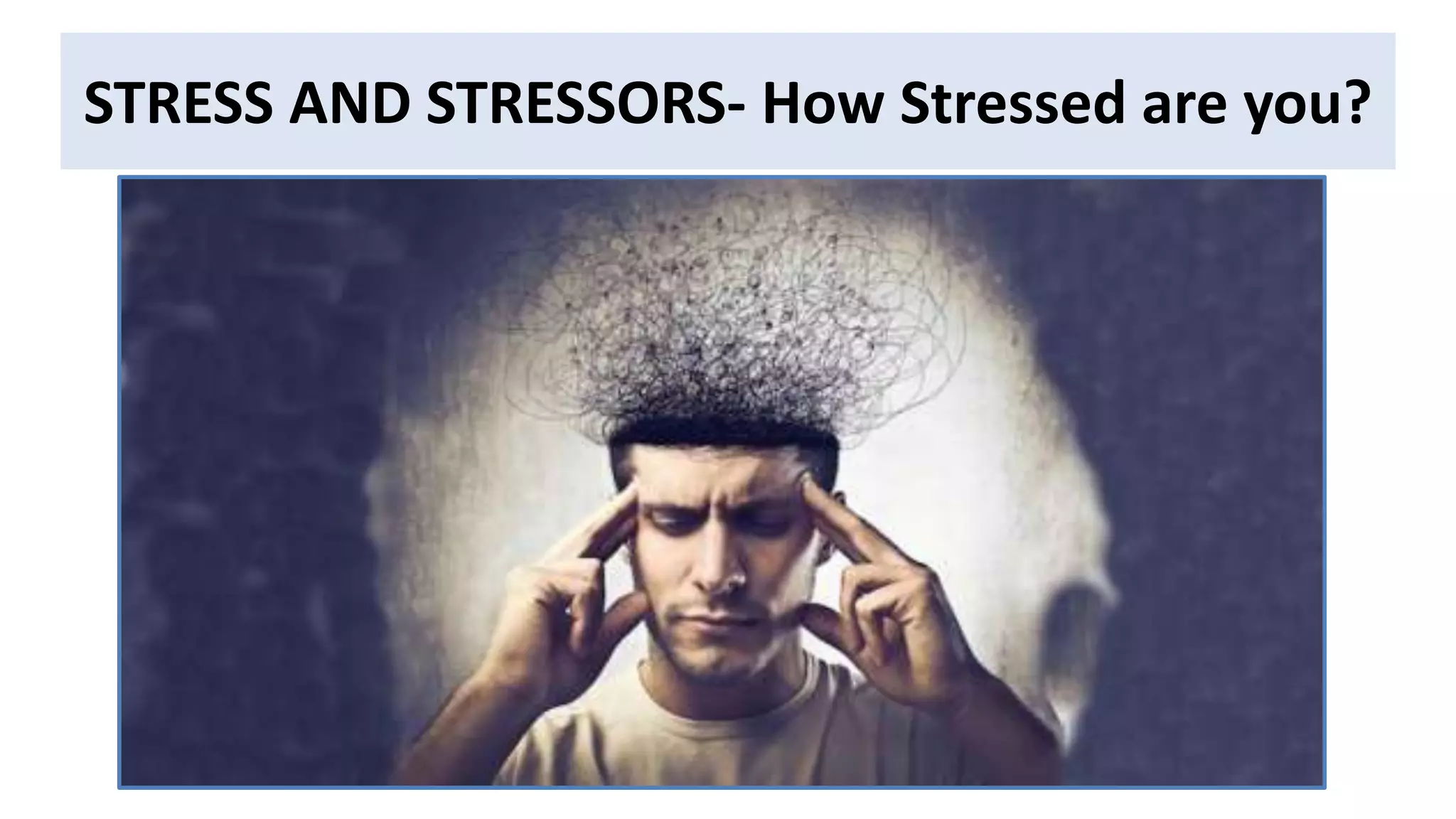
STRESS AND STRESSORS- How Stressed are you?
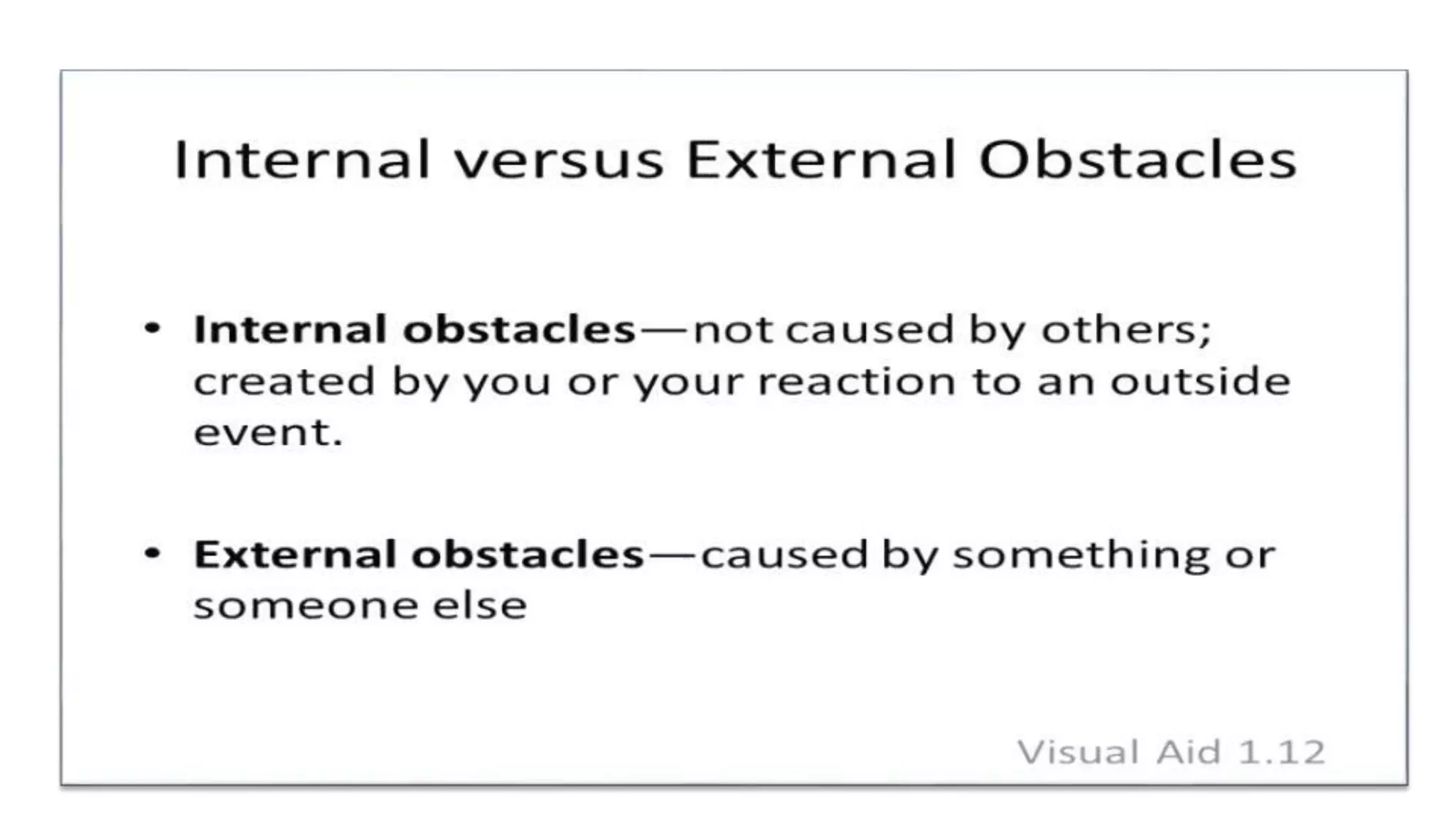
Obstacles
One that opposes, stands in the way of, or holds up
progress
Two Forms:
1. Internal obstacles- under your control and
are actionable if you are willing.
2. External obstacle- outside your control but
correct recognition and assessment make it
possible to deal with them.
“I’m Ruled” attitude- you believe that you have no choice
but to react to and become distracted by the obstacles.
“I Rule” attitude- you can choose to overcome and not be
distracted by obstacles
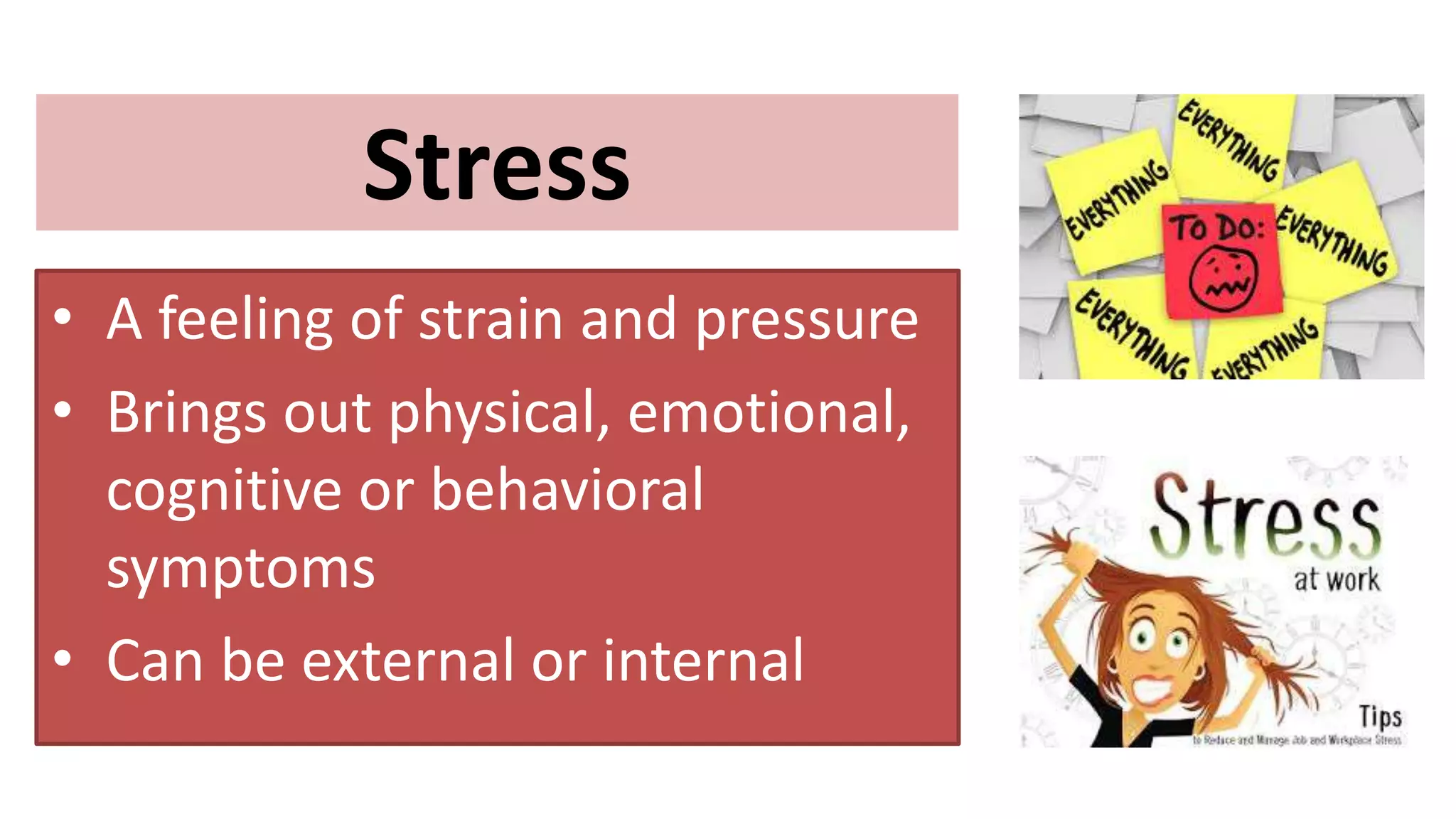
Stress
• A feeling of strain and pressure
• Brings out physical, emotional,
cognitive or behavioral
symptoms
• Can be external or internal
Types of Stress
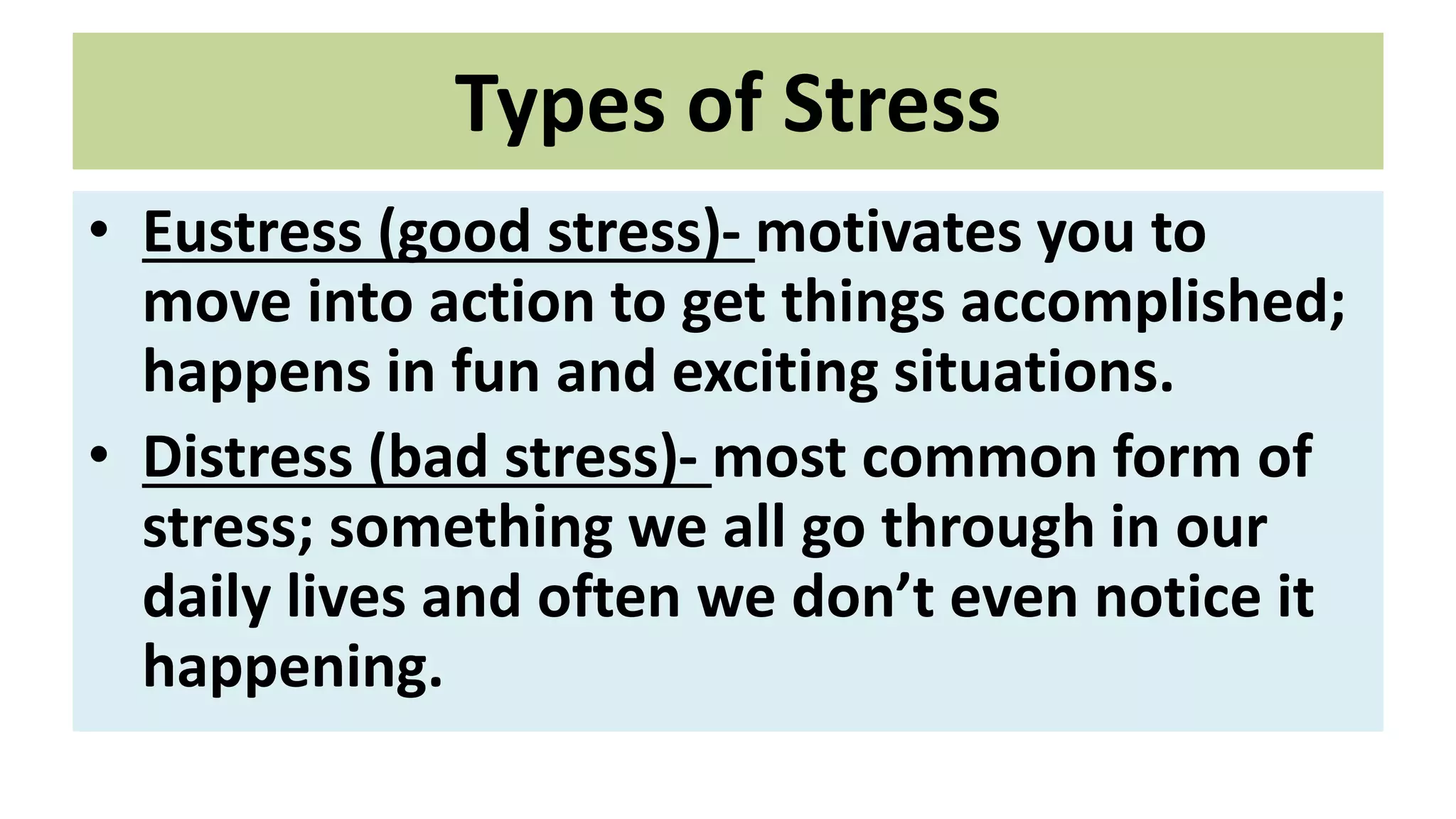
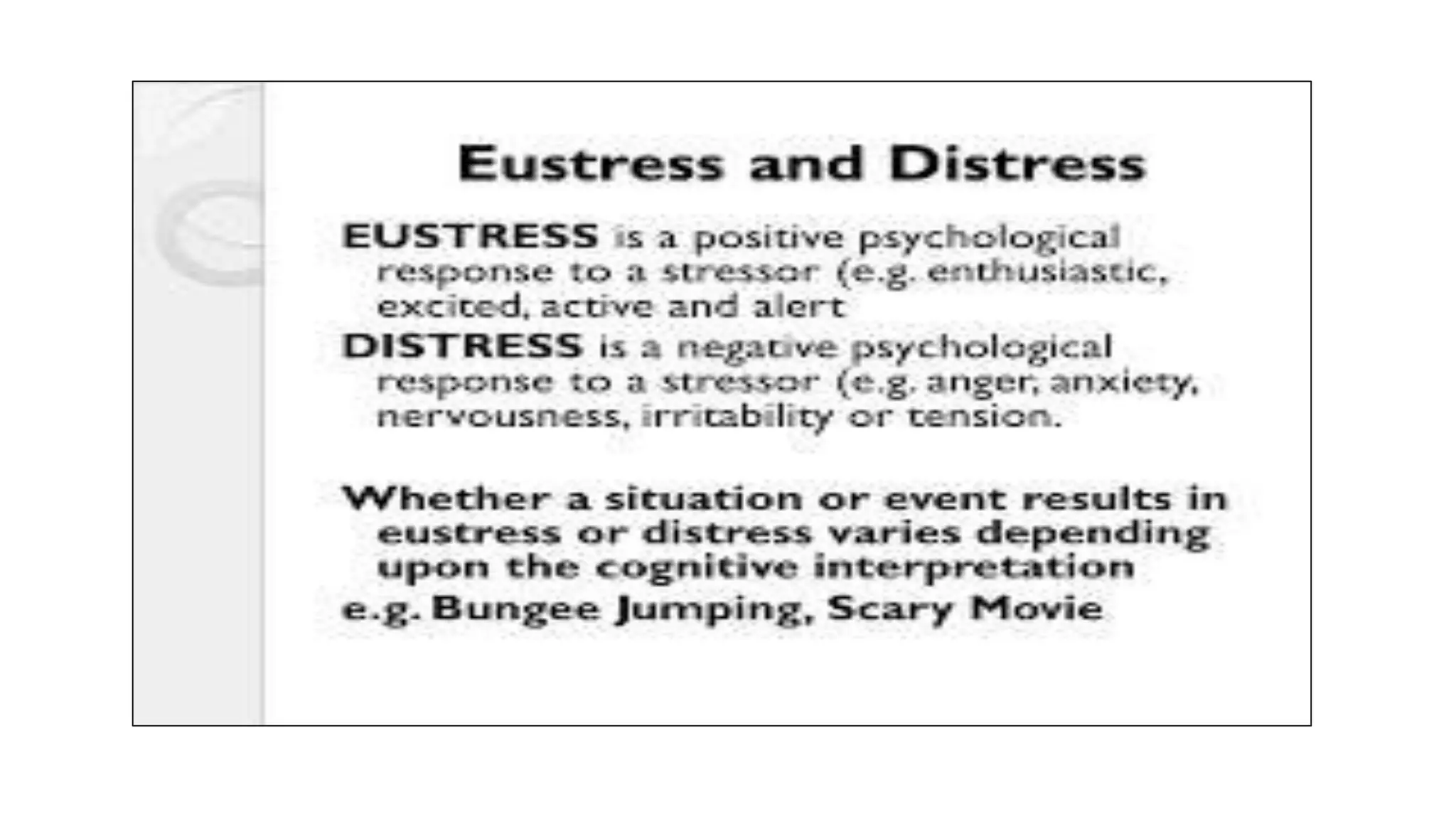
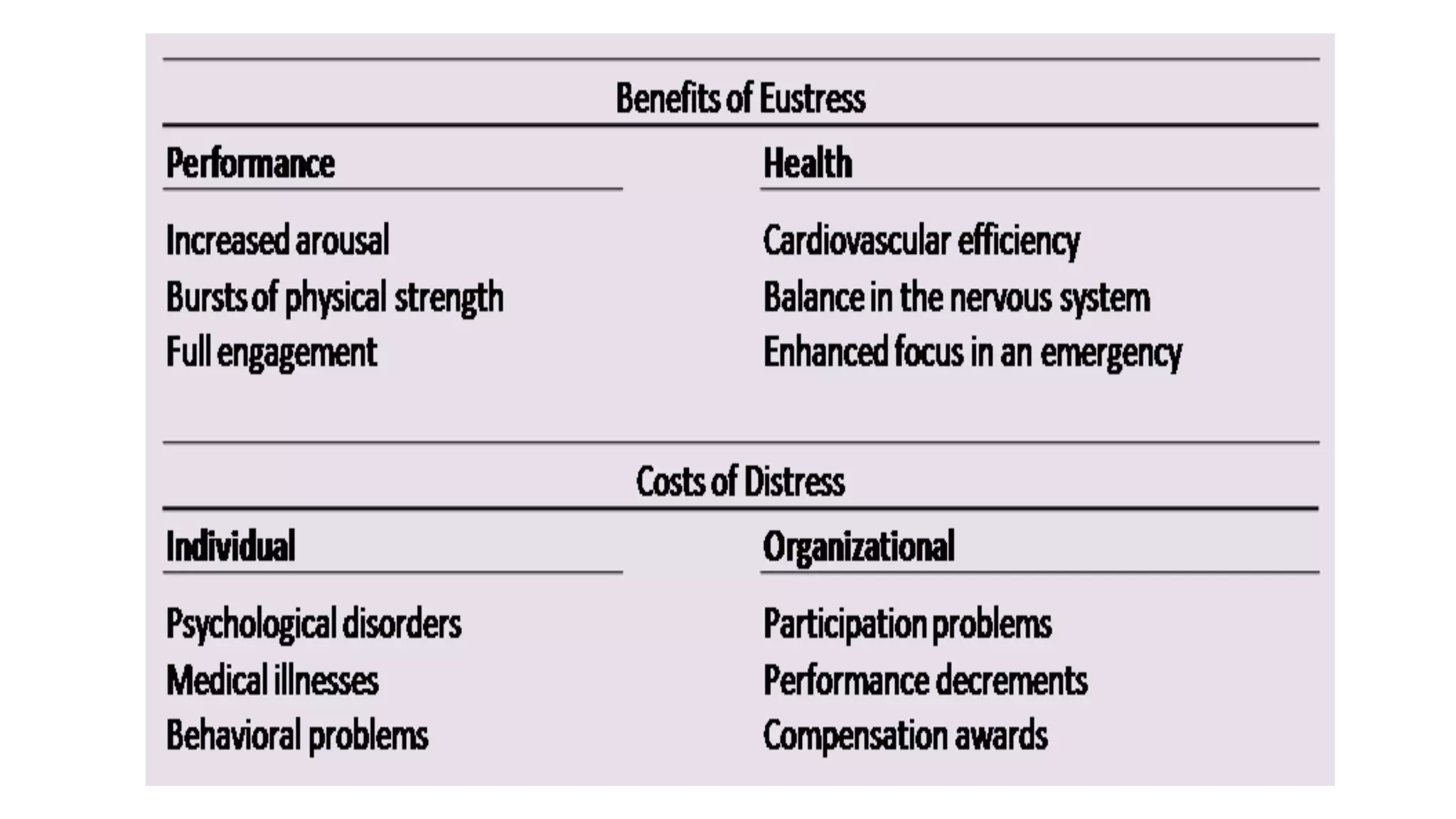
• Eustress (good stress)- motivates you to
move into action to get things accomplished;
happens in fun and exciting situations.
• Distress (bad stress)- most common form of
stress; something we all go through in our
daily lives and often we don’t even notice it
happening.
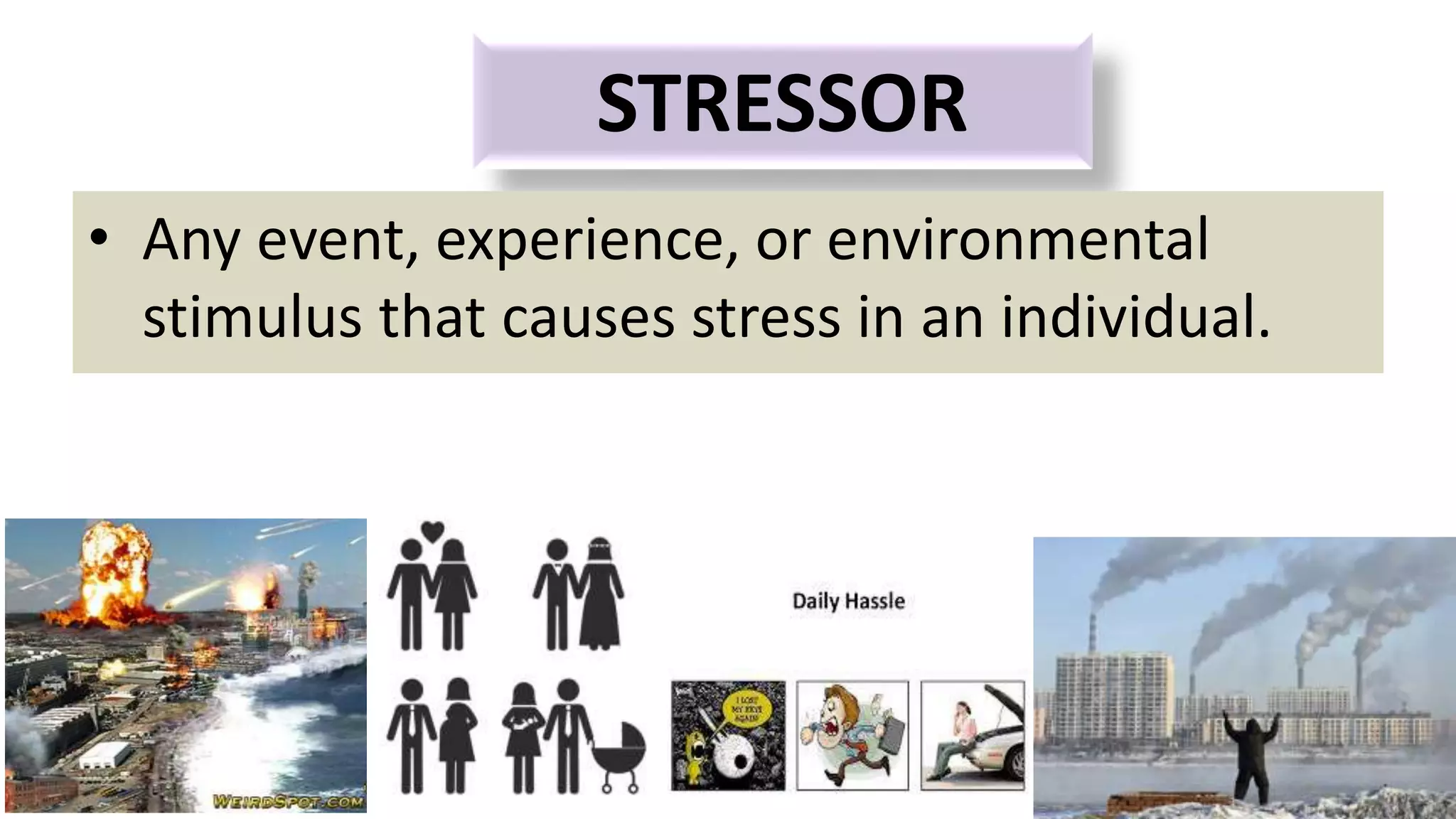
STRESSOR
• Any event, experience, or environmental
stimulus that causes stress in an individual.
Types of Stressors
1. Crises/catastrophe- natural disaster, war
2. Major life events- marriage, college, death,
birth
3. Daily hassles/micro-stressors- annoyances,
conflicts
4. Ambient stressors- pollution, noise,
crowding, and traffic
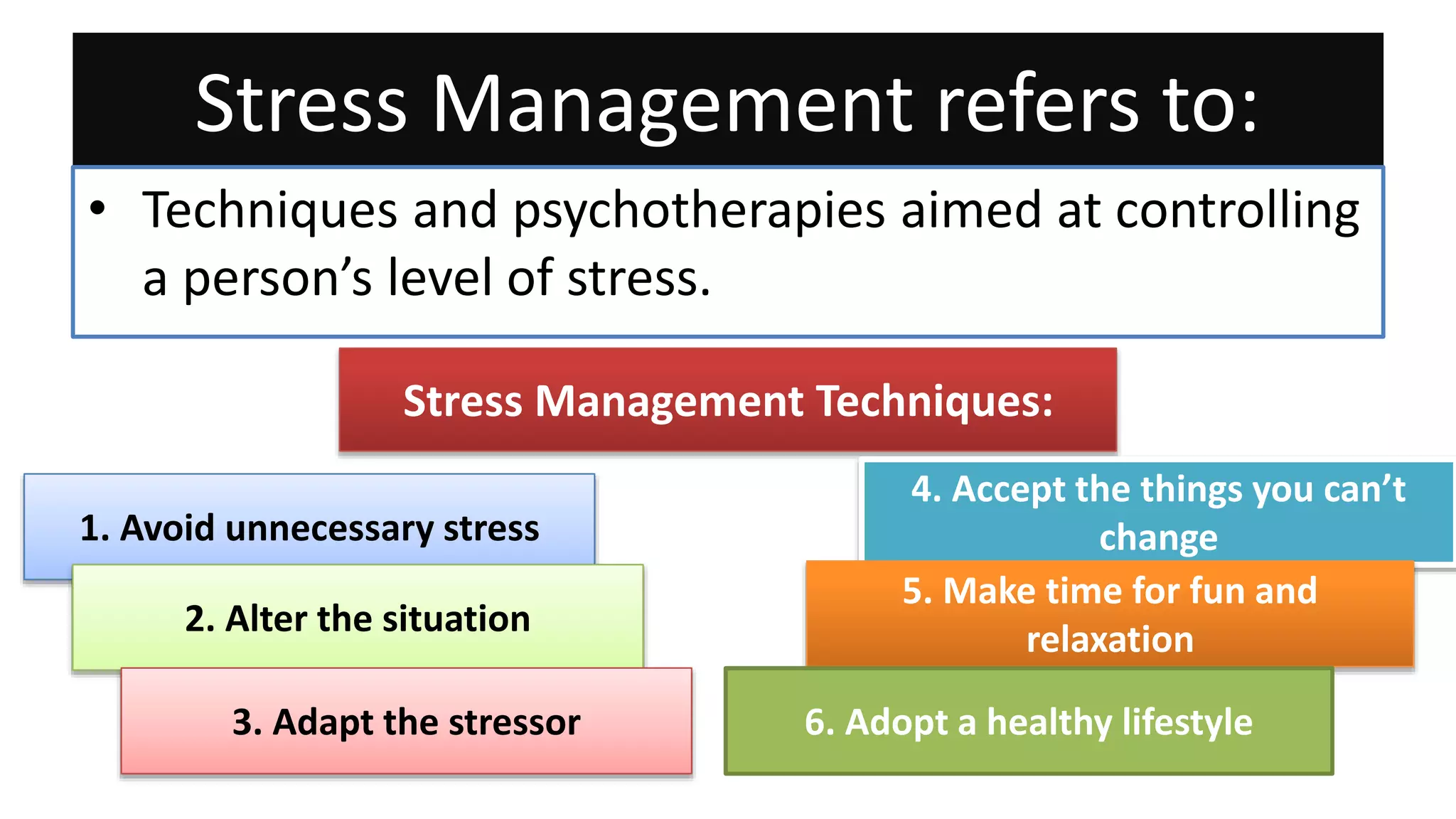
Stress Management refers to:
• Techniques and psychotherapies aimed at controlling
a person’s level of stress.
Stress Management Techniques:
1. Avoid unnecessary stress
2. Alter the situation
3. Adapt the stressor
4. Accept the things you can’t
change
5. Make time for fun and
relaxation
6. Adopt a healthy lifestyle
DAY 7: Personal Stressors and Relievers
and Stress Relief Reminders
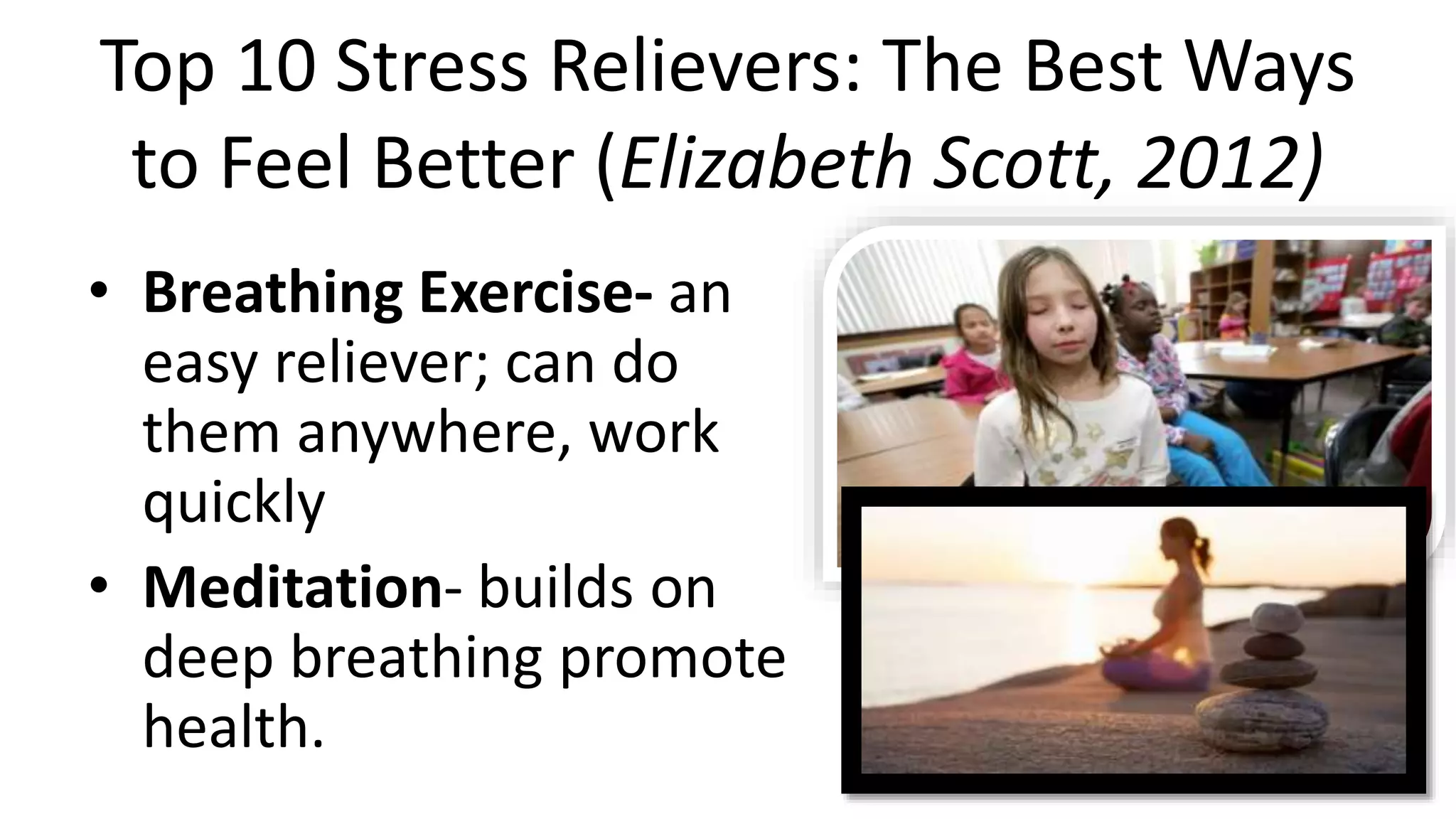
Top 10 Stress Relievers: The Best Ways
to Feel Better (Elizabeth Scott, 2012)
• Breathing Exercise- an
easy reliever; can do
them anywhere, work
quickly
• Meditation- builds on
deep breathing promote
health.
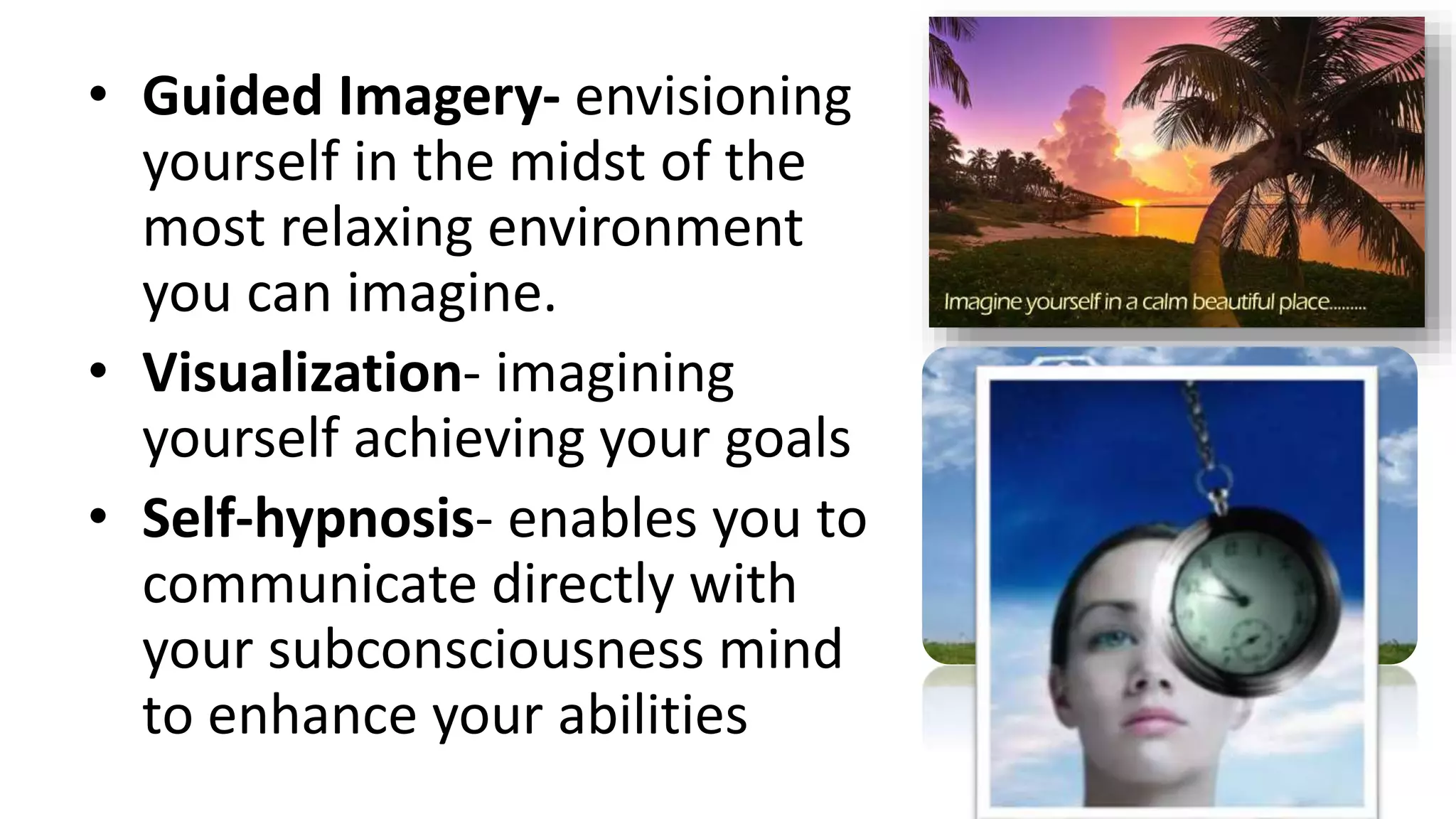
• Guided Imagery- envisioning
yourself in the midst of the
most relaxing environment
you can imagine.
• Visualization- imagining
yourself achieving your goals
• Self-hypnosis- enables you to
communicate directly with
your subconsciousness mind
to enhance your abilities
• Exercise- provides a distraction from
stressful situations; an outlet for
frustrations.
• Progressive muscles relaxation-
tensing and relaxing all the muscle
groups in your body.
• Sex- provides physical benefits.
• Music- Lower your blood pressure;
relax your body and your mind.
• Yoga- combines the practices of
several other stress management
techniques.
Stress Relief Reminders
1. Make Gentle Reminders- think about bright or the
positive side about the things that gives you
2. Be Careful With Comparisons- Choose to compare
yourself to people who have less than you
3. Keep a Gratitude Journal- Keep a catalog of happy
memories and a long list of things in your life for which you
are grateful for.

Stress and stressors

  • 2.
    STRESS AND STRESSORS-How Stressed are you?
  • 3.
    Obstacles One that opposes,stands in the way of, or holds up progress
  • 4.
    Two Forms: 1. Internalobstacles- under your control and are actionable if you are willing. 2. External obstacle- outside your control but correct recognition and assessment make it possible to deal with them.
  • 9.
    “I’m Ruled” attitude-you believe that you have no choice but to react to and become distracted by the obstacles. “I Rule” attitude- you can choose to overcome and not be distracted by obstacles
  • 11.
    Stress • A feelingof strain and pressure • Brings out physical, emotional, cognitive or behavioral symptoms • Can be external or internal
  • 12.
    Types of Stress •Eustress (good stress)- motivates you to move into action to get things accomplished; happens in fun and exciting situations. • Distress (bad stress)- most common form of stress; something we all go through in our daily lives and often we don’t even notice it happening.
  • 15.
    STRESSOR • Any event,experience, or environmental stimulus that causes stress in an individual.
  • 16.
    Types of Stressors 1.Crises/catastrophe- natural disaster, war 2. Major life events- marriage, college, death, birth 3. Daily hassles/micro-stressors- annoyances, conflicts 4. Ambient stressors- pollution, noise, crowding, and traffic
  • 17.
    Stress Management refersto: • Techniques and psychotherapies aimed at controlling a person’s level of stress. Stress Management Techniques: 1. Avoid unnecessary stress 2. Alter the situation 3. Adapt the stressor 4. Accept the things you can’t change 5. Make time for fun and relaxation 6. Adopt a healthy lifestyle
  • 18.
    DAY 7: PersonalStressors and Relievers and Stress Relief Reminders
  • 19.
    Top 10 StressRelievers: The Best Ways to Feel Better (Elizabeth Scott, 2012) • Breathing Exercise- an easy reliever; can do them anywhere, work quickly • Meditation- builds on deep breathing promote health.
  • 20.
    • Guided Imagery-envisioning yourself in the midst of the most relaxing environment you can imagine. • Visualization- imagining yourself achieving your goals • Self-hypnosis- enables you to communicate directly with your subconsciousness mind to enhance your abilities
  • 21.
    • Exercise- providesa distraction from stressful situations; an outlet for frustrations. • Progressive muscles relaxation- tensing and relaxing all the muscle groups in your body. • Sex- provides physical benefits. • Music- Lower your blood pressure; relax your body and your mind. • Yoga- combines the practices of several other stress management techniques.
  • 22.
    Stress Relief Reminders 1.Make Gentle Reminders- think about bright or the positive side about the things that gives you 2. Be Careful With Comparisons- Choose to compare yourself to people who have less than you 3. Keep a Gratitude Journal- Keep a catalog of happy memories and a long list of things in your life for which you are grateful for.