STRATEGIES
FOR
METROPOLITAN
CITY PLANNING
Abubakar Shehu Rufai
1510671
CONTENTS
1. Metropolitan area
2. Case study (Delhi)
3. Focal points of Delhi master plan
4. Problems of Delhi
5. Strategies
Metropolitan Area
In India, a metropolitan city is defined as,
one having a population of 1 million and
above. As of 2011 census of India, there
are 46 metropolitan cities in India and the
top ten are
1. Mumbai
2. Delhi
3. Kolkata
4. Chennai,
5. Bangalore
6. Hyderabad
7. Ahmedabad
8. Pune
9. Lucknow
10. Jaipur.
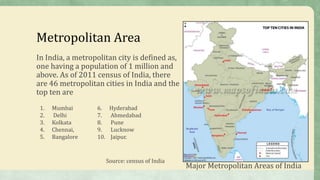
Major Metropolitan Areas of India
Source: census of India
DELHI CASE STUDY
• Delhi is the largest city in India in terms of
geographical area (about 1484km2).
• Delhi is the 2nd most populated city in India
with population of 16.3 million (census
2011).
• Delhi is the 2nd most populated urban
agglomeration in India and 3rd in the World.
• Delhi is the national capital of India.
• National Capital Region Planning Board Act
of 1985 was enacted to take responsibility of
coordinating the effort of adjoining states
through the instrumental development of the
region. Delhi Metropolitan Area
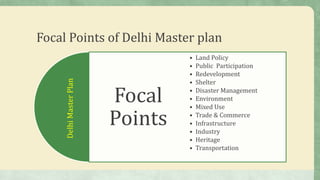
Focal Points of Delhi Master plan
Focal
Points
• Land Policy
• Public Participation
• Redevelopment
• Shelter
• Disaster Management
• Environment
• Mixed Use
• Trade & Commerce
• Infrastructure
• Industry
• Heritage
• Transportation
DelhiMasterPlan
PROBLEMS OF DELHI
Land policy
• Urban sprawl
• Restriction of FAR
Public participation
• Lack of people awareness
• Lack of participation
Redevelopment
• Unplanned development
Shelter
• Lack of enough housing
• Slum areas
Disaster management
• Lack of management offices
• Neglect of disaster in building control
Environment
• Lack of public spaces
• Pollution
PROBLEMS OF DELHI
Mixed land use
• Commercial places are springing
up in residential areas
• Unplanned development
Trade and commerce
• Commercial activities are
scattered around the city
• No defined market place for
informal sector
• Sprawling of commercial centers
Infrastructure
• Inadequate health facilities
• Inadequate educational facilities
• Lack of play ground in educational
institutions
• Lack of facilities for mental and
physically challenged
• Inadequate sport infrastructure
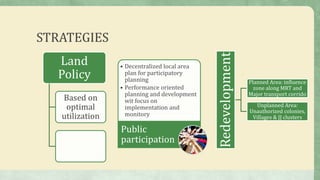
STRATEGIES
Land
Policy
Based on
optimal
utilization
• Decentralized local area
plan for participatory
planning
• Performance oriented
planning and development
wit focus on
implementation and
monitory
Public
participation
Redevelopment
Planned Area: influence
zone along MRT and
Major transport corrido
Unplanned Area:
Unauthorized colonies,
Villages & JJ clusters
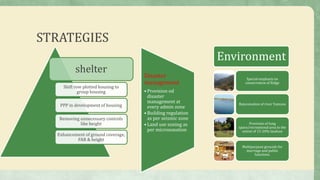
shelter
Shift row plotted housing to
group housing
PPP in development of housing
Removing unnecessary controls
like height
Enhancement of ground coverage,
FAR & height
Disaster
management
• Provision od
disaster
management at
every admin zone
• Building regulation
as per seismic zone
• Land use zoning as
per microzonation
Environment
Special emphasis on
conservation of Ridge
Rejuvenation of river Yamuna
Provision of lung
space/recreational area to the
extent of 15-20% landuse
Multipurpose grounds for
marriage and public
functions.
STRATEGIES
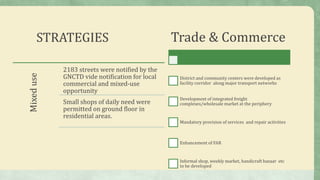
STRATEGIESMixeduse
2183 streets were notified by the
GNCTD vide notification for local
commercial and mixed-use
opportunity
Small shops of daily need were
permitted on ground floor in
residential areas.
Trade & Commerce
District and community centers were developed as
facility corridor along major transport networks
Development of integrated freight
complexes/wholesale market at the periphery
Mandatory provision of services and repair activities
Enhancement of FAR
Informal shop, weekly market, handicraft bazaar etc
to be developed
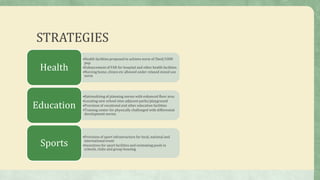
STRATEGIES
•Health facilities proposed to achieve norm of 5bed/1000
pop.
•Enhancement of FAR for hospital and other health facilities
•Nursing home, clinics etc allowed under relaxed mixed use
norm
Health
•Rationalizing of planning norms with enhanced floor area
•Locating new school sites adjacent parks/playground
•Provision of vocational and other education facilities
•Training center for physically challenged with differential
development norms.
Education
•Provision of sport infrastructure for local, national and
international event
•Incentives for sport facilities and swimming pools in
schools, clubs and group housing
Sports
Strategies for metropolitan planning

Strategies for metropolitan planning

  • 1.
  • 2.
    CONTENTS 1. Metropolitan area 2.Case study (Delhi) 3. Focal points of Delhi master plan 4. Problems of Delhi 5. Strategies
  • 3.
    Metropolitan Area In India,a metropolitan city is defined as, one having a population of 1 million and above. As of 2011 census of India, there are 46 metropolitan cities in India and the top ten are 1. Mumbai 2. Delhi 3. Kolkata 4. Chennai, 5. Bangalore 6. Hyderabad 7. Ahmedabad 8. Pune 9. Lucknow 10. Jaipur. Major Metropolitan Areas of India Source: census of India
  • 4.
    DELHI CASE STUDY •Delhi is the largest city in India in terms of geographical area (about 1484km2). • Delhi is the 2nd most populated city in India with population of 16.3 million (census 2011). • Delhi is the 2nd most populated urban agglomeration in India and 3rd in the World. • Delhi is the national capital of India. • National Capital Region Planning Board Act of 1985 was enacted to take responsibility of coordinating the effort of adjoining states through the instrumental development of the region. Delhi Metropolitan Area
  • 5.
    Focal Points ofDelhi Master plan Focal Points • Land Policy • Public Participation • Redevelopment • Shelter • Disaster Management • Environment • Mixed Use • Trade & Commerce • Infrastructure • Industry • Heritage • Transportation DelhiMasterPlan
  • 6.
    PROBLEMS OF DELHI Landpolicy • Urban sprawl • Restriction of FAR Public participation • Lack of people awareness • Lack of participation Redevelopment • Unplanned development Shelter • Lack of enough housing • Slum areas Disaster management • Lack of management offices • Neglect of disaster in building control Environment • Lack of public spaces • Pollution
  • 7.
    PROBLEMS OF DELHI Mixedland use • Commercial places are springing up in residential areas • Unplanned development Trade and commerce • Commercial activities are scattered around the city • No defined market place for informal sector • Sprawling of commercial centers Infrastructure • Inadequate health facilities • Inadequate educational facilities • Lack of play ground in educational institutions • Lack of facilities for mental and physically challenged • Inadequate sport infrastructure
  • 8.
    STRATEGIES Land Policy Based on optimal utilization • Decentralizedlocal area plan for participatory planning • Performance oriented planning and development wit focus on implementation and monitory Public participation Redevelopment Planned Area: influence zone along MRT and Major transport corrido Unplanned Area: Unauthorized colonies, Villages & JJ clusters
  • 9.
    shelter Shift row plottedhousing to group housing PPP in development of housing Removing unnecessary controls like height Enhancement of ground coverage, FAR & height Disaster management • Provision od disaster management at every admin zone • Building regulation as per seismic zone • Land use zoning as per microzonation Environment Special emphasis on conservation of Ridge Rejuvenation of river Yamuna Provision of lung space/recreational area to the extent of 15-20% landuse Multipurpose grounds for marriage and public functions. STRATEGIES
  • 10.
    STRATEGIESMixeduse 2183 streets werenotified by the GNCTD vide notification for local commercial and mixed-use opportunity Small shops of daily need were permitted on ground floor in residential areas. Trade & Commerce District and community centers were developed as facility corridor along major transport networks Development of integrated freight complexes/wholesale market at the periphery Mandatory provision of services and repair activities Enhancement of FAR Informal shop, weekly market, handicraft bazaar etc to be developed
  • 11.
    STRATEGIES •Health facilities proposedto achieve norm of 5bed/1000 pop. •Enhancement of FAR for hospital and other health facilities •Nursing home, clinics etc allowed under relaxed mixed use norm Health •Rationalizing of planning norms with enhanced floor area •Locating new school sites adjacent parks/playground •Provision of vocational and other education facilities •Training center for physically challenged with differential development norms. Education •Provision of sport infrastructure for local, national and international event •Incentives for sport facilities and swimming pools in schools, clubs and group housing Sports