
HBRJuly-August 1980
Strategic Management for
Competitive Advantage
By: Frederick W. Gluck, Stephen P. Kaufman,
andA. StevenWalleck
Presented By:
 SANAULLAH
 ZOHAIB AHMED
 SOFIA FATIMA
 SUNDAS SETHI
INTRODUCTION
 The planners all have turned
into strategists
 Performances of some large,
complex multicultural
corporations turned to the
strategic management
 The question is raisesWhy the
companies like Apple,
Mitsubishi are so successful
INTRODUCTION
Cont…
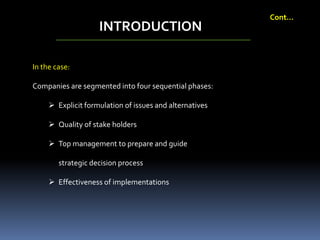
In the case:
Companies are segmented into four sequential phases:
 Explicit formulation of issues and alternatives
 Quality of stake holders
 Top management to prepare and guide
strategic decision process
 Effectiveness of implementations
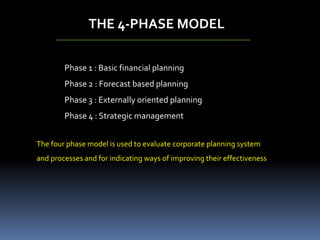
The four phase model is used to evaluate corporate planning system
and processes and for indicating ways of improving their effectiveness
THE 4-PHASE MODEL
Phase 1 : Basic financial planning
Phase 2 : Forecast based planning
Phase 3 : Externally oriented planning
Phase 4 : Strategic management
THE 4-PHASE MODEL
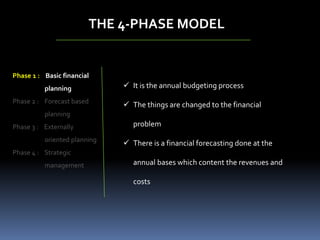
Phase 1 : Basic financial
planning
Phase 2 : Forecast based
planning
Phase 3 : Externally
oriented planning
Phase 4 : Strategic
management
 It is the annual budgeting process
 The things are changed to the financial
problem
 There is a financial forecasting done at the
annual bases which content the revenues and
costs
THE 4-PHASE MODEL
Phase 1 : Basic financial
planning
Phase 2 : Forecast based
planning
Phase 3 : Externally
oriented planning
Phase 4 : Strategic
management
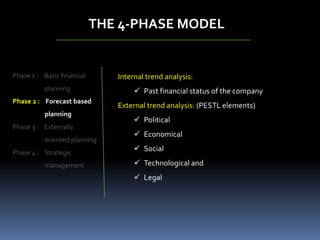
Internal trend analysis:
 Past financial status of the company
External trend analysis: (PESTL elements)
 Political
 Economical
 Social
 Technological and
 Legal
THE 4-PHASE MODEL
Phase 1 : Basic financial
planning
Phase 2 : Forecast based
planning
Phase 3 : Externally
oriented planning
Phase 4 : Strategic
management
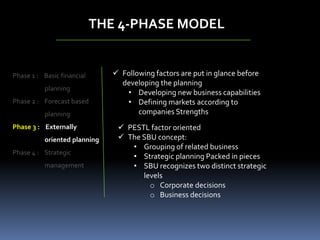
 Following factors are put in glance before
developing the planning
• Developing new business capabilities
• Defining markets according to
companies Strengths
 PESTL factor oriented
 The SBU concept:
• Grouping of related business
• Strategic planning Packed in pieces
• SBU recognizes two distinct strategic
levels
o Corporate decisions
o Business decisions
THE 4-PHASE MODEL
Phase 1 : Basic financial
planning
Phase 2 : Forecast based
planning
Phase 3 : Externally
oriented planning
Phase 4 : Strategic
management
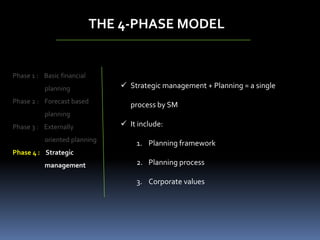
 Strategic management + Planning = a single
process by SM
 It include:
1. Planning framework
2. Planning process
3. Corporate values
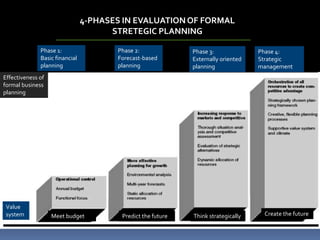
4-PHASES IN EVALUATIONOF FORMAL
STRETEGIC PLANNING
Phase 1:
Basic financial
planning
Phase 2:
Forecast-based
planning
Phase 3:
Externally oriented
planning
Phase 4:
Strategic
management
Effectiveness of
formal business
planning
Meet budget Predict the future Think strategically Create the future
Value
system
Strategic Management for Competitive Advantage

Strategic Management for Competitive Advantage

  • 2.
    HBRJuly-August 1980 Strategic Managementfor Competitive Advantage By: Frederick W. Gluck, Stephen P. Kaufman, andA. StevenWalleck
  • 3.
    Presented By:  SANAULLAH ZOHAIB AHMED  SOFIA FATIMA  SUNDAS SETHI
  • 5.
    INTRODUCTION  The plannersall have turned into strategists  Performances of some large, complex multicultural corporations turned to the strategic management  The question is raisesWhy the companies like Apple, Mitsubishi are so successful
  • 6.
    INTRODUCTION Cont… In the case: Companiesare segmented into four sequential phases:  Explicit formulation of issues and alternatives  Quality of stake holders  Top management to prepare and guide strategic decision process  Effectiveness of implementations
  • 7.
    The four phasemodel is used to evaluate corporate planning system and processes and for indicating ways of improving their effectiveness THE 4-PHASE MODEL Phase 1 : Basic financial planning Phase 2 : Forecast based planning Phase 3 : Externally oriented planning Phase 4 : Strategic management
  • 8.
    THE 4-PHASE MODEL Phase1 : Basic financial planning Phase 2 : Forecast based planning Phase 3 : Externally oriented planning Phase 4 : Strategic management  It is the annual budgeting process  The things are changed to the financial problem  There is a financial forecasting done at the annual bases which content the revenues and costs
  • 9.
    THE 4-PHASE MODEL Phase1 : Basic financial planning Phase 2 : Forecast based planning Phase 3 : Externally oriented planning Phase 4 : Strategic management Internal trend analysis:  Past financial status of the company External trend analysis: (PESTL elements)  Political  Economical  Social  Technological and  Legal
  • 10.
    THE 4-PHASE MODEL Phase1 : Basic financial planning Phase 2 : Forecast based planning Phase 3 : Externally oriented planning Phase 4 : Strategic management  Following factors are put in glance before developing the planning • Developing new business capabilities • Defining markets according to companies Strengths  PESTL factor oriented  The SBU concept: • Grouping of related business • Strategic planning Packed in pieces • SBU recognizes two distinct strategic levels o Corporate decisions o Business decisions
  • 11.
    THE 4-PHASE MODEL Phase1 : Basic financial planning Phase 2 : Forecast based planning Phase 3 : Externally oriented planning Phase 4 : Strategic management  Strategic management + Planning = a single process by SM  It include: 1. Planning framework 2. Planning process 3. Corporate values
  • 12.
    4-PHASES IN EVALUATIONOFFORMAL STRETEGIC PLANNING Phase 1: Basic financial planning Phase 2: Forecast-based planning Phase 3: Externally oriented planning Phase 4: Strategic management Effectiveness of formal business planning Meet budget Predict the future Think strategically Create the future Value system