Human Resource 
Management Model 
Behind the recent development in 
the new HRM there are popular 
model known as Matching Model 
and the Harvard Model.
The Matching Model 
 The Matching Model was developed by 
Fombrun. It suggest that people in the 
organization are managed according to 
organizational requirements of quality and 
effectiveness. 
 The Matching Model assumes that the firms’ 
strategy, structure, and HRM system should 
have a sort of “tight fit” and these are 
vertually affected by the environmental 
factors.............................................
The Matching Model 
Mission 
and 
strategy 
Organizational 
structure 
Human 
Resource 
Management 
Economic
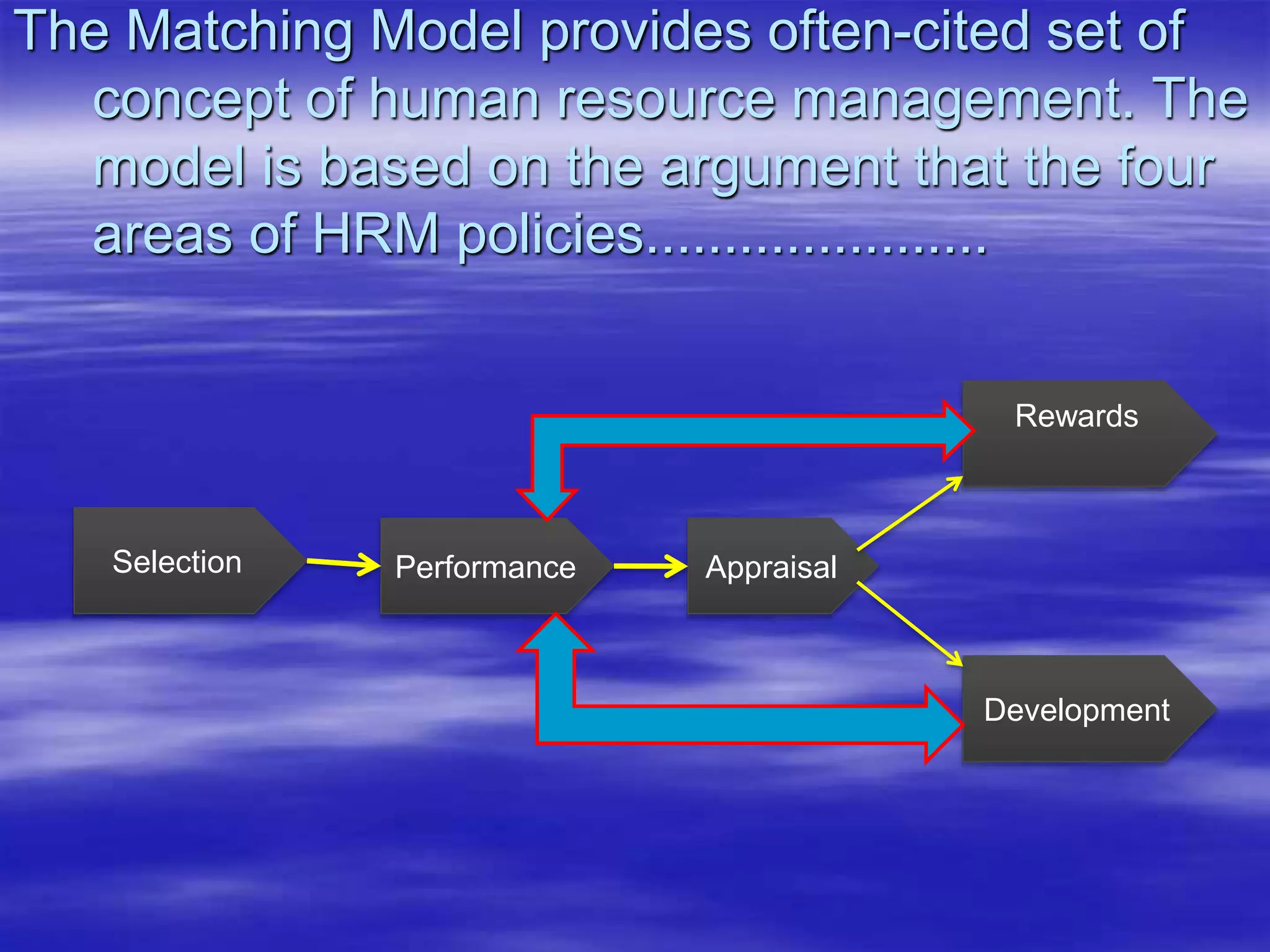
The Matching Model provides often-cited set of 
concept of human resource management. The 
model is based on the argument that the four 
areas of HRM policies...................... 
Selection Performance Appraisal 
Rewards 
Development
The Harvard Model 
The Harvared School suggested that 
HRM has two charecteristic features. 
Lin manager accept more responsibility 
for ensuring the alignment of competitive 
strategy and personal policies. 
Personnel has the mission of setting 
policies that govern how personnel 
activities are developed and implemented 
in ways that make them.
THE HARVARD FRAMEWORK FOR 
THE HRM 
Stakeholders Interest 
ST 
•Shareholders 
•Management 
•Employees 
•Government 
•Unions 
Situational Factors: 
•Workforce 
charecterstics 
•Business strategy & 
Conditions 
•Management 
Philosophy 
•Labour Market Unions 
•Task Technology 
•Laws & Social Values 
HRM policy 
choices: 
•Employment 
Influence 
•Human 
resource flow 
•Reward system 
•Work systems 
Human 
Resource 
Outcomes: 
•Commitment 
•Congruence 
•Competence 
•Cost 
Effectiveness 
Longterm 
Consequences: 
•Individual well 
being 
•Organizational 
Effectiveness 
•Social well 
being
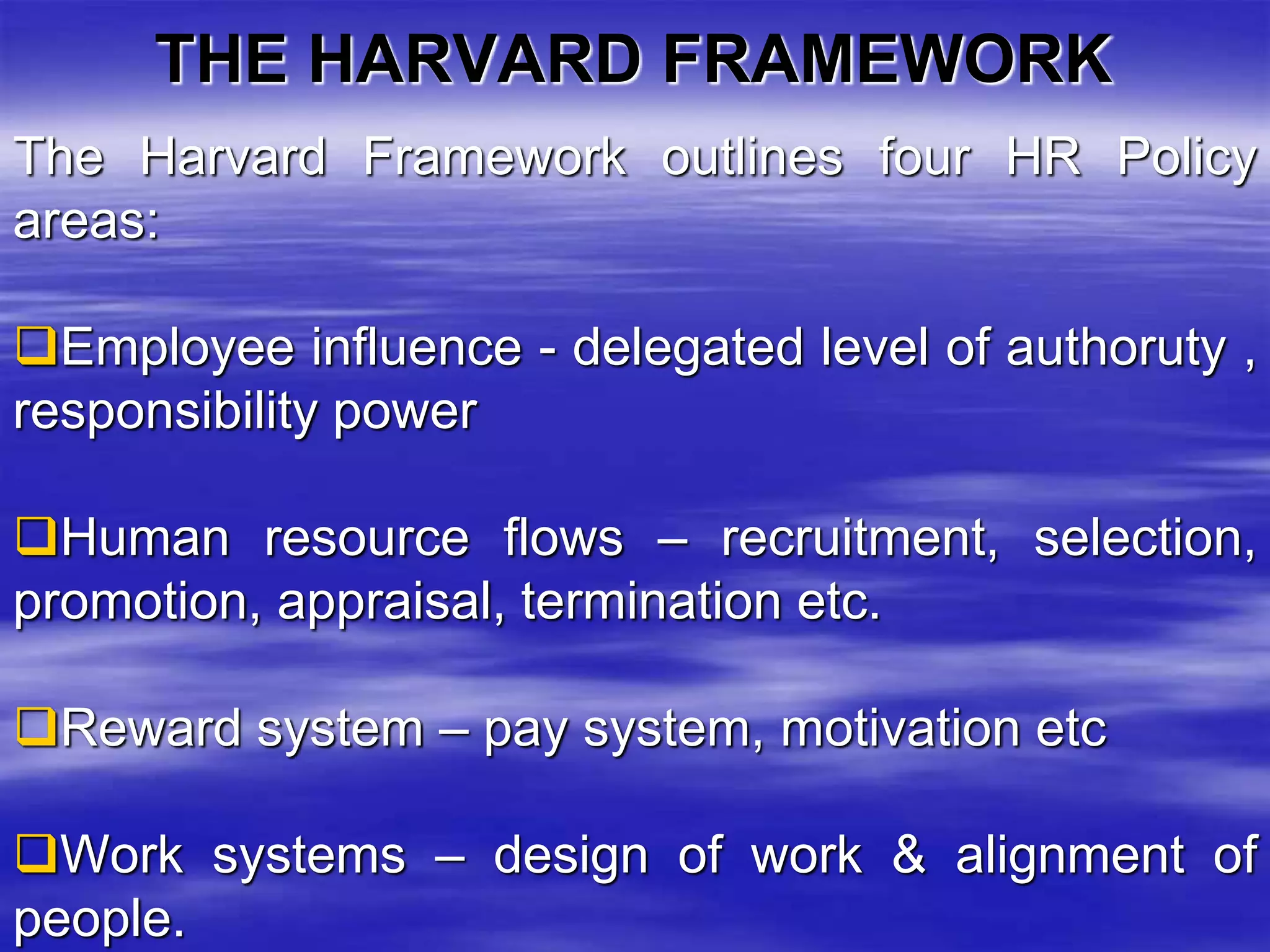
THE HARVARD FRAMEWORK 
The Harvard Framework outlines four HR Policy 
areas: 
Employee influence - delegated level of authoruty , 
responsibility power 
Human resource flows – recruitment, selection, 
promotion, appraisal, termination etc. 
Reward system – pay system, motivation etc 
Work systems – design of work & alignment of 
people.
Which in turn lead to the ‘Four Cs’ 
or HR policies that have to be 
achieved:- 
Commitment 
Congruence 
Competence 
Cost effectiveness 
================

Human resource management model

  • 1.
    Human Resource ManagementModel Behind the recent development in the new HRM there are popular model known as Matching Model and the Harvard Model.
  • 2.
    The Matching Model  The Matching Model was developed by Fombrun. It suggest that people in the organization are managed according to organizational requirements of quality and effectiveness.  The Matching Model assumes that the firms’ strategy, structure, and HRM system should have a sort of “tight fit” and these are vertually affected by the environmental factors.............................................
  • 3.
    The Matching Model Mission and strategy Organizational structure Human Resource Management Economic
  • 4.
    The Matching Modelprovides often-cited set of concept of human resource management. The model is based on the argument that the four areas of HRM policies...................... Selection Performance Appraisal Rewards Development
  • 5.
    The Harvard Model The Harvared School suggested that HRM has two charecteristic features. Lin manager accept more responsibility for ensuring the alignment of competitive strategy and personal policies. Personnel has the mission of setting policies that govern how personnel activities are developed and implemented in ways that make them.
  • 6.
    THE HARVARD FRAMEWORKFOR THE HRM Stakeholders Interest ST •Shareholders •Management •Employees •Government •Unions Situational Factors: •Workforce charecterstics •Business strategy & Conditions •Management Philosophy •Labour Market Unions •Task Technology •Laws & Social Values HRM policy choices: •Employment Influence •Human resource flow •Reward system •Work systems Human Resource Outcomes: •Commitment •Congruence •Competence •Cost Effectiveness Longterm Consequences: •Individual well being •Organizational Effectiveness •Social well being
  • 7.
    THE HARVARD FRAMEWORK The Harvard Framework outlines four HR Policy areas: Employee influence - delegated level of authoruty , responsibility power Human resource flows – recruitment, selection, promotion, appraisal, termination etc. Reward system – pay system, motivation etc Work systems – design of work & alignment of people.
  • 8.
    Which in turnlead to the ‘Four Cs’ or HR policies that have to be achieved:- Commitment Congruence Competence Cost effectiveness ================