High Performance
Work System(HPWS)
Research programme based on Norwegian industry
Presented by:
Prity Shakya
20th March,2016
Introduction to HPWS
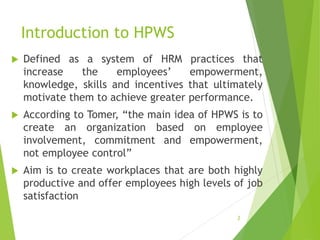
 Defined as a system of HRM practices that
increase the employees’ empowerment,
knowledge, skills and incentives that ultimately
motivate them to achieve greater performance.
 According to Tomer, “the main idea of HPWS is to
create an organization based on employee
involvement, commitment and empowerment,
not employee control”
 Aim is to create workplaces that are both highly
productive and offer employees high levels of job
satisfaction
2
Basic Practices
 self-managing teams
 open communication
 extensive training/upskilling
 Flexible work assignments
 Decentralized decision making
 employment security
 selective hiring of personnel
3
Selective hiring of personnel
 An organization need to have a large applicant
pool from which to select.
 The organization needs to be clear about what
are the most critical skills and attributes
needed in its applicant pool.
 The skills and abilities need to be carefully
considered and consistent with the particular
job requirements and the organization's
approach to its market.
4
Advantages
 Allows organization to build strong loyalty
within the organization
 Brings new people with fresh and innovative
ideas to the organization
 Reduce training costs as staff will bring
experience and qualifications from the
organization they've worked at before
5
Disadvantages
 An expensive process and takes a lot of energy
from the HRM department to handle all the
potential candidates
 Time-consuming as the organization works
through so many processes that go before
selection.
6
Decentralized Decision Making
 It is any process where the decision-making
authority is delegated by top level to middle
and lower and level managers within the
organization
7
Advantages
 Empowering employees
 Relieving the burden
 Preparing for emergencies
 More efficient decision making
 Ease of expansion
8
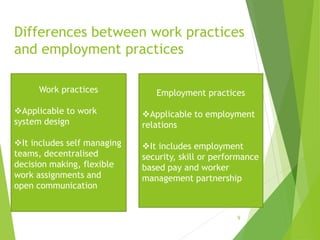
Differences between work practices
and employment practices
9
Work practices
Applicable to work
system design
It includes self managing
teams, decentralised
decision making, flexible
work assignments and
open communication
Employment practices
Applicable to employment
relations
It includes employment
security, skill or performance
based pay and worker
management partnership
10

High Performance Work System

  • 1.
    High Performance Work System(HPWS) Researchprogramme based on Norwegian industry Presented by: Prity Shakya 20th March,2016
  • 2.
    Introduction to HPWS Defined as a system of HRM practices that increase the employees’ empowerment, knowledge, skills and incentives that ultimately motivate them to achieve greater performance.  According to Tomer, “the main idea of HPWS is to create an organization based on employee involvement, commitment and empowerment, not employee control”  Aim is to create workplaces that are both highly productive and offer employees high levels of job satisfaction 2
  • 3.
    Basic Practices  self-managingteams  open communication  extensive training/upskilling  Flexible work assignments  Decentralized decision making  employment security  selective hiring of personnel 3
  • 4.
    Selective hiring ofpersonnel  An organization need to have a large applicant pool from which to select.  The organization needs to be clear about what are the most critical skills and attributes needed in its applicant pool.  The skills and abilities need to be carefully considered and consistent with the particular job requirements and the organization's approach to its market. 4
  • 5.
    Advantages  Allows organizationto build strong loyalty within the organization  Brings new people with fresh and innovative ideas to the organization  Reduce training costs as staff will bring experience and qualifications from the organization they've worked at before 5
  • 6.
    Disadvantages  An expensiveprocess and takes a lot of energy from the HRM department to handle all the potential candidates  Time-consuming as the organization works through so many processes that go before selection. 6
  • 7.
    Decentralized Decision Making It is any process where the decision-making authority is delegated by top level to middle and lower and level managers within the organization 7
  • 8.
    Advantages  Empowering employees Relieving the burden  Preparing for emergencies  More efficient decision making  Ease of expansion 8
  • 9.
    Differences between workpractices and employment practices 9 Work practices Applicable to work system design It includes self managing teams, decentralised decision making, flexible work assignments and open communication Employment practices Applicable to employment relations It includes employment security, skill or performance based pay and worker management partnership
  • 10.