HRM FunctionDefinitionHuman Resource Management is the process of acquiring, training, appraising, and compensating employees and attending to their labor relations, health and safety, and fairness concerns.
Functions of HRMIdentifying and Developing PersonsRetaining Suitable Persons Creating a Work Culture Educating Managerial Personnel Conducting Research Developing a Communication System
Importance of HRMNEEDED FOR:Better Industrial RelationsDevelop Organizational CommitmentCoping with Changing Environment Changes in Political Philosophy Increased Pressure on Employees
HRM VS HUMAN RESOURCES DEVELOPMENTHRMNeed to develop skills, talents, capabilities, potentialities of people in organization and this task is taken up in human resource management   HRDStrategy is to bring about the changes inpersonnel so that new challenges are met.
HRDT.V. Rao and Udai Pareek have given six dimensions(i)      Performance appraisal(ii)    Potential appraisal(iii)   Employee counseling(iv)  Career development and planning(v)    Training(vi)  Organizational development
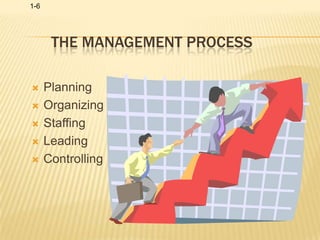
The Management ProcessPlanningOrganizingStaffingLeadingControlling
Management ProcessPlanningGoals and standardsRules and proceduresPlans and forecasting.OrganizingTasksDepartmentsDelegating Authority and communicationCoordinating
Management ProcessStaffingHiringRecruiting Selecting Performance standardsCompensationEvaluating performanceCounseling Training and developing
Management ProcessLeadingGetting the job doneMoraleMotivationControllingSetting standards Comparing actual performance to standardsCorrective action
HRM People Functions Include:PerformanceCommunicateTrain and developEmployee commitmentEqual opportunityHealth and safetyGrievances/labor relationsJob analysesLabor needsRecruitSelect candidatesOrient and trainWages and salariesIncentives and benefits
HRM is Important to all Managers.Don’t Let These Happen to You!The wrong personHigh turnoverPoor resultsUseless interviewsCourt actionsSafety citationsSalaries appear unfairPoor trainingUnfair labor practices
HRM – It’s All About Results“For many years it has been said that capital is the bottleneck for a developing industry. I don’t think this any longer holds true. I think it’s the work force and a company’s inability to recruit and maintain a good work force that does constitute the bottleneck….” F. K. Foulkes
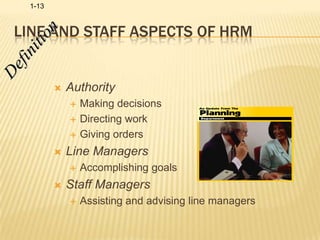
Line and Staff Aspects of HRMDefinitionAuthorityMaking decisions Directing workGiving ordersLine Managers Accomplishing goalsStaff Managers Assisting and advising line managers
Line Manager’s HRM JobsThe right person OrientationTrainingPerformanceCreativityWorking relationshipsPolicies and proceduresLabor costsDevelopmentMoraleProtecting
Staff Manager’s HRM Jobs Line authorityImplied authorityFunctional controlEmployee advocacy
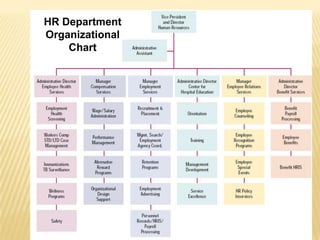
HR Department Organizational Chart
Strategic Planning and TrendsDefinitionStrategy is the company’s long-term plan for how it will balance its internal strengths and weaknesses with its external opportunities and threats to maintain a competitive advantage.
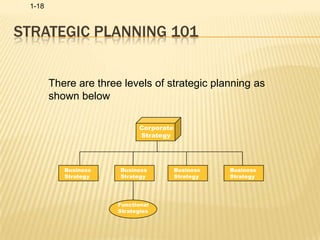
Strategic Planning 101There are three levels of strategic planning as shown belowCorporate StrategyBusinessStrategyBusinessStrategyBusinessStrategyBusinessStrategyFunctionalStrategies
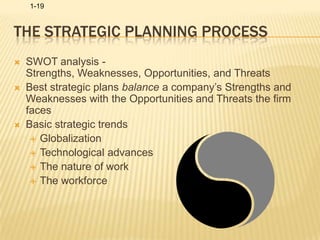
The Strategic Planning ProcessSWOT analysis - Strengths, Weaknesses, Opportunities, and ThreatsBest strategic plans balance a company’s Strengths and Weaknesses with the Opportunities and Threats the firm facesBasic strategic trendsGlobalizationTechnological advancesThe nature of workThe workforce
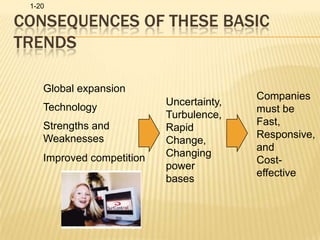
Consequences of these basic trendsGlobal expansionCompanies must be Fast,Responsive, andCost-effectiveUncertainty, Turbulence, Rapid Change, Changing power basesTechnologyStrengths and Weaknesses Improved competition
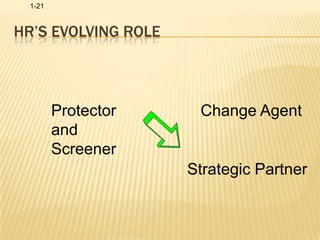
HR’s evolving roleProtector and ScreenerChange AgentStrategic Partner
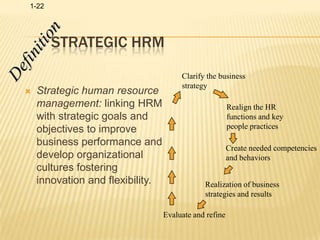
Strategic HRMDefinitionStrategic human resource management: linking HRM with strategic goals and objectives to improve business performance and develop organizational cultures fostering innovation and flexibility.Clarify the businessstrategyRealign the HR functions and keypeople practicesCreate needed competenciesand behaviors Realization of businessstrategies and resultsEvaluate and refine
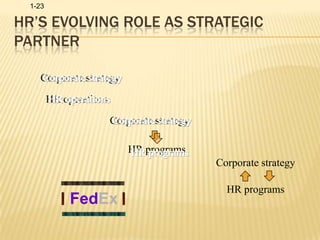
HR’s evolving role as strategic partnerCorporate strategyCorporate strategyHR operationsHR operationsCorporate strategyCorporate strategyHR programsHR programsCorporate strategyHR programsFedEx
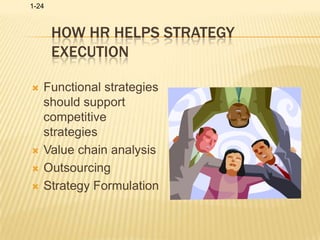
How HR helps strategy executionFunctional strategies should support competitive strategiesValue chain analysisOutsourcingStrategy Formulation
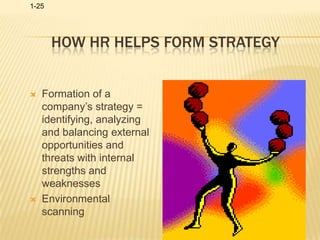
How HR helps form strategyFormation of a company’s strategy = identifying, analyzing and balancing external opportunities and threats with internal strengths and weaknessesEnvironmental scanning
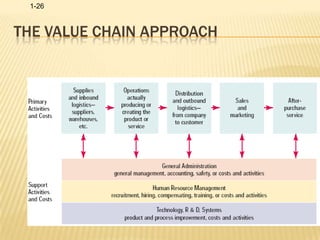
The Value Chain Approach
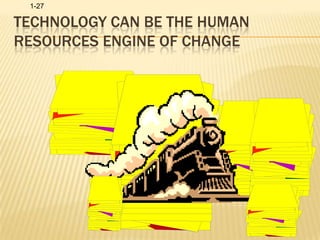
Technology can be the Human Resources engine of change
HR and technologyBasic HR systems demand paperwork70% of HR’s employees time = paperworkOff the shelf forms from Office Depot/OfficemaxOnline formsHuman Resource Information Systems (HRIS)HR on the Internet
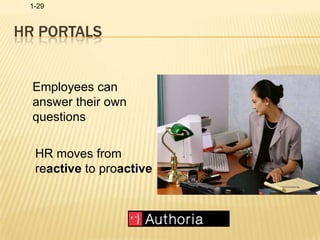
HR portalsEmployees can answer their own questionsHR moves from reactive to proactive
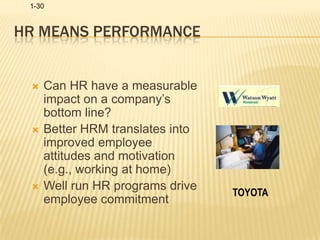
HR means performanceCan HR have a measurable impact on a company’s bottom line?Better HRM translates into improved employee attitudes and motivation (e.g., working at home)Well run HR programs drive employee commitmentTOYOTA
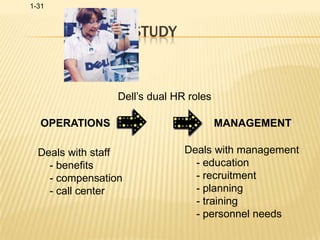
		A Case StudyDell’s dual HR rolesOPERATIONSMANAGEMENTDeals with management    - education    - recruitment    - planning    - training    - personnel needsDeals with staff    - benefits    - compensation    - call center
Is There a “One Best HR Way”?Follow a company’s operating and strategic initiativesAll companies can benefit fromProfit sharing programsResults oriented appraisalsEmployment securityFoster informal relationships- promote worldwide communicationsDevelop global executives

HRM Basics Er. S Sood

  • 1.
    HRM FunctionDefinitionHuman ResourceManagement is the process of acquiring, training, appraising, and compensating employees and attending to their labor relations, health and safety, and fairness concerns.
  • 2.
    Functions of HRMIdentifyingand Developing PersonsRetaining Suitable Persons Creating a Work Culture Educating Managerial Personnel Conducting Research Developing a Communication System
  • 3.
    Importance of HRMNEEDEDFOR:Better Industrial RelationsDevelop Organizational CommitmentCoping with Changing Environment Changes in Political Philosophy Increased Pressure on Employees
  • 4.
    HRM VS HUMANRESOURCES DEVELOPMENTHRMNeed to develop skills, talents, capabilities, potentialities of people in organization and this task is taken up in human resource management HRDStrategy is to bring about the changes inpersonnel so that new challenges are met.
  • 5.
    HRDT.V. Rao andUdai Pareek have given six dimensions(i)      Performance appraisal(ii)    Potential appraisal(iii)   Employee counseling(iv)  Career development and planning(v)    Training(vi)  Organizational development
  • 6.
  • 7.
    Management ProcessPlanningGoals andstandardsRules and proceduresPlans and forecasting.OrganizingTasksDepartmentsDelegating Authority and communicationCoordinating
  • 8.
    Management ProcessStaffingHiringRecruiting SelectingPerformance standardsCompensationEvaluating performanceCounseling Training and developing
  • 9.
    Management ProcessLeadingGetting thejob doneMoraleMotivationControllingSetting standards Comparing actual performance to standardsCorrective action
  • 10.
    HRM People FunctionsInclude:PerformanceCommunicateTrain and developEmployee commitmentEqual opportunityHealth and safetyGrievances/labor relationsJob analysesLabor needsRecruitSelect candidatesOrient and trainWages and salariesIncentives and benefits
  • 11.
    HRM is Importantto all Managers.Don’t Let These Happen to You!The wrong personHigh turnoverPoor resultsUseless interviewsCourt actionsSafety citationsSalaries appear unfairPoor trainingUnfair labor practices
  • 12.
    HRM – It’sAll About Results“For many years it has been said that capital is the bottleneck for a developing industry. I don’t think this any longer holds true. I think it’s the work force and a company’s inability to recruit and maintain a good work force that does constitute the bottleneck….” F. K. Foulkes
  • 13.
    Line and StaffAspects of HRMDefinitionAuthorityMaking decisions Directing workGiving ordersLine Managers Accomplishing goalsStaff Managers Assisting and advising line managers
  • 14.
    Line Manager’s HRMJobsThe right person OrientationTrainingPerformanceCreativityWorking relationshipsPolicies and proceduresLabor costsDevelopmentMoraleProtecting
  • 15.
    Staff Manager’s HRMJobs Line authorityImplied authorityFunctional controlEmployee advocacy
  • 16.
  • 17.
    Strategic Planning andTrendsDefinitionStrategy is the company’s long-term plan for how it will balance its internal strengths and weaknesses with its external opportunities and threats to maintain a competitive advantage.
  • 18.
    Strategic Planning 101Thereare three levels of strategic planning as shown belowCorporate StrategyBusinessStrategyBusinessStrategyBusinessStrategyBusinessStrategyFunctionalStrategies
  • 19.
    The Strategic PlanningProcessSWOT analysis - Strengths, Weaknesses, Opportunities, and ThreatsBest strategic plans balance a company’s Strengths and Weaknesses with the Opportunities and Threats the firm facesBasic strategic trendsGlobalizationTechnological advancesThe nature of workThe workforce
  • 20.
    Consequences of thesebasic trendsGlobal expansionCompanies must be Fast,Responsive, andCost-effectiveUncertainty, Turbulence, Rapid Change, Changing power basesTechnologyStrengths and Weaknesses Improved competition
  • 21.
    HR’s evolving roleProtectorand ScreenerChange AgentStrategic Partner
  • 22.
    Strategic HRMDefinitionStrategic humanresource management: linking HRM with strategic goals and objectives to improve business performance and develop organizational cultures fostering innovation and flexibility.Clarify the businessstrategyRealign the HR functions and keypeople practicesCreate needed competenciesand behaviors Realization of businessstrategies and resultsEvaluate and refine
  • 23.
    HR’s evolving roleas strategic partnerCorporate strategyCorporate strategyHR operationsHR operationsCorporate strategyCorporate strategyHR programsHR programsCorporate strategyHR programsFedEx
  • 24.
    How HR helpsstrategy executionFunctional strategies should support competitive strategiesValue chain analysisOutsourcingStrategy Formulation
  • 25.
    How HR helpsform strategyFormation of a company’s strategy = identifying, analyzing and balancing external opportunities and threats with internal strengths and weaknessesEnvironmental scanning
  • 26.
  • 27.
    Technology can bethe Human Resources engine of change
  • 28.
    HR and technologyBasicHR systems demand paperwork70% of HR’s employees time = paperworkOff the shelf forms from Office Depot/OfficemaxOnline formsHuman Resource Information Systems (HRIS)HR on the Internet
  • 29.
    HR portalsEmployees cananswer their own questionsHR moves from reactive to proactive
  • 30.
    HR means performanceCanHR have a measurable impact on a company’s bottom line?Better HRM translates into improved employee attitudes and motivation (e.g., working at home)Well run HR programs drive employee commitmentTOYOTA
  • 31.
    A Case StudyDell’sdual HR rolesOPERATIONSMANAGEMENTDeals with management - education - recruitment - planning - training - personnel needsDeals with staff - benefits - compensation - call center
  • 32.
    Is There a“One Best HR Way”?Follow a company’s operating and strategic initiativesAll companies can benefit fromProfit sharing programsResults oriented appraisalsEmployment securityFoster informal relationships- promote worldwide communicationsDevelop global executives