

Definition 
Is A Voluntary, Formal Arrangement 
Between Two Or More Parties To 
Pool Resources To Achieve A 
Common Set Of Objectives That 
Meet Critical Needs While 
Remaining Independent Entities. 
Partners May Provide The Strategic 
Alliance With Resources Such As 
Products, Distribution Channels, 
Manufacturing Capability, Project 
Funding, Capital Equipment, Knowledge, 
Expertise, Or Intellectual Property.
Aim Of Alliance 
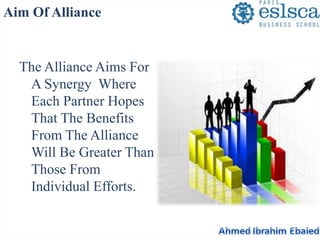
The Alliance Aims For 
A Synergy Where 
Each Partner Hopes 
That The Benefits 
From The Alliance 
Will Be Greater Than 
Those From 
Individual Efforts.
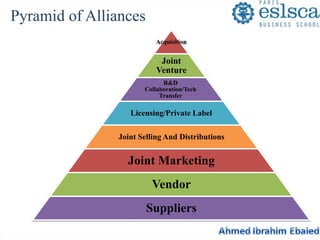
Pyramid of Alliances 
Acquisition 
Joint 
Venture 
R&D 
Collaboration/Tech 
Transfer 
Licensing/Private Label 
Joint Selling And Distributions 
Joint Marketing 
Vendor 
Suppliers
Stages Of Alliance Formation 
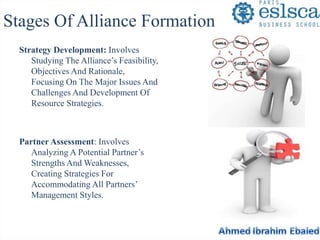
Strategy Development: Involves 
Studying The Alliance’s Feasibility, 
Objectives And Rationale, 
Focusing On The Major Issues And 
Challenges And Development Of 
Resource Strategies. 
Partner Assessment: Involves 
Analyzing A Potential Partner’s 
Strengths And Weaknesses, 
Creating Strategies For 
Accommodating All Partners’ 
Management Styles.
Stages Of Alliance Formation 
Contract Negotiation: Involves 
Determining Whether All Parties Have 
Realistic Objectives, Defining Each 
Partner’s Contributions And Rewards. 
Alliance Operation: Involves Addressing 
Senior Management’s Commitment, 
Finding The Caliber Of Resources Devoted 
To The Alliance, Linking Of Budgets And 
Resources With Strategic Priorities. 
Alliance Termination: Involves Winding 
Down The Alliance, For Instance When Its 
Objectives Have Been Met Or Cannot Be 
Met.
Types Of Strategic Alliance 
Joint Venture 
Is A Strategic Alliance In Which Two Or 
More Firms Create A Legally Independent 
Company To Share Some Of Their 
Resources And Capabilities To Develop A 
Competitive Advantage. 
Equity Strategic Alliance Is An Alliance In 
Which Two Or More Firms Own Different 
Percentages Of The Company They Have 
Formed By Combining Some Of Their 
Resources And Capabilities.
Types Of Strategic Alliance; 
Non-equity Strategic Alliance 
Is An Alliance In Which Two Or 
More Firms Develop A 
Contractual-relationship To 
Share Some Of Their Unique 
Resources And Capabilities. 
Global Strategic Alliances 
Working Partnerships Between 
Companies Across National 
Boundaries And Sometimes 
Formed Between Company And A 
Foreign Government, Or Among 
Companies And Governments.
Types Of Strategic Alliance; 
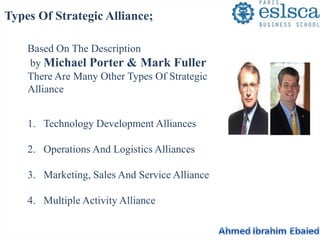
Based On The Description 
by Michael Porter & Mark Fuller 
There Are Many Other Types Of Strategic 
Alliance 
1. Technology Development Alliances 
2. Operations And Logistics Alliances 
3. Marketing, Sales And Service Alliance 
4. Multiple Activity Alliance
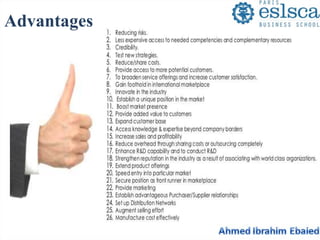
Advantages
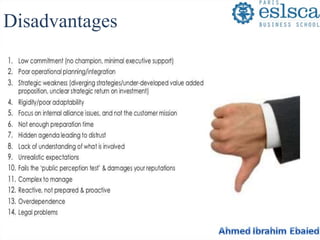
Disadvantages
Examples 
On Strategic Alliance
Starbucks 
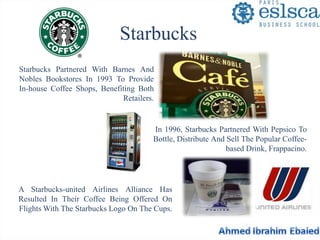
Starbucks Partnered With Barnes And 
Nobles Bookstores In 1993 To Provide 
In-house Coffee Shops, Benefiting Both 
Retailers. 
In 1996, Starbucks Partnered With Pepsico To 
Bottle, Distribute And Sell The Popular Coffee-based 
Drink, Frappacino. 
A Starbucks-united Airlines Alliance Has 
Resulted In Their Coffee Being Offered On 
FlightsWith The Starbucks Logo On The Cups.
Apple 
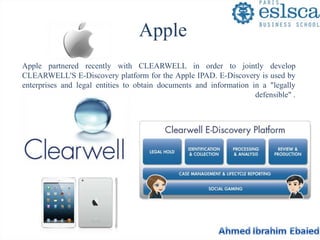
Apple partnered recently with CLEARWELL in order to jointly develop 
CLEARWELL'S E-Discovery platform for the Apple IPAD. E-Discovery is used by 
enterprises and legal entities to obtain documents and information in a "legally 
defensible" .
Hewlett Packard 
and Disney 
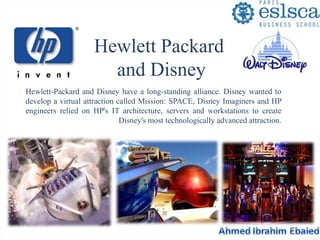
Hewlett-Packard and Disney have a long-standing alliance. Disney wanted to 
develop a virtual attraction called Mission: SPACE, Disney Imaginers and HP 
engineers relied on HP's IT architecture, servers and workstations to create 
Disney's most technologically advanced attraction.
 strategic alliances

strategic alliances

  • 2.
    Definition Is AVoluntary, Formal Arrangement Between Two Or More Parties To Pool Resources To Achieve A Common Set Of Objectives That Meet Critical Needs While Remaining Independent Entities. Partners May Provide The Strategic Alliance With Resources Such As Products, Distribution Channels, Manufacturing Capability, Project Funding, Capital Equipment, Knowledge, Expertise, Or Intellectual Property.
  • 3.
    Aim Of Alliance The Alliance Aims For A Synergy Where Each Partner Hopes That The Benefits From The Alliance Will Be Greater Than Those From Individual Efforts.
  • 4.
    Pyramid of Alliances Acquisition Joint Venture R&D Collaboration/Tech Transfer Licensing/Private Label Joint Selling And Distributions Joint Marketing Vendor Suppliers
  • 5.
    Stages Of AllianceFormation Strategy Development: Involves Studying The Alliance’s Feasibility, Objectives And Rationale, Focusing On The Major Issues And Challenges And Development Of Resource Strategies. Partner Assessment: Involves Analyzing A Potential Partner’s Strengths And Weaknesses, Creating Strategies For Accommodating All Partners’ Management Styles.
  • 6.
    Stages Of AllianceFormation Contract Negotiation: Involves Determining Whether All Parties Have Realistic Objectives, Defining Each Partner’s Contributions And Rewards. Alliance Operation: Involves Addressing Senior Management’s Commitment, Finding The Caliber Of Resources Devoted To The Alliance, Linking Of Budgets And Resources With Strategic Priorities. Alliance Termination: Involves Winding Down The Alliance, For Instance When Its Objectives Have Been Met Or Cannot Be Met.
  • 7.
    Types Of StrategicAlliance Joint Venture Is A Strategic Alliance In Which Two Or More Firms Create A Legally Independent Company To Share Some Of Their Resources And Capabilities To Develop A Competitive Advantage. Equity Strategic Alliance Is An Alliance In Which Two Or More Firms Own Different Percentages Of The Company They Have Formed By Combining Some Of Their Resources And Capabilities.
  • 8.
    Types Of StrategicAlliance; Non-equity Strategic Alliance Is An Alliance In Which Two Or More Firms Develop A Contractual-relationship To Share Some Of Their Unique Resources And Capabilities. Global Strategic Alliances Working Partnerships Between Companies Across National Boundaries And Sometimes Formed Between Company And A Foreign Government, Or Among Companies And Governments.
  • 9.
    Types Of StrategicAlliance; Based On The Description by Michael Porter & Mark Fuller There Are Many Other Types Of Strategic Alliance 1. Technology Development Alliances 2. Operations And Logistics Alliances 3. Marketing, Sales And Service Alliance 4. Multiple Activity Alliance
  • 10.
  • 11.
  • 12.
  • 13.
    Starbucks Starbucks PartneredWith Barnes And Nobles Bookstores In 1993 To Provide In-house Coffee Shops, Benefiting Both Retailers. In 1996, Starbucks Partnered With Pepsico To Bottle, Distribute And Sell The Popular Coffee-based Drink, Frappacino. A Starbucks-united Airlines Alliance Has Resulted In Their Coffee Being Offered On FlightsWith The Starbucks Logo On The Cups.
  • 14.
    Apple Apple partneredrecently with CLEARWELL in order to jointly develop CLEARWELL'S E-Discovery platform for the Apple IPAD. E-Discovery is used by enterprises and legal entities to obtain documents and information in a "legally defensible" .
  • 15.
    Hewlett Packard andDisney Hewlett-Packard and Disney have a long-standing alliance. Disney wanted to develop a virtual attraction called Mission: SPACE, Disney Imaginers and HP engineers relied on HP's IT architecture, servers and workstations to create Disney's most technologically advanced attraction.