PORTER’S FIVE FORCES AND GENERIC STRATEGIES -Prepared by: Rohit Dobaria  Vikas Surani Viral Jani Tina Mittal Jigar Modi Janak Nayak
Porter’s Five Forces
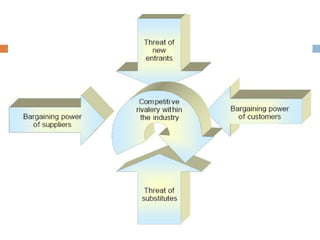
Introduction Developed by Michael E. Porter, 1980. Identified five competitive forces that shape every industry and market. These forces determine the intensity of competition and hence profitability and attractiveness of industry.
 
1. Bargaining power of Suppliers Suppliers :  All sources needed to provide goods or services. When is the Bargaining power high?
2. Bargaining power of Customers It determines how much customers can impose pressure on margins and volumes. When is the bargaining power high?
3. Threat of New Entrants Higher the competition, easier for other companies to enter. New entries depend on the barriers to entry.
4. Threat of Substitutes Substitutes  :  Alternative products with lower prices of better performance parameters for the same purpose. Can reduce potential sales volume for existing players. What are the factors determining the Threat of Substitutes?
5. Competitive Rivalry Describes the intensity of competition between existing players. High competitiveness -> Pressure on prices, margins -> reduced profitability for every company When is the competition high?
Limitations The model assumes a classic perfect market. Best applicable for analysis of  simple market structures. The model assumes relatively static market structures.
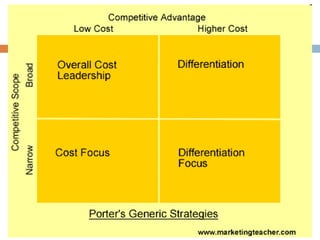
GENERIC STRATEGY 1. COST LEADERSHIP 2. DIFFERENTIATION 3. FOCUS STRATEGY
1.Cost leadership The low cost leader in any market gains competitive advantage from being able to many to produce at the lowest cost.
2. Differentiation Allows companies to desensitize prices and focus on value that generates a comparatively higher price and a better margin. The differentiating organization will incur additional costs in creating their competitive advantage.
3. Focus Strategy Also known as Niche Strategy  Stuck in the middle If you select one or more approaches, and then fail to achieve them, that your organization gets stuck in the middle without a competitive advantage
 
Thank You

Porter’s five forces and generic strategies

  • 1.
    PORTER’S FIVE FORCESAND GENERIC STRATEGIES -Prepared by: Rohit Dobaria Vikas Surani Viral Jani Tina Mittal Jigar Modi Janak Nayak
  • 2.
  • 3.
    Introduction Developed byMichael E. Porter, 1980. Identified five competitive forces that shape every industry and market. These forces determine the intensity of competition and hence profitability and attractiveness of industry.
  • 4.
  • 5.
    1. Bargaining powerof Suppliers Suppliers : All sources needed to provide goods or services. When is the Bargaining power high?
  • 6.
    2. Bargaining powerof Customers It determines how much customers can impose pressure on margins and volumes. When is the bargaining power high?
  • 7.
    3. Threat ofNew Entrants Higher the competition, easier for other companies to enter. New entries depend on the barriers to entry.
  • 8.
    4. Threat ofSubstitutes Substitutes : Alternative products with lower prices of better performance parameters for the same purpose. Can reduce potential sales volume for existing players. What are the factors determining the Threat of Substitutes?
  • 9.
    5. Competitive RivalryDescribes the intensity of competition between existing players. High competitiveness -> Pressure on prices, margins -> reduced profitability for every company When is the competition high?
  • 10.
    Limitations The modelassumes a classic perfect market. Best applicable for analysis of simple market structures. The model assumes relatively static market structures.
  • 11.
    GENERIC STRATEGY 1.COST LEADERSHIP 2. DIFFERENTIATION 3. FOCUS STRATEGY
  • 12.
    1.Cost leadership Thelow cost leader in any market gains competitive advantage from being able to many to produce at the lowest cost.
  • 13.
    2. Differentiation Allowscompanies to desensitize prices and focus on value that generates a comparatively higher price and a better margin. The differentiating organization will incur additional costs in creating their competitive advantage.
  • 14.
    3. Focus StrategyAlso known as Niche Strategy Stuck in the middle If you select one or more approaches, and then fail to achieve them, that your organization gets stuck in the middle without a competitive advantage
  • 15.
  • 16.