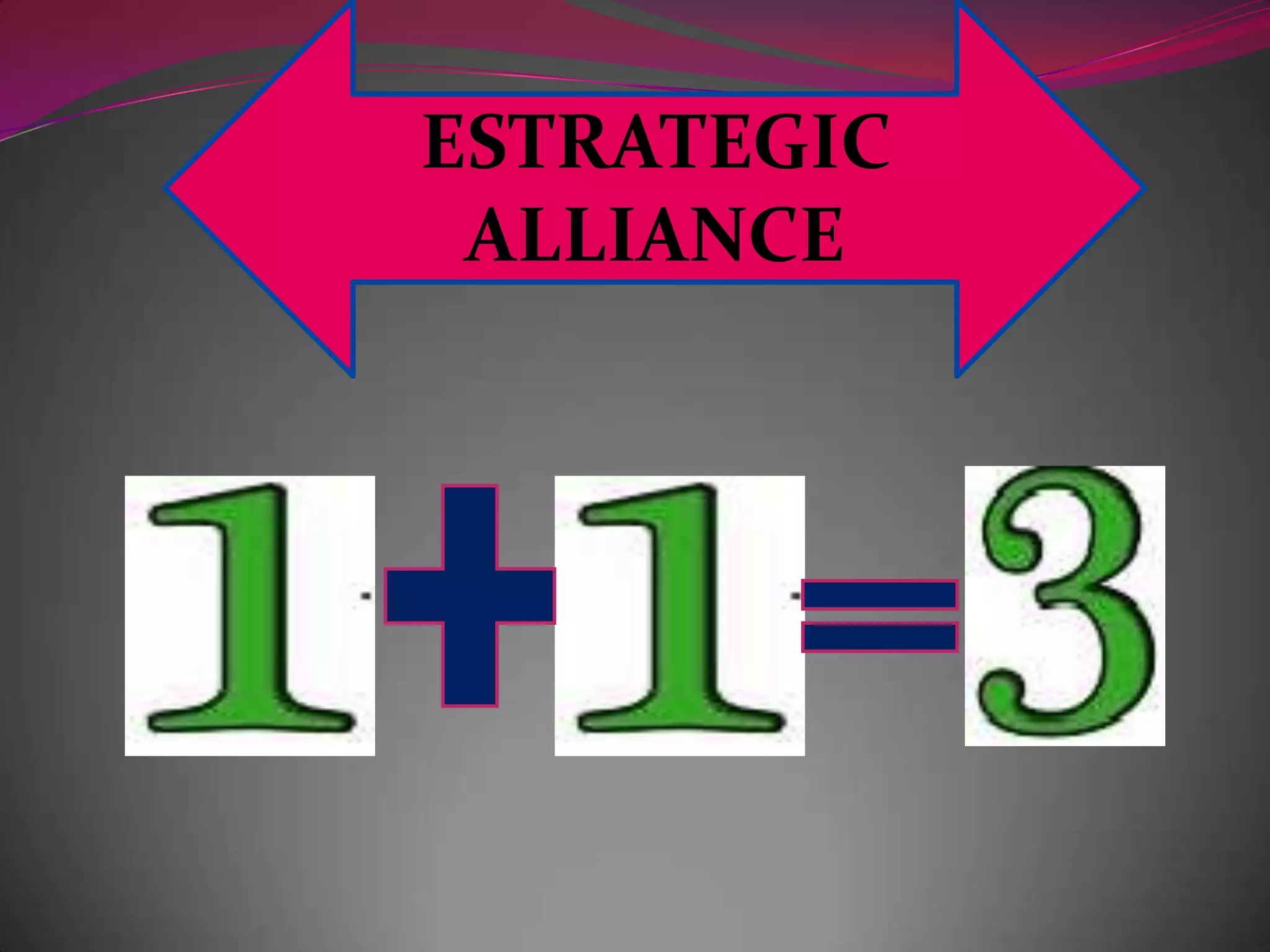
ESTRATEGIC
 ALLIANCE
What is strategic
   alliance?


           An           arrangement
           between two companies
           that have decided to
           share     resources    to
           undertake               a
           specific,        mutually
           beneficial        project.
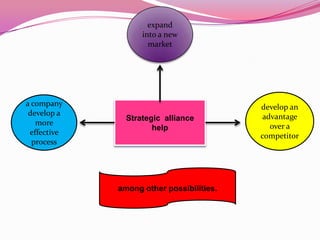
expand
                   into a new
                     market


a company                                 develop an
 develop a                                 advantage
               Strategic alliance
   more                                      over a
                      help
 effective                                competitor
  process


             among other possibilities.
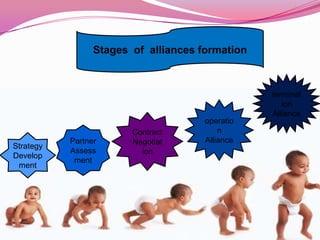
Stages of alliances formation


                                                 terminat
                                                    ion
                                                 Alliance
                                      operatio
                        Contract          n
           Partner      Negotiat      Alliance
Strategy
           Assess         ion
Develop
            ment
 ment
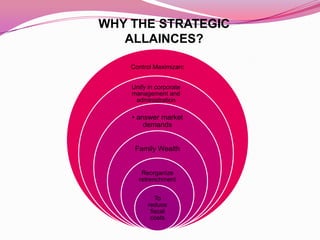
WHY THE STRATEGIC
   ALLAINCES?

    Control Maximizarc


    Unify in corporate
    management and
     administration

    • answer market
        demands


     Family Wealth


       Reorganize
      retrenchment


             To
          reduce
           fiscal
           costs
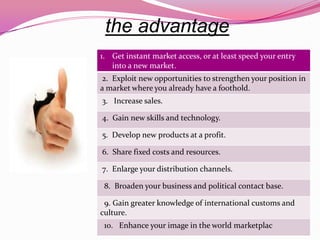
the advantage
1. Get instant market access, or at least speed your entry
   into a new market.
 2. Exploit new opportunities to strengthen your position in
a market where you already have a foothold.
3. Increase sales.

4. Gain new skills and technology.

5. Develop new products at a profit.

6. Share fixed costs and resources.

7. Enlarge your distribution channels.

 8. Broaden your business and political contact base.

 9. Gain greater knowledge of international customs and
culture.
 10. Enhance your image in the world marketplac
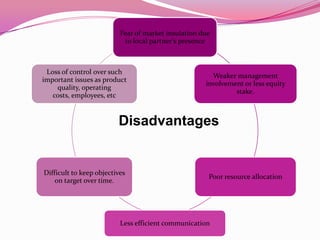
Fear of market insulation due
                           to local partner's presence


 Loss of control over such
                                                       Weaker management
important issues as product
                                                     involvement or less equity
    quality, operating
                                                              stake.
   costs, employees, etc


                         Disadvantages


Difficult to keep objectives
                                                      Poor resource allocation
    on target over time.


                          Less efficient communication
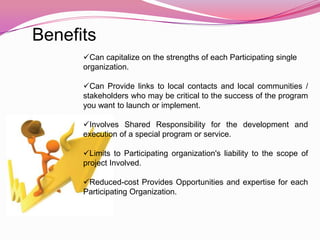
Benefits
      Can capitalize on the strengths of each Participating single
      organization.

      Can Provide links to local contacts and local communities /
      stakeholders who may be critical to the success of the program
      you want to launch or implement.

      Involves Shared Responsibility for the development and
      execution of a special program or service.

      Limits to Participating organization's liability to the scope of
      project Involved.

      Reduced-cost Provides Opportunities and expertise for each
      Participating Organization.
There are four types of strategic alliances.

Joint venture is a strategic alliance in which two or more firms create a legally
independent company to share some of their resources and capabilities to develop a
competitive advantage.

Equity strategic alliance is an alliance in which two or more firms own different
percentages of the company they have formed by combining some of their
resources and capabilities to create a competitive advantage.

Non-equity strategic alliance is an alliance in which two or more firms develop a
contractual-relationship to share some of their unique resources and capabilities to
create a competitive advantage.

Global Strategic Alliances working partnerships between companies (often more
than two) across national boundaries and increasingly across
industries, sometimes formed between company and a foreign government, or
among companies and governments.
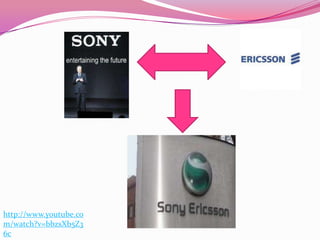
http://www.youtube.co
m/watch?v=bbzsXb5Z3
6c
REFERENCES

 http://www.slideshare.net/jant/alianzas-estrategicas


 http://importexport.about.com/od/MarketingAndSellingGlobally/a/Glo
  bal-Strategic-Alliances-Advantages-And-Disadvantages-To-Global-
  Strategic-Alliances.htm

 http://en.wikipedia.org/wiki/Strategic_alliance


 http://www.investopedia.com/terms/s/strategicalliance.asp#ixzz26xnd
  e4ii

Presentación1

  • 1.
  • 2.
    What is strategic alliance? An arrangement between two companies that have decided to share resources to undertake a specific, mutually beneficial project.
  • 3.
    expand into a new market a company develop an develop a advantage Strategic alliance more over a help effective competitor process among other possibilities.
  • 4.
    Stages of alliancesformation terminat ion Alliance operatio Contract n Partner Negotiat Alliance Strategy Assess ion Develop ment ment
  • 5.
    WHY THE STRATEGIC ALLAINCES? Control Maximizarc Unify in corporate management and administration • answer market demands Family Wealth Reorganize retrenchment To reduce fiscal costs
  • 6.
    the advantage 1. Getinstant market access, or at least speed your entry into a new market. 2. Exploit new opportunities to strengthen your position in a market where you already have a foothold. 3. Increase sales. 4. Gain new skills and technology. 5. Develop new products at a profit. 6. Share fixed costs and resources. 7. Enlarge your distribution channels. 8. Broaden your business and political contact base. 9. Gain greater knowledge of international customs and culture. 10. Enhance your image in the world marketplac
  • 7.
    Fear of marketinsulation due to local partner's presence Loss of control over such Weaker management important issues as product involvement or less equity quality, operating stake. costs, employees, etc Disadvantages Difficult to keep objectives Poor resource allocation on target over time. Less efficient communication
  • 8.
    Benefits Can capitalize on the strengths of each Participating single organization. Can Provide links to local contacts and local communities / stakeholders who may be critical to the success of the program you want to launch or implement. Involves Shared Responsibility for the development and execution of a special program or service. Limits to Participating organization's liability to the scope of project Involved. Reduced-cost Provides Opportunities and expertise for each Participating Organization.
  • 9.
    There are fourtypes of strategic alliances. Joint venture is a strategic alliance in which two or more firms create a legally independent company to share some of their resources and capabilities to develop a competitive advantage. Equity strategic alliance is an alliance in which two or more firms own different percentages of the company they have formed by combining some of their resources and capabilities to create a competitive advantage. Non-equity strategic alliance is an alliance in which two or more firms develop a contractual-relationship to share some of their unique resources and capabilities to create a competitive advantage. Global Strategic Alliances working partnerships between companies (often more than two) across national boundaries and increasingly across industries, sometimes formed between company and a foreign government, or among companies and governments.
  • 10.
  • 11.
    REFERENCES  http://www.slideshare.net/jant/alianzas-estrategicas  http://importexport.about.com/od/MarketingAndSellingGlobally/a/Glo bal-Strategic-Alliances-Advantages-And-Disadvantages-To-Global- Strategic-Alliances.htm  http://en.wikipedia.org/wiki/Strategic_alliance  http://www.investopedia.com/terms/s/strategicalliance.asp#ixzz26xnd e4ii