JOINT VENTURE &
STRATEGIC ALLIANCE
WHAT IS JOINT VENTURE??
• A JOINT VENTURE (JV) IS A BUSINESS AGREEMENT IN WHICH
THE PARTIES COME TOGETHER TO TAKE ON ONE PROJECT BY
EQUALLY INVESTING IN THE PROJECT IN TERMS OF MONEY,
TIME, AND EFFORTS.
• THEY EXERCISE CONTROL OVER THE ENTERPRISE AND
CONSEQUENTLY SHARE REVENUES, EXPENSES AND ASSETS.
• WITH INDIVIDUALS FORM A TEMPORARY PARTNERSHIPSUCH
PARTNERSHIP CAN ALSO BE CALLED A JOINT VENTURE WHERE
THE PARTIES ARE "CO-VENTURERS".
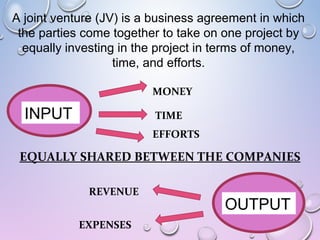
INPUT
MONEY
TIME
EFFORTS
OUTPUT
REVENUE
EXPENSES
EQUALLY SHARED BETWEEN THE COMPANIES
A joint venture (JV) is a business agreement in which
the parties come together to take on one project by
equally investing in the project in terms of money,
time, and efforts.
STEPS TO A SUCCESSFUL
JOINT VENTURE-
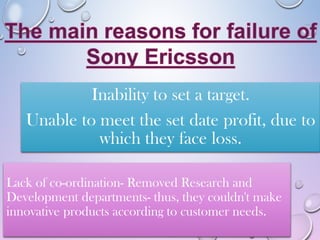
Lack of co-ordination- Removed Research and
Development departments- thus, they couldn't make
innovative products according to customer needs.
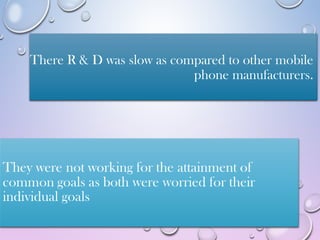
There R & D was slow as compared to other mobile
phone manufacturers.
Critical Factors for the Success of a
Joint Venture-
1.Good communication, cooperation &
coordination.
2.Common goals & shared vision among
partners.
3.Dedication towards the success &
sustainability of the JV.
4.Proper sharing of profits & benefits.
5.Proper planning & research prior to the
incorporation of the JV.
6.JV should work towards the benefit of all
partners
WHAT IS STRATEGIC ALLIANCE?
• A STRATEGIC ALLIANCE ISAN AGREEMENT
BETWEEN TWO OR MORE PARTIESTO PURSUE A
SET OF AGREED UPON OBJECTIVESNEEDED
WHILE REMAINING INDEPENDENT
ORGANIZATIONS.
• THE ALLIANCE ISA COLLABORATION WHERE
EACH PARTNER HOPESTHAT THE BENEFITSFROM
THE ALLIANCE WILL BE GREATER THAN THOSE
FROM INDIVIDUAL EFFORTS.
• IT DOESNOT CREATE A NEW LEGAL ENTITY, I.E. A
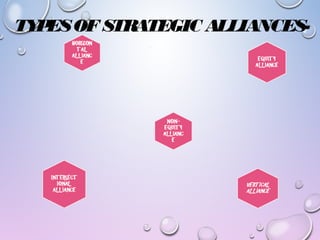
TYPESOFSTRATEGIC ALLIANCES-
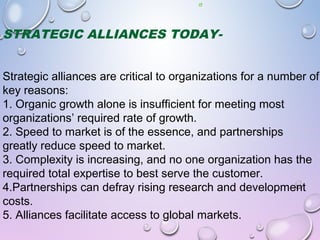
STRATEGIC ALLIANCES TODAY-
Strategic alliances are critical to organizations for a number of
key reasons:
1. Organic growth alone is insufficient for meeting most
organizations’ required rate of growth.
2. Speed to market is of the essence, and partnerships
greatly reduce speed to market.
3. Complexity is increasing, and no one organization has the
required total expertise to best serve the customer.
4.Partnerships can defray rising research and development
costs.
5. Alliances facilitate access to global markets.
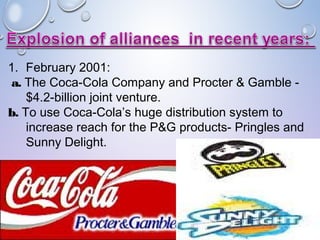
1. February 2001:
a. The Coca-Cola Company and Procter & Gamble -
$4.2-billion joint venture.
b. To use Coca-Cola’s huge distribution system to
increase reach for the P&G products- Pringles and
Sunny Delight.
2. Star Alliance - largest partnership in the airline
industry.
a. Scandinavian Airlines, Thai Airways International, Air
Canada, Lufthansa, and United Airlines came together
to launch Star Alliance.
b. Its reach extends to 130 countries and more than 815
destinations.
c. Collective revenue for the partnership at more than
$63 billion.
3. Hewlett-Packard and NTT DoCoMo created a
partnership .
a.To conduct joint research on technology for fourth-
generation mobile phones.
b.To bring together HP’s network infrastructure and
computer servers with DoCoMo’s wireless broadband
technology.
THE STRATEGIC ALLIANCE
PROCESS
The Strategic Alliance Process involves planning,
implementation and evaluation. An alliance has a five-stage
“life cycle,” and a structured methodology is applied to
preparation and negotiations at each stage.
 Setting alliance strategy-
1.Creating a successful alliance is to develop a well-
thought-out alliance strategy.
2.An alliance strategy emerges out of business strategy.
Once a business does decide that a partnership is
desirable, it must develop an alliance strategy.
3.Strategy includes the needs to address the vision for
the partnership, market analysis and a competitive
assessment.
4.Also required is an honest self-assessment to know
organizational strengths and weaknesses, as well as the
organizational culture.
 Selecting a partner-
This is based on the criteria identified in the strategy
session.
1.Once the partner is selected, the key is to determine if
both organizations are strategically aligned and culturally
compatible.
2.It also becomes clear whether all parties have similar
ambitions .
3.Identify any strategic gaps and previously unanticipated
opportunities.
4.Thought needs to be given to the structures for
management and the board.
Structuring the alliance-
1.It is during this stage that the deal is financially and
legally structured and negotiated.
2.A negotiating strategy is critical and must begin at the
alliance-strategy stage.
3.Negotiations begins the first time you meet the partner.
4.Every alliance agreement should include an exit
strategy. This does not imply a pessimistic view of the
relationship, but rather recognizes that all alliances have
a natural life.
5.The average lifespan of an alliance is seven years.
Managing the alliance-
“Oncetheinkis dry, thehardworkbegins.”
1.Making the relationship work on an ongoing basis is a
challenge.
2.In a well-structured alliance, a full launch strategy
needs to have been jointly developed before the deal is
announced.
3.Specific action plans, and the resources assigned to the
alliance, must be known.
4.A conflict-management process and periodic checks is
critical to ensure smooth alignment of the alliance.
Re-evaluating the alliance-
Measuring the results of an alliance is critical. Its
important to determine if the alliance is achieving its
objectives.
Where possible, deep relationships are always more
desirable.
For example, by reconfiguring and reinventing their
relationship, Fuji and Xerox have remained partners for
close to 40 years, well above the seven-year average.
It is necessary to evaluate and further develop the
alliance at each stage of the life cycle..
STRATEGIC ALLIANCEVS. JOINT
VENTURE
Joint venture & strategic alliance

Joint venture & strategic alliance

  • 1.
  • 2.
    WHAT IS JOINTVENTURE?? • A JOINT VENTURE (JV) IS A BUSINESS AGREEMENT IN WHICH THE PARTIES COME TOGETHER TO TAKE ON ONE PROJECT BY EQUALLY INVESTING IN THE PROJECT IN TERMS OF MONEY, TIME, AND EFFORTS. • THEY EXERCISE CONTROL OVER THE ENTERPRISE AND CONSEQUENTLY SHARE REVENUES, EXPENSES AND ASSETS. • WITH INDIVIDUALS FORM A TEMPORARY PARTNERSHIPSUCH PARTNERSHIP CAN ALSO BE CALLED A JOINT VENTURE WHERE THE PARTIES ARE "CO-VENTURERS".
  • 3.
    INPUT MONEY TIME EFFORTS OUTPUT REVENUE EXPENSES EQUALLY SHARED BETWEENTHE COMPANIES A joint venture (JV) is a business agreement in which the parties come together to take on one project by equally investing in the project in terms of money, time, and efforts.
  • 6.
    STEPS TO ASUCCESSFUL JOINT VENTURE-
  • 10.
    Lack of co-ordination-Removed Research and Development departments- thus, they couldn't make innovative products according to customer needs.
  • 11.
    There R &D was slow as compared to other mobile phone manufacturers.
  • 12.
    Critical Factors forthe Success of a Joint Venture- 1.Good communication, cooperation & coordination. 2.Common goals & shared vision among partners. 3.Dedication towards the success & sustainability of the JV. 4.Proper sharing of profits & benefits. 5.Proper planning & research prior to the incorporation of the JV. 6.JV should work towards the benefit of all partners
  • 15.
    WHAT IS STRATEGICALLIANCE? • A STRATEGIC ALLIANCE ISAN AGREEMENT BETWEEN TWO OR MORE PARTIESTO PURSUE A SET OF AGREED UPON OBJECTIVESNEEDED WHILE REMAINING INDEPENDENT ORGANIZATIONS. • THE ALLIANCE ISA COLLABORATION WHERE EACH PARTNER HOPESTHAT THE BENEFITSFROM THE ALLIANCE WILL BE GREATER THAN THOSE FROM INDIVIDUAL EFFORTS. • IT DOESNOT CREATE A NEW LEGAL ENTITY, I.E. A
  • 18.
  • 19.
    STRATEGIC ALLIANCES TODAY- Strategicalliances are critical to organizations for a number of key reasons: 1. Organic growth alone is insufficient for meeting most organizations’ required rate of growth. 2. Speed to market is of the essence, and partnerships greatly reduce speed to market. 3. Complexity is increasing, and no one organization has the required total expertise to best serve the customer. 4.Partnerships can defray rising research and development costs. 5. Alliances facilitate access to global markets.
  • 20.
    1. February 2001: a.The Coca-Cola Company and Procter & Gamble - $4.2-billion joint venture. b. To use Coca-Cola’s huge distribution system to increase reach for the P&G products- Pringles and Sunny Delight.
  • 21.
    2. Star Alliance- largest partnership in the airline industry. a. Scandinavian Airlines, Thai Airways International, Air Canada, Lufthansa, and United Airlines came together to launch Star Alliance. b. Its reach extends to 130 countries and more than 815 destinations. c. Collective revenue for the partnership at more than $63 billion.
  • 22.
    3. Hewlett-Packard andNTT DoCoMo created a partnership . a.To conduct joint research on technology for fourth- generation mobile phones. b.To bring together HP’s network infrastructure and computer servers with DoCoMo’s wireless broadband technology.
  • 23.
    THE STRATEGIC ALLIANCE PROCESS TheStrategic Alliance Process involves planning, implementation and evaluation. An alliance has a five-stage “life cycle,” and a structured methodology is applied to preparation and negotiations at each stage.
  • 24.
     Setting alliancestrategy- 1.Creating a successful alliance is to develop a well- thought-out alliance strategy. 2.An alliance strategy emerges out of business strategy. Once a business does decide that a partnership is desirable, it must develop an alliance strategy. 3.Strategy includes the needs to address the vision for the partnership, market analysis and a competitive assessment. 4.Also required is an honest self-assessment to know organizational strengths and weaknesses, as well as the organizational culture.
  • 25.
     Selecting apartner- This is based on the criteria identified in the strategy session. 1.Once the partner is selected, the key is to determine if both organizations are strategically aligned and culturally compatible. 2.It also becomes clear whether all parties have similar ambitions . 3.Identify any strategic gaps and previously unanticipated opportunities. 4.Thought needs to be given to the structures for management and the board.
  • 26.
    Structuring the alliance- 1.Itis during this stage that the deal is financially and legally structured and negotiated. 2.A negotiating strategy is critical and must begin at the alliance-strategy stage. 3.Negotiations begins the first time you meet the partner. 4.Every alliance agreement should include an exit strategy. This does not imply a pessimistic view of the relationship, but rather recognizes that all alliances have a natural life. 5.The average lifespan of an alliance is seven years.
  • 27.
    Managing the alliance- “Oncetheinkisdry, thehardworkbegins.” 1.Making the relationship work on an ongoing basis is a challenge. 2.In a well-structured alliance, a full launch strategy needs to have been jointly developed before the deal is announced. 3.Specific action plans, and the resources assigned to the alliance, must be known. 4.A conflict-management process and periodic checks is critical to ensure smooth alignment of the alliance.
  • 28.
    Re-evaluating the alliance- Measuringthe results of an alliance is critical. Its important to determine if the alliance is achieving its objectives. Where possible, deep relationships are always more desirable. For example, by reconfiguring and reinventing their relationship, Fuji and Xerox have remained partners for close to 40 years, well above the seven-year average. It is necessary to evaluate and further develop the alliance at each stage of the life cycle..
  • 29.