Growth Strategy
Growth and Profitability Growth and a firm’s long-run average costs shape of the  LRAC  curve minimum efficient scale Demand considerations nature of the product possibilities for diversification Relationship between growth & profitability how growth depends on profitability how growth affects profitability
Constraints on Growth Financial considerations internal sources of finance borrowing share issue Shareholder confidence problem of retaining large proportion of profits excessive borrowing the takeover constraint share performance the valuation ratio
Constraints on Growth Demand conditions importance of market demand importance of promoting demand for the firm's product and increasing market share Managerial conditions the composition of the managerial team management structure
Alternative Growth Strategies Growth by internal expansion product differentiation vertical integration diversification Growth by external expansion: mergers and takeovers horizontal mergers vertical mergers conglomerate mergers
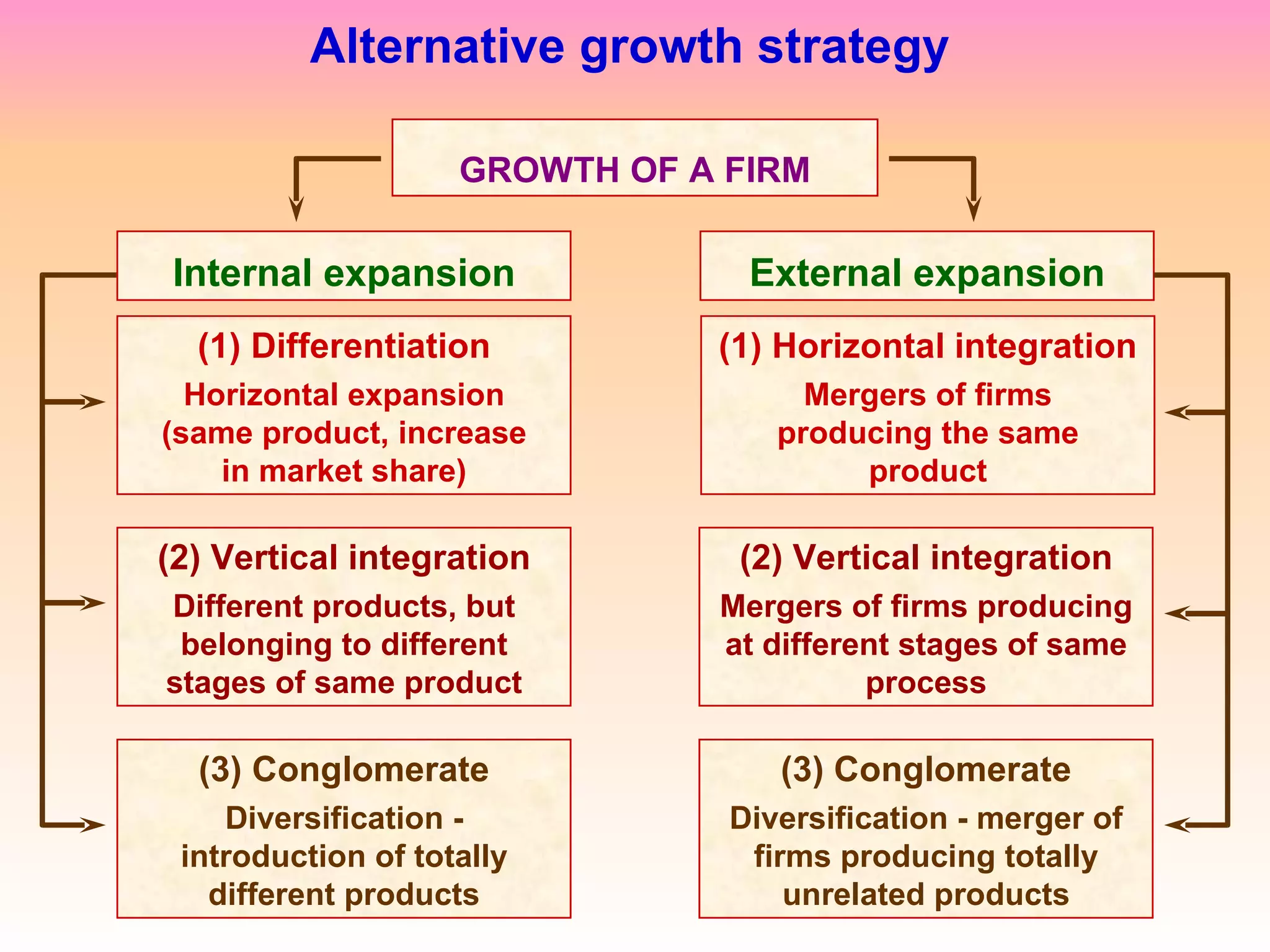
Alternative growth strategy GROWTH OF A FIRM Internal expansion External expansion (1) Differentiation Horizontal expansion (same product, increase in market share) (1) Horizontal integration Mergers of firms producing the same product (2) Vertical integration Different products, but belonging to different stages of same product (2) Vertical integration Mergers of firms producing at different stages of same process (3) Conglomerate Diversification - introduction of totally different products (3) Conglomerate Diversification - merger of firms producing totally unrelated products
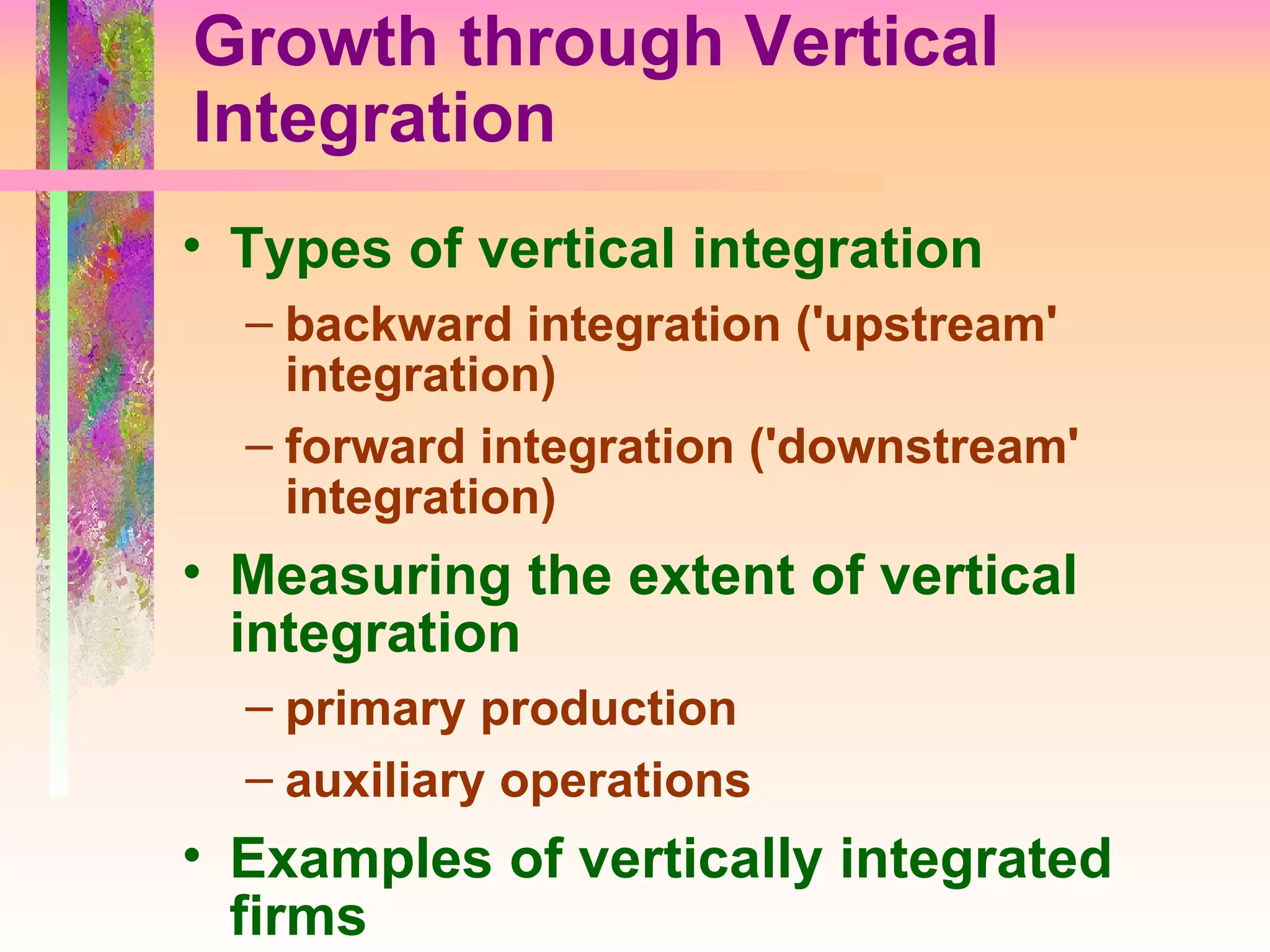
Growth through Vertical Integration Types of vertical integration backward integration ('upstream' integration) forward integration ('downstream' integration) Measuring the extent of vertical integration primary production auxiliary operations Examples of vertically integrated firms
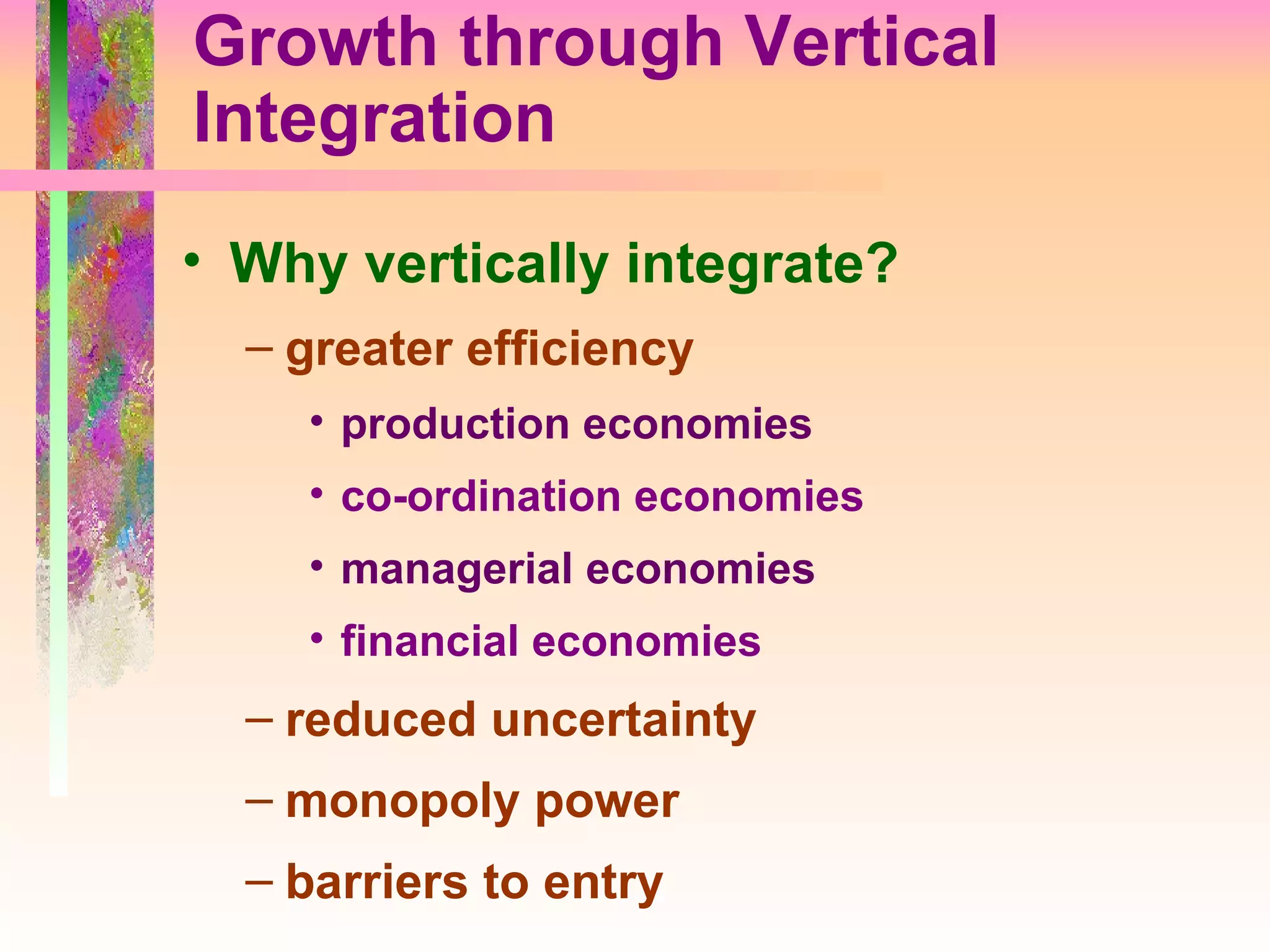
Growth through Vertical Integration Why vertically integrate?  greater efficiency production economies co-ordination economies managerial economies financial economies reduced uncertainty monopoly power barriers to entry
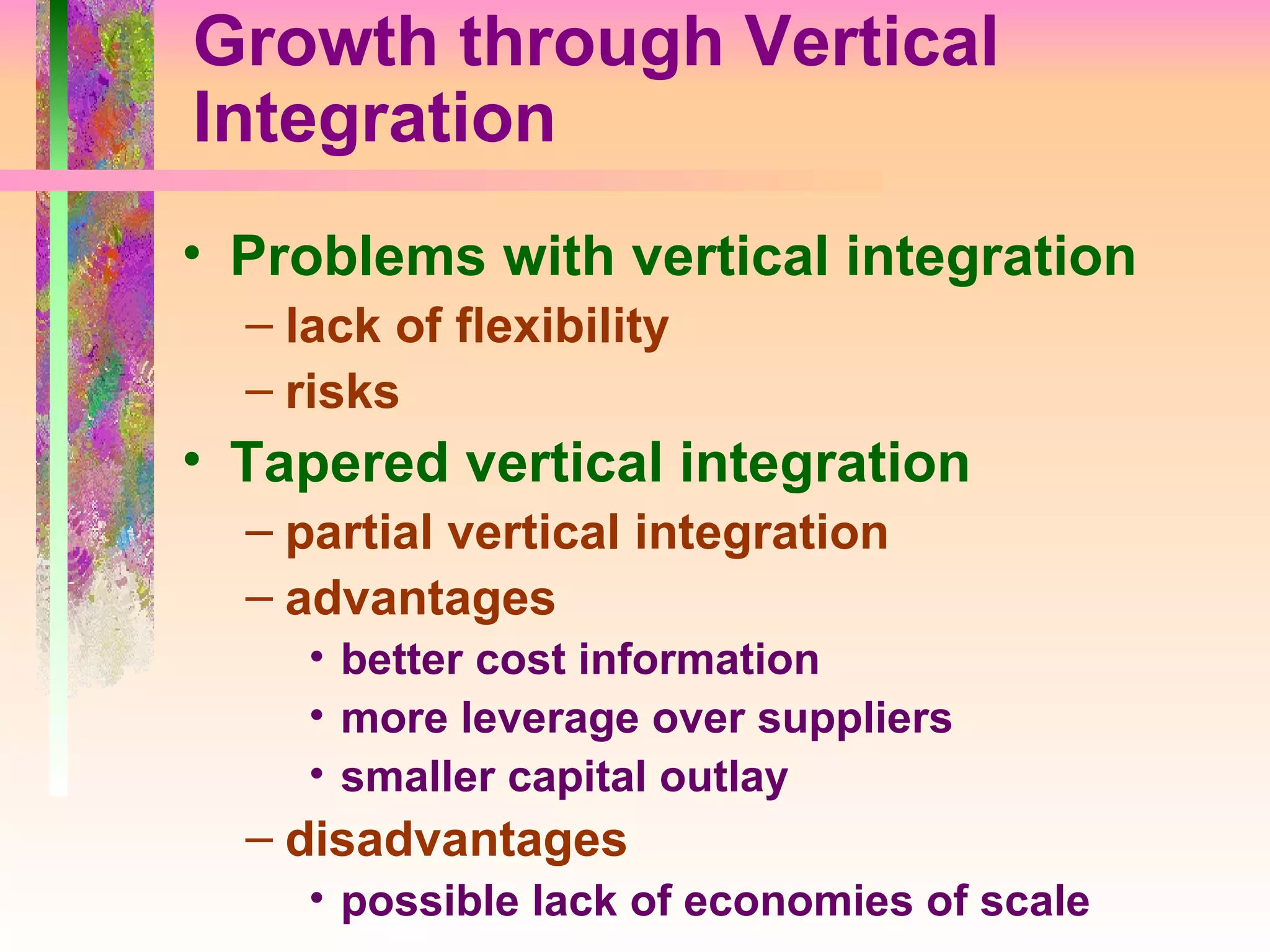
Growth through Vertical Integration Problems with vertical integration lack of flexibility risks Tapered vertical integration partial vertical integration advantages better cost information more leverage over suppliers smaller capital outlay disadvantages possible lack of economies of scale
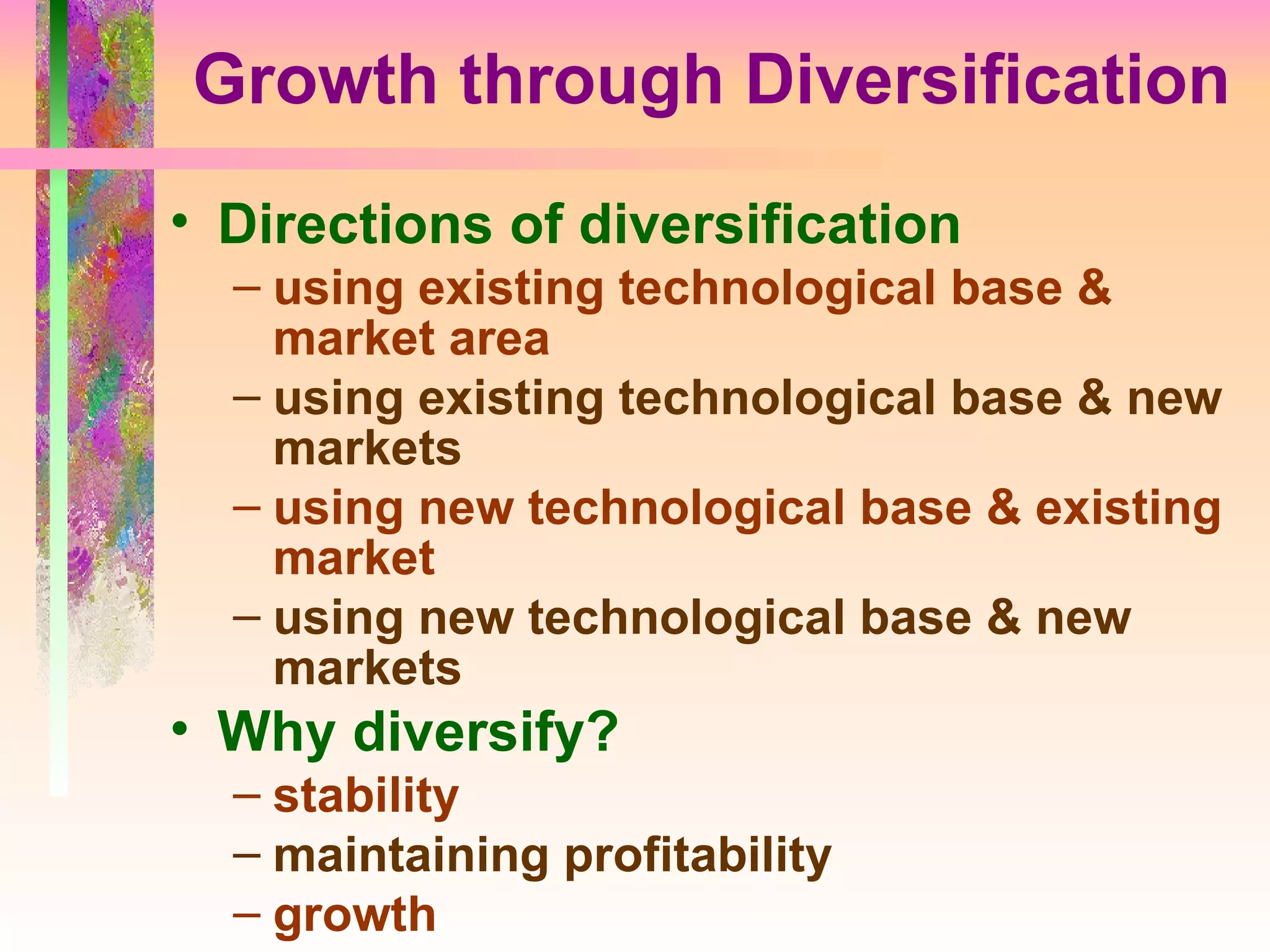
Growth through Diversification Directions of diversification using existing technological base & market area using existing technological base & new markets using new technological base & existing market using new technological base & new markets Why diversify? stability maintaining profitability growth
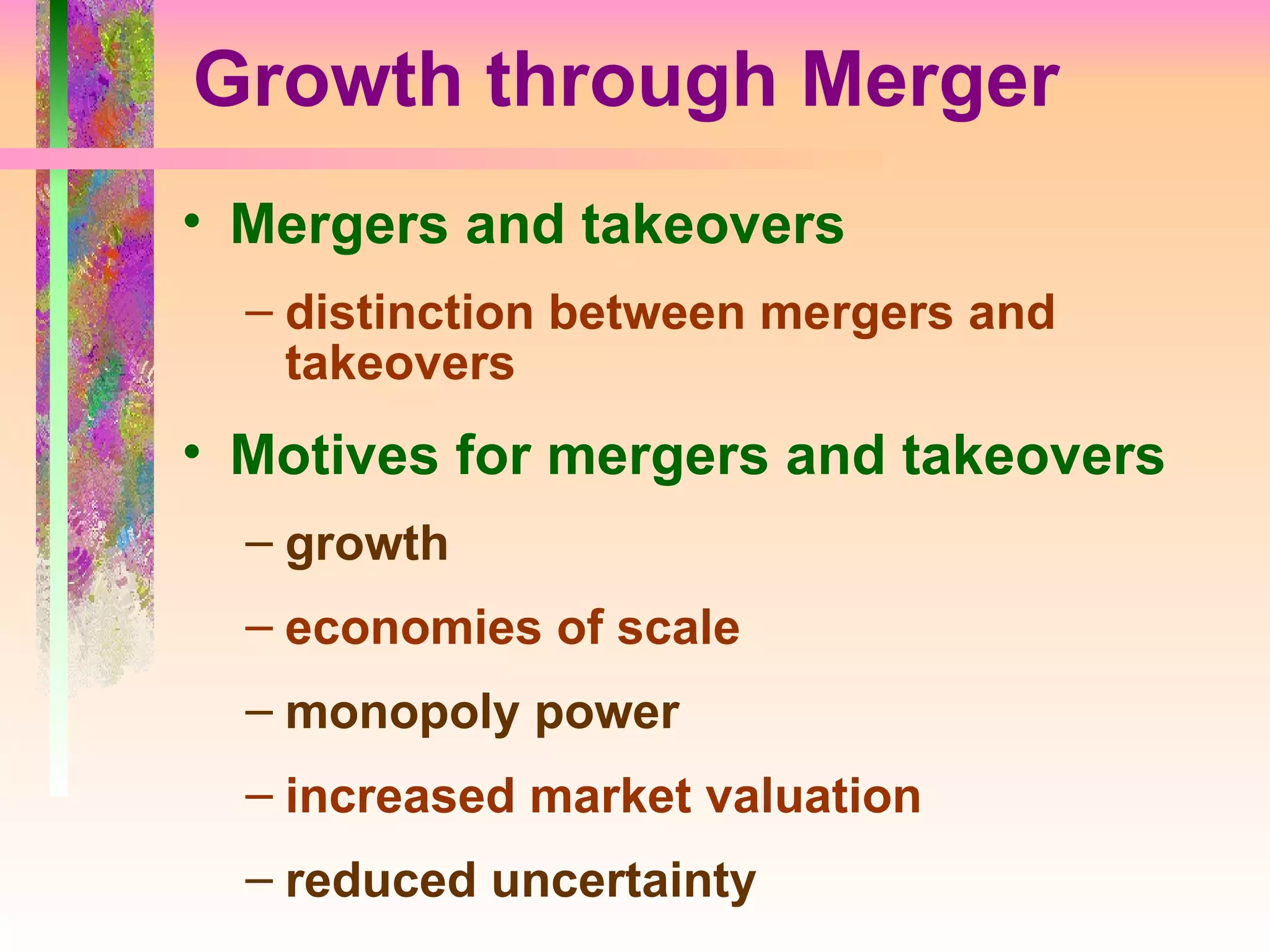
Growth through Merger Mergers and takeovers distinction between mergers and takeovers Motives for mergers and takeovers growth economies of scale monopoly power increased market valuation reduced uncertainty
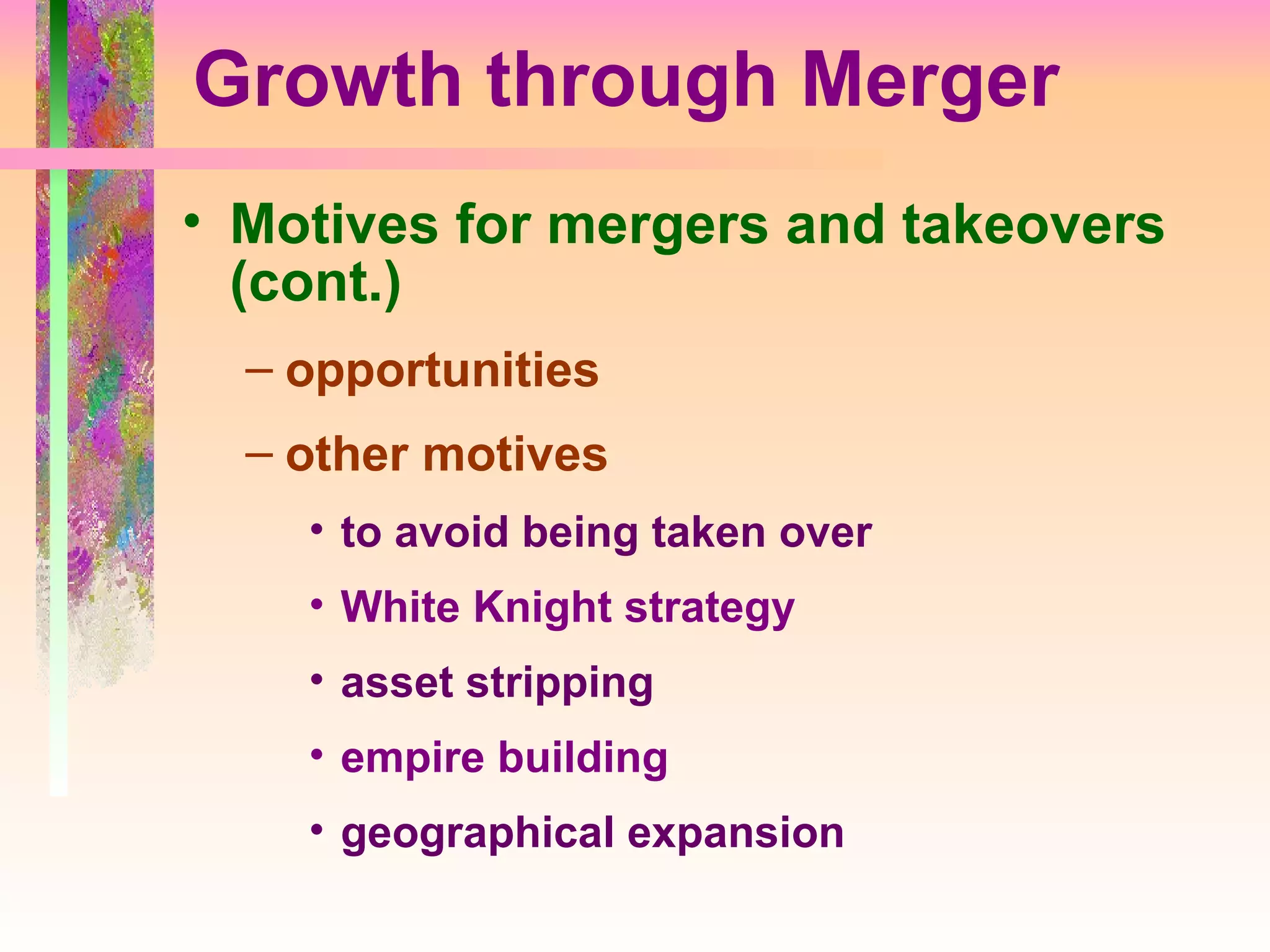
Growth through Merger Motives for mergers and takeovers (cont.) opportunities other motives to avoid being taken over White Knight strategy asset stripping empire building geographical expansion
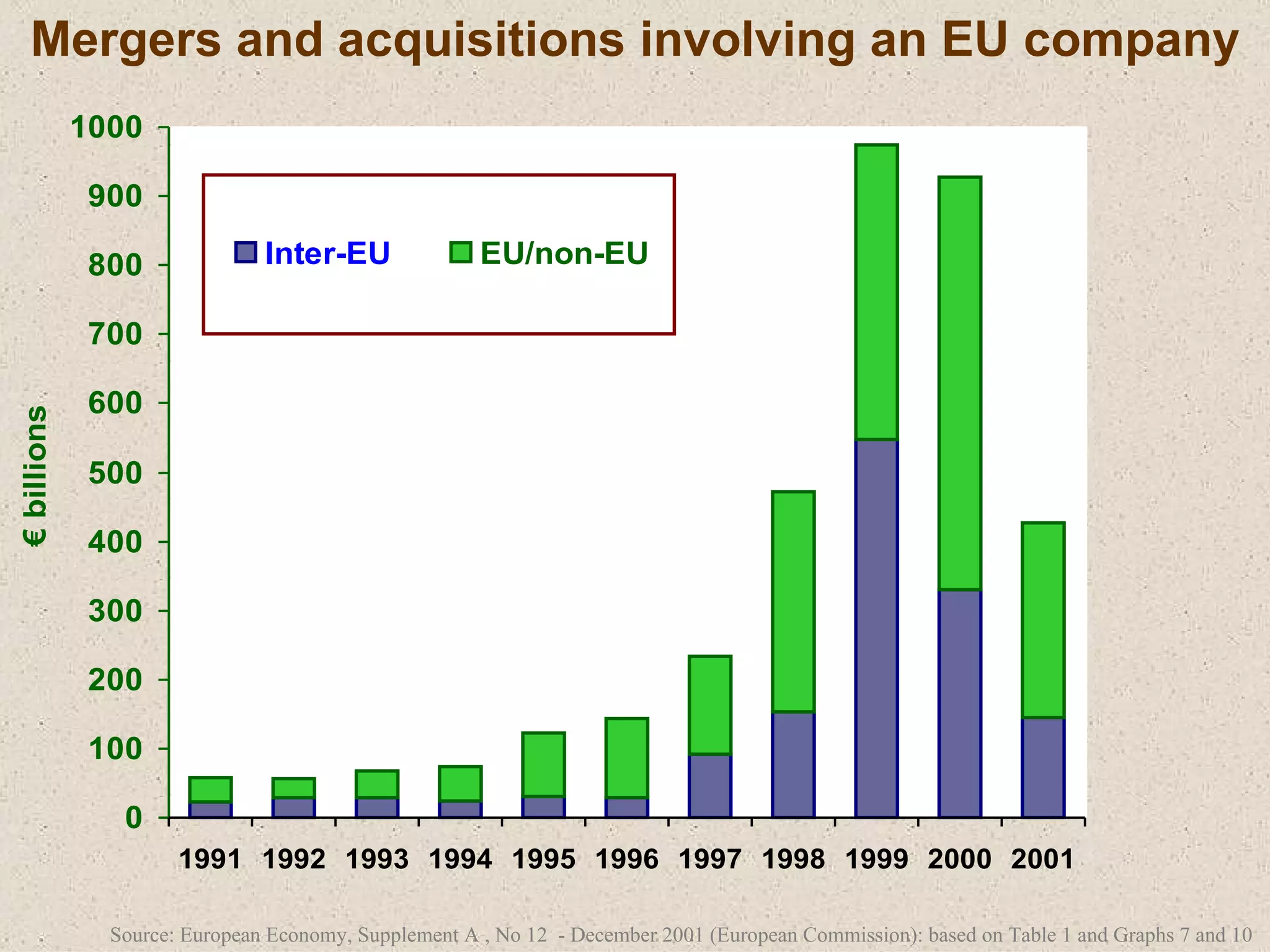
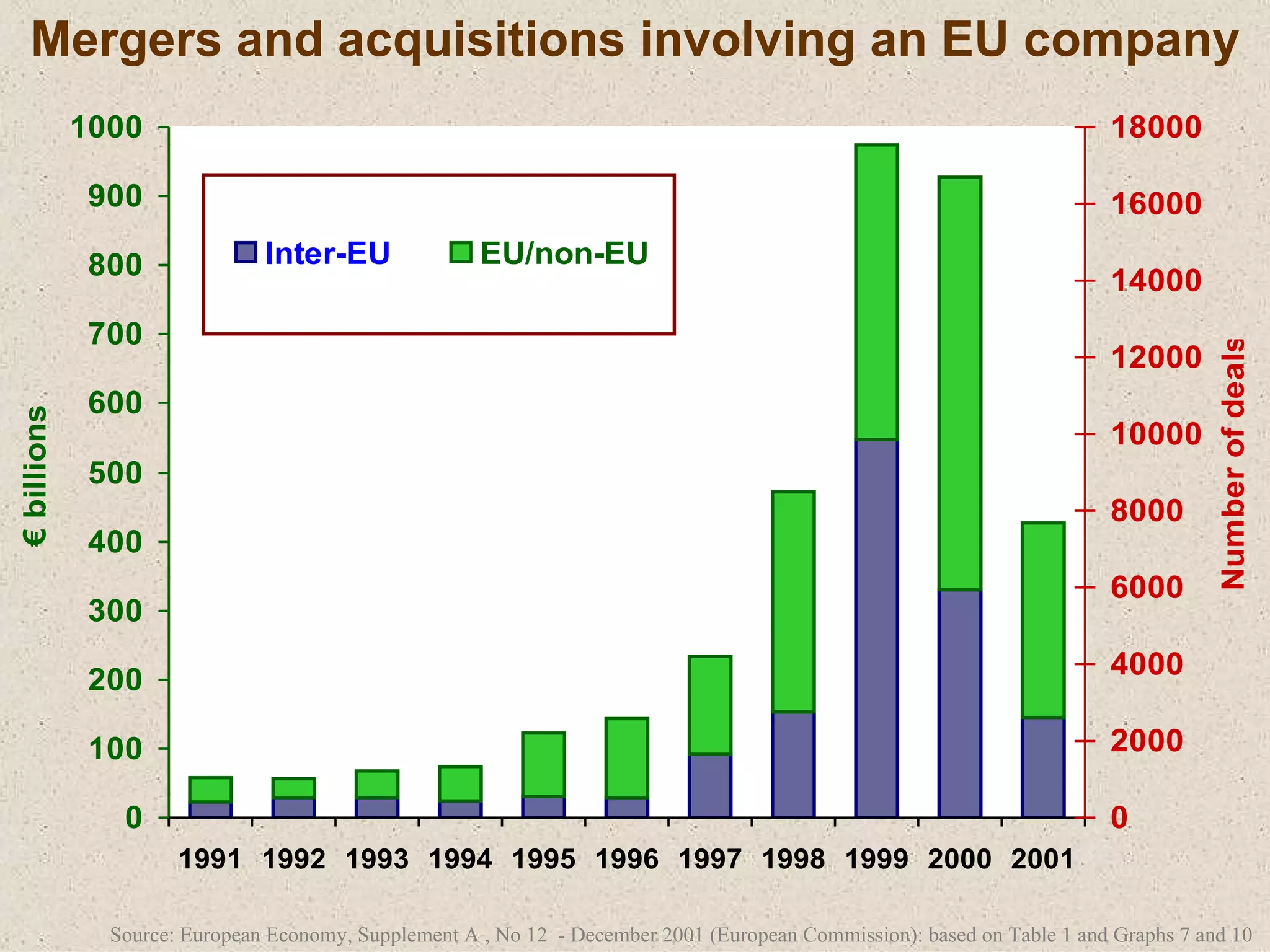
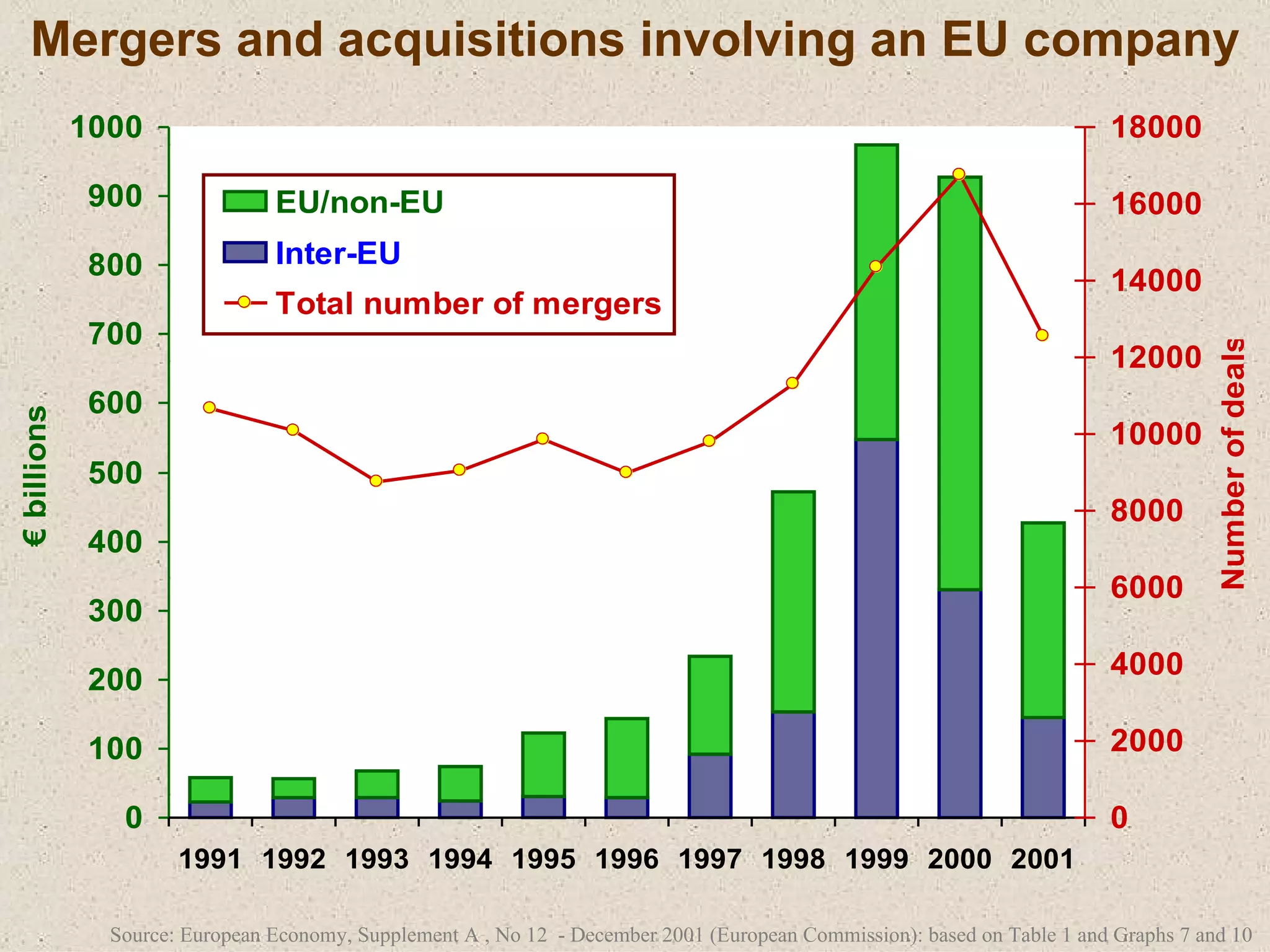
Mergers and acquisitions involving an EU company Source: European Economy, Supplement A , No 12  - December 2001 (European Commission): based on Table 1 and Graphs 7 and 10
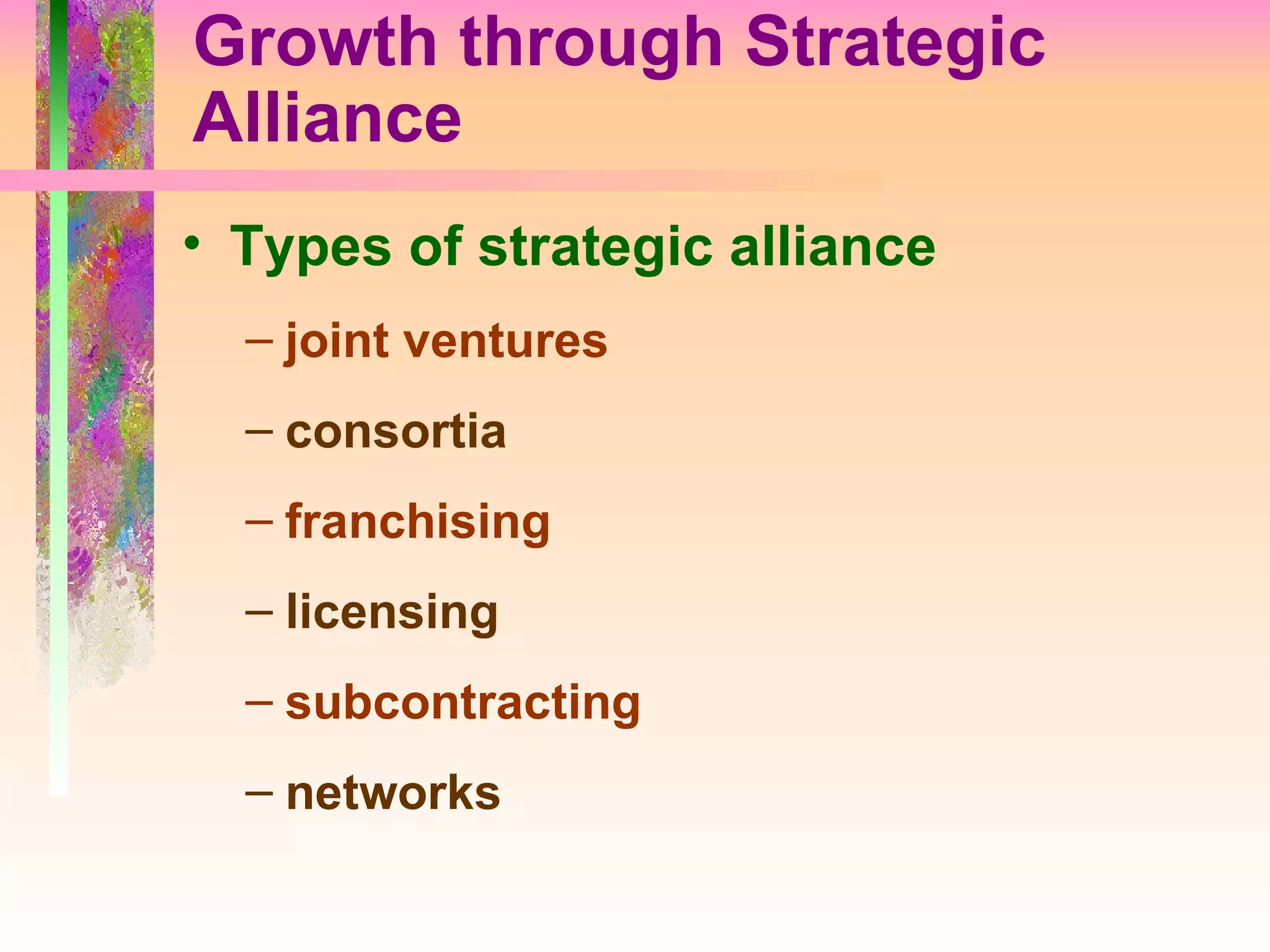
Growth through Strategic Alliance Types of strategic alliance joint ventures consortia franchising licensing subcontracting networks
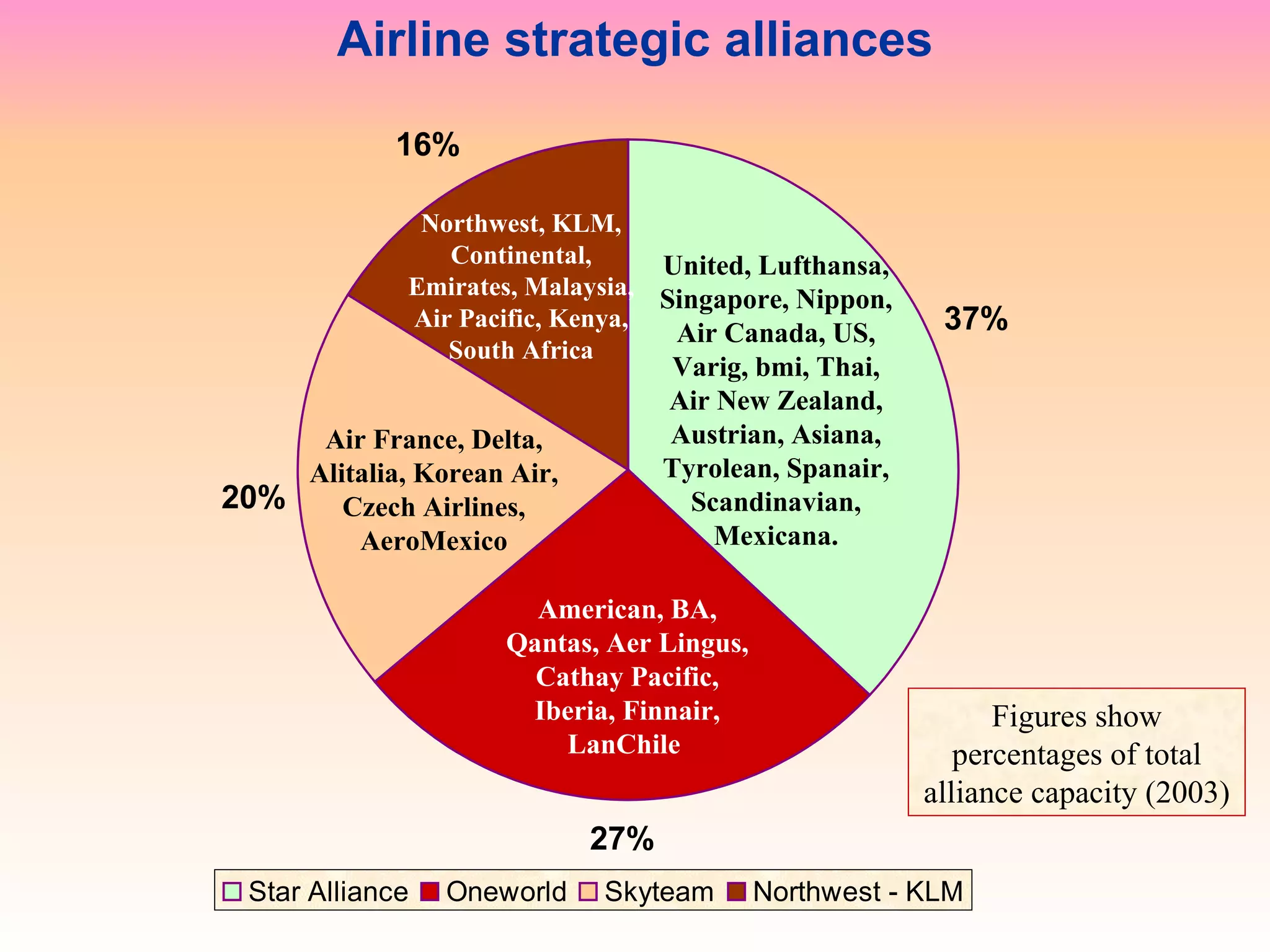
United, Lufthansa, Singapore, Nippon, Air Canada, US, Varig, bmi, Thai, Air New Zealand, Austrian, Asiana, Tyrolean, Spanair, Scandinavian, Mexicana. American, BA, Qantas, Aer Lingus, Cathay Pacific, Iberia, Finnair, LanChile  Air France, Delta, Alitalia, Korean Air, Czech Airlines, AeroMexico Northwest, KLM, Continental, Emirates, Malaysia, Air Pacific, Kenya, South Africa Airline strategic alliances Figures show percentages of total alliance capacity (2003)
Growth through Strategic Alliance Why form strategic alliances? new markets risk sharing capital pooling

Growth Strategy

  • 1.
  • 2.
    Growth and ProfitabilityGrowth and a firm’s long-run average costs shape of the LRAC curve minimum efficient scale Demand considerations nature of the product possibilities for diversification Relationship between growth & profitability how growth depends on profitability how growth affects profitability
  • 3.
    Constraints on GrowthFinancial considerations internal sources of finance borrowing share issue Shareholder confidence problem of retaining large proportion of profits excessive borrowing the takeover constraint share performance the valuation ratio
  • 4.
    Constraints on GrowthDemand conditions importance of market demand importance of promoting demand for the firm's product and increasing market share Managerial conditions the composition of the managerial team management structure
  • 5.
    Alternative Growth StrategiesGrowth by internal expansion product differentiation vertical integration diversification Growth by external expansion: mergers and takeovers horizontal mergers vertical mergers conglomerate mergers
  • 6.
    Alternative growth strategyGROWTH OF A FIRM Internal expansion External expansion (1) Differentiation Horizontal expansion (same product, increase in market share) (1) Horizontal integration Mergers of firms producing the same product (2) Vertical integration Different products, but belonging to different stages of same product (2) Vertical integration Mergers of firms producing at different stages of same process (3) Conglomerate Diversification - introduction of totally different products (3) Conglomerate Diversification - merger of firms producing totally unrelated products
  • 7.
    Growth through VerticalIntegration Types of vertical integration backward integration ('upstream' integration) forward integration ('downstream' integration) Measuring the extent of vertical integration primary production auxiliary operations Examples of vertically integrated firms
  • 8.
    Growth through VerticalIntegration Why vertically integrate? greater efficiency production economies co-ordination economies managerial economies financial economies reduced uncertainty monopoly power barriers to entry
  • 9.
    Growth through VerticalIntegration Problems with vertical integration lack of flexibility risks Tapered vertical integration partial vertical integration advantages better cost information more leverage over suppliers smaller capital outlay disadvantages possible lack of economies of scale
  • 10.
    Growth through DiversificationDirections of diversification using existing technological base & market area using existing technological base & new markets using new technological base & existing market using new technological base & new markets Why diversify? stability maintaining profitability growth
  • 11.
    Growth through MergerMergers and takeovers distinction between mergers and takeovers Motives for mergers and takeovers growth economies of scale monopoly power increased market valuation reduced uncertainty
  • 12.
    Growth through MergerMotives for mergers and takeovers (cont.) opportunities other motives to avoid being taken over White Knight strategy asset stripping empire building geographical expansion
  • 13.
    Mergers and acquisitionsinvolving an EU company Source: European Economy, Supplement A , No 12 - December 2001 (European Commission): based on Table 1 and Graphs 7 and 10
  • 14.
    Mergers and acquisitionsinvolving an EU company Source: European Economy, Supplement A , No 12 - December 2001 (European Commission): based on Table 1 and Graphs 7 and 10
  • 15.
    Mergers and acquisitionsinvolving an EU company Source: European Economy, Supplement A , No 12 - December 2001 (European Commission): based on Table 1 and Graphs 7 and 10
  • 16.
    Growth through StrategicAlliance Types of strategic alliance joint ventures consortia franchising licensing subcontracting networks
  • 17.
    United, Lufthansa, Singapore,Nippon, Air Canada, US, Varig, bmi, Thai, Air New Zealand, Austrian, Asiana, Tyrolean, Spanair, Scandinavian, Mexicana. American, BA, Qantas, Aer Lingus, Cathay Pacific, Iberia, Finnair, LanChile Air France, Delta, Alitalia, Korean Air, Czech Airlines, AeroMexico Northwest, KLM, Continental, Emirates, Malaysia, Air Pacific, Kenya, South Africa Airline strategic alliances Figures show percentages of total alliance capacity (2003)
  • 18.
    Growth through StrategicAlliance Why form strategic alliances? new markets risk sharing capital pooling