SPECIFICATION OF TOOLS
Kitchen tools make cooking easier. If tools are
arranged according to its specifications/usage
it will be easy to find the tools when in need.
There are different kinds of kitchen tools,
utensils, small appliances and cookware in the
market. Each has a different use and function.
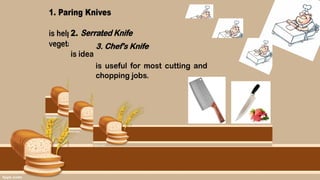
A. KNIVES
Sharp, quality knives are
important in the kitchen. They
cut better and are easier to
work with than dull knives.
B. CUTTING BOARDS
Always keep your counter tops clean
and scratch-free. It is important to have
separate cutting boards for meat and
vegetables to prevent germs and cross
contamination. Cutting boards are made
of many different materials from wood
to plastic.
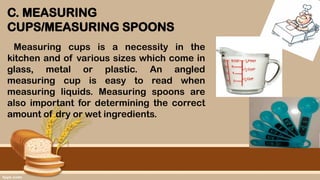
C. MEASURING
CUPS/MEASURING SPOONS
Measuring cups is a necessity in the
kitchen and of various sizes which come in
glass, metal or plastic. An angled
measuring cup is easy to read when
measuring liquids. Measuring spoons are
also important for determining the correct
amount of dry or wet ingredients.
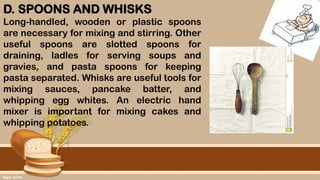
D. SPOONS AND WHISKS
Long-handled, wooden or plastic spoons
are necessary for mixing and stirring. Other
useful spoons are slotted spoons for
draining, ladles for serving soups and
gravies, and pasta spoons for keeping
pasta separated. Whisks are useful tools for
mixing sauces, pancake batter, and
whipping egg whites. An electric hand
mixer is important for mixing cakes and
whipping potatoes.
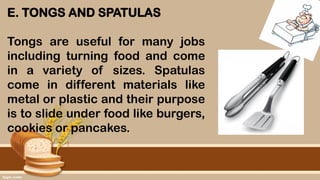
E. TONGS AND SPATULAS
Tongs are useful for many jobs
including turning food and come
in a variety of sizes. Spatulas
come in different materials like
metal or plastic and their purpose
is to slide under food like burgers,
cookies or pancakes.
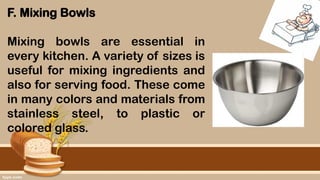
F. Mixing Bowls
Mixing bowls are essential in
every kitchen. A variety of sizes is
useful for mixing ingredients and
also for serving food. These come
in many colors and materials from
stainless steel, to plastic or
colored glass.
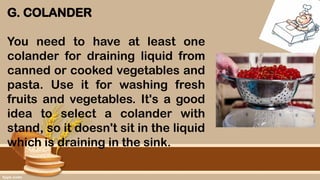
G. COLANDER
You need to have at least one
colander for draining liquid from
canned or cooked vegetables and
pasta. Use it for washing fresh
fruits and vegetables. It's a good
idea to select a colander with
stand, so it doesn't sit in the liquid
which is draining in the sink.
H. MISCELLANEOUS TOOLS
A grater for shredding, shaving and zesting
is a versatile tool to have in the kitchen.
Also useful is a can opener, bottle opener. A
potato masher and vegetable peeler are
always part of a well-stocked kitchen. A
kitchen timer is important for timing recipes
accurately. A meat thermometer will assure
the proper temperature for food safety.
SAFETY OF TOOLS &
EQUIPMENTS
The safety of tools and equipment is not only the
concern of the management, but of the workers who
use the equipment as well. Proper maintenance and
safety of tools and equipment are important for the
following reasons:
1. Good quality of service
2. Sanitation
3. Fire prevention
4. Safety
5. Less cost of production
Safety Measures in the Use and
Storage of Tools & Equipment
1. Store knives, choppers and cutting blades
in designated places. Label them.
2. Repair broken tools and equipment
immediately.
3. Check wiring of electrical equipment
regularly. Report kitchen equipment that are
not functioning.
4. Handle fragile tools or those tools made of
glass with care. Those with breaks should be
discarded.
5. Store tools and equipment in a clean dry
place. Do not keep them when wet.
Proper Storage of Tools and
Equipment
The proper care and storage of tools
and equipment are not only the concern
of the management but of the workers
who use the equipment.
Importance of proper storage of tools and
equipment
1. It is an important factor for safety and
health as well as good business.
2. Improves appearance of general-shop
and construction areas.
3. Reduces overall tool cost through
maintenance.
4. This also ensures that tools are in good
repair at hand.
5. Teaches workers principles of (tool)
accountability.
Pointers to follow in storing tools and
equipment:
1. Have a designated place for each kind
of tools.
2. Label the storage cabinet or place
correctly for immediate finding.
3. Store them near the point of use.
4. Wash and dry properly before storing.
5. Store knives properly when not in use
with sharp edge down
6. Put frequently used items in conveniently
accessible locations.
7. Gather and secure electrical cords to
prevent entanglement or snagging.
8. Cutting boards should be stored vertically
to avoid moisture collection.
9. Metal equipment can be stacked on one
another after drying such as storage dishes
and
bowls.
10. Make sure the areas where you are storing
the equipment are clean, dry and not
overcrowded.

SPECIFICATION OF TOOLSxczzdfdvdgvdg.pptx

  • 1.
  • 2.
    Kitchen tools makecooking easier. If tools are arranged according to its specifications/usage it will be easy to find the tools when in need. There are different kinds of kitchen tools, utensils, small appliances and cookware in the market. Each has a different use and function.
  • 3.
    A. KNIVES Sharp, qualityknives are important in the kitchen. They cut better and are easier to work with than dull knives.
  • 5.
    B. CUTTING BOARDS Alwayskeep your counter tops clean and scratch-free. It is important to have separate cutting boards for meat and vegetables to prevent germs and cross contamination. Cutting boards are made of many different materials from wood to plastic.
  • 6.
    C. MEASURING CUPS/MEASURING SPOONS Measuringcups is a necessity in the kitchen and of various sizes which come in glass, metal or plastic. An angled measuring cup is easy to read when measuring liquids. Measuring spoons are also important for determining the correct amount of dry or wet ingredients.
  • 7.
    D. SPOONS ANDWHISKS Long-handled, wooden or plastic spoons are necessary for mixing and stirring. Other useful spoons are slotted spoons for draining, ladles for serving soups and gravies, and pasta spoons for keeping pasta separated. Whisks are useful tools for mixing sauces, pancake batter, and whipping egg whites. An electric hand mixer is important for mixing cakes and whipping potatoes.
  • 8.
    E. TONGS ANDSPATULAS Tongs are useful for many jobs including turning food and come in a variety of sizes. Spatulas come in different materials like metal or plastic and their purpose is to slide under food like burgers, cookies or pancakes.
  • 9.
    F. Mixing Bowls Mixingbowls are essential in every kitchen. A variety of sizes is useful for mixing ingredients and also for serving food. These come in many colors and materials from stainless steel, to plastic or colored glass.
  • 10.
    G. COLANDER You needto have at least one colander for draining liquid from canned or cooked vegetables and pasta. Use it for washing fresh fruits and vegetables. It's a good idea to select a colander with stand, so it doesn't sit in the liquid which is draining in the sink.
  • 11.
    H. MISCELLANEOUS TOOLS Agrater for shredding, shaving and zesting is a versatile tool to have in the kitchen. Also useful is a can opener, bottle opener. A potato masher and vegetable peeler are always part of a well-stocked kitchen. A kitchen timer is important for timing recipes accurately. A meat thermometer will assure the proper temperature for food safety.
  • 12.
    SAFETY OF TOOLS& EQUIPMENTS
  • 13.
    The safety oftools and equipment is not only the concern of the management, but of the workers who use the equipment as well. Proper maintenance and safety of tools and equipment are important for the following reasons: 1. Good quality of service 2. Sanitation 3. Fire prevention 4. Safety 5. Less cost of production
  • 14.
    Safety Measures inthe Use and Storage of Tools & Equipment
  • 15.
    1. Store knives,choppers and cutting blades in designated places. Label them. 2. Repair broken tools and equipment immediately. 3. Check wiring of electrical equipment regularly. Report kitchen equipment that are not functioning. 4. Handle fragile tools or those tools made of glass with care. Those with breaks should be discarded. 5. Store tools and equipment in a clean dry place. Do not keep them when wet.
  • 16.
    Proper Storage ofTools and Equipment
  • 17.
    The proper careand storage of tools and equipment are not only the concern of the management but of the workers who use the equipment.
  • 18.
    Importance of properstorage of tools and equipment 1. It is an important factor for safety and health as well as good business. 2. Improves appearance of general-shop and construction areas. 3. Reduces overall tool cost through maintenance. 4. This also ensures that tools are in good repair at hand. 5. Teaches workers principles of (tool) accountability.
  • 19.
    Pointers to followin storing tools and equipment: 1. Have a designated place for each kind of tools. 2. Label the storage cabinet or place correctly for immediate finding. 3. Store them near the point of use. 4. Wash and dry properly before storing. 5. Store knives properly when not in use with sharp edge down
  • 20.
    6. Put frequentlyused items in conveniently accessible locations. 7. Gather and secure electrical cords to prevent entanglement or snagging. 8. Cutting boards should be stored vertically to avoid moisture collection. 9. Metal equipment can be stacked on one another after drying such as storage dishes and bowls. 10. Make sure the areas where you are storing the equipment are clean, dry and not overcrowded.