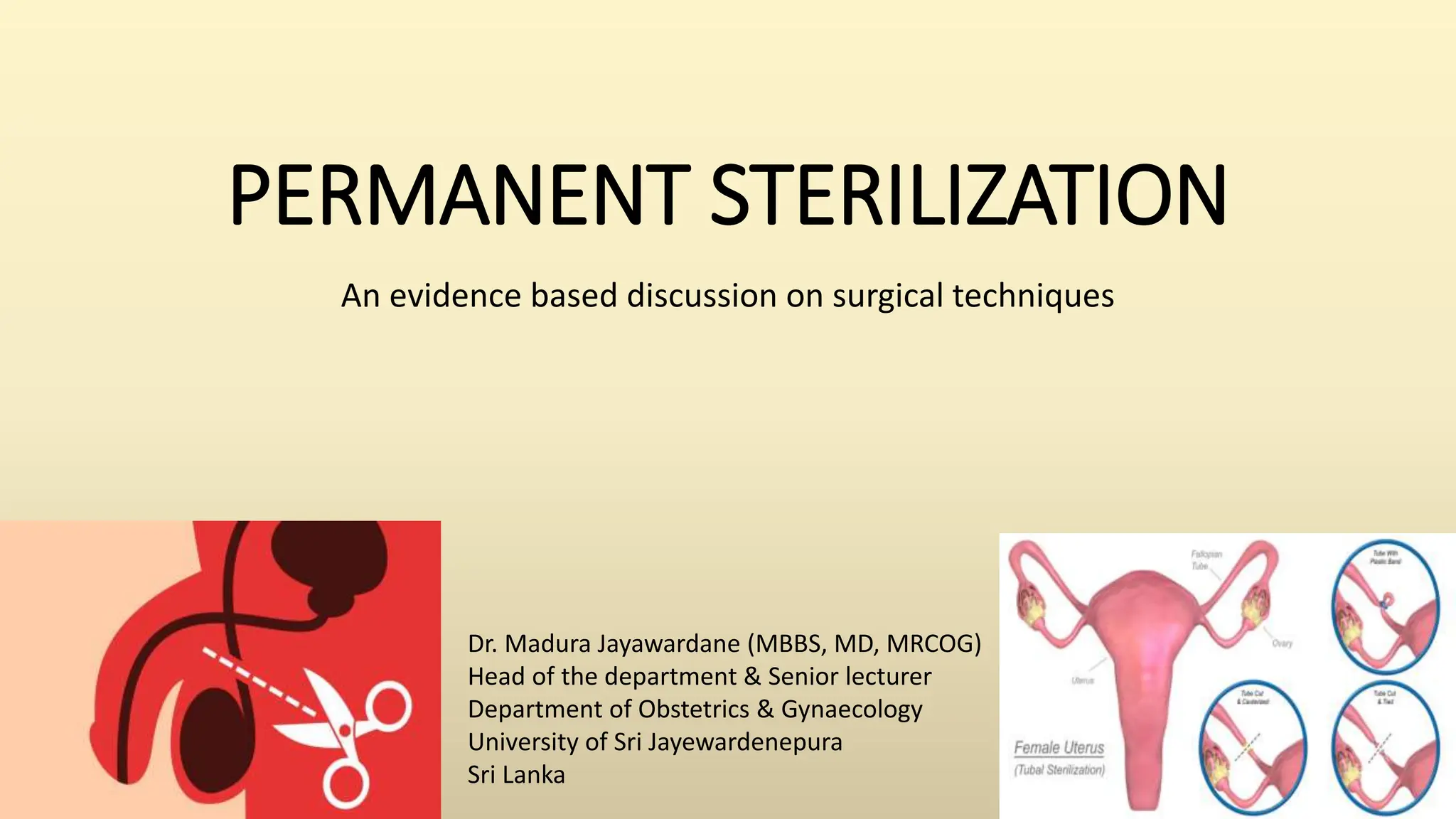
PERMANENT STERILIZATION
An evidence based discussion on surgical techniques
Dr. Madura Jayawardane (MBBS, MD, MRCOG)
Head of the department & Senior lecturer
Department of Obstetrics & Gynaecology
University of Sri Jayewardenepura
Sri Lanka
Scope of the discussion
• Why sterilization?
• Which sterilization is better? Male or female? Evidence?
• Sri Lankan Data versus global data
• Current Indications for female/male sterilization in SL
• Surgical methods of female sterilization
Cont.
• Why female sterilization fails?
• Added advantages of female sterilization
• Complications of female sterilization
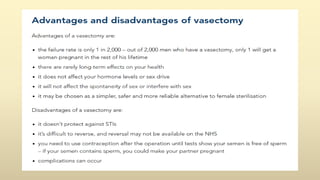
• Vasectomy and its advantages, disadvantages & complications.
• Psychological impact of sterilization
• Tips and tricks for counselling
Sterilization as a contraceptive method
• Permanent solution for both males and females
• Often referred as no reversible
• When they refuse or not suitable to be on hormonal or non hormonal
alternatives
• Limit capacity to expand family
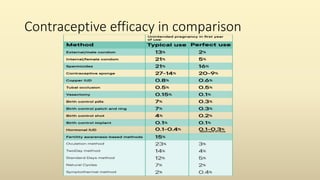
Contraceptive efficacy in comparison
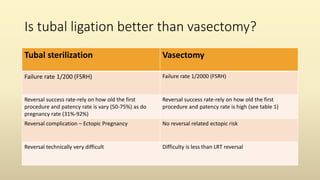
Is tubal ligation better than vasectomy?
Tubal sterilization Vasectomy
Failure rate 1/200 (FSRH) Failure rate 1/2000 (FSRH)
Reversal success rate-rely on how old the first
procedure and patency rate is vary (50-75%) as do
pregnancy rate (31%-92%)
Reversal success rate-rely on how old the first
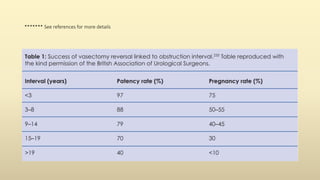
procedure and patency rate is high (see table 1)
Reversal complication – Ectopic Pregnancy No reversal related ectopic risk
Reversal technically very difficult Difficulty is less than LRT reversal
******* See references for more details
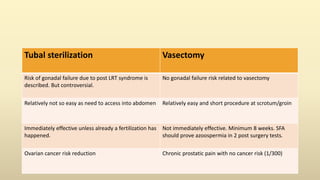
Tubal sterilization Vasectomy
Risk of gonadal failure due to post LRT syndrome is
described. But controversial.
No gonadal failure risk related to vasectomy
Relatively not so easy as need to access into abdomen Relatively easy and short procedure at scrotum/groin
Immediately effective unless already a fertilization has
happened.
Not immediately effective. Minimum 8 weeks. SFA
should prove azoospermia in 2 post surgery tests.
Ovarian cancer risk reduction Chronic prostatic pain with no cancer risk (1/300)
Sterilization practices in SL
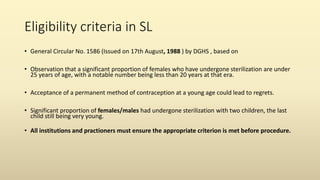
Eligibility criteria in SL
• General Circular No. 1586 (Issued on 17th August, 1988 ) by DGHS , based on
• Observation that a significant proportion of females who have undergone sterilization are under
25 years of age, with a notable number being less than 20 years at that era.
• Acceptance of a permanent method of contraception at a young age could lead to regrets.
• Significant proportion of females/males had undergone sterilization with two children, the last
child still being very young.
• All institutions and practioners must ensure the appropriate criterion is met before procedure.
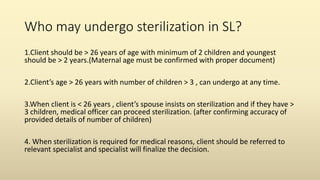
Who may undergo sterilization in SL?
1.Client should be > 26 years of age with minimum of 2 children and youngest
should be > 2 years.(Maternal age must be confirmed with proper document)
2.Client’s age > 26 years with number of children > 3 , can undergo at any time.
3.When client is < 26 years , client’s spouse insists on sterilization and if they have >
3 children, medical officer can proceed sterilization. (after confirming accuracy of
provided details of number of children)
4. When sterilization is required for medical reasons, client should be referred to
relevant specialist and specialist will finalize the decision.
Demographic & Health Survey 2016 - SL
Conducted representing all districts and sample size was 18,302
Female sterilization was the mostly used method
Male sterilization was the least used method
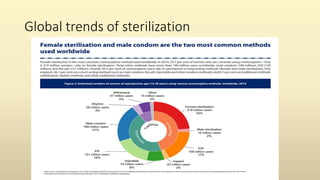
Global trends of sterilization
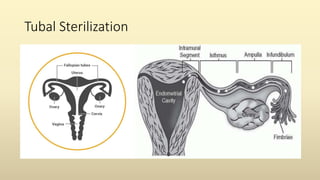
Tubal Sterilization
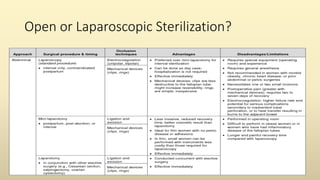
Open or Laparoscopic Sterilization?
Open Sterilization Procedure
• Performed under anaesthesia (SA,GA or LA)
• a transverse incision is satisfactory
• incision made approximately 2–3 cm above the symphysis pubis
• approximately 2–3 cm in length is satisfactory
• fascia is divided transversely
• rectus muscles are retracted laterally
• transversalis fascia and the underlying parietal peritoneum is incised
in a vertical fashion
• To avoid bladder injury, the bladder must be adequately emptied
immediately before surgery or an indwelling Foley catheter can be
placed
• Following the sterilization procedure, the incision is closed in the
customary fashion
• subcuticular absorbable suture is often useful and has excellent
patient acceptance
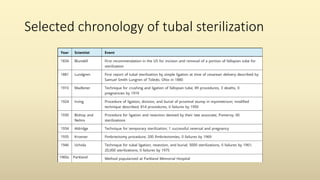
Selected chronology of tubal sterilization
The Pomeroy, or "modified" Pomeroy
Technique
• the most common method (easy to learn and perform)
• partial salpingectomy is the end result
• First accurate identification of the fallopian tube
• Babcock clamp is placed around the proximal portion of the tubal
ampulla and the tube is elevated to reveal the vascular supply of the
mesosalpinx
• A single strand of absorbable suture material (1-vicryl) is placed
around the elevated loop of tube and firmly tied
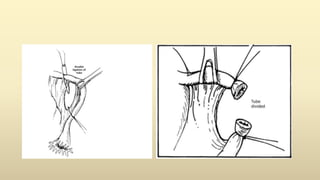
• Fallopian tube is thus ligated and the blood supply is occluded
simultaneously
• A haemostat may now be placed on the suture strands and cut suture
• Now with clamp you hold the tied tube
• While gentle traction is maintained on the elevated section of tube
• scissors is used to pierce the mesosalpinx and approximately 1 cm of
tube is excised
• examined for bleeding and then the tube is returned to the
abdominal cavity
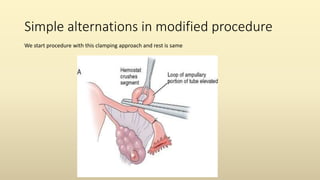
Simple alternations in modified procedure
We start procedure with this clamping approach and rest is same
The Parkland Method
• End result is partial salpingectomy
• Rather than ligation of a knuckle of tube followed by creation of a
window in the mesosalpinx, the window is created first.
• Thus, procedure is started by identifying an avascular section of the
mesosalpinx
• While elevating the tube with Babcock clamps, window is
created below the tube with scissors
• A 2-cm segment of the mid-portion of the tube is then ligated
proximally and distally as before using 1-vicryl
• Segment between the suture ligatures is then excised
• Parkland method provides for immediate anatomic separation of the
disconnected tubal segments unlike the Pomeroy technique
• Failure rates do not differ between these two methods
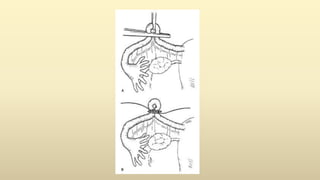
The Madlerner Method
• High failure rates and no longer in use
• A loop of tube is elevated and crushed before ligation with
permanent suture
• No tube portion is excised
• Let the ligated segment undergoes aseptic necrosis
• Chance of reconnect is high if suture is slipped or fistula formed
between adjacent tube portions
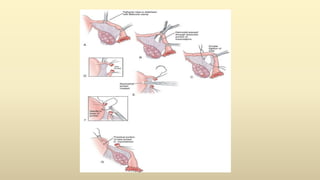
The Irving Method-a burring technique
• Introduced as a technique for ligation and division of the oviduct at
the time of caesarean delivery
• Due to the perceived higher failure rates for traditional tubal
sterilization when performed at caesarean
• Caused by increased hypertrophy and vascularity of the oviducts in
the immediate postpartum period
• Although when performed in the puerperal period, it is highly
effective and has a low failure rate
• Not recommended as an interval procedure
• The tube is divided at approximately the ampullary–isthmic junction
• Ends of the suture are kept long for traction
• Using blunt dissection, a tunnel is made within the substance of the
uterine myometrium
• Proximal tube is pulled into this chamber and sutured in place
• Distal tube is then buried within the substance of the broad ligament
• Additional sutures may be necessary to close the defect within the
mesosalpinx and adjacent broad ligament as a result of the previous
dissection
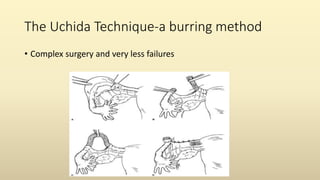
The Uchida Technique-a burring method
• Complex surgery and very less failures
• A subserosal injection of a saline-epinephrine solution is made in the
region of the tubal ampulla
• The serosa is then incised with the scissors, exposing the muscular
layer of the tube
• A segment of the muscular layer is elevated while the serosa is
simultaneously stripped back over the proximal and distal segments
• The proximal portion of the muscular tube is ligated and excised
• Ligated segment then drops back beneath the serosa
• Purse-string suture is placed around the distal tube and tied
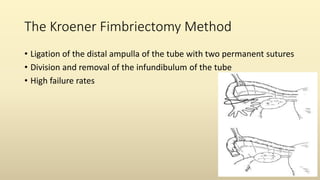
The Kroener Fimbriectomy Method
• Ligation of the distal ampulla of the tube with two permanent sutures
• Division and removal of the infundibulum of the tube
• High failure rates
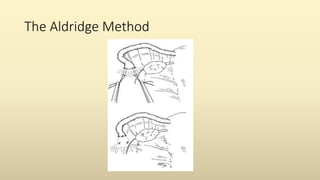
The Aldridge Method
• The fallopian tube remains intact
• Fimbrial end of the fallopian tube is drawn into a pocket beneath the
peritoneum of the broad ligament
• Buried fimbrial end is then secured in place by several sutures of non
absorbable suture material
• This circle of sutures incorporates the serosal and muscular layers of
the tube in the peritoneum of the broad ligament
• High failure rates
Summery of efficacy in different methods
• Irving and Uchida-very few failure rates + technically difficult (to do in
postpartum sterilization)
• Madlener and Kroener methods are associated with the highest
failures
• Pomeroy’s is the easiest way with acceptable efficacy
Post-partum Sterilization
• Simultaneously at C-section (as the addition of sterilization to caesarean section
adds little to the operative risk of the procedure or to the postoperative morbidity)
• May be after vaginal birth as immediate procedure or interval
procedure
• Open surgical techniques are used in immediate procedures
• When perform as interval procedure, interim method should be
considered if necesary.
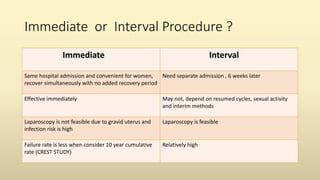
Immediate or Interval Procedure ?
Immediate Interval
Same hospital admission and convenient for women,
recover simultaneously with no added recovery period
Need separate admission , 6 weeks later
Effective immediately May not, depend on resumed cycles, sexual activity
and interim methods
Laparoscopy is not feasible due to gravid uterus and
infection risk is high
Laparoscopy is feasible
Failure rate is less when consider 10 year cumulative
rate (CREST STUDY)
Relatively high
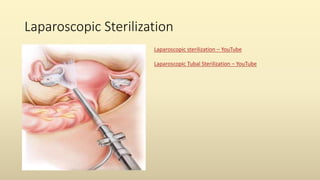
Laparoscopic Sterilization
Laparoscopic sterilization – YouTube
Laparoscopic Tubal Sterilization – YouTube
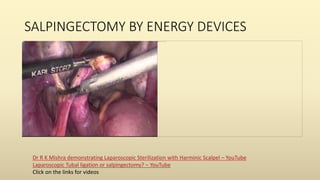
SALPINGECTOMY BY ENERGY DEVICES
Dr R K Mishra demonstrating Laparoscopic Sterilization with Harminic Scalpel – YouTube
Laparoscopic Tubal ligation or salpingectomy? – YouTube
Click on the links for videos
• Unipolar diathermy should not be used due to hazard risk
• bipolar., harmonic and ligasure can be used
• These has less misdirection of energy and reduce thermal damage
• Simple diathermy coagulation is not advised compare to
salpingectomy due to ectopic risk
• Care must be taken to preserve meso-salphinx which carries vessels
to ipsilateral ovary.
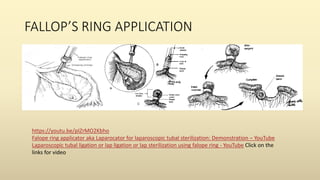
FALLOP’S RING APPLICATION
https://youtu.be/pIZrMO2Kbho
Falope ring applicator aka Laparocator for laparoscopic tubal sterilization: Demonstration – YouTube
Laparoscopic tubal ligation or lap ligation or lap sterilization using falope ring - YouTube Click on the
links for video
• Sialstic rubber ring is placed on isthmic part of tube
• Likely pomeroy technique, but no tissue reduction
• Surgery may produce significant postoperative pain
• Direct application of local anaesthetic agent is used for this
• Need to make sure that we catch full thickness of tube
• This is difficult as tube is thick and drawing it through ring may tear it
• This leads to bleeding and failure of procedure
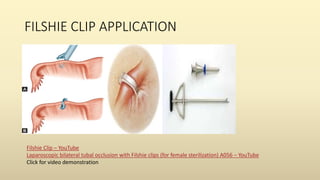
FILSHIE CLIP APPLICATION
Filshie Clip – YouTube
Laparoscopic bilateral tubal occlusion with Filshie clips (for female sterilization) A056 – YouTube
Click for video demonstration
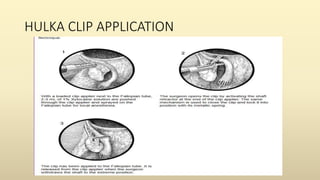
HULKA CLIP APPLICATION
• Safe, easy and popular
• Hulka clip has been replaced with filshie clip
• Whole width of tube must include
• Clip is applied closer to uterus than any other procedure
• For better contraception effect,2 clips can be used
• 2 clip method is known to cause hydrosalpinx and no longer practiced
Reasons for failed female sterilization
1.The ends of a fallopian tube can be recanalised
2.A fistula can develop at the occluded portion of the tube
3.There may be incomplete occlusion of the tube
4.There may be slippage of the occlusive device
5.The occlusive device can be placed on the wrong anatomical structure
6.luteal-phase pregnancies,(which occur when patients are sterilised after unknowingly
conceiving in the same cycle as the sterilisation procedure is performed)
• Iatrogenic luteal-phase ectopic pregnancies can be caused by occluding the fallopian tubes
before the blastocyst has passed the site of occlusion
• Luteal-phase pregnancies are estimated to occur in about 2–3/1000 interval procedures
• women who used more effective methods of contraception, such as combined oral
contraception (COC) or a copper intrauterine device (Cu-IUD), prior to sterilisation had a
significantly lower luteal-phase pregnancy rate than women using barrier, fertility awareness
or withdrawal methods
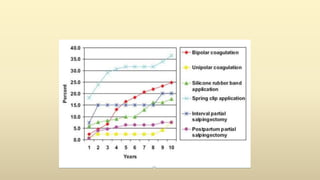
The CREST Study
US COLLABORATIVE REVIEW OF STERILIZATION STUDY-10 YEAR FOLLOW UP STUDY.
• a multicentre, prospective study conducted in various teaching
institutions by the Centres for Disease Control and Prevention (CDC)
to examine the long-term failure of tubal ligation for sterilization
• The study included 10,863 women who enrolled prior to sterilization.
After sterilization, these women were followed by annual telephone
interviews. They were asked whether they had had a positive
pregnancy test or had been told by a physician that they were
pregnant since the sterilization
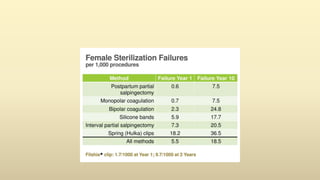
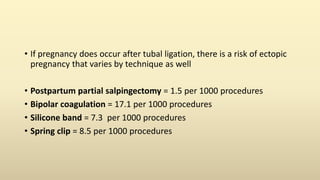
• If pregnancy does occur after tubal ligation, there is a risk of ectopic
pregnancy that varies by technique as well
• Postpartum partial salpingectomy = 1.5 per 1000 procedures
• Bipolar coagulation = 17.1 per 1000 procedures
• Silicone band = 7.3 per 1000 procedures
• Spring clip = 8.5 per 1000 procedures
Non contraceptive benefits of female
sterilization
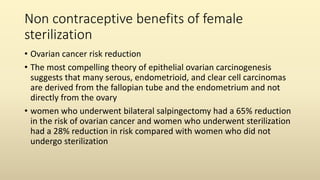
• Ovarian cancer risk reduction
• The most compelling theory of epithelial ovarian carcinogenesis
suggests that many serous, endometrioid, and clear cell carcinomas
are derived from the fallopian tube and the endometrium and not
directly from the ovary
• women who underwent bilateral salpingectomy had a 65% reduction
in the risk of ovarian cancer and women who underwent sterilization
had a 28% reduction in risk compared with women who did not
undergo sterilization
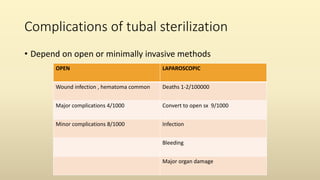
Complications of tubal sterilization
• Depend on open or minimally invasive methods
OPEN LAPAROSCOPIC
Wound infection , hematoma common Deaths 1-2/100000
Major complications 4/1000 Convert to open sx 9/1000
Minor complications 8/1000 Infection
Bleeding
Major organ damage
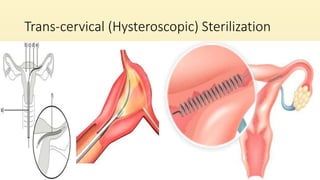
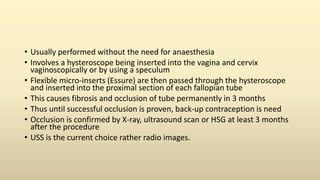
Trans-cervical (Hysteroscopic) Sterilization
• Usually performed without the need for anaesthesia
• Involves a hysteroscope being inserted into the vagina and cervix
vaginoscopically or by using a speculum
• Flexible micro-inserts (Essure) are then passed through the hysteroscope
and inserted into the proximal section of each fallopian tube
• This causes fibrosis and occlusion of tube permanently in 3 months
• Thus until successful occlusion is proven, back-up contraception is need
• Occlusion is confirmed by X-ray, ultrasound scan or HSG at least 3 months
after the procedure
• USS is the current choice rather radio images.
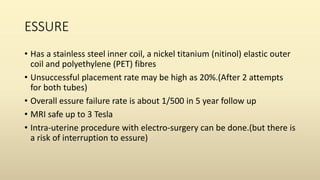
ESSURE
• Has a stainless steel inner coil, a nickel titanium (nitinol) elastic outer
coil and polyethylene (PET) fibres
• Unsuccessful placement rate may be high as 20%.(After 2 attempts
for both tubes)
• Overall essure failure rate is about 1/500 in 5 year follow up
• MRI safe up to 3 Tesla
• Intra-uterine procedure with electro-surgery can be done.(but there is
a risk of interruption to essure)
Contraindications for Essure
• uncertainty about ending fertility
• pregnancy or suspected pregnancy
• delivery or abortion of a second-trimester pregnancy <6 weeks before micro-insert insertion
• active or recent pelvic infection
• untreated acute cervicitis
• unexplained or severe vaginal bleeding
• known or suspected gynaecological malignancy
• known abnormal uterine cavity or fallopian tubes that impairs visualization of the tubal
• ostia or that makes cannulation of the proximal fallopian tube difficult/impossible
• allergy to contrast media used for HSG
• women taking corticosteroids.
• Essure Procedure – YouTube
• BIRTH CONTROL - ESSURE PROCEDURE – YouTube
Click for video
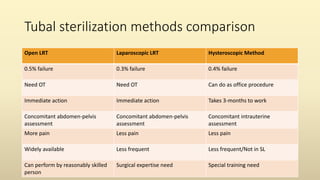
Tubal sterilization methods comparison
Open LRT Laparoscopic LRT Hysteroscopic Method
0.5% failure 0.3% failure 0.4% failure
Need OT Need OT Can do as office procedure
Immediate action Immediate action Takes 3-months to work
Concomitant abdomen-pelvis
assessment
Concomitant abdomen-pelvis
assessment
Concomitant intrauterine
assessment
More pain Less pain Less pain
Widely available Less frequent Less frequent/Not in SL
Can perform by reasonably skilled
person
Surgical expertise need Special training need
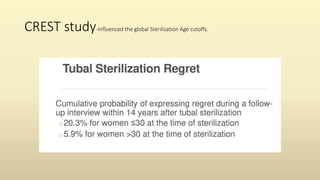
Psychological impact of sterilization-’’Regret’’
• More if it is done in younger age
• Perform in emergencies with no adequate explanation or time to
make informed decision
• Unmarried
• Non Caucasian
• Forcefully performed
CREST study-Influenced the global Sterilization Age cutoffs.
Sterilization for mentally incapacitated client
• Sterilization of Women and Girls with Disabilities | Human Rights
Watch (hrw.org)
• Impossible-suggest LARC
• No free consent by the women , no sterilization
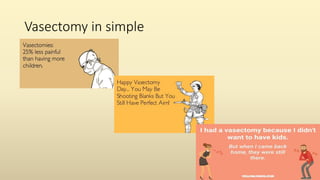
Vasectomy in simple
• This is a minor , short procedure that can be done in 15 min under LA
• Prevents sperm from reaching the seminal fluid (semen)
• Man can still ejaculate, but no sperms.
• Permanent
• 1/2000 failure rate
• Takes 2 months minimum to reach azoospermia and 2 post procedure
SFA should prove it. (until such back-up method need)
• 1/300 risk of chronic prostatic pain
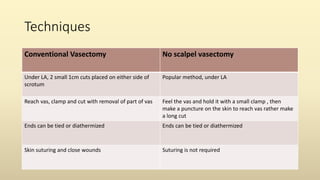
Techniques
Conventional Vasectomy No scalpel vasectomy
Under LA, 2 small 1cm cuts placed on either side of
scrotum
Popular method, under LA
Reach vas, clamp and cut with removal of part of vas Feel the vas and hold it with a small clamp , then
make a puncture on the skin to reach vas rather make
a long cut
Ends can be tied or diathermized Ends can be tied or diathermized
Skin suturing and close wounds Suturing is not required
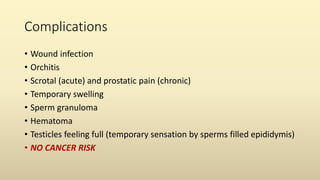
Complications
• Wound infection
• Orchitis
• Scrotal (acute) and prostatic pain (chronic)
• Temporary swelling
• Sperm granuloma
• Hematoma
• Testicles feeling full (temporary sensation by sperms filled epididymis)
• NO CANCER RISK
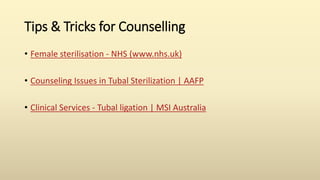
Tips & Tricks for Counselling
• Female sterilisation - NHS (www.nhs.uk)
• Counseling Issues in Tubal Sterilization | AAFP
• Clinical Services - Tubal ligation | MSI Australia
References
• Faculty of Sexual and Reproductive Healthcare. (2014). FSRH Clinical
Guidance: Male and Female Sterilisation Summary of Recommendations.
Retrieved from FSRH.org: http://www.fsrh.org/standards-
andguidance/documents/cec-ceu- guidance-sterilisation-summarysep-
2014
• NHS Choices. (n.d.). Female sterilisation. Retrieved 09 16, 2016, from
Female sterilisation NHS Choices:
http://www.nhs.uk/Conditions/contraception-
guide/Pages/femalesterilisation.aspx
• Male and female sterilization.FSRH,2014.(2019 Reviewed)
• NHS Choices. (n.d.). Vasectomy (male sterilisation). Retrieved 09 19, 2016,
from Vasectomy NHS Choices :
http://www.nhs.uk/Conditions/contraceptionguide/Pages/vasectomy-
malesterilisation.aspx
• Prabha S, Burnett Lunan C, Hill R. Experience of reversal of sterilisation at
Glasgow Royal Infirmary. J Fam Plann Reprod Health Care 2003; 29: 32–33.
• British Association of Urological Surgeons (BAUS). Reversal of Vasectomy:
Procedure Specific Information for Patients. London, UK: BAUS, 2012.
• Shaw’s text book of operative gynecology,7th Edition.
• Surgical Procedures for Tubal Sterilization | GLOWM
• Surgical Sterilization | Clinical Gate
• Tubal Ligation - StatPearls - NCBI Bookshelf (nih.gov)
sterilization techniques AND discussion on

sterilization techniques AND discussion on

  • 1.
    PERMANENT STERILIZATION An evidencebased discussion on surgical techniques Dr. Madura Jayawardane (MBBS, MD, MRCOG) Head of the department & Senior lecturer Department of Obstetrics & Gynaecology University of Sri Jayewardenepura Sri Lanka
  • 2.
    Scope of thediscussion • Why sterilization? • Which sterilization is better? Male or female? Evidence? • Sri Lankan Data versus global data • Current Indications for female/male sterilization in SL • Surgical methods of female sterilization
  • 3.
    Cont. • Why femalesterilization fails? • Added advantages of female sterilization • Complications of female sterilization • Vasectomy and its advantages, disadvantages & complications. • Psychological impact of sterilization • Tips and tricks for counselling
  • 5.
    Sterilization as acontraceptive method • Permanent solution for both males and females • Often referred as no reversible • When they refuse or not suitable to be on hormonal or non hormonal alternatives • Limit capacity to expand family
  • 6.
  • 7.
    Is tubal ligationbetter than vasectomy? Tubal sterilization Vasectomy Failure rate 1/200 (FSRH) Failure rate 1/2000 (FSRH) Reversal success rate-rely on how old the first procedure and patency rate is vary (50-75%) as do pregnancy rate (31%-92%) Reversal success rate-rely on how old the first procedure and patency rate is high (see table 1) Reversal complication – Ectopic Pregnancy No reversal related ectopic risk Reversal technically very difficult Difficulty is less than LRT reversal
  • 8.
    ******* See referencesfor more details
  • 9.
    Tubal sterilization Vasectomy Riskof gonadal failure due to post LRT syndrome is described. But controversial. No gonadal failure risk related to vasectomy Relatively not so easy as need to access into abdomen Relatively easy and short procedure at scrotum/groin Immediately effective unless already a fertilization has happened. Not immediately effective. Minimum 8 weeks. SFA should prove azoospermia in 2 post surgery tests. Ovarian cancer risk reduction Chronic prostatic pain with no cancer risk (1/300)
  • 10.
  • 11.
    Eligibility criteria inSL • General Circular No. 1586 (Issued on 17th August, 1988 ) by DGHS , based on • Observation that a significant proportion of females who have undergone sterilization are under 25 years of age, with a notable number being less than 20 years at that era. • Acceptance of a permanent method of contraception at a young age could lead to regrets. • Significant proportion of females/males had undergone sterilization with two children, the last child still being very young. • All institutions and practioners must ensure the appropriate criterion is met before procedure.
  • 12.
    Who may undergosterilization in SL? 1.Client should be > 26 years of age with minimum of 2 children and youngest should be > 2 years.(Maternal age must be confirmed with proper document) 2.Client’s age > 26 years with number of children > 3 , can undergo at any time. 3.When client is < 26 years , client’s spouse insists on sterilization and if they have > 3 children, medical officer can proceed sterilization. (after confirming accuracy of provided details of number of children) 4. When sterilization is required for medical reasons, client should be referred to relevant specialist and specialist will finalize the decision.
  • 13.
    Demographic & HealthSurvey 2016 - SL Conducted representing all districts and sample size was 18,302 Female sterilization was the mostly used method Male sterilization was the least used method
  • 14.
    Global trends ofsterilization
  • 16.
  • 17.
    Open or LaparoscopicSterilization?
  • 18.
    Open Sterilization Procedure •Performed under anaesthesia (SA,GA or LA) • a transverse incision is satisfactory • incision made approximately 2–3 cm above the symphysis pubis • approximately 2–3 cm in length is satisfactory • fascia is divided transversely • rectus muscles are retracted laterally • transversalis fascia and the underlying parietal peritoneum is incised in a vertical fashion
  • 19.
    • To avoidbladder injury, the bladder must be adequately emptied immediately before surgery or an indwelling Foley catheter can be placed • Following the sterilization procedure, the incision is closed in the customary fashion • subcuticular absorbable suture is often useful and has excellent patient acceptance
  • 20.
    Selected chronology oftubal sterilization
  • 21.
    The Pomeroy, or"modified" Pomeroy Technique
  • 22.
    • the mostcommon method (easy to learn and perform) • partial salpingectomy is the end result • First accurate identification of the fallopian tube • Babcock clamp is placed around the proximal portion of the tubal ampulla and the tube is elevated to reveal the vascular supply of the mesosalpinx • A single strand of absorbable suture material (1-vicryl) is placed around the elevated loop of tube and firmly tied
  • 23.
    • Fallopian tubeis thus ligated and the blood supply is occluded simultaneously • A haemostat may now be placed on the suture strands and cut suture • Now with clamp you hold the tied tube • While gentle traction is maintained on the elevated section of tube • scissors is used to pierce the mesosalpinx and approximately 1 cm of tube is excised • examined for bleeding and then the tube is returned to the abdominal cavity
  • 24.
    Simple alternations inmodified procedure We start procedure with this clamping approach and rest is same
  • 25.
    The Parkland Method •End result is partial salpingectomy • Rather than ligation of a knuckle of tube followed by creation of a window in the mesosalpinx, the window is created first. • Thus, procedure is started by identifying an avascular section of the mesosalpinx • While elevating the tube with Babcock clamps, window is created below the tube with scissors
  • 27.
    • A 2-cmsegment of the mid-portion of the tube is then ligated proximally and distally as before using 1-vicryl • Segment between the suture ligatures is then excised • Parkland method provides for immediate anatomic separation of the disconnected tubal segments unlike the Pomeroy technique • Failure rates do not differ between these two methods
  • 29.
    The Madlerner Method •High failure rates and no longer in use • A loop of tube is elevated and crushed before ligation with permanent suture • No tube portion is excised • Let the ligated segment undergoes aseptic necrosis • Chance of reconnect is high if suture is slipped or fistula formed between adjacent tube portions
  • 31.
    The Irving Method-aburring technique • Introduced as a technique for ligation and division of the oviduct at the time of caesarean delivery • Due to the perceived higher failure rates for traditional tubal sterilization when performed at caesarean • Caused by increased hypertrophy and vascularity of the oviducts in the immediate postpartum period • Although when performed in the puerperal period, it is highly effective and has a low failure rate • Not recommended as an interval procedure
  • 33.
    • The tubeis divided at approximately the ampullary–isthmic junction • Ends of the suture are kept long for traction • Using blunt dissection, a tunnel is made within the substance of the uterine myometrium • Proximal tube is pulled into this chamber and sutured in place • Distal tube is then buried within the substance of the broad ligament • Additional sutures may be necessary to close the defect within the mesosalpinx and adjacent broad ligament as a result of the previous dissection
  • 34.
    The Uchida Technique-aburring method • Complex surgery and very less failures
  • 35.
    • A subserosalinjection of a saline-epinephrine solution is made in the region of the tubal ampulla • The serosa is then incised with the scissors, exposing the muscular layer of the tube • A segment of the muscular layer is elevated while the serosa is simultaneously stripped back over the proximal and distal segments • The proximal portion of the muscular tube is ligated and excised • Ligated segment then drops back beneath the serosa • Purse-string suture is placed around the distal tube and tied
  • 36.
    The Kroener FimbriectomyMethod • Ligation of the distal ampulla of the tube with two permanent sutures • Division and removal of the infundibulum of the tube • High failure rates
  • 37.
  • 38.
    • The fallopiantube remains intact • Fimbrial end of the fallopian tube is drawn into a pocket beneath the peritoneum of the broad ligament • Buried fimbrial end is then secured in place by several sutures of non absorbable suture material • This circle of sutures incorporates the serosal and muscular layers of the tube in the peritoneum of the broad ligament • High failure rates
  • 39.
    Summery of efficacyin different methods • Irving and Uchida-very few failure rates + technically difficult (to do in postpartum sterilization) • Madlener and Kroener methods are associated with the highest failures • Pomeroy’s is the easiest way with acceptable efficacy
  • 40.
    Post-partum Sterilization • Simultaneouslyat C-section (as the addition of sterilization to caesarean section adds little to the operative risk of the procedure or to the postoperative morbidity) • May be after vaginal birth as immediate procedure or interval procedure • Open surgical techniques are used in immediate procedures • When perform as interval procedure, interim method should be considered if necesary.
  • 41.
    Immediate or IntervalProcedure ? Immediate Interval Same hospital admission and convenient for women, recover simultaneously with no added recovery period Need separate admission , 6 weeks later Effective immediately May not, depend on resumed cycles, sexual activity and interim methods Laparoscopy is not feasible due to gravid uterus and infection risk is high Laparoscopy is feasible Failure rate is less when consider 10 year cumulative rate (CREST STUDY) Relatively high
  • 42.
    Laparoscopic Sterilization Laparoscopic sterilization– YouTube Laparoscopic Tubal Sterilization – YouTube
  • 43.
    SALPINGECTOMY BY ENERGYDEVICES Dr R K Mishra demonstrating Laparoscopic Sterilization with Harminic Scalpel – YouTube Laparoscopic Tubal ligation or salpingectomy? – YouTube Click on the links for videos
  • 44.
    • Unipolar diathermyshould not be used due to hazard risk • bipolar., harmonic and ligasure can be used • These has less misdirection of energy and reduce thermal damage • Simple diathermy coagulation is not advised compare to salpingectomy due to ectopic risk • Care must be taken to preserve meso-salphinx which carries vessels to ipsilateral ovary.
  • 45.
    FALLOP’S RING APPLICATION https://youtu.be/pIZrMO2Kbho Falopering applicator aka Laparocator for laparoscopic tubal sterilization: Demonstration – YouTube Laparoscopic tubal ligation or lap ligation or lap sterilization using falope ring - YouTube Click on the links for video
  • 46.
    • Sialstic rubberring is placed on isthmic part of tube • Likely pomeroy technique, but no tissue reduction • Surgery may produce significant postoperative pain • Direct application of local anaesthetic agent is used for this • Need to make sure that we catch full thickness of tube • This is difficult as tube is thick and drawing it through ring may tear it • This leads to bleeding and failure of procedure
  • 47.
    FILSHIE CLIP APPLICATION FilshieClip – YouTube Laparoscopic bilateral tubal occlusion with Filshie clips (for female sterilization) A056 – YouTube Click for video demonstration
  • 48.
  • 49.
    • Safe, easyand popular • Hulka clip has been replaced with filshie clip • Whole width of tube must include • Clip is applied closer to uterus than any other procedure • For better contraception effect,2 clips can be used • 2 clip method is known to cause hydrosalpinx and no longer practiced
  • 50.
    Reasons for failedfemale sterilization
  • 51.
    1.The ends ofa fallopian tube can be recanalised 2.A fistula can develop at the occluded portion of the tube 3.There may be incomplete occlusion of the tube 4.There may be slippage of the occlusive device 5.The occlusive device can be placed on the wrong anatomical structure
  • 52.
    6.luteal-phase pregnancies,(which occurwhen patients are sterilised after unknowingly conceiving in the same cycle as the sterilisation procedure is performed) • Iatrogenic luteal-phase ectopic pregnancies can be caused by occluding the fallopian tubes before the blastocyst has passed the site of occlusion • Luteal-phase pregnancies are estimated to occur in about 2–3/1000 interval procedures • women who used more effective methods of contraception, such as combined oral contraception (COC) or a copper intrauterine device (Cu-IUD), prior to sterilisation had a significantly lower luteal-phase pregnancy rate than women using barrier, fertility awareness or withdrawal methods
  • 53.
    The CREST Study USCOLLABORATIVE REVIEW OF STERILIZATION STUDY-10 YEAR FOLLOW UP STUDY. • a multicentre, prospective study conducted in various teaching institutions by the Centres for Disease Control and Prevention (CDC) to examine the long-term failure of tubal ligation for sterilization • The study included 10,863 women who enrolled prior to sterilization. After sterilization, these women were followed by annual telephone interviews. They were asked whether they had had a positive pregnancy test or had been told by a physician that they were pregnant since the sterilization
  • 56.
    • If pregnancydoes occur after tubal ligation, there is a risk of ectopic pregnancy that varies by technique as well • Postpartum partial salpingectomy = 1.5 per 1000 procedures • Bipolar coagulation = 17.1 per 1000 procedures • Silicone band = 7.3 per 1000 procedures • Spring clip = 8.5 per 1000 procedures
  • 57.
    Non contraceptive benefitsof female sterilization • Ovarian cancer risk reduction • The most compelling theory of epithelial ovarian carcinogenesis suggests that many serous, endometrioid, and clear cell carcinomas are derived from the fallopian tube and the endometrium and not directly from the ovary • women who underwent bilateral salpingectomy had a 65% reduction in the risk of ovarian cancer and women who underwent sterilization had a 28% reduction in risk compared with women who did not undergo sterilization
  • 58.
    Complications of tubalsterilization • Depend on open or minimally invasive methods OPEN LAPAROSCOPIC Wound infection , hematoma common Deaths 1-2/100000 Major complications 4/1000 Convert to open sx 9/1000 Minor complications 8/1000 Infection Bleeding Major organ damage
  • 59.
  • 60.
    • Usually performedwithout the need for anaesthesia • Involves a hysteroscope being inserted into the vagina and cervix vaginoscopically or by using a speculum • Flexible micro-inserts (Essure) are then passed through the hysteroscope and inserted into the proximal section of each fallopian tube • This causes fibrosis and occlusion of tube permanently in 3 months • Thus until successful occlusion is proven, back-up contraception is need • Occlusion is confirmed by X-ray, ultrasound scan or HSG at least 3 months after the procedure • USS is the current choice rather radio images.
  • 61.
    ESSURE • Has astainless steel inner coil, a nickel titanium (nitinol) elastic outer coil and polyethylene (PET) fibres • Unsuccessful placement rate may be high as 20%.(After 2 attempts for both tubes) • Overall essure failure rate is about 1/500 in 5 year follow up • MRI safe up to 3 Tesla • Intra-uterine procedure with electro-surgery can be done.(but there is a risk of interruption to essure)
  • 62.
    Contraindications for Essure •uncertainty about ending fertility • pregnancy or suspected pregnancy • delivery or abortion of a second-trimester pregnancy <6 weeks before micro-insert insertion • active or recent pelvic infection • untreated acute cervicitis • unexplained or severe vaginal bleeding • known or suspected gynaecological malignancy • known abnormal uterine cavity or fallopian tubes that impairs visualization of the tubal • ostia or that makes cannulation of the proximal fallopian tube difficult/impossible • allergy to contrast media used for HSG • women taking corticosteroids.
  • 63.
    • Essure Procedure– YouTube • BIRTH CONTROL - ESSURE PROCEDURE – YouTube Click for video
  • 65.
    Tubal sterilization methodscomparison Open LRT Laparoscopic LRT Hysteroscopic Method 0.5% failure 0.3% failure 0.4% failure Need OT Need OT Can do as office procedure Immediate action Immediate action Takes 3-months to work Concomitant abdomen-pelvis assessment Concomitant abdomen-pelvis assessment Concomitant intrauterine assessment More pain Less pain Less pain Widely available Less frequent Less frequent/Not in SL Can perform by reasonably skilled person Surgical expertise need Special training need
  • 66.
    Psychological impact ofsterilization-’’Regret’’ • More if it is done in younger age • Perform in emergencies with no adequate explanation or time to make informed decision • Unmarried • Non Caucasian • Forcefully performed
  • 67.
    CREST study-Influenced theglobal Sterilization Age cutoffs.
  • 68.
    Sterilization for mentallyincapacitated client • Sterilization of Women and Girls with Disabilities | Human Rights Watch (hrw.org) • Impossible-suggest LARC • No free consent by the women , no sterilization
  • 69.
  • 70.
    • This isa minor , short procedure that can be done in 15 min under LA • Prevents sperm from reaching the seminal fluid (semen) • Man can still ejaculate, but no sperms. • Permanent • 1/2000 failure rate • Takes 2 months minimum to reach azoospermia and 2 post procedure SFA should prove it. (until such back-up method need) • 1/300 risk of chronic prostatic pain
  • 71.
    Techniques Conventional Vasectomy Noscalpel vasectomy Under LA, 2 small 1cm cuts placed on either side of scrotum Popular method, under LA Reach vas, clamp and cut with removal of part of vas Feel the vas and hold it with a small clamp , then make a puncture on the skin to reach vas rather make a long cut Ends can be tied or diathermized Ends can be tied or diathermized Skin suturing and close wounds Suturing is not required
  • 74.
    Complications • Wound infection •Orchitis • Scrotal (acute) and prostatic pain (chronic) • Temporary swelling • Sperm granuloma • Hematoma • Testicles feeling full (temporary sensation by sperms filled epididymis) • NO CANCER RISK
  • 76.
    Tips & Tricksfor Counselling • Female sterilisation - NHS (www.nhs.uk) • Counseling Issues in Tubal Sterilization | AAFP • Clinical Services - Tubal ligation | MSI Australia
  • 77.
    References • Faculty ofSexual and Reproductive Healthcare. (2014). FSRH Clinical Guidance: Male and Female Sterilisation Summary of Recommendations. Retrieved from FSRH.org: http://www.fsrh.org/standards- andguidance/documents/cec-ceu- guidance-sterilisation-summarysep- 2014 • NHS Choices. (n.d.). Female sterilisation. Retrieved 09 16, 2016, from Female sterilisation NHS Choices: http://www.nhs.uk/Conditions/contraception- guide/Pages/femalesterilisation.aspx • Male and female sterilization.FSRH,2014.(2019 Reviewed)
  • 78.
    • NHS Choices.(n.d.). Vasectomy (male sterilisation). Retrieved 09 19, 2016, from Vasectomy NHS Choices : http://www.nhs.uk/Conditions/contraceptionguide/Pages/vasectomy- malesterilisation.aspx • Prabha S, Burnett Lunan C, Hill R. Experience of reversal of sterilisation at Glasgow Royal Infirmary. J Fam Plann Reprod Health Care 2003; 29: 32–33. • British Association of Urological Surgeons (BAUS). Reversal of Vasectomy: Procedure Specific Information for Patients. London, UK: BAUS, 2012.
  • 79.
    • Shaw’s textbook of operative gynecology,7th Edition. • Surgical Procedures for Tubal Sterilization | GLOWM • Surgical Sterilization | Clinical Gate • Tubal Ligation - StatPearls - NCBI Bookshelf (nih.gov)