Standardization of Ayurvedic
formulations
Dr. Vipin Chaurasiya
Pg scholar
VPSV Ayurveda College Kottakkal
Standardization
• Standardization is a Numerical value or
specific property that quantifies the purity and
quality of drugs and formulations.
• Standardization of drug means confirmation of
its identity and determination of its quality and
purity.
2
• Identity : biological source of drug
• Quality : Active constituents
• Purity : extent of foreign materials
3
LEGAL NOTICE OF AFI
 Cosmetics Act (1940), Chapter IVA
Formulations included in the Ayurvedic
Formulary may also be manufactured as per
formulae given in various Ayurvedic Classics.
 Standards for the several single drugs of plant,
animal and mineral origin included in the
Pharmacopoeial List of Single Drugs included as
an Appendix to the Ayurvedic Formulary have yet
to be worked out. In the manufacture of medicines
included in this Formulary, it should be ensured
that the Vaidya - in - charge of the Pharmacy has
reasonably satisfied himself about the identity and
purity of the drugs.
Use of Substitute drugs (Pratinidhi dravyas),
wherever the original drugs are not available, is
permissible in the Ayurvedic classics and practice.
It must, however, be ensured that only the
substitutes as are mentioned in the texts or
included in the Formulary are used.
Standardization of Churna
• Ayurvedic Parameters :
शुष्कपिष्टः सुक्ष्मतान्तविटच्युतश्चूर्णः।
तस्यसमस्तद्रव्यािरित्यागादाप्लुतोियोगाच्च कल्कादभेदः॥
(A.S.K.)
अत्यन्तशुष्कं यद्द्रव्यं सुपिष्टं वस्त्रगापलतं ।
तत्स्याच्चूर्े िजःक्षोदस्तन्मात्रा कर्णसंपमता ॥
(S.S.M)
Modern Parameters
• Organoleptic evaluation
• Microscopic evaluation
• Physical analysis
• Phytochemical analysis
• Particle size
• Test for heavy metals & toxins
• Microbial contamination
• Test for specific pathogen
• Test for alfa toxin
• Pesticide residue
• Shelf life
Standardization of Churna
Organoleptic evaluation:
• Colour
• Odour
• Taste
Microscopic evaluation
Standardization of Churna
• Physical evaluation:
• Loss on drying at 105°c
• Total ash
• Acid insoluble ash
• Water soluble extractive
• pH
Standardization of Churna
Phytochemical evaluation
• Qualitative analysis
• TLC
• HPTLC & HPLC
Standardization of Churna
Particle size :
• Churna : 80-120 mesh.
• Kwatha Churna : 40-60 mesh.
Standardization of Churna
Microbial contamination
• Total aerobic count
• Enterobacteria count
• Total fungal count
Test for specific pathogen
• E.coli
• Salrnonella spp.
• Pseudomonas spp.
Standardization of Churna
Pesticide residue:
Methods : Extraction & Purification
Pesticides:
• Organochlorine pesticide
• Organophosphorus pasticides
• Pyrethroids
Standardization of Churna
Taste for aflatoxins by TLC:- B1,B2,G1,G2
Shelf life
Parameters for Standardization of
Asava And Arishta
Ayurvedic parameters :
• Clear liquid without any forth
• Pleasant aromatic odour of alcohol
• Should not have sour taste
• No effervescence sound
• Additive sink to the bottom
• Burning candle burns brightly when placed in
or just above the Sandhana Paatra
Parameters for Standardization of
Asava And Arishta
• Organoleptic evaluation
• Physical evaluation:- pH, Specific gravity at 25°c and
total solid
• Alcohol content
• Reducing sugar
• Non- reducing Sugar
• Test for Methanol
• Total Acidity
• Chromatography
• Shelf life
• Viscosity
Acid Value
• The acid value is the number of mg of
Potassium hydroxide required to neutralize the
free acid in 1gm of substance.
• Viscosity: Resistance to flow
• Apparatus : viscometer
Parameters for standardization of
Avaleha
सुिक्वेतन्तुमत्वं स्यदवलेहोऽप्सु मज्जपत ।
पसपिित्वं िीडते मुद्रागन्धवर्णिसोद्भवः ॥
1. Can be lifted in a spoon as treacle
2. When pressed between fingers, shows threadness when
stretched
3. Sinks in water without getting easily dissolved
4. Finger leaves impression on it
Parameters for standardization of
Avaleha
• Organoleptic
• Physical
• Reducing sugar
• Total sugar
• Chromatography
• Test for heavy metals
• Microbial contamination
• Shelf life
Parameters for standardization of
Avaleha
Physical evaluation:
• Loss on drying at 105°c
• Total ash
• Acid insoluble ash
• pH
• Specific gravity
• Total solid contents
• Fat contents
Parameters for standardization of
Vati & Gutika
• Organoleptic Parameters :
1. colour
2. Odour
• Total sugar
• Reducing sugar
• Phytochemical assessment
Parameters for standardization of Vati
& Gutika
• Particle size
• Identification : Microscopy , HPTLC & TLC
• Test for Heavy metals & toxins
• Microbial contamination
• Pesticide residue
Parameters for standardization of Vati
& Gutika
Physical evaluation:
• Ash value
• Acid insoluble ash
• Water insoluble ash
• Alcohol soluble extractive
• pH
• Volatile oil
• Melting temperature
• Loss on drying
Parameters for standardization of Vati
& Gutika
• Pharmaceutical parameters
1. Hardness
2. Uniformity in weight
3. Uniformity in diameter
4. Friability test
5. Dissolution time
6. Disintegration time
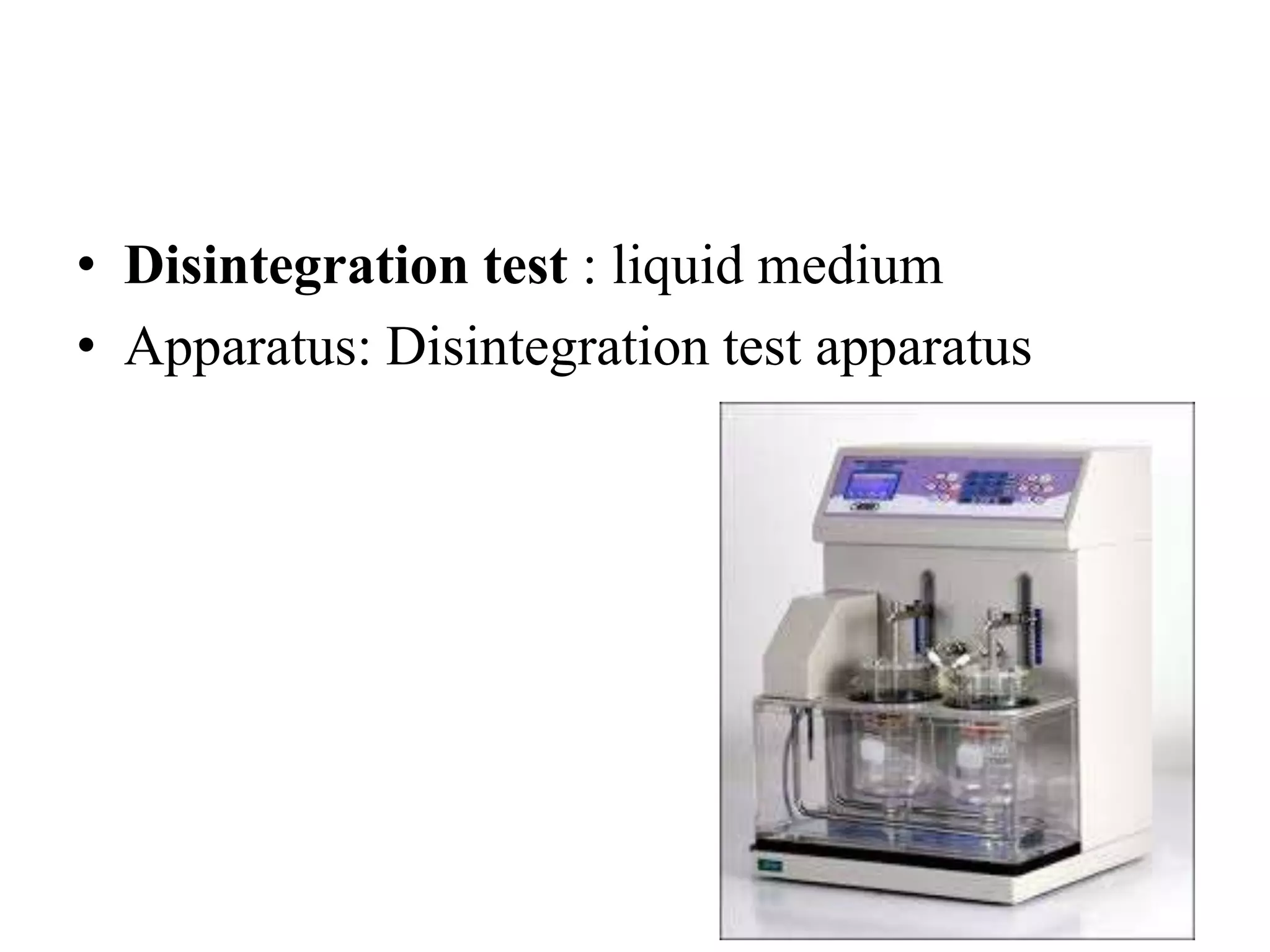
• Disintegration test : liquid medium
• Apparatus: Disintegration test apparatus
• Friability test : how much mechanical stress
tablets are able to withstand during their
manufacturing , distributing and handling
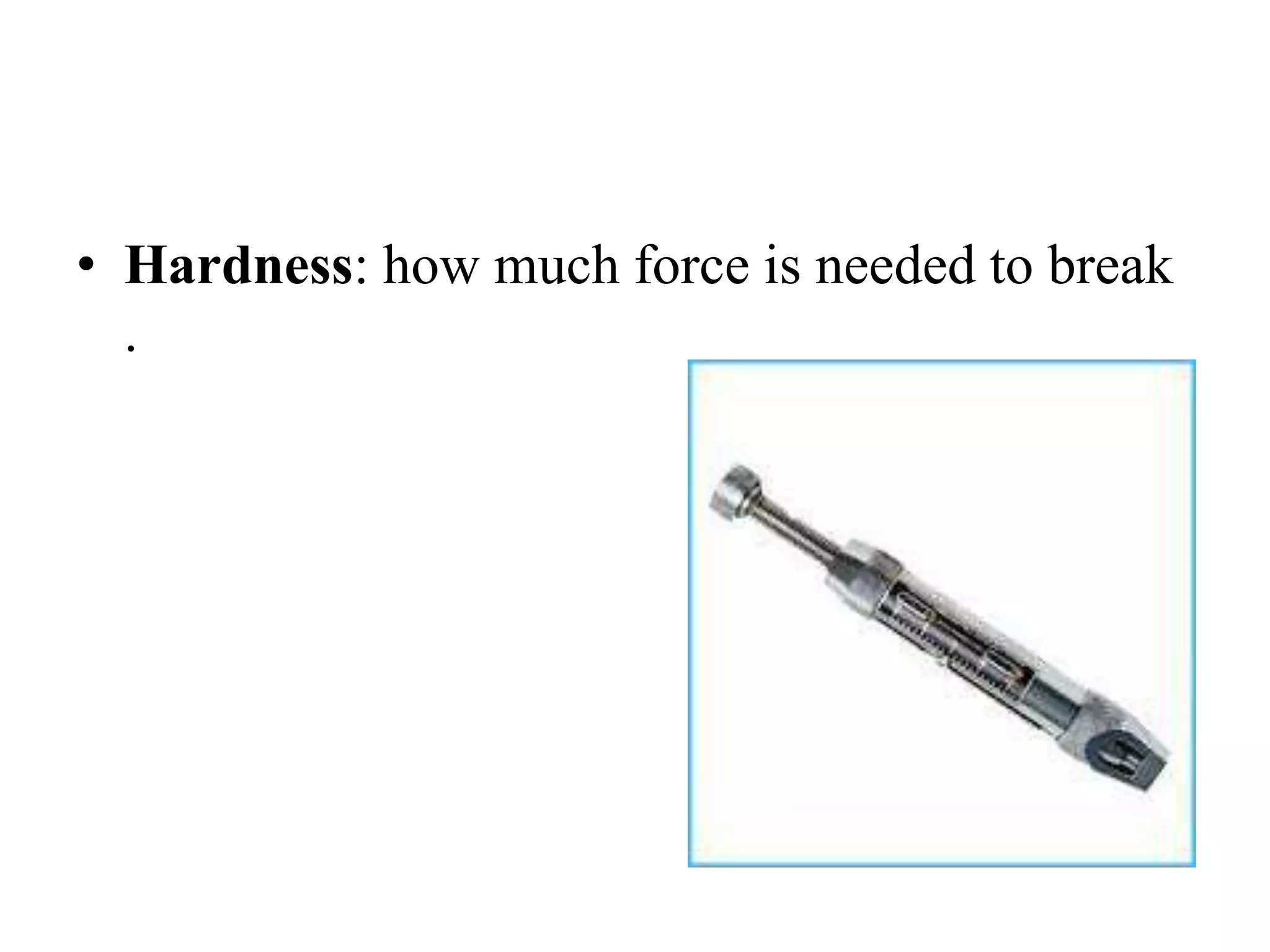
• Hardness: how much force is needed to break
.
• Uniformity of weight:
• Apparatus: Analytical balance
• Tablets which contains <10mg or < 10% W/W
of active ingredient.
• Not applicable to tablets which are containing
trace elements
Parameters for standardization of
Tailas & Ghritas
वपतणवत्स्नेहकल्कः स्यादागुल्या पवमपदणतः।
शब्धहीनोऽपननपनपक्षप्तः स्नेहः पसध्दो भवेतदादा॥
यदा फे नोद्गमस्तैले िैनशापन्तश्च सपिणपर् ।
गन्धवर्णिसोत्िपतदा स्नेहपसपध्दस्तदा भवेत् ।
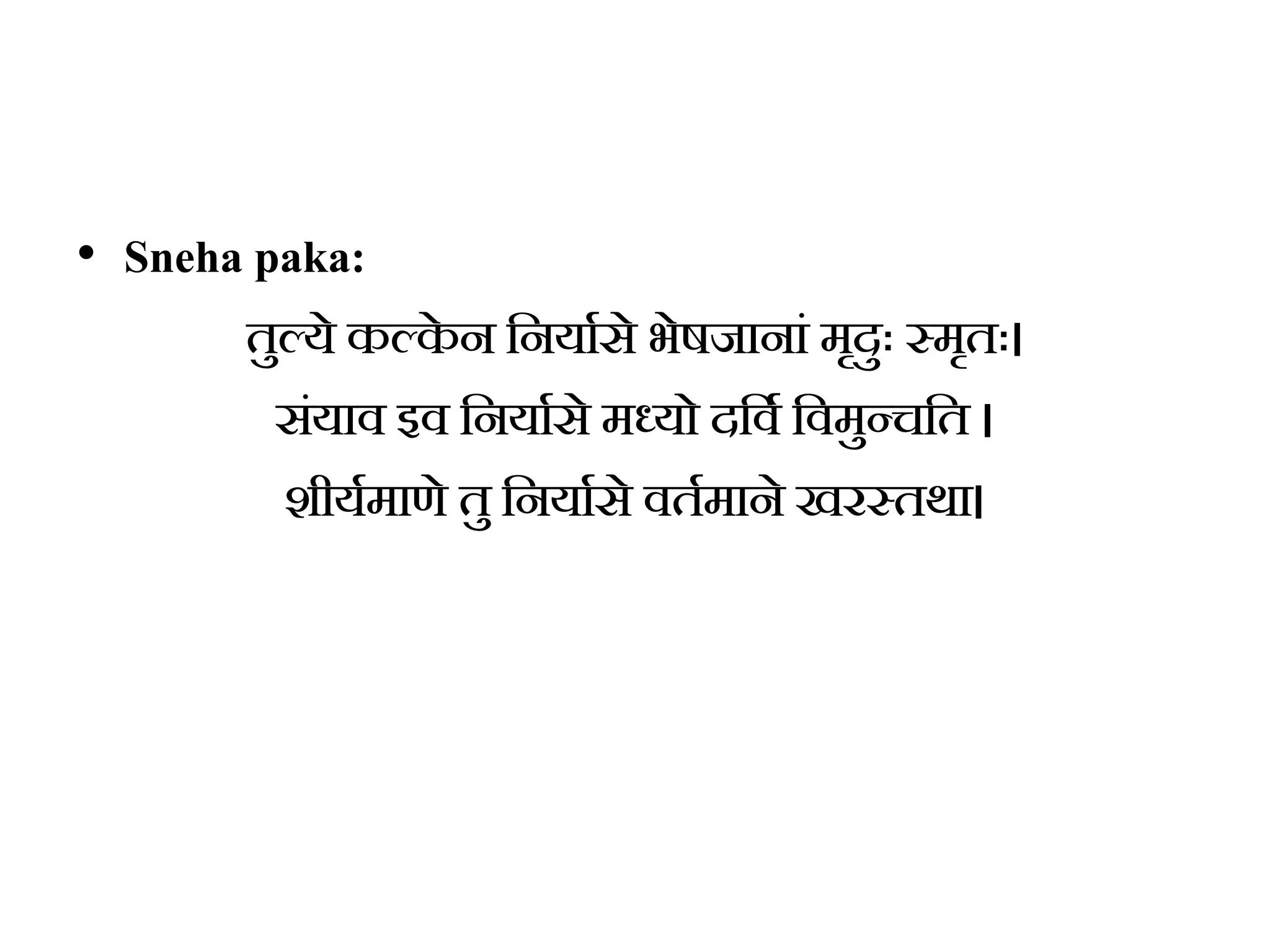
• Sneha paka:
तुल्ये कल्के न पनयाणसे भेर्जानां मृदुः स्मृतः।
संयाव इव पनयाणसे मध्यो दपवण पवमुन्चपत ।
शीयणमार्े तु पनयाणसे वतणमाने खिस्तिा।
Parameters for standardization of
Tailas & Ghritas
• Organoleptic : colour, odour
• Weight /ml
• Viscosity
• Iodine value
• Saponification
• Acid value
• Rancidity : fat oxidization
Iodine Value
• The iodine value of substance is the weight of
iodine absorbed by 100 part by weight of
substance .
• Applicable for liquid substances.
Saponification value
• Number of mg of KOH required to neutralize
the fatty acids, resulting from the complete
hydrolysis of 1 gm of the oil & fat.
Parameters for standardization of
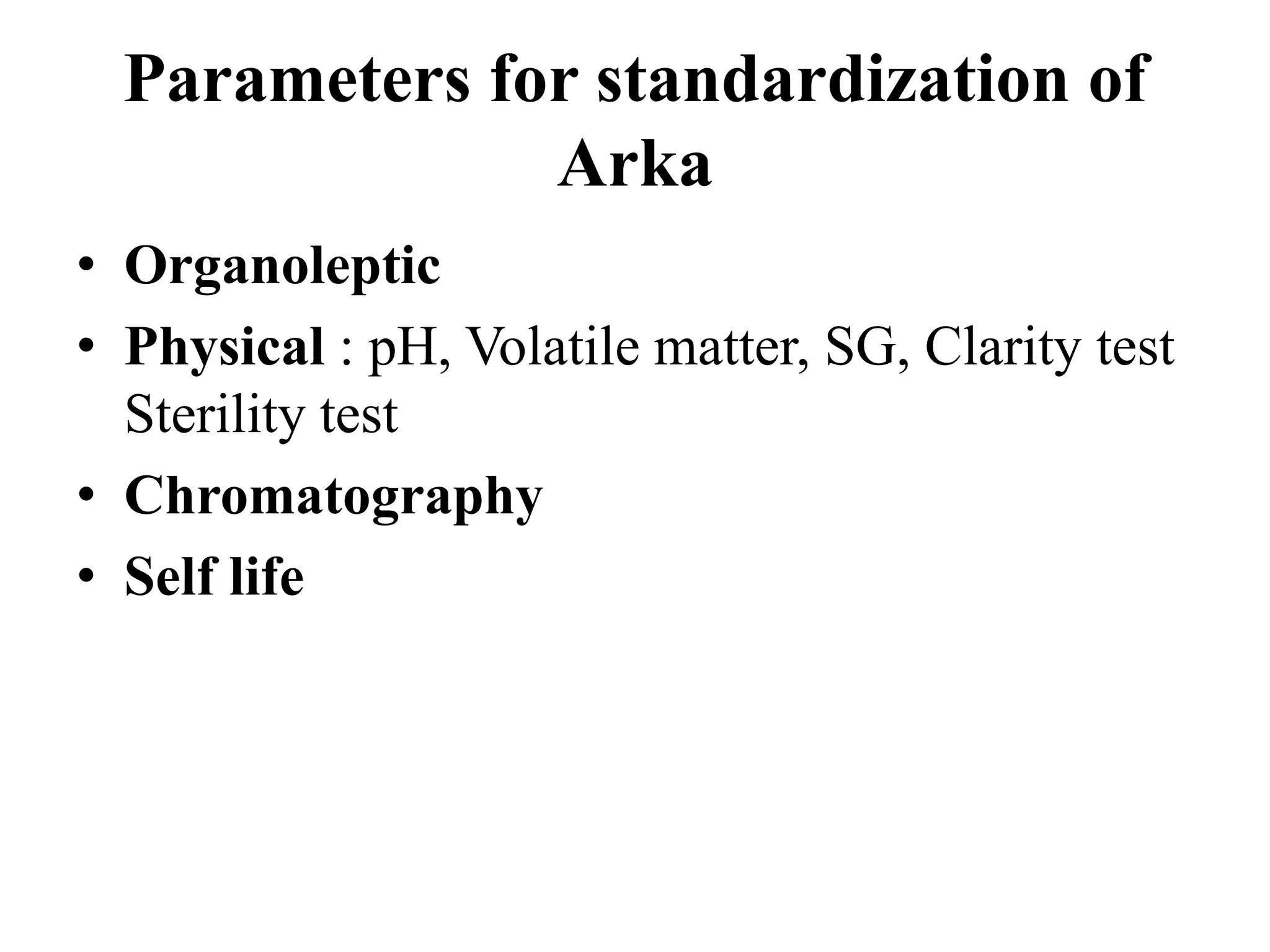
Arka
• Organoleptic
• Physical : pH, Volatile matter, SG, Clarity test
Sterility test
• Chromatography
• Self life
Shelf life assessments
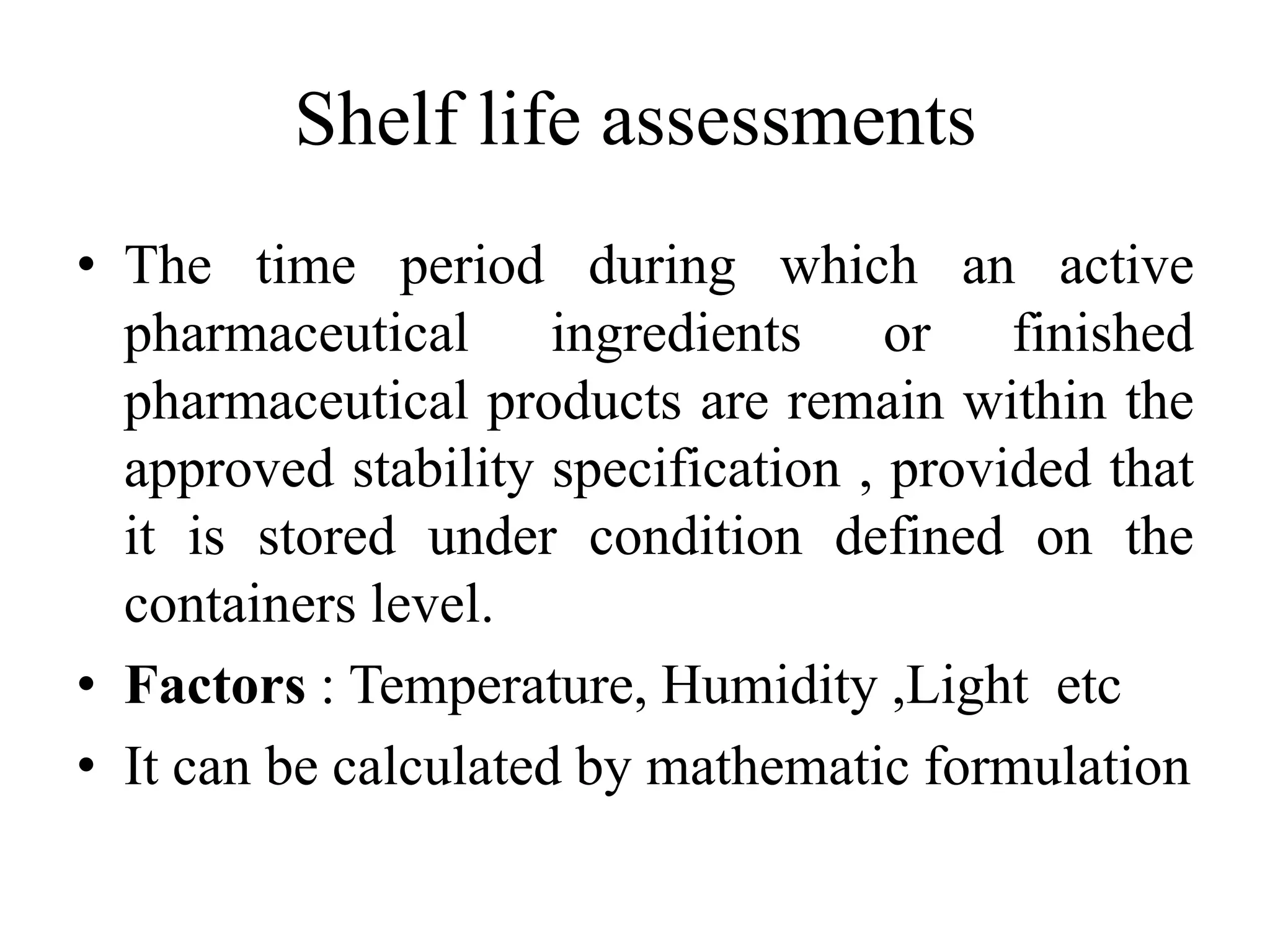
• The time period during which an active
pharmaceutical ingredients or finished
pharmaceutical products are remain within the
approved stability specification , provided that
it is stored under condition defined on the
containers level.
• Factors : Temperature, Humidity ,Light etc
• It can be calculated by mathematic formulation
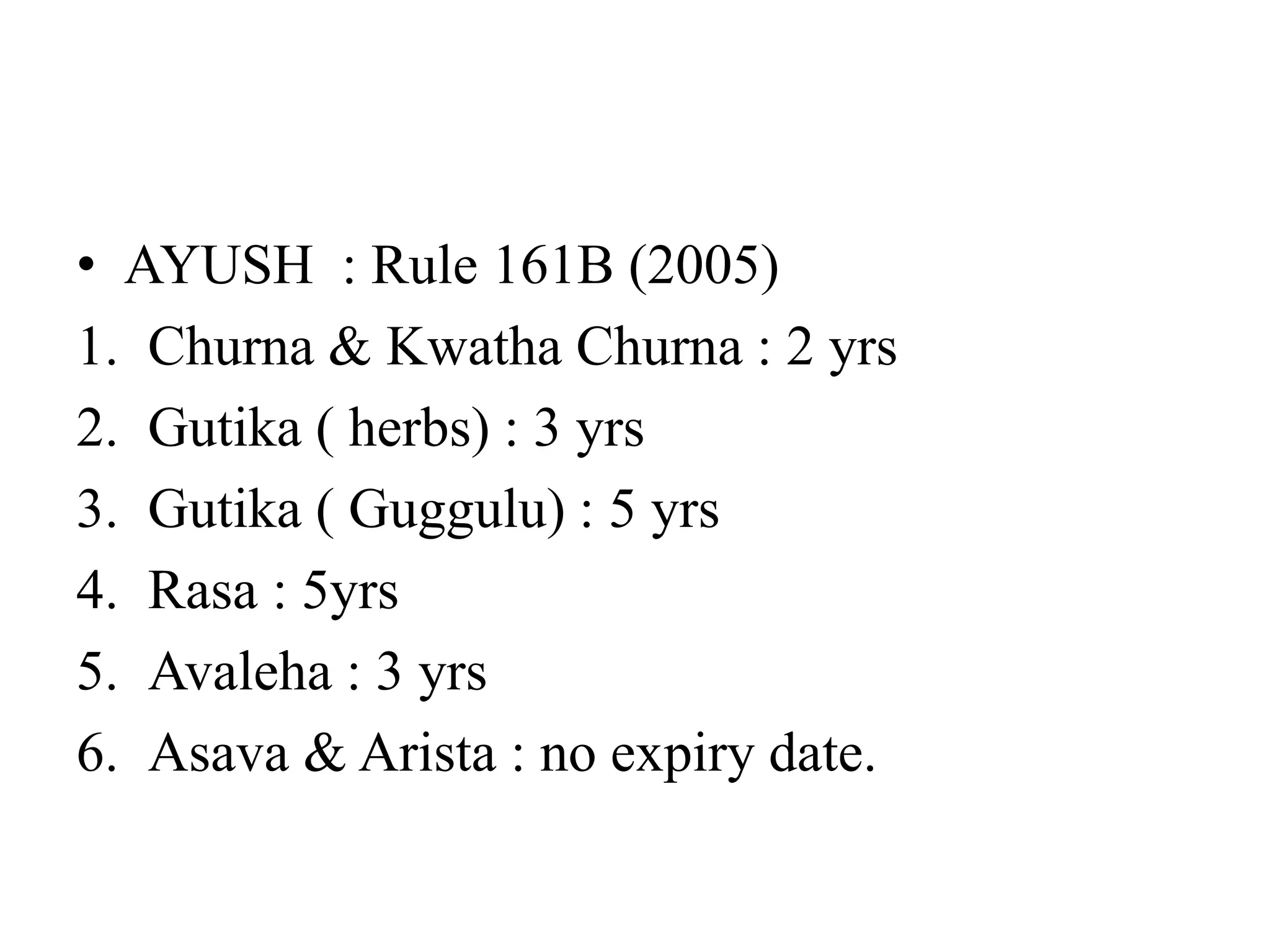
• AYUSH : Rule 161B (2005)
1. Churna & Kwatha Churna : 2 yrs
2. Gutika ( herbs) : 3 yrs
3. Gutika ( Guggulu) : 5 yrs
4. Rasa : 5yrs
5. Avaleha : 3 yrs
6. Asava & Arista : no expiry date.
Thank you

Standardization of ayurvedic formulation

  • 1.
    Standardization of Ayurvedic formulations Dr.Vipin Chaurasiya Pg scholar VPSV Ayurveda College Kottakkal
  • 2.
    Standardization • Standardization isa Numerical value or specific property that quantifies the purity and quality of drugs and formulations. • Standardization of drug means confirmation of its identity and determination of its quality and purity. 2
  • 3.
    • Identity :biological source of drug • Quality : Active constituents • Purity : extent of foreign materials 3
  • 4.
    LEGAL NOTICE OFAFI  Cosmetics Act (1940), Chapter IVA Formulations included in the Ayurvedic Formulary may also be manufactured as per formulae given in various Ayurvedic Classics.
  • 5.
     Standards forthe several single drugs of plant, animal and mineral origin included in the Pharmacopoeial List of Single Drugs included as an Appendix to the Ayurvedic Formulary have yet to be worked out. In the manufacture of medicines included in this Formulary, it should be ensured that the Vaidya - in - charge of the Pharmacy has reasonably satisfied himself about the identity and purity of the drugs. Use of Substitute drugs (Pratinidhi dravyas), wherever the original drugs are not available, is permissible in the Ayurvedic classics and practice. It must, however, be ensured that only the substitutes as are mentioned in the texts or included in the Formulary are used.
  • 6.
    Standardization of Churna •Ayurvedic Parameters : शुष्कपिष्टः सुक्ष्मतान्तविटच्युतश्चूर्णः। तस्यसमस्तद्रव्यािरित्यागादाप्लुतोियोगाच्च कल्कादभेदः॥ (A.S.K.) अत्यन्तशुष्कं यद्द्रव्यं सुपिष्टं वस्त्रगापलतं । तत्स्याच्चूर्े िजःक्षोदस्तन्मात्रा कर्णसंपमता ॥ (S.S.M)
  • 7.
    Modern Parameters • Organolepticevaluation • Microscopic evaluation • Physical analysis • Phytochemical analysis • Particle size • Test for heavy metals & toxins • Microbial contamination • Test for specific pathogen • Test for alfa toxin • Pesticide residue • Shelf life
  • 8.
    Standardization of Churna Organolepticevaluation: • Colour • Odour • Taste Microscopic evaluation
  • 9.
    Standardization of Churna •Physical evaluation: • Loss on drying at 105°c • Total ash • Acid insoluble ash • Water soluble extractive • pH
  • 10.
    Standardization of Churna Phytochemicalevaluation • Qualitative analysis • TLC • HPTLC & HPLC
  • 11.
    Standardization of Churna Particlesize : • Churna : 80-120 mesh. • Kwatha Churna : 40-60 mesh.
  • 12.
    Standardization of Churna Microbialcontamination • Total aerobic count • Enterobacteria count • Total fungal count Test for specific pathogen • E.coli • Salrnonella spp. • Pseudomonas spp.
  • 13.
    Standardization of Churna Pesticideresidue: Methods : Extraction & Purification Pesticides: • Organochlorine pesticide • Organophosphorus pasticides • Pyrethroids
  • 14.
    Standardization of Churna Tastefor aflatoxins by TLC:- B1,B2,G1,G2 Shelf life
  • 15.
    Parameters for Standardizationof Asava And Arishta Ayurvedic parameters : • Clear liquid without any forth • Pleasant aromatic odour of alcohol • Should not have sour taste • No effervescence sound • Additive sink to the bottom • Burning candle burns brightly when placed in or just above the Sandhana Paatra
  • 16.
    Parameters for Standardizationof Asava And Arishta • Organoleptic evaluation • Physical evaluation:- pH, Specific gravity at 25°c and total solid • Alcohol content • Reducing sugar • Non- reducing Sugar • Test for Methanol • Total Acidity • Chromatography • Shelf life • Viscosity
  • 17.
    Acid Value • Theacid value is the number of mg of Potassium hydroxide required to neutralize the free acid in 1gm of substance.
  • 18.
    • Viscosity: Resistanceto flow • Apparatus : viscometer
  • 19.
    Parameters for standardizationof Avaleha सुिक्वेतन्तुमत्वं स्यदवलेहोऽप्सु मज्जपत । पसपिित्वं िीडते मुद्रागन्धवर्णिसोद्भवः ॥ 1. Can be lifted in a spoon as treacle 2. When pressed between fingers, shows threadness when stretched 3. Sinks in water without getting easily dissolved 4. Finger leaves impression on it
  • 20.
    Parameters for standardizationof Avaleha • Organoleptic • Physical • Reducing sugar • Total sugar • Chromatography • Test for heavy metals • Microbial contamination • Shelf life
  • 21.
    Parameters for standardizationof Avaleha Physical evaluation: • Loss on drying at 105°c • Total ash • Acid insoluble ash • pH • Specific gravity • Total solid contents • Fat contents
  • 22.
    Parameters for standardizationof Vati & Gutika • Organoleptic Parameters : 1. colour 2. Odour • Total sugar • Reducing sugar • Phytochemical assessment
  • 23.
    Parameters for standardizationof Vati & Gutika • Particle size • Identification : Microscopy , HPTLC & TLC • Test for Heavy metals & toxins • Microbial contamination • Pesticide residue
  • 24.
    Parameters for standardizationof Vati & Gutika Physical evaluation: • Ash value • Acid insoluble ash • Water insoluble ash • Alcohol soluble extractive • pH • Volatile oil • Melting temperature • Loss on drying
  • 25.
    Parameters for standardizationof Vati & Gutika • Pharmaceutical parameters 1. Hardness 2. Uniformity in weight 3. Uniformity in diameter 4. Friability test 5. Dissolution time 6. Disintegration time
  • 26.
    • Disintegration test: liquid medium • Apparatus: Disintegration test apparatus
  • 27.
    • Friability test: how much mechanical stress tablets are able to withstand during their manufacturing , distributing and handling
  • 28.
    • Hardness: howmuch force is needed to break .
  • 29.
    • Uniformity ofweight: • Apparatus: Analytical balance • Tablets which contains <10mg or < 10% W/W of active ingredient. • Not applicable to tablets which are containing trace elements
  • 30.
    Parameters for standardizationof Tailas & Ghritas वपतणवत्स्नेहकल्कः स्यादागुल्या पवमपदणतः। शब्धहीनोऽपननपनपक्षप्तः स्नेहः पसध्दो भवेतदादा॥ यदा फे नोद्गमस्तैले िैनशापन्तश्च सपिणपर् । गन्धवर्णिसोत्िपतदा स्नेहपसपध्दस्तदा भवेत् ।
  • 31.
    • Sneha paka: तुल्येकल्के न पनयाणसे भेर्जानां मृदुः स्मृतः। संयाव इव पनयाणसे मध्यो दपवण पवमुन्चपत । शीयणमार्े तु पनयाणसे वतणमाने खिस्तिा।
  • 32.
    Parameters for standardizationof Tailas & Ghritas • Organoleptic : colour, odour • Weight /ml • Viscosity • Iodine value • Saponification • Acid value • Rancidity : fat oxidization
  • 33.
    Iodine Value • Theiodine value of substance is the weight of iodine absorbed by 100 part by weight of substance . • Applicable for liquid substances.
  • 34.
    Saponification value • Numberof mg of KOH required to neutralize the fatty acids, resulting from the complete hydrolysis of 1 gm of the oil & fat.
  • 35.
    Parameters for standardizationof Arka • Organoleptic • Physical : pH, Volatile matter, SG, Clarity test Sterility test • Chromatography • Self life
  • 36.
    Shelf life assessments •The time period during which an active pharmaceutical ingredients or finished pharmaceutical products are remain within the approved stability specification , provided that it is stored under condition defined on the containers level. • Factors : Temperature, Humidity ,Light etc • It can be calculated by mathematic formulation
  • 37.
    • AYUSH :Rule 161B (2005) 1. Churna & Kwatha Churna : 2 yrs 2. Gutika ( herbs) : 3 yrs 3. Gutika ( Guggulu) : 5 yrs 4. Rasa : 5yrs 5. Avaleha : 3 yrs 6. Asava & Arista : no expiry date.
  • 38.