


Dr. Dhanya.R
Lecturer
Dept. of Dravyaguna vijnana
S.N.K.D Trust’s Nallasopara
Ayurveda MedicalCollege
Important methods in quality control and
standardization of Ayurvedic medicines
Introduction
• Quality control- need of the hour
• Present protocol for testing of Ayurveda
products contain various parameters
• PURPOSE OF THESE TESTS
• identify the drug
• detect adulteration/substitution
• provide reference standards for future purposes.
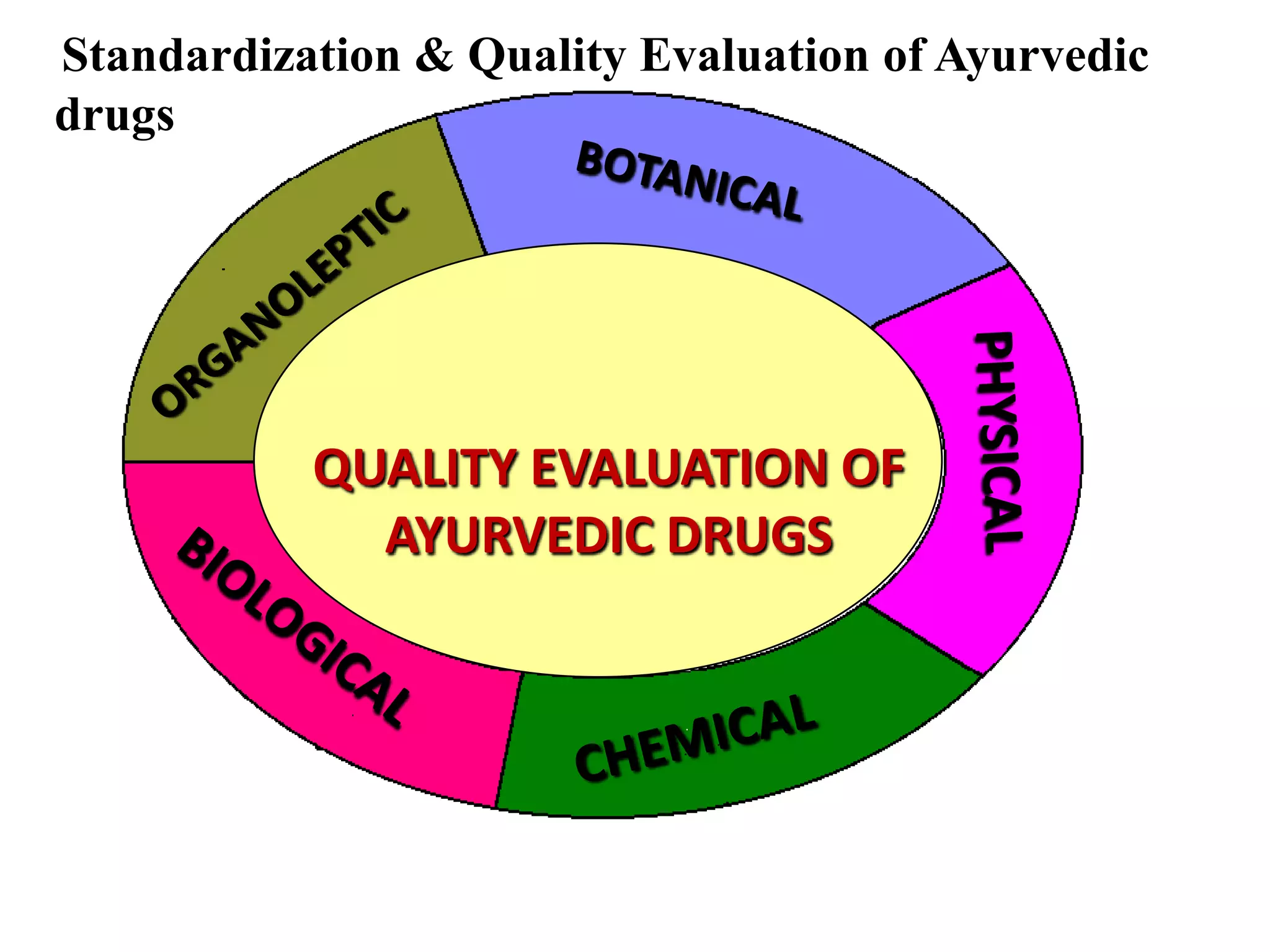
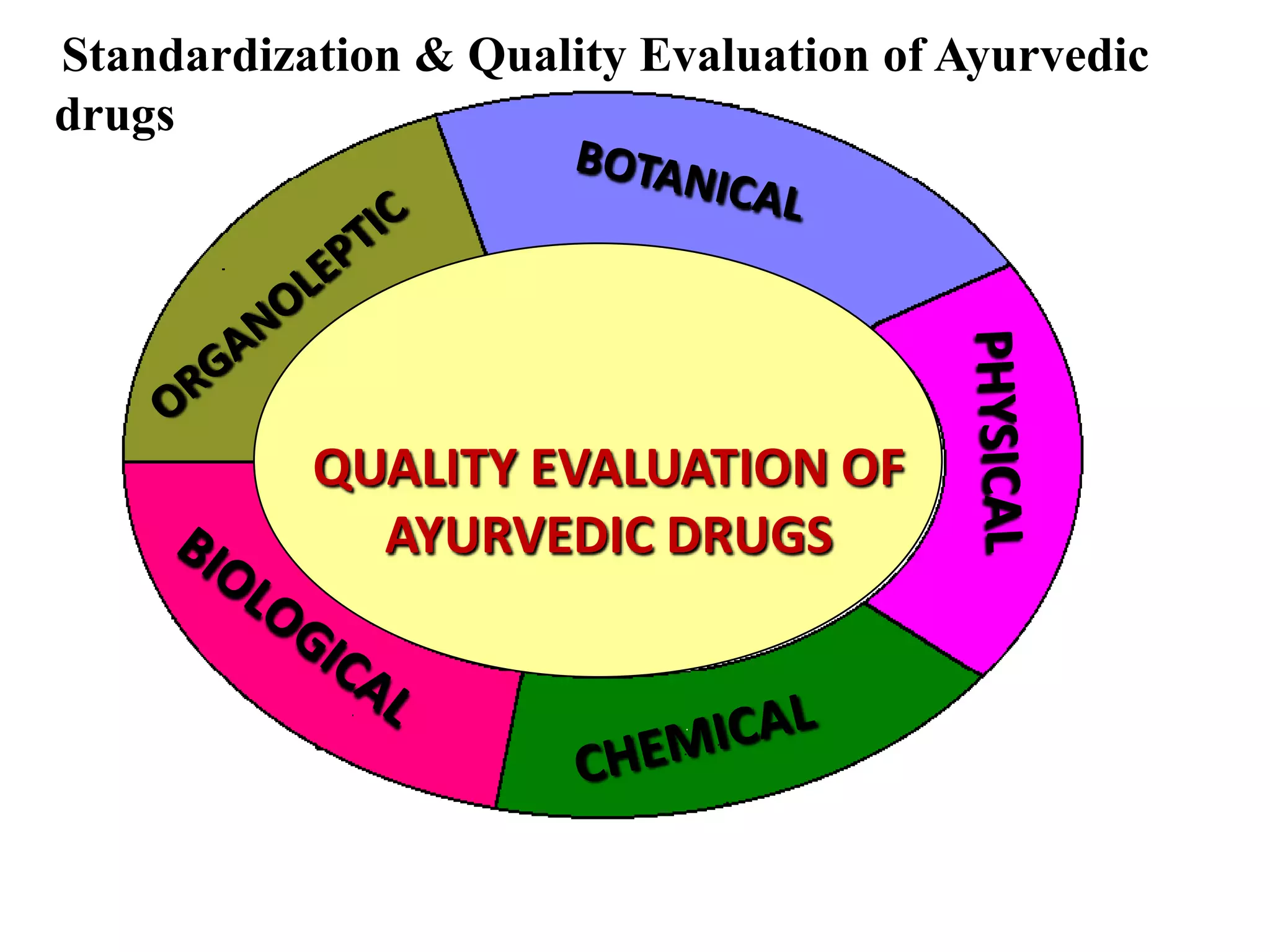
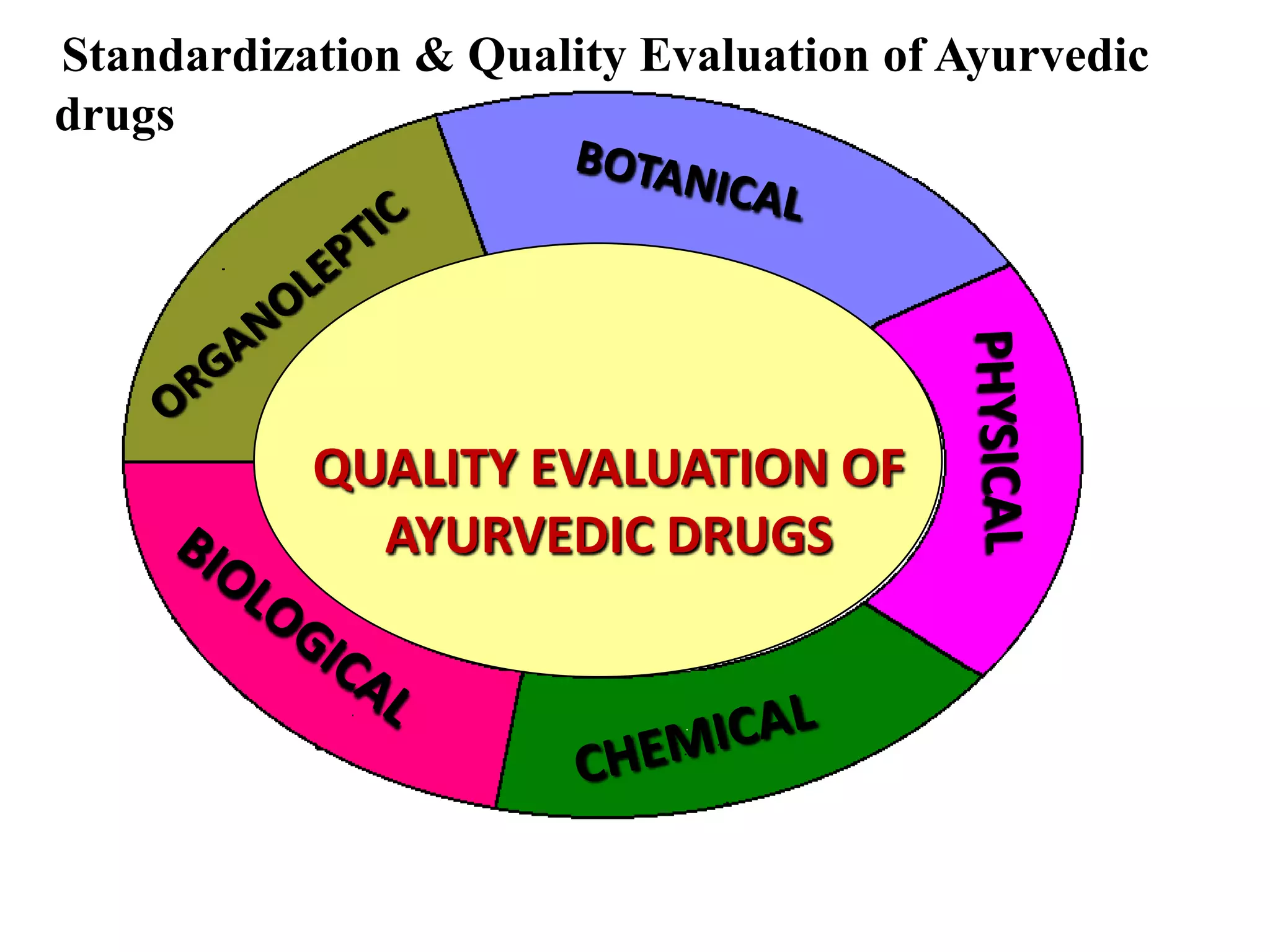
Standardization & Quality Evaluation of Ayurvedic
drugs
QUALITY EVALUATION OF
AYURVEDIC DRUGS
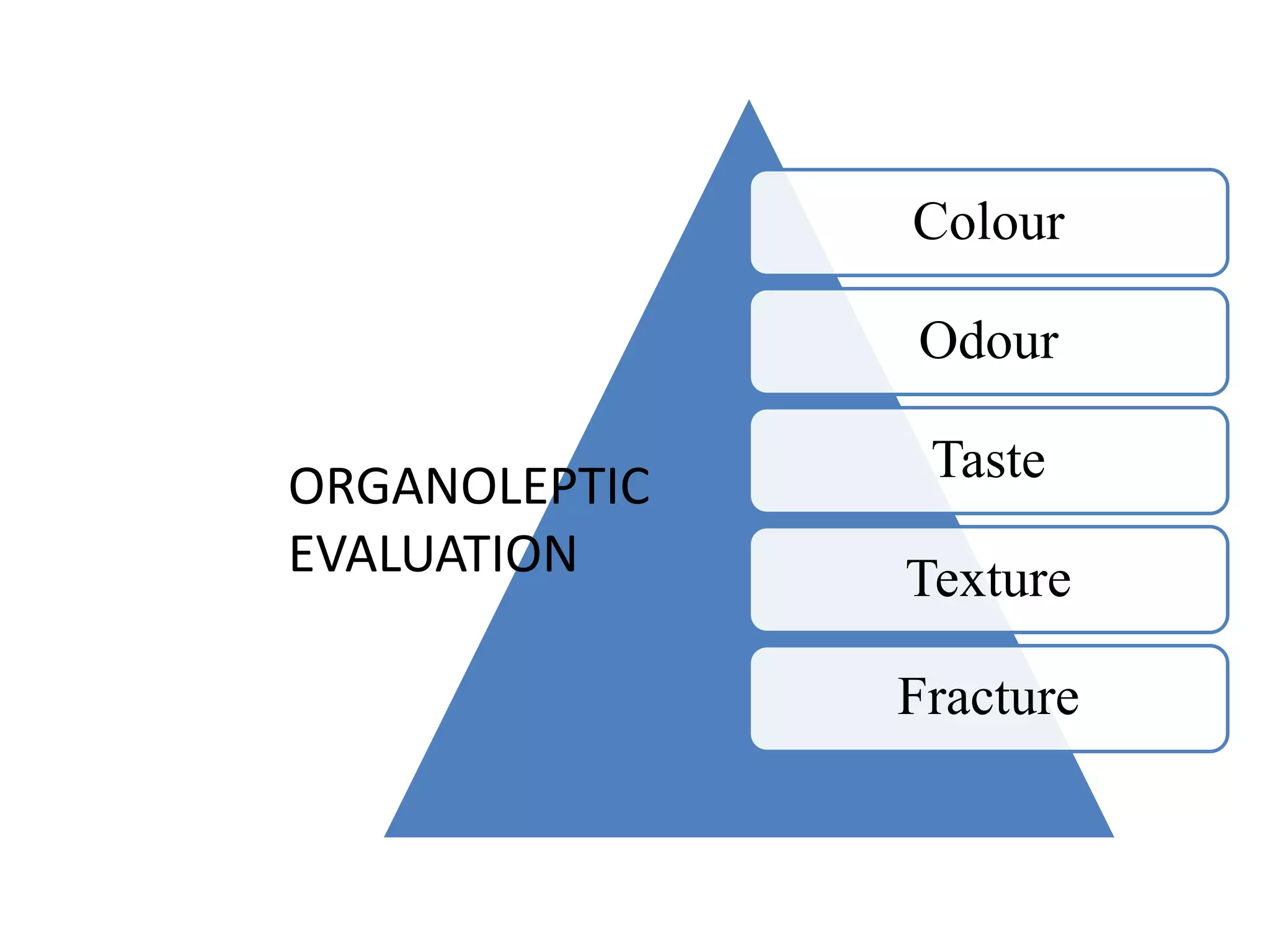
Colour
Odour
Taste
Texture
Fracture
ORGANOLEPTIC
EVALUATION
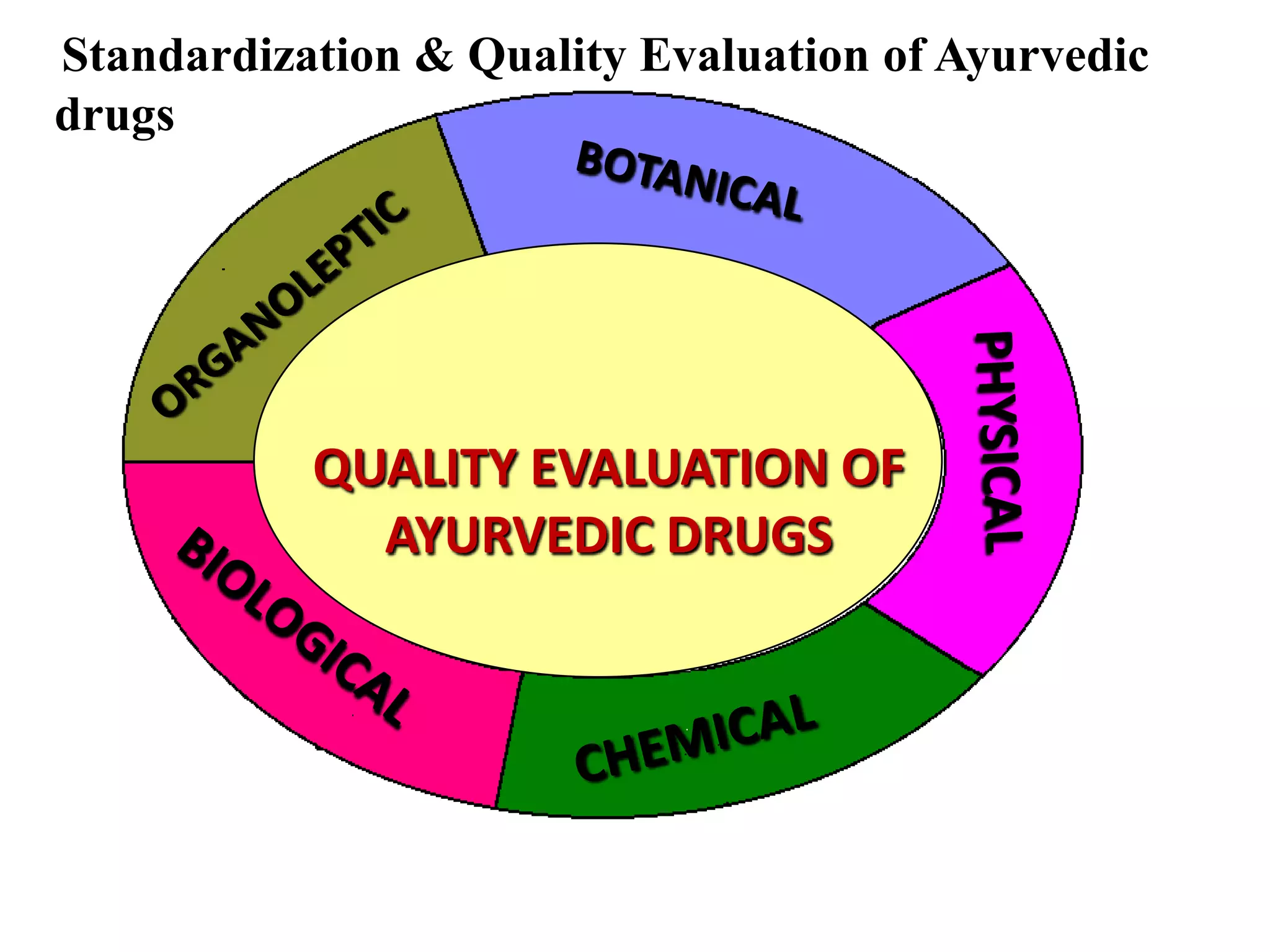
Standardization & Quality Evaluation of Ayurvedic
drugs
QUALITY EVALUATION OF
AYURVEDIC DRUGS
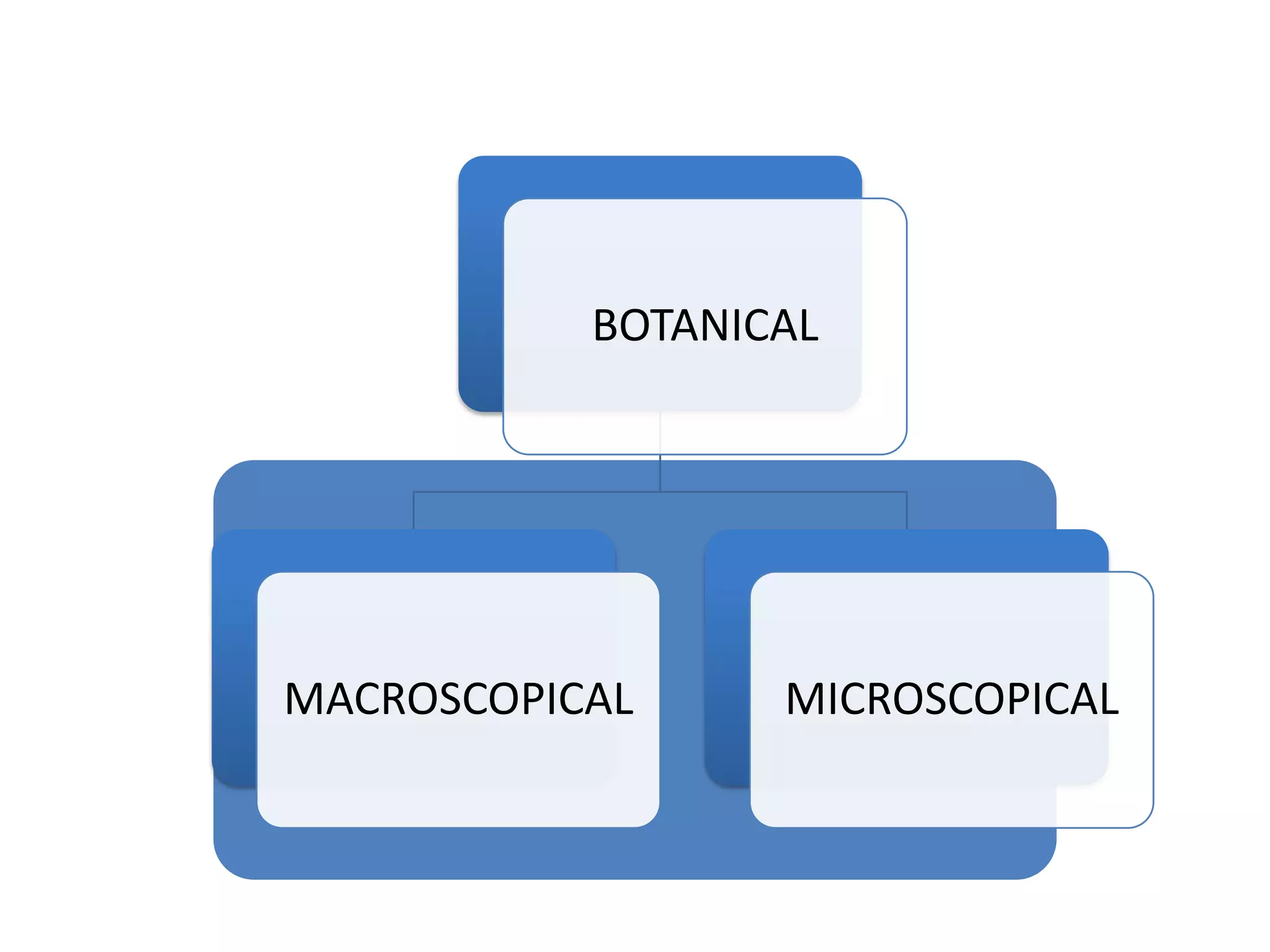
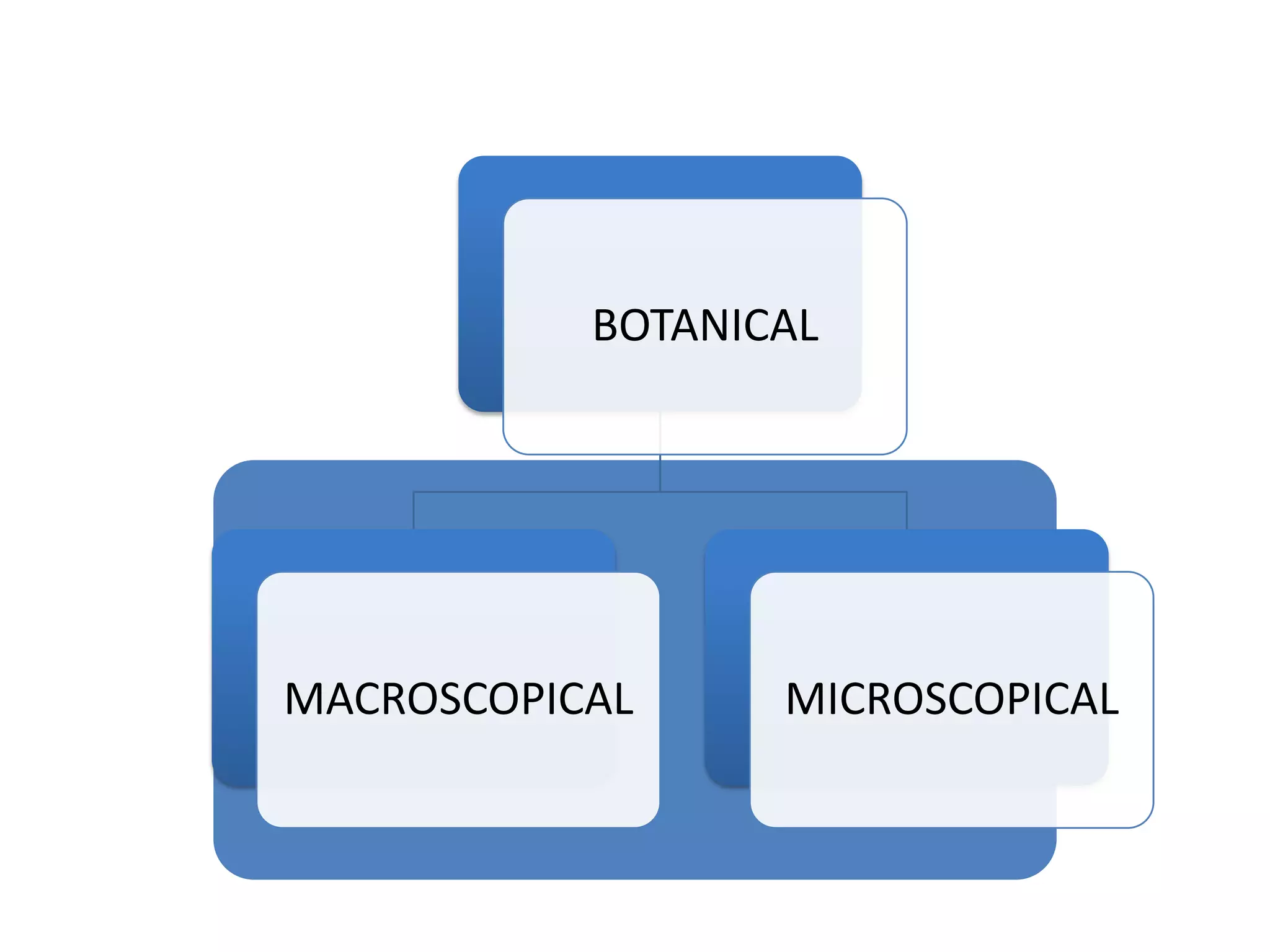
BOTANICAL
MACROSCOPICAL MICROSCOPICAL
Standardization & Quality Evaluation of Ayurvedic
drugs
QUALITY EVALUATION OF
AYURVEDIC DRUGS
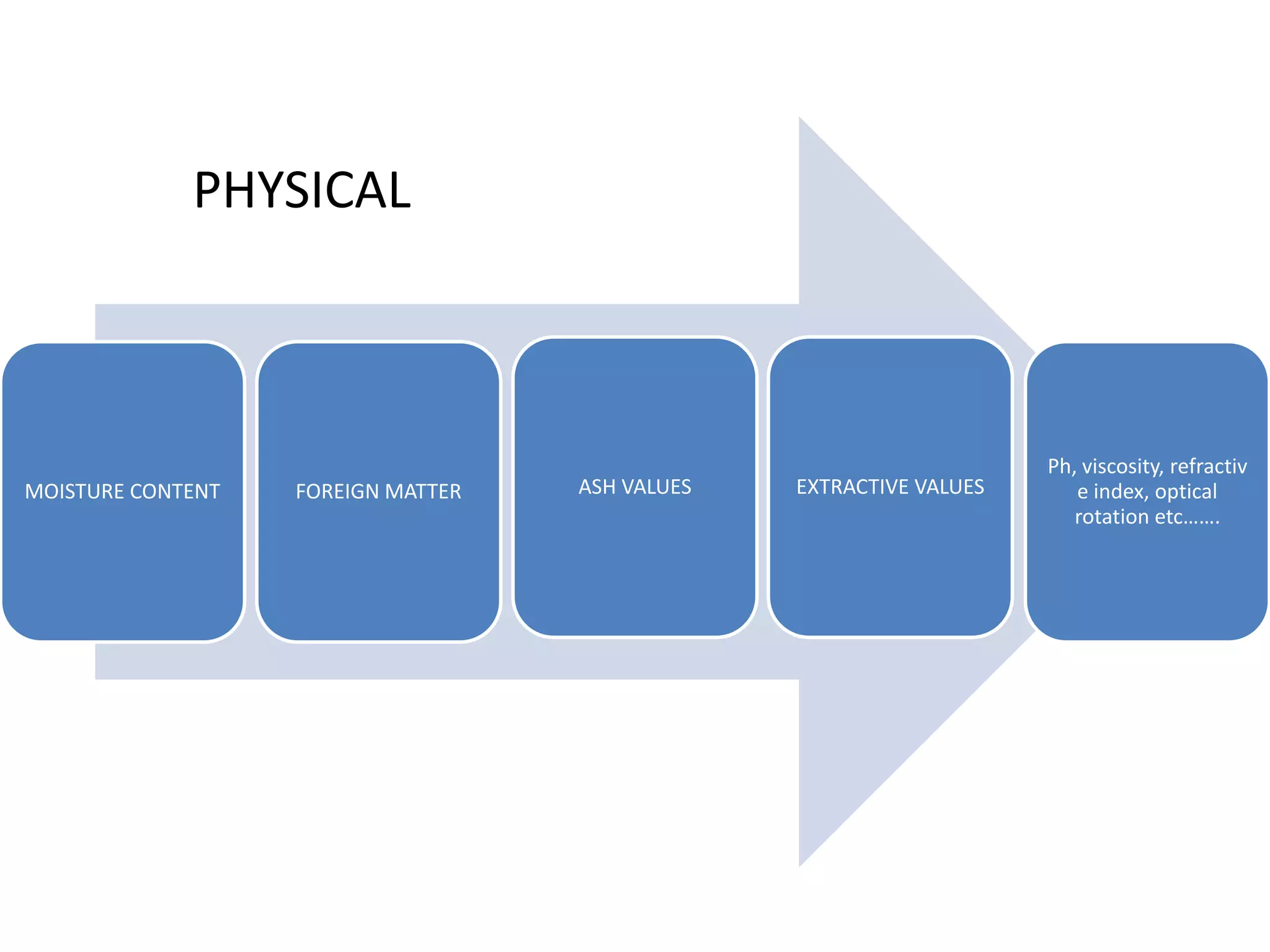
MOISTURE CONTENT FOREIGN MATTER ASH VALUES EXTRACTIVE VALUES
Ph, viscosity, refractiv
e index, optical
rotation etc…….
PHYSICAL
Standardization & Quality Evaluation of Ayurvedic
drugs
QUALITY EVALUATION OF
AYURVEDIC DRUGS
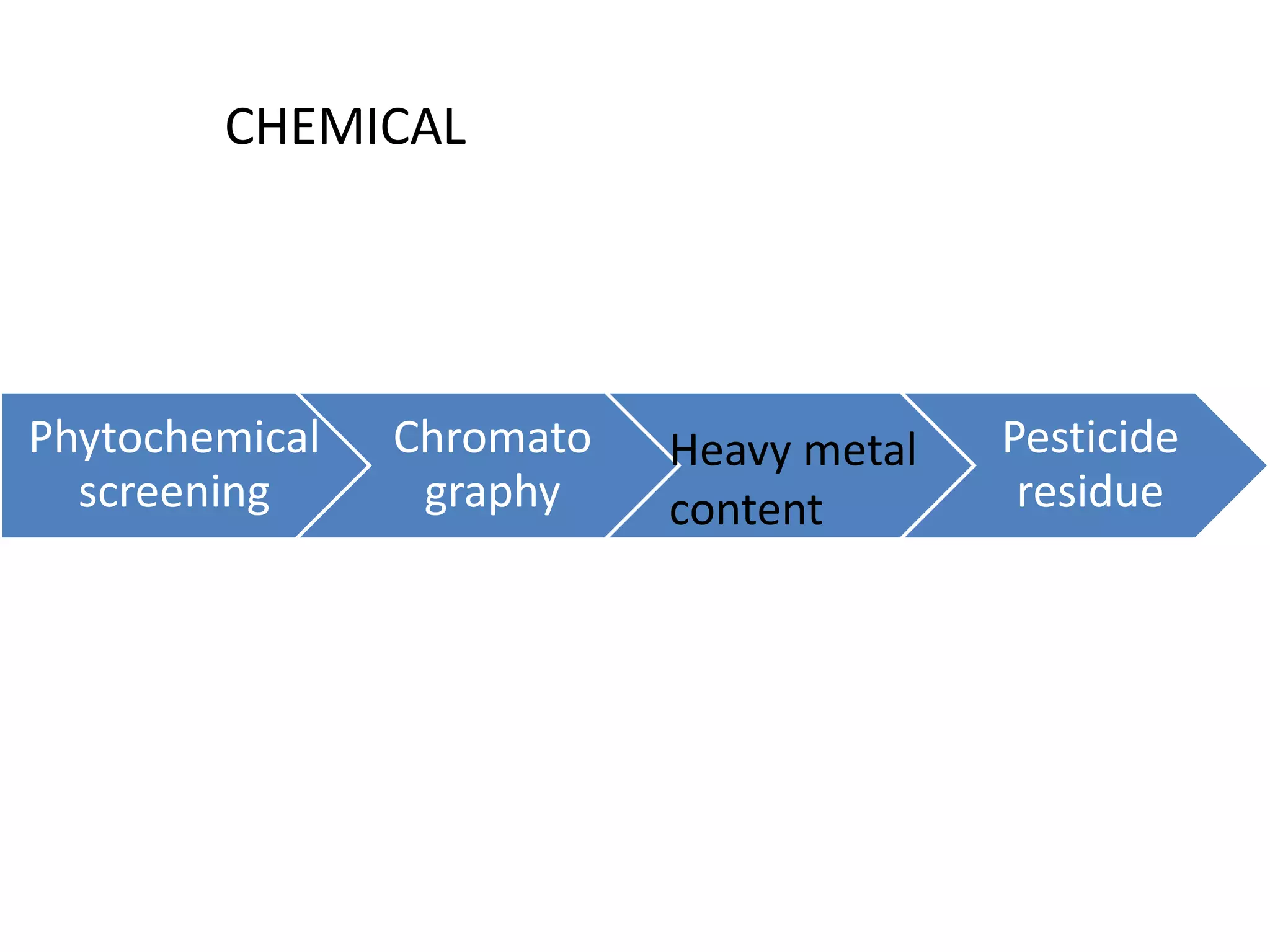
Phytochemical
screening
Chromato
graphy
Pesticide
residue
Heavy metal
content
CHEMICAL
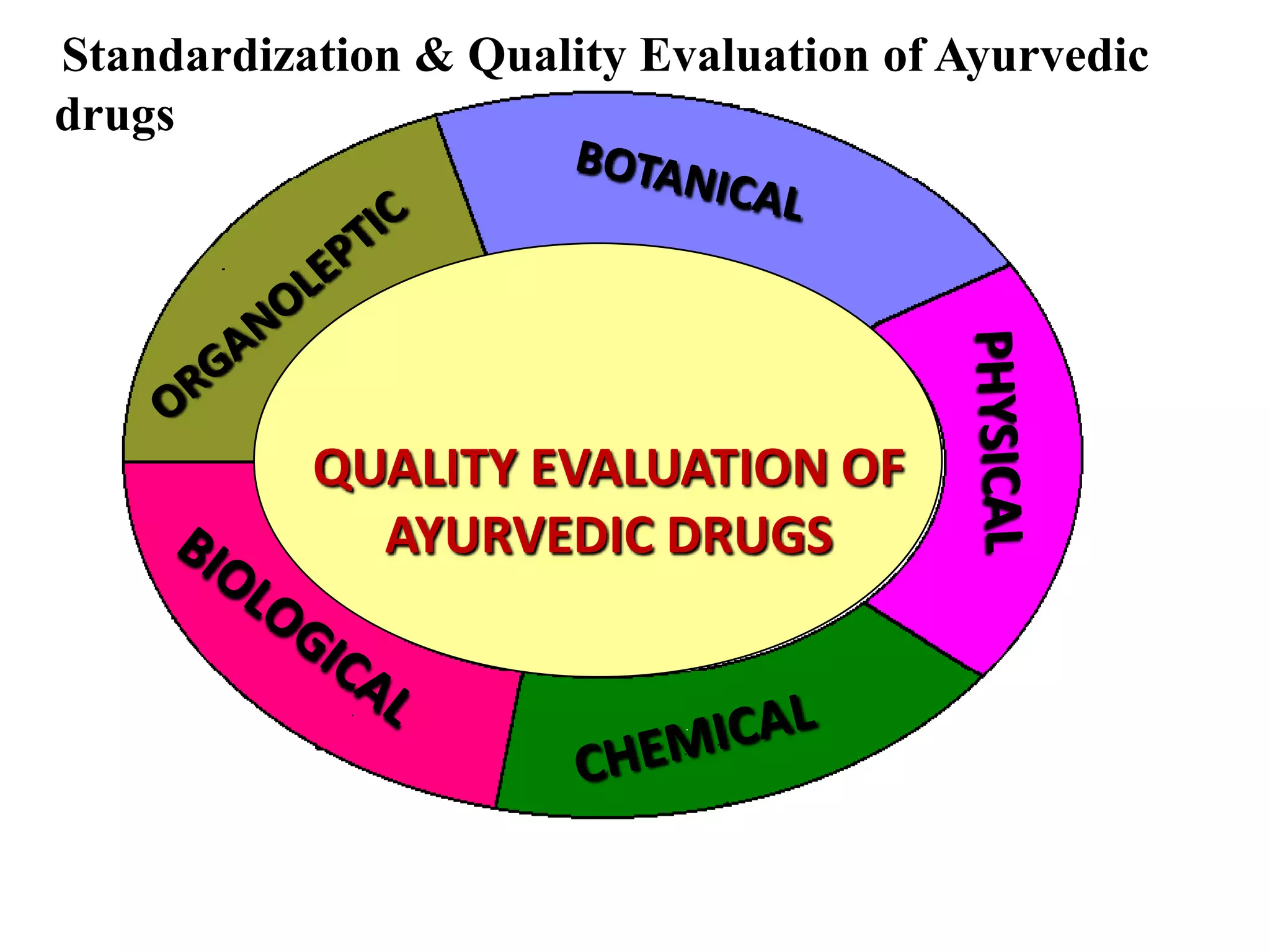
Standardization & Quality Evaluation of Ayurvedic
drugs
QUALITY EVALUATION OF
AYURVEDIC DRUGS
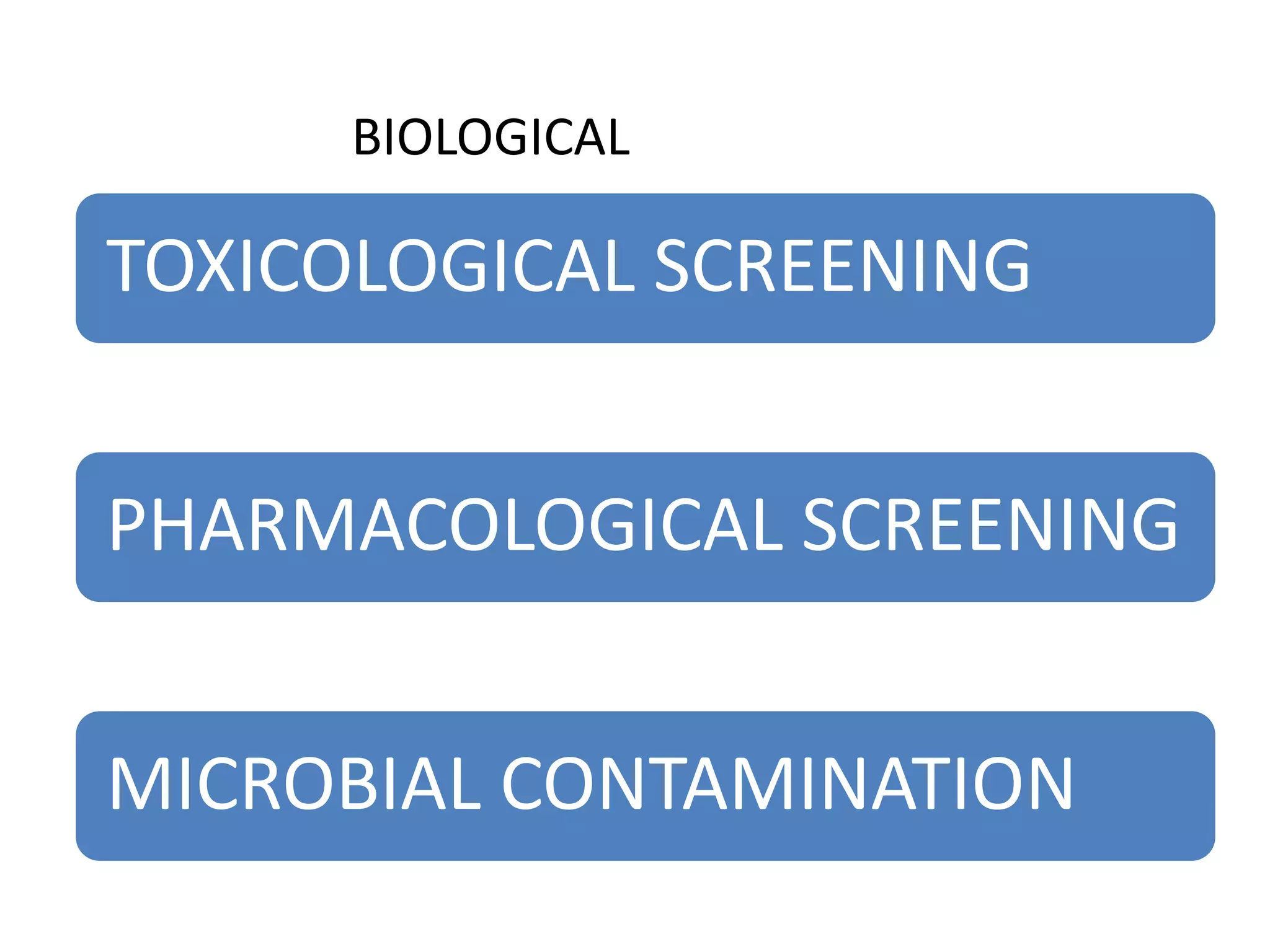
TOXICOLOGICAL SCREENING
PHARMACOLOGICAL SCREENING
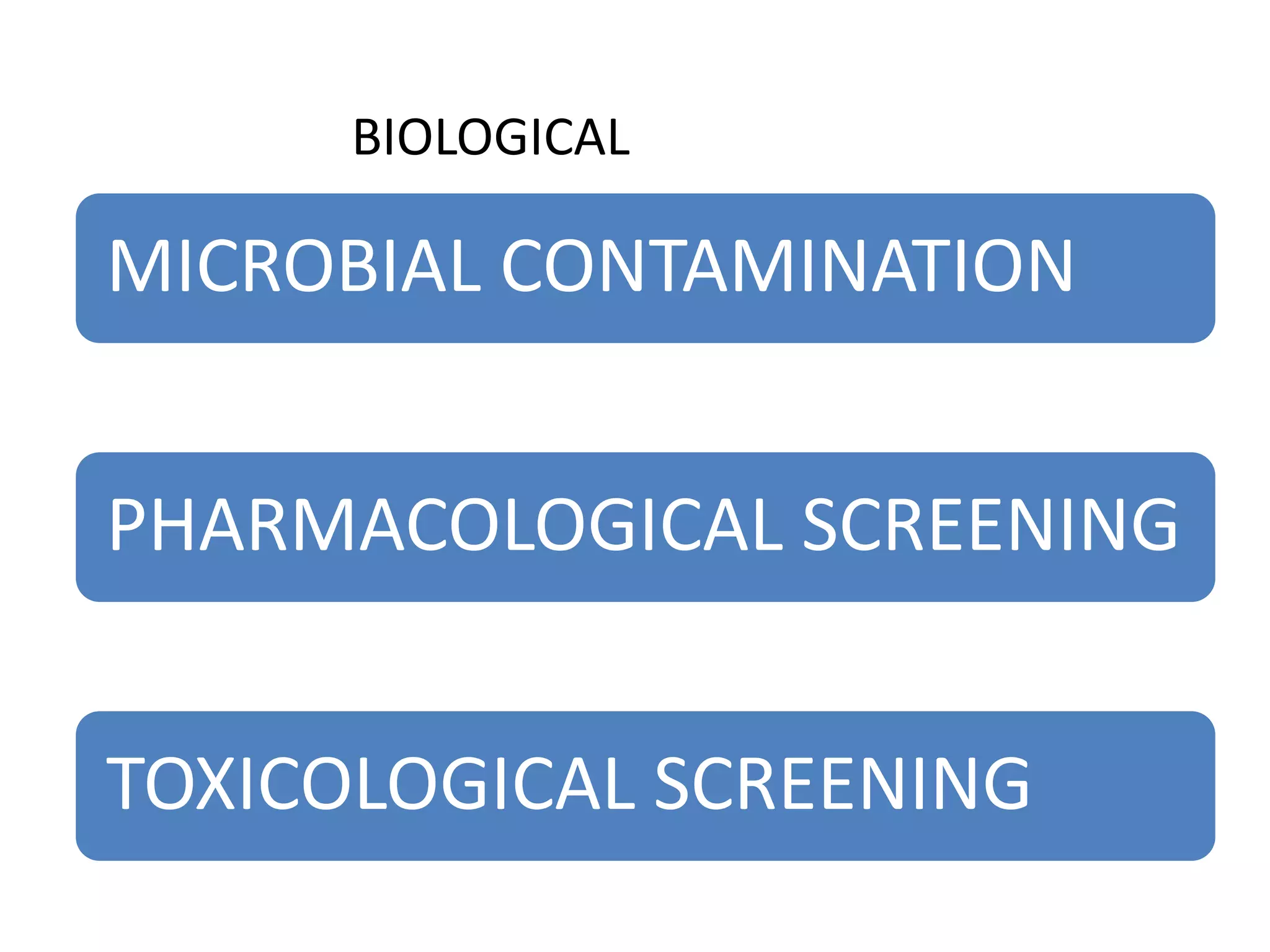
MICROBIAL CONTAMINATION
BIOLOGICAL
ORGANOLEPTIC EVALUATION
• Colour
• Odour
• Taste
• Texture
• Fracture
• Use- identification of drug
detection of adulteration
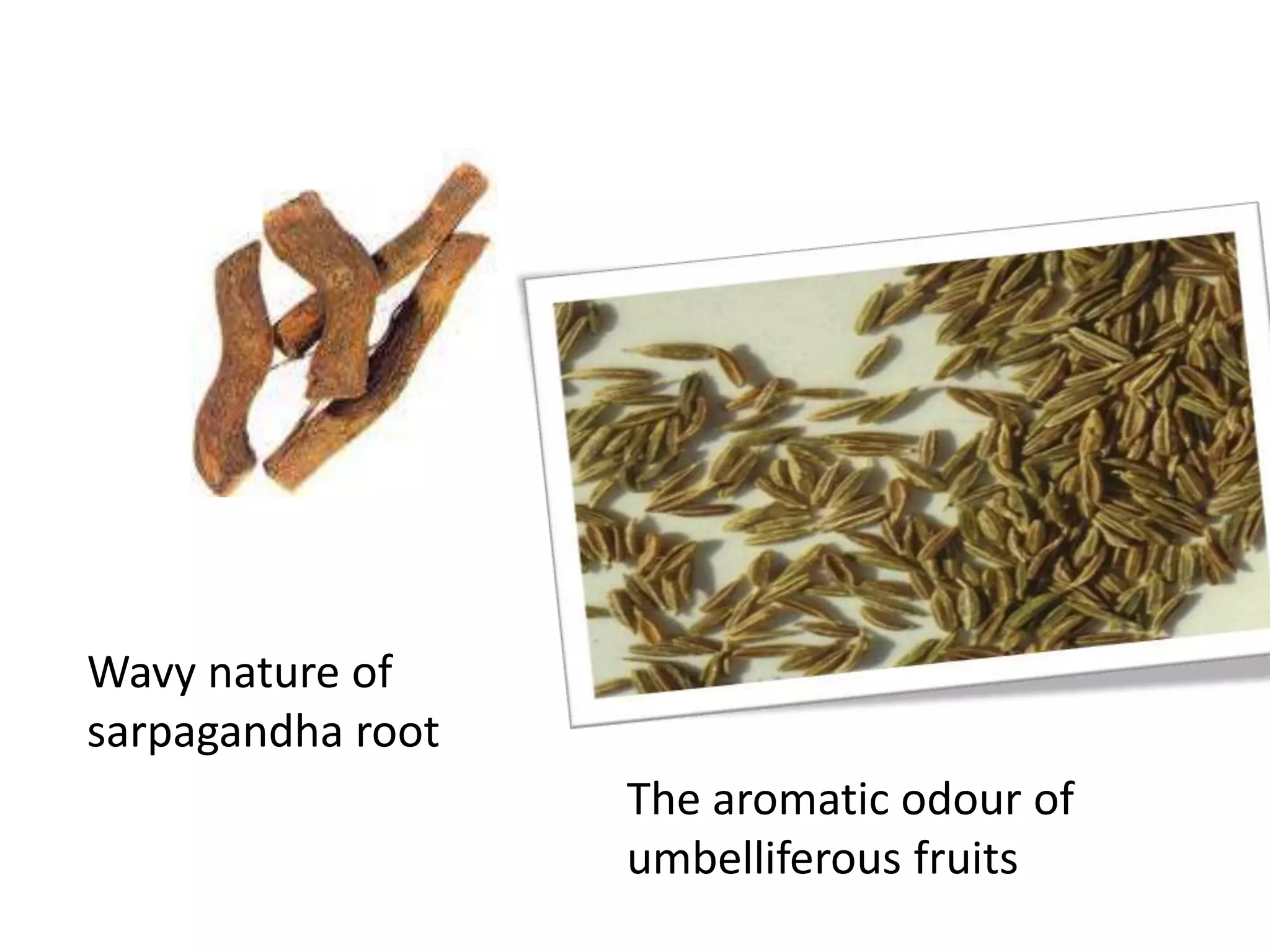
Wavy nature of
sarpagandha root
The aromatic odour of
umbelliferous fruits
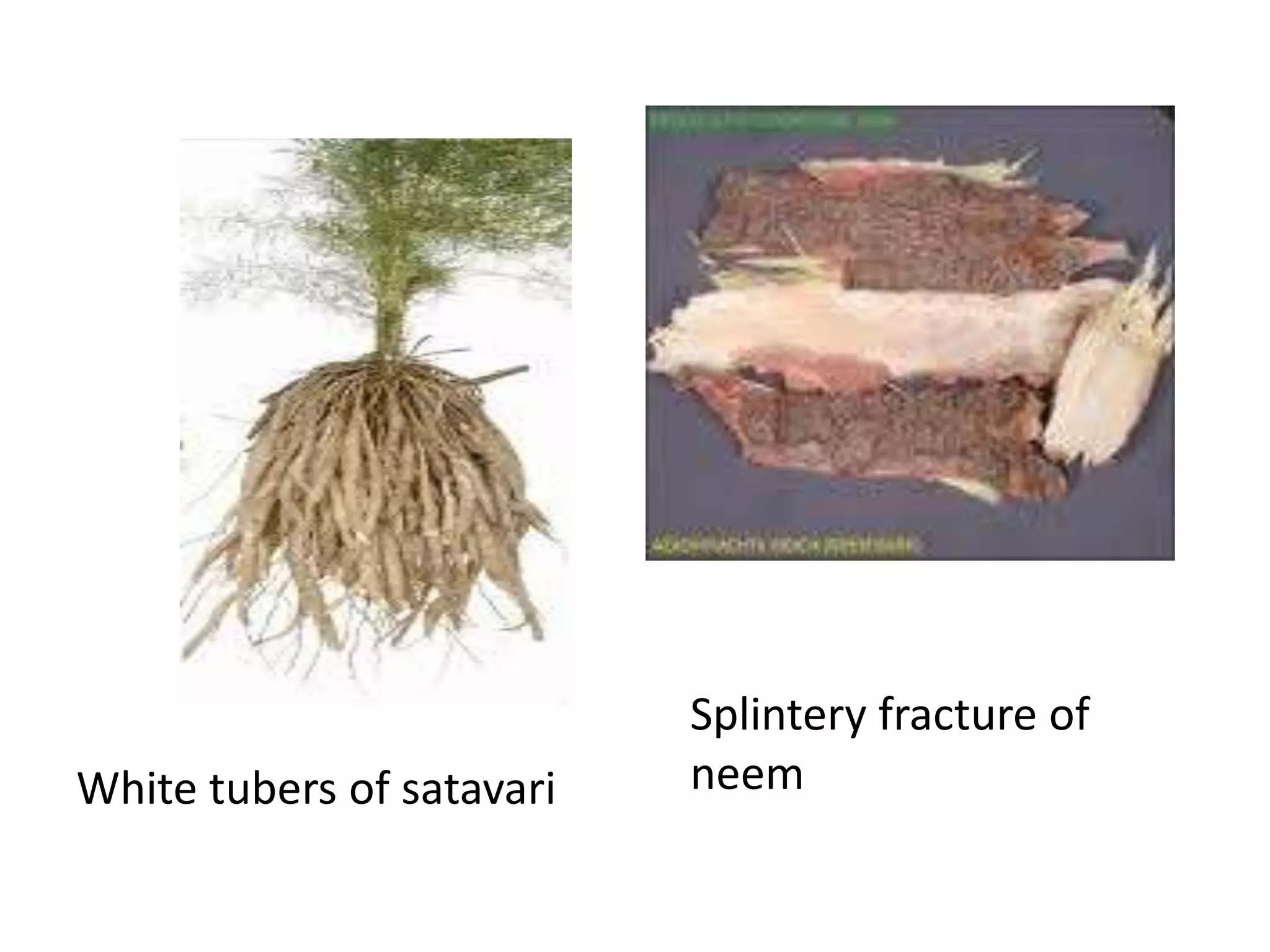
White tubers of satavari
Splintery fracture of
neem
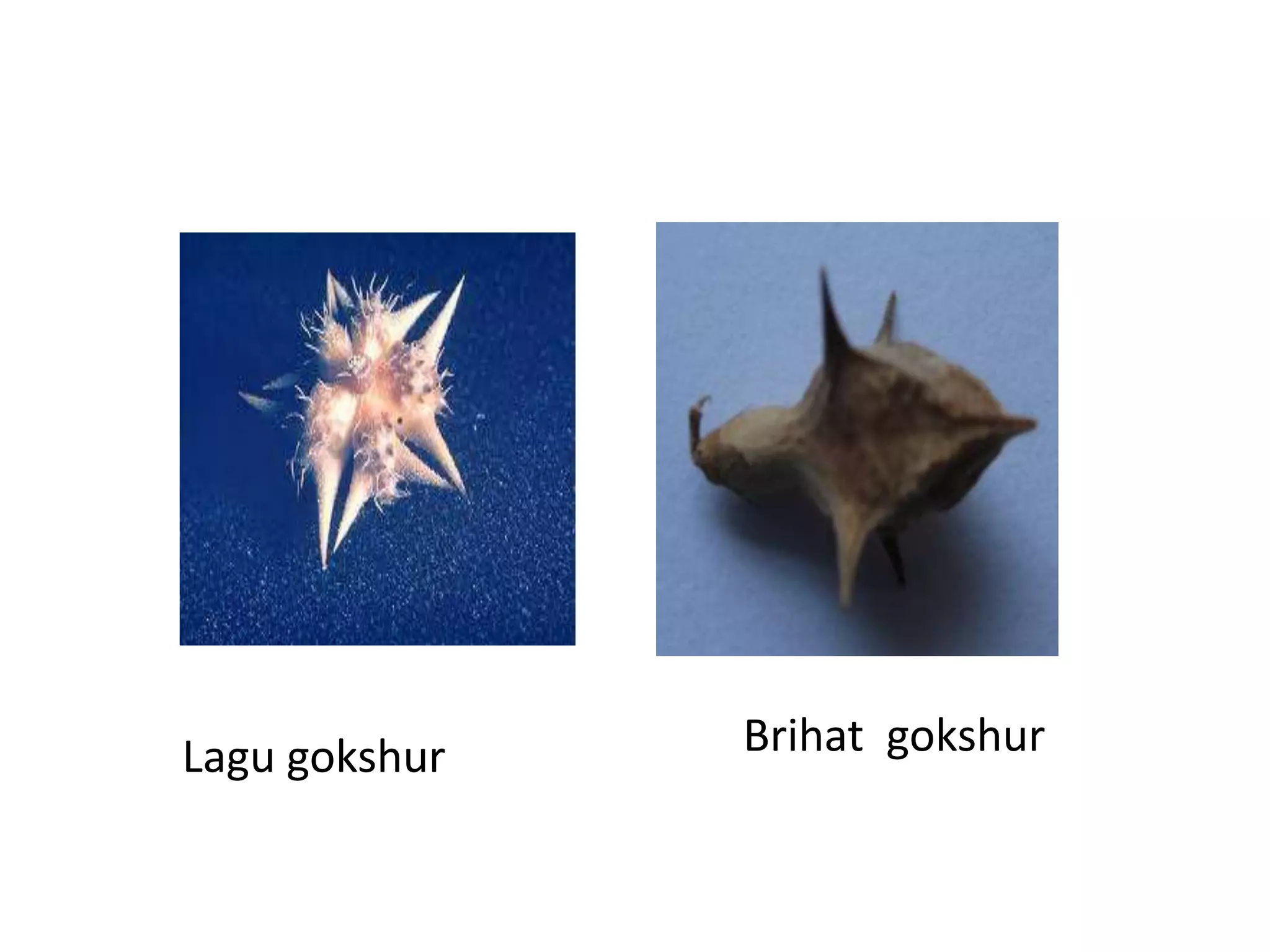
Lagu gokshur Brihat gokshur
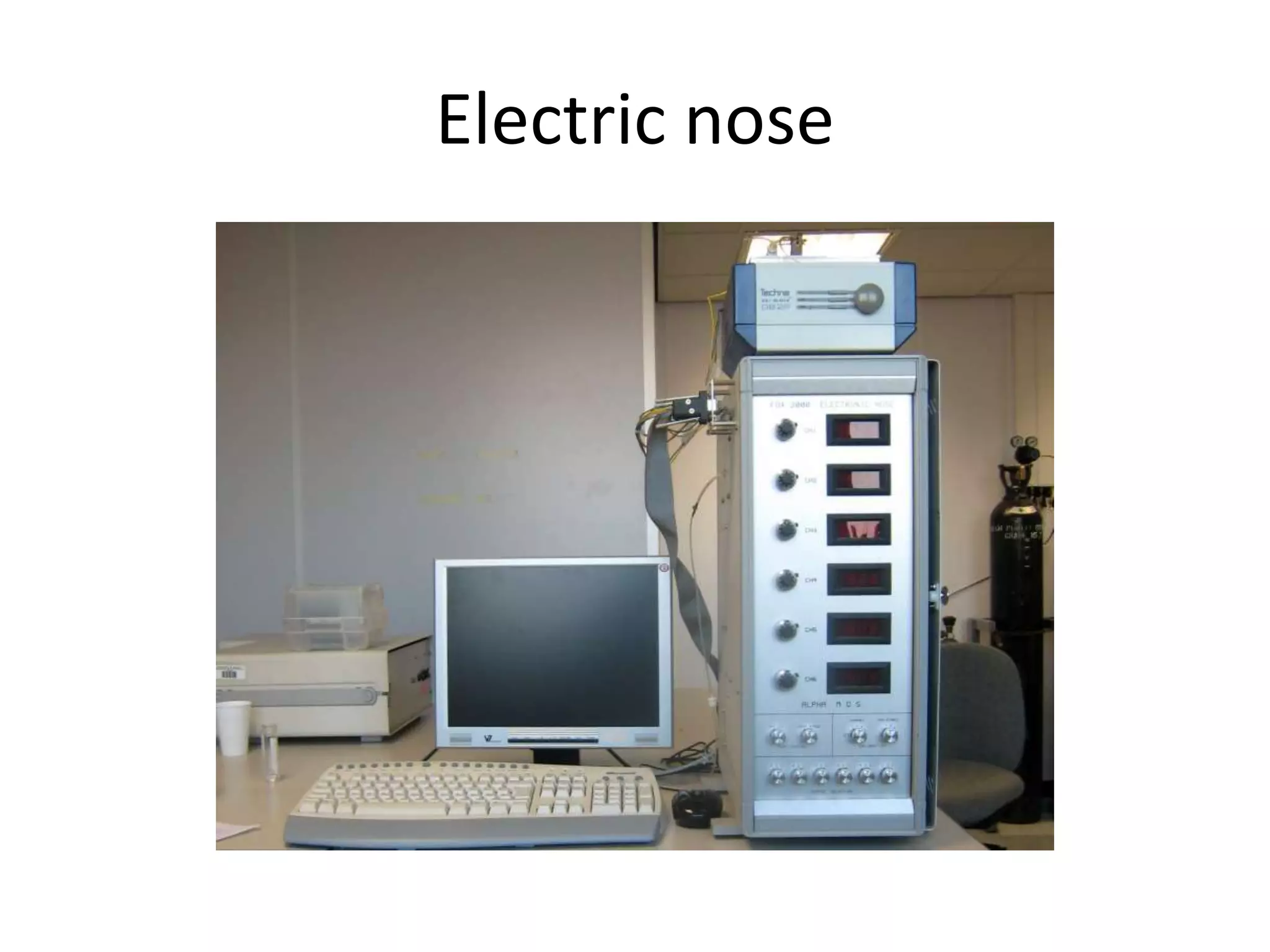
Electric nose
Electronic tongue
BOTANICAL
MACROSCOPICAL MICROSCOPICAL
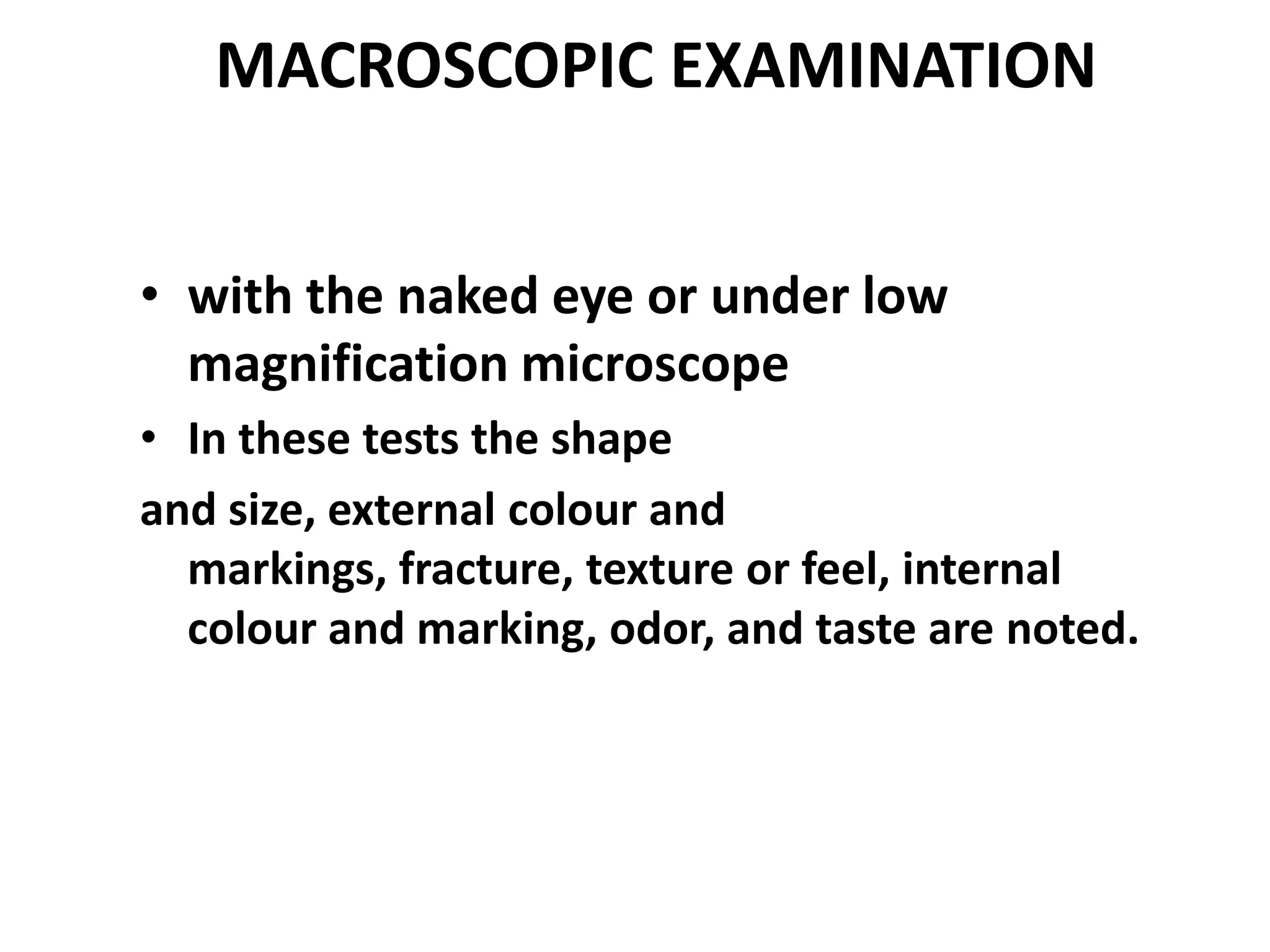
MACROSCOPIC EXAMINATION
• with the naked eye or under low
magnification microscope
• In these tests the shape
and size, external colour and
markings, fracture, texture or feel, internal
colour and marking, odor, and taste are noted.
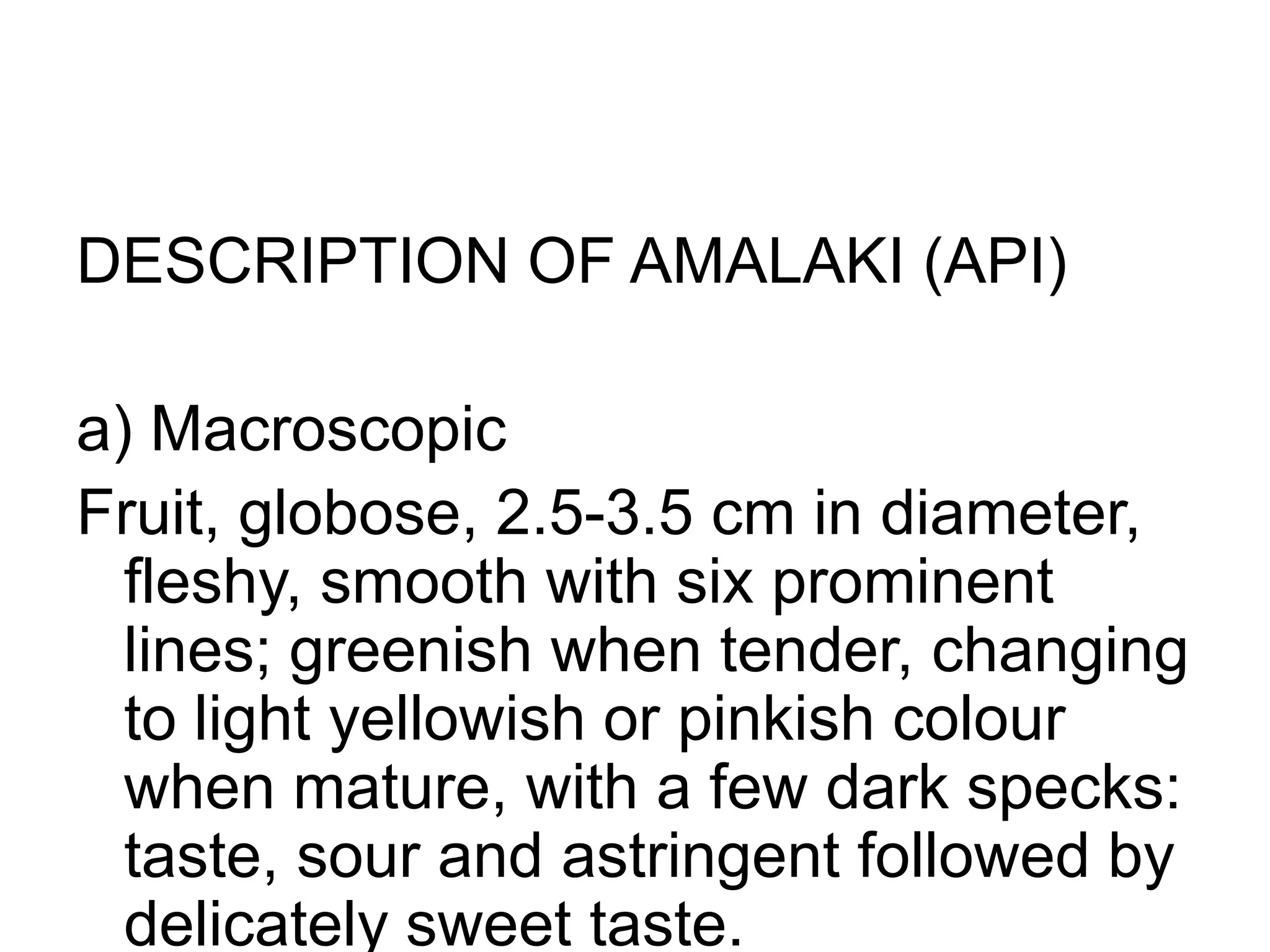
DESCRIPTION OF AMALAKI (API)
a) Macroscopic
Fruit, globose, 2.5-3.5 cm in diameter,
fleshy, smooth with six prominent
lines; greenish when tender, changing
to light yellowish or pinkish colour
when mature, with a few dark specks:
taste, sour and astringent followed by
delicately sweet taste.
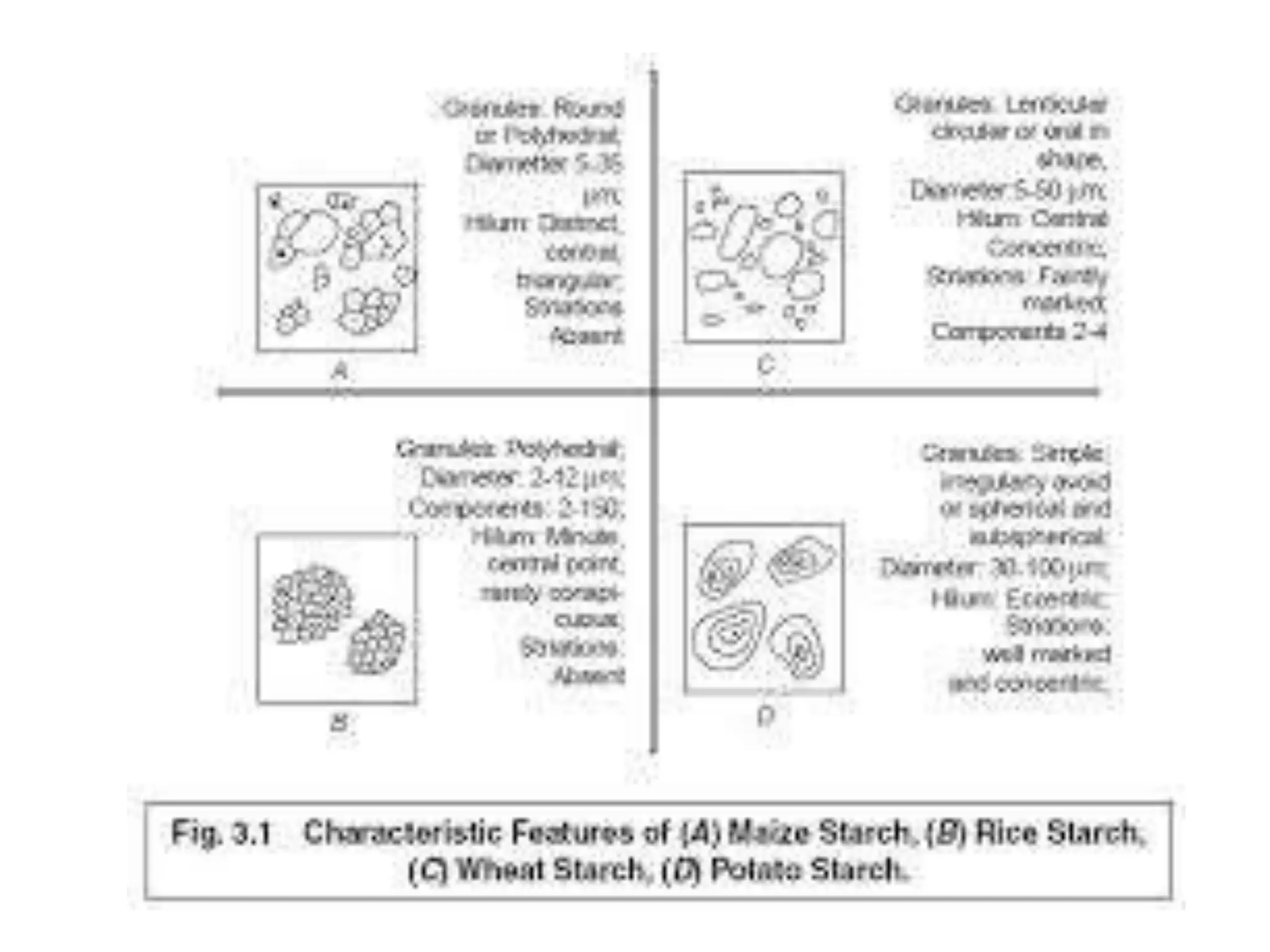
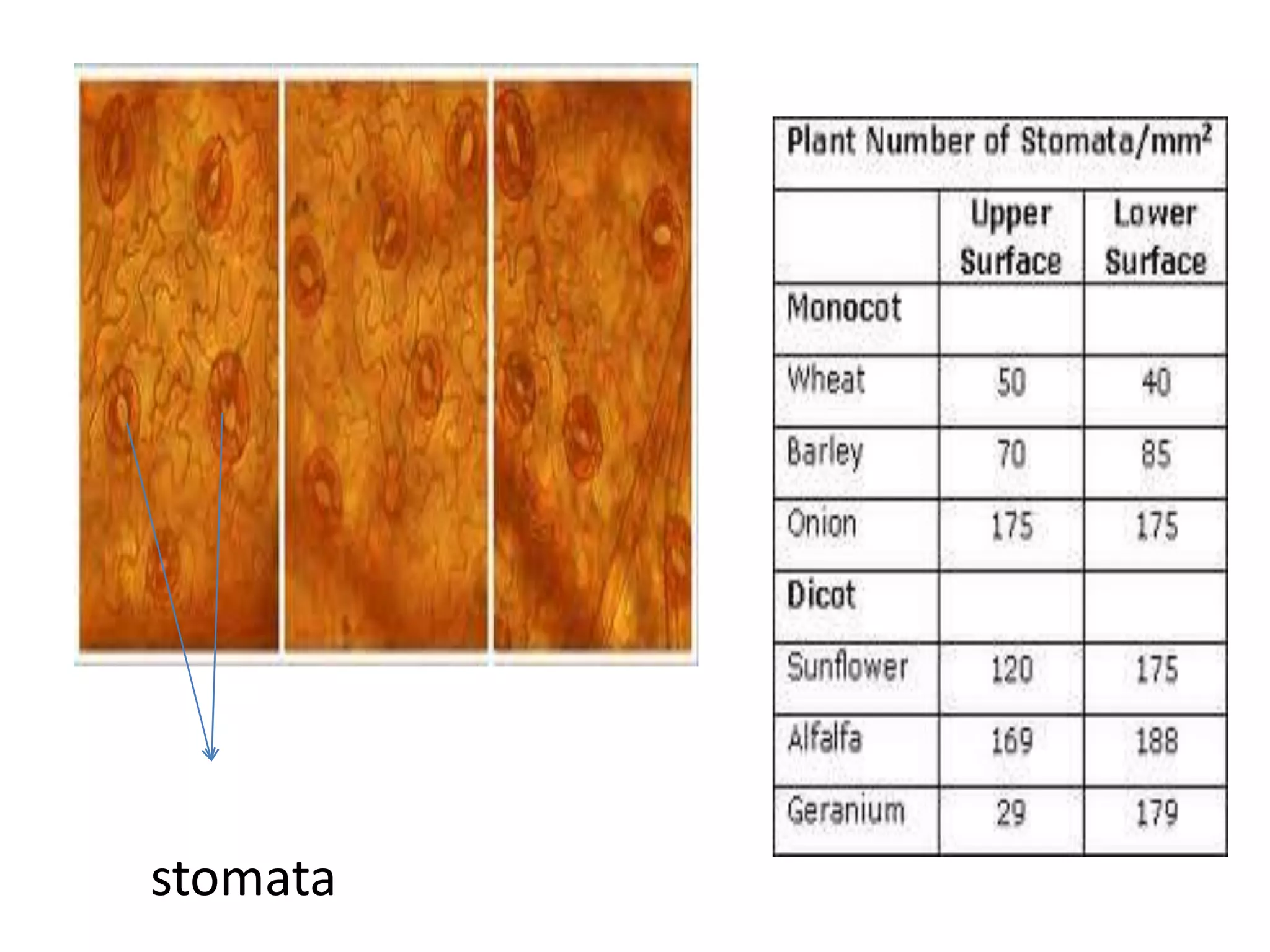
MICROSCOPIC EXAMINATION
• Microscopical structure of the drug is analysed
• Microscope
• Identity of plant
• Detection of adulteration
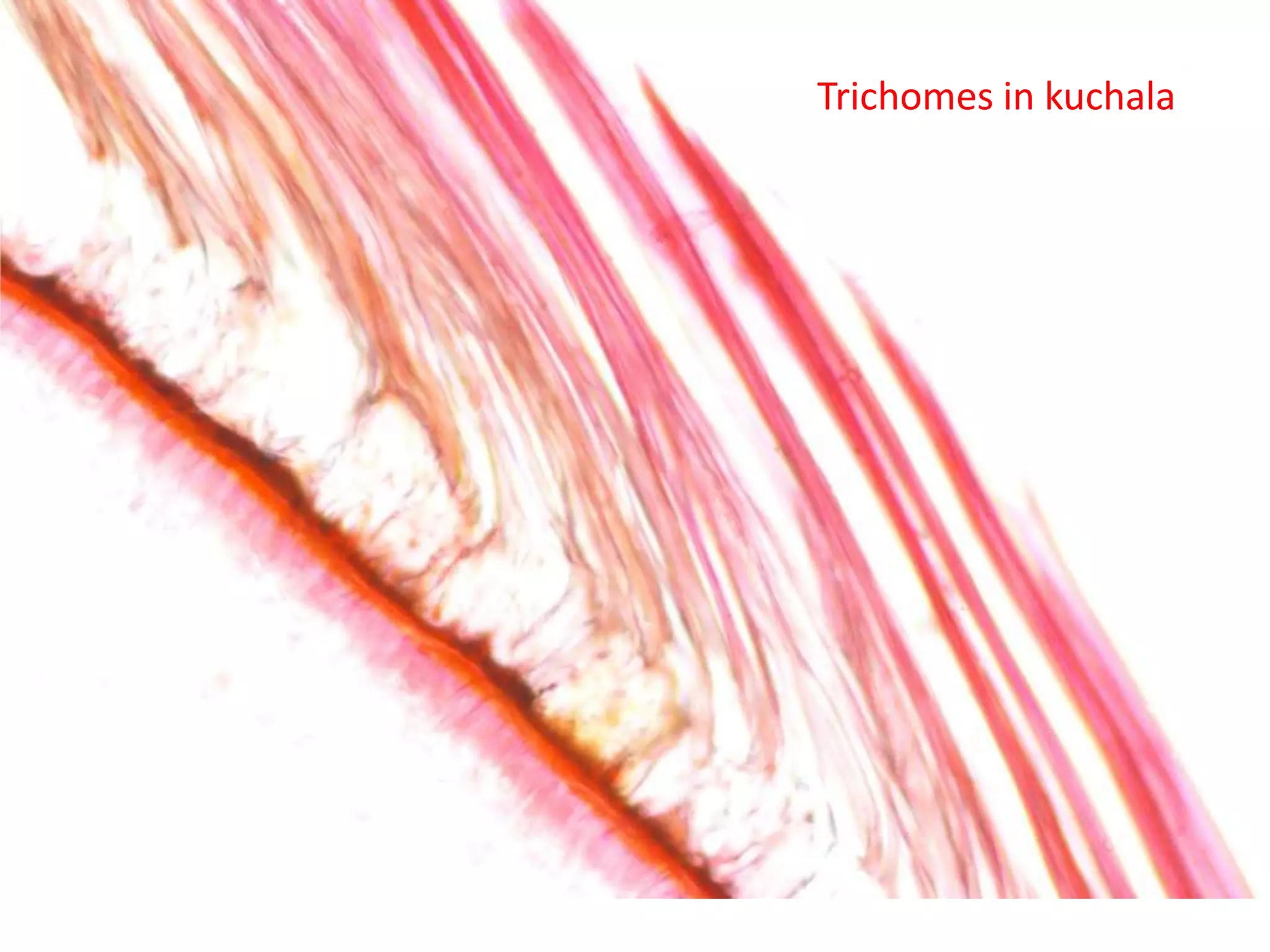
Trichomes in kuchala
stomata
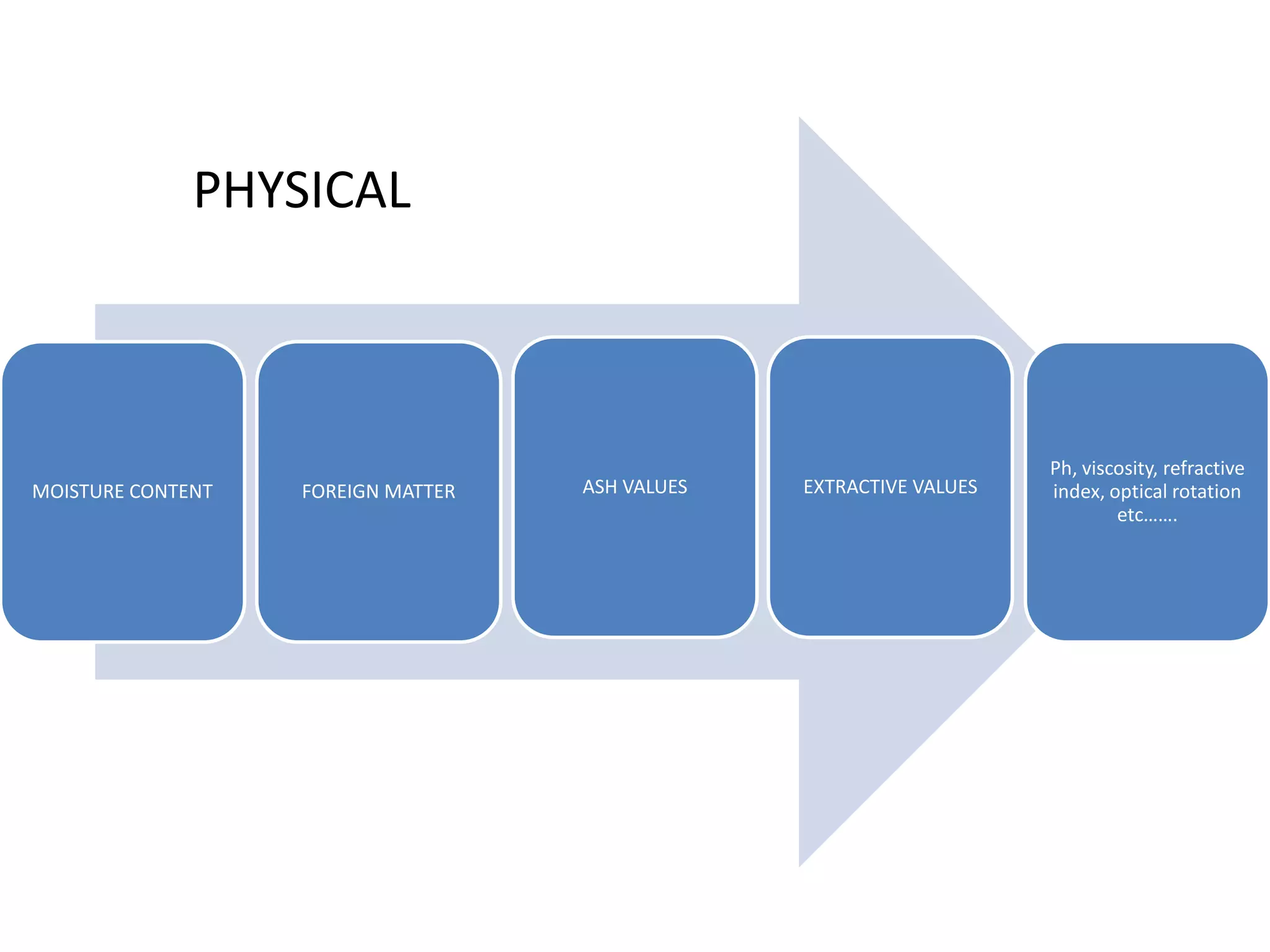
MOISTURE CONTENT FOREIGN MATTER ASH VALUES EXTRACTIVE VALUES
Ph, viscosity, refractive
index, optical rotation
etc…….
PHYSICAL
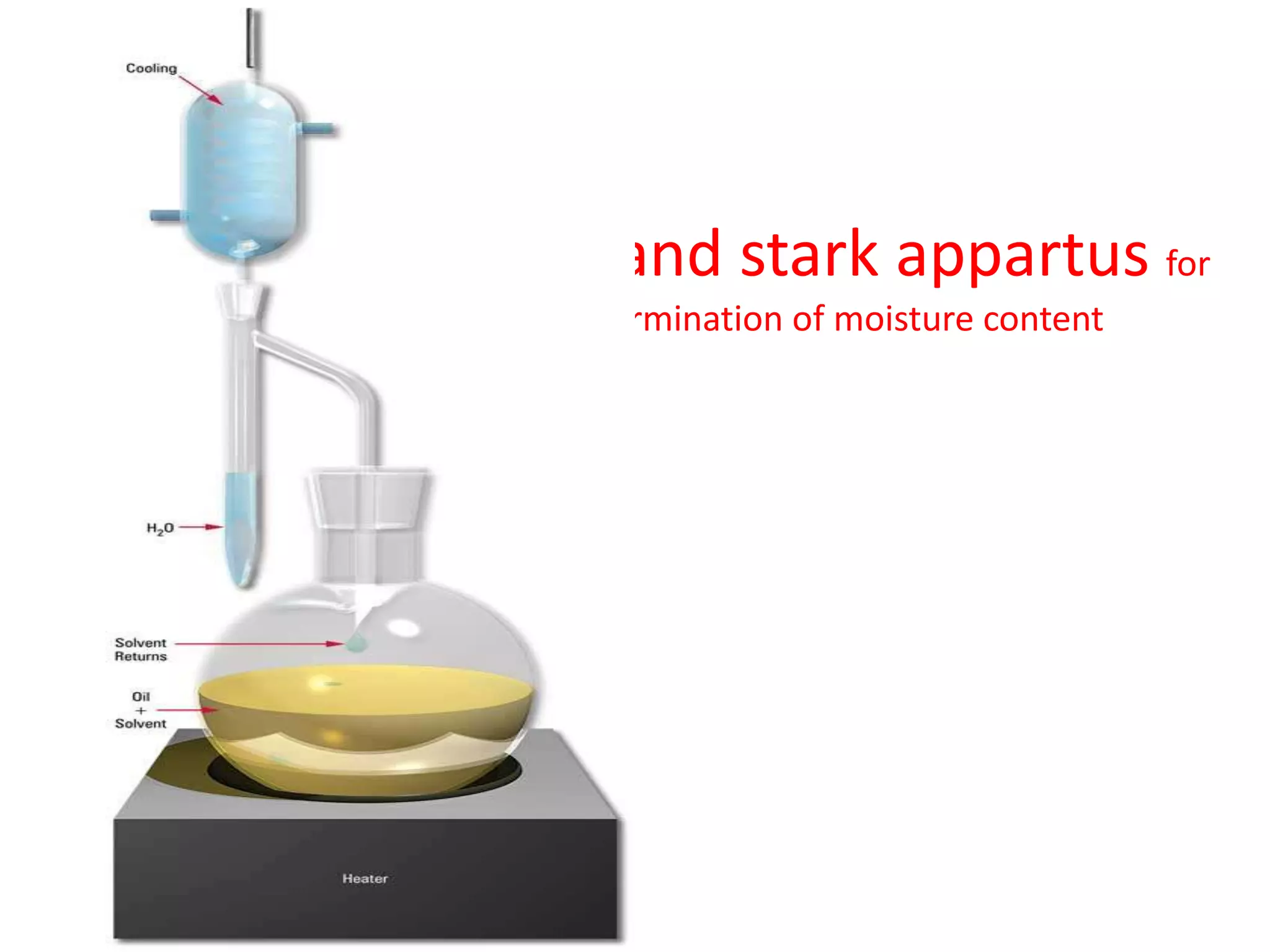
MOISTURE CONTENT
• Indicates the amount of moisture in the drug
• Should be minimum to prevent microbial
contamination
• Aloes- not more than 10% w/w
Dean and stark appartus for
determination of moisture content
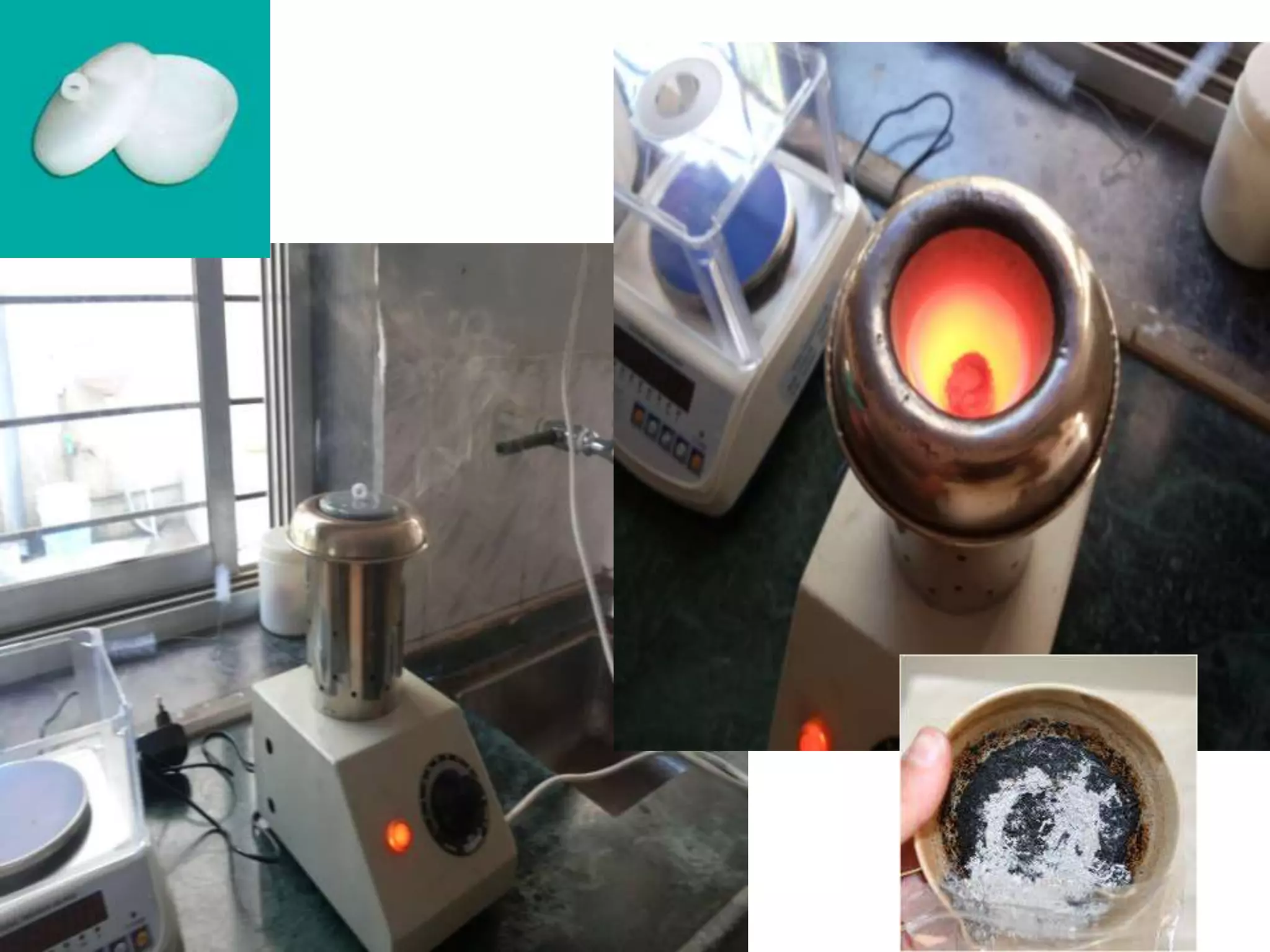
Ash value- total, acid- insoluble
Total ash
• Residue remaining after incineration
• Represents inorganic salts – either in drug or
added deliberately-calcium carbonate,
silicates etc…
• Criterion for purity
Acid insoluble ash
• Ash insoluble in dil.HCl
• Chemicals obtained from incineration of plant
inorganic matter like calcium carbonate is
soluble in acid whereas incinerated sand
chemicals like silicates are insoluble
• Represents sand and dirt- silicates……..
• Criterion for purity
Extractives
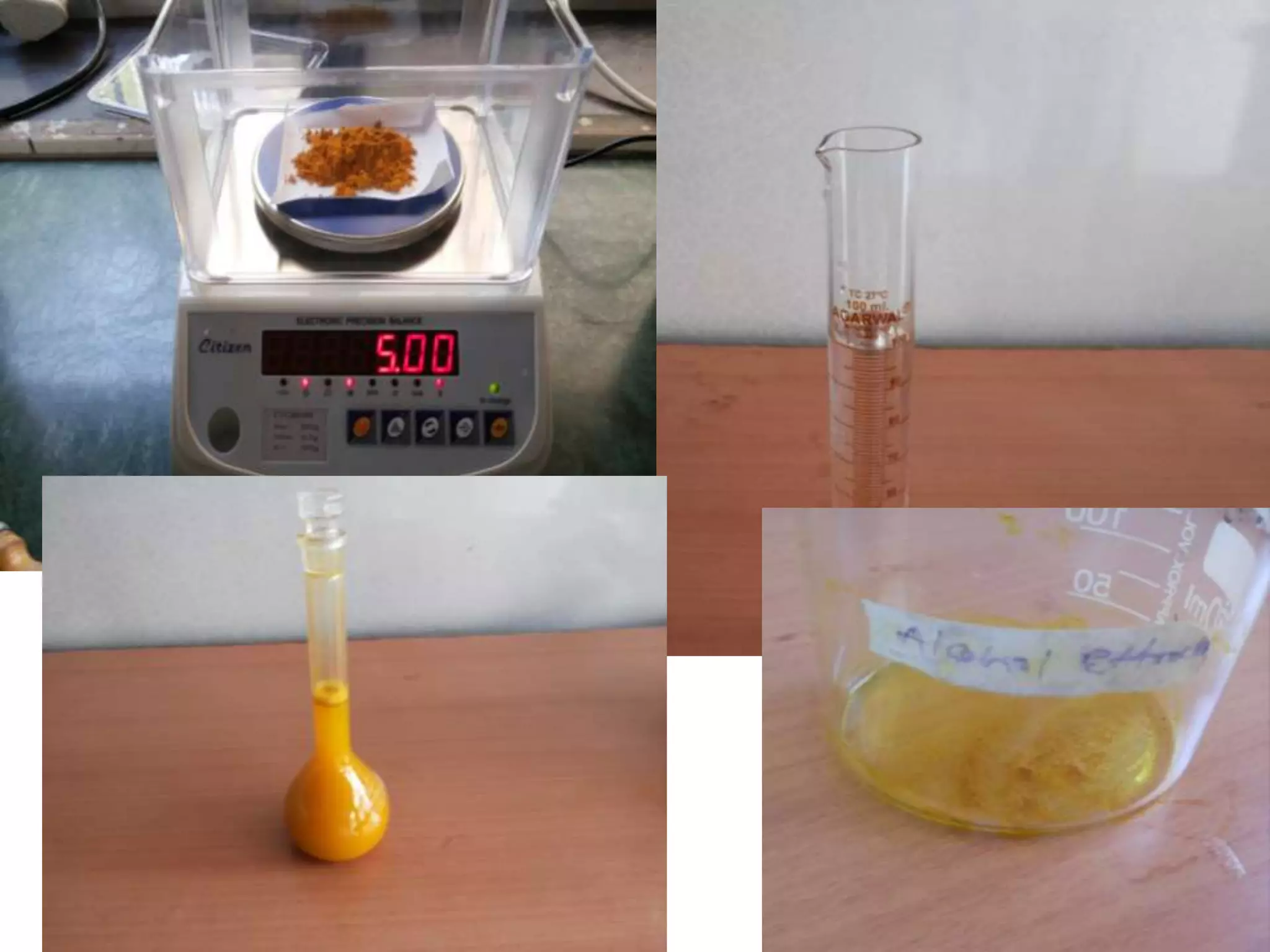
Principles drawn out of the drug by
macerating it with various solvents like water
alcohol etc.
Indicative of the chemical constituent present
in the drug
o Water soluble Extractive
o Alcohol soluble Extractive
Water soluble extractive
 Tannins, sugars, plant
acids, mucilage, glycosides etc.
 Eg: yashtimadhu- not less than 20%w/w
Alcohol soluble extractive
 Resin, tannin
 Official method for assay of hingu
 Hingu- Not less than 50%w/w
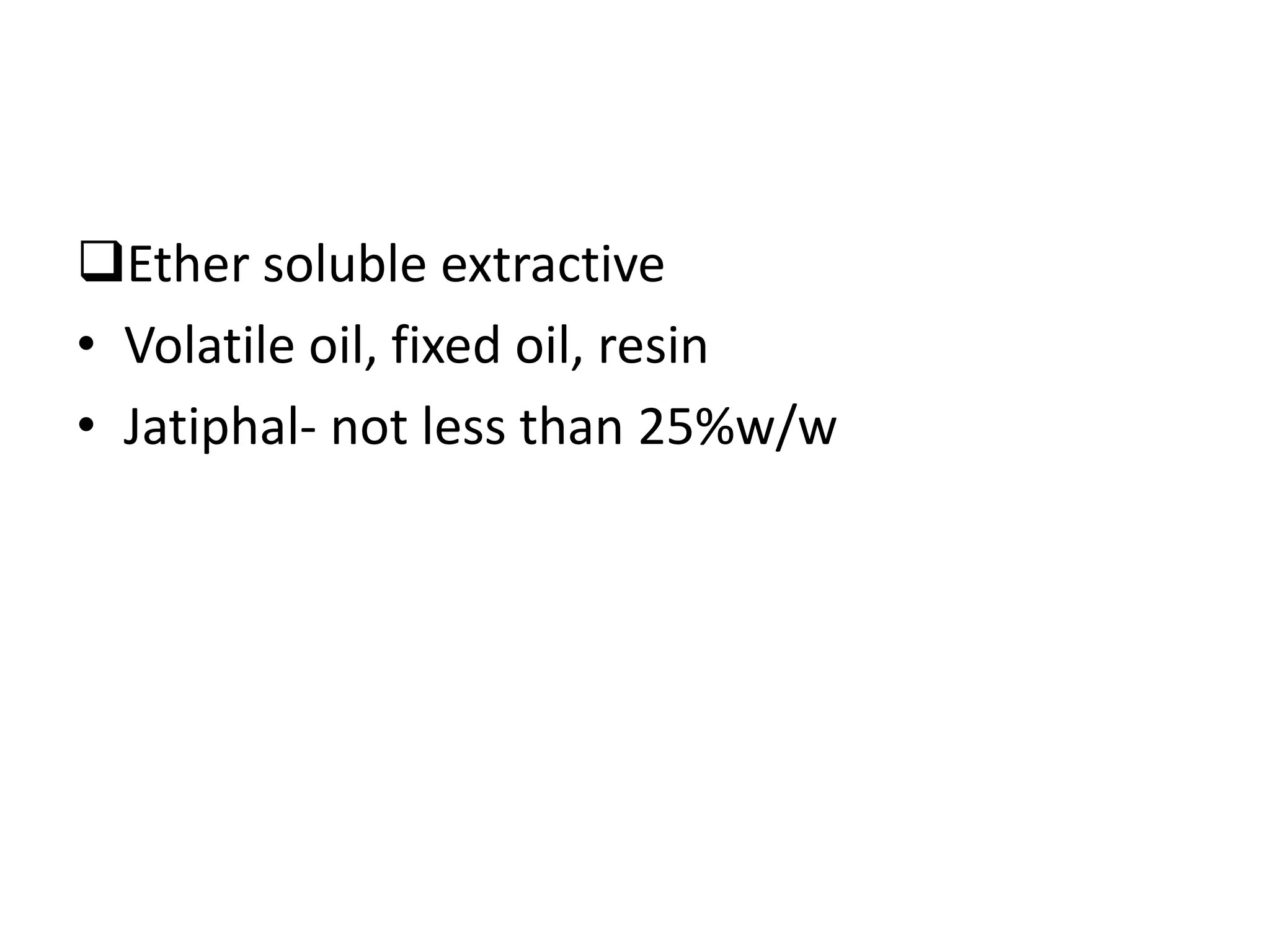
Ether soluble extractive
• Volatile oil, fixed oil, resin
• Jatiphal- not less than 25%w/w
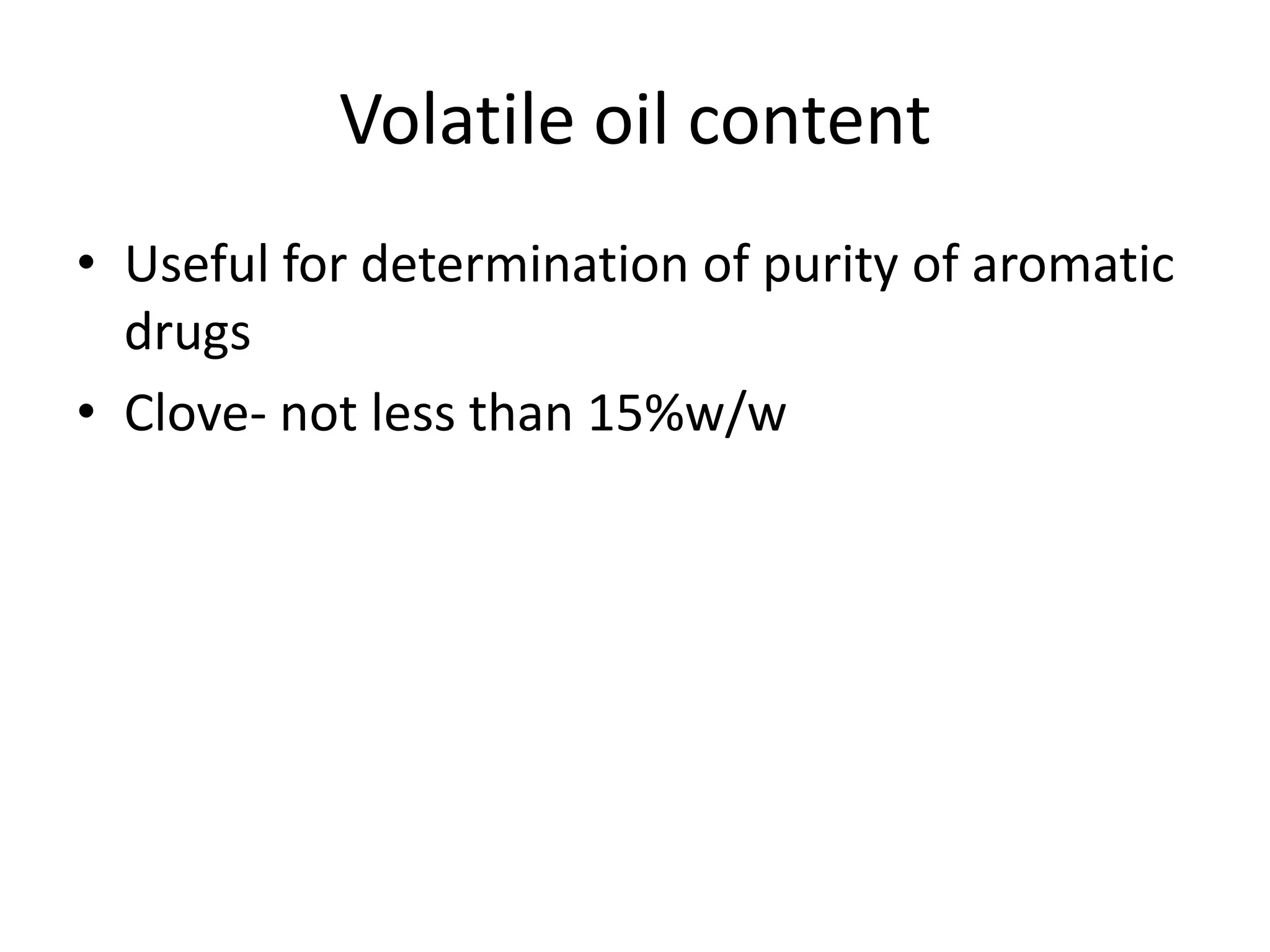
Volatile oil content
• Useful for determination of purity of aromatic
drugs
• Clove- not less than 15%w/w
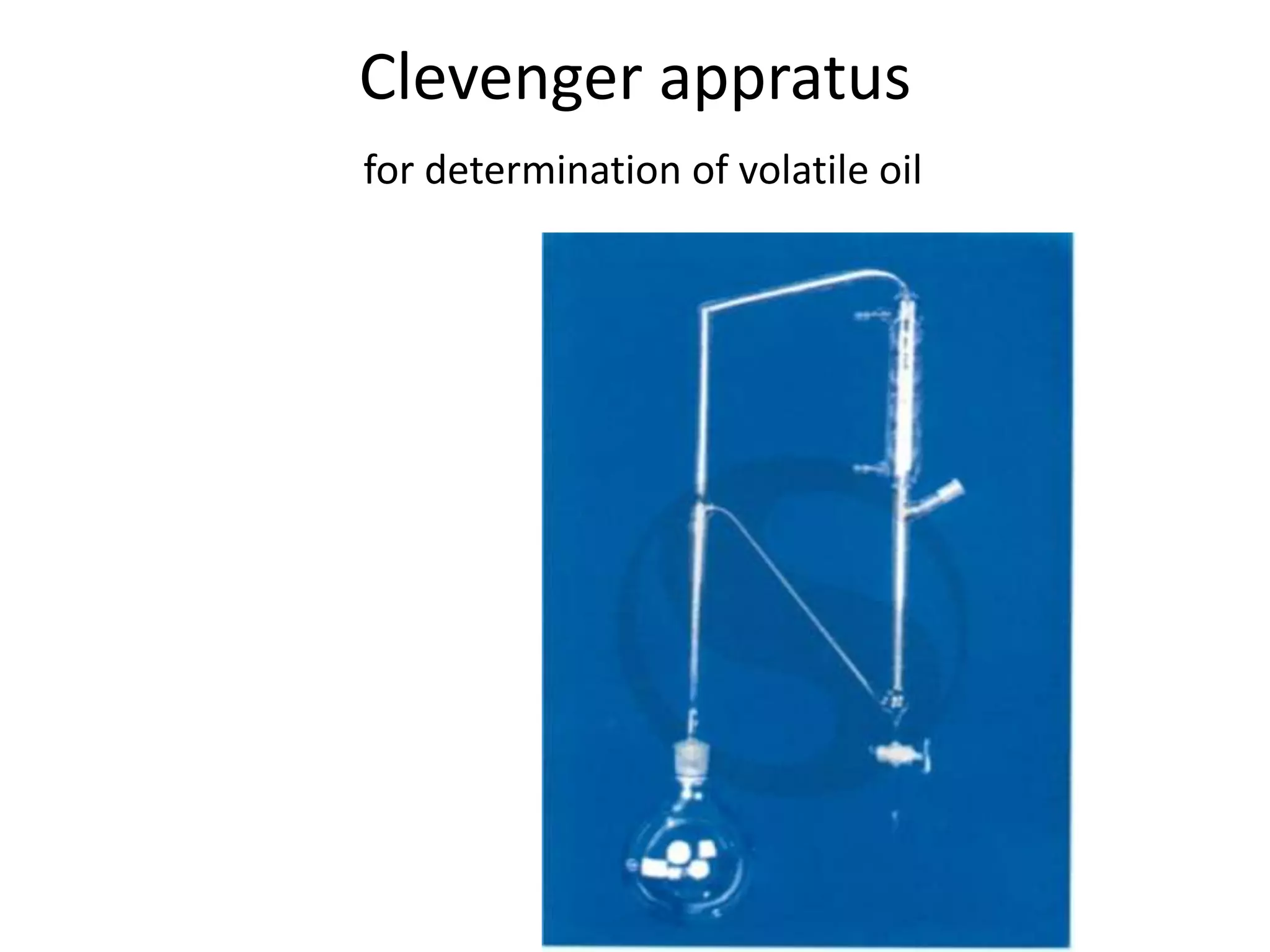
Clevenger appratus
for determination of volatile oil
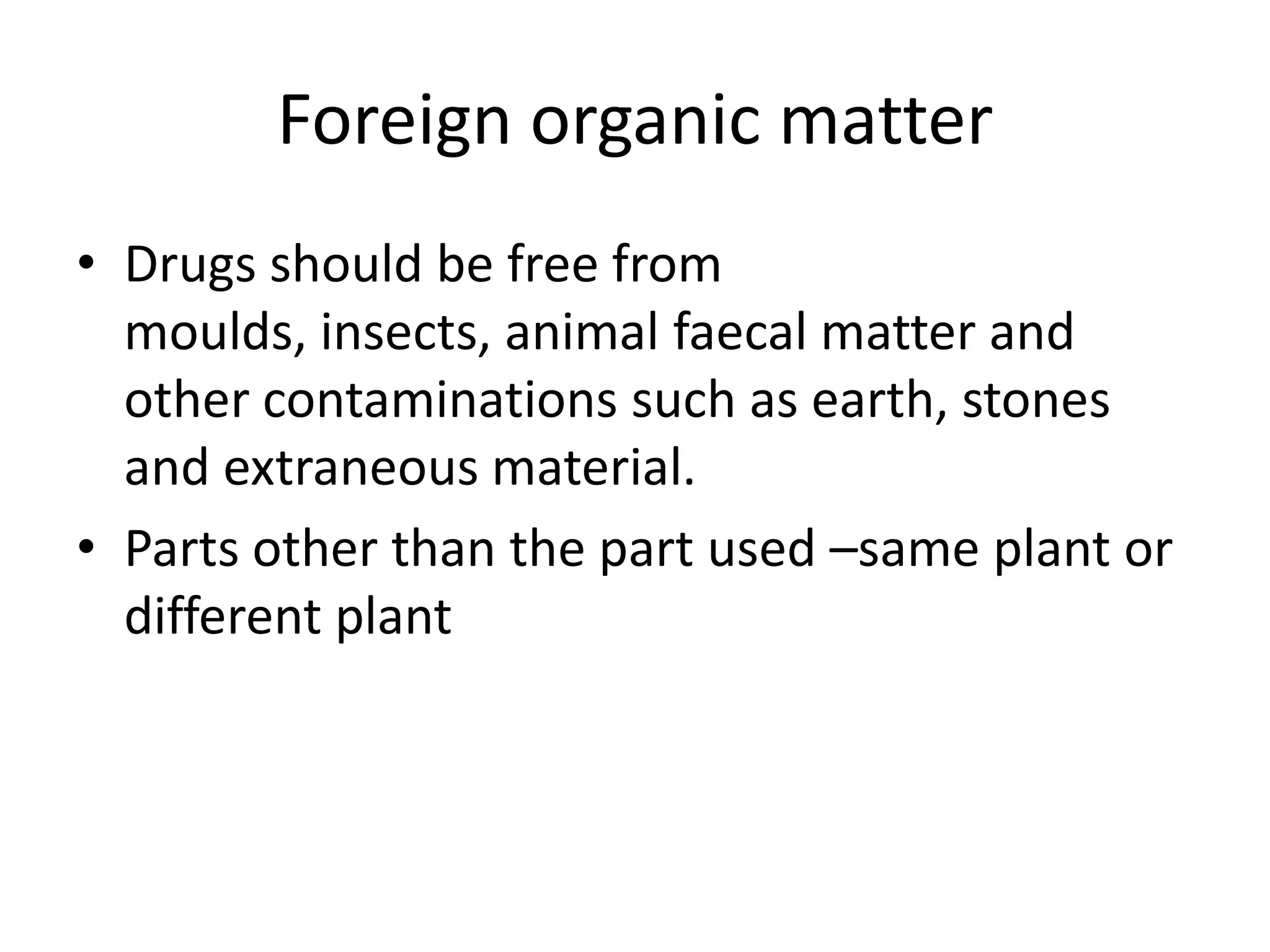
Foreign organic matter
• Drugs should be free from
moulds, insects, animal faecal matter and
other contaminations such as earth, stones
and extraneous material.
• Parts other than the part used –same plant or
different plant
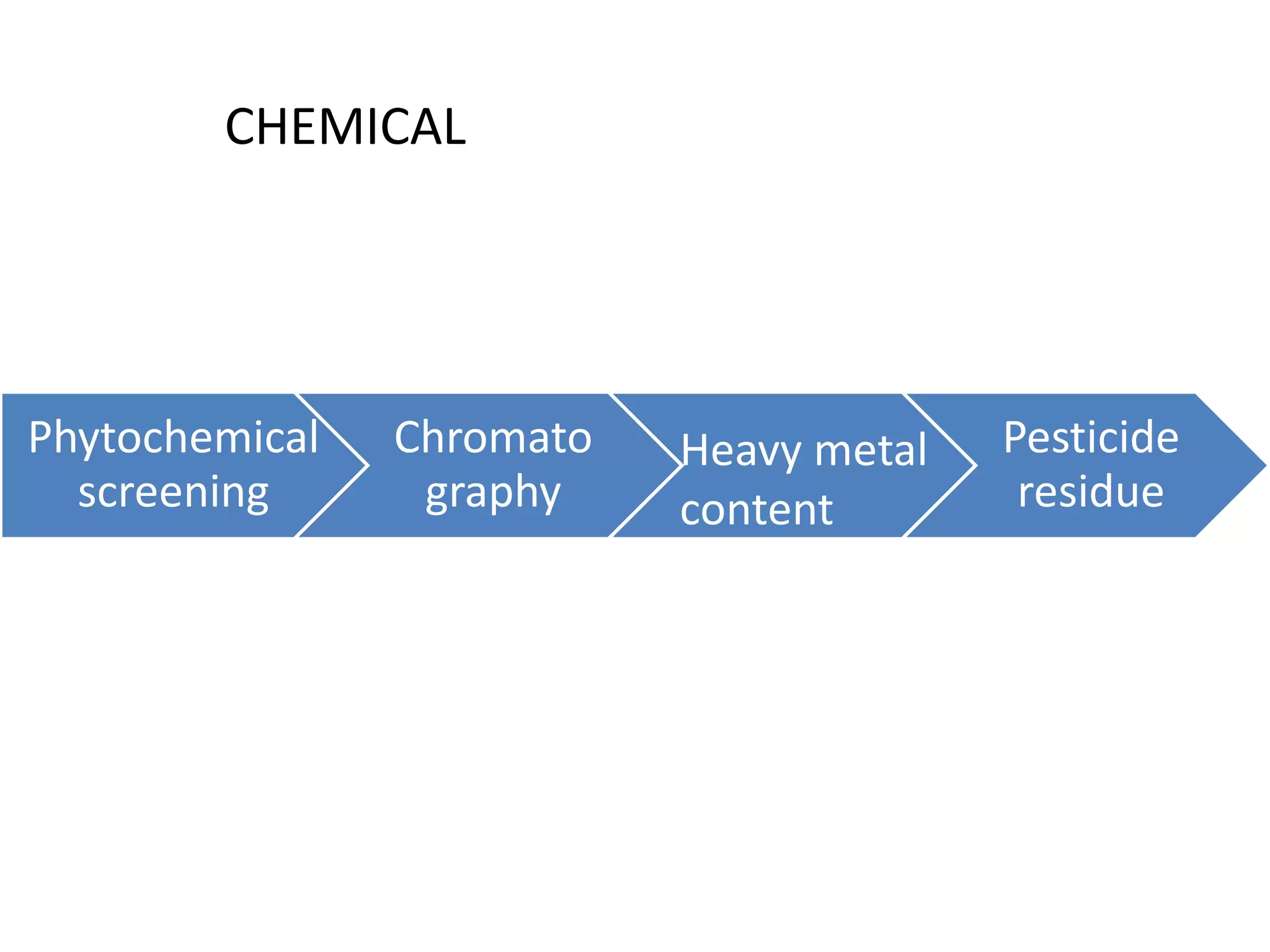
Phytochemical
screening
Chromato
graphy
Pesticide
residue
Heavy metal
content
CHEMICAL
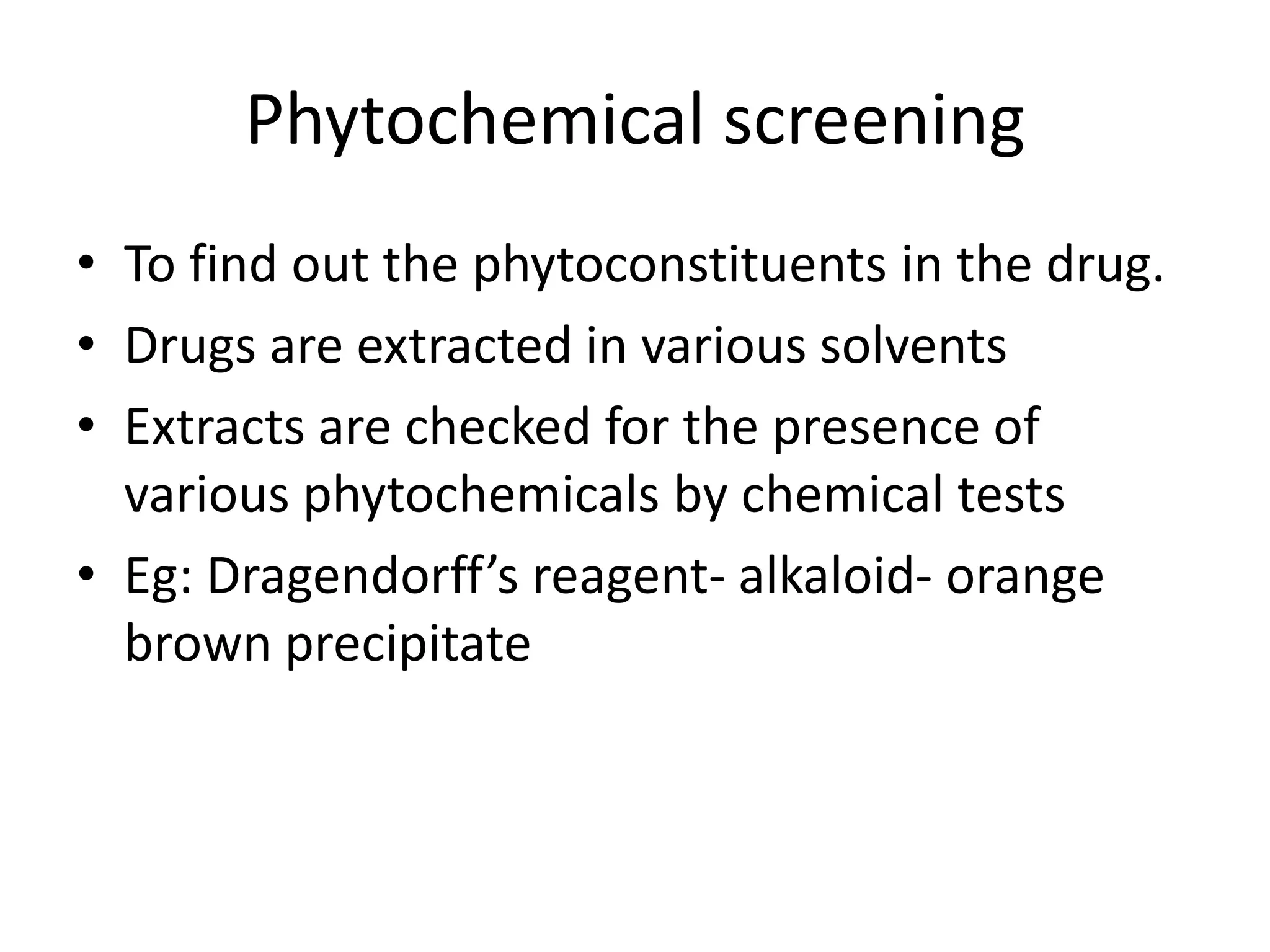
Phytochemical screening
• To find out the phytoconstituents in the drug.
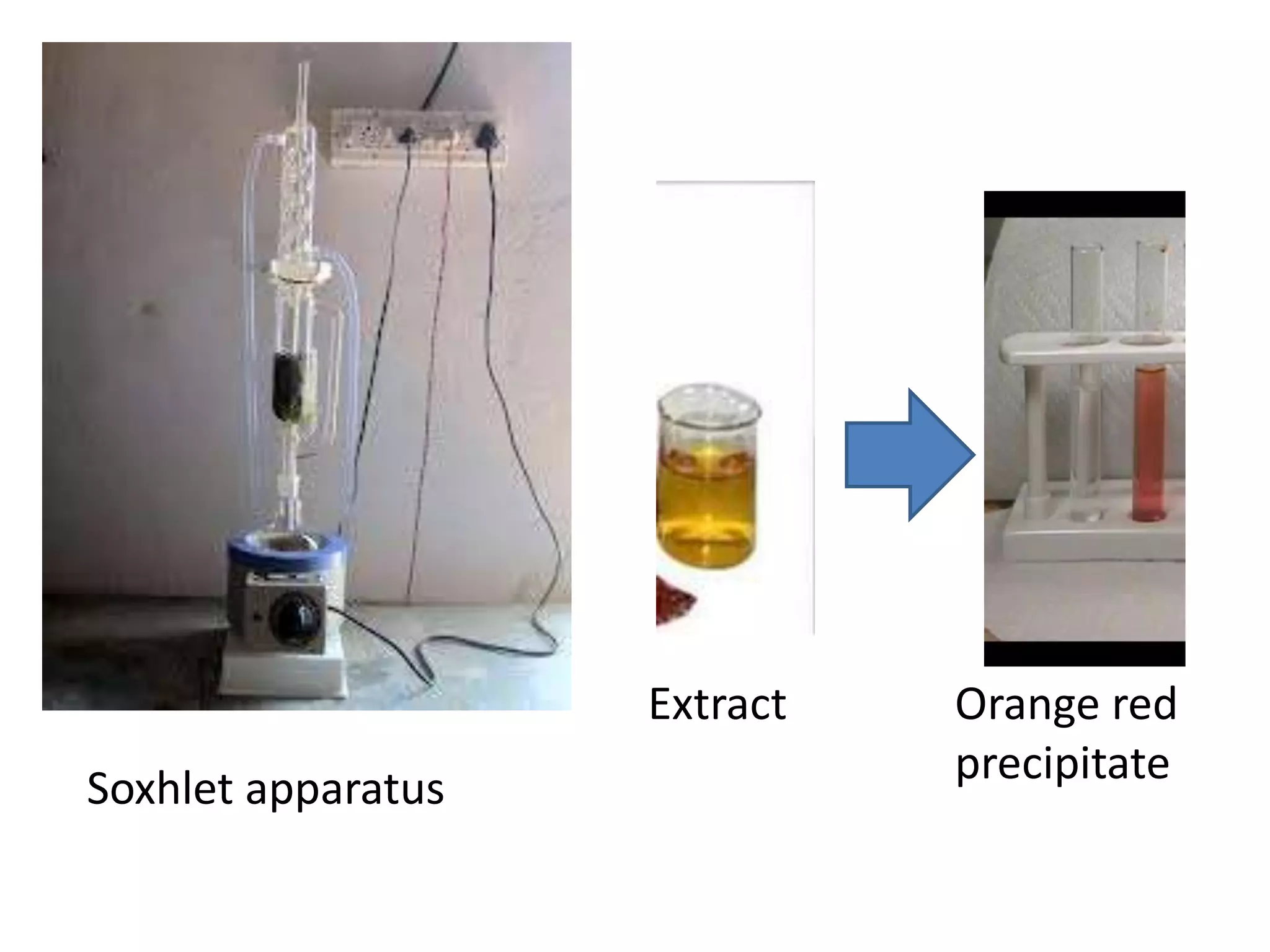
• Drugs are extracted in various solvents
• Extracts are checked for the presence of
various phytochemicals by chemical tests
• Eg: Dragendorff’s reagent- alkaloid- orange
brown precipitate
Soxhlet apparatus
Extract Orange red
precipitate
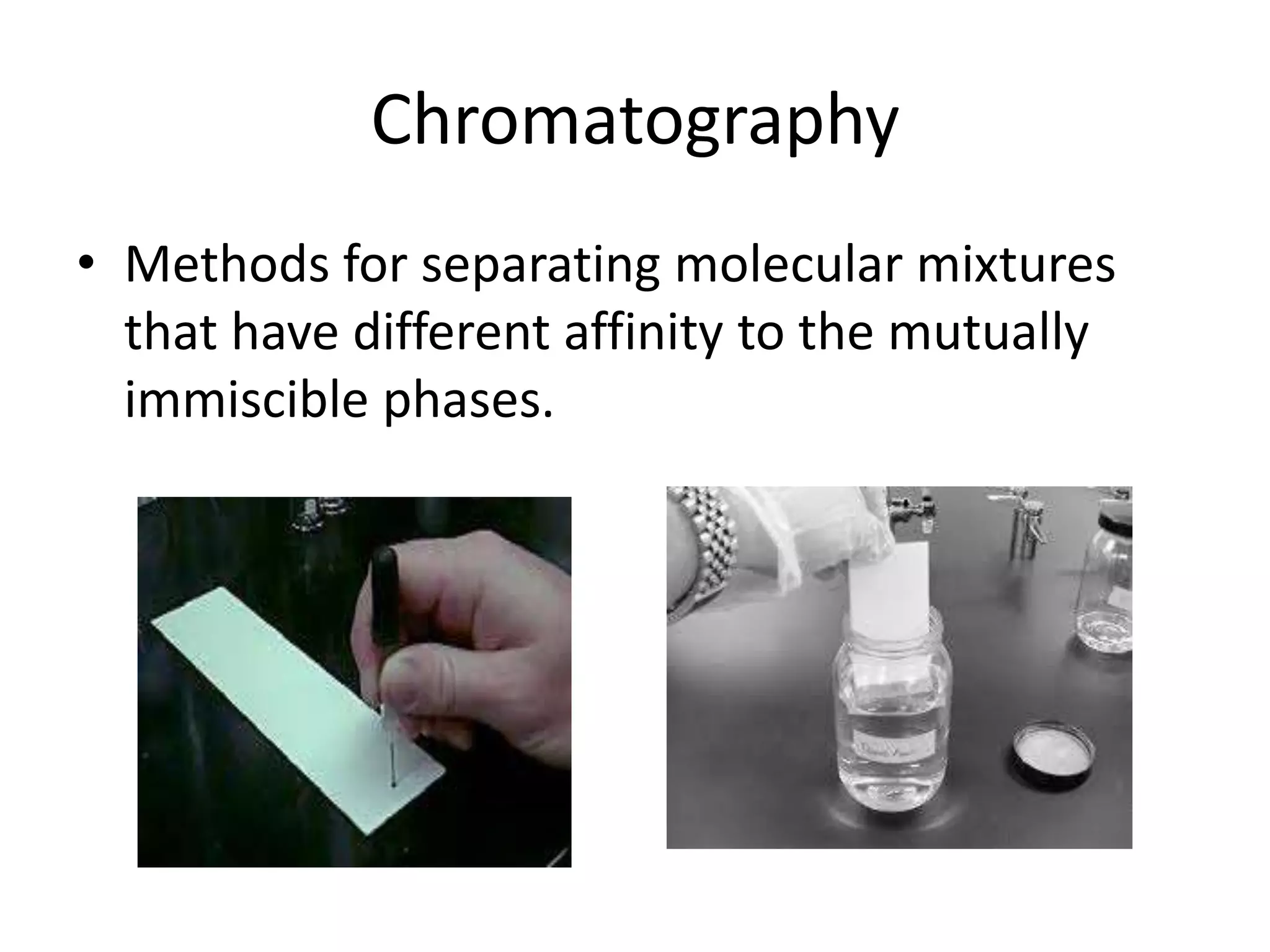
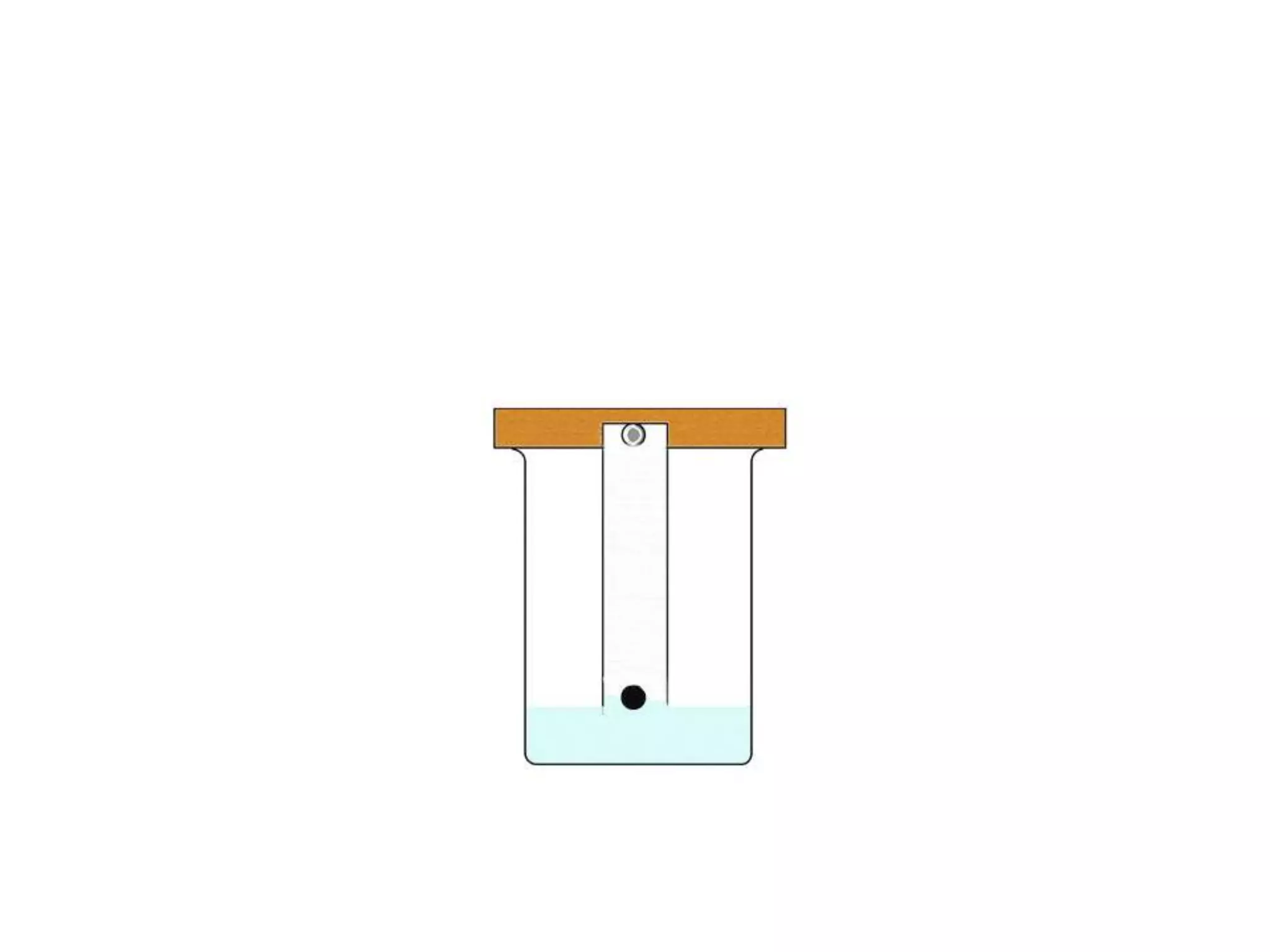
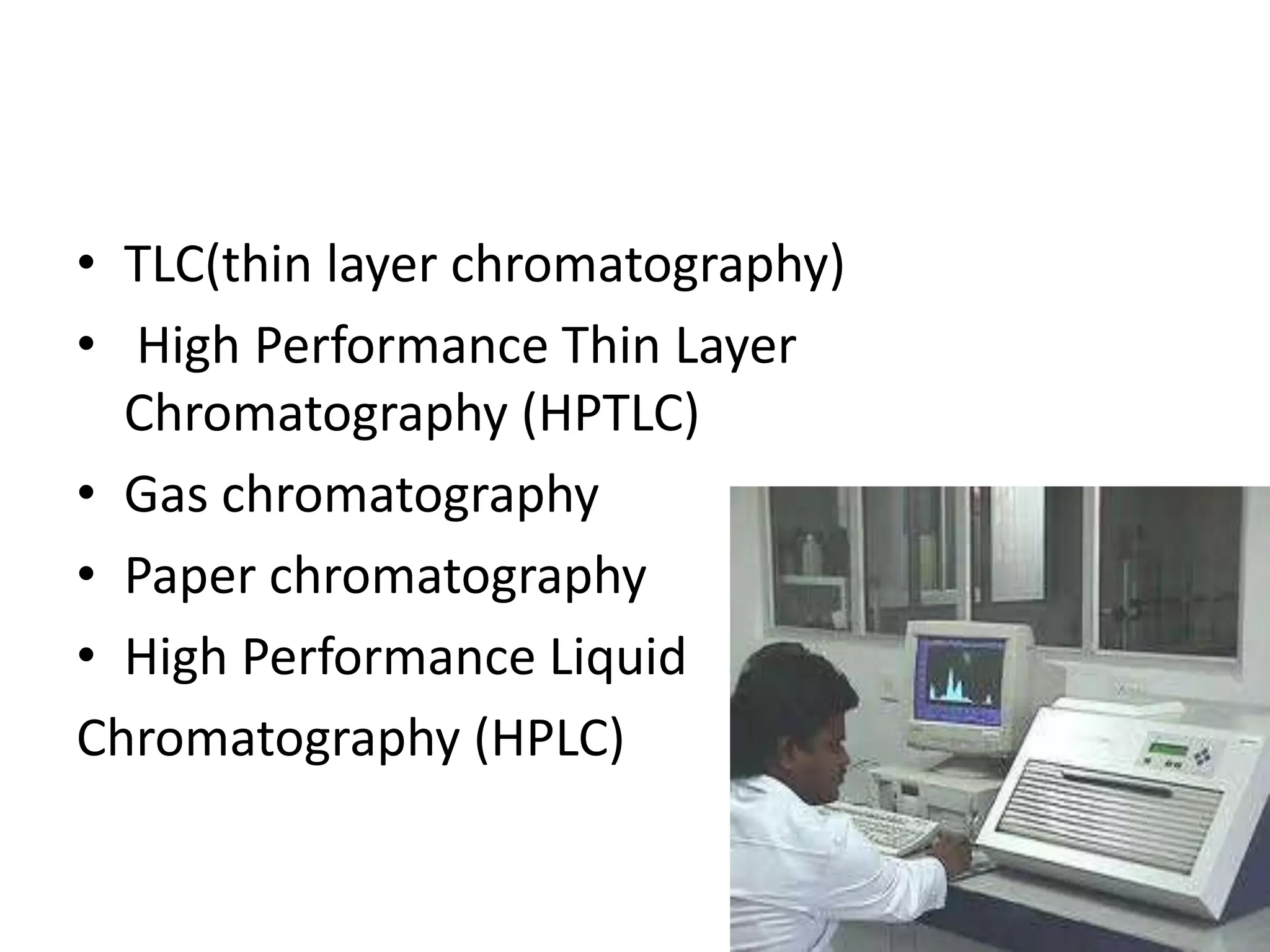
Chromatography
• Methods for separating molecular mixtures
that have different affinity to the mutually
immiscible phases.
• TLC(thin layer chromatography)
• High Performance Thin Layer
Chromatography (HPTLC)
• Gas chromatography
• Paper chromatography
• High Performance Liquid
Chromatography (HPLC)
Uses
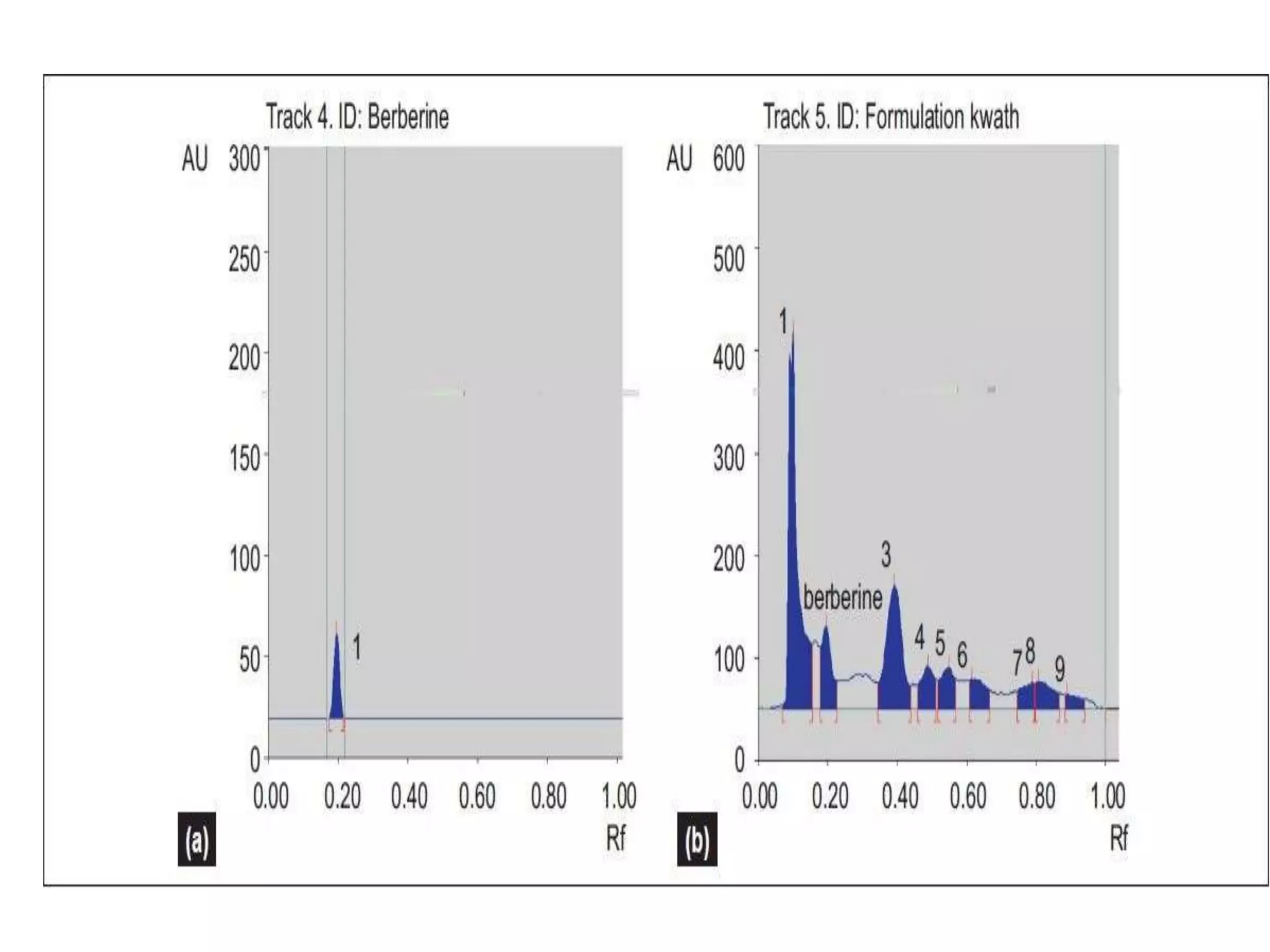
• profile of the chemical constituents of a
particular herbal plant is obtained
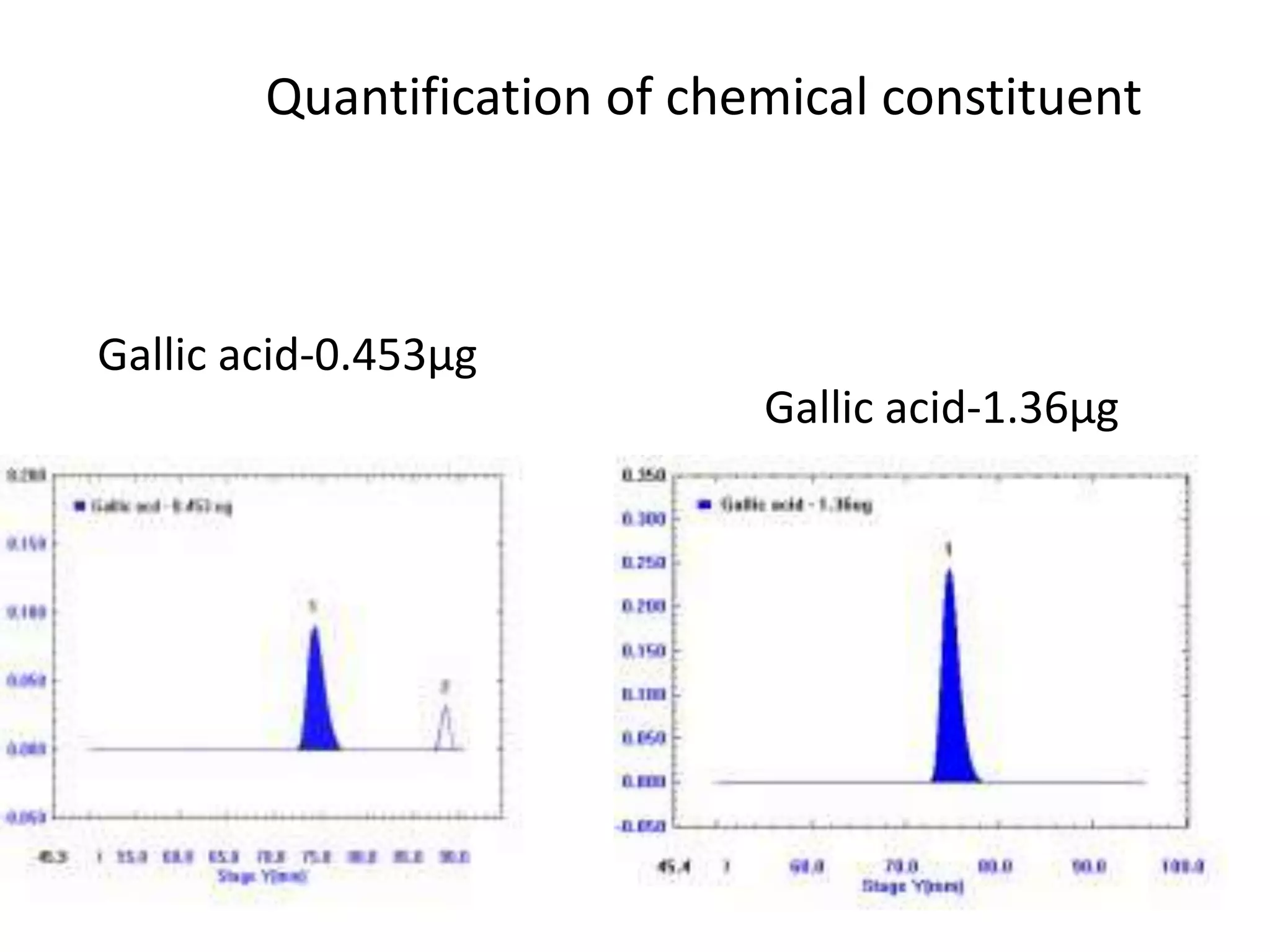
• Identification and Quantification of active
ingredients
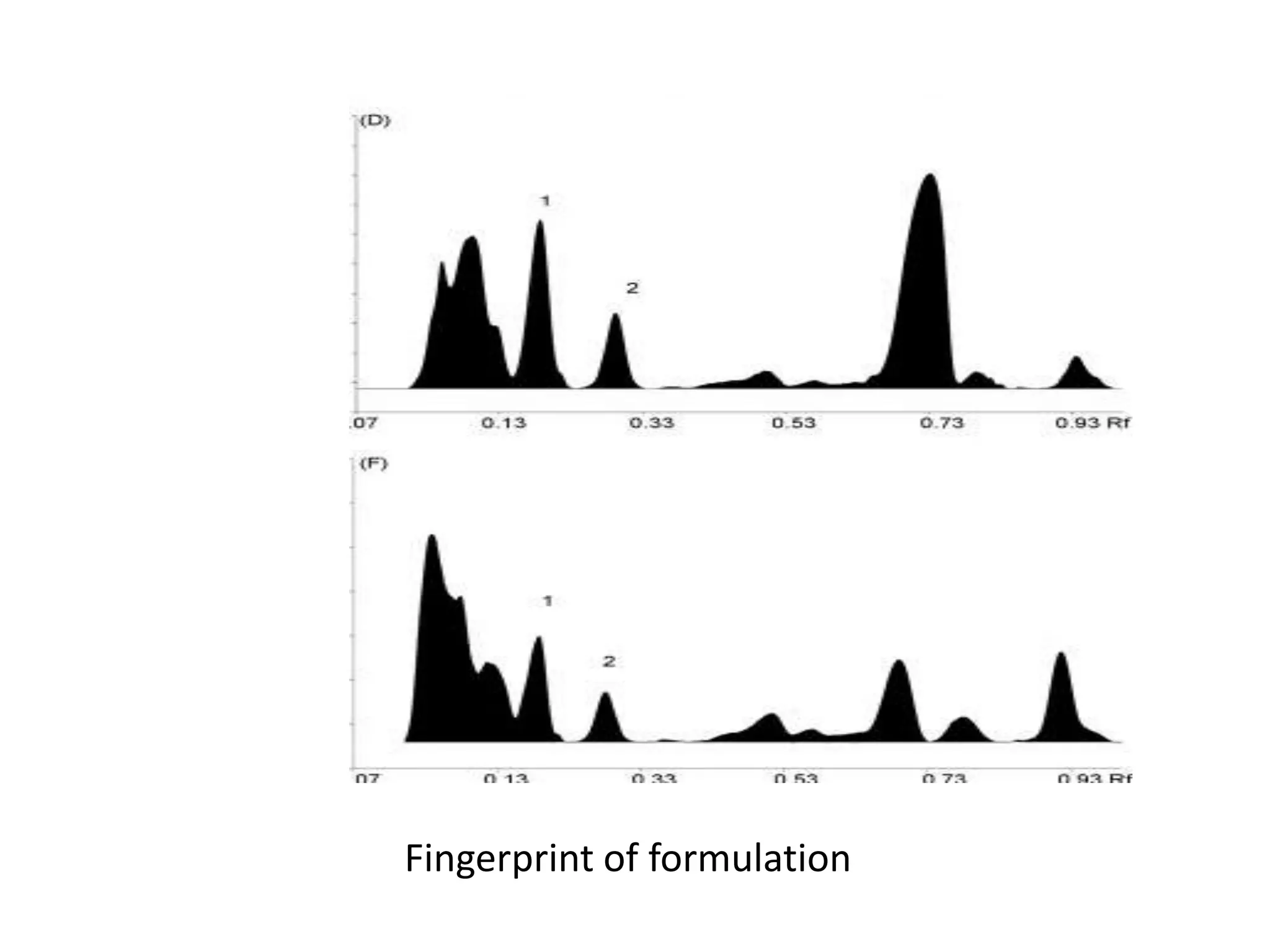
• ‘Fingerprints’ of formulations
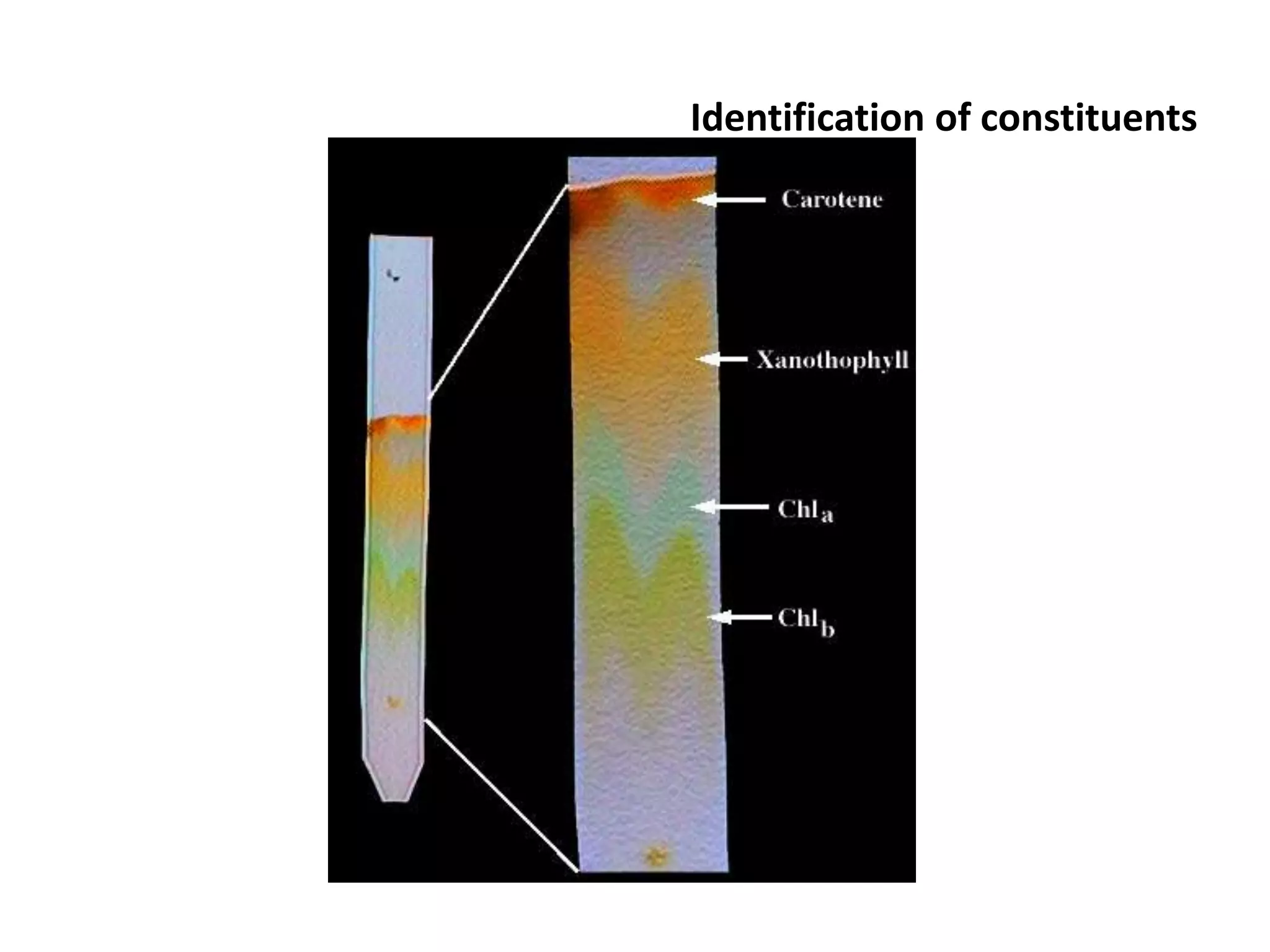
Identification of constituents
Quantification of chemical constituent
Gallic acid-0.453µg
Gallic acid-1.36µg
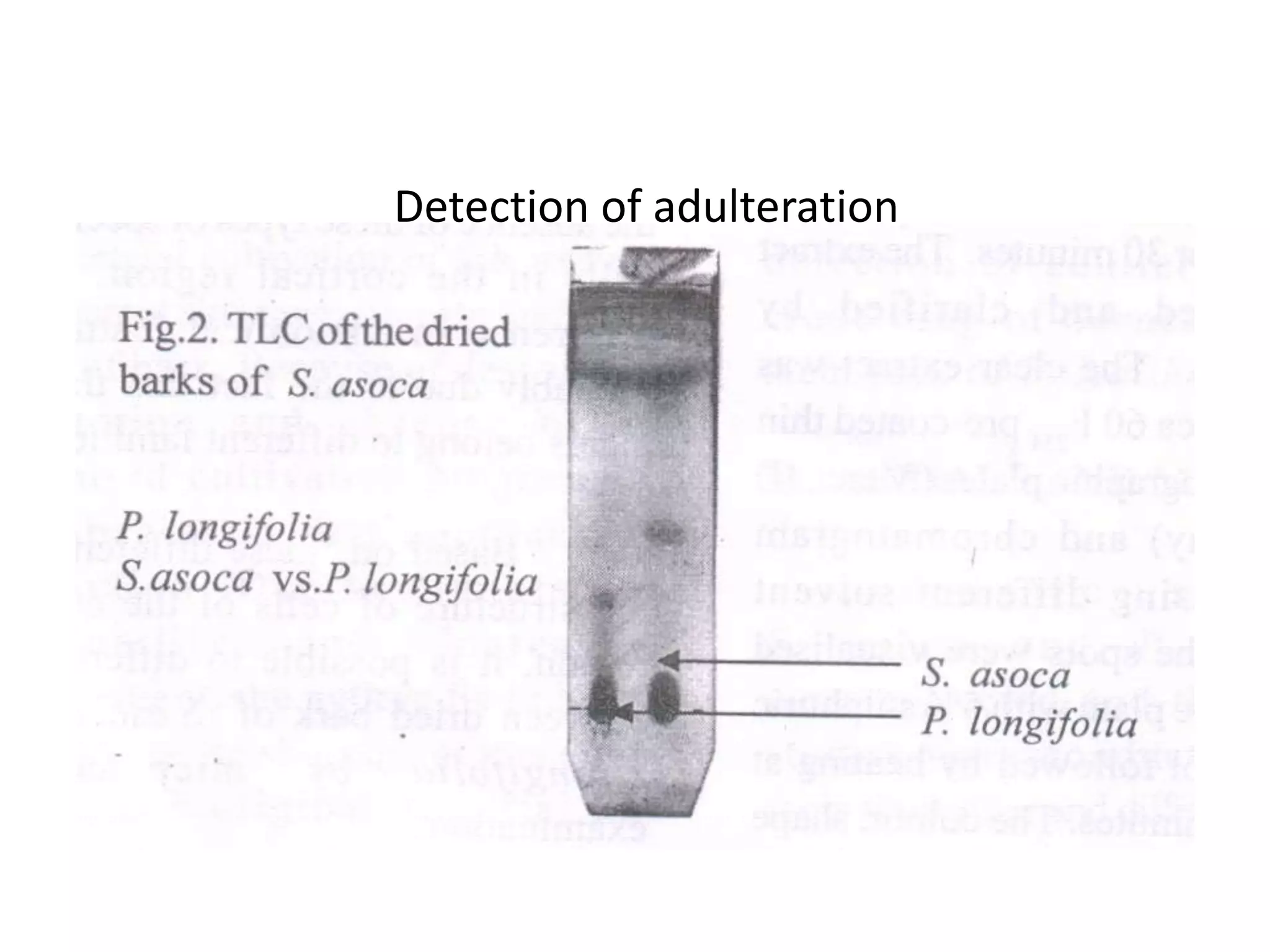
Detection of adulteration
Fingerprint of formulation
Heavy metal determination
• Contamination by toxic metals can either be
accidental or intentional
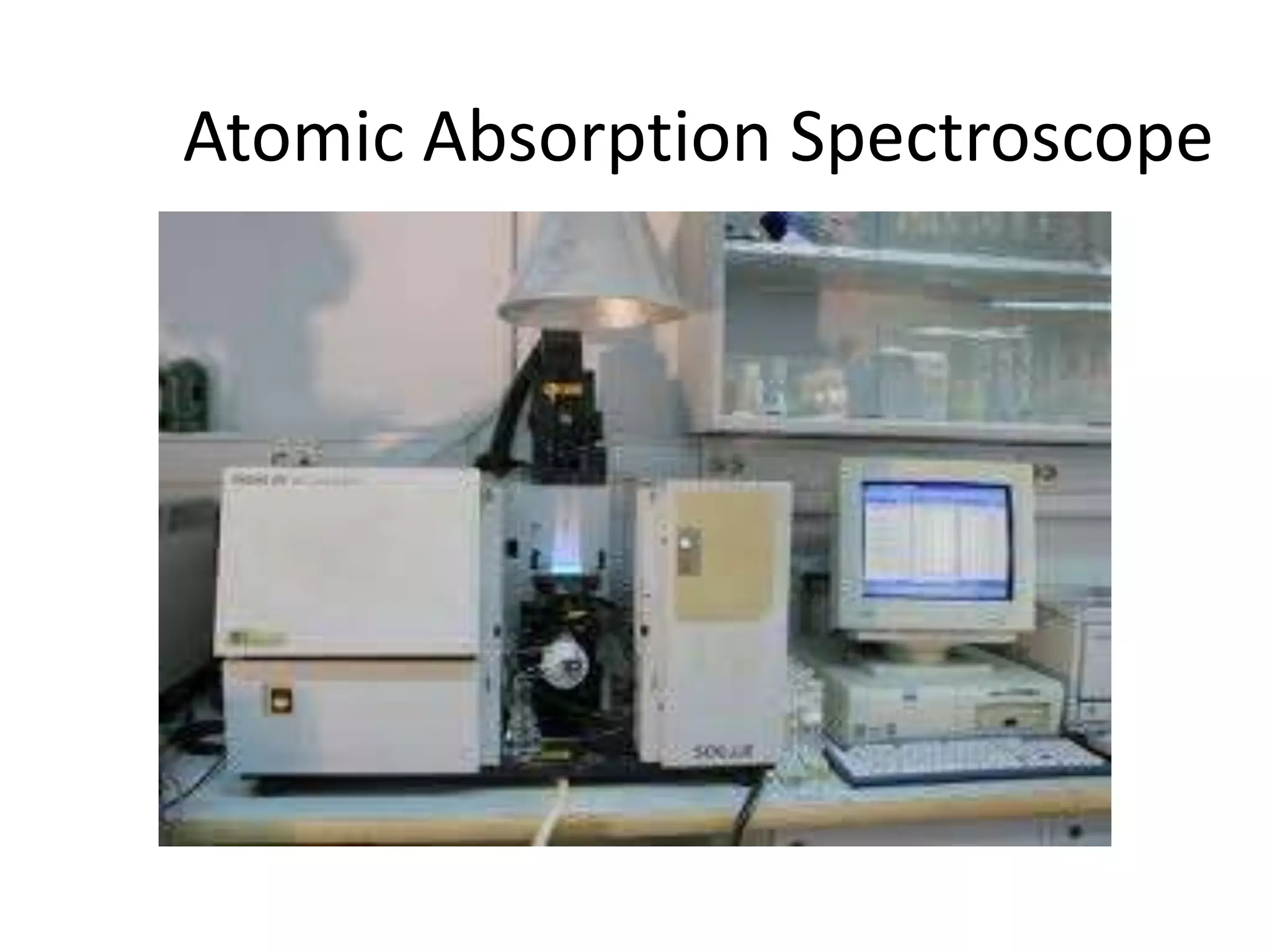
• the main instrumental method of analysis is
atomic absorption spectrophotometry (AAS),
Atomic Absorption Spectroscope
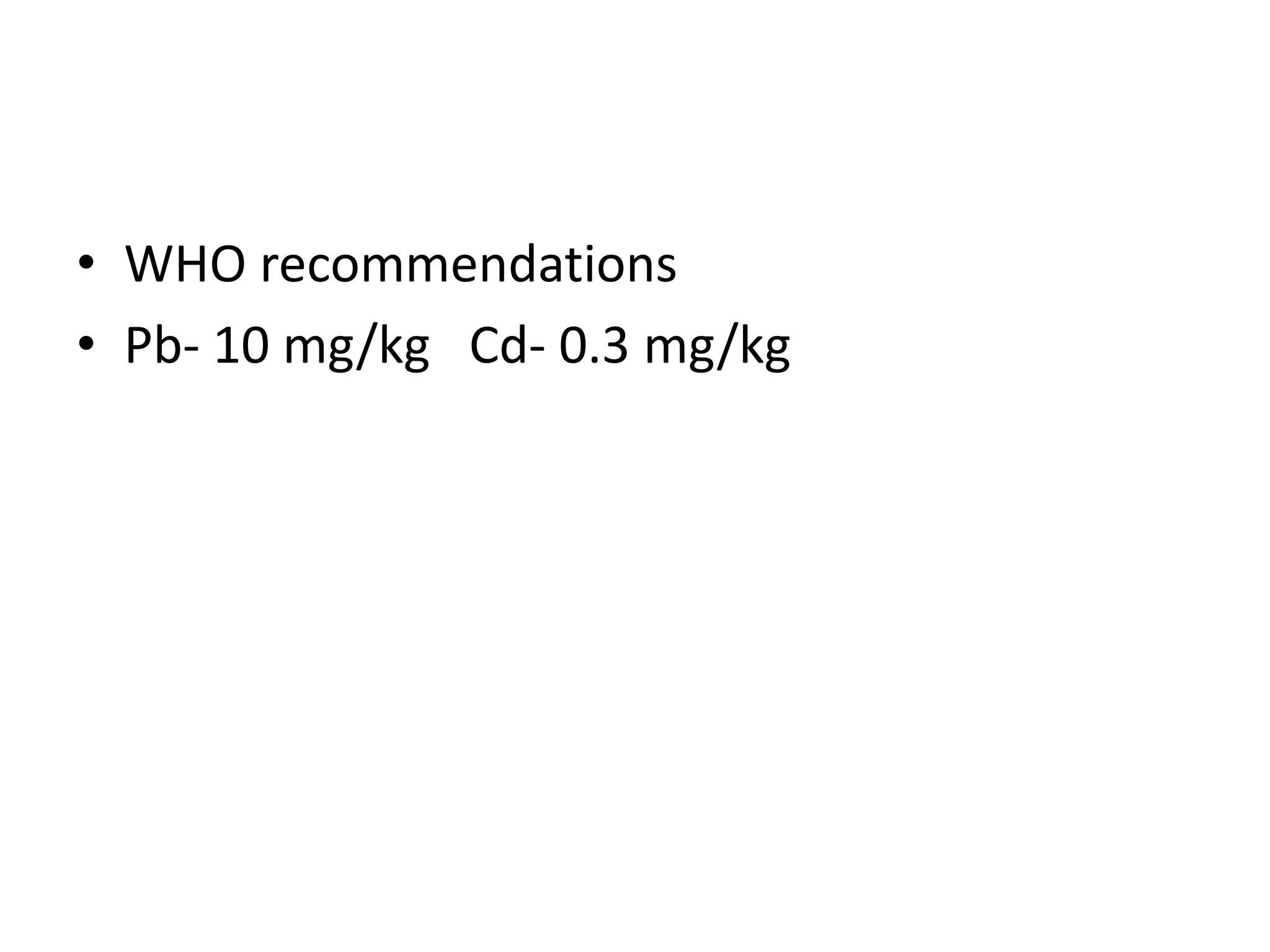
• WHO recommendations
• Pb- 10 mg/kg Cd- 0.3 mg/kg
Pesticide residue
• Pesticide residues accumulate from
agricultural practices, such as
spraying, treatment of soils during
cultivation, and administering of fumigants
during storage
• Limit of acceptable levels of pesticide
contamination is provided by various national
agencies and WHO.
MICROBIAL CONTAMINATION
PHARMACOLOGICAL SCREENING
TOXICOLOGICAL SCREENING
BIOLOGICAL
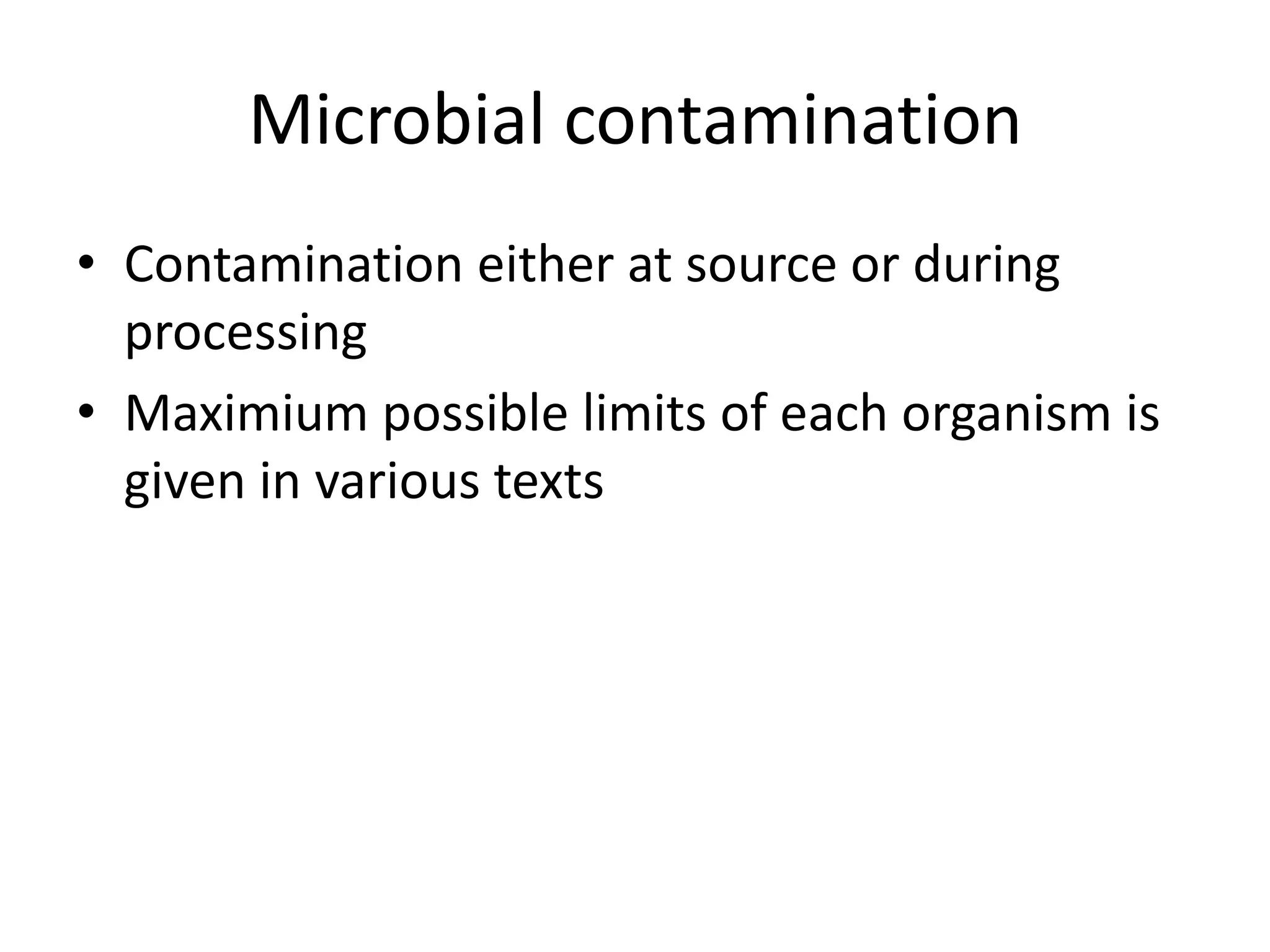
Microbial contamination
• Contamination either at source or during
processing
• Maximium possible limits of each organism is
given in various texts
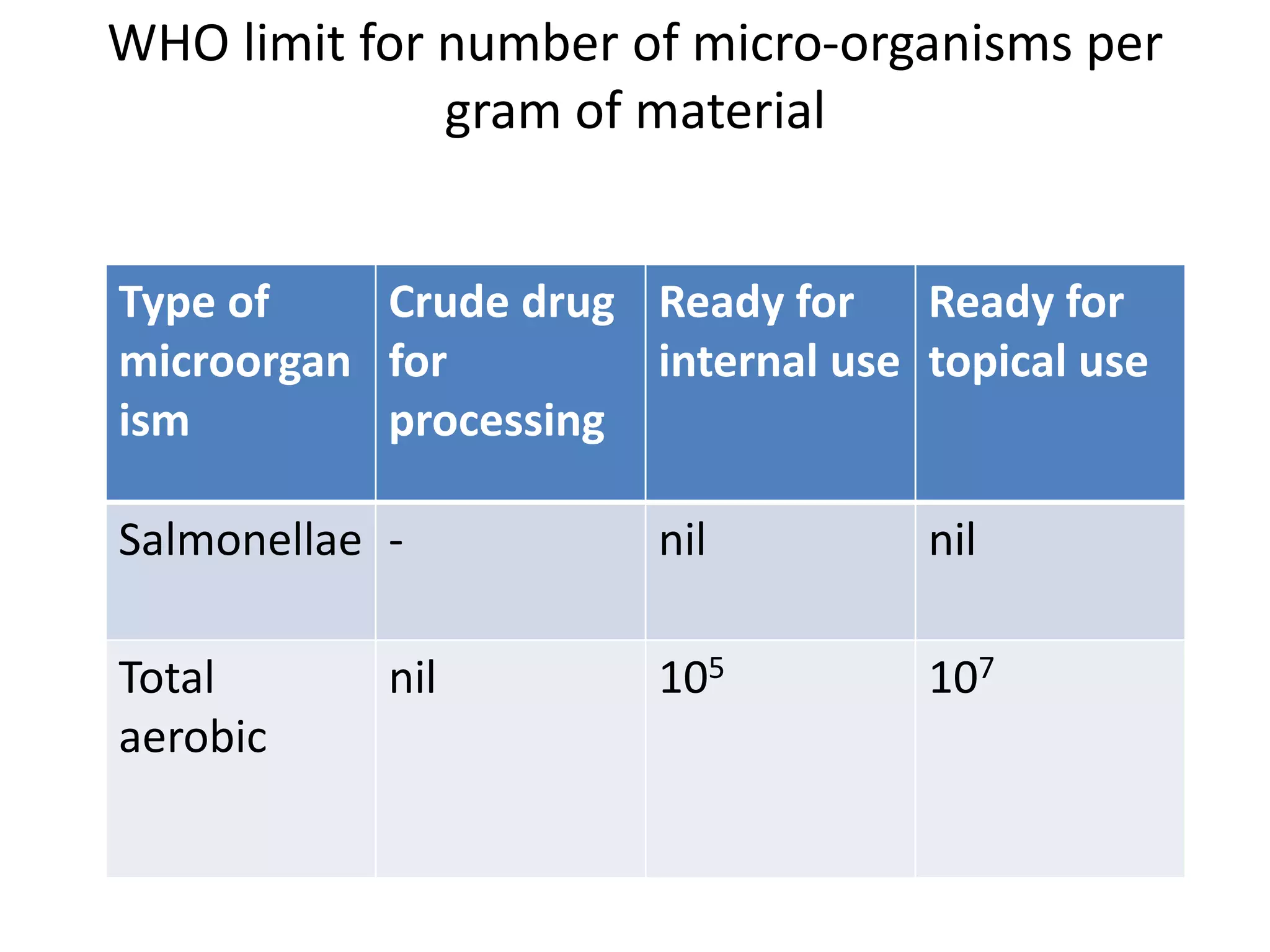
WHO limit for number of micro-organisms per
gram of material
Type of
microorgan
ism
Crude drug
for
processing
Ready for
internal use
Ready for
topical use
Salmonellae - nil nil
Total
aerobic
nil 105 107
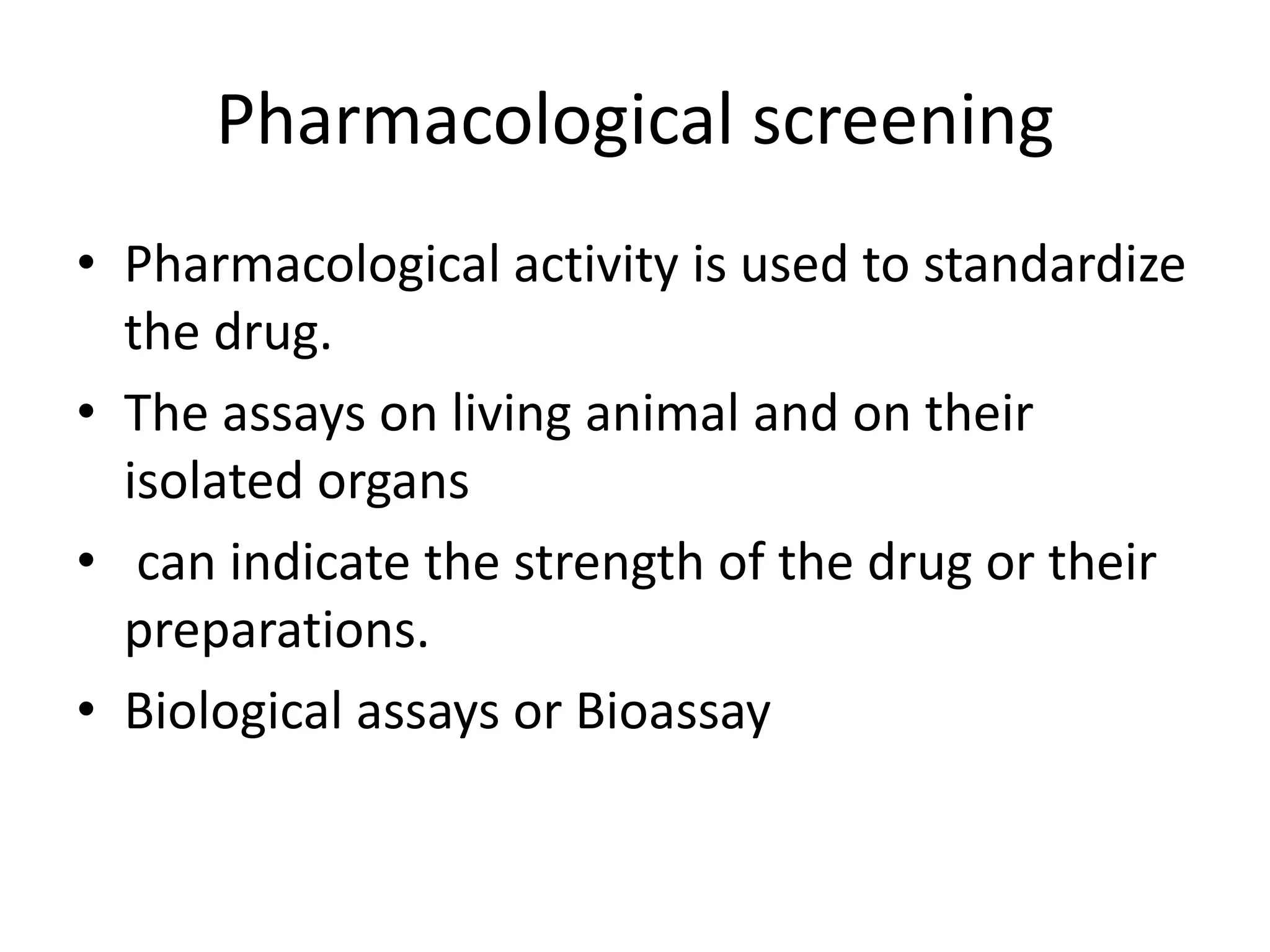
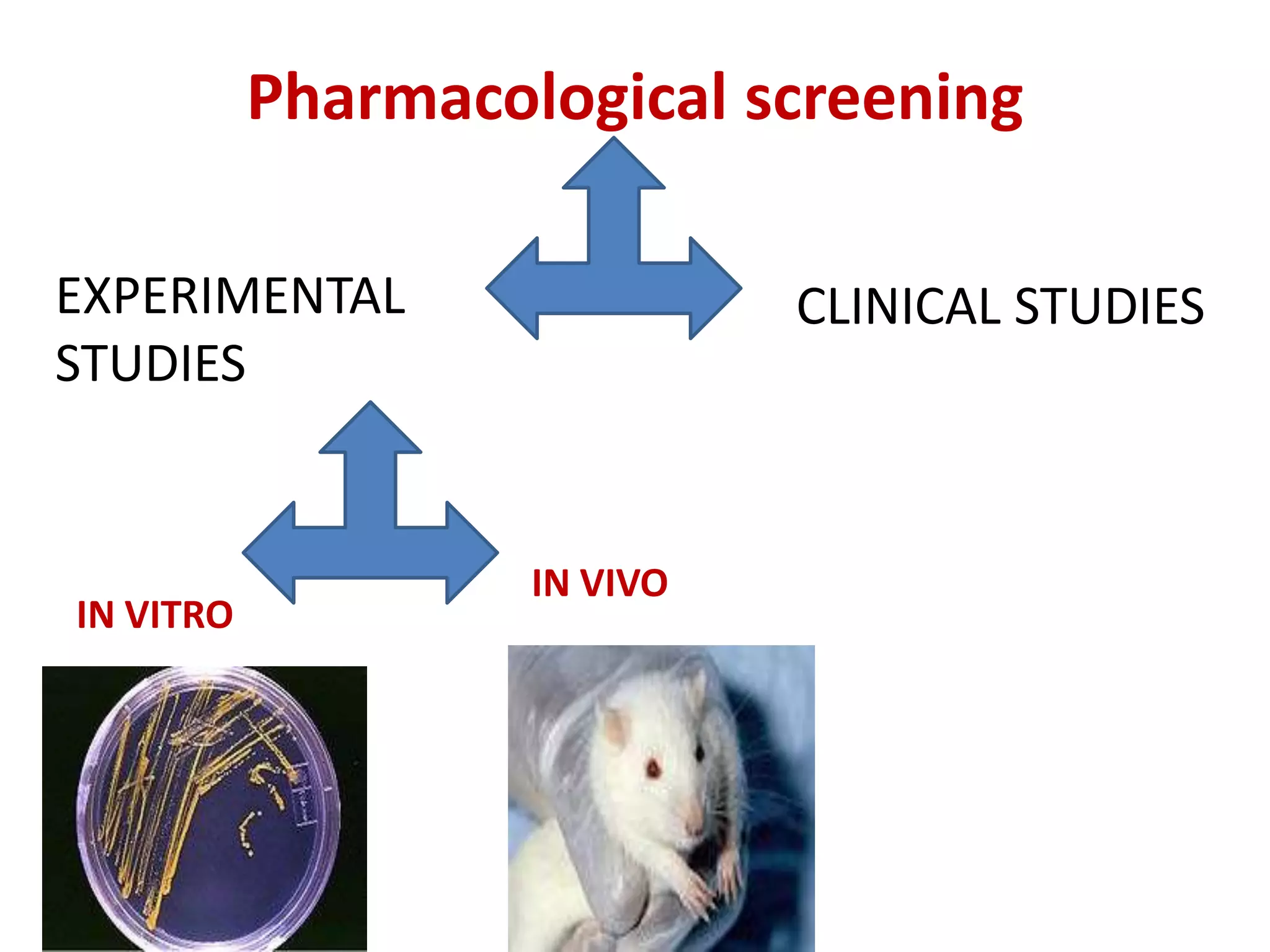
Pharmacological screening
• Pharmacological activity is used to standardize
the drug.
• The assays on living animal and on their
isolated organs
• can indicate the strength of the drug or their
preparations.
• Biological assays or Bioassay
Pharmacological screening
IN VITRO
IN VIVO
EXPERIMENTAL
STUDIES
CLINICAL STUDIES
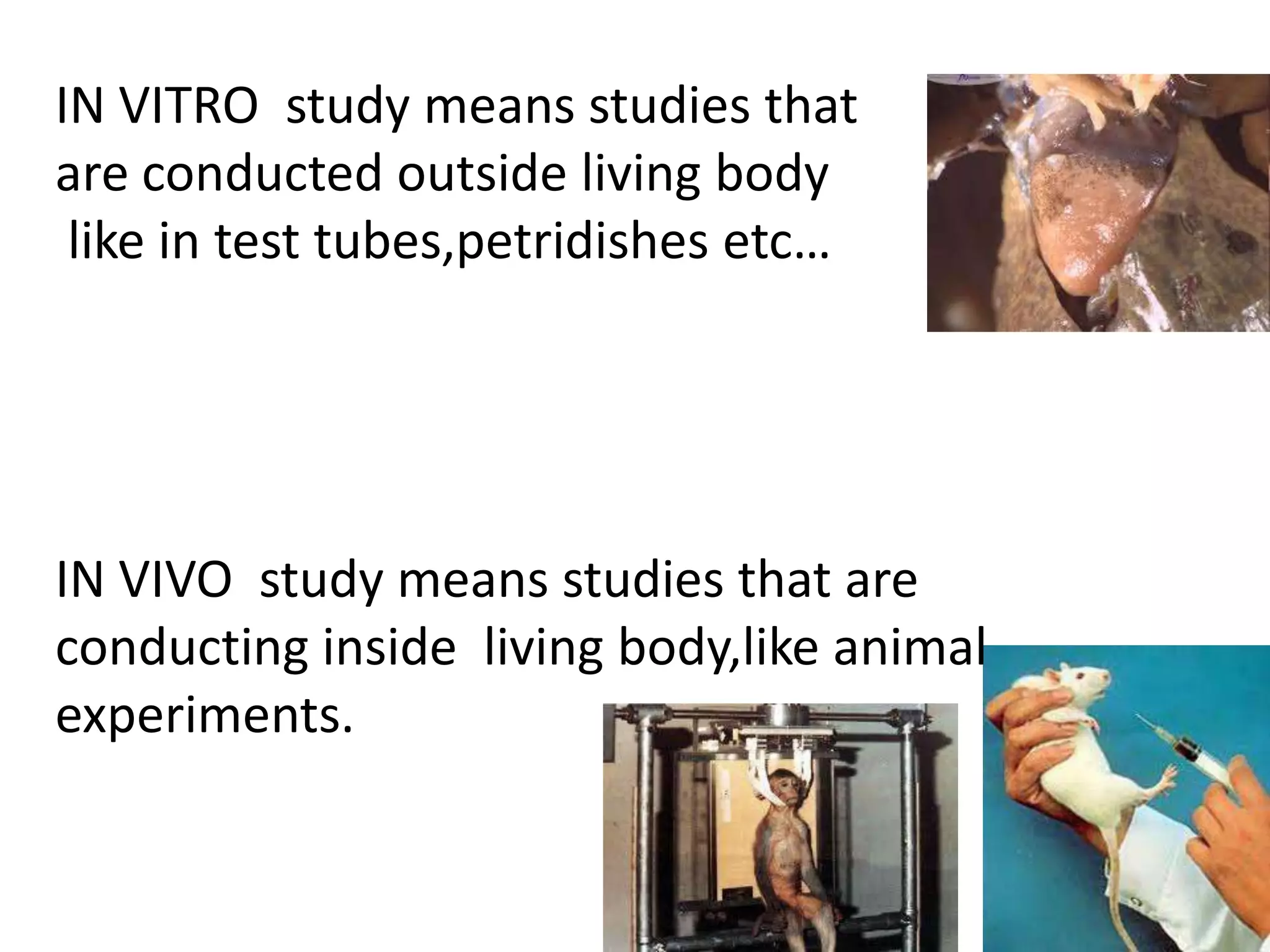
IN VITRO study means studies that
are conducted outside living body
like in test tubes,petridishes etc…
IN VIVO study means studies that are
conducting inside living body,like animal
experiments.
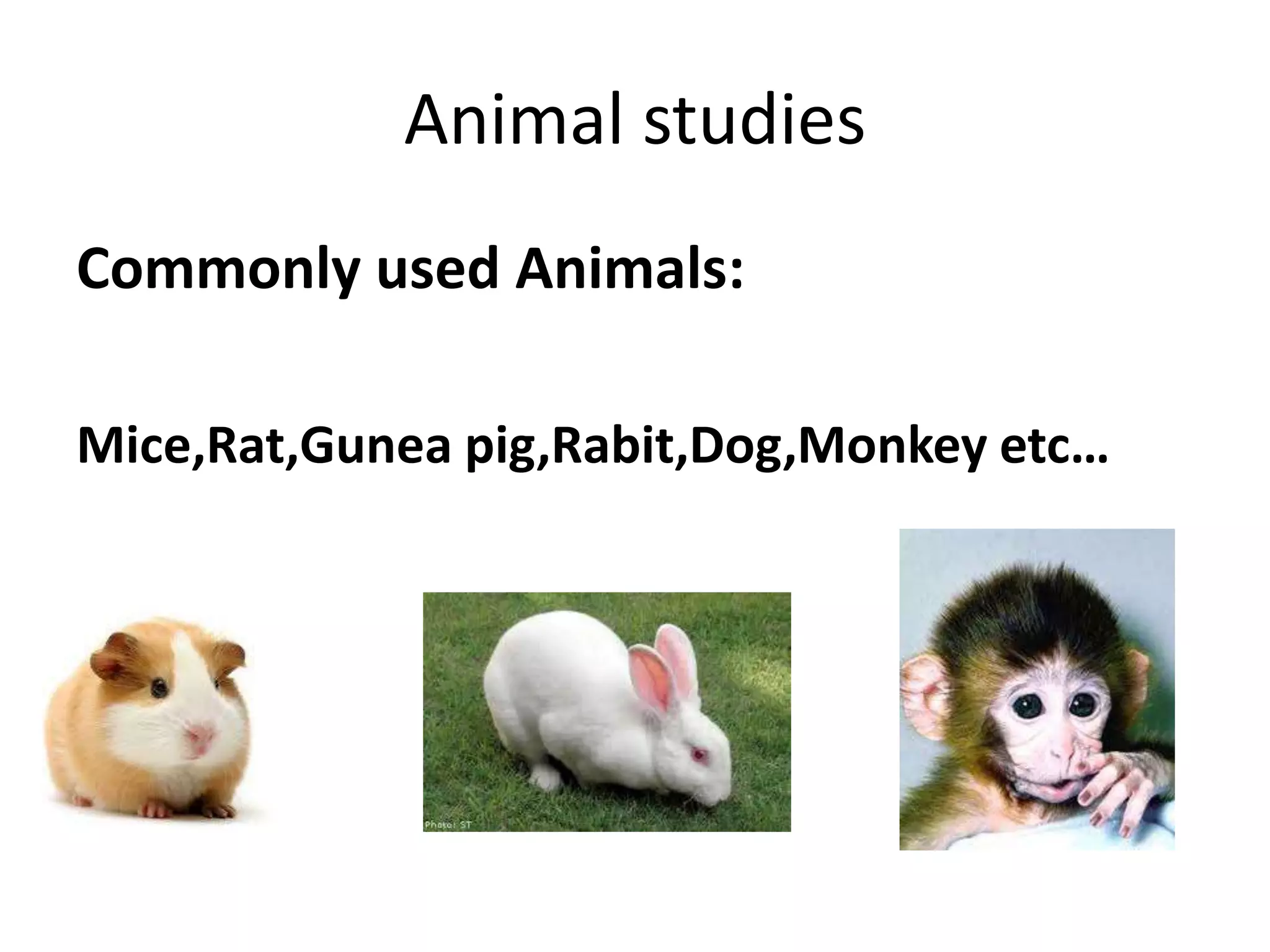
Animal studies
Commonly used Animals:
Mice,Rat,Gunea pig,Rabit,Dog,Monkey etc…
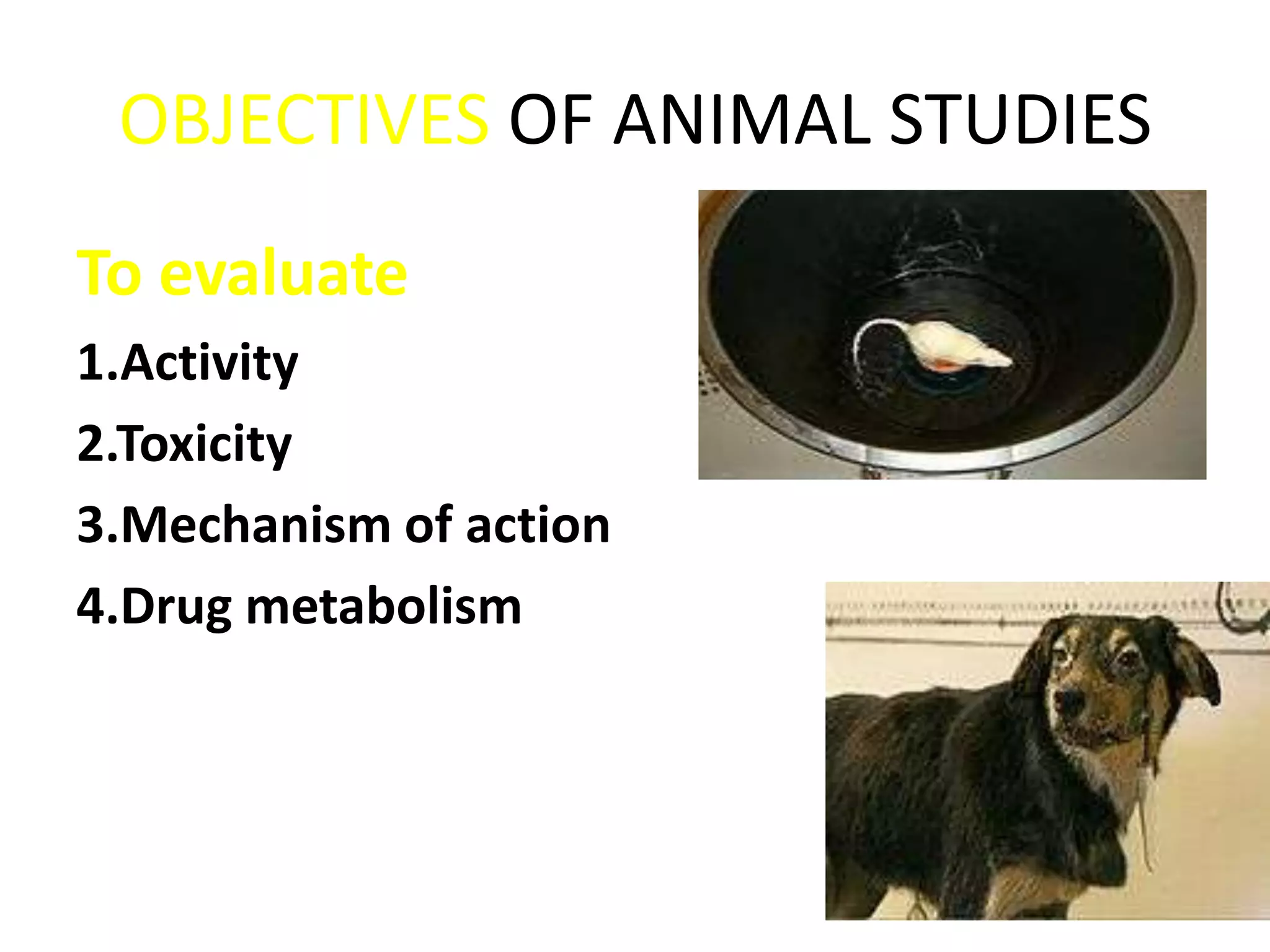
OBJECTIVES OF ANIMAL STUDIES
To evaluate
1.Activity
2.Toxicity
3.Mechanism of action
4.Drug metabolism
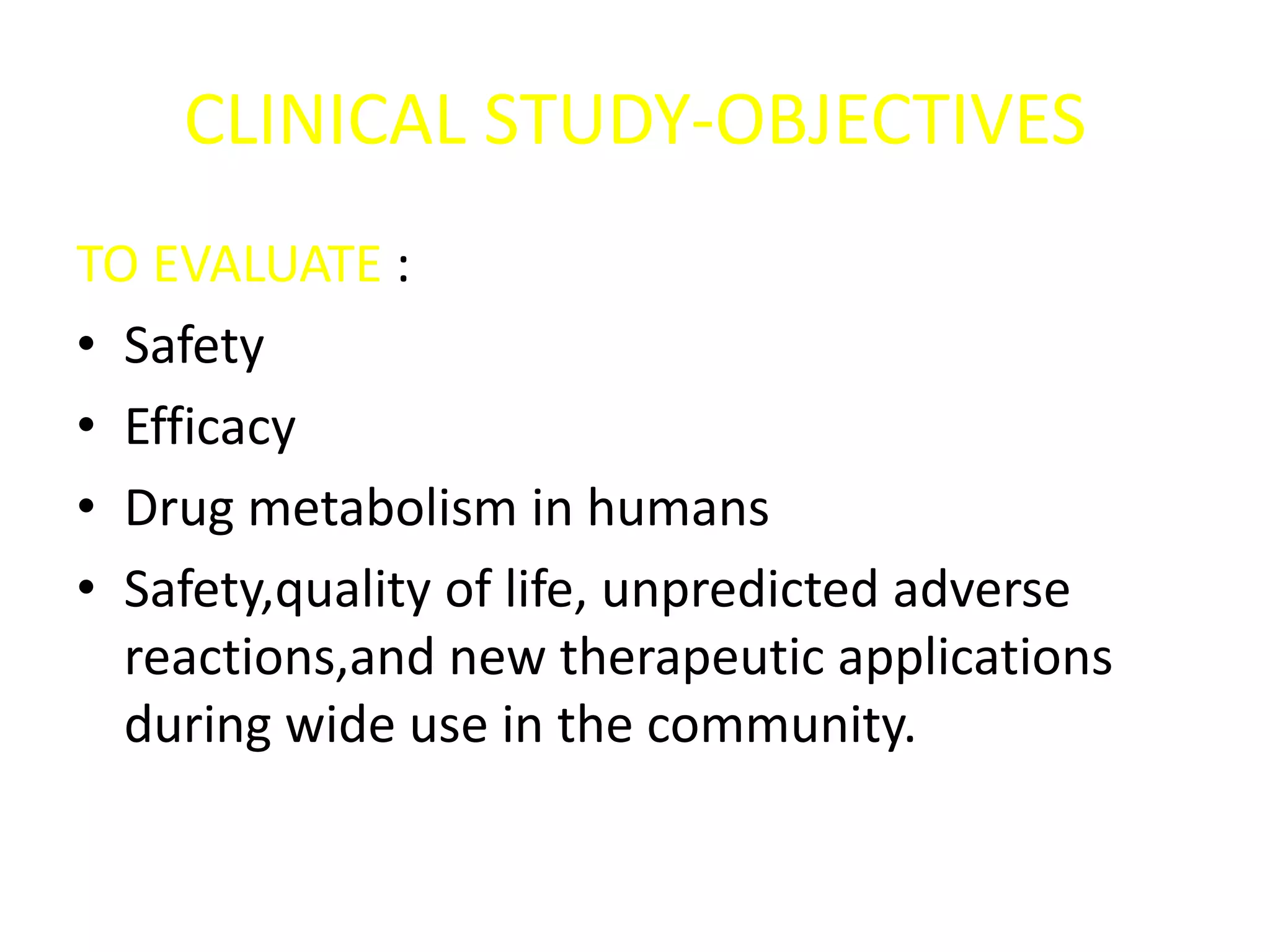
CLINICAL STUDY-OBJECTIVES
TO EVALUATE :
• Safety
• Efficacy
• Drug metabolism in humans
• Safety,quality of life, unpredicted adverse
reactions,and new therapeutic applications
during wide use in the community.
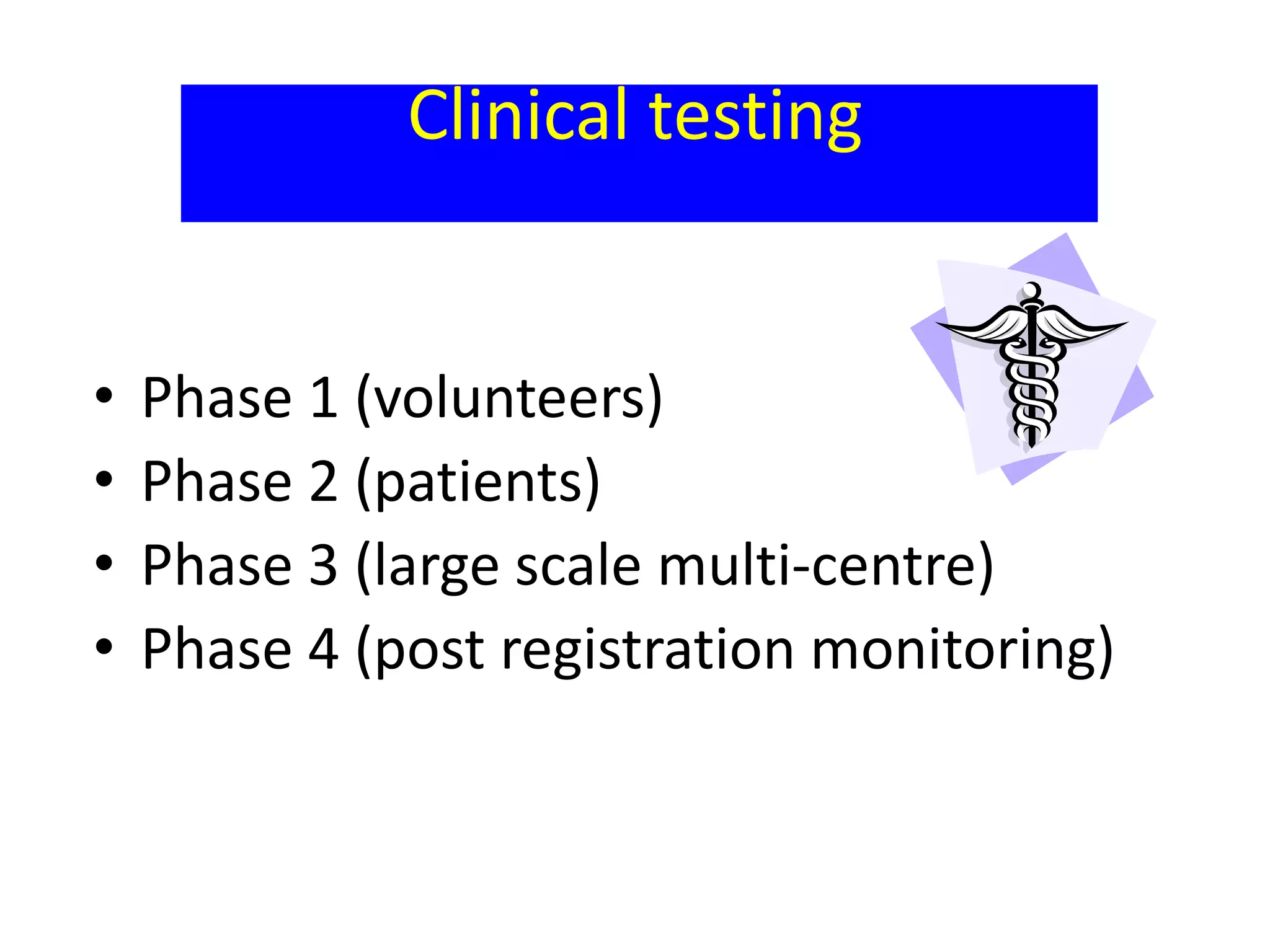
Clinical testing
• Phase 1 (volunteers)
• Phase 2 (patients)
• Phase 3 (large scale multi-centre)
• Phase 4 (post registration monitoring)
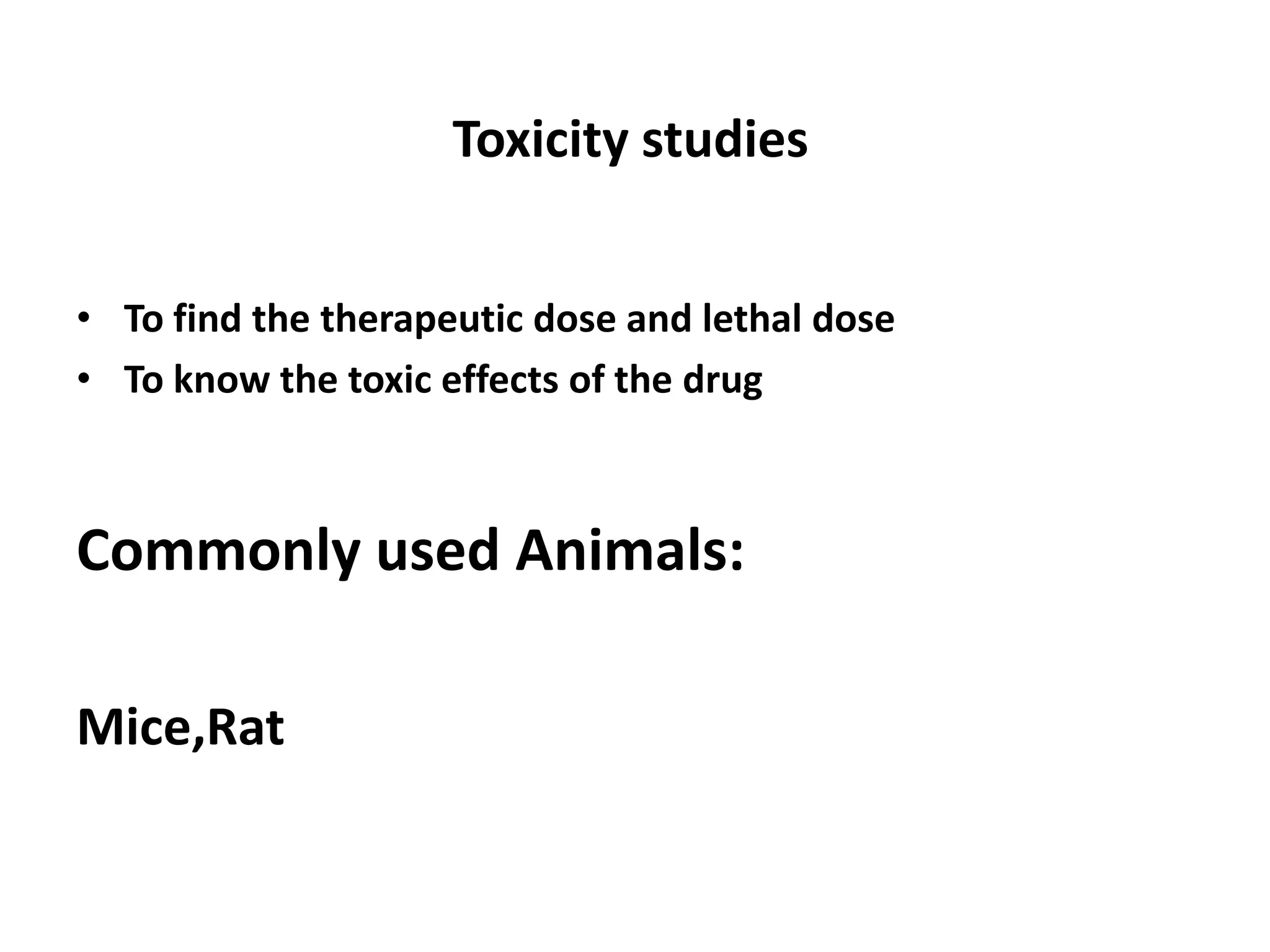
Toxicity studies
• To find the therapeutic dose and lethal dose
• To know the toxic effects of the drug
Commonly used Animals:
Mice,Rat
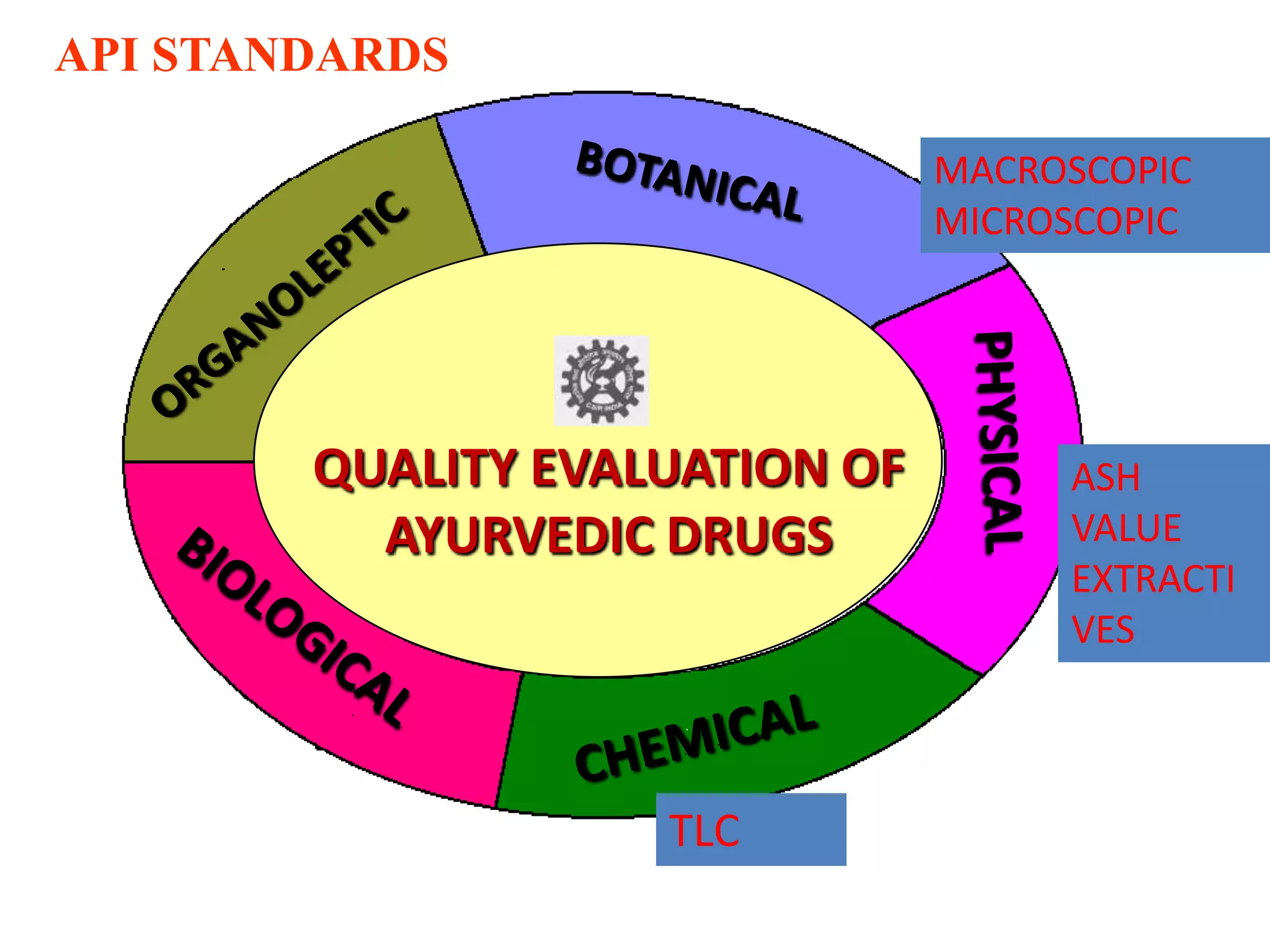
QUALITY EVALUATION OF
AYURVEDIC DRUGS
API STANDARDS
TLC
ASH
VALUE
EXTRACTI
VES
MACROSCOPIC
MICROSCOPIC
Will to implement these methods
• Let us help humanity and our science by
implementing these methods and thereby
providing safe, cost effective, affordable
therapeutics to the people and also
emerge as significant players in the global
market place
THANK YOU FOR YOUR
ATTENTION

important methods employed in quality control of ayurvedic drugs