Standard Infrastructure 
for Quality Eye Care Services 
DR. DIVYESH P. SHAH 
Sight First Technical Advisor, 
MD 322
The American Medical Association defines the 
quality of care services as “the degree to which 
[these] services influence the probability of 
optimal patient outcomes.
The World Health Organization offers a more 
comprehensive definition and divides 
quality in four sections : 
1 Professional performance 
2.Use of resources 
3 Risk management 
4 Patient satisfaction 
‘whole system’
Quality Infrastructure 
1. Planned OPD, IPD & OT 
2. Proper equipments 
3. Trained human resources 
4. Record maintenance 
5. Accreditations
Building and Infrastructure : 
1. Layout 
2. Maintenance 
3. Sanitation and Hygiene
Layout of facilities 
• Amenities OPD FACILITIES 
Reception 
– Seating 
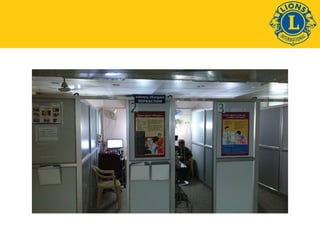
– Consulting rooms: optometrists, opthalmologists 
– Investigation rooms 
– Speciality clinics - Squint clinic, retinal clinic, glaucoma clinic 
etc 
– laser and minor procedures room 
– Patient counselor 
– Canteen 
– Banking / ATM 
– Medical Shop 
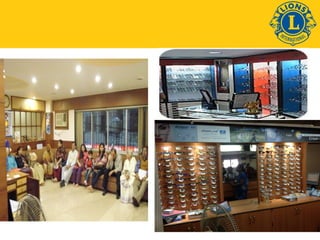
– Optical shop 
– Parking 
– Telephone facility 
– Travel Desk
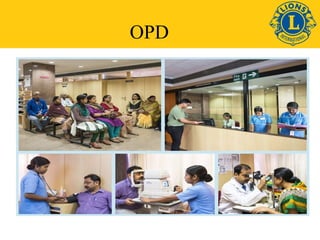
OPD
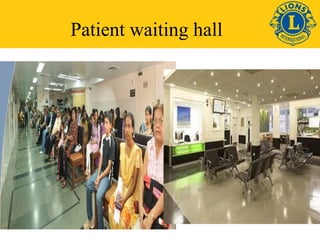
Patient waiting hall
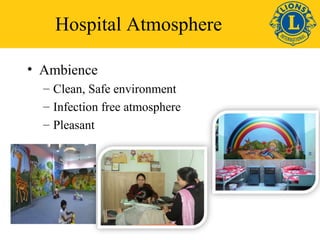
Hospital Atmosphere 
• Ambience 
– Clean, Safe environment 
– Infection free atmosphere 
– Pleasant
LAYOUT 
• IPD facilities – 
- proper OT layout 
- pre OT and post OT facilities 
- wards and private cabins 
- nurses station 
- emergency medicines and treatment 
facilities 
• Store
Operation Theatre 
• OT complex 
• Pre OT 
• OT walls and flooring 
• Laminar airflow 
• Septic OT 
• Autoclave room, proper autoclave, scrub 
area 
• Facilities for patient emergency
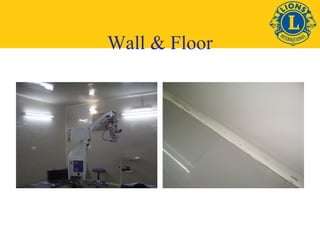
Wall & Floor
Floor and wall construction 
• Nonporous material with minimal joint is 
recommended for Walls and floors 
• Surface should be smooth for better 
disinfection. 
• Corners should be rounded 
• Thorough wiping of walls and floor with 
disinfectants is currently preferred to 
regular fumigation.
Theatre lay out and interior 
• Minimum two barriers are recommended 
between external air and the Operating 
Room. 
• Prevent entry of external air to prevent 
contamination of inside air. 
• No window in the theatre. 
• Any surface that may gather dust should be 
avoided like fans, cupboards etc. Only 
essentials 
• Split AC
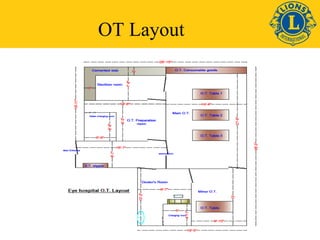
OT Layout
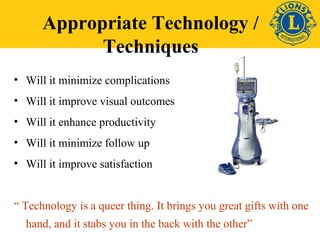
Appropriate Technology / 
Techniques 
• Will it minimize complications 
• Will it improve visual outcomes 
• Will it enhance productivity 
• Will it minimize follow up 
• Will it improve satisfaction 
“ Technology is a queer thing. It brings you great gifts with one 
hand, and it stabs you in the back with the other”
Monitoring surgical supplies 
• Use the same source 
• Periodic QC of the supplies used : irrigating solutions, 
viscoelastics, disposables etc 
• Check sterility, pH etc 
“Most worthwhile achievements are the result of 
many little things done in a single direction”
Safety Control 
• Electricity safety and Power Loss 
• Fire Safety 
• Biological Hazard 
• Reporting of Mishaps/ Just missed events.
Systems to Ensure 
Efficiency & Quality 
• Clinical Protocols 
• Standardization of procedures 
• Resources - Usage & Balancing 
• Staff Training & Discipline 
• Documentation Systems
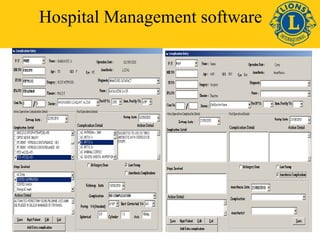
Hospital Management software
Total Computerization 
• Administrative 
• Medical records 
• Finance and Book keeping
Human resources 
1. Trained staff 
2. Technical Skills 
3. Task to skill matching for individual 
“you can have the best strategy and best 
building in the world, but if you don’t have 
the hearts and minds of the people who 
work with you, none of it comes to life”
Appropriate use of manpower 
• Increases out put & Reduces cost 
• Maintains quality of skill at high level 
• Eliminate non-productive activities 
• Increases job satisfaction 
“ At the end you bet on people , not on 
strategies”
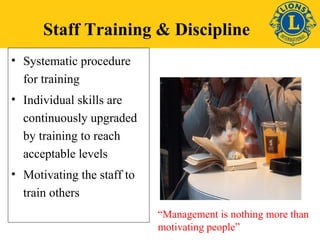
Staff Training & Discipline 
• Systematic procedure 
for training 
• Individual skills are 
continuously upgraded 
by training to reach 
acceptable levels 
• Motivating the staff to 
train others 
“Management is nothing more than 
motivating people”
Standardization of procedures 
• Essential to streamline workflow 
• Person responsible for each task/process identified 
• Expected outcomes quantitatively & qualitatively 
well defined 
• Clarity is achieved by frequent discussion and re-emphasis
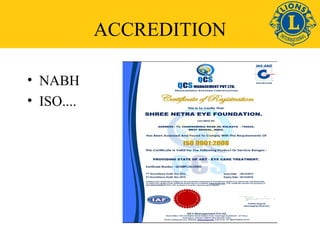
ACCREDITION 
• NABH 
• ISO....
What is Accreditation 
• Accreditation means Certification of competence in a 
specified subject or areas of expertise by external 
agencies. 
• There are four principal component 
1. It is based on written and published standards 
2. Reviews are conducted by professional peers 
3. The accreditation process is administered by an 
independent body 
4. The aim of accreditation is to encourage 
organizational development. 
5. On going process
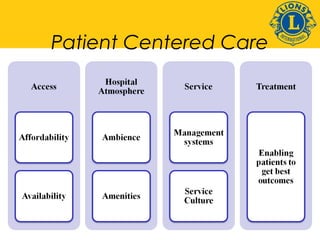
Patient Centered Care
Effective philanthropy requires a lot of 
time and creativity – the same kind of focus 
and skills that building a business requires 
-- Bill Gates 
THANK YOU 
DR DIVYESH P SHAH, TA MD 322
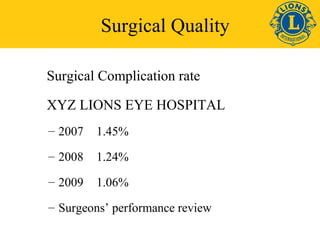
Surgical Quality 
Surgical Complication rate 
XYZ LIONS EYE HOSPITAL 
– 2007 1.45% 
– 2008 1.24% 
– 2009 1.06% 
– Surgeons’ performance review
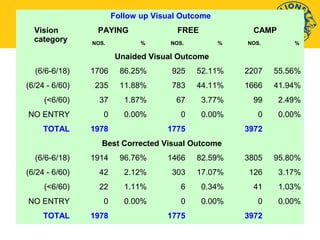
Follow up Visual Outcome 
Vision 
category 
PAYING FREE CAMP 
NOS. % NOS. % NOS. % 
Unaided Visual Outcome 
(6/6-6/18) 1706 86.25% 925 52.11% 2207 55.56% 
(6/24 - 6/60) 235 11.88% 783 44.11% 1666 41.94% 
(<6/60) 37 1.87% 67 3.77% 99 2.49% 
NO ENTRY 0 0.00% 0 0.00% 0 0.00% 
TOTAL 1978 1775 3972 
Best Corrected Visual Outcome 
(6/6-6/18) 1914 96.76% 1466 82.59% 3805 95.80% 
(6/24 - 6/60) 42 2.12% 303 17.07% 126 3.17% 
(<6/60) 22 1.11% 6 0.34% 41 1.03% 
NO ENTRY 0 0.00% 0 0.00% 0 0.00% 
TOTAL 1978 1775 3972
Compliance to Treatment 
• Counseling – Providing maximum 
information 
• Health Education inputs – Audio Visual 
aids (Brochures, posters, pamphlets, etc.,) 
• Informed decision making 
– Risks, complications, benefits, alternative 
procedures, guarded prognosis, etc.,
Comprehensive Eye Examination 
• History 
• Visual Acuity/Refraction 
• Systemic Examination (BP/Blood sugar) 
• IOP 
• External torch light examination 
• Slit Lamp Examination 
• Fundus Examination
Non-medical needs
Employee safety and Policies
To prevent mistakes 
• Create culture of safety 
• “First do no harm” 
• Improve Processes 
– Reduce complexity 
– Develop reliable processes 
– Create independent checks for key 
processes 
• Make the organization depend on systems and 
not on individuals
Most of the errors / failures go 
unreported… 
Due to 
 staff fear of reprisal 
 lack of adequate systems to report 
 limited staff education about safety and report process 
and 
 lack of computerized surveillance systems 
So, So, alleviate alleviate the the fear fear of of reporting reporting through through training 
training 
and sharing the importance of IR system 
and sharing the importance of IR system
Hospital Assessment Tool 
• Dr. Moses file on Assessment
• Safety - 
• Patient-Centred - care should be based on individual needs 
• Timely - waits and delays in care should be reduced 
• Effective - care should be evidence-based 
• Efficient – best use of resources and reduced waste 
• Equitable - care should be equal for all people irrespective their gender, 
economic status, caste, religion, etc
Access 
Availability 
•Core services matching the community needs 
•All services under one roof 
•Outreach programs 
•Open Access system
Core result of service: 
Patient satisfaction 
Handling patient complaints promptly improves 
satisfaction 
satisfaction 
• Patient complaint is 
everybody’s 
responsibility 
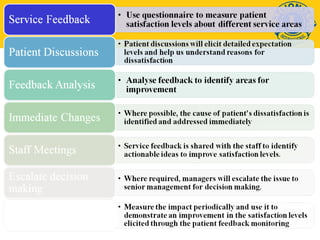
• Viewing Complaints as 
feedback for improvement 
• Patient feedback 
monitoring

Standard infrastructure for quality eye care services

  • 1.
    Standard Infrastructure forQuality Eye Care Services DR. DIVYESH P. SHAH Sight First Technical Advisor, MD 322
  • 2.
    The American MedicalAssociation defines the quality of care services as “the degree to which [these] services influence the probability of optimal patient outcomes.
  • 3.
    The World HealthOrganization offers a more comprehensive definition and divides quality in four sections : 1 Professional performance 2.Use of resources 3 Risk management 4 Patient satisfaction ‘whole system’
  • 4.
    Quality Infrastructure 1.Planned OPD, IPD & OT 2. Proper equipments 3. Trained human resources 4. Record maintenance 5. Accreditations
  • 5.
    Building and Infrastructure: 1. Layout 2. Maintenance 3. Sanitation and Hygiene
  • 6.
    Layout of facilities • Amenities OPD FACILITIES Reception – Seating – Consulting rooms: optometrists, opthalmologists – Investigation rooms – Speciality clinics - Squint clinic, retinal clinic, glaucoma clinic etc – laser and minor procedures room – Patient counselor – Canteen – Banking / ATM – Medical Shop – Optical shop – Parking – Telephone facility – Travel Desk
  • 7.
  • 8.
  • 11.
    Hospital Atmosphere •Ambience – Clean, Safe environment – Infection free atmosphere – Pleasant
  • 12.
    LAYOUT • IPDfacilities – - proper OT layout - pre OT and post OT facilities - wards and private cabins - nurses station - emergency medicines and treatment facilities • Store
  • 13.
    Operation Theatre •OT complex • Pre OT • OT walls and flooring • Laminar airflow • Septic OT • Autoclave room, proper autoclave, scrub area • Facilities for patient emergency
  • 14.
  • 15.
    Floor and wallconstruction • Nonporous material with minimal joint is recommended for Walls and floors • Surface should be smooth for better disinfection. • Corners should be rounded • Thorough wiping of walls and floor with disinfectants is currently preferred to regular fumigation.
  • 16.
    Theatre lay outand interior • Minimum two barriers are recommended between external air and the Operating Room. • Prevent entry of external air to prevent contamination of inside air. • No window in the theatre. • Any surface that may gather dust should be avoided like fans, cupboards etc. Only essentials • Split AC
  • 17.
  • 18.
    Appropriate Technology / Techniques • Will it minimize complications • Will it improve visual outcomes • Will it enhance productivity • Will it minimize follow up • Will it improve satisfaction “ Technology is a queer thing. It brings you great gifts with one hand, and it stabs you in the back with the other”
  • 19.
    Monitoring surgical supplies • Use the same source • Periodic QC of the supplies used : irrigating solutions, viscoelastics, disposables etc • Check sterility, pH etc “Most worthwhile achievements are the result of many little things done in a single direction”
  • 20.
    Safety Control •Electricity safety and Power Loss • Fire Safety • Biological Hazard • Reporting of Mishaps/ Just missed events.
  • 21.
    Systems to Ensure Efficiency & Quality • Clinical Protocols • Standardization of procedures • Resources - Usage & Balancing • Staff Training & Discipline • Documentation Systems
  • 22.
  • 23.
    Total Computerization •Administrative • Medical records • Finance and Book keeping
  • 24.
    Human resources 1.Trained staff 2. Technical Skills 3. Task to skill matching for individual “you can have the best strategy and best building in the world, but if you don’t have the hearts and minds of the people who work with you, none of it comes to life”
  • 25.
    Appropriate use ofmanpower • Increases out put & Reduces cost • Maintains quality of skill at high level • Eliminate non-productive activities • Increases job satisfaction “ At the end you bet on people , not on strategies”
  • 26.
    Staff Training &Discipline • Systematic procedure for training • Individual skills are continuously upgraded by training to reach acceptable levels • Motivating the staff to train others “Management is nothing more than motivating people”
  • 27.
    Standardization of procedures • Essential to streamline workflow • Person responsible for each task/process identified • Expected outcomes quantitatively & qualitatively well defined • Clarity is achieved by frequent discussion and re-emphasis
  • 28.
  • 29.
    What is Accreditation • Accreditation means Certification of competence in a specified subject or areas of expertise by external agencies. • There are four principal component 1. It is based on written and published standards 2. Reviews are conducted by professional peers 3. The accreditation process is administered by an independent body 4. The aim of accreditation is to encourage organizational development. 5. On going process
  • 30.
  • 32.
    Effective philanthropy requiresa lot of time and creativity – the same kind of focus and skills that building a business requires -- Bill Gates THANK YOU DR DIVYESH P SHAH, TA MD 322
  • 33.
    Surgical Quality SurgicalComplication rate XYZ LIONS EYE HOSPITAL – 2007 1.45% – 2008 1.24% – 2009 1.06% – Surgeons’ performance review
  • 34.
    Follow up VisualOutcome Vision category PAYING FREE CAMP NOS. % NOS. % NOS. % Unaided Visual Outcome (6/6-6/18) 1706 86.25% 925 52.11% 2207 55.56% (6/24 - 6/60) 235 11.88% 783 44.11% 1666 41.94% (<6/60) 37 1.87% 67 3.77% 99 2.49% NO ENTRY 0 0.00% 0 0.00% 0 0.00% TOTAL 1978 1775 3972 Best Corrected Visual Outcome (6/6-6/18) 1914 96.76% 1466 82.59% 3805 95.80% (6/24 - 6/60) 42 2.12% 303 17.07% 126 3.17% (<6/60) 22 1.11% 6 0.34% 41 1.03% NO ENTRY 0 0.00% 0 0.00% 0 0.00% TOTAL 1978 1775 3972
  • 35.
    Compliance to Treatment • Counseling – Providing maximum information • Health Education inputs – Audio Visual aids (Brochures, posters, pamphlets, etc.,) • Informed decision making – Risks, complications, benefits, alternative procedures, guarded prognosis, etc.,
  • 36.
    Comprehensive Eye Examination • History • Visual Acuity/Refraction • Systemic Examination (BP/Blood sugar) • IOP • External torch light examination • Slit Lamp Examination • Fundus Examination
  • 37.
  • 38.
  • 39.
    To prevent mistakes • Create culture of safety • “First do no harm” • Improve Processes – Reduce complexity – Develop reliable processes – Create independent checks for key processes • Make the organization depend on systems and not on individuals
  • 40.
    Most of theerrors / failures go unreported… Due to  staff fear of reprisal  lack of adequate systems to report  limited staff education about safety and report process and  lack of computerized surveillance systems So, So, alleviate alleviate the the fear fear of of reporting reporting through through training training and sharing the importance of IR system and sharing the importance of IR system
  • 41.
    Hospital Assessment Tool • Dr. Moses file on Assessment
  • 42.
    • Safety - • Patient-Centred - care should be based on individual needs • Timely - waits and delays in care should be reduced • Effective - care should be evidence-based • Efficient – best use of resources and reduced waste • Equitable - care should be equal for all people irrespective their gender, economic status, caste, religion, etc
  • 43.
    Access Availability •Coreservices matching the community needs •All services under one roof •Outreach programs •Open Access system
  • 44.
    Core result ofservice: Patient satisfaction Handling patient complaints promptly improves Handling patient complaints promptly improves satisfaction satisfaction • Patient complaint is everybody’s responsibility • Viewing Complaints as feedback for improvement • Patient feedback monitoring