Stakeholder
Management
Indirect practices and tools & techniques
to apply for project success Meral Altinbilek
Christine Aykac
About us
Meral Altinbilek, MSc., P.Eng., PMP, PMI-ACP
N. Christine Aykac, PMP, PMI-RMP, PMI-ACP, PRINCE2, PRINCE2 Agile
Project Manager, Agile Coach, Facilitator & Trainer
 Focus on Project, Risk, Agile & Interpersonal Skills teaching
 Customized awareness programs and workshops
 Together 50+ years of project and program management
experience
2
Learning
Objectives
 Recognize the direct impact of stakeholder
management to project success.
 Understand the practical tools and techniques
for managing and engaging your stakeholders
to your advantage
 Learn how to create a Stakeholder
Management plan
 Q &A
3
“The single biggest problem
in communication is the
illusion that it has taken
place.”
George Bernard Shaw
Communication
is the key
4
Who Said it
first ? Guess ?
5
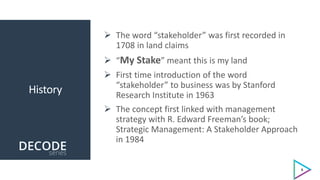
History
 The word “stakeholder” was first recorded in
1708 in land claims
 “My Stake” meant this is my land
 First time introduction of the word
“stakeholder” to business was by Stanford
Research Institute in 1963
 The concept first linked with management
strategy with R. Edward Freeman’s book;
Strategic Management: A Stakeholder Approach
in 1984
6
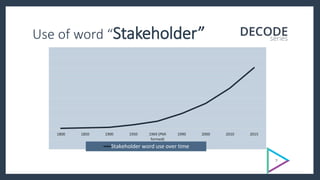
Use of word “Stakeholder”
1800 1850 1900 1950 1969 (PMI
formed)
1990 2000 2010 2015
Stakeholder word use over time
7
Everyone
Counts
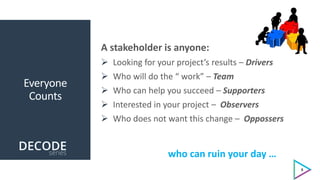
A stakeholder is anyone:
 Looking for your project’s results – Drivers
 Who will do the “ work” – Team
 Who can help you succeed – Supporters
 Interested in your project – Observers
 Who does not want this change – Oppossers
who can ruin your day …
8
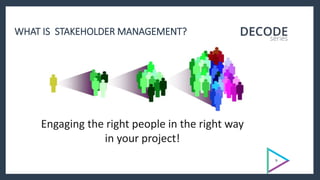
WHAT IS STAKEHOLDER MANAGEMENT?
Engaging the right people in the right way
in your project!
9
Why Stakeholder
Management?
 To develop relationships with all individuals
and manage their impacts to your project
 To be better able to:
 Keep a lid on scope creep
 Ensure project requirements are aligned
 Understand tolerance for risk, and
 Mitigate issues
10
TECHNIQUE TO CONSIDER
To
Start
Explore these questions:
 Who are the stakeholders?
 What does each stakeholder expect from the
project?
 How will satisfaction be measured across the
organization?
12
Understand
Your Key
Stakeholders
 Interest? Positive or Negative?
 Motivation?
 What do they want?
 Their opinion of your work?
 Who influences them?
 How to win them?
 How will you manage the people who oppose
you?
 Who influences your opponents?
13
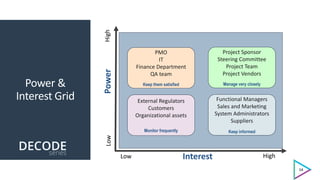
Power &
Interest Grid
PMO
IT
Finance Department
QA team
Keep them satisfied
External Regulators
Customers
Organizational assets
Monitor frequently
Project Sponsor
Steering Committee
Project Team
Project Vendors
Manage very closely
Functional Managers
Sales and Marketing
System Administrators
Suppliers
Keep informed
LowHigh
Interest
Power
Low High
14
MANAGE STAKEHOLDER
ENGAGEMENT
How to Keep
Stakeholders
Happy?
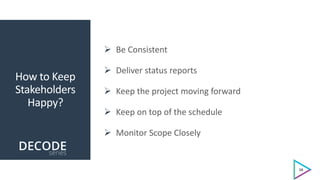
 Be Consistent
 Deliver status reports
 Keep the project moving forward
 Keep on top of the schedule
 Monitor Scope Closely
16
Key Artifacts &
Controls
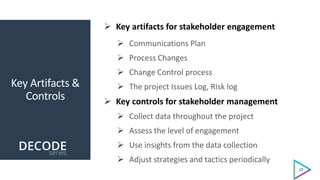
 Key artifacts for stakeholder engagement
 Communications Plan
 Process Changes
 Change Control process
 The project Issues Log, Risk log
 Key controls for stakeholder management
 Collect data throughout the project
 Assess the level of engagement
 Use insights from the data collection
 Adjust strategies and tactics periodically
17
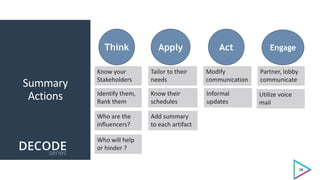
Summary
Actions
Think
Know your
Stakeholders
Identify them,
Rank them
Who are the
influencers?
Tailor to their
needs
Know their
schedules
Modify
communication
Partner, lobby
communicate
Who will help
or hinder ?
Add summary
to each artifact
Informal
updates
Apply Act Engage
Utilize voice
mail
18
Last but not least …
Good Stakeholder Management helps you to
manage the politics that can often come
with major projects.
It helps you win support for your projects and
eliminates a major source of project and
work stress.
19
QUESTION & ANSWER
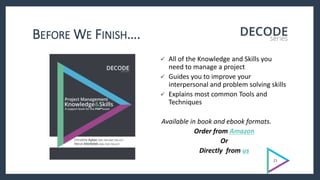
BEFORE WE FINISH….
 All of the Knowledge and Skills you
need to manage a project
 Guides you to improve your
interpersonal and problem solving skills
 Explains most common Tools and
Techniques
Available in book and ebook formats.
Order from Amazon
Or
Directly from us
21
Thank You!
Meral Altinbilek, MSc., P.Eng., PMP, PMI-ACP
N. Christine Aykac, PMP, PMI-RMP, PMI-ACP, PRINCE2, PRINCE2 Agile
Email: feedback@decodeseries.com
Twitter: @decodeseries

Stakeholder Management

  • 1.
    Stakeholder Management Indirect practices andtools & techniques to apply for project success Meral Altinbilek Christine Aykac
  • 2.
    About us Meral Altinbilek,MSc., P.Eng., PMP, PMI-ACP N. Christine Aykac, PMP, PMI-RMP, PMI-ACP, PRINCE2, PRINCE2 Agile Project Manager, Agile Coach, Facilitator & Trainer  Focus on Project, Risk, Agile & Interpersonal Skills teaching  Customized awareness programs and workshops  Together 50+ years of project and program management experience 2
  • 3.
    Learning Objectives  Recognize thedirect impact of stakeholder management to project success.  Understand the practical tools and techniques for managing and engaging your stakeholders to your advantage  Learn how to create a Stakeholder Management plan  Q &A 3
  • 4.
    “The single biggestproblem in communication is the illusion that it has taken place.” George Bernard Shaw Communication is the key 4
  • 5.
    Who Said it first? Guess ? 5
  • 6.
    History  The word“stakeholder” was first recorded in 1708 in land claims  “My Stake” meant this is my land  First time introduction of the word “stakeholder” to business was by Stanford Research Institute in 1963  The concept first linked with management strategy with R. Edward Freeman’s book; Strategic Management: A Stakeholder Approach in 1984 6
  • 7.
    Use of word“Stakeholder” 1800 1850 1900 1950 1969 (PMI formed) 1990 2000 2010 2015 Stakeholder word use over time 7
  • 8.
    Everyone Counts A stakeholder isanyone:  Looking for your project’s results – Drivers  Who will do the “ work” – Team  Who can help you succeed – Supporters  Interested in your project – Observers  Who does not want this change – Oppossers who can ruin your day … 8
  • 9.
    WHAT IS STAKEHOLDERMANAGEMENT? Engaging the right people in the right way in your project! 9
  • 10.
    Why Stakeholder Management?  Todevelop relationships with all individuals and manage their impacts to your project  To be better able to:  Keep a lid on scope creep  Ensure project requirements are aligned  Understand tolerance for risk, and  Mitigate issues 10
  • 11.
  • 12.
    To Start Explore these questions: Who are the stakeholders?  What does each stakeholder expect from the project?  How will satisfaction be measured across the organization? 12
  • 13.
    Understand Your Key Stakeholders  Interest?Positive or Negative?  Motivation?  What do they want?  Their opinion of your work?  Who influences them?  How to win them?  How will you manage the people who oppose you?  Who influences your opponents? 13
  • 14.
    Power & Interest Grid PMO IT FinanceDepartment QA team Keep them satisfied External Regulators Customers Organizational assets Monitor frequently Project Sponsor Steering Committee Project Team Project Vendors Manage very closely Functional Managers Sales and Marketing System Administrators Suppliers Keep informed LowHigh Interest Power Low High 14
  • 15.
  • 16.
    How to Keep Stakeholders Happy? Be Consistent  Deliver status reports  Keep the project moving forward  Keep on top of the schedule  Monitor Scope Closely 16
  • 17.
    Key Artifacts & Controls Key artifacts for stakeholder engagement  Communications Plan  Process Changes  Change Control process  The project Issues Log, Risk log  Key controls for stakeholder management  Collect data throughout the project  Assess the level of engagement  Use insights from the data collection  Adjust strategies and tactics periodically 17
  • 18.
    Summary Actions Think Know your Stakeholders Identify them, Rankthem Who are the influencers? Tailor to their needs Know their schedules Modify communication Partner, lobby communicate Who will help or hinder ? Add summary to each artifact Informal updates Apply Act Engage Utilize voice mail 18
  • 19.
    Last but notleast … Good Stakeholder Management helps you to manage the politics that can often come with major projects. It helps you win support for your projects and eliminates a major source of project and work stress. 19
  • 20.
  • 21.
    BEFORE WE FINISH…. All of the Knowledge and Skills you need to manage a project  Guides you to improve your interpersonal and problem solving skills  Explains most common Tools and Techniques Available in book and ebook formats. Order from Amazon Or Directly from us 21
  • 22.
    Thank You! Meral Altinbilek,MSc., P.Eng., PMP, PMI-ACP N. Christine Aykac, PMP, PMI-RMP, PMI-ACP, PRINCE2, PRINCE2 Agile Email: feedback@decodeseries.com Twitter: @decodeseries

Editor's Notes

  • #4 We will accomplish to cover the learning objectives by focusing on the Obvious, tested and tried methods and tools of Stakeholder management, How to apply these techniques in your projects, What are not so well known and indirect practices of stakeholder management? Why and how should you communicate with all of your stakeholders? Where do you start?
  • #5 Communication plays the biggest role in Stakeholder Management
  • #6 Can you guess where did the term come from
  • #7 … old practice of land claims by placing a wooden stake to outline the boundary of a property right as a person who holds the stake or stakes in a “bet” in gambling.
  • #9 Leets talk about the key terminology in Stakeholder management and what we mean by each term.
  • #10 In summary Stakeholder management allows you to engage the right people in the right way in your project! And always keep in mind that a stakeholder can be anyone ‘who can ruin your day’ and your project.
  • #11 Why do you need to manage your Stakeholders ? Aren’t they the ones who want this project ? Why bother to spend time and effort ?
  • #13 The first step in any project is to explore these questions: Who are the stakeholders? The first step is to identify the stakeholders, both internal and external to the project. For example, for the application development team, customers would include the application users, along with some internal people to whom services are catered. What does each stakeholder expects from the project? Identify each stakeholder's expectation. How will satisfaction be measured across the organization? Customer satisfaction measures how your project, product or services satisfies or surpasses user expectations. However, it is very hard to quantify this abstract concept.
  • #14 The first step is to really understand your stakeholders. Have a deep dive of analysis. Make sure to: Work out what you want from each stakeholder Identify the messages you need to convey Identify actions and communications
  • #15 As shown in above slide the Power/Interest Grid, which is also known as the Power/Interest Matrix, is a simple technique that helps project managers categorize and group project stakeholders with increasing power and interest in the project. This technique establishes a base for PMs to focus on the key stakeholders who can support project success or break the project.   During the planning phase of a project, PM analysis stakeholders and: Document their interests and motivations in the project Identify conflicting interests between stakeholders – if any Identify relationships between stakeholders – if any Determine the level of participation required from each stakeholder By using this matrix, PM can determine which stakeholders to manage closely and which stakeholders to put minimum effort in. Keep them satisfied : Put enough work to keep them satisfy so much that they are satisfied, but not bored with your message. Manage very closely These are the people you must fully engage and make the greatest efforts to satisfy. Monitor frequently Monitor these people, but do not bore them with excessive communication. Keep informed Keep these people adequately informed, and talk to them to ensure that no major issues are arising.  
  • #17 Now you know the players and what actions are best to have them engaged and support your project. You now need to know what are the important elements to keep project stakeholders happy: Be Consistent. Consistency shows leadership and breeds confidence, both with your customer and your team members. Deliver status reports when you say you will or in advance, conduct status meetings regularly, deliver error-free documents, provide accurate project schedules, and always do your best to ensure your team hits the big deadlines. Keep the project moving forward. Make sure everyone knows what they are responsible for and remain engaged all the time. Keep on top of the schedule. Keep good forecasts to know when you need to engage new resources to keep the new tasks on target. The goal is to not let the project stall. Customer satisfaction can drop like a rock if project stalls. Monitor Scope Closely. Keeping a close eye on scope helps keep the team spending time on the original scope. But most of all, in terms of customer satisfaction, it will ensure that the right tasks are getting done in the right timeframe.
  • #18 Basic artifacts to use and controls to apply
  • #19 In summary, Your course of Action always need to start with THINKING clearly, APPLYING the techniques you have learned, ACTING continuously and ENGAGING everyone in your project appropriately.