Stakeholder Management
PMI Knowledge Areas
Importance of Project Stakeholder
Management
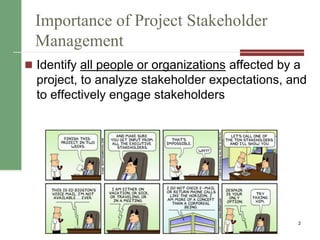
 Identify all people or organizations affected by a
project, to analyze stakeholder expectations, and
to effectively engage stakeholders
2
Change and Organizational Impact
 Projects often cause changes in organizations,
and some people may lose their jobs when a
project is completed.
 Project managers must learn to identify,
understand, and work with a variety of
stakeholders
Examples of Stakeholder Impacts from cases
3
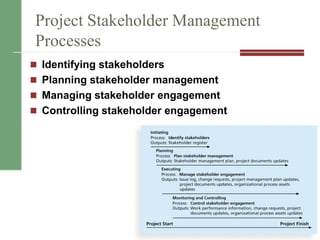
Project Stakeholder Management
Processes
 Identifying stakeholders
 Planning stakeholder management
 Managing stakeholder engagement
 Controlling stakeholder engagement
4
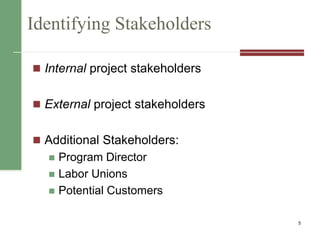
Identifying Stakeholders
 Internal project stakeholders
 External project stakeholders
 Additional Stakeholders:
 Program Director
 Labor Unions
 Potential Customers
5
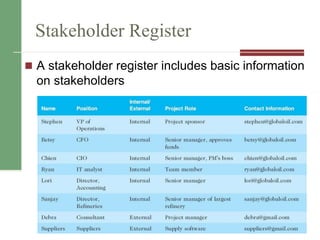
Stakeholder Register
 A stakeholder register includes basic information
on stakeholders
6
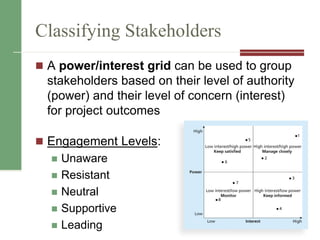
Classifying Stakeholders
 A power/interest grid can be used to group
stakeholders based on their level of authority
(power) and their level of concern (interest)
for project outcomes
 Engagement Levels:
 Unaware
 Resistant
 Neutral
 Supportive
 Leading 7
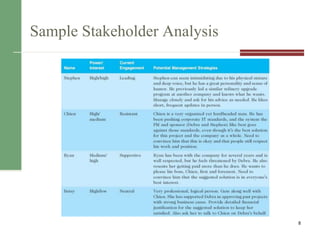
Sample Stakeholder Analysis
8
Planning Stakeholder Management
 After identifying and analyzing stakeholders,
project teams should develop a plan for
management them
 Limit Availability
 Restrict who prepares it
 Don’t write everything down
9
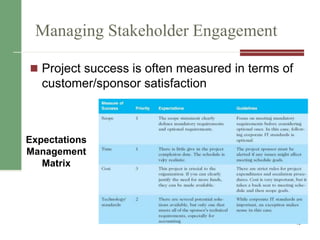
Managing Stakeholder Engagement
 Project success is often measured in terms of
customer/sponsor satisfaction
10
Expectations
Management
Matrix
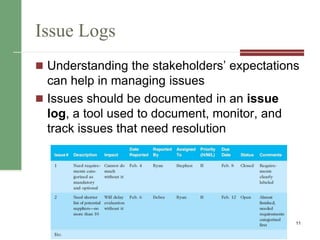
Issue Logs
 Understanding the stakeholders’ expectations
can help in managing issues
 Issues should be documented in an issue
log, a tool used to document, monitor, and
track issues that need resolution
11
Best Practice
 Project managers are often faced with
challenges, especially in managing stakeholders
 Suggestions for handling these situations include
the following:
 Be clear from the start
 Explain the consequences
 Have a contingency plan
 Avoid surprises
 Take a stand 12
Controlling Stakeholder Engagement
Can you control stakeholders?
13
Ways to Control Engagement
 Participation in kick-off meetings
 Meet before hand with key stakeholders
 Engagement activities and deliverables
throughout the project
 Stakeholders As Key Project Team Members
 On some IT projects, important stakeholders are
invited to be members of the project teams
(Example: Northwest Airlines and ResNet) 14
Social Media for Project Managers
 Elizabeth Harrin, author of Social Media for
Project Managers, describes the pros and cons
of several social media tools, including blogs,
collaboration tools, instant messaging,
microblogs like Twitter and Facebook,
podcasts, RSS, social networks, vodcasts
(video podcasts), webinars, and wikis
 Harrin provides advice for when to use social
media and when not to use it
15
Chapter Summary
 Managing stakeholders is now the tenth
knowledge area in the PMBOK® Guide.
 Processes include:
 Identify stakeholders
 Plan stakeholder management
 Manage stakeholder engagement
 Control stakeholder engagement
16

15_Ch13.pptx

  • 1.
  • 2.
    Importance of ProjectStakeholder Management  Identify all people or organizations affected by a project, to analyze stakeholder expectations, and to effectively engage stakeholders 2
  • 3.
    Change and OrganizationalImpact  Projects often cause changes in organizations, and some people may lose their jobs when a project is completed.  Project managers must learn to identify, understand, and work with a variety of stakeholders Examples of Stakeholder Impacts from cases 3
  • 4.
    Project Stakeholder Management Processes Identifying stakeholders  Planning stakeholder management  Managing stakeholder engagement  Controlling stakeholder engagement 4
  • 5.
    Identifying Stakeholders  Internalproject stakeholders  External project stakeholders  Additional Stakeholders:  Program Director  Labor Unions  Potential Customers 5
  • 6.
    Stakeholder Register  Astakeholder register includes basic information on stakeholders 6
  • 7.
    Classifying Stakeholders  Apower/interest grid can be used to group stakeholders based on their level of authority (power) and their level of concern (interest) for project outcomes  Engagement Levels:  Unaware  Resistant  Neutral  Supportive  Leading 7
  • 8.
  • 9.
    Planning Stakeholder Management After identifying and analyzing stakeholders, project teams should develop a plan for management them  Limit Availability  Restrict who prepares it  Don’t write everything down 9
  • 10.
    Managing Stakeholder Engagement Project success is often measured in terms of customer/sponsor satisfaction 10 Expectations Management Matrix
  • 11.
    Issue Logs  Understandingthe stakeholders’ expectations can help in managing issues  Issues should be documented in an issue log, a tool used to document, monitor, and track issues that need resolution 11
  • 12.
    Best Practice  Projectmanagers are often faced with challenges, especially in managing stakeholders  Suggestions for handling these situations include the following:  Be clear from the start  Explain the consequences  Have a contingency plan  Avoid surprises  Take a stand 12
  • 13.
    Controlling Stakeholder Engagement Canyou control stakeholders? 13
  • 14.
    Ways to ControlEngagement  Participation in kick-off meetings  Meet before hand with key stakeholders  Engagement activities and deliverables throughout the project  Stakeholders As Key Project Team Members  On some IT projects, important stakeholders are invited to be members of the project teams (Example: Northwest Airlines and ResNet) 14
  • 15.
    Social Media forProject Managers  Elizabeth Harrin, author of Social Media for Project Managers, describes the pros and cons of several social media tools, including blogs, collaboration tools, instant messaging, microblogs like Twitter and Facebook, podcasts, RSS, social networks, vodcasts (video podcasts), webinars, and wikis  Harrin provides advice for when to use social media and when not to use it 15
  • 16.
    Chapter Summary  Managingstakeholders is now the tenth knowledge area in the PMBOK® Guide.  Processes include:  Identify stakeholders  Plan stakeholder management  Manage stakeholder engagement  Control stakeholder engagement 16