Child Development Services –
    ?where do we belong

           Boaz Porter
Prevalence of Cerebral Palsy

United States
The prevalence of cerebral palsy is approximately 1.5-2 cases per 1000 live births. The
incidence of cerebral palsy has not changed in more than 4 decades, despite significant
advances in the medical care of neonates.

International
The prevalence of cerebral palsy is approximately 1.5-2 cases per 1000 live births.

Mortality/Morbidity
Cerebral palsy is the leading cause of childhood disability affecting function and
development
Prevalence of Intellectual Deficiency

United States
• The frequency of MR/ID of all degrees ranges from 1-3%
  of the population. The statistical definition of subaverage
  intelligence (2 SDs below the mean) would indicate a
  predicted prevalence of 2.5%.
International
• A study with excellent ascertainment conducted in
  Aberdeen, Scotland, yielded a prevalence of 1 in 300 for
  severe MR and 1 in 77 for mild MR.
Autistic Spectrum

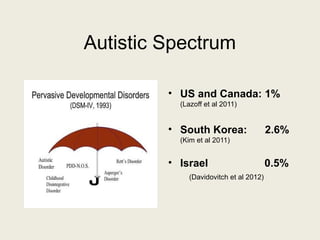
         • US and Canada: 1%
           (Lazoff et al 2011)


         • South Korea:                  2.6%
           (Kim et al 2011)


         • Israel                        0.5%
              (Davidovitch et al 2012)
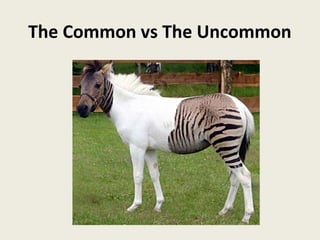
The Common vs The Uncommon
Learning Disability
Approximately 10% of children have some
 learning impairment, while as many as 3%
 manifest some degree of MR/ID. The
 population prevalence of these combined
 disorders of learning rivals that of the
 common childhood disorder asthma.
Developmental Coordination
        Disorder


                Prevalence of
                Developmental
                Coordination Disorder
                has been estimated to
                be as high as 6% for
                children in the age
                range of 5 -11 years.
Prevalence of Language Disorders

             •   Beitchman, Nair, Clegg, and Patel
                 (1986) found a prevalence of
                 12.6% for language disorders, using a
                 definition that did not exclude other
                 developmental disabilities or require
                 nonverbal intelligence within the normal
                 range.
             •   Tomblin et al. (1997) reported a
                 prevalence of 7.4% for specific
                 language disorders
             •   For 6- and 7-year-old children, Law et
                 al. (2000) noted median prevalence
                 estimates of 5.5% and 3.1%,
                 respectively.
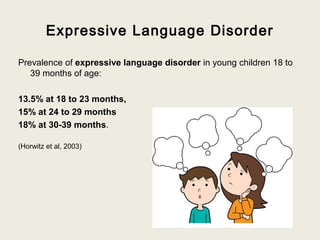
Expressive Language Disorder

Prevalence of expressive language disorder in young children 18 to
   39 months of age:

13.5% at 18 to 23 months,
15% at 24 to 29 months
18% at 30-39 months.

(Horwitz et al, 2003)
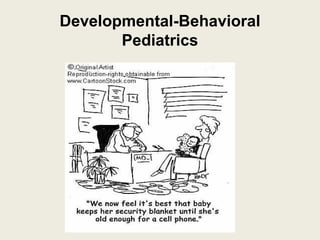
Developmental-Behavioral
       Pediatrics
An estimated 9 to 13% of American children
and adolescents between ages nine to 17
have serious diagnosable emotional or
behavioral health disorders resulting in
.substantial to extreme impairment
( Friedman, 2002)
Campbell )1995( estimated that approximately 10-15%
of all typically developing preschool children have
chronic mild to moderate levels of
behavior problems.
Children who are poor are much more likely to develop
behavior problems with prevalence rates that approach
30% )Qi & Kaiser, 2003(.
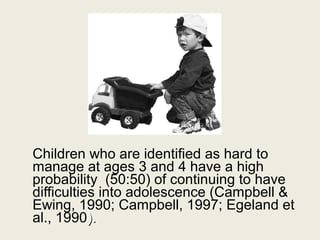
Children who are identified as hard to
manage at ages 3 and 4 have a high
probability (50:50) of continuing to have
difficulties into adolescence (Campbell &
Ewing, 1990; Campbell, 1997; Egeland et
al., 1990).
…….No time to lose
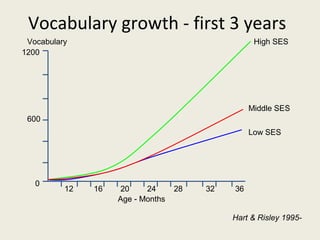
Vocabulary growth - first 3 years
 Vocabulary                                        High SES
1200


                                                  Middle SES
 600
                                                  Low SES


   0
          12   16    20    24      28   32   36
                    Age - Months

                                             Hart & Risley 1995-
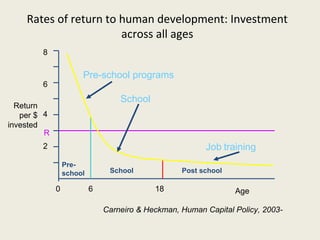
Rates of return to human development: Investment
                       across all ages
        8

                      Pre-school programs
        6
                                  School
  Return
   per $ 4
invested
         R
        2                                               Job training
                 Pre-
                 school        School             Post school

             0            6                18                   Age

                              Carneiro & Heckman, Human Capital Policy, 2003-
”Need to think “Outside the Box
….I Have a Dream
• Training pediatricians and
  workforce re common
  developmental/behavioral
  problems
• Group vs Solo Practice
• Parent involvement
• Family centered practice
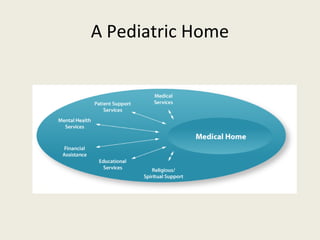
• The “Pediatric Home”
• Relationships with community
  providers (education, welfare)
• Continuity between providers
Organizational Change of Child
     Development Services
• Primary care: Initial evaluation of
  behavioral/developmental problems:
  manages common issues e.g. crying,
  sleep issues in infants
• Secondary care level community
  pediatrician: Manages mild speech delay,
  DCD, ADHD, common behavior problems
• CDC – manages more serious
  developmental spectrum
Changes within CDC
 ?Can we be more cost-efficient


• Staff: All therapists should be
   trained to advise re common problems
• Patients: increase group interventions for
  DCD, speech and behavioral problems
• Parents: include them as part of
  therapeutic team,volunteers
A Pediatric Home
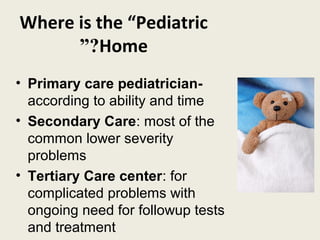
Where is the “Pediatric
      ”?Home
• Primary care pediatrician-
  according to ability and time
• Secondary Care: most of the
  common lower severity
  problems
• Tertiary Care center: for
  complicated problems with
  ongoing need for followup tests
  and treatment
שירותי התפתחות הילד איפה מקומם

שירותי התפתחות הילד איפה מקומם

  • 1.
    Child Development Services– ?where do we belong Boaz Porter
  • 2.
    Prevalence of CerebralPalsy United States The prevalence of cerebral palsy is approximately 1.5-2 cases per 1000 live births. The incidence of cerebral palsy has not changed in more than 4 decades, despite significant advances in the medical care of neonates. International The prevalence of cerebral palsy is approximately 1.5-2 cases per 1000 live births. Mortality/Morbidity Cerebral palsy is the leading cause of childhood disability affecting function and development
  • 3.
    Prevalence of IntellectualDeficiency United States • The frequency of MR/ID of all degrees ranges from 1-3% of the population. The statistical definition of subaverage intelligence (2 SDs below the mean) would indicate a predicted prevalence of 2.5%. International • A study with excellent ascertainment conducted in Aberdeen, Scotland, yielded a prevalence of 1 in 300 for severe MR and 1 in 77 for mild MR.
  • 4.
    Autistic Spectrum • US and Canada: 1% (Lazoff et al 2011) • South Korea: 2.6% (Kim et al 2011) • Israel 0.5% (Davidovitch et al 2012)
  • 5.
    The Common vsThe Uncommon
  • 6.
    Learning Disability Approximately 10%of children have some learning impairment, while as many as 3% manifest some degree of MR/ID. The population prevalence of these combined disorders of learning rivals that of the common childhood disorder asthma.
  • 7.
    Developmental Coordination Disorder Prevalence of Developmental Coordination Disorder has been estimated to be as high as 6% for children in the age range of 5 -11 years.
  • 8.
    Prevalence of LanguageDisorders • Beitchman, Nair, Clegg, and Patel (1986) found a prevalence of 12.6% for language disorders, using a definition that did not exclude other developmental disabilities or require nonverbal intelligence within the normal range. • Tomblin et al. (1997) reported a prevalence of 7.4% for specific language disorders • For 6- and 7-year-old children, Law et al. (2000) noted median prevalence estimates of 5.5% and 3.1%, respectively.
  • 9.
    Expressive Language Disorder Prevalenceof expressive language disorder in young children 18 to 39 months of age: 13.5% at 18 to 23 months, 15% at 24 to 29 months 18% at 30-39 months. (Horwitz et al, 2003)
  • 10.
  • 11.
    An estimated 9to 13% of American children and adolescents between ages nine to 17 have serious diagnosable emotional or behavioral health disorders resulting in .substantial to extreme impairment ( Friedman, 2002)
  • 12.
    Campbell )1995( estimatedthat approximately 10-15% of all typically developing preschool children have chronic mild to moderate levels of behavior problems. Children who are poor are much more likely to develop behavior problems with prevalence rates that approach 30% )Qi & Kaiser, 2003(.
  • 13.
    Children who areidentified as hard to manage at ages 3 and 4 have a high probability (50:50) of continuing to have difficulties into adolescence (Campbell & Ewing, 1990; Campbell, 1997; Egeland et al., 1990).
  • 14.
  • 15.
    Vocabulary growth -first 3 years Vocabulary High SES 1200 Middle SES 600 Low SES 0 12 16 20 24 28 32 36 Age - Months Hart & Risley 1995-
  • 16.
    Rates of returnto human development: Investment across all ages 8 Pre-school programs 6 School Return per $ 4 invested R 2 Job training Pre- school School Post school 0 6 18 Age Carneiro & Heckman, Human Capital Policy, 2003-
  • 17.
    ”Need to think“Outside the Box
  • 18.
    ….I Have aDream • Training pediatricians and workforce re common developmental/behavioral problems • Group vs Solo Practice • Parent involvement • Family centered practice • The “Pediatric Home” • Relationships with community providers (education, welfare) • Continuity between providers
  • 19.
    Organizational Change ofChild Development Services • Primary care: Initial evaluation of behavioral/developmental problems: manages common issues e.g. crying, sleep issues in infants • Secondary care level community pediatrician: Manages mild speech delay, DCD, ADHD, common behavior problems • CDC – manages more serious developmental spectrum
  • 20.
    Changes within CDC ?Can we be more cost-efficient • Staff: All therapists should be trained to advise re common problems • Patients: increase group interventions for DCD, speech and behavioral problems • Parents: include them as part of therapeutic team,volunteers
  • 21.
  • 22.
    Where is the“Pediatric ”?Home • Primary care pediatrician- according to ability and time • Secondary Care: most of the common lower severity problems • Tertiary Care center: for complicated problems with ongoing need for followup tests and treatment