Downloaded 81 times


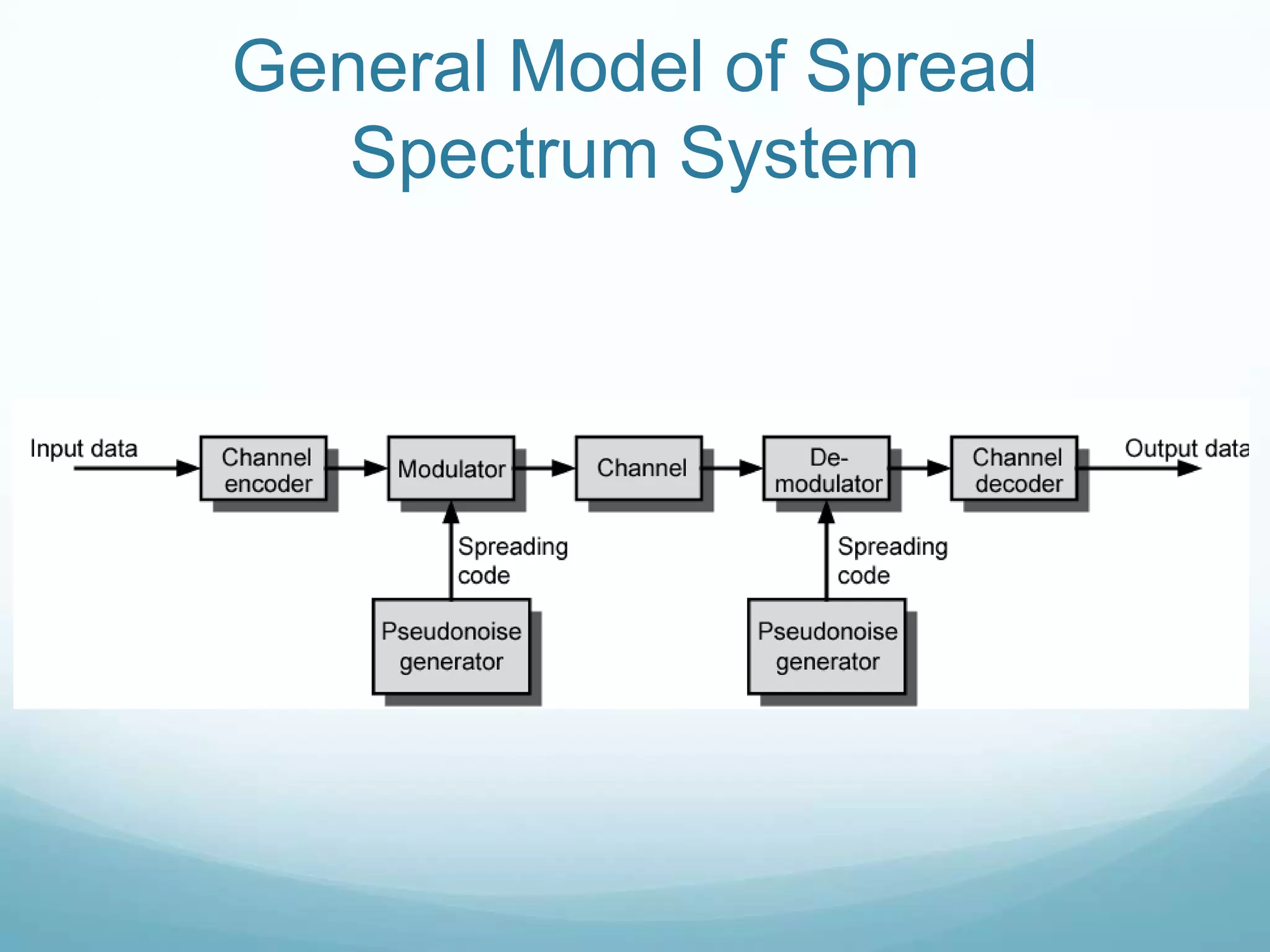


Spread Spectrum multiple access (SSMA) uses signals that have a much greater transmission bandwidth than the minimum required. It uses a pseudorandom number (PN) sequence to convert a narrowband signal into a wideband noise-like signal before transmission. The two main types of SSMA are frequency hopped multiple access (FH) and direct sequence multiple access (DS). SSMA provides advantages like being immune to multipath interference and having robust multiple access capability in a multiple user environment.


