Spillage
Response
Awareness
QA/QC Department
Inappropriate Handling
techniques
Damaged storage
containers
01.
Common Causes
of Spills
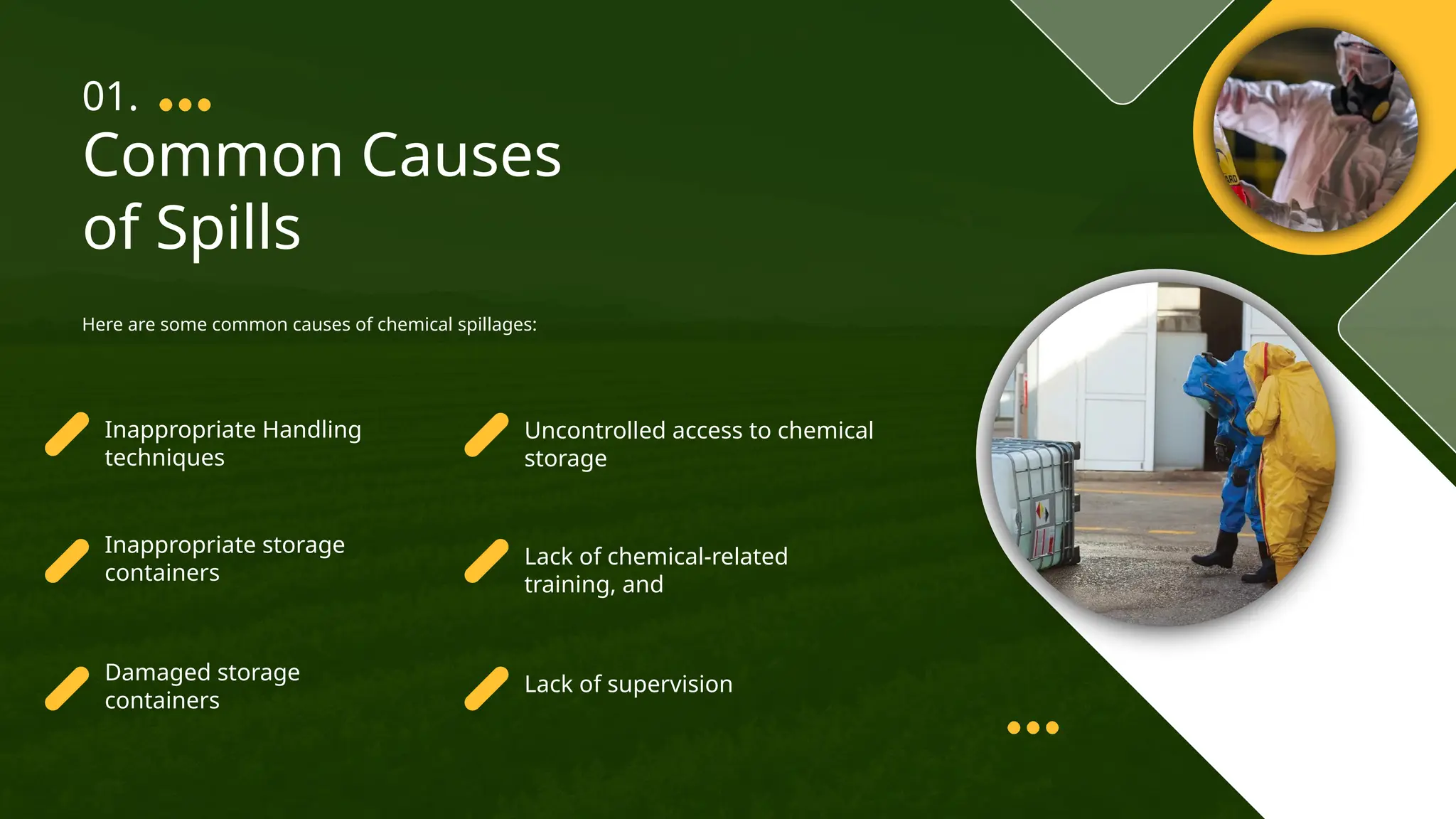
Here are some common causes of chemical spillages:
Inappropriate storage
containers
Uncontrolled access to chemical
storage
Lack of chemical-related
training, and
Lack of supervision
02.
The Dangers of
Chemical Spillages
Chemical spillages present several dangers and can be a serious risk to health.
Depending on the nature of the chemical spilt, those dangers could be:
Slip, trip and fall hazards
Contamination of other materials
Risk of fire
Contamination of the environment
03.
The Routes of
Exposure
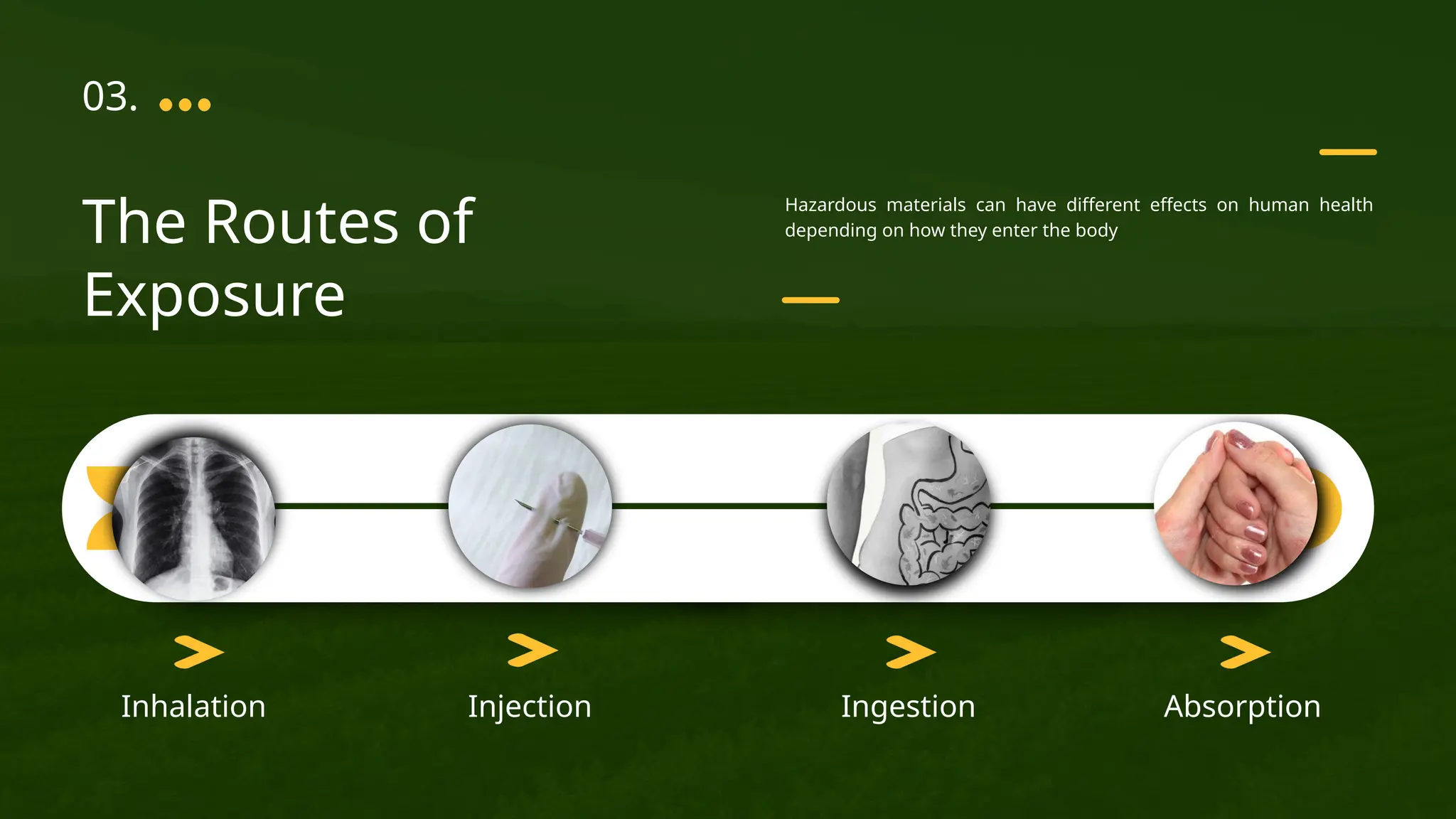
Hazardous materials can have different effects on human health
depending on how they enter the body
Inhalation Injection Absorption
Ingestion
04.
Many chemicals and other
hazardous substances
release fumes, vapors or tiny
particulates
Breathing these can cause
severe respiratory problems
Enter the body through
cuts or open skin.
Injection routes let the
contaminant straight into
your bloodstream and
often leads to severe
health problems
Failing to properly remove
contaminated clothing or
wash hands.
Eating or drinking
contaminated foodstuffs can
cause severe digestive
problems and other sever
health problems
Not using PPE and not
properly cleaning oneself
down.
Many chemicals can easily
seep through the many layers
of skin into the bloodstream
and cause severe skin
disorders
Inhalation Injection Absorption
Ingestion
Why are Chemicals
Dangerous?
The majority of chemicals we use in our industries are hazardous to human health, or the
health of the environment.
There are too many health effects that chemicals can cause to list them all here. Just
understand that they are dangerous and can cause immediate (acute) and long term (chronic)
symptoms. Take every precaution provided for you when working with chemicals.
05.
Why are Chemicals
Dangerous?
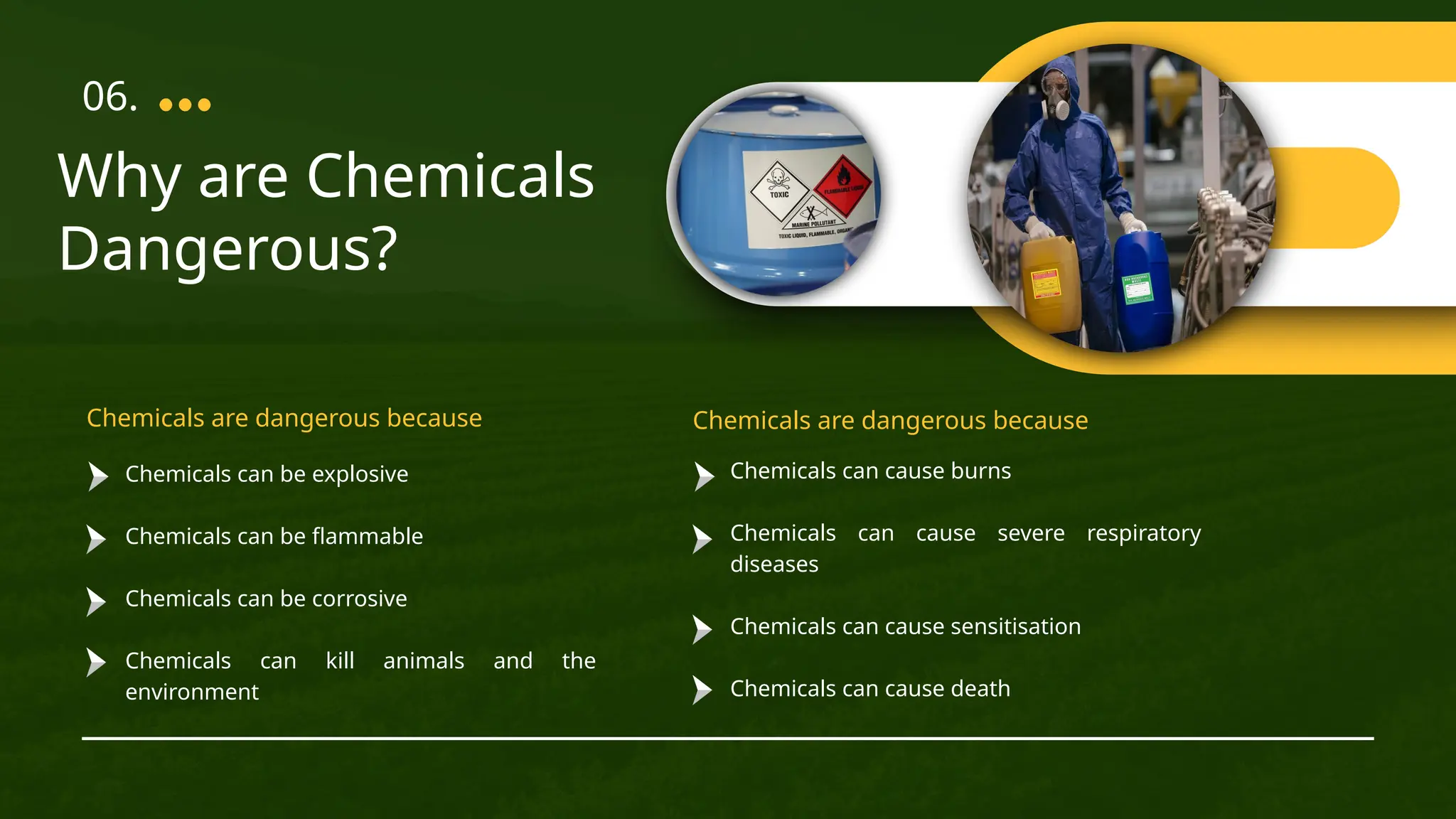
Chemicals can be explosive
Chemicals can be flammable
Chemicals can be corrosive
Chemicals can kill animals and the
environment
06.
Chemicals can cause burns
Chemicals can cause severe respiratory
diseases
Chemicals can cause sensitisation
Chemicals can cause death
Chemicals are dangerous because Chemicals are dangerous because
07.
How to Prevent Spillages in
the Workplace
Only purchase and store the quantity of materials needed to perform the
work
Where reasonably practicable, buy only the least hazardous materials
Where reasonably practiceable, buy only non-hazardous materials
Minimise traffic in the storage area and where the work will take place
Store liquid waste in secondary containers
Regularly inspect shelving and container integrity
Be aware of evacuation routes and emergency equipment
08.
Can I manage
this Spillage?
Quantity Familiarity Safety
Is the spillage less than
1 gallon?
Is the spillage of a
chemical I have been
trained to use?
Can I safely contain the
spillage?
Spill Kit
Is there a spill kit available, in
a designated area and clearly
marked for which type of
chemical to be used for?
Before cleaning up a spillage, you first need to ask yourself the following questions:
09.
An Example of a Chemical
Spill Kit’s Contents
This is a chemical spill kit, designed to be used to clean up smaller spillages:
A wheelie bin filled with the rest of the spill kit contents
Absorbent socks (barriers) to contain the spillage
Absorbent cushions to contain runoff
Absorbent pads and a container of loose materials to soak up the majority of the
spillage
A dustpan and brush to transport the excess absorbent materials into
disposal bags
Disposal bags and ties to properly remove the used absorbent materials
Personal protective equipment to protect the person performing the cleanup
10.
How to Manage a Spillage
1
2
3
Decide if you hold the requisite information
Prepare the cleanup plan of action
if there is the possibility of an acute respiratory hazard present,
or if you need assistance to clean up the spillage.
knowledge, and training to safely handle the incident.
For example: Should you wait for help, attend to an injured person, shut off
a valve or remove ignition sources first?
Immediately evacuate the area and report the spillage to your supervisor or
manager
4
5
If anyone is injured or contaminated
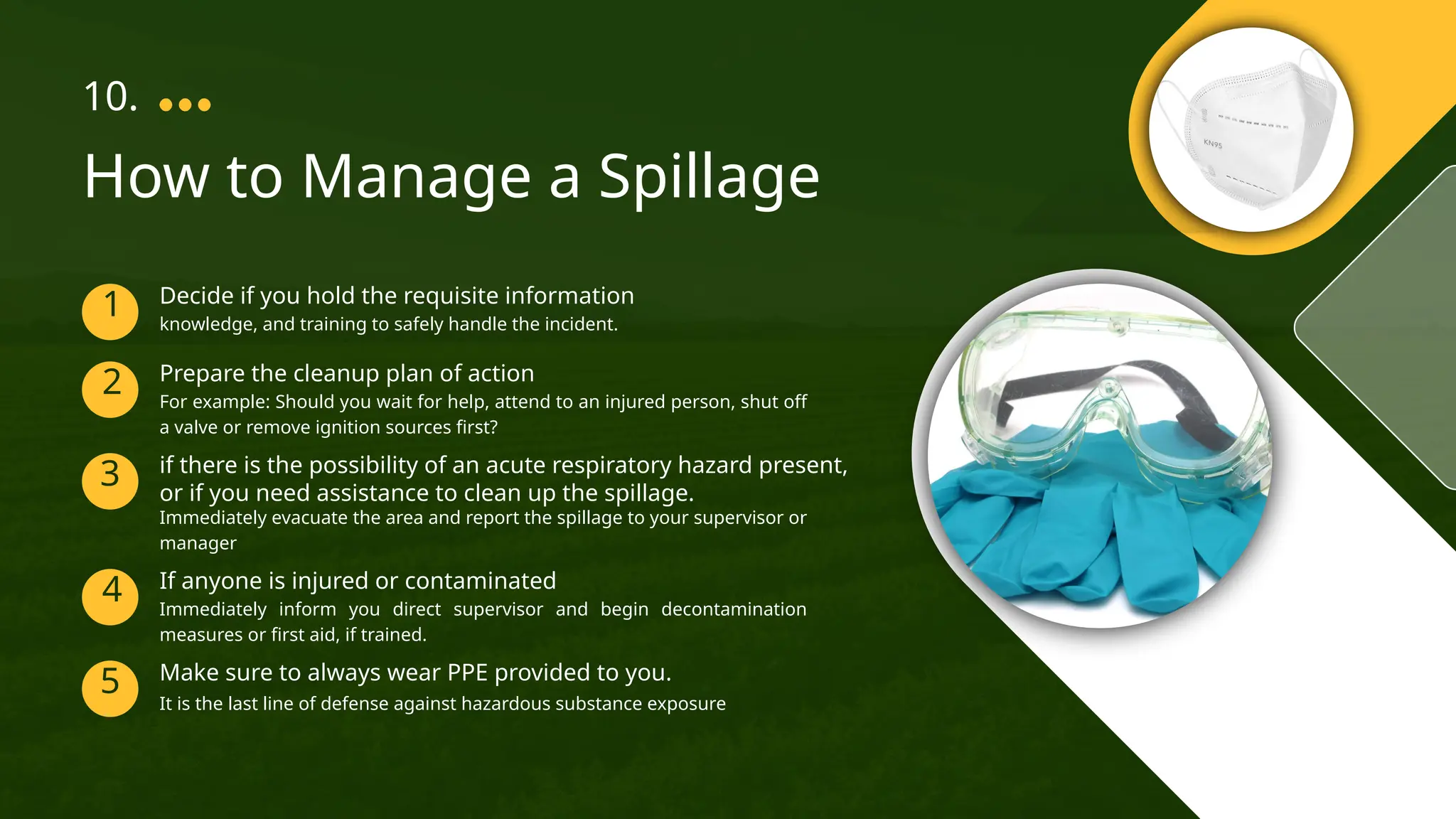
Make sure to always wear PPE provided to you.
Immediately inform you direct supervisor and begin decontamination
measures or first aid, if trained.
It is the last line of defense against hazardous substance exposure
To stop the source
Close the valve
Shutting down the pump to stop
the flow
Bandaging the leak in a hose
Reposition the leaking container
11.
Safely Containing the
Spillage
To contain a spillage you must stop the source and stop the spread
To stop the spread
Build an absorbent barrier
around the spillage
Create a flow channel
Use absorbent cushions and pads
to soak up the main body of the
spillage
12. Safely Using the Absorbent
1 Absorbent should be
distributed over the entire
spillage area, working from
the outside, circling into the
inside.
This stops the spread of the
spilt chemical.
2 When spilt materials have
been absorbed, use a
brush and scoop to place
materials in the
appropriate container
(provided in spill kits).
Dispose of any
contaminated items and
PPE used during the
cleanup in the appropriate
waste bin.
3 Complete the required
hazardous waste label -
identifying the material
as spill debris involving
the chemical
4 Arrange for collection
of the hazardous waste
container by an
approved waste
contractor as soon as
possible.
13.
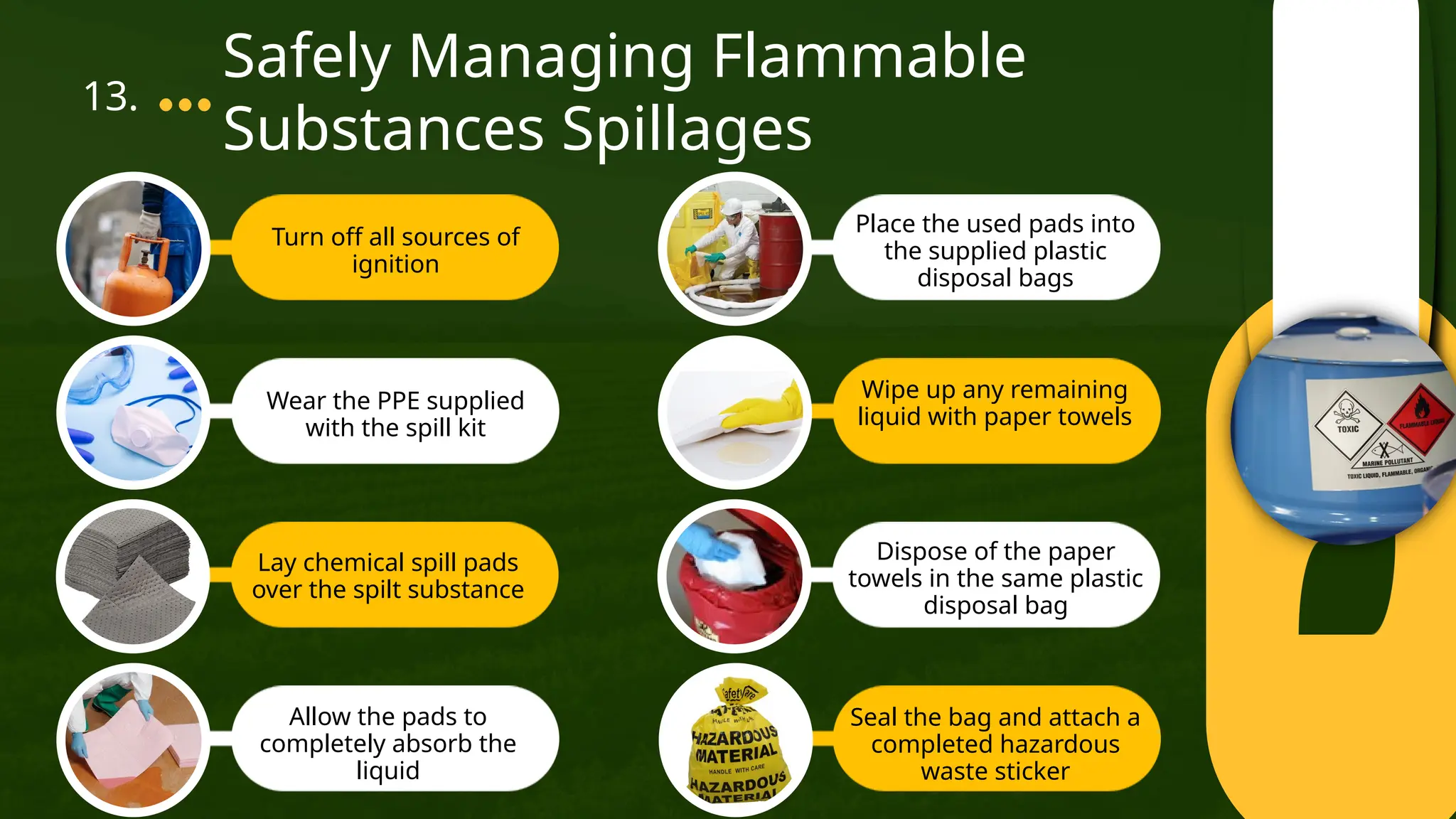
Safely Managing Flammable
Substances Spillages
Turn off all sources of
ignition
Wear the PPE supplied
with the spill kit
Lay chemical spill pads
over the spilt substance
Place the used pads into
the supplied plastic
disposal bags
Wipe up any remaining
liquid with paper towels
Dispose of the paper
towels in the same plastic
disposal bag
Allow the pads to
completely absorb the
liquid
Seal the bag and attach a
completed hazardous
waste sticker
The absorbent materials now have the very same hazardous properties as
the originally spilt material.
Safely dispose of all contaminated, disposable coveralls, gloves, and
respirators.
Decontaminate all non-disposable items (brooms, shovels, PPE, etc.) using a
mild detergent and water
Report the spillage and cleanup to your supervisor, manager, or health and
safety officer as soon as possible.
Review what happened, to aid in the prevention of future spillages.
No matter the size of the spillage, record the incident and the actions taken
to prevent exposure and cleanup.
Ensure the supplies used to clean up the spillage are replaced immediately.
14. What to After the Spillage is
Cleaned up?
1
2
3
4
5
6
7
Take care of your own safety and if it is safe for you to do so, the safety of your
colleagues.
Immediately activate the building’s fire alarm system.
If anyone came into bodily contact with the spilt material, immediately remove any
contaminated clothing and flush their skin with plenty of water.
Call emergency services and give them the following information:
Your identity and why you are calling
Your exact location and the nature of the emergency
Whether anyone has been injured or is showing signs of acute health effects
The names and nature of every hazardous substances involved in the emergency
(if known).
15.
1
2
3
4
What to do in an Emergency
Situation
Head to the nearest emergency assembly point.
Leave clear access for the emergency personnel.
Ensure every person who was exposed stays together, in the same area. They should not be
allowed to leave until they have been checked by the relevant authorities and medical personnel.
If you have the time to do the following without placing yourself at risk, then do so:
1.Close, but do not lock, doors behind you to isolate the area
2.Turn off, unplug, or remove potential sources of ignition
3.Contain the spilt material using berms, absorbent socks or other means
4.Place signs in prominent places to warn people the area is unsafe to enter
16. What to do in an Emergency
Situation
5
6
7
8
17.
Your safety and the safety of
others should be your top
priority!
Please note: This is general awareness training. You are not trained as an
emergency responder and should not attempt to manage emergencies.
3
Thank
You
Knights of Safety Academy

Spillage Response Awareness Presentation

  • 1.
  • 2.
    Inappropriate Handling techniques Damaged storage containers 01. CommonCauses of Spills Here are some common causes of chemical spillages: Inappropriate storage containers Uncontrolled access to chemical storage Lack of chemical-related training, and Lack of supervision
  • 3.
    02. The Dangers of ChemicalSpillages Chemical spillages present several dangers and can be a serious risk to health. Depending on the nature of the chemical spilt, those dangers could be: Slip, trip and fall hazards Contamination of other materials Risk of fire Contamination of the environment
  • 4.
    03. The Routes of Exposure Hazardousmaterials can have different effects on human health depending on how they enter the body Inhalation Injection Absorption Ingestion
  • 5.
    04. Many chemicals andother hazardous substances release fumes, vapors or tiny particulates Breathing these can cause severe respiratory problems Enter the body through cuts or open skin. Injection routes let the contaminant straight into your bloodstream and often leads to severe health problems Failing to properly remove contaminated clothing or wash hands. Eating or drinking contaminated foodstuffs can cause severe digestive problems and other sever health problems Not using PPE and not properly cleaning oneself down. Many chemicals can easily seep through the many layers of skin into the bloodstream and cause severe skin disorders Inhalation Injection Absorption Ingestion
  • 6.
    Why are Chemicals Dangerous? Themajority of chemicals we use in our industries are hazardous to human health, or the health of the environment. There are too many health effects that chemicals can cause to list them all here. Just understand that they are dangerous and can cause immediate (acute) and long term (chronic) symptoms. Take every precaution provided for you when working with chemicals. 05.
  • 7.
    Why are Chemicals Dangerous? Chemicalscan be explosive Chemicals can be flammable Chemicals can be corrosive Chemicals can kill animals and the environment 06. Chemicals can cause burns Chemicals can cause severe respiratory diseases Chemicals can cause sensitisation Chemicals can cause death Chemicals are dangerous because Chemicals are dangerous because
  • 8.
    07. How to PreventSpillages in the Workplace Only purchase and store the quantity of materials needed to perform the work Where reasonably practicable, buy only the least hazardous materials Where reasonably practiceable, buy only non-hazardous materials Minimise traffic in the storage area and where the work will take place Store liquid waste in secondary containers Regularly inspect shelving and container integrity Be aware of evacuation routes and emergency equipment
  • 9.
    08. Can I manage thisSpillage? Quantity Familiarity Safety Is the spillage less than 1 gallon? Is the spillage of a chemical I have been trained to use? Can I safely contain the spillage? Spill Kit Is there a spill kit available, in a designated area and clearly marked for which type of chemical to be used for? Before cleaning up a spillage, you first need to ask yourself the following questions:
  • 10.
    09. An Example ofa Chemical Spill Kit’s Contents This is a chemical spill kit, designed to be used to clean up smaller spillages: A wheelie bin filled with the rest of the spill kit contents Absorbent socks (barriers) to contain the spillage Absorbent cushions to contain runoff Absorbent pads and a container of loose materials to soak up the majority of the spillage A dustpan and brush to transport the excess absorbent materials into disposal bags Disposal bags and ties to properly remove the used absorbent materials Personal protective equipment to protect the person performing the cleanup
  • 11.
    10. How to Managea Spillage 1 2 3 Decide if you hold the requisite information Prepare the cleanup plan of action if there is the possibility of an acute respiratory hazard present, or if you need assistance to clean up the spillage. knowledge, and training to safely handle the incident. For example: Should you wait for help, attend to an injured person, shut off a valve or remove ignition sources first? Immediately evacuate the area and report the spillage to your supervisor or manager 4 5 If anyone is injured or contaminated Make sure to always wear PPE provided to you. Immediately inform you direct supervisor and begin decontamination measures or first aid, if trained. It is the last line of defense against hazardous substance exposure
  • 12.
    To stop thesource Close the valve Shutting down the pump to stop the flow Bandaging the leak in a hose Reposition the leaking container 11. Safely Containing the Spillage To contain a spillage you must stop the source and stop the spread To stop the spread Build an absorbent barrier around the spillage Create a flow channel Use absorbent cushions and pads to soak up the main body of the spillage
  • 13.
    12. Safely Usingthe Absorbent 1 Absorbent should be distributed over the entire spillage area, working from the outside, circling into the inside. This stops the spread of the spilt chemical. 2 When spilt materials have been absorbed, use a brush and scoop to place materials in the appropriate container (provided in spill kits). Dispose of any contaminated items and PPE used during the cleanup in the appropriate waste bin. 3 Complete the required hazardous waste label - identifying the material as spill debris involving the chemical 4 Arrange for collection of the hazardous waste container by an approved waste contractor as soon as possible.
  • 14.
    13. Safely Managing Flammable SubstancesSpillages Turn off all sources of ignition Wear the PPE supplied with the spill kit Lay chemical spill pads over the spilt substance Place the used pads into the supplied plastic disposal bags Wipe up any remaining liquid with paper towels Dispose of the paper towels in the same plastic disposal bag Allow the pads to completely absorb the liquid Seal the bag and attach a completed hazardous waste sticker
  • 15.
    The absorbent materialsnow have the very same hazardous properties as the originally spilt material. Safely dispose of all contaminated, disposable coveralls, gloves, and respirators. Decontaminate all non-disposable items (brooms, shovels, PPE, etc.) using a mild detergent and water Report the spillage and cleanup to your supervisor, manager, or health and safety officer as soon as possible. Review what happened, to aid in the prevention of future spillages. No matter the size of the spillage, record the incident and the actions taken to prevent exposure and cleanup. Ensure the supplies used to clean up the spillage are replaced immediately. 14. What to After the Spillage is Cleaned up? 1 2 3 4 5 6 7
  • 16.
    Take care ofyour own safety and if it is safe for you to do so, the safety of your colleagues. Immediately activate the building’s fire alarm system. If anyone came into bodily contact with the spilt material, immediately remove any contaminated clothing and flush their skin with plenty of water. Call emergency services and give them the following information: Your identity and why you are calling Your exact location and the nature of the emergency Whether anyone has been injured or is showing signs of acute health effects The names and nature of every hazardous substances involved in the emergency (if known). 15. 1 2 3 4 What to do in an Emergency Situation
  • 17.
    Head to thenearest emergency assembly point. Leave clear access for the emergency personnel. Ensure every person who was exposed stays together, in the same area. They should not be allowed to leave until they have been checked by the relevant authorities and medical personnel. If you have the time to do the following without placing yourself at risk, then do so: 1.Close, but do not lock, doors behind you to isolate the area 2.Turn off, unplug, or remove potential sources of ignition 3.Contain the spilt material using berms, absorbent socks or other means 4.Place signs in prominent places to warn people the area is unsafe to enter 16. What to do in an Emergency Situation 5 6 7 8
  • 18.
    17. Your safety andthe safety of others should be your top priority! Please note: This is general awareness training. You are not trained as an emergency responder and should not attempt to manage emergencies. 3
  • 19.