spelling Spelling
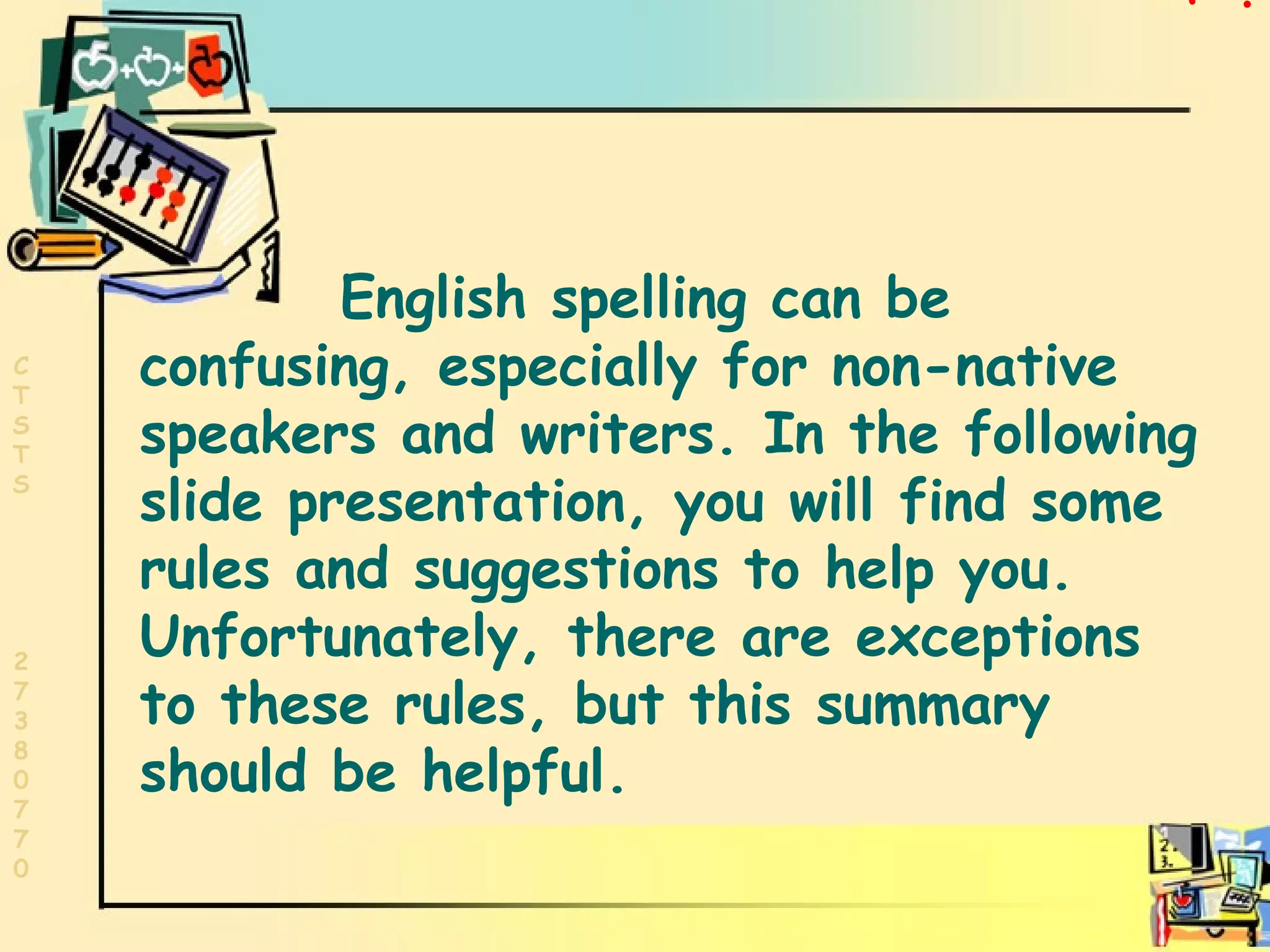
intro   English spelling can be confusing, especially for non-native speakers and writers. In the following slide presentation, you will find some rules and suggestions to help you. Unfortunately, there are exceptions to these rules, but this summary should be helpful.
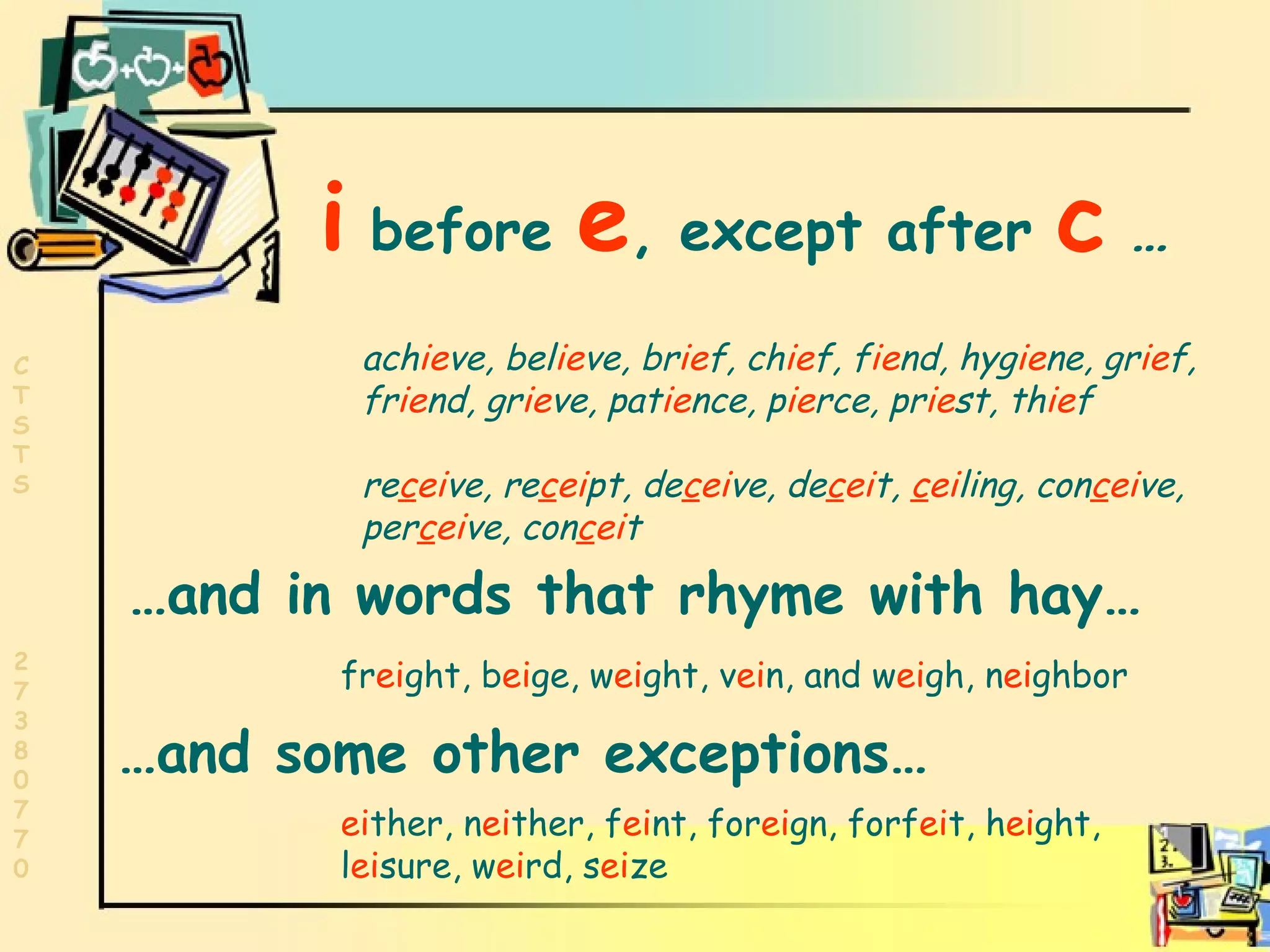
ie,ei,  i   before  e ,   except after  c  …   ach ie ve, bel ie ve, br ie f, ch ie f, f ie nd, hyg ie ne, gr ie f,  fr ie nd, gr ie ve, pat ie nce, p ie rce, pr ie st, th ie f re c ei ve, re c ei pt, de c ei ve, de c ei t,  c ei ling, con c ei ve, per c ei ve, con c ei t … and in words that rhyme with hay…  fr ei ght, b ei ge, w ei ght, v ei n, and w ei gh, n ei ghbor  … and some other exceptions… ei ther, n ei ther, f ei nt, for ei gn, forf ei t, h ei ght, l ei sure, w ei rd, s ei ze
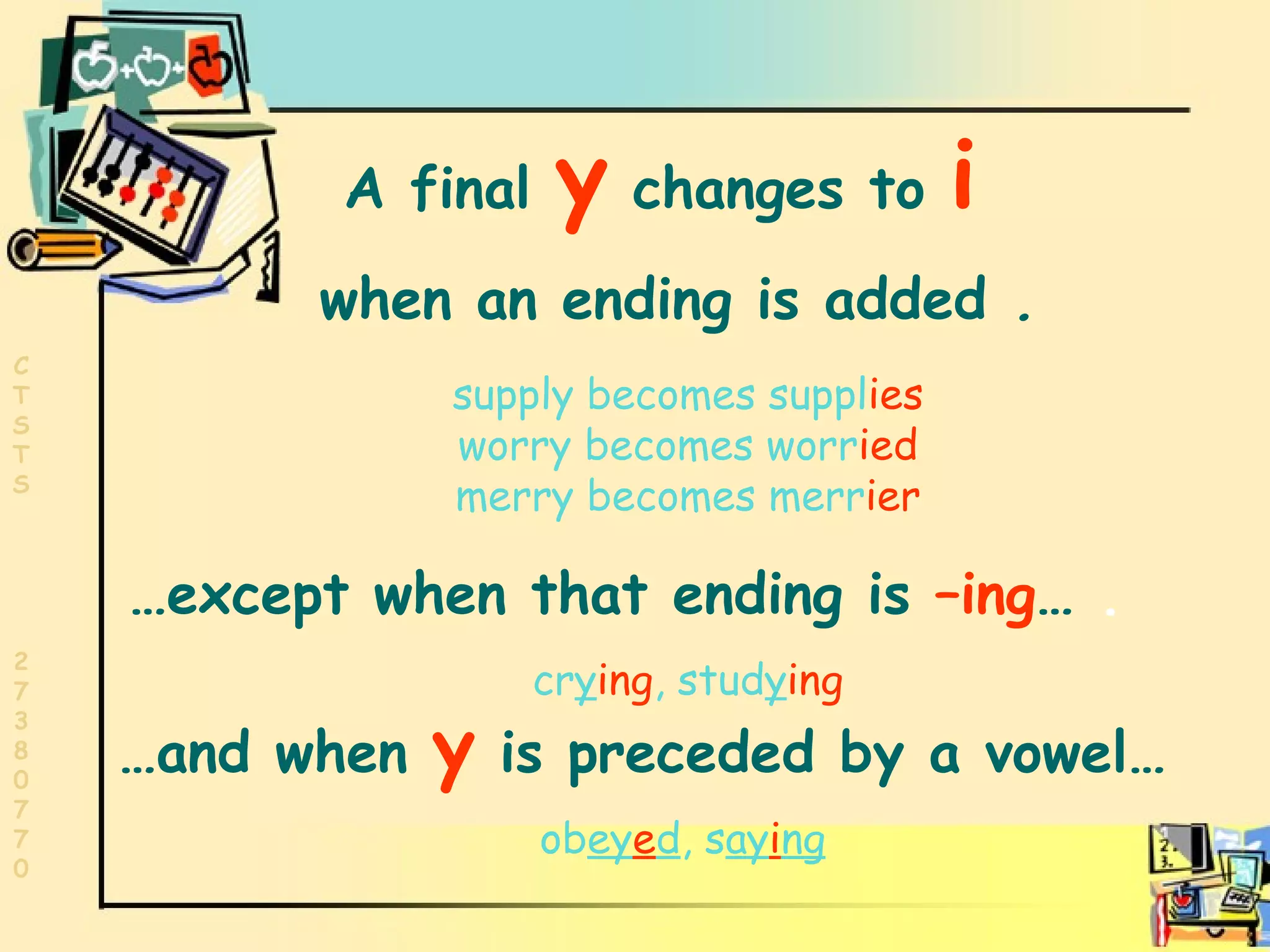
Words ending in y A final   y   changes to   i   when an ending is added  . supply becomes suppl ies worry becomes worr ied merry becomes merr ier … except when that ending is  –ing …  .   cr y ing , stud y ing … and when  y  is preceded by a vowel… ob ey e d , s ay i ng
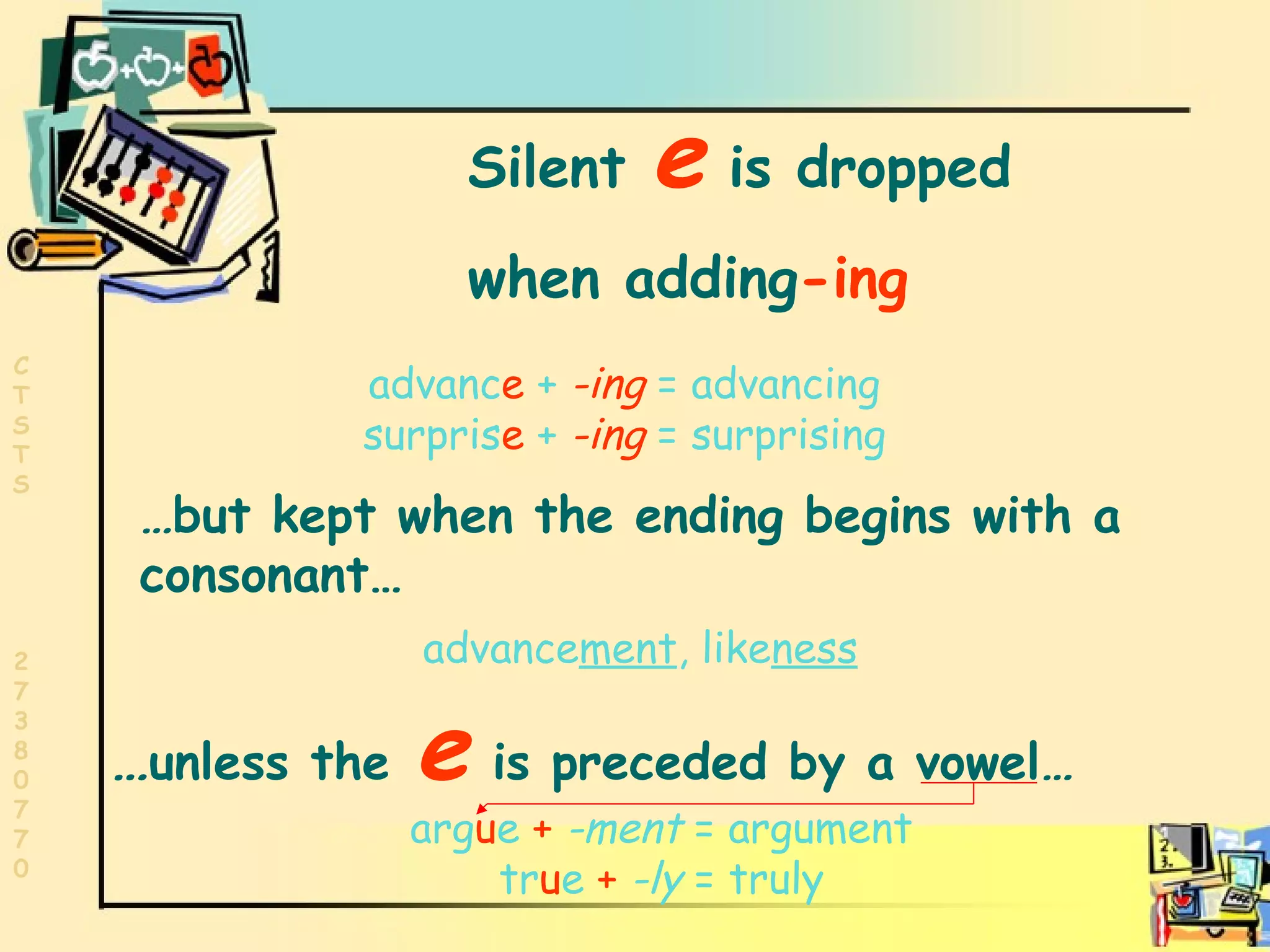
Words ending in e Silent  e   is dropped  when adding -ing advanc e  +   -ing   = advancing surpris e  +   -ing   = surprising … but kept when the ending begins with a consonant… advance ment , like ness … unless the   e   is preceded by a vowel … arg u e   +   -ment  = argument tr u e   +   -ly  = truly
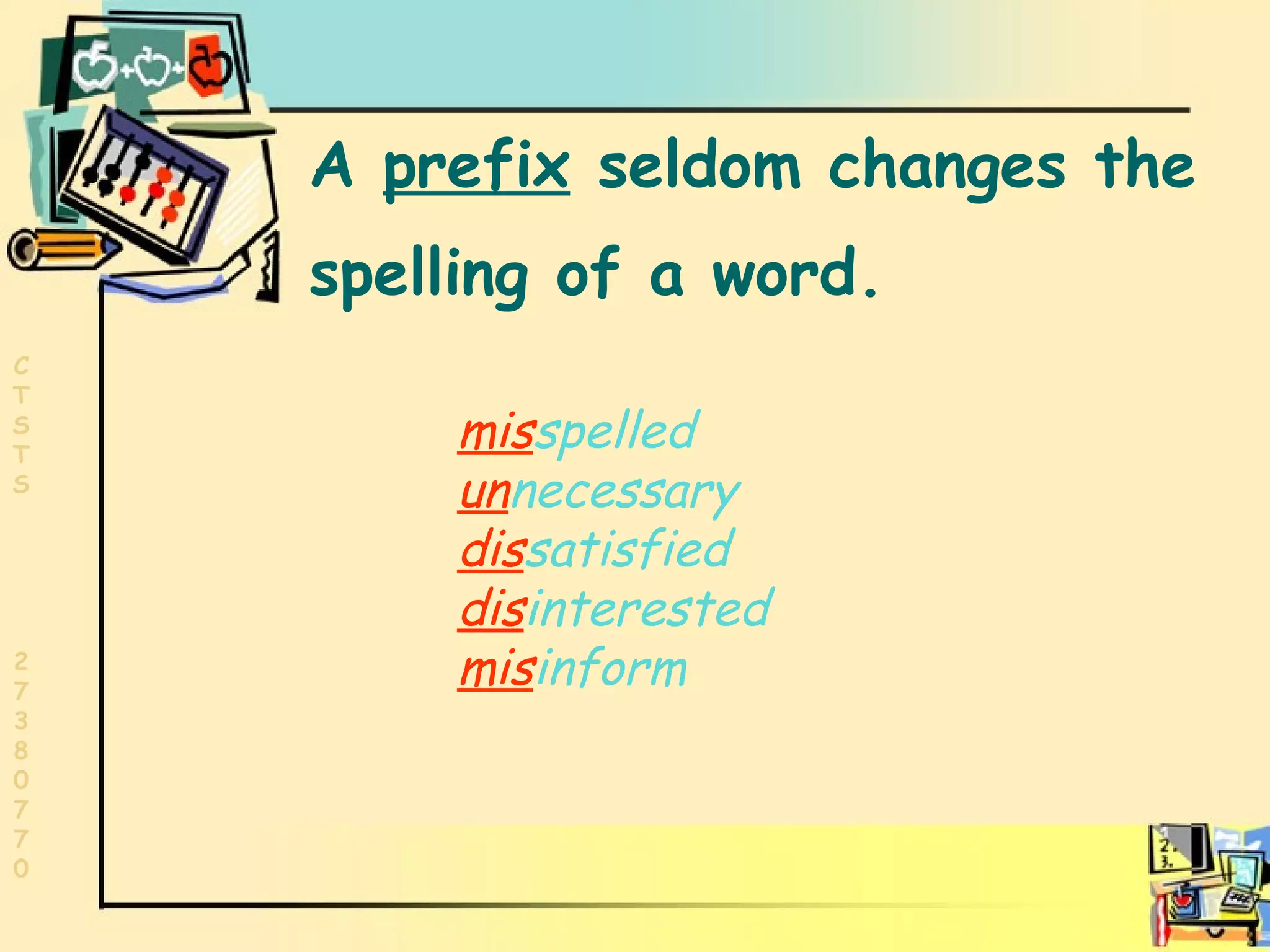
Adding prefix A  prefix  seldom changes the spelling of a word.   mis spelled un necessary dis satisfied dis interested mis inform
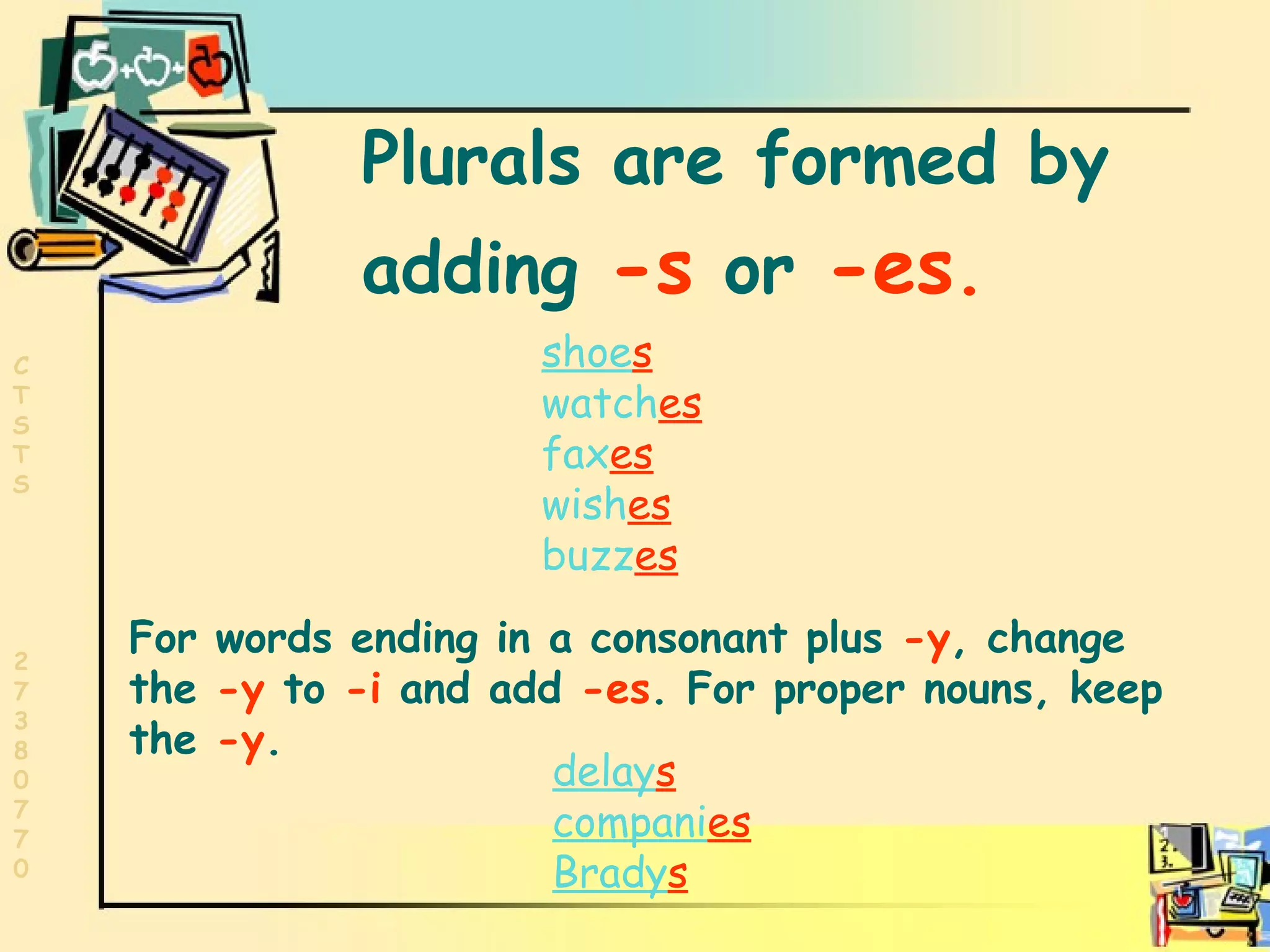
Plurals Plurals are formed by  adding  -s  or  -es .   shoe s watch es fax es wish es buzz es For words ending in a consonant plus  -y , change the  -y  to  -i  and add  -es . For proper nouns, keep the  -y . delay s compani es Brady s
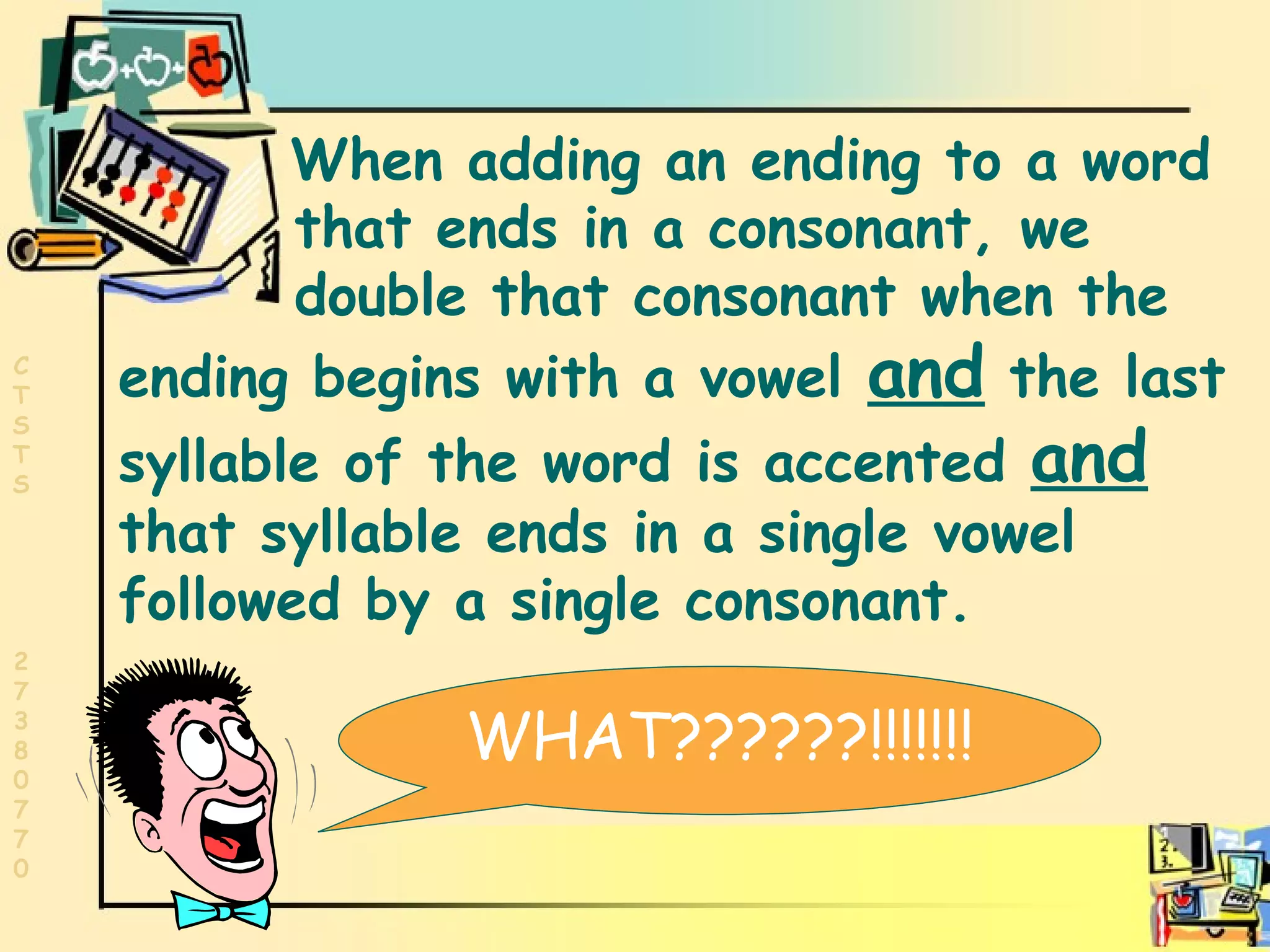
Words ending in consonants WHAT??????!!!!!!! When adding an ending to a word    that ends in a consonant, we    double that consonant when the ending begins with a vowel  and  the last syllable of the word is accented  and   that syllable ends in a single vowel followed by a single consonant.
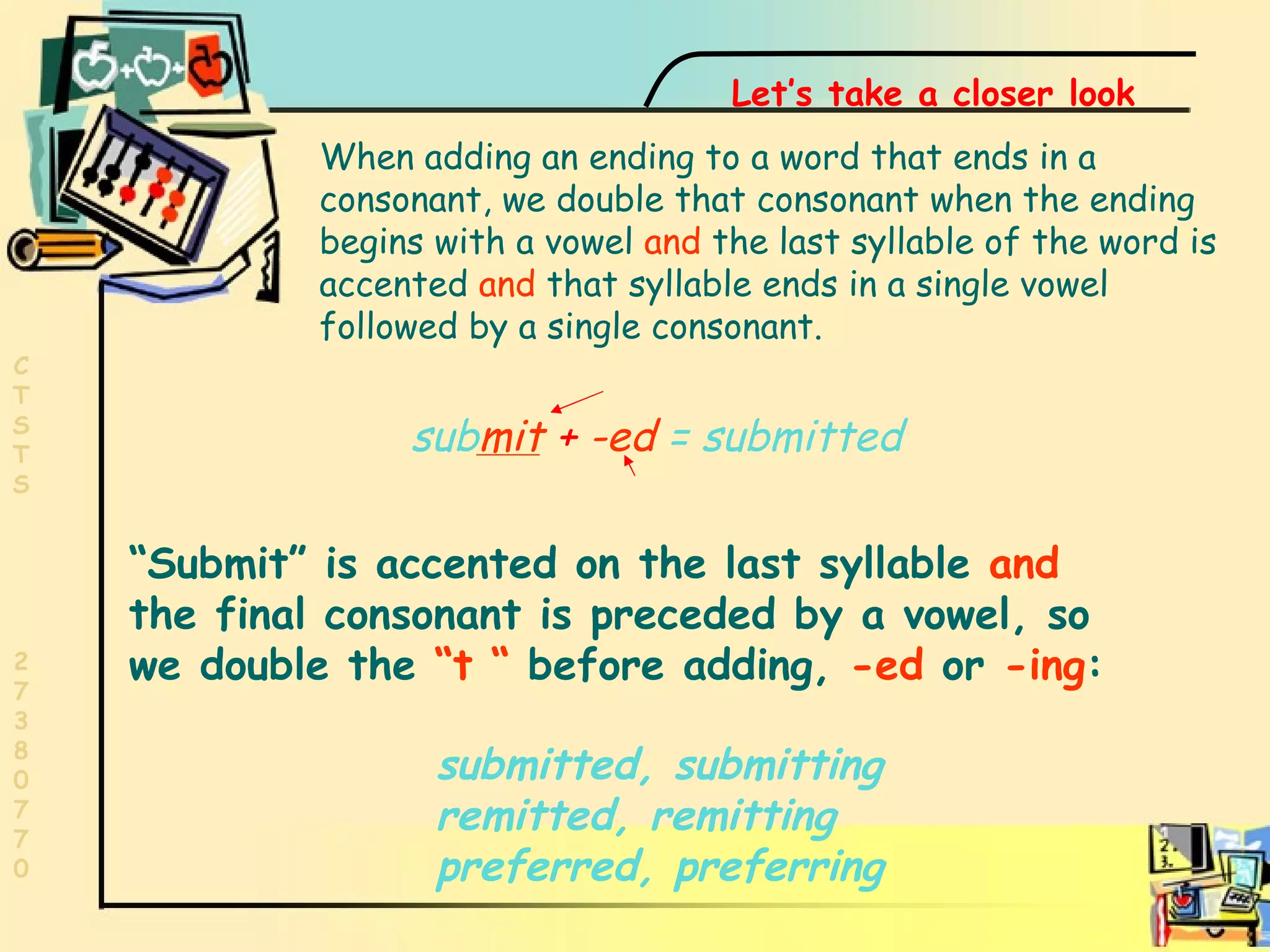
Last syllable accent  sub mit   +   -ed  = submitted When adding an ending to a word that ends in a consonant, we double that consonant when the ending begins with a vowel  and  the last syllable of the word is accented  and  that syllable ends in a single vowel followed by a single consonant. “ Submit” is accented on the last syllable   and   the final consonant is preceded by a vowel, so we double the   “t “   before adding,  -ed  or  -ing : Let’s take a closer look submitted, submitting remitted, remitting  preferred, preferring
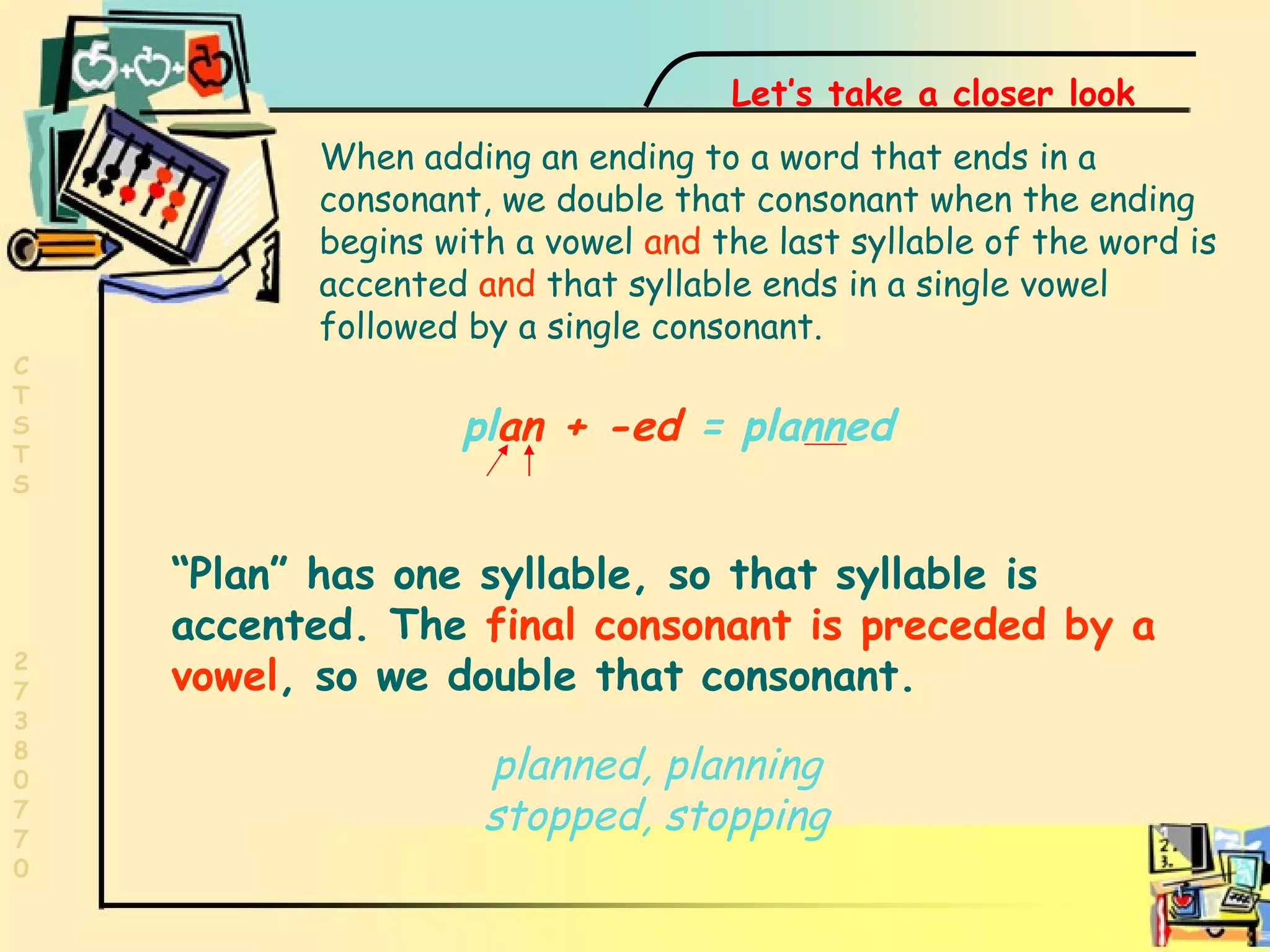
One syllable word pl an   +   -ed  = planned “ Plan” has one syllable, so that syllable is  accented. The  final consonant is preceded by a vowel , so we double that consonant. When adding an ending to a word that ends in a consonant, we double that consonant when the ending begins with a vowel  and  the last syllable of the word is accented  and  that syllable ends in a single vowel followed by a single consonant. Let’s take a closer look planned, planning stopped, stopping
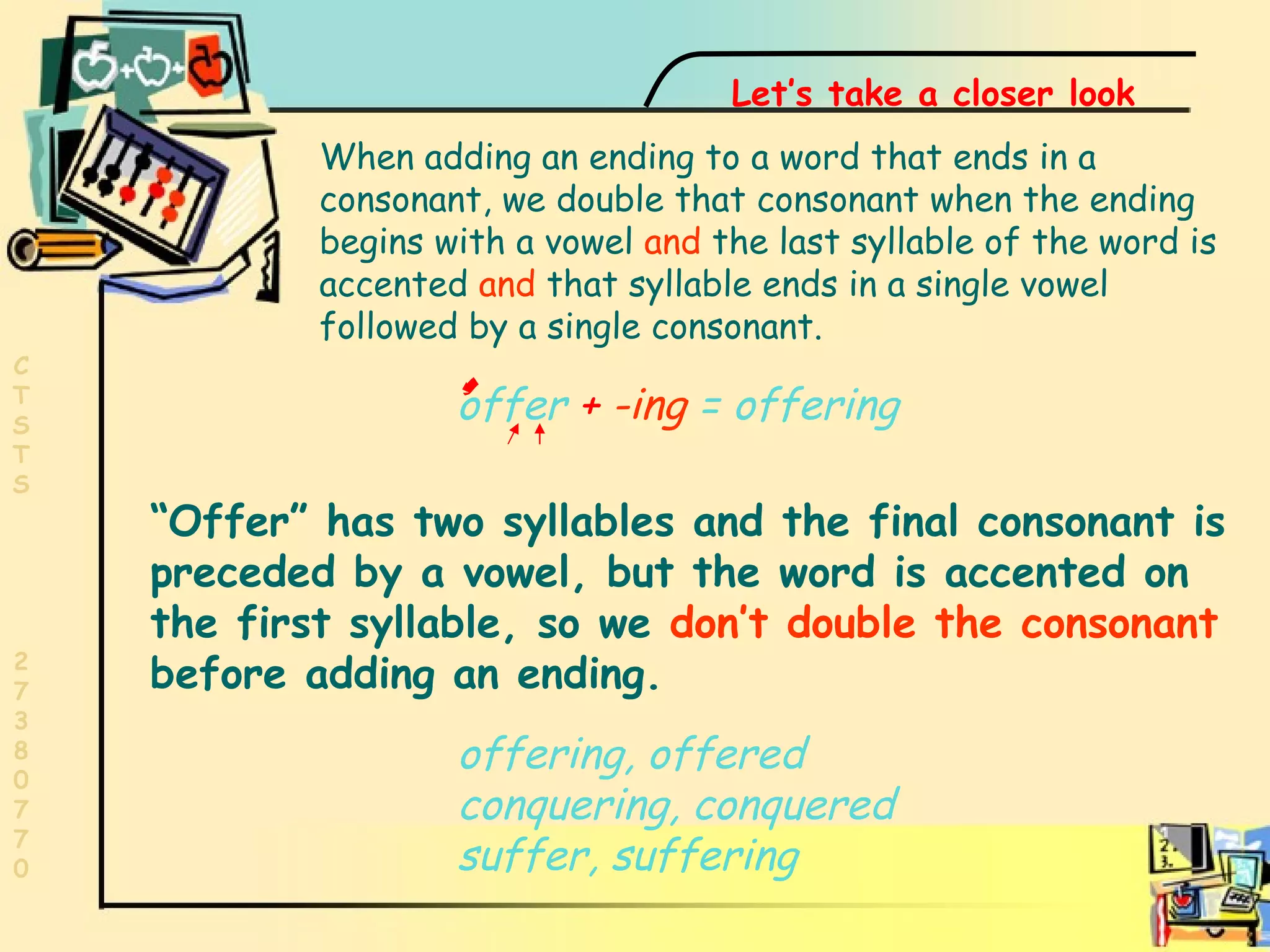
First syllable accent  offer  +   -ing  = offering “ Offer” has two syllables and the final consonant is preceded by a vowel, but the word is accented on the first syllable, so we  don’t double the consonant  before adding an ending.   Let’s take a closer look When adding an ending to a word that ends in a consonant, we double that consonant when the ending begins with a vowel  and  the last syllable of the word is accented  and  that syllable ends in a single vowel followed by a single consonant. offering, offered conquering, conquered suffer, suffering
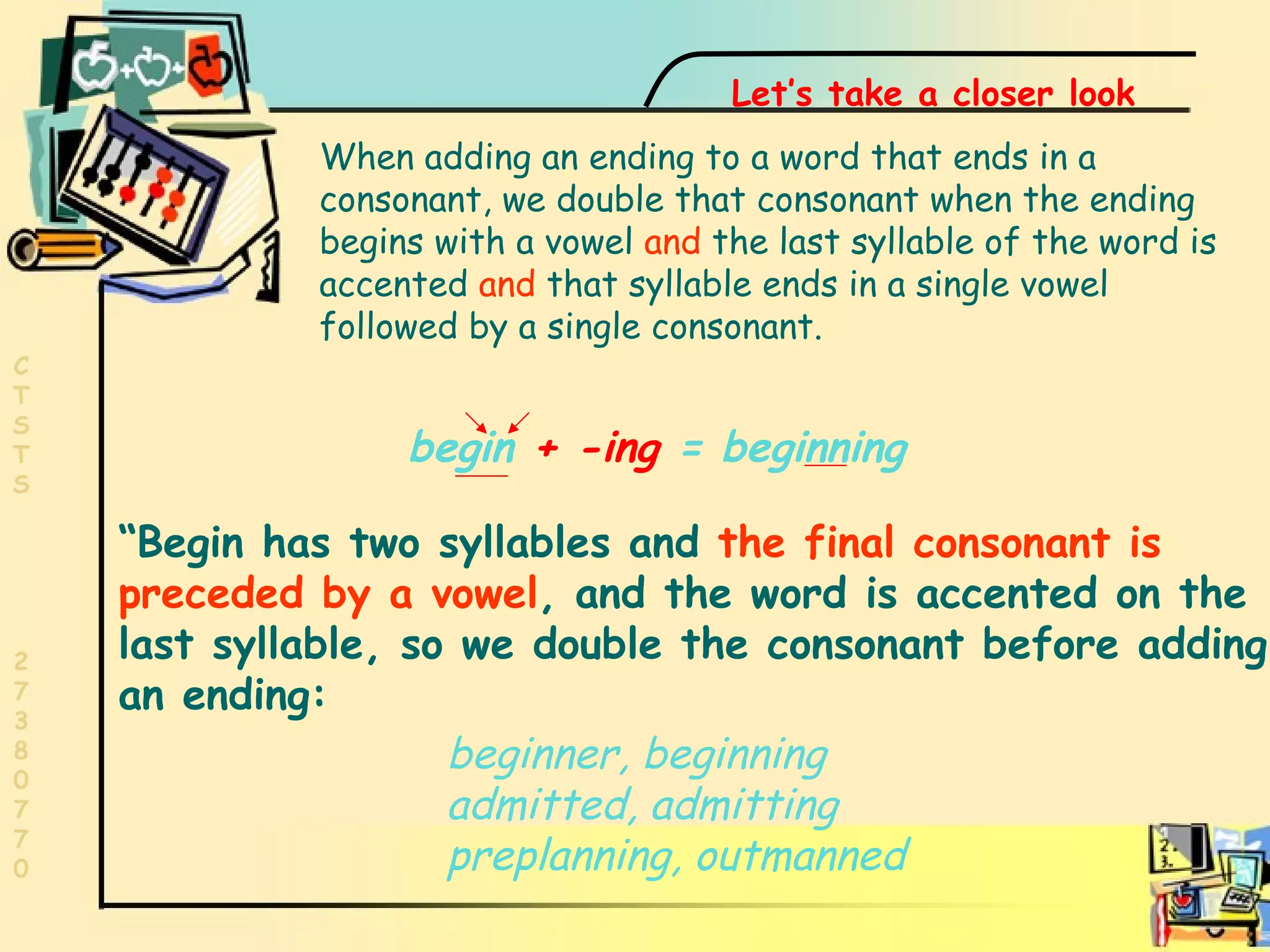
Final consonant begin  +   -ing  = beginning “ Begin has two syllables and  the final consonant is preceded by a vowel , and the word is accented on the last syllable, so we double the consonant before adding an ending:  Let’s take a closer look When adding an ending to a word that ends in a consonant, we double that consonant when the ending begins with a vowel  and  the last syllable of the word is accented  and  that syllable ends in a single vowel followed by a single consonant. beginner, beginning admitted, admitting preplanning, outmanned
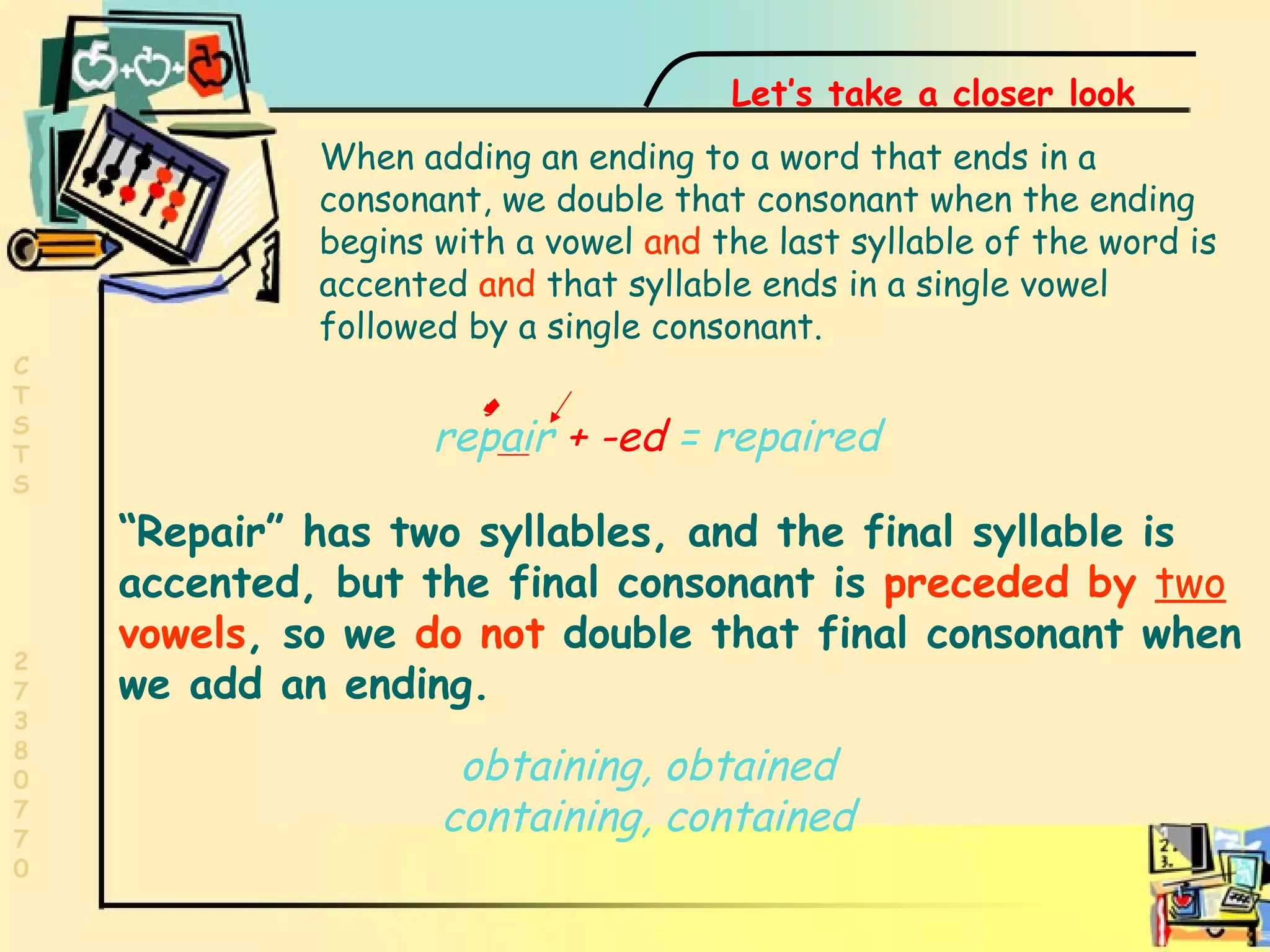
Two vowels  repair  +   -ed  = repaired “ Repair” has two syllables, and the final syllable is accented, but the final consonant is  preceded by  two  vowels , so we  do not  double that final consonant when we add an ending. Let’s take a closer look When adding an ending to a word that ends in a consonant, we double that consonant when the ending begins with a vowel  and  the last syllable of the word is accented  and  that syllable ends in a single vowel followed by a single consonant. obtaining, obtained containing, contained
conclusion Write as often as you can to improve your spelling skills. If you have further questions, use the spell checker on you computer or a good dictionary.
BEST info This presentation is especially created for you by Nora   恩沛   2738 0770 0910 311 516 Located near 101 [email_address] CausingtheSongtoSing copyright March 2005

Grammar: Spelling

  • 1.
  • 2.
    intro English spelling can be confusing, especially for non-native speakers and writers. In the following slide presentation, you will find some rules and suggestions to help you. Unfortunately, there are exceptions to these rules, but this summary should be helpful.
  • 3.
    ie,ei, i before e , except after c … ach ie ve, bel ie ve, br ie f, ch ie f, f ie nd, hyg ie ne, gr ie f, fr ie nd, gr ie ve, pat ie nce, p ie rce, pr ie st, th ie f re c ei ve, re c ei pt, de c ei ve, de c ei t, c ei ling, con c ei ve, per c ei ve, con c ei t … and in words that rhyme with hay… fr ei ght, b ei ge, w ei ght, v ei n, and w ei gh, n ei ghbor … and some other exceptions… ei ther, n ei ther, f ei nt, for ei gn, forf ei t, h ei ght, l ei sure, w ei rd, s ei ze
  • 4.
    Words ending iny A final y changes to i when an ending is added . supply becomes suppl ies worry becomes worr ied merry becomes merr ier … except when that ending is –ing … . cr y ing , stud y ing … and when y is preceded by a vowel… ob ey e d , s ay i ng
  • 5.
    Words ending ine Silent e is dropped when adding -ing advanc e + -ing = advancing surpris e + -ing = surprising … but kept when the ending begins with a consonant… advance ment , like ness … unless the e is preceded by a vowel … arg u e + -ment = argument tr u e + -ly = truly
  • 6.
    Adding prefix A prefix seldom changes the spelling of a word. mis spelled un necessary dis satisfied dis interested mis inform
  • 7.
    Plurals Plurals areformed by adding -s or -es . shoe s watch es fax es wish es buzz es For words ending in a consonant plus -y , change the -y to -i and add -es . For proper nouns, keep the -y . delay s compani es Brady s
  • 8.
    Words ending inconsonants WHAT??????!!!!!!! When adding an ending to a word that ends in a consonant, we double that consonant when the ending begins with a vowel and the last syllable of the word is accented and that syllable ends in a single vowel followed by a single consonant.
  • 9.
    Last syllable accent sub mit + -ed = submitted When adding an ending to a word that ends in a consonant, we double that consonant when the ending begins with a vowel and the last syllable of the word is accented and that syllable ends in a single vowel followed by a single consonant. “ Submit” is accented on the last syllable and the final consonant is preceded by a vowel, so we double the “t “ before adding, -ed or -ing : Let’s take a closer look submitted, submitting remitted, remitting preferred, preferring
  • 10.
    One syllable wordpl an + -ed = planned “ Plan” has one syllable, so that syllable is accented. The final consonant is preceded by a vowel , so we double that consonant. When adding an ending to a word that ends in a consonant, we double that consonant when the ending begins with a vowel and the last syllable of the word is accented and that syllable ends in a single vowel followed by a single consonant. Let’s take a closer look planned, planning stopped, stopping
  • 11.
    First syllable accent offer + -ing = offering “ Offer” has two syllables and the final consonant is preceded by a vowel, but the word is accented on the first syllable, so we don’t double the consonant before adding an ending. Let’s take a closer look When adding an ending to a word that ends in a consonant, we double that consonant when the ending begins with a vowel and the last syllable of the word is accented and that syllable ends in a single vowel followed by a single consonant. offering, offered conquering, conquered suffer, suffering
  • 12.
    Final consonant begin + -ing = beginning “ Begin has two syllables and the final consonant is preceded by a vowel , and the word is accented on the last syllable, so we double the consonant before adding an ending: Let’s take a closer look When adding an ending to a word that ends in a consonant, we double that consonant when the ending begins with a vowel and the last syllable of the word is accented and that syllable ends in a single vowel followed by a single consonant. beginner, beginning admitted, admitting preplanning, outmanned
  • 13.
    Two vowels repair + -ed = repaired “ Repair” has two syllables, and the final syllable is accented, but the final consonant is preceded by two vowels , so we do not double that final consonant when we add an ending. Let’s take a closer look When adding an ending to a word that ends in a consonant, we double that consonant when the ending begins with a vowel and the last syllable of the word is accented and that syllable ends in a single vowel followed by a single consonant. obtaining, obtained containing, contained
  • 14.
    conclusion Write asoften as you can to improve your spelling skills. If you have further questions, use the spell checker on you computer or a good dictionary.
  • 15.
    BEST info Thispresentation is especially created for you by Nora 恩沛 2738 0770 0910 311 516 Located near 101 [email_address] CausingtheSongtoSing copyright March 2005