Silent Letters
L.O. To recognise words with silent letters
S.C I can spell words with silent letters
GUESS
• Can you remember any words that begin
with:
• wr-
• kn-
• ps-
What are silent letters?
Silent letters are letters that appear in
the spelling of words, but don’t make a
sound.
What caused English to have so
many silent letters?
• Historical change
• Letters added to make the spelling look Latin or
French
• Borrowed words from other languages
• Sound combinations too difficult to say
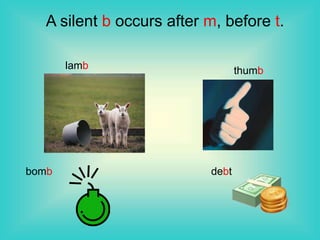
A silent b occurs after m, before t.
lamb thumb
bomb debt
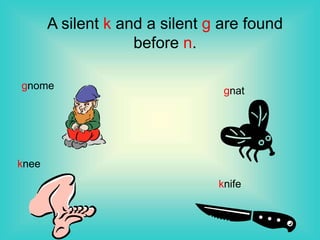
A silent k and a silent g are found
before n.
gnome gnat
knee
knife
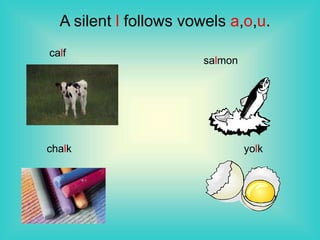
A silent l follows vowels a,o,u.
calf
salmon
chalk yolk
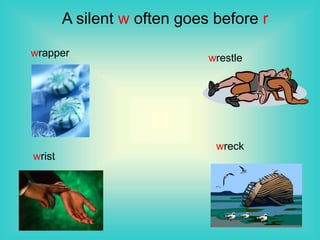
A silent w often goes before r
wrapper wrestle
wrist
wreck
AFL
• Complete the given worksheet
• Do peer check
• Complete the success criteria
Silent Letters
L.O. To recognise words with silent letters
S.C I can use words with silent letters in my writing

Silent letter ppt

  • 1.
    Silent Letters L.O. Torecognise words with silent letters S.C I can spell words with silent letters
  • 2.
    GUESS • Can youremember any words that begin with: • wr- • kn- • ps-
  • 3.
    What are silentletters? Silent letters are letters that appear in the spelling of words, but don’t make a sound.
  • 4.
    What caused Englishto have so many silent letters? • Historical change • Letters added to make the spelling look Latin or French • Borrowed words from other languages • Sound combinations too difficult to say
  • 5.
    A silent boccurs after m, before t. lamb thumb bomb debt
  • 6.
    A silent kand a silent g are found before n. gnome gnat knee knife
  • 7.
    A silent lfollows vowels a,o,u. calf salmon chalk yolk
  • 8.
    A silent woften goes before r wrapper wrestle wrist wreck
  • 9.
    AFL • Complete thegiven worksheet • Do peer check • Complete the success criteria
  • 10.
    Silent Letters L.O. Torecognise words with silent letters S.C I can use words with silent letters in my writing

Editor's Notes

  • #5 Historical Change: According to Britishcouncil.org, Old English was 90% phonemic (meaning the words sounded the same as they looked). But from the beginning of the 15th century, we began to borrow words from other languages. Because other languages have different grammar and usage rules, the words we adopted from them did not follow the same rules we use to pronounce words in English. The English language borrowed the Latin alphabet, and so we have only got 26 letters to represent around 41 different significant sounds. That means we have to attempt to use combinations of letters to represent sounds. In the Middle English Period, William Caxton brought the printing press to England. As time passed, pronunciation continued to change, but the printing press preserved the old spelling. Modern day English is only about 40% phonemic- meaning the words sound the way they are spelled. Some examples would be hope, knot, and light. Letters added to make spelling look Latin or French: Medieval spellings of French loan words (dette, doute) were without the letter b. The b was added to connect words to their Latin origin from which the French words came (debit, dubitative); however the b remained silent in English (debt, doubt). Some other examples are: island and victual. Sound combinations too difficult to say: Some sound combinations are just difficult to say so over time, some letters become silent. Examples would be: handkerchief and sandwich. Borrowed words from other languages: We borrowed many words from other languages and kept their spelling. (champagne, khaki, myrrh)