AGE-GRADED THEORY


    By:CarliBecks
    Molly Ramey
    Lysette Torres
     Mia Staten
   Manuel Vasquez
Age-Graded Theory

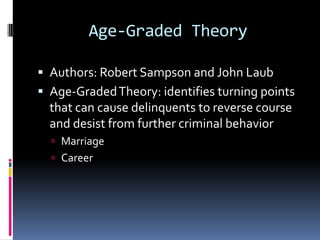
 Authors: Robert Sampson and John Laub
 Age-Graded Theory: identifies turning points
  that can cause delinquents to reverse course
  and desist from further criminal behavior
   Marriage
   Career
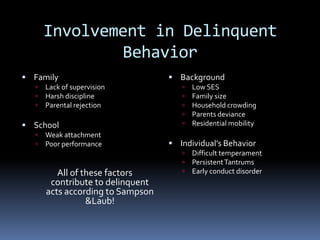
Involvement in Delinquent
              Behavior
 Family                           Background
     Lack of supervision               Low SES
     Harsh discipline                  Family size
     Parental rejection                Household crowding
                                        Parents deviance
 School                                Residential mobility
     Weak attachment
     Poor performance             Individual’s Behavior
                                        Difficult temperament
                                        Persistent Tantrums
         All of these factors           Early conduct disorder
       contribute to delinquent
      acts according to Sampson
                 &Laub!
What could change the
       delinquent behavior?
 Turning points
   Marriage
     Finding a spouse who supports the spouse about
      their past and is willing to forgive, will lead to less
      crime
     People who cannot sustain secure marital statuses
      are less likely to desist from crime
   Career
     Finding a job where the employers are willing to
      work with the person and give them a chance
      despite their records will decrease chances of crime
Warning Signs

 Performance in School
 Performance at work
 Family structure


 These warning signs are important for a
  probation officer to look at to determine if
  the juvenile is at high risk for continuous
  delinquency.
Prevention of Delinquent
           Behavior
 Teacher Support
   Patience and understanding
   Encouragement and praise
 Teacher Involvement
   Programs and organizations to encourage positive
    behaviors
   Encourage student to get involved extra curricular
    activities
 Positive relationships with both teachers and
  parents

Spa #2 js 152

  • 1.
    AGE-GRADED THEORY By:CarliBecks Molly Ramey Lysette Torres Mia Staten Manuel Vasquez
  • 2.
    Age-Graded Theory  Authors:Robert Sampson and John Laub  Age-Graded Theory: identifies turning points that can cause delinquents to reverse course and desist from further criminal behavior  Marriage  Career
  • 3.
    Involvement in Delinquent Behavior  Family  Background  Lack of supervision  Low SES  Harsh discipline  Family size  Parental rejection  Household crowding  Parents deviance  School  Residential mobility  Weak attachment  Poor performance  Individual’s Behavior  Difficult temperament  Persistent Tantrums All of these factors  Early conduct disorder contribute to delinquent acts according to Sampson &Laub!
  • 4.
    What could changethe delinquent behavior?  Turning points  Marriage  Finding a spouse who supports the spouse about their past and is willing to forgive, will lead to less crime  People who cannot sustain secure marital statuses are less likely to desist from crime  Career  Finding a job where the employers are willing to work with the person and give them a chance despite their records will decrease chances of crime
  • 5.
    Warning Signs  Performancein School  Performance at work  Family structure  These warning signs are important for a probation officer to look at to determine if the juvenile is at high risk for continuous delinquency.
  • 6.
    Prevention of Delinquent Behavior  Teacher Support  Patience and understanding  Encouragement and praise  Teacher Involvement  Programs and organizations to encourage positive behaviors  Encourage student to get involved extra curricular activities  Positive relationships with both teachers and parents