Child Abuse and Neglect
Training for Educators, Part 2

Child Abuse and Neglect:
 Signs and Symptoms
     Fran Roberson, LCSW, LMFT
  Center for Children and Families, Inc.
           Norman, Oklahoma
Child maltreatment includes:
neglect, physical and emotional
  abuse, and sexual abuse.
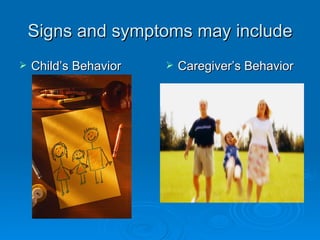
Signs and symptoms may include
   Child’s Behavior      Caregiver’s Behavior
Neglect is failure to
provide for a child’s
   basic needs.
Children’s behaviors may include:
   Lack of confidence, concentration, and social
    skills.
   Little to no expectations of care from caregivers.
   Expect to fail at tasks.
   Apathetic, demonstrating little hope in getting
    needs met.
   May be needy and dependent, clingy at times.
   Used to taking care of self and siblings.
   Hungry, and often hoards food for self or
    siblings.
Caregiver’s behavior may include:

 Little to no supervision of children
  observable.
 Little attention to child’s needs, i.e.,
  clothing, food, attention.
 Apathetic and emotionally unavailable.
 May demonstrate victim posture.
 Communicates sense of hopelessness.
84% of child abuse and
  neglect cases are
 NEGLECT (Oklahoma 2008)

          Substance abuse
by a caregiver has been the greatest
   contributing factor to neglect in
              Oklahoma.
Neglect is also the result of:
   Threat of harm            Failure to provide
   Failure to protect         adequate nutrition.
                              Abandonment
   Exposure to domestic
    violence
                              Failure to obtain
                               medical attention.
   Inadequate or             Educational
    dangerous shelter         Failure to obtain
   Lack of supervision        psychiatric attention.
   Inadequate physical       Inadequate clothing
    care                      Failure to thrive
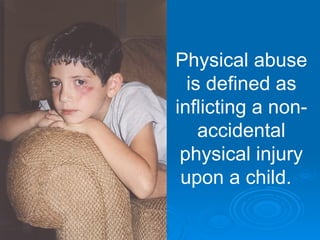
Physical abuse
  is defined as
inflicting a non-
    accidental
 physical injury
 upon a child.
Children’s behavior may include:
   Wary of physical contact with adults.
   Apprehensive when other children cry.
   Demonstrates extremes in behavior
    (aggressiveness or withdrawal).
   Seems frightened of parents.
   Reports injury by parents or appears to be using
    adult language to explain and injury.
   Exhibits “frozen watchfulness”.
   Developmental delays in language, social skills,
    physical skills, and/or cognitive skills.
   May wear inappropriate clothing for the weather,
    i.e., long sleeves or coat in warm weather.
Caregiver’s behavior may include:
 Responds harshly and applies discipline
  inappropriate to child’s age, transgression,
  and condition.
 Offers illogical, unconvincing,
  contradictory, or no explanation of child’s
  injury.
 Significantly misperceives child and
  intention of child’s behaviors.
 Has excessively high expectations of
  child.
 Demonstrates lack of empathy for child.
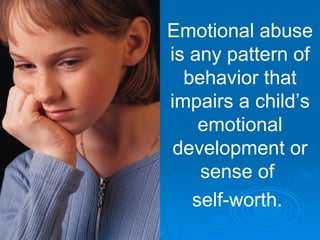
Emotional abuse
is any pattern of
  behavior that
impairs a child’s
    emotional
 development or
    sense of
   self-worth.
Children’s behaviors may include:

 Appears overly compliant, passive,
  undemanding.
 Is extremely aggressive, demanding, or
  rageful
 Show overly adaptive behaviors, either
  inappropriately adult or inappropriately
  infantile.
Caregiver’s behavior may include:

 Blames or belittles child.
 Is cold and rejecting.
 Withholds love.
 Treats siblings unequally.
 Seems unconcerned about child’s
  problems.
Emotional abuse co-exists
  with others abuses.

  Emotional abuse is difficult to
     confirm in isolation.
Suspicion of abuse or
neglect of children requires
   a report to the Child
Welfare hotline or office in
       your county.
   As teachers, counselors, or administrators,
   we only have to have “suspicion” based on
   our best observations and interactions. We
  do not have to confirm the abuse . .that is the
                   state’s job!
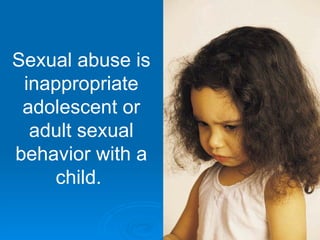
Sexual abuse is
 inappropriate
 adolescent or
  adult sexual
behavior with a
    child.
Children’s behaviors may include:
 Appears withdrawn or engages in fantasy
  or infantile behavior.
 Has poor peer relationships.
 Is unwilling to participate in physical
  activities.
 Has recurrent nightmares or disturbed
  sleep patterns and fear of the dark.
 Displays unusual interest or knowledge of
  sexual matters, expresses affection in
  ways inappropriate for a child of that age.
Children’s behaviors may include:
 Fear of a person or an intense dislike at
  being left somewhere or with someone.
 Other behavioral signals such as loss of
  appetite, aggressive or disruptive
  behavior, withdrawal, running away, or
  delinquent behavior, failing in school.
 Approaches adults in a sexual manner.
 Demonstrates poor boundaries with
  adults, known and unknown to them.
 May wear many clothing layers.
Caregiver’s behavior may include:
 Extremely protective or jealous of child.
 Demonstrates favoritism of one child over
  another.
 Inappropriate boundaries with children.
 Evidence of role reversals.
 Cautious and concerned about what child
  has said to others.
Suspicion of abuse or
neglect of children requires
   a report to the Child
Welfare hotline or office in
       your county.
   As teachers, counselors, or administrators,
   we only have to have “suspicion” based on
   our best observations and interactions. We
  do not have to confirm the abuse . .that is the
                   state’s job!
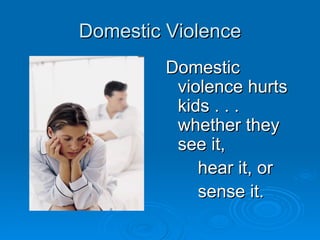
Domestic Violence
         Domestic
          violence hurts
          kids . . .
          whether they
          see it,
             hear it, or
             sense it.
Children’s behaviors may include:

 Playing out of domestic conflicts
 repeatedly.

 Anxious when any disagreement
 occurs in their presence.

 Exhibits “frozen watchfulness”.
Caregiver’s behavior may include:

 One parent exhibiting controlling
 behaviors of other parent.

 One parent exhibiting fear behaviors
 toward the other parent.
Contact Fran Roberson at the
Center for Children and Families,
  Inc. for further questions or
            concerns.

   froberson@ccfinorman.org
         405.364.1420

Second segment can in ok 2009 for otac

  • 1.
    Child Abuse andNeglect Training for Educators, Part 2 Child Abuse and Neglect: Signs and Symptoms Fran Roberson, LCSW, LMFT Center for Children and Families, Inc. Norman, Oklahoma
  • 3.
    Child maltreatment includes: neglect,physical and emotional abuse, and sexual abuse.
  • 4.
    Signs and symptomsmay include  Child’s Behavior  Caregiver’s Behavior
  • 5.
    Neglect is failureto provide for a child’s basic needs.
  • 6.
    Children’s behaviors mayinclude:  Lack of confidence, concentration, and social skills.  Little to no expectations of care from caregivers.  Expect to fail at tasks.  Apathetic, demonstrating little hope in getting needs met.  May be needy and dependent, clingy at times.  Used to taking care of self and siblings.  Hungry, and often hoards food for self or siblings.
  • 7.
    Caregiver’s behavior mayinclude:  Little to no supervision of children observable.  Little attention to child’s needs, i.e., clothing, food, attention.  Apathetic and emotionally unavailable.  May demonstrate victim posture.  Communicates sense of hopelessness.
  • 8.
    84% of childabuse and neglect cases are NEGLECT (Oklahoma 2008) Substance abuse by a caregiver has been the greatest contributing factor to neglect in Oklahoma.
  • 9.
    Neglect is alsothe result of:  Threat of harm  Failure to provide  Failure to protect adequate nutrition.  Abandonment  Exposure to domestic violence  Failure to obtain medical attention.  Inadequate or  Educational dangerous shelter  Failure to obtain  Lack of supervision psychiatric attention.  Inadequate physical  Inadequate clothing care  Failure to thrive
  • 10.
    Physical abuse is defined as inflicting a non- accidental physical injury upon a child.
  • 11.
    Children’s behavior mayinclude:  Wary of physical contact with adults.  Apprehensive when other children cry.  Demonstrates extremes in behavior (aggressiveness or withdrawal).  Seems frightened of parents.  Reports injury by parents or appears to be using adult language to explain and injury.  Exhibits “frozen watchfulness”.  Developmental delays in language, social skills, physical skills, and/or cognitive skills.  May wear inappropriate clothing for the weather, i.e., long sleeves or coat in warm weather.
  • 12.
    Caregiver’s behavior mayinclude:  Responds harshly and applies discipline inappropriate to child’s age, transgression, and condition.  Offers illogical, unconvincing, contradictory, or no explanation of child’s injury.  Significantly misperceives child and intention of child’s behaviors.  Has excessively high expectations of child.  Demonstrates lack of empathy for child.
  • 13.
    Emotional abuse is anypattern of behavior that impairs a child’s emotional development or sense of self-worth.
  • 14.
    Children’s behaviors mayinclude:  Appears overly compliant, passive, undemanding.  Is extremely aggressive, demanding, or rageful  Show overly adaptive behaviors, either inappropriately adult or inappropriately infantile.
  • 15.
    Caregiver’s behavior mayinclude:  Blames or belittles child.  Is cold and rejecting.  Withholds love.  Treats siblings unequally.  Seems unconcerned about child’s problems.
  • 16.
    Emotional abuse co-exists with others abuses. Emotional abuse is difficult to confirm in isolation.
  • 17.
    Suspicion of abuseor neglect of children requires a report to the Child Welfare hotline or office in your county. As teachers, counselors, or administrators, we only have to have “suspicion” based on our best observations and interactions. We do not have to confirm the abuse . .that is the state’s job!
  • 18.
    Sexual abuse is inappropriate adolescent or adult sexual behavior with a child.
  • 19.
    Children’s behaviors mayinclude:  Appears withdrawn or engages in fantasy or infantile behavior.  Has poor peer relationships.  Is unwilling to participate in physical activities.  Has recurrent nightmares or disturbed sleep patterns and fear of the dark.  Displays unusual interest or knowledge of sexual matters, expresses affection in ways inappropriate for a child of that age.
  • 20.
    Children’s behaviors mayinclude:  Fear of a person or an intense dislike at being left somewhere or with someone.  Other behavioral signals such as loss of appetite, aggressive or disruptive behavior, withdrawal, running away, or delinquent behavior, failing in school.  Approaches adults in a sexual manner.  Demonstrates poor boundaries with adults, known and unknown to them.  May wear many clothing layers.
  • 21.
    Caregiver’s behavior mayinclude:  Extremely protective or jealous of child.  Demonstrates favoritism of one child over another.  Inappropriate boundaries with children.  Evidence of role reversals.  Cautious and concerned about what child has said to others.
  • 22.
    Suspicion of abuseor neglect of children requires a report to the Child Welfare hotline or office in your county. As teachers, counselors, or administrators, we only have to have “suspicion” based on our best observations and interactions. We do not have to confirm the abuse . .that is the state’s job!
  • 23.
    Domestic Violence Domestic violence hurts kids . . . whether they see it, hear it, or sense it.
  • 24.
    Children’s behaviors mayinclude:  Playing out of domestic conflicts repeatedly.  Anxious when any disagreement occurs in their presence.  Exhibits “frozen watchfulness”.
  • 25.
    Caregiver’s behavior mayinclude:  One parent exhibiting controlling behaviors of other parent.  One parent exhibiting fear behaviors toward the other parent.
  • 27.
    Contact Fran Robersonat the Center for Children and Families, Inc. for further questions or concerns. froberson@ccfinorman.org 405.364.1420