World History 1 Final Review - Europe (Middle Ages - Industrial Revolution) Middle Ages - Scientific Revolution Charlemagne - Enlightenment Feudalism - French Revolution  Crusades - Napoleon Medieval Society - Industrial Revolution  Renaissance Reformation  Absolutism
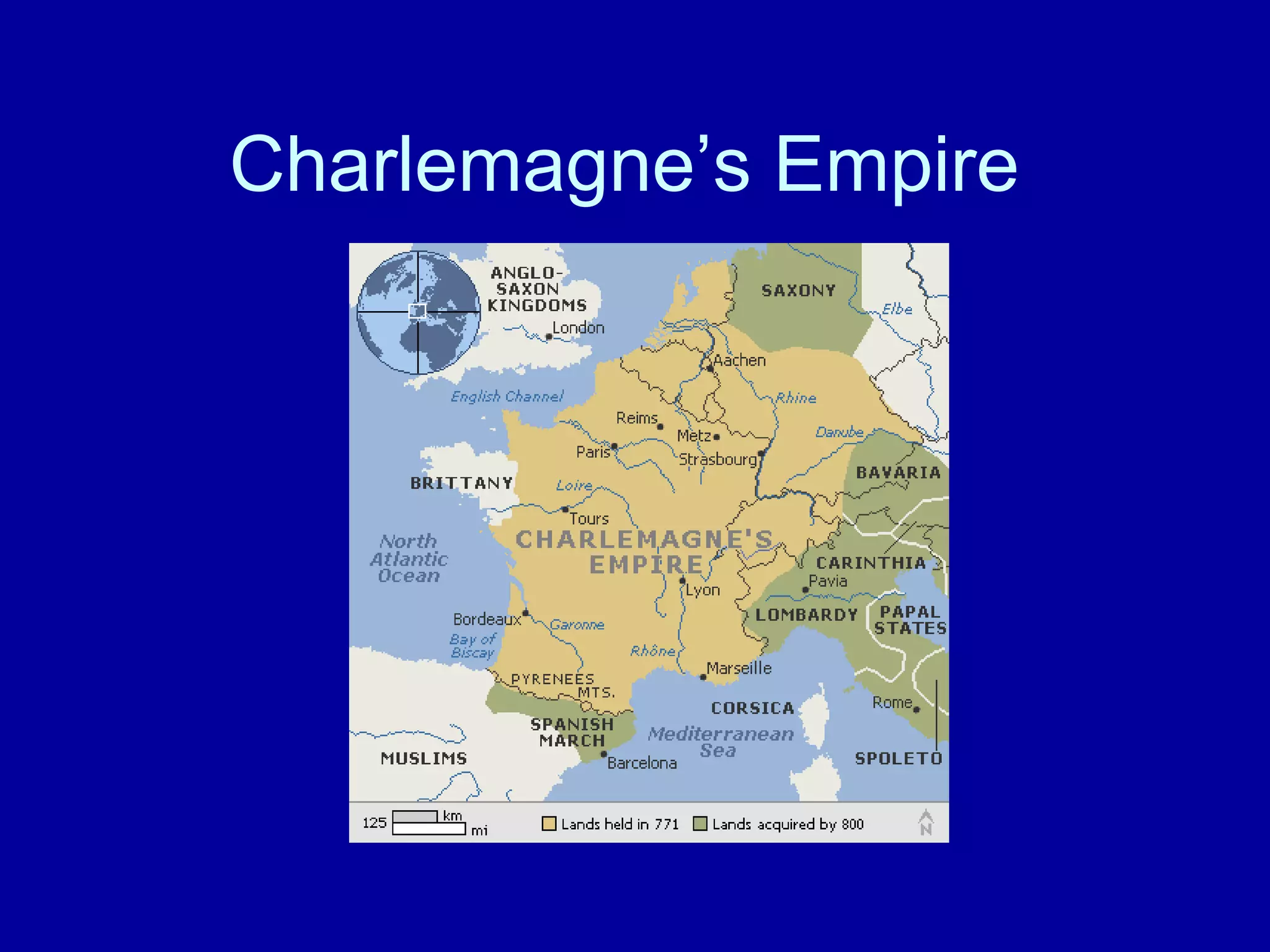
Middle Ages Rome falls Feudalism and the Catholic Church  provide stability during this period Rome is Replaced by lots of small  kingdoms, most notably… - Frankish kingdom, including present-day France, largest - Charlemagne becomes leader of the Franks in 768
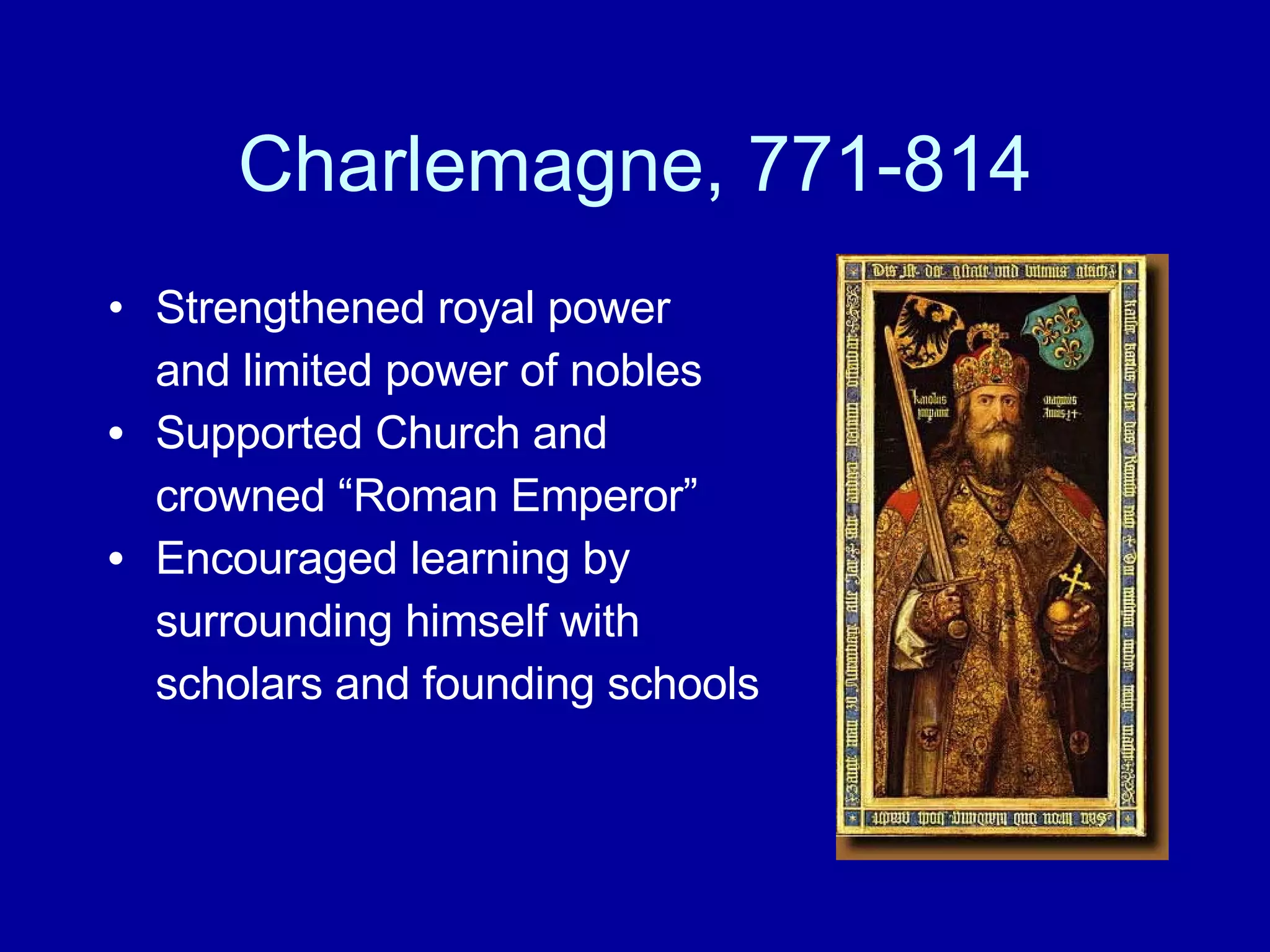
Charlemagne, 771-814 Strengthened royal power and limited power of nobles Supported Church and  crowned “Roman Emperor” Encouraged learning by  surrounding himself with  scholars and founding schools
Charlemagne’s Empire
Age of Feudalism Europe is attacked from 850-950 by Vikings, Magyars, and Muslims In exchange for protection,  vassals  living on  manors , were granted  fiefs , by  lords Peasants paid  tithes  to church Gave rise to the  Age of Chivalry
Crusades In 1093, Pope Urban II calls for a “holy war” to gain control of the Holy Land First Crusade, 1096-1099, succeeds in recapturing Jerusalem Second Crusade, 1147-1149, launched to regain control, after it is conquered by the Turks Third Crusade, 1189-1191 ends in a truce Fourth Crusade, 1204, fails to capture Jerusalem, and knights instead loot Constantinople
Effects of Crusades Expansion in trade  and increase in  cultural exchanges  between Europe  and Middle East Power of Pope  decreases Power of Kings increases Legacy of bitterness  between Christians  and Muslims
Medieval Society Growing Food Supply Formation of Guilds Increase in trade Growth of business and banking Towns grow Rise of a merchant class Growth of learning
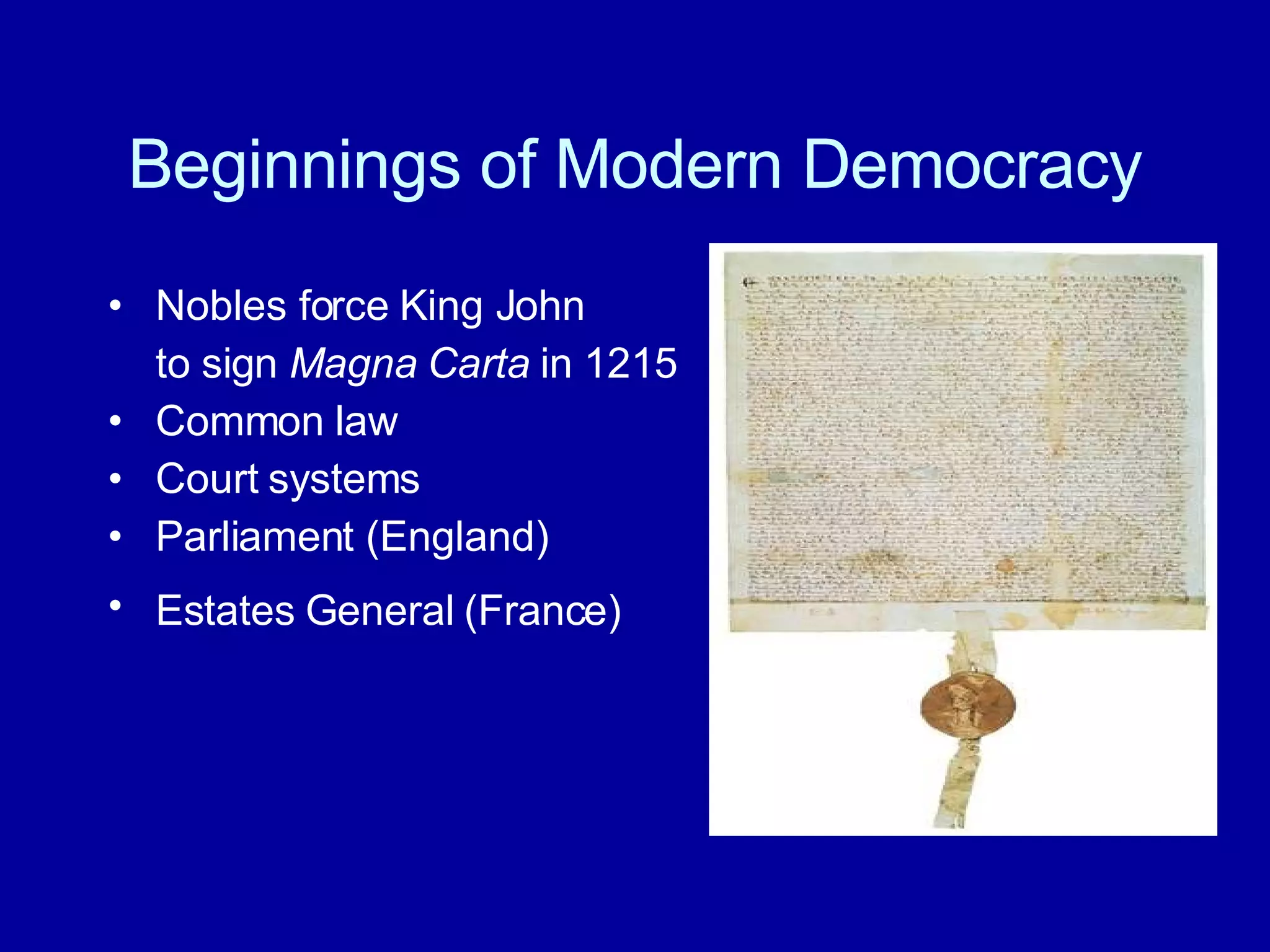
Beginnings of Modern Democracy Nobles force King John  to sign  Magna Carta  in 1215 Common law Court systems Parliament (England) Estates General (France)
Other changes in Medieval Society Bubonic plague strikes, killing 1/3 of population of Europe Longbow changes warfare Nationalism emerges in France and England  Hundred Years’ War between France and England ends 1453
Renaissance Why it begins in Italy City-States Merchant Class Humanism  Secularism
Impact of the Renaissance Art draws on techniques and styles of classical Greece and Rome Due to the invention of the  printing press,  books become   more widely available People question political structures and religious practices
Reformation  Problems within the Church Most priests were poorly educated Growing wealth and increased corruption Practice of selling indulgences Martin Luther responds with 95 Theses in 1517 and says that “salvation comes through faith alone”  Henry VIII breaks away in 1534 and becomes the head of the Church of England because the Pope would not grant him a divorce
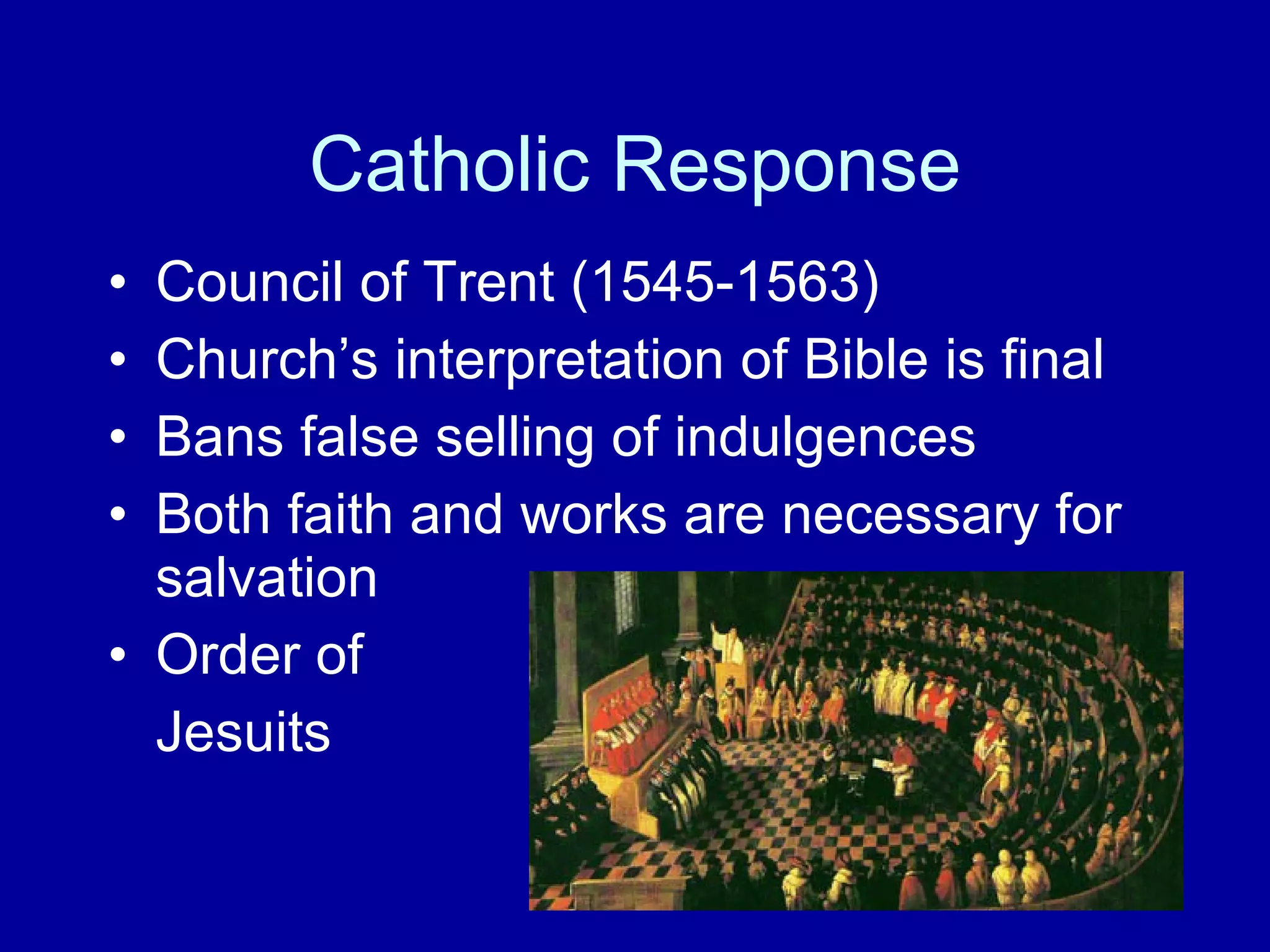
Catholic Response Council of Trent (1545-1563)  Church’s interpretation of Bible is final Bans false selling of indulgences Both faith and works are necessary for salvation Order of  Jesuits
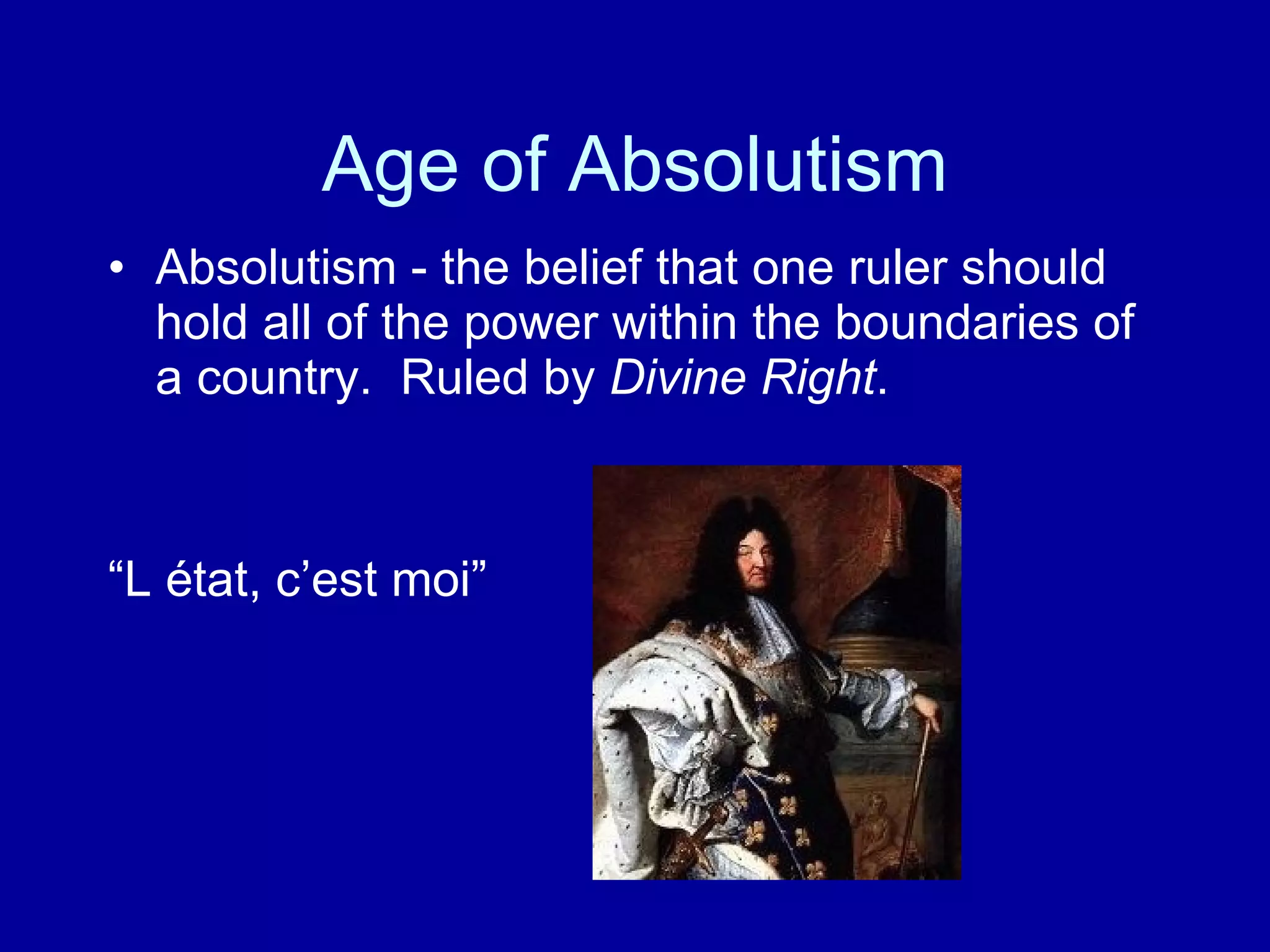
Age of Absolutism Absolutism - the belief that one ruler should hold all of the power within the boundaries of a country.  Ruled by  Divine Right .  “ L état, c’est moi”
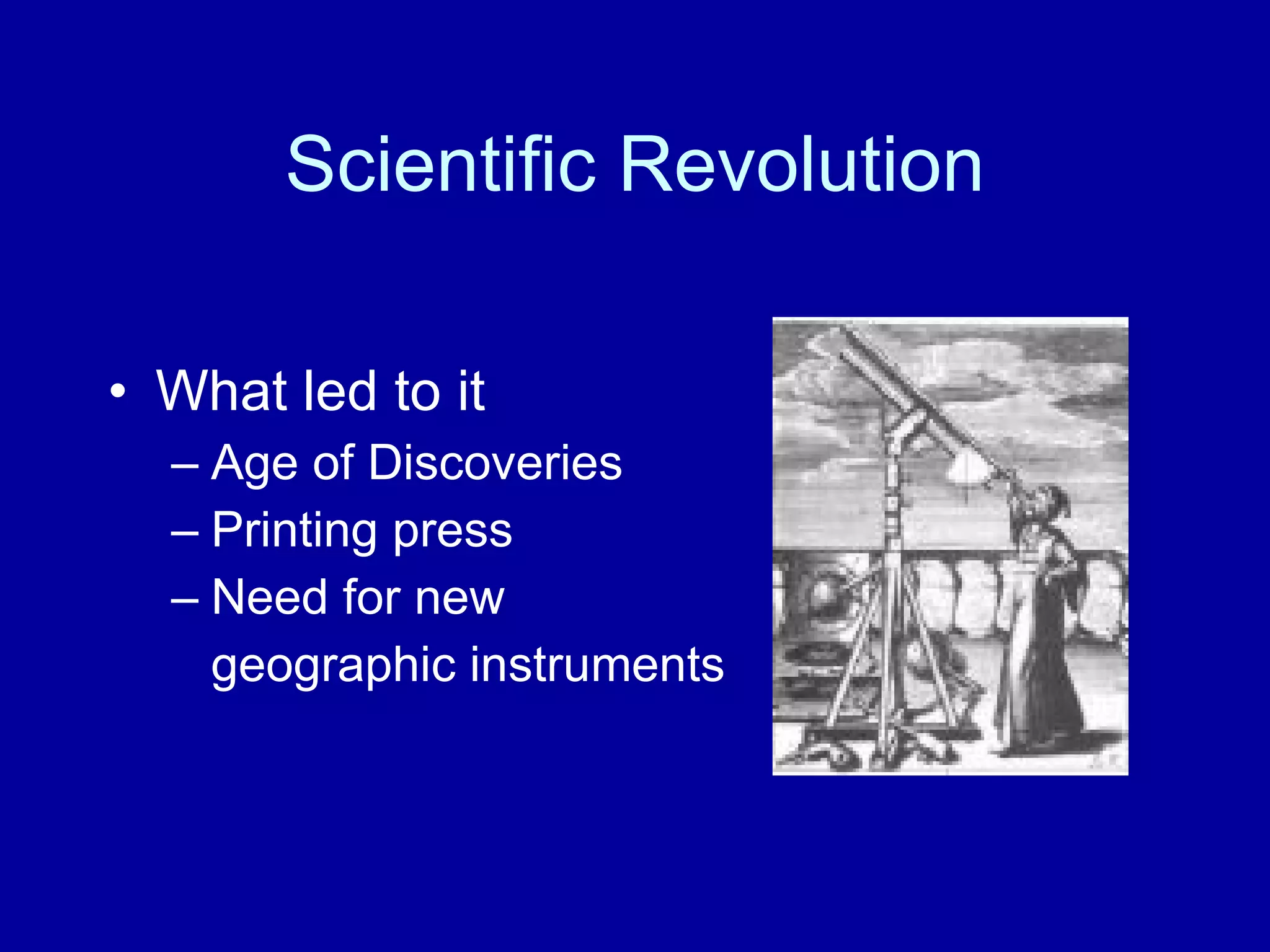
Scientific Revolution What led to it Age of Discoveries Printing press Need for new  geographic instruments
Copernicus develops the heliocentric theory of the universe Copernicus, Galileo, and Kepler develop the scientific method
Enlightenment Thomas Hobbes - Social Contract John Locke - natural rights Montesquieu - separation of powers Voltaire - freedom of speech
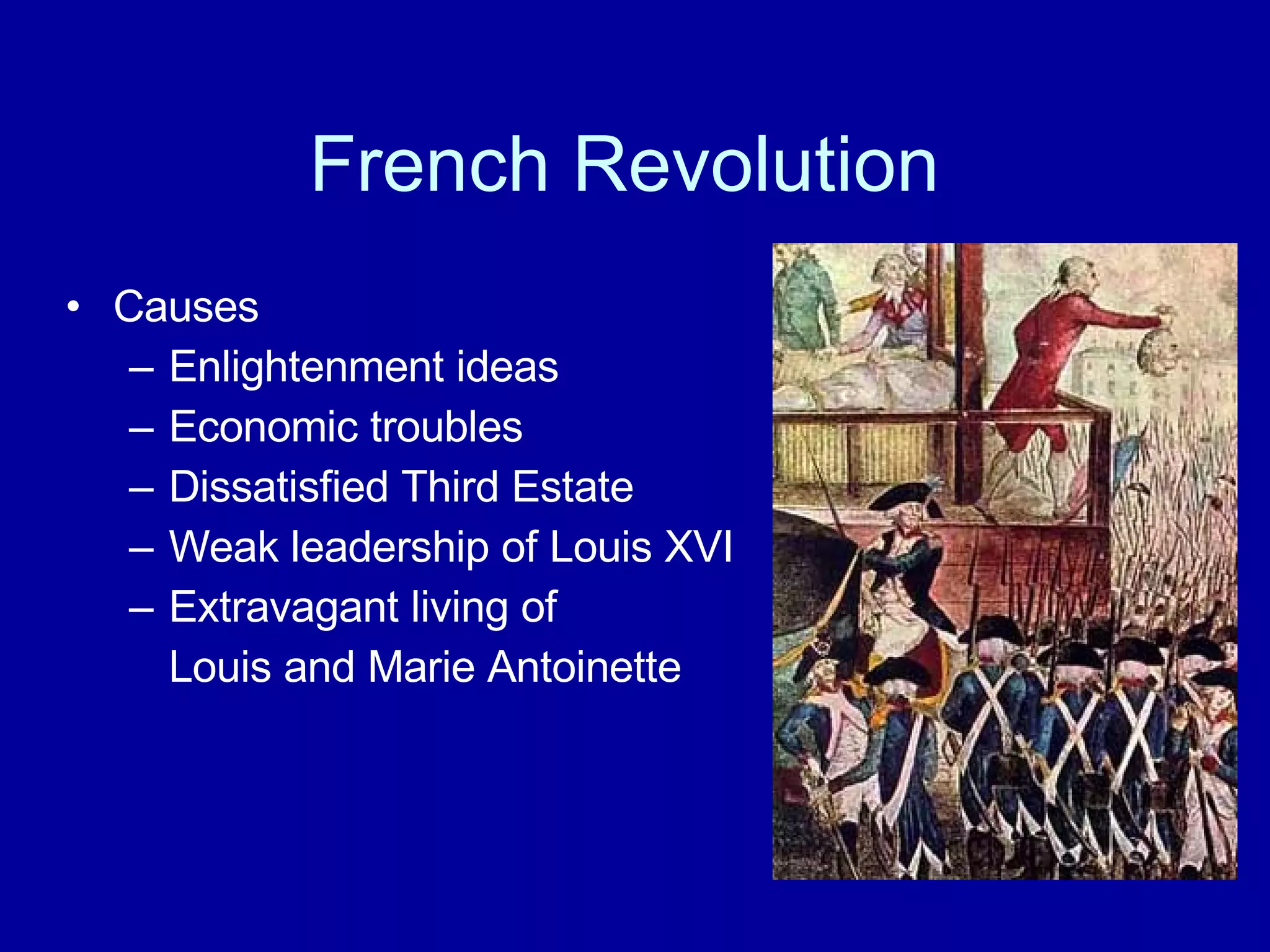
French Revolution  Causes Enlightenment ideas Economic troubles Dissatisfied Third Estate Weak leadership of Louis XVI Extravagant living of  Louis and Marie Antoinette
Napoleon Restores order  Creates  lycées Establishes  Napoleonic Code Signs Concordat with Pope Expands Empire Finally defeated at Waterloo
Congress of Vienna (1815) Restore balance  of power to Europe Restore European  royal families  to their thrones Prevent future  French aggression
Rise of Nation-State  Nationalism - belief that people should be loyal to their nation Bonds that create a Nation-State: - History - Language - Territory - Nationality - Religion - Culture
Industrial Revolution  Begins in England… - Enclosure Movement - System of crop rotation - Extensive natural resources - Human resources and capital New Inventions - Steam engine, railroads, spinning jenny
Effects on the Middle Class - Long hours, harsh working conditions,  crowded cities - Growing middle-class - Began to organize  Capitalism, Socialism, Marxism - Adam Smith &  laissez-faire -  Marx, Engels & Marxism

Sp08 Fin Rev

  • 1.
    World History 1Final Review - Europe (Middle Ages - Industrial Revolution) Middle Ages - Scientific Revolution Charlemagne - Enlightenment Feudalism - French Revolution Crusades - Napoleon Medieval Society - Industrial Revolution Renaissance Reformation Absolutism
  • 2.
    Middle Ages Romefalls Feudalism and the Catholic Church provide stability during this period Rome is Replaced by lots of small kingdoms, most notably… - Frankish kingdom, including present-day France, largest - Charlemagne becomes leader of the Franks in 768
  • 3.
    Charlemagne, 771-814 Strengthenedroyal power and limited power of nobles Supported Church and crowned “Roman Emperor” Encouraged learning by surrounding himself with scholars and founding schools
  • 4.
  • 5.
    Age of FeudalismEurope is attacked from 850-950 by Vikings, Magyars, and Muslims In exchange for protection, vassals living on manors , were granted fiefs , by lords Peasants paid tithes to church Gave rise to the Age of Chivalry
  • 6.
    Crusades In 1093,Pope Urban II calls for a “holy war” to gain control of the Holy Land First Crusade, 1096-1099, succeeds in recapturing Jerusalem Second Crusade, 1147-1149, launched to regain control, after it is conquered by the Turks Third Crusade, 1189-1191 ends in a truce Fourth Crusade, 1204, fails to capture Jerusalem, and knights instead loot Constantinople
  • 7.
    Effects of CrusadesExpansion in trade and increase in cultural exchanges between Europe and Middle East Power of Pope decreases Power of Kings increases Legacy of bitterness between Christians and Muslims
  • 8.
    Medieval Society GrowingFood Supply Formation of Guilds Increase in trade Growth of business and banking Towns grow Rise of a merchant class Growth of learning
  • 9.
    Beginnings of ModernDemocracy Nobles force King John to sign Magna Carta in 1215 Common law Court systems Parliament (England) Estates General (France)
  • 10.
    Other changes inMedieval Society Bubonic plague strikes, killing 1/3 of population of Europe Longbow changes warfare Nationalism emerges in France and England Hundred Years’ War between France and England ends 1453
  • 11.
    Renaissance Why itbegins in Italy City-States Merchant Class Humanism Secularism
  • 12.
    Impact of theRenaissance Art draws on techniques and styles of classical Greece and Rome Due to the invention of the printing press, books become more widely available People question political structures and religious practices
  • 13.
    Reformation Problemswithin the Church Most priests were poorly educated Growing wealth and increased corruption Practice of selling indulgences Martin Luther responds with 95 Theses in 1517 and says that “salvation comes through faith alone” Henry VIII breaks away in 1534 and becomes the head of the Church of England because the Pope would not grant him a divorce
  • 14.
    Catholic Response Councilof Trent (1545-1563) Church’s interpretation of Bible is final Bans false selling of indulgences Both faith and works are necessary for salvation Order of Jesuits
  • 15.
    Age of AbsolutismAbsolutism - the belief that one ruler should hold all of the power within the boundaries of a country. Ruled by Divine Right . “ L état, c’est moi”
  • 16.
    Scientific Revolution Whatled to it Age of Discoveries Printing press Need for new geographic instruments
  • 17.
    Copernicus develops theheliocentric theory of the universe Copernicus, Galileo, and Kepler develop the scientific method
  • 18.
    Enlightenment Thomas Hobbes- Social Contract John Locke - natural rights Montesquieu - separation of powers Voltaire - freedom of speech
  • 19.
    French Revolution Causes Enlightenment ideas Economic troubles Dissatisfied Third Estate Weak leadership of Louis XVI Extravagant living of Louis and Marie Antoinette
  • 20.
    Napoleon Restores order Creates lycées Establishes Napoleonic Code Signs Concordat with Pope Expands Empire Finally defeated at Waterloo
  • 21.
    Congress of Vienna(1815) Restore balance of power to Europe Restore European royal families to their thrones Prevent future French aggression
  • 22.
    Rise of Nation-State Nationalism - belief that people should be loyal to their nation Bonds that create a Nation-State: - History - Language - Territory - Nationality - Religion - Culture
  • 23.
    Industrial Revolution Begins in England… - Enclosure Movement - System of crop rotation - Extensive natural resources - Human resources and capital New Inventions - Steam engine, railroads, spinning jenny
  • 24.
    Effects on theMiddle Class - Long hours, harsh working conditions, crowded cities - Growing middle-class - Began to organize Capitalism, Socialism, Marxism - Adam Smith & laissez-faire - Marx, Engels & Marxism