SOMATOFORM
DISORDER
 WHAT ARE SOMATOFORM
DISORDERS?
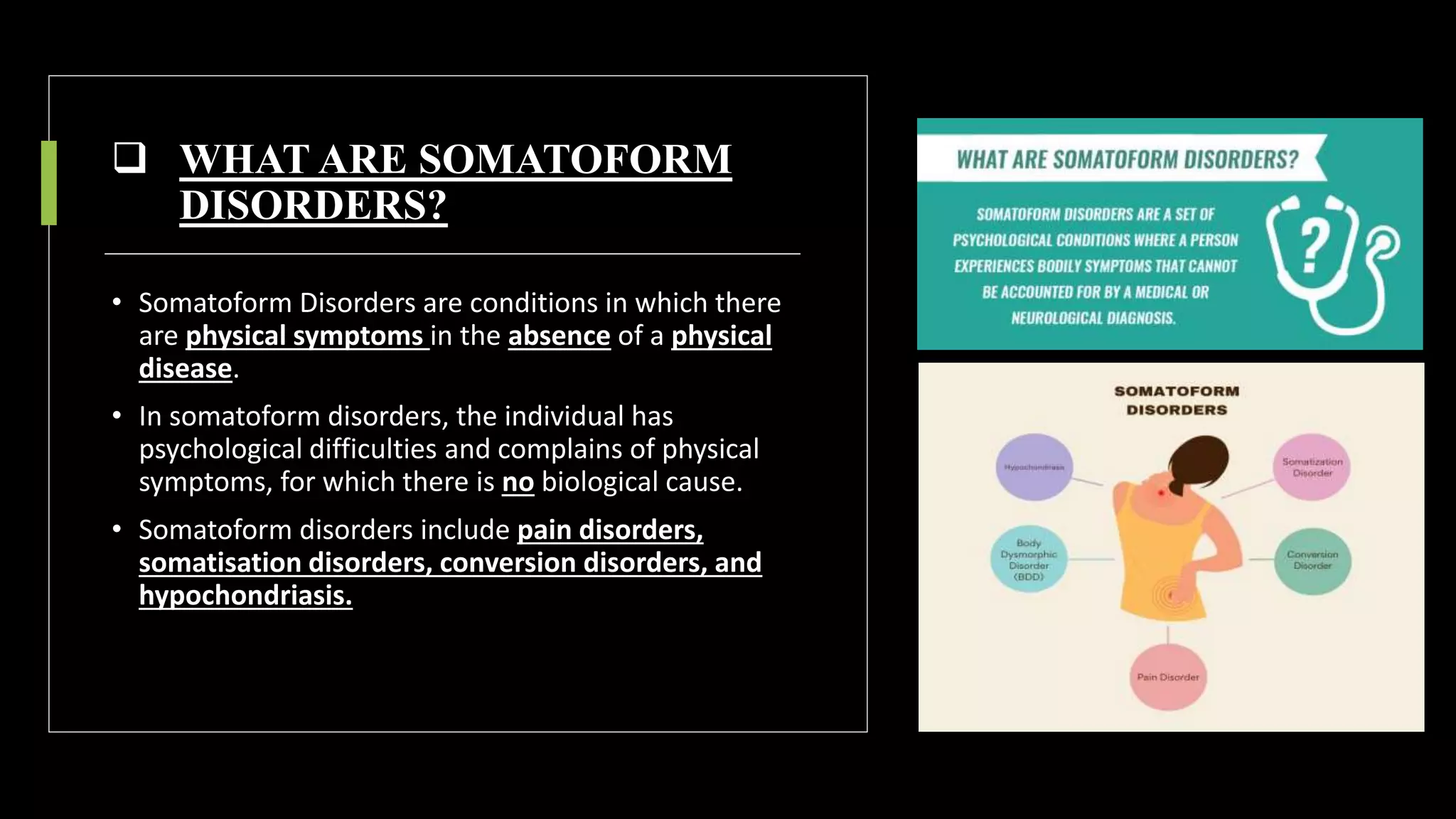
• Somatoform Disorders are conditions in which there
are physical symptoms in the absence of a physical
disease.
• In somatoform disorders, the individual has
psychological difficulties and complains of physical
symptoms, for which there is no biological cause.
• Somatoform disorders include pain disorders,
somatisation disorders, conversion disorders, and
hypochondriasis.
Types of Somatoform
Disorders
1.
2. :-
• Patients with somatisation disorders
have multiple and recurrent or chronic
bodily complaints.
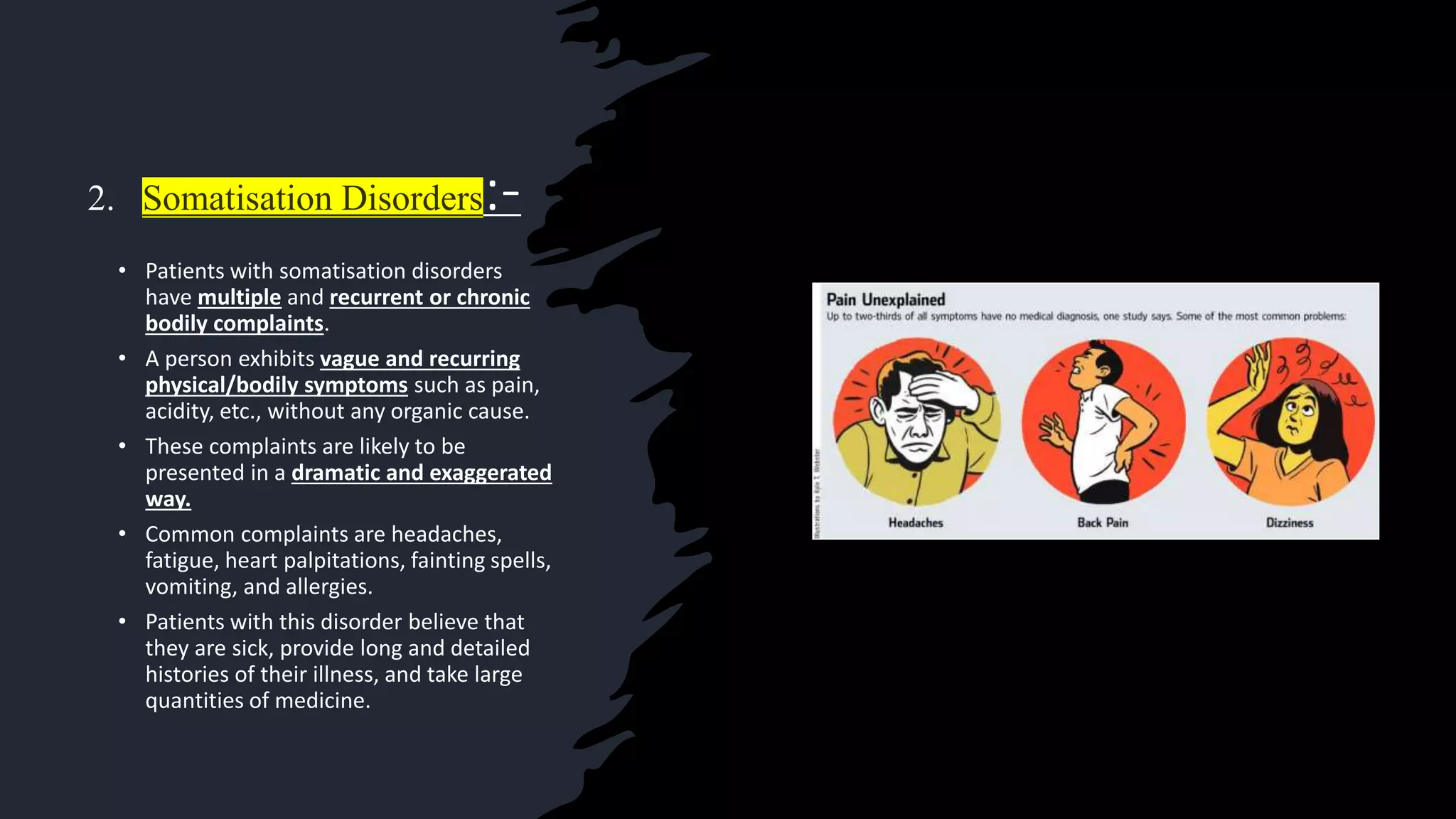
• A person exhibits vague and recurring
physical/bodily symptoms such as pain,
acidity, etc., without any organic cause.
• These complaints are likely to be
presented in a dramatic and exaggerated
way.
• Common complaints are headaches,
fatigue, heart palpitations, fainting spells,
vomiting, and allergies.
• Patients with this disorder believe that
they are sick, provide long and detailed
histories of their illness, and take large
quantities of medicine.
3.
• The person suffers from a loss or impairment of
motor or sensory function (e.g., paralysis,
blindness, etc.) that has no physical cause but
may be a response to stress and psychological
problems.
• The symptoms of conversion disorders are the
reported loss of part or all of some basic body
functions.
• Paralysis, blindness, deafness and difficulty in
walking are generally among the symptoms
reported.
• These symptoms often occur after a stressful
experience and may be quite sudden.
4.
• Hypochondriasis is diagnosed if a person has a
persistent belief that s/he has a serious illness,
despite medical reassurance, lack of physical findings,
and failure to develop the disease.
• Hypochondriacs have an obsessive preoccupation
and concern with the condition of their bodily
organs, and they continually worry about their
health.
• A person interprets insignificant symptoms as signs of
a serious illness despite repeated medical evaluation
that point to no pathology/disease.
5.
• Dissociation involves feelings of unreality,
estrangement, depersonalization, and
sometimes a loss or shift of identity.
• It can be viewed as severance of the
connections between ideas and emotions.
• Sudden temporary alterations of
consciousness that blot out painful
experiences are a defining characteristic of
dissociative disorders.

SOMATOFORM disorder psychology.pptx

  • 1.
  • 2.
     WHAT ARESOMATOFORM DISORDERS? • Somatoform Disorders are conditions in which there are physical symptoms in the absence of a physical disease. • In somatoform disorders, the individual has psychological difficulties and complains of physical symptoms, for which there is no biological cause. • Somatoform disorders include pain disorders, somatisation disorders, conversion disorders, and hypochondriasis.
  • 3.
  • 4.
    2. :- • Patientswith somatisation disorders have multiple and recurrent or chronic bodily complaints. • A person exhibits vague and recurring physical/bodily symptoms such as pain, acidity, etc., without any organic cause. • These complaints are likely to be presented in a dramatic and exaggerated way. • Common complaints are headaches, fatigue, heart palpitations, fainting spells, vomiting, and allergies. • Patients with this disorder believe that they are sick, provide long and detailed histories of their illness, and take large quantities of medicine.
  • 5.
    3. • The personsuffers from a loss or impairment of motor or sensory function (e.g., paralysis, blindness, etc.) that has no physical cause but may be a response to stress and psychological problems. • The symptoms of conversion disorders are the reported loss of part or all of some basic body functions. • Paralysis, blindness, deafness and difficulty in walking are generally among the symptoms reported. • These symptoms often occur after a stressful experience and may be quite sudden.
  • 6.
    4. • Hypochondriasis isdiagnosed if a person has a persistent belief that s/he has a serious illness, despite medical reassurance, lack of physical findings, and failure to develop the disease. • Hypochondriacs have an obsessive preoccupation and concern with the condition of their bodily organs, and they continually worry about their health. • A person interprets insignificant symptoms as signs of a serious illness despite repeated medical evaluation that point to no pathology/disease.
  • 7.
    5. • Dissociation involvesfeelings of unreality, estrangement, depersonalization, and sometimes a loss or shift of identity. • It can be viewed as severance of the connections between ideas and emotions. • Sudden temporary alterations of consciousness that blot out painful experiences are a defining characteristic of dissociative disorders.