Solid Waste Disposal & Treatment
Abdul Majid (5961)
Aizaz Hussain (5959)
Hasnain Khan (5956)
Department of Civil Engineering
Abasyn University Peshawar
Plan of Presentation
Introduction to waste disposal
Techniques of waste disposal
oDumping
oLandfill
oComposting
oIncineration
Recylcing
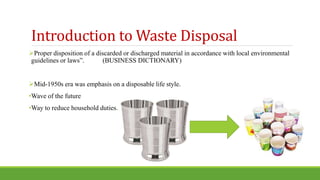
Proper disposition of a discarded or discharged material in accordance with local environmental
guidelines or laws”. (BUSINESS DICTIONARY)
Mid-1950s era was emphasis on a disposable life style.
•Wave of the future
•Way to reduce household duties.
Introduction to Waste Disposal
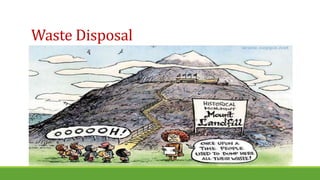
Waste Disposal
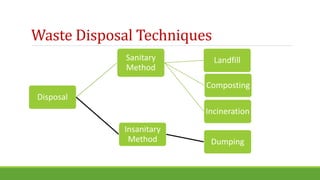
Disposal
Sanitary
Method
Landfill
Incineration
Composting
Insanitary
Method Dumping
Waste Disposal Techniques
Dumping
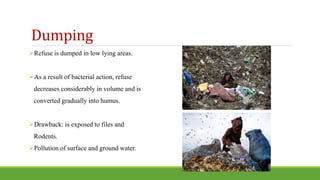
Refuse is dumped in low lying areas.
As a result of bacterial action, refuse
decreases considerably in volume and is
converted gradually into humus.
Drawback: is exposed to files and
Rodents.
Pollution of surface and ground water.
Land Fill
Different types like:-
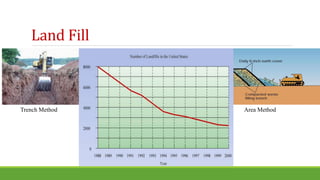
•Trench Method: Used for leveled ground, 2-3m deep and 4-12m wide.
•Refuse is compacted and covered with excavated earth.
•Ramp Method: Well suited where terrain is moderately sloping.
•Small excavations are usually done.
•Area Method: Filling land depressions.
•2-2.5m deep. Each layer is sealed at least 30cm
Land Fill
Trench Method Area Method
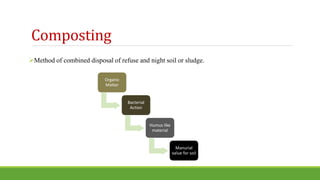
Method of combined disposal of refuse and night soil or sludge.
Composting
Organic
Matter
Bacterial
Action
Humus like
material
Manurial
value for soil
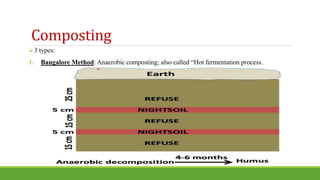
3 types:
1. Bangalore Method: Anaerobic composting; also called “Hot fermentation process.
Composting
2. Mechanical Composting :
Composting
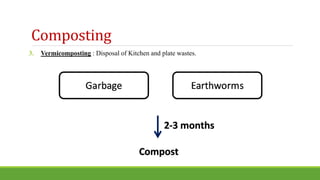
3. Vermicomposting : Disposal of Kitchen and plate wastes.
Composting
Incineration
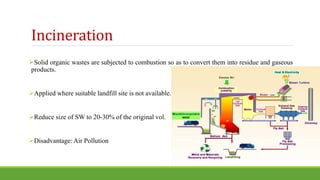
Solid organic wastes are subjected to combustion so as to convert them into residue and gaseous
products.
Applied where suitable landfill site is not available.
Reduce size of SW to 20-30% of the original vol.
Disadvantage: Air Pollution
Incinerator types−
•Refuse-Derived Fuel : Refuse is sorted to remove recyclable and unburnable materials.
•Mass Burn : Everything smaller than major furniture and appliances loaded into furnace.
Incineration
Recycle is processing of used materials into new products.
It reduce−
Consumption of fresh raw materials
Energy usage
Pollution
Recycling
Recycling of Solid Waste
Recycling refers to the collection and reprocess of waste materials.
Many of the materials we consider as waste can actually be reprocessed and used for
recycling for new products in order to protect our environment and our planet.
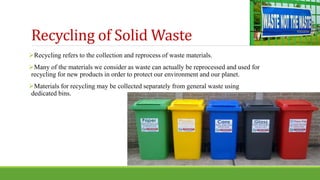
Materials for recycling may be collected separately from general waste using
dedicated bins.
What we can Recycle
Metals
o Recycling steel and tin cans saves 74% of the energy used to produce them.
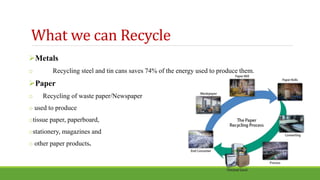
Paper
o Recycling of waste paper/Newspaper
o used to produce
otissue paper, paperboard,
ostationery, magazines and
o other paper products.
Solid waste disposal and treatment

Solid waste disposal and treatment

  • 1.
    Solid Waste Disposal& Treatment Abdul Majid (5961) Aizaz Hussain (5959) Hasnain Khan (5956) Department of Civil Engineering Abasyn University Peshawar
  • 2.
    Plan of Presentation Introductionto waste disposal Techniques of waste disposal oDumping oLandfill oComposting oIncineration Recylcing
  • 3.
    Proper disposition ofa discarded or discharged material in accordance with local environmental guidelines or laws”. (BUSINESS DICTIONARY) Mid-1950s era was emphasis on a disposable life style. •Wave of the future •Way to reduce household duties. Introduction to Waste Disposal
  • 4.
  • 5.
  • 6.
    Dumping Refuse is dumpedin low lying areas. As a result of bacterial action, refuse decreases considerably in volume and is converted gradually into humus. Drawback: is exposed to files and Rodents. Pollution of surface and ground water.
  • 7.
    Land Fill Different typeslike:- •Trench Method: Used for leveled ground, 2-3m deep and 4-12m wide. •Refuse is compacted and covered with excavated earth. •Ramp Method: Well suited where terrain is moderately sloping. •Small excavations are usually done. •Area Method: Filling land depressions. •2-2.5m deep. Each layer is sealed at least 30cm
  • 8.
  • 9.
    Method of combineddisposal of refuse and night soil or sludge. Composting Organic Matter Bacterial Action Humus like material Manurial value for soil
  • 10.
    3 types: 1. BangaloreMethod: Anaerobic composting; also called “Hot fermentation process. Composting
  • 11.
  • 12.
    3. Vermicomposting :Disposal of Kitchen and plate wastes. Composting
  • 13.
    Incineration Solid organic wastesare subjected to combustion so as to convert them into residue and gaseous products. Applied where suitable landfill site is not available. Reduce size of SW to 20-30% of the original vol. Disadvantage: Air Pollution
  • 14.
    Incinerator types− •Refuse-Derived Fuel: Refuse is sorted to remove recyclable and unburnable materials. •Mass Burn : Everything smaller than major furniture and appliances loaded into furnace. Incineration
  • 15.
    Recycle is processingof used materials into new products. It reduce− Consumption of fresh raw materials Energy usage Pollution Recycling
  • 16.
    Recycling of SolidWaste Recycling refers to the collection and reprocess of waste materials. Many of the materials we consider as waste can actually be reprocessed and used for recycling for new products in order to protect our environment and our planet. Materials for recycling may be collected separately from general waste using dedicated bins.
  • 17.
    What we canRecycle Metals o Recycling steel and tin cans saves 74% of the energy used to produce them. Paper o Recycling of waste paper/Newspaper o used to produce otissue paper, paperboard, ostationery, magazines and o other paper products.