WASTE MANAGEMENT
PRESENTED BY
ANJITHA LEKSHMI A
Contents
• Introduction
• Classification of waste
• Laws
• Waste disposal methods
• How to manage waste
• Waste hierarchy
Introduction
Waste management refers to the activities connected with
the collection and disposal of wastes. Waste management
comprises the following activities:
1. Waste collection
2. Waste transportation
3. Waste segregation
4. Waste recycling
5. Waste disposal
6. Waste minimization and control
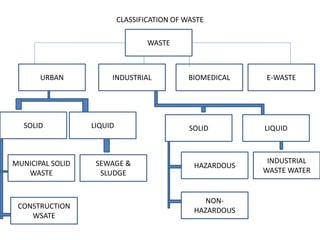
CLASSIFICATION OF WASTE
WASTE
URBAN INDUSTRIAL BIOMEDICAL E-WASTE
SOLID LIQUID
CONSTRUCTION
WSATE
MUNICIPAL SOLID
WASTE
SEWAGE &
SLUDGE
SOLID LIQUID
HAZARDOUS
NON-
HAZARDOUS
INDUSTRIAL
WASTE WATER
URBAN WASTE
SOLID WASTE
1) MUNICIPAL SOLID WASTE :
Recyclable , biodegradable as well as inert waste
Recyclable: paper, glass, plastic etc
Biodegradable: food wastage from household.
2) CONSTRUCTION WASTE:
Solid waste generated by the construction, repair, alteration or
demolition of building, road, bridge etc.
LIQUID WASTE
1) SEWAGE & SLUDGE :
Sewage water carried waste, in solution or suspension, it is more
than 99 per cent water.
Sludge is the semi-solid precipitate produced in waste water
treatment plants originating from their process of treatment.
INDUSTRIAL WASTE
SOLID WASTE
1) HAZARDOUS WASTE:
a) Listed wastes : eg: commercial chemical products
b) Characteristics wastes: eg: harmful, explosions etc.
c) Universal wastes: eg: batteries. Pesticides etc.
d) Mixed wastes: eg: cyanides, heavy metals etc.
2) NON- HAZARDOUS WASTE :
packaging waste, glass, metal scrap etc.
LIQUID WASTE
1) INDUSTRIAL WASTE WATER :
Toxic chemical from electroplating, cooling water from
thermal power plats etc.
BIOMEDICAL WASTE
• Waste generated from hospitals
• Waste generated from Health care facilities
• Waste generated from Health research laboratories.
E- WASTE
• Electronic waste loosely discarded, surplus, obsolete, broken,
electrical or electronic devices.
Law
 The Water Act 1974
 The Water Rules 1975
 The Water Cess Act 1977
 Water Cess Rules 1978
 The Air Act 1981
 The Environment Act 1986
 The Manufacture ,Storage and Import of Hazardous Chemical Rules
1989
 The National Environment Appellate Authority Act 1997
 The Bio-Medical Waste Rules 1998
 Batteries Rules 2001
 National Green Tribunal Act 2010
 The Plastic Waste Rules 2011
 E- Waste Rules 2011
Disposal Methods
1)Land filling 8) sewers and drain pipes
2)Burial 9)soak pits
3)Incineration
4)Composting
5) Vermicomposting
6)Biogas
7)Recycling
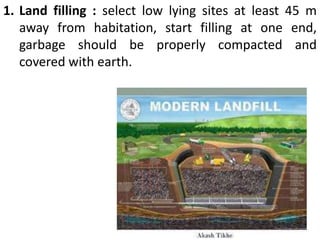
1. Land filling : select low lying sites at least 45 m
away from habitation, start filling at one end,
garbage should be properly compacted and
covered with earth.
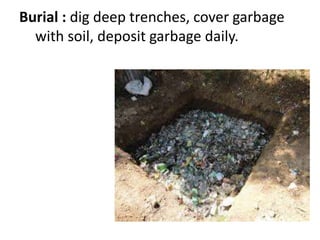
Burial : dig deep trenches, cover garbage
with soil, deposit garbage daily.
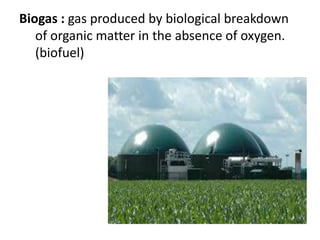
Biogas : gas produced by biological breakdown
of organic matter in the absence of oxygen.
(biofuel)
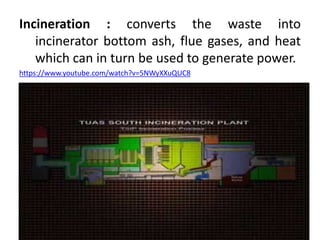
Incineration : converts the waste into
incinerator bottom ash, flue gases, and heat
which can in turn be used to generate power.
https://www.youtube.com/watch?v=5NWyXXuQUC8
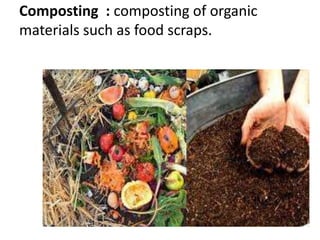
Composting : composting of organic
materials such as food scraps.
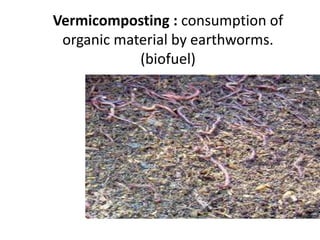
Vermicomposting : consumption of
organic material by earthworms.
(biofuel)
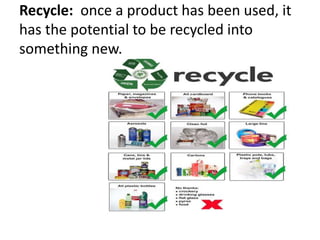
Recycle: once a product has been used, it
has the potential to be recycled into
something new.
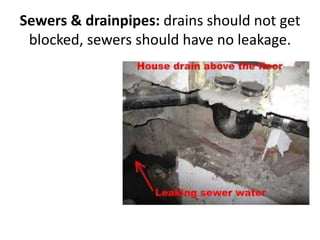
Sewers & drainpipes: drains should not get
blocked, sewers should have no leakage.
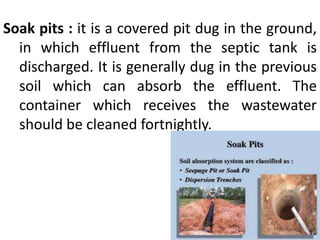
Soak pits : it is a covered pit dug in the ground,
in which effluent from the septic tank is
discharged. It is generally dug in the previous
soil which can absorb the effluent. The
container which receives the wastewater
should be cleaned fortnightly.
How to manage waste effectively
• New technologies and machines
• Optimum use of available resources
• increasing staff morale and environment
awareness
• Use reusable things
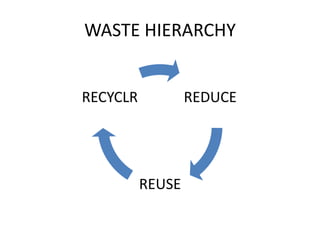
WASTE HIERARCHY
REDUCE
REUSE
RECYCLR
References
• https://www.google.co.in/search?q=waste+management&rlz=1C1GIGM_enIN732I
N732&source=lnms&tbm=isch&sa=X&ved=0ahUKEwi6o7e5mMbZAhUPTo8KHc5W
A_wQ_AUICigB#imgdii=1E788HzrUHcFIM:&imgrc=mEmbtGEUFY12ZM:
• https://www.youtube.com/watch?v=4JDGFNoY-rQ
• https://www.slideshare.net/vishakeb/waste-management-presentation-650616
• https://www.journals.elsevier.com/waste-management
• www.wm.com/sustainability/pdfs/2012_Sustainability_Report.pdf

Waste management

  • 1.
  • 2.
    Contents • Introduction • Classificationof waste • Laws • Waste disposal methods • How to manage waste • Waste hierarchy
  • 3.
    Introduction Waste management refersto the activities connected with the collection and disposal of wastes. Waste management comprises the following activities: 1. Waste collection 2. Waste transportation 3. Waste segregation 4. Waste recycling 5. Waste disposal 6. Waste minimization and control
  • 4.
    CLASSIFICATION OF WASTE WASTE URBANINDUSTRIAL BIOMEDICAL E-WASTE SOLID LIQUID CONSTRUCTION WSATE MUNICIPAL SOLID WASTE SEWAGE & SLUDGE SOLID LIQUID HAZARDOUS NON- HAZARDOUS INDUSTRIAL WASTE WATER
  • 5.
    URBAN WASTE SOLID WASTE 1)MUNICIPAL SOLID WASTE : Recyclable , biodegradable as well as inert waste Recyclable: paper, glass, plastic etc Biodegradable: food wastage from household. 2) CONSTRUCTION WASTE: Solid waste generated by the construction, repair, alteration or demolition of building, road, bridge etc.
  • 6.
    LIQUID WASTE 1) SEWAGE& SLUDGE : Sewage water carried waste, in solution or suspension, it is more than 99 per cent water. Sludge is the semi-solid precipitate produced in waste water treatment plants originating from their process of treatment.
  • 7.
    INDUSTRIAL WASTE SOLID WASTE 1)HAZARDOUS WASTE: a) Listed wastes : eg: commercial chemical products b) Characteristics wastes: eg: harmful, explosions etc. c) Universal wastes: eg: batteries. Pesticides etc. d) Mixed wastes: eg: cyanides, heavy metals etc.
  • 8.
    2) NON- HAZARDOUSWASTE : packaging waste, glass, metal scrap etc. LIQUID WASTE 1) INDUSTRIAL WASTE WATER : Toxic chemical from electroplating, cooling water from thermal power plats etc.
  • 9.
    BIOMEDICAL WASTE • Wastegenerated from hospitals • Waste generated from Health care facilities • Waste generated from Health research laboratories.
  • 10.
    E- WASTE • Electronicwaste loosely discarded, surplus, obsolete, broken, electrical or electronic devices.
  • 11.
    Law  The WaterAct 1974  The Water Rules 1975  The Water Cess Act 1977  Water Cess Rules 1978  The Air Act 1981  The Environment Act 1986  The Manufacture ,Storage and Import of Hazardous Chemical Rules 1989  The National Environment Appellate Authority Act 1997  The Bio-Medical Waste Rules 1998  Batteries Rules 2001  National Green Tribunal Act 2010  The Plastic Waste Rules 2011  E- Waste Rules 2011
  • 12.
    Disposal Methods 1)Land filling8) sewers and drain pipes 2)Burial 9)soak pits 3)Incineration 4)Composting 5) Vermicomposting 6)Biogas 7)Recycling
  • 13.
    1. Land filling: select low lying sites at least 45 m away from habitation, start filling at one end, garbage should be properly compacted and covered with earth.
  • 14.
    Burial : digdeep trenches, cover garbage with soil, deposit garbage daily.
  • 15.
    Biogas : gasproduced by biological breakdown of organic matter in the absence of oxygen. (biofuel)
  • 16.
    Incineration : convertsthe waste into incinerator bottom ash, flue gases, and heat which can in turn be used to generate power. https://www.youtube.com/watch?v=5NWyXXuQUC8
  • 17.
    Composting : compostingof organic materials such as food scraps.
  • 18.
    Vermicomposting : consumptionof organic material by earthworms. (biofuel)
  • 19.
    Recycle: once aproduct has been used, it has the potential to be recycled into something new.
  • 20.
    Sewers & drainpipes:drains should not get blocked, sewers should have no leakage.
  • 21.
    Soak pits :it is a covered pit dug in the ground, in which effluent from the septic tank is discharged. It is generally dug in the previous soil which can absorb the effluent. The container which receives the wastewater should be cleaned fortnightly.
  • 22.
    How to managewaste effectively • New technologies and machines • Optimum use of available resources • increasing staff morale and environment awareness • Use reusable things
  • 23.
  • 25.
    References • https://www.google.co.in/search?q=waste+management&rlz=1C1GIGM_enIN732I N732&source=lnms&tbm=isch&sa=X&ved=0ahUKEwi6o7e5mMbZAhUPTo8KHc5W A_wQ_AUICigB#imgdii=1E788HzrUHcFIM:&imgrc=mEmbtGEUFY12ZM: • https://www.youtube.com/watch?v=4JDGFNoY-rQ •https://www.slideshare.net/vishakeb/waste-management-presentation-650616 • https://www.journals.elsevier.com/waste-management • www.wm.com/sustainability/pdfs/2012_Sustainability_Report.pdf