Introduction to Municipal Solid
Waste
An overgrowing problem with serious health hazards.
Rishabh Sharma
Prepared by :
Rishabh Sharma
M.Sc. (ES)
CEEES Department
DCRUST, Murthal
Rishabh Sharma
Contents
 What is Waste?
 According to EPA regulations, solid waste is?
 Classification of Municipal Wastes according to their Properties.
 Classification of Wastes according to their Effects on Human Health and the
Environment.
 Classification of wastes according to their origin and type.
 Major sources of waste.
 Characteristics of Waste.
 Statistics showing growth in MSW.
 Reduction of Production.
 A brief overview of Recycling Rates.
 Treatment of Waste.
 Health hazards associated with MSW.
 Environmental impacts of MSW.
 Referential Video
 References.
Rishabh Sharma
What is Waste?
 The term waste is referred to as the different definitions according to different
persons and circumstances.
 For example- A Cell phone (most appropriately an I-Phone) is purchased by you in
the last December but in this December a new model of an I-phone is launched
and you are willing to buy it and most importantly you also have the sufficient
money and purchasing power, so you purchased a new I-Phone and the previous
one becomes a waste for you.
 Moreover if it is not utilized by any other than it contributes to the formation of the
E-waste that finally became a liability for nature.
Rishabh Sharma
According to EPA regulations,
SOLID WASTE is:
 Any garbage or refuse (Municipal Solid Waste).
 Sludge from a wastewater treatment plant, water supply treatment plant, or air
pollution control facility.
 Other discarded material.
 Solid, liquid, semi-solid, or contained gaseous material from industrial, commercial,
mining, and agricultural operations, and from community activities.
Rishabh Sharma
Classification of Municipal Wastes
according to their Properties:
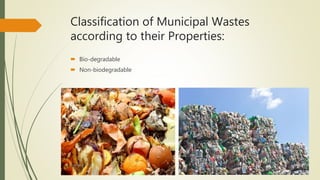
 Bio-degradable
 Non-biodegradable
Rishabh Sharma
Classification of Wastes according to their
Effects on Human Health and the Environment
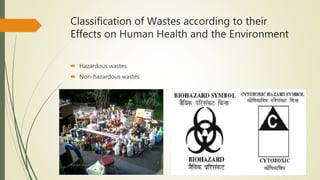
 Hazardous wastes
 Non-hazardous wastes
Rishabh Sharma
Classification of wastes according to their
origin and type
 Municipal Solid wastes
 Medical wastes
 Industrial wastes
 Agricultural wastes
 Radioactive wastes
 Electronic wastes (E - waste)
Rishabh Sharma
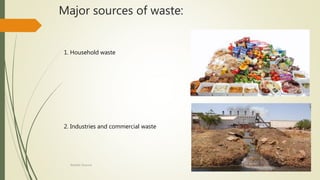
Major sources of waste:
1. Household waste
2. Industries and commercial waste
Rishabh Sharma
Characteristics of Waste
 Corrosive: these are wastes that include acids or bases that are capable of
corroding mental containers, e.g. tanks.
 Ignitability: this is waste that can create fires under certain condition, e.g. waste oils
and solvents.
 Reactive: these are unstable in nature, they cause explosions, toxic fumes when
heated.
 Toxicity: waste which are harmful or fatal when ingested or absorb.
Rishabh Sharma
Statistics
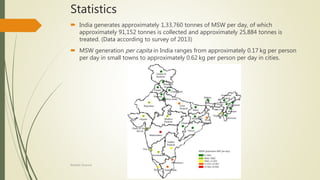
 India generates approximately 1,33,760 tonnes of MSW per day, of which
approximately 91,152 tonnes is collected and approximately 25,884 tonnes is
treated. (Data according to survey of 2013)
 MSW generation per capita in India ranges from approximately 0.17 kg per person
per day in small towns to approximately 0.62 kg per person per day in cities.
Rishabh Sharma
Reduction of Production
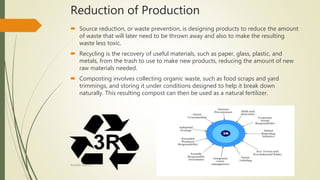
 Source reduction, or waste prevention, is designing products to reduce the amount
of waste that will later need to be thrown away and also to make the resulting
waste less toxic.
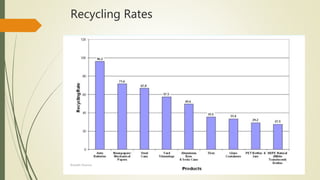
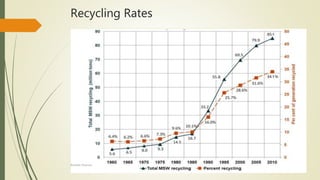
 Recycling is the recovery of useful materials, such as paper, glass, plastic, and
metals, from the trash to use to make new products, reducing the amount of new
raw materials needed.
 Composting involves collecting organic waste, such as food scraps and yard
trimmings, and storing it under conditions designed to help it break down
naturally. This resulting compost can then be used as a natural fertilizer.
Rishabh Sharma
Recycling Rates
Rishabh Sharma
Recycling Rates
Rishabh Sharma
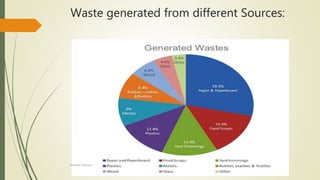
Waste generated from different Sources:
Rishabh Sharma
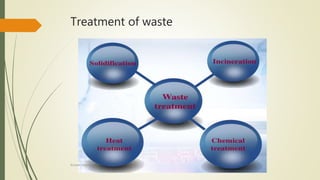
Treatment of waste
Rishabh Sharma
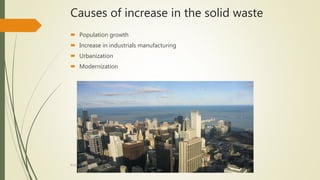
Causes of increase in the solid waste
 Population growth
 Increase in industrials manufacturing
 Urbanization
 Modernization
Rishabh Sharma
Public health aspects due to Municipal
solid waste :
Sources of Human Exposures
Exposures occurs through :
 Ingestion of contaminated water or food
 Contact with disease vectors
 Inhalation (through Nose)
 Dermal (through Skin)
Rishabh Sharma
Points of contact :
 Soil adsorption, storage and biodegrading.
 Plant uptake
 Ventilation
 Runoff
 Leaching
 Insects, birds, rats, flies and animals.
 Direct dumping of untreated waste in seas, rivers and lakes results in the plants and
animals that feed on it.
Rishabh Sharma
Impacts of Municipal solid waste on health
:
 Chemical poisoning through chemical inhalation.
 Uncollected waste can obstruct the storm water runoff resulting in flood.
 Low birth weight.
 Cancer
 Congenital malformations
 Neurological disease
 Nausea and vomiting
 Increase in hospitalization of diabetic residents living near hazard waste sites.
 Mercury toxicity from eating fish with high levels of mercury causes Minamata
disease.
Rishabh Sharma
Effects of Solid Waste on Animals and
Aquatics life :
 Increase in mercury level in fish due to disposal of mercury in the rivers.
 Plastic found in oceans ingested by birds containing Poly chlorinated biphenyls
(PCBs) that results in thinning of the egg shells and pre mature death of the new
born.
 Resulted in high algal population in rivers and sea.
 Degrades water and soil quality.
Rishabh Sharma
Impacts of Municipal solid waste on
Environment :
 Waste breaks down in landfills to form methane, a potent greenhouse gas.
 Change in climate and destruction of ozone layer due to waste that degrades and
results in release of CFCs and other OD’s.
 Littering, due to waste pollutions, illegal dumping, Leaching (is a process by which
solid waste enter soil and ground water and contaminating them) results in
contamination of the soil and ground as well as the surface water.
Rishabh Sharma
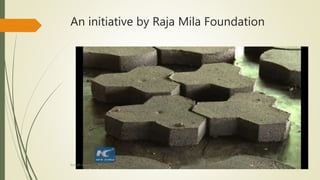
An initiative by Raja Mila Foundation
Rishabh Sharma
References:
 http://www.bhujbolechhe.org/en/hic/projects/demand-driven- waste-collection.
 https://theconstructor.org/environmental-engg/methods-of- solid-waste-
disposal/4721/.
 The state of India’s environment 2017.
 https://www.slideshare.net/tabirsir/impact-of-solid-waste-on-health-and-
environment?qid=e6574baf-4581-4708-b591-
0a7af52368b3&v=&b=&from_search=2.
 http://rsos.royalsocietypublishing.org/content/4/3/160764
 www.Wikipedia.ind.org.
Rishabh Sharma
Thank You & Save Environment
Rishabh Sharma

Introduction to municipal solid waste

  • 1.
    Introduction to MunicipalSolid Waste An overgrowing problem with serious health hazards. Rishabh Sharma
  • 2.
    Prepared by : RishabhSharma M.Sc. (ES) CEEES Department DCRUST, Murthal Rishabh Sharma
  • 3.
    Contents  What isWaste?  According to EPA regulations, solid waste is?  Classification of Municipal Wastes according to their Properties.  Classification of Wastes according to their Effects on Human Health and the Environment.  Classification of wastes according to their origin and type.  Major sources of waste.  Characteristics of Waste.  Statistics showing growth in MSW.  Reduction of Production.  A brief overview of Recycling Rates.  Treatment of Waste.  Health hazards associated with MSW.  Environmental impacts of MSW.  Referential Video  References. Rishabh Sharma
  • 4.
    What is Waste? The term waste is referred to as the different definitions according to different persons and circumstances.  For example- A Cell phone (most appropriately an I-Phone) is purchased by you in the last December but in this December a new model of an I-phone is launched and you are willing to buy it and most importantly you also have the sufficient money and purchasing power, so you purchased a new I-Phone and the previous one becomes a waste for you.  Moreover if it is not utilized by any other than it contributes to the formation of the E-waste that finally became a liability for nature. Rishabh Sharma
  • 5.
    According to EPAregulations, SOLID WASTE is:  Any garbage or refuse (Municipal Solid Waste).  Sludge from a wastewater treatment plant, water supply treatment plant, or air pollution control facility.  Other discarded material.  Solid, liquid, semi-solid, or contained gaseous material from industrial, commercial, mining, and agricultural operations, and from community activities. Rishabh Sharma
  • 6.
    Classification of MunicipalWastes according to their Properties:  Bio-degradable  Non-biodegradable Rishabh Sharma
  • 7.
    Classification of Wastesaccording to their Effects on Human Health and the Environment  Hazardous wastes  Non-hazardous wastes Rishabh Sharma
  • 8.
    Classification of wastesaccording to their origin and type  Municipal Solid wastes  Medical wastes  Industrial wastes  Agricultural wastes  Radioactive wastes  Electronic wastes (E - waste) Rishabh Sharma
  • 9.
    Major sources ofwaste: 1. Household waste 2. Industries and commercial waste Rishabh Sharma
  • 10.
    Characteristics of Waste Corrosive: these are wastes that include acids or bases that are capable of corroding mental containers, e.g. tanks.  Ignitability: this is waste that can create fires under certain condition, e.g. waste oils and solvents.  Reactive: these are unstable in nature, they cause explosions, toxic fumes when heated.  Toxicity: waste which are harmful or fatal when ingested or absorb. Rishabh Sharma
  • 11.
    Statistics  India generatesapproximately 1,33,760 tonnes of MSW per day, of which approximately 91,152 tonnes is collected and approximately 25,884 tonnes is treated. (Data according to survey of 2013)  MSW generation per capita in India ranges from approximately 0.17 kg per person per day in small towns to approximately 0.62 kg per person per day in cities. Rishabh Sharma
  • 12.
    Reduction of Production Source reduction, or waste prevention, is designing products to reduce the amount of waste that will later need to be thrown away and also to make the resulting waste less toxic.  Recycling is the recovery of useful materials, such as paper, glass, plastic, and metals, from the trash to use to make new products, reducing the amount of new raw materials needed.  Composting involves collecting organic waste, such as food scraps and yard trimmings, and storing it under conditions designed to help it break down naturally. This resulting compost can then be used as a natural fertilizer. Rishabh Sharma
  • 13.
  • 14.
  • 15.
    Waste generated fromdifferent Sources: Rishabh Sharma
  • 16.
  • 17.
    Causes of increasein the solid waste  Population growth  Increase in industrials manufacturing  Urbanization  Modernization Rishabh Sharma
  • 18.
    Public health aspectsdue to Municipal solid waste : Sources of Human Exposures Exposures occurs through :  Ingestion of contaminated water or food  Contact with disease vectors  Inhalation (through Nose)  Dermal (through Skin) Rishabh Sharma
  • 19.
    Points of contact:  Soil adsorption, storage and biodegrading.  Plant uptake  Ventilation  Runoff  Leaching  Insects, birds, rats, flies and animals.  Direct dumping of untreated waste in seas, rivers and lakes results in the plants and animals that feed on it. Rishabh Sharma
  • 20.
    Impacts of Municipalsolid waste on health :  Chemical poisoning through chemical inhalation.  Uncollected waste can obstruct the storm water runoff resulting in flood.  Low birth weight.  Cancer  Congenital malformations  Neurological disease  Nausea and vomiting  Increase in hospitalization of diabetic residents living near hazard waste sites.  Mercury toxicity from eating fish with high levels of mercury causes Minamata disease. Rishabh Sharma
  • 21.
    Effects of SolidWaste on Animals and Aquatics life :  Increase in mercury level in fish due to disposal of mercury in the rivers.  Plastic found in oceans ingested by birds containing Poly chlorinated biphenyls (PCBs) that results in thinning of the egg shells and pre mature death of the new born.  Resulted in high algal population in rivers and sea.  Degrades water and soil quality. Rishabh Sharma
  • 22.
    Impacts of Municipalsolid waste on Environment :  Waste breaks down in landfills to form methane, a potent greenhouse gas.  Change in climate and destruction of ozone layer due to waste that degrades and results in release of CFCs and other OD’s.  Littering, due to waste pollutions, illegal dumping, Leaching (is a process by which solid waste enter soil and ground water and contaminating them) results in contamination of the soil and ground as well as the surface water. Rishabh Sharma
  • 23.
    An initiative byRaja Mila Foundation Rishabh Sharma
  • 24.
    References:  http://www.bhujbolechhe.org/en/hic/projects/demand-driven- waste-collection. https://theconstructor.org/environmental-engg/methods-of- solid-waste- disposal/4721/.  The state of India’s environment 2017.  https://www.slideshare.net/tabirsir/impact-of-solid-waste-on-health-and- environment?qid=e6574baf-4581-4708-b591- 0a7af52368b3&v=&b=&from_search=2.  http://rsos.royalsocietypublishing.org/content/4/3/160764  www.Wikipedia.ind.org. Rishabh Sharma
  • 25.
    Thank You &Save Environment Rishabh Sharma