Solar Thermal & Unvented
Systems
Types of systems
Not only can you heat domestic hot water by the use of a boiler
and immersion, but water can be heated via:
• Solar panels on the roof
• Solid fuel units
These can be incorporated into a domestic hot water system by
introducing a second or third coil in the hot water cylinder. This
will allow the hot water to be heated by various means:
• Renewable energy
Types of systems
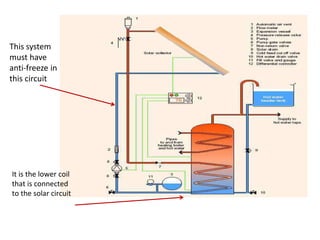
This system
must have
anti-freeze in
this circuit
It is the lower coil
that is connected
to the solar circuit
Types of systems
Solar thermal is a growing
business in the UK. The most
popular form is solar water
heating via panels installed on
a south facing roof.
The fluid circulates down to the cylinder, heating the water.
In the UK, solar water heating can provide over 50 per cent
of a household’s demand.
A common method of solar thermal is the use of evacuated
tubes. These capture the heat from the sun’s rays; this in
turn heats water, which circulates down to the cylinder,
heating the DHW.
Types of systems
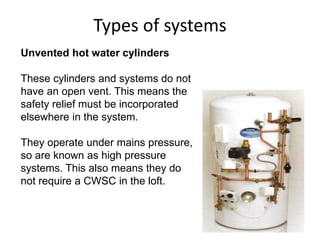
Unvented hot water cylinders
These cylinders and systems do not
have an open vent. This means the
safety relief must be incorporated
elsewhere in the system.
They operate under mains pressure,
so are known as high pressure
systems. This also means they do
not require a CWSC in the loft.
Types of systems
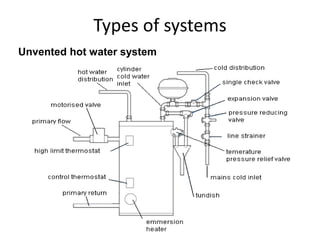
Unvented hot water system
Types of systems
Unvented hot water system
• The cylinder must be fitted with a range of safety
(temperature) controls so the hot water never reaches 1000C
• The discharge pipes are located in a safe place
• The system must be maintained by a competent person
• Installations must be notified to the local authority or self-
certified (Competent Persons Scheme)

Solar thermal unvented systems

  • 1.
    Solar Thermal &Unvented Systems
  • 2.
    Types of systems Notonly can you heat domestic hot water by the use of a boiler and immersion, but water can be heated via: • Solar panels on the roof • Solid fuel units These can be incorporated into a domestic hot water system by introducing a second or third coil in the hot water cylinder. This will allow the hot water to be heated by various means: • Renewable energy
  • 3.
    Types of systems Thissystem must have anti-freeze in this circuit It is the lower coil that is connected to the solar circuit
  • 4.
    Types of systems Solarthermal is a growing business in the UK. The most popular form is solar water heating via panels installed on a south facing roof. The fluid circulates down to the cylinder, heating the water. In the UK, solar water heating can provide over 50 per cent of a household’s demand. A common method of solar thermal is the use of evacuated tubes. These capture the heat from the sun’s rays; this in turn heats water, which circulates down to the cylinder, heating the DHW.
  • 5.
    Types of systems Unventedhot water cylinders These cylinders and systems do not have an open vent. This means the safety relief must be incorporated elsewhere in the system. They operate under mains pressure, so are known as high pressure systems. This also means they do not require a CWSC in the loft.
  • 6.
    Types of systems Unventedhot water system
  • 7.
    Types of systems Unventedhot water system • The cylinder must be fitted with a range of safety (temperature) controls so the hot water never reaches 1000C • The discharge pipes are located in a safe place • The system must be maintained by a competent person • Installations must be notified to the local authority or self- certified (Competent Persons Scheme)