Environmental protection
measures
Plumbing Level 2
Heat pumps absorb heat from the ground
and then transfers it into a building to
provide space heating. They may also be
used to pre-heat domestic hot water.
Three important elements to a GSHP:
•ground loop,
•heat pump,
•heat distribution system.
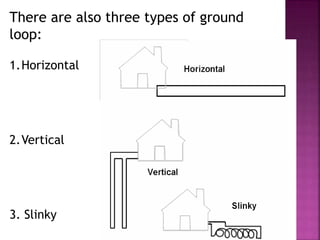
There are also three types of ground
loop:
1.Horizontal
2.Vertical
3. Slinky
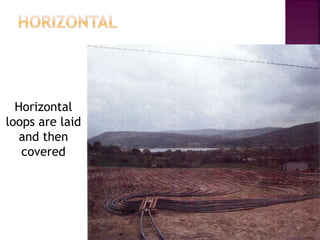
Horizontal
loops are laid
and then
covered
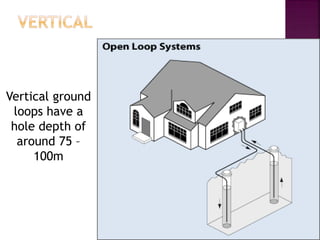
Vertical ground
loops have a
hole depth of
around 75 –
100m
Slinky ground
loops are buried
in a trench,
usually at around
1.5m depth
• Heat collector (loop) is buried in the garden
The heat pump is made up of:
• Evaporator – extracts the energy taken from the ground
• Compressor – takes the extracted energy and increases it
• Condenser – transfers the heat into the heating system
• Expansion valve – lets in small amounts of refrigerant to
prevent freezing.
The best applications for heat pumps are:
Low heat demand properties, which includes:
•Radiators (heating system)
•Underfloor heating
•Air ducts.
Soil conditions
such as particle
size and water
content
determine the
soils thermal
properties and
must be taken
into account.
Soil conditions will also determine the size of the
ground loop
• The more pipe used in a ground loop
the greater the heat output.
• The loop will typically form around
50% of the cost of the system.
• Under sizing would lead to the ground
loop running cool and at worst, become
unsustainable.
The size of the system and length of
loop depends on:
1.The building heat demand
2.The soil conditions on site
3.The type of ground loop used i.e.
(slinky, horizontal or vertical).
• Low heat demand, high insulation
• Type of heating system
• Ground space for trench or borehole
• Desire to be renewable and lower
carbon emissions
• Is there a cooling requirement.
GSHP are low in maintenance as systems have few
moving parts
Keep the filters clean and monitor the refrigerant
levels
A well designed system can have over a 40 year
lifespan.
1. Ground, water or air source
2. Best for homes with a low heat demand
3. Ground space for trench or borehole
4. Soil type determines heat transfer
5. Radiators, underfloor heating or air heating
6. Not 100% renewable
7. Reversed for cooling
8. Low maintenance
9. System needs to be carefully sized by an experienced
engineer.

Heat pump systems

  • 1.
  • 2.
    Heat pumps absorbheat from the ground and then transfers it into a building to provide space heating. They may also be used to pre-heat domestic hot water.
  • 3.
    Three important elementsto a GSHP: •ground loop, •heat pump, •heat distribution system.
  • 4.
    There are alsothree types of ground loop: 1.Horizontal 2.Vertical 3. Slinky
  • 5.
  • 6.
    Vertical ground loops havea hole depth of around 75 – 100m
  • 7.
    Slinky ground loops areburied in a trench, usually at around 1.5m depth
  • 8.
    • Heat collector(loop) is buried in the garden The heat pump is made up of: • Evaporator – extracts the energy taken from the ground • Compressor – takes the extracted energy and increases it • Condenser – transfers the heat into the heating system • Expansion valve – lets in small amounts of refrigerant to prevent freezing.
  • 9.
    The best applicationsfor heat pumps are: Low heat demand properties, which includes: •Radiators (heating system) •Underfloor heating •Air ducts.
  • 10.
    Soil conditions such asparticle size and water content determine the soils thermal properties and must be taken into account. Soil conditions will also determine the size of the ground loop
  • 11.
    • The morepipe used in a ground loop the greater the heat output. • The loop will typically form around 50% of the cost of the system. • Under sizing would lead to the ground loop running cool and at worst, become unsustainable.
  • 12.
    The size ofthe system and length of loop depends on: 1.The building heat demand 2.The soil conditions on site 3.The type of ground loop used i.e. (slinky, horizontal or vertical).
  • 13.
    • Low heatdemand, high insulation • Type of heating system • Ground space for trench or borehole • Desire to be renewable and lower carbon emissions • Is there a cooling requirement.
  • 14.
    GSHP are lowin maintenance as systems have few moving parts Keep the filters clean and monitor the refrigerant levels A well designed system can have over a 40 year lifespan.
  • 15.
    1. Ground, wateror air source 2. Best for homes with a low heat demand 3. Ground space for trench or borehole 4. Soil type determines heat transfer 5. Radiators, underfloor heating or air heating 6. Not 100% renewable 7. Reversed for cooling 8. Low maintenance 9. System needs to be carefully sized by an experienced engineer.