National Conservation Strategy (NCS)
Group Members:
 Saira Sharif
 Summayia Altaf
 Qurat-ul-Ain
 Syeda Somia
 Masrooha Tariq
 Sultana Jamil
Contents
• Introduction/History
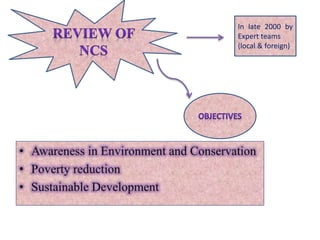
• Objectives
• Overarching Principles
• NCS Donors
• NCS Implementation Committee
• Review of NCS
• Recommendations
• Priority Areas
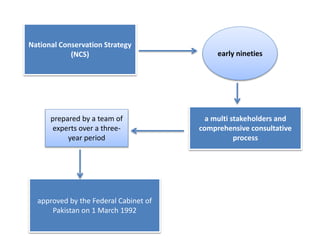
National Conservation Strategy
(NCS) early nineties
a multi stakeholders and
comprehensive consultative
process
prepared by a team of
experts over a three-
year period
approved by the Federal Cabinet of
Pakistan on 1 March 1992
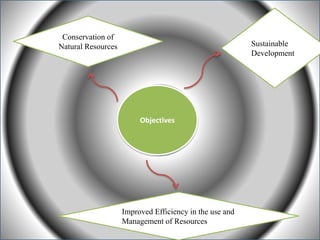
Objectives
Conservation of
Natural Resources Sustainable
Development
Improved Efficiency in the use and
Management of Resources
• Achieving greater Public Partnership in
Development and Environmental
Management
• Merging Environment and Economics in
decision-making
• Focusing on Durable Improvements in the
quality of life in Pakistan
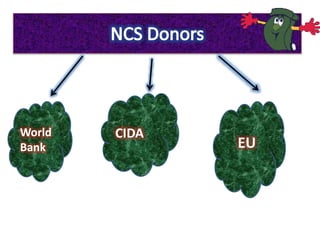
World
Bank
CIDA
EU
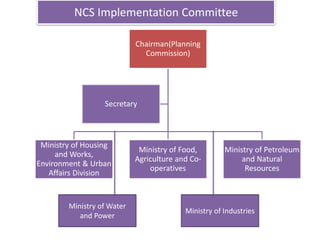
Chairman(Planning
Commission)
Ministry of Housing
and Works,
Environment & Urban
Affairs Division
Ministry of Food,
Agriculture and Co-
operatives
Ministry of Petroleum
and Natural
Resources
Secretary
Ministry of Water
and Power
Ministry of Industries
NCS Implementation Committee
In late 2000 by
Expert teams
(local & foreign)
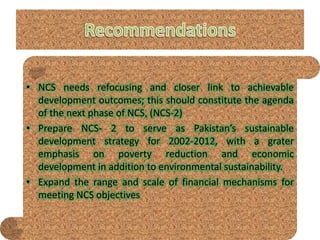
• NCS needs refocusing and closer link to achievable
development outcomes; this should constitute the agenda
of the next phase of NCS, (NCS-2)
• Prepare NCS- 2 to serve as Pakistan’s sustainable
development strategy for 2002-2012, with a grater
emphasis on poverty reduction and economic
development in addition to environmental sustainability.
• Expand the range and scale of financial mechanisms for
meeting NCS objectives
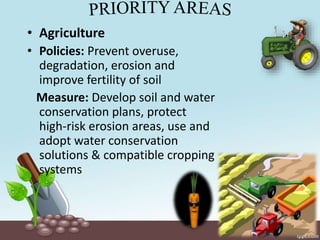
• Agriculture
• Policies: Prevent overuse,
degradation, erosion and
improve fertility of soil
Measure: Develop soil and water
conservation plans, protect
high-risk erosion areas, use and
adopt water conservation
solutions & compatible cropping
systems
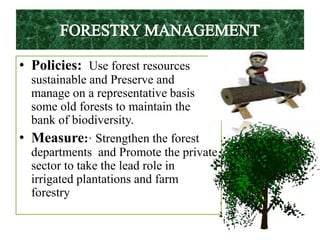
• Policies: Use forest resources
sustainable and Preserve and
manage on a representative basis
some old forests to maintain the
bank of biodiversity.
• Measure:· Strengthen the forest
departments and Promote the private
sector to take the lead role in
irrigated plantations and farm
forestry
RANGELAND REHABILITATION
• Polices: System should repair rangelands and to
ensure sustainable income to range land inhabitants
on interval basis
• Measures: Issue rangeland management licenses and
Improve services of department & multi sectors but
programmers should be cost effective.
• provide technical & relevant advices
Policies
• priorities to increase irrigation effectiveness.
• Promote biological approach & engineering
solutions to solve problems of salinity
sodality & water logging
Measures:
• For salinity & water logging solutions
research should be done with addition of
biological solutions
Water management
Policies
• Protect and restore fishing habitats, with harvesting
restricted to the level of annual sustainable yields.
Measures
• Harvest fisheries on a sustainable yield basis
FISHERIES
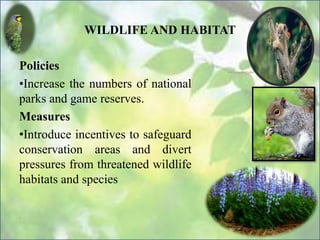
WILDLIFE AND HABITAT
Policies
•Increase the numbers of national
parks and game reserves.
Measures
•Introduce incentives to safeguard
conservation areas and divert
pressures from threatened wildlife
habitats and species
ENERGY
Policies
• Expand the use of coal to meet short-term, electricity
demand requirements, based on the least polluting
technology and current emission standards.
Measures
•Assign clear roles for the public and private sectors in
supplying energy
POLLUTION CONTROL
Policies
• Adopt domestic wastewater treatment
technologies that provide for
recovery and reuse of water,
nutrients, and organic matter
Measure
• Encourage source reduction, through
recovery by industrial units of heavy
metals before discharge
National Conservation Strategy

National Conservation Strategy

  • 2.
  • 3.
    Group Members:  SairaSharif  Summayia Altaf  Qurat-ul-Ain  Syeda Somia  Masrooha Tariq  Sultana Jamil
  • 4.
    Contents • Introduction/History • Objectives •Overarching Principles • NCS Donors • NCS Implementation Committee • Review of NCS • Recommendations • Priority Areas
  • 5.
    National Conservation Strategy (NCS)early nineties a multi stakeholders and comprehensive consultative process prepared by a team of experts over a three- year period approved by the Federal Cabinet of Pakistan on 1 March 1992
  • 6.
    Objectives Conservation of Natural ResourcesSustainable Development Improved Efficiency in the use and Management of Resources
  • 7.
    • Achieving greaterPublic Partnership in Development and Environmental Management • Merging Environment and Economics in decision-making • Focusing on Durable Improvements in the quality of life in Pakistan
  • 8.
  • 9.
    Chairman(Planning Commission) Ministry of Housing andWorks, Environment & Urban Affairs Division Ministry of Food, Agriculture and Co- operatives Ministry of Petroleum and Natural Resources Secretary Ministry of Water and Power Ministry of Industries NCS Implementation Committee
  • 10.
    In late 2000by Expert teams (local & foreign)
  • 11.
    • NCS needsrefocusing and closer link to achievable development outcomes; this should constitute the agenda of the next phase of NCS, (NCS-2) • Prepare NCS- 2 to serve as Pakistan’s sustainable development strategy for 2002-2012, with a grater emphasis on poverty reduction and economic development in addition to environmental sustainability. • Expand the range and scale of financial mechanisms for meeting NCS objectives
  • 12.
    • Agriculture • Policies:Prevent overuse, degradation, erosion and improve fertility of soil Measure: Develop soil and water conservation plans, protect high-risk erosion areas, use and adopt water conservation solutions & compatible cropping systems
  • 13.
    • Policies: Useforest resources sustainable and Preserve and manage on a representative basis some old forests to maintain the bank of biodiversity. • Measure:· Strengthen the forest departments and Promote the private sector to take the lead role in irrigated plantations and farm forestry
  • 14.
    RANGELAND REHABILITATION • Polices:System should repair rangelands and to ensure sustainable income to range land inhabitants on interval basis • Measures: Issue rangeland management licenses and Improve services of department & multi sectors but programmers should be cost effective. • provide technical & relevant advices
  • 16.
    Policies • priorities toincrease irrigation effectiveness. • Promote biological approach & engineering solutions to solve problems of salinity sodality & water logging Measures: • For salinity & water logging solutions research should be done with addition of biological solutions Water management
  • 19.
    Policies • Protect andrestore fishing habitats, with harvesting restricted to the level of annual sustainable yields. Measures • Harvest fisheries on a sustainable yield basis FISHERIES
  • 20.
    WILDLIFE AND HABITAT Policies •Increasethe numbers of national parks and game reserves. Measures •Introduce incentives to safeguard conservation areas and divert pressures from threatened wildlife habitats and species
  • 21.
    ENERGY Policies • Expand theuse of coal to meet short-term, electricity demand requirements, based on the least polluting technology and current emission standards. Measures •Assign clear roles for the public and private sectors in supplying energy
  • 22.
    POLLUTION CONTROL Policies • Adoptdomestic wastewater treatment technologies that provide for recovery and reuse of water, nutrients, and organic matter Measure • Encourage source reduction, through recovery by industrial units of heavy metals before discharge