Effective Communication
Overview
Introduction of Effective Communication
Active Listening & Responding
Elements of Effective Communication
Traits of a Good Communicator
Types of Communicators (What kind of a communicator are
you?)
Guide to confidence building & How not to Stumble while
Talking
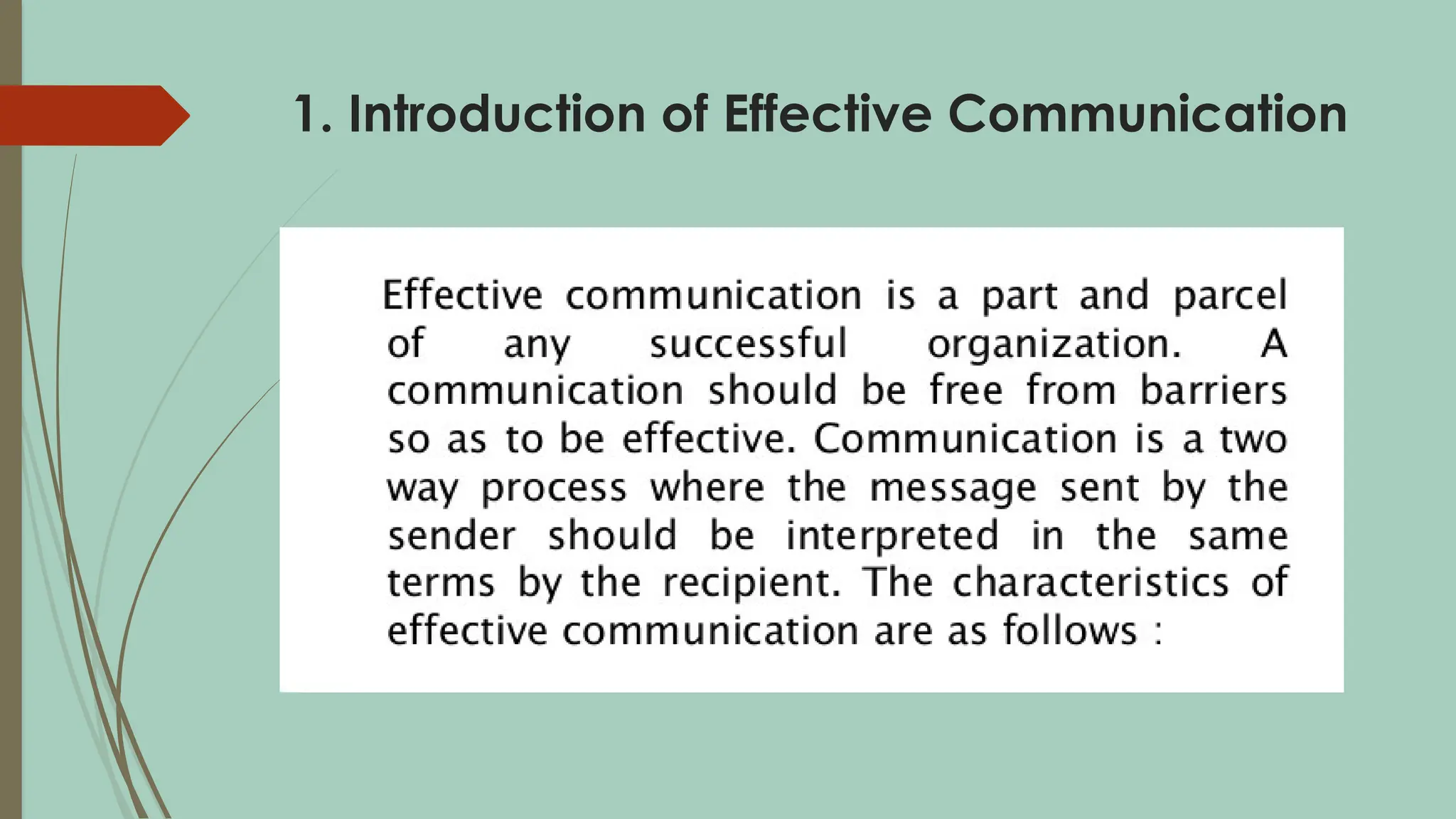
1. Introduction of Effective Communication
2. Active Listening
 An active listener encourages communication in verbal and non-verbal ways. This
can be done by reiterating the speaker’s words, asking questions for clarification or
providing feedback, and through facial expressions, posture, and gestures.
 Unlike active listening, passive listening can cause communication to shut down,
resulting in a one-sided conversation. When a person is only passively listening, the
speaker does not feel heard and will ultimately be unwilling to engage in further
communication.
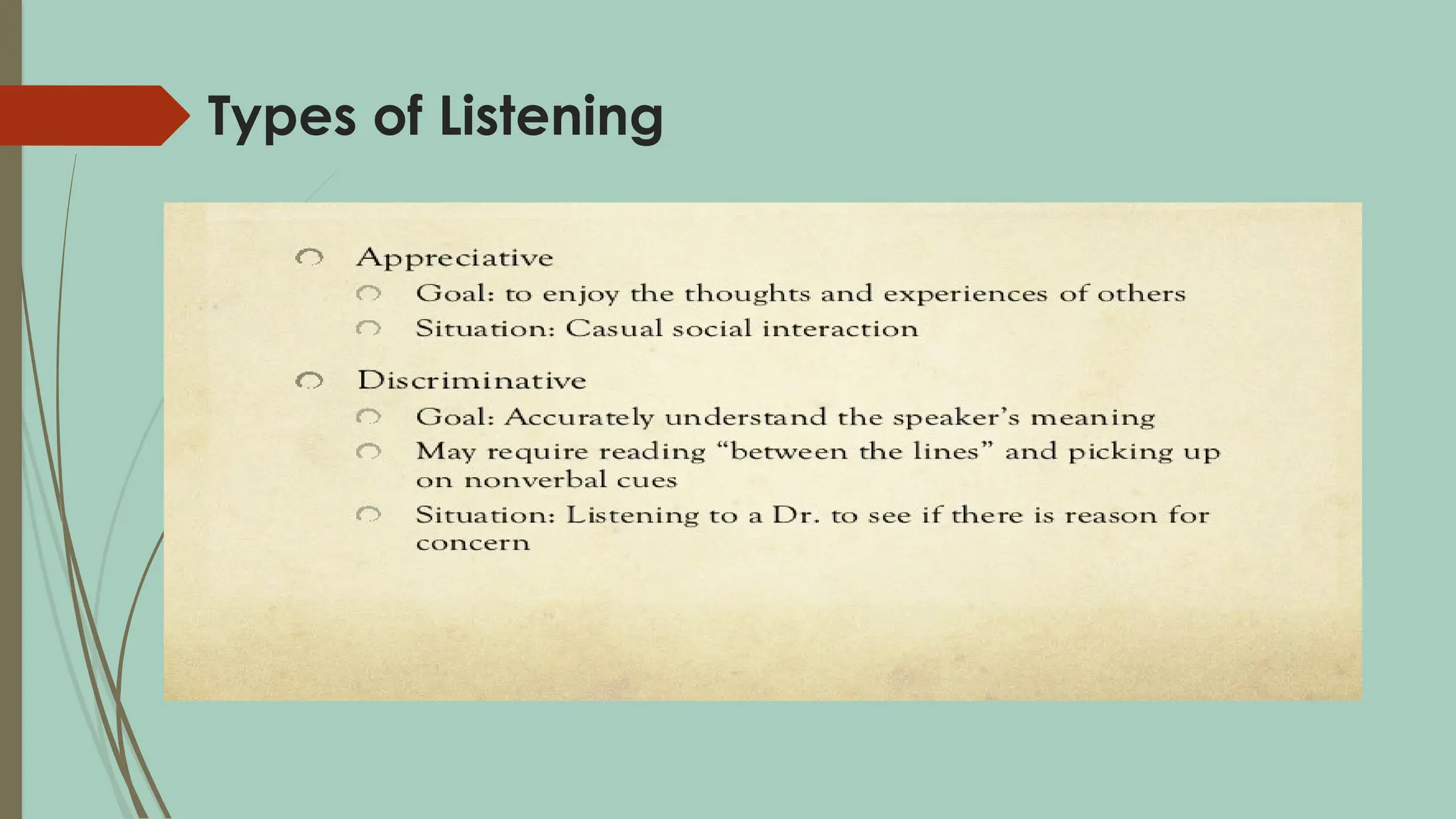
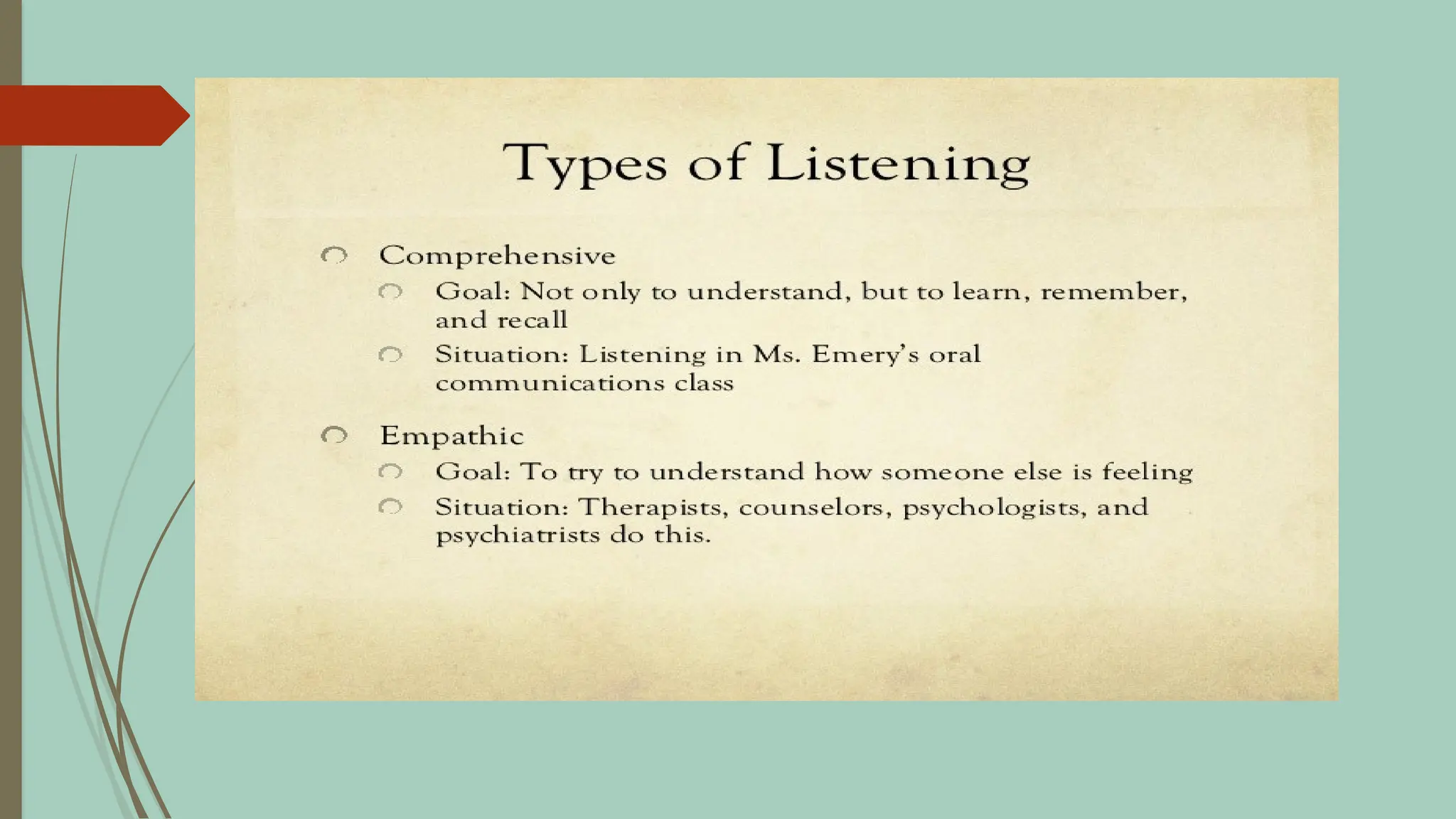
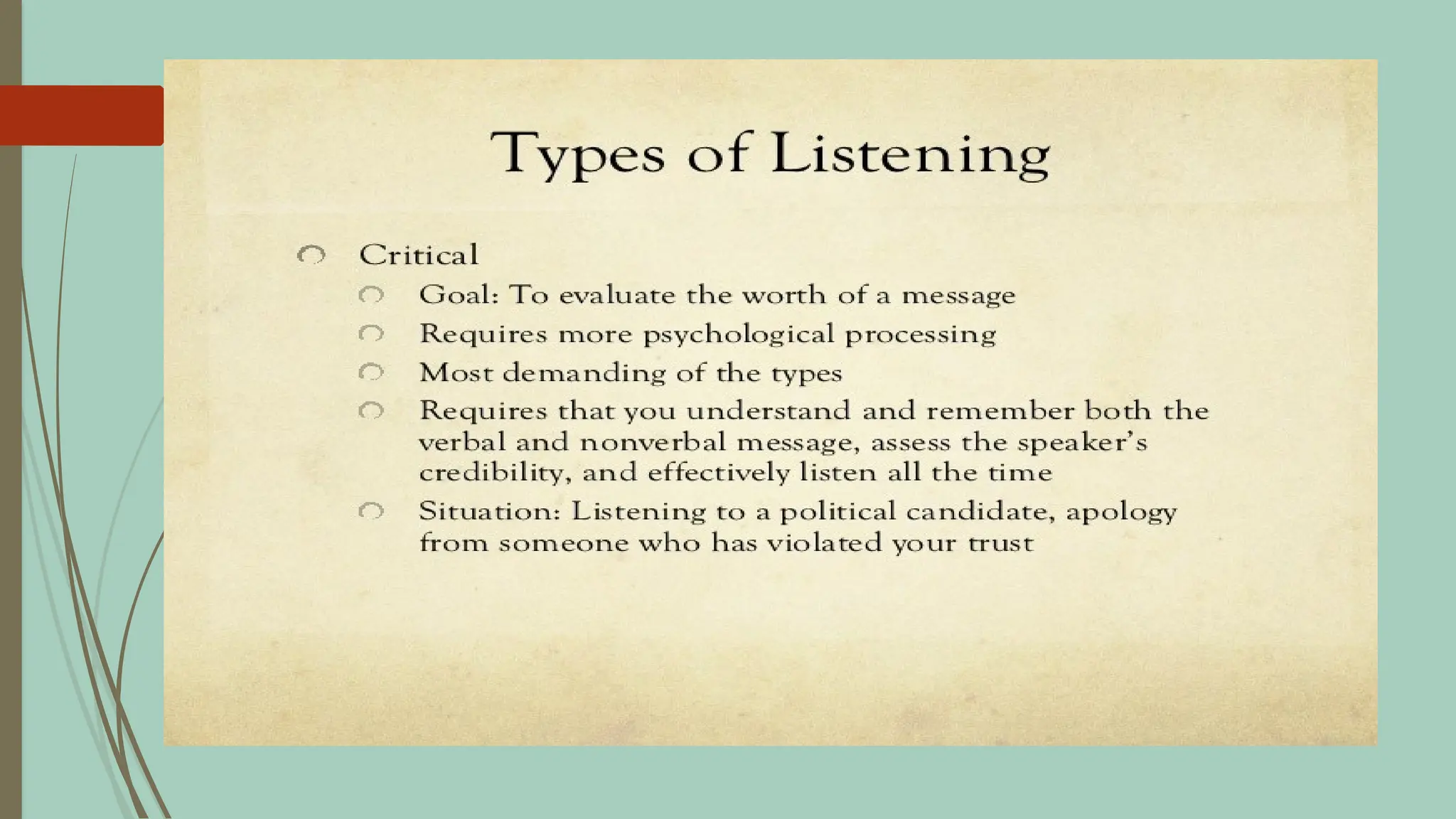
Types of Listening
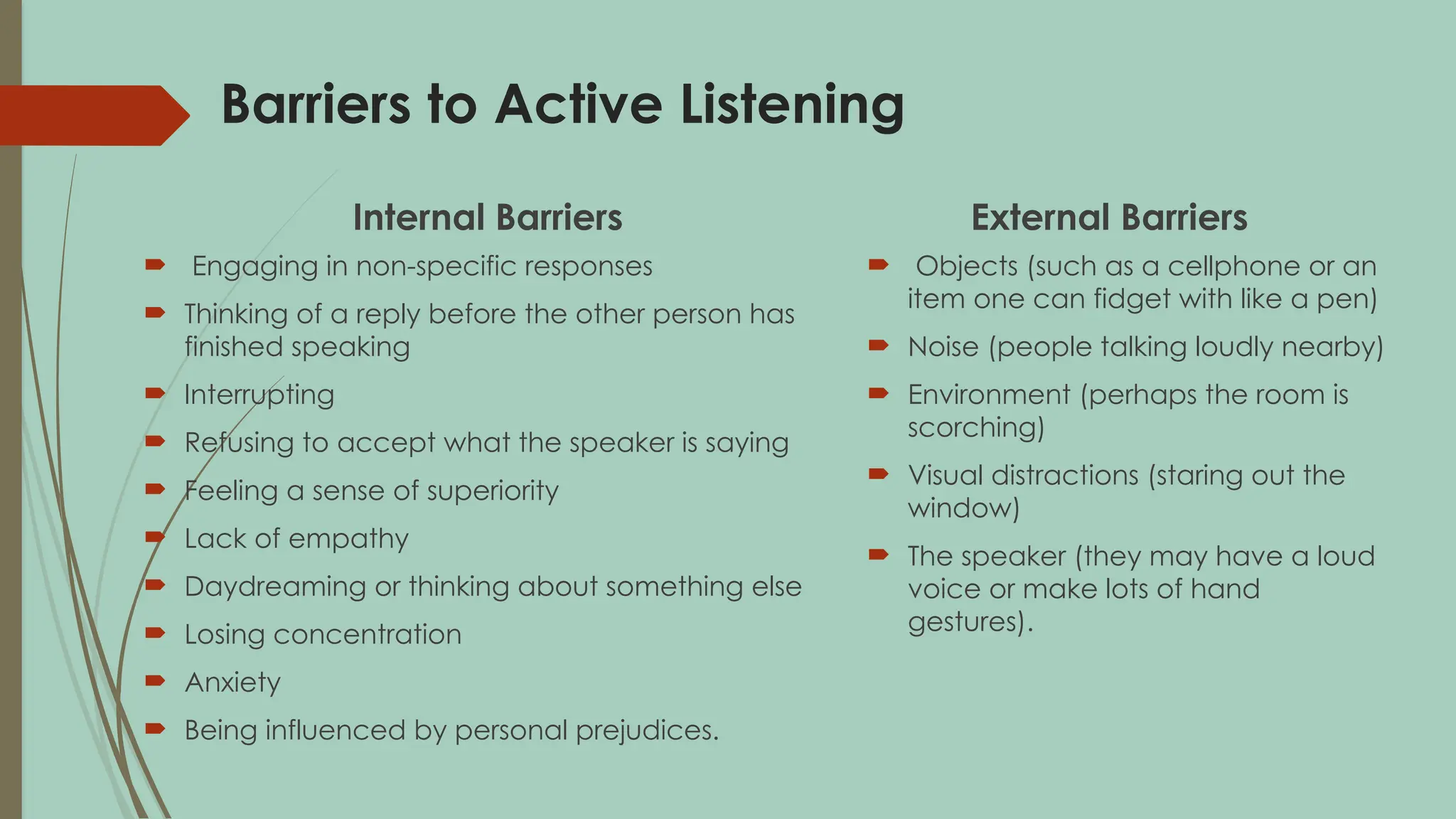
Barriers to Active Listening
Internal Barriers
 Engaging in non-specific responses
 Thinking of a reply before the other person has
finished speaking
 Interrupting
 Refusing to accept what the speaker is saying
 Feeling a sense of superiority
 Lack of empathy
 Daydreaming or thinking about something else
 Losing concentration
 Anxiety
 Being influenced by personal prejudices.
External Barriers
 Objects (such as a cellphone or an
item one can fidget with like a pen)
 Noise (people talking loudly nearby)
 Environment (perhaps the room is
scorching)
 Visual distractions (staring out the
window)
 The speaker (they may have a loud
voice or make lots of hand
gestures).
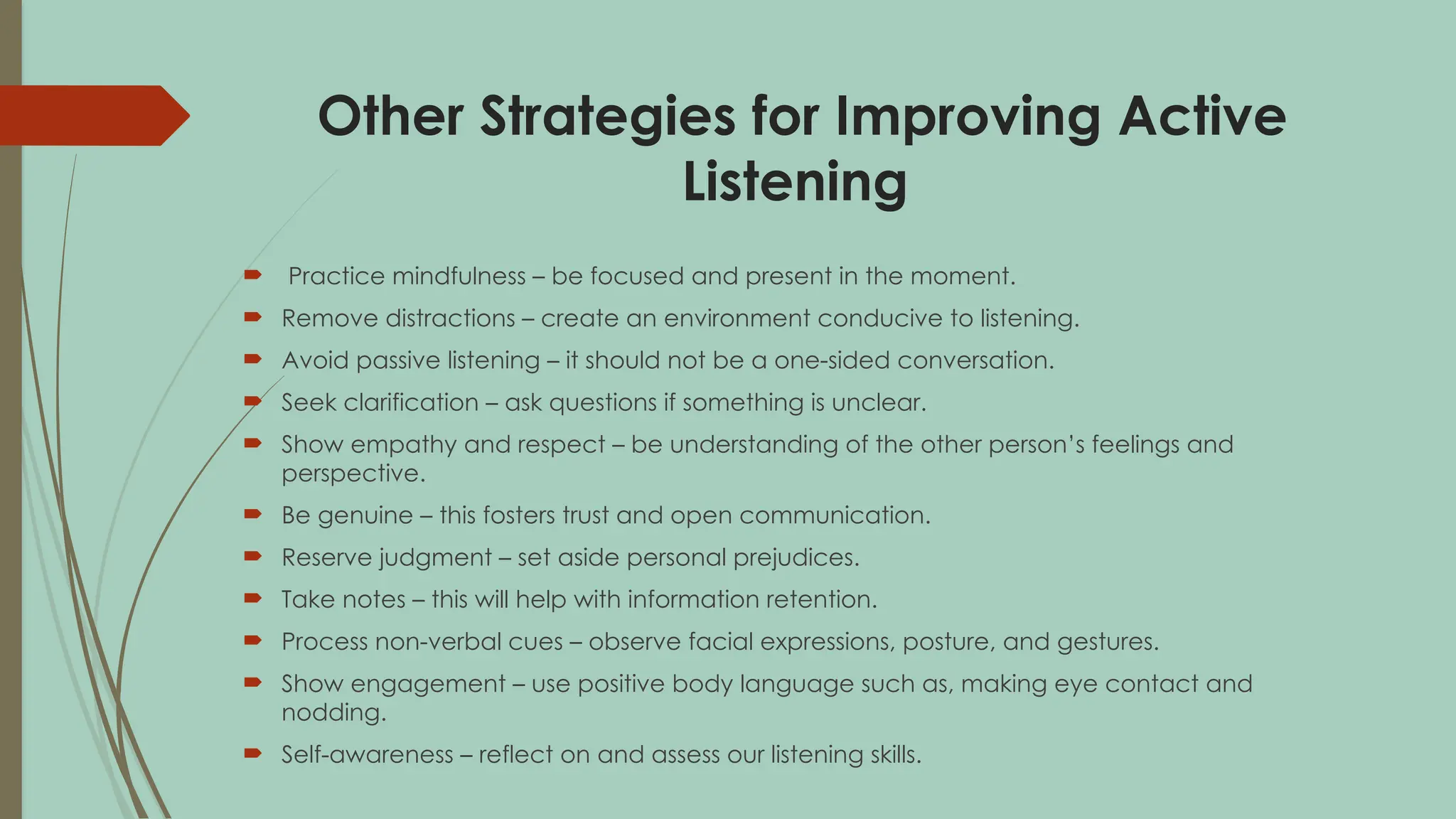
Other Strategies for Improving Active
Listening
 Practice mindfulness – be focused and present in the moment.
 Remove distractions – create an environment conducive to listening.
 Avoid passive listening – it should not be a one-sided conversation.
 Seek clarification – ask questions if something is unclear.
 Show empathy and respect – be understanding of the other person’s feelings and
perspective.
 Be genuine – this fosters trust and open communication.
 Reserve judgment – set aside personal prejudices.
 Take notes – this will help with information retention.
 Process non-verbal cues – observe facial expressions, posture, and gestures.
 Show engagement – use positive body language such as, making eye contact and
nodding.
 Self-awareness – reflect on and assess our listening skills.
3. Elements of Effective Communication
1. Participant(who)
2. Messages ( what)
3. Context ( where)
4. Channels (how)
5. Feedback (reaction)
1. Participants
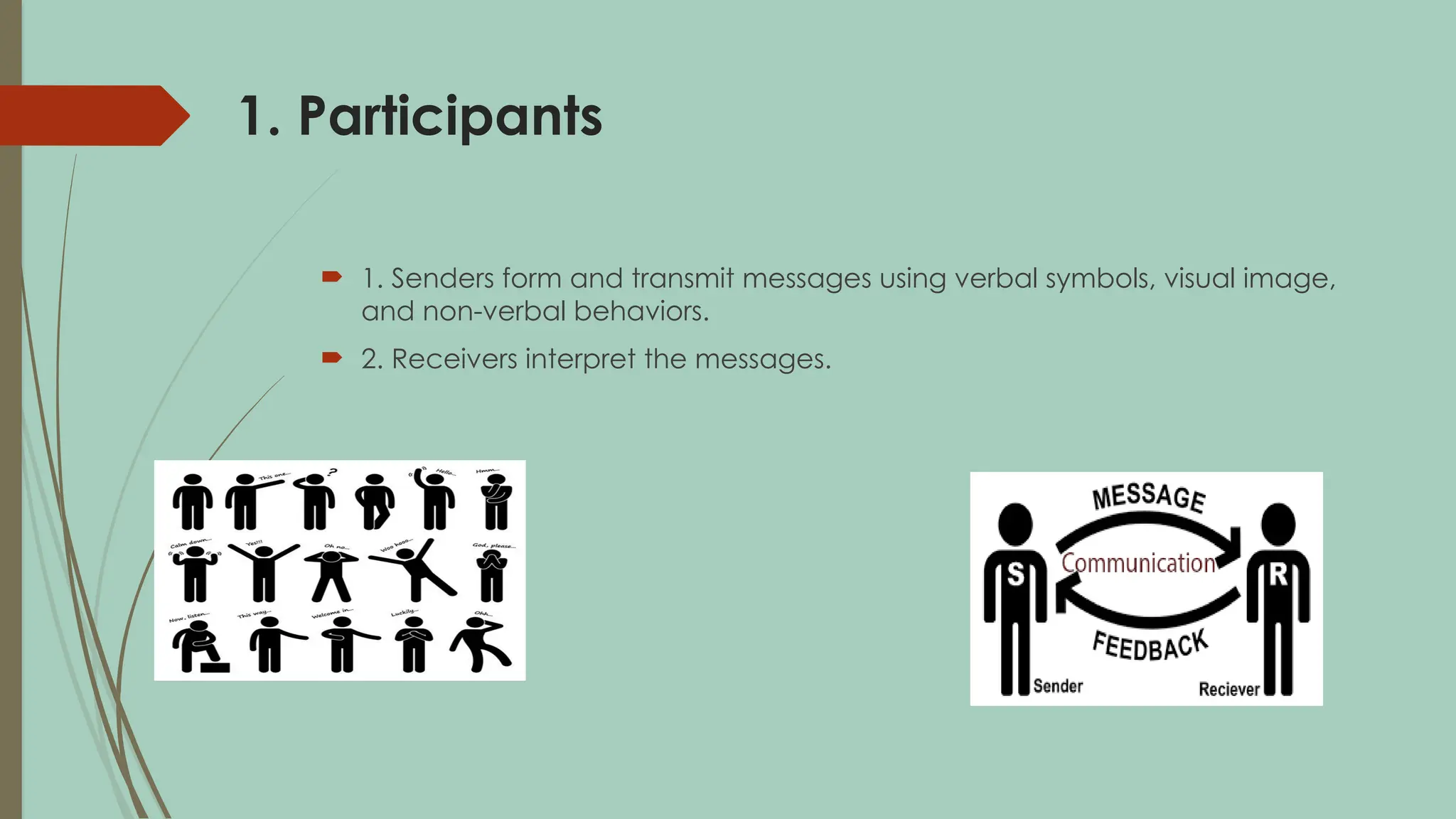
 1. Senders form and transmit messages using verbal symbols, visual image,
and non-verbal behaviors.
 2. Receivers interpret the messages.
2. Messages
Messages are the key ideas that the sender wants to communicate. It
includes, verbal utterances , visual images and non-verbal behaviors.
Types of
Messages
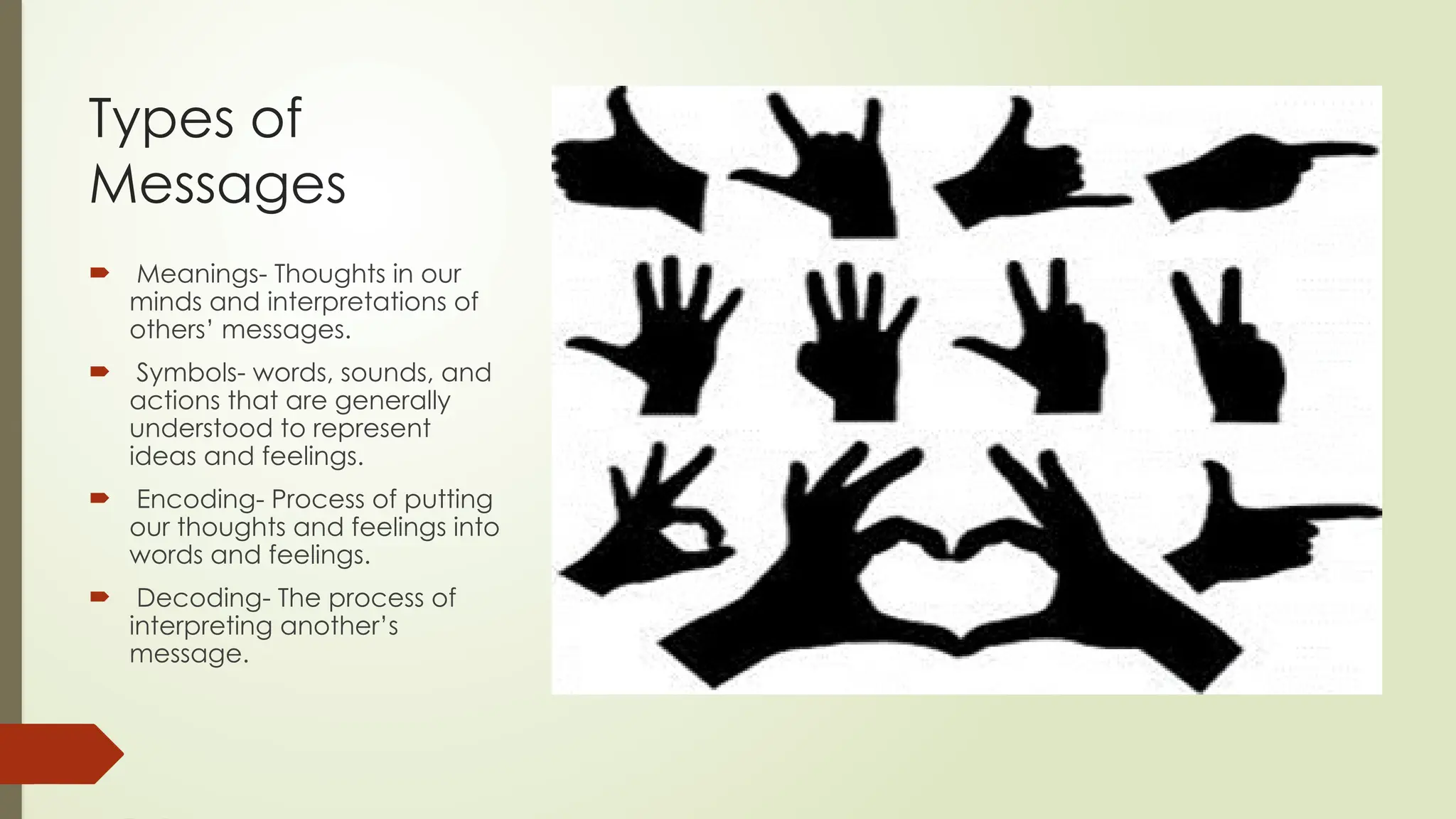
 Meanings- Thoughts in our
minds and interpretations of
others’ messages.
 Symbols- words, sounds, and
actions that are generally
understood to represent
ideas and feelings.
 Encoding- Process of putting
our thoughts and feelings into
words and feelings.
 Decoding- The process of
interpreting another’s
message.
Careful Creation of the Message
Give your audience a framework for understanding the ideas you
communicate
To make your message memorable:
Use words that evoke a physical, sensory impression.
Use telling statistics.
The key to brevity is to limit the number of ideas. Keep your message short and
to the point.
Tie the message to your audience’s frame of reference (how new idea
connects with the already existing idea).
By highlighting and summarizing key points, you help your audience
understand and remember the message.
Minimize NOISE!!
Types of Context
 Physical Context
Location, environmental condition, distance between communicators, seating
arrangements, and time and day.
 Social Context
The nature of the relationship between the participants.
 Historical Context
The background provided by previous communication between the participants
generates an understanding of the current encounter.
 Psychological Context
The mood and the feelings that each participant brings into the conversation.
 Cultural Context
The values, attitudes, beliefs, and underlying assumptions prevalent amongst
people of the society.
Make feedback more useful by:
• Planning how and when to accept it.
• Being receptive to your audience’s responses.
• Encouraging frankness.
• Using it to communicate.
• Listen to comments with objective mindset.
Your goal is to find out whether the people in your audience have
understood and accepted your message. Understanding of these
aspects will help you to improve your communication.
4. Traits of a Good Communicator
 Perception:
Communicators can predict how you will receive their message. They anticipate
your reaction and shape the message accordingly. They read your response
correctly and constantly adjust to correct any misunderstanding.
 Precision:
Communicators create a ‘meeting of the minds. When they finish expressing
themselves, they share the same mental picture.
 Credibility:
They are believable. They have faith in the substance of their message. You trust
their information and their intentions.
 Control:
They shape your response. Depending on their
purpose, they can make you laugh or cry, calm
down, change your mind, or act.
 Congeniality
They maintain friendly, pleasurable relations
with you, whether you agree with them. Good
communicators command your response and
good will. You are willing to work with them
again, despite their differences.
4. Types of Communicators
What Kind of a Communicator are You?
 The way we communicate reflects our personality and of the kind of
relationship we can establish.
 How we interact with strangers and the people we know and how we
present ourselves to those around us is basically governed by
communication.
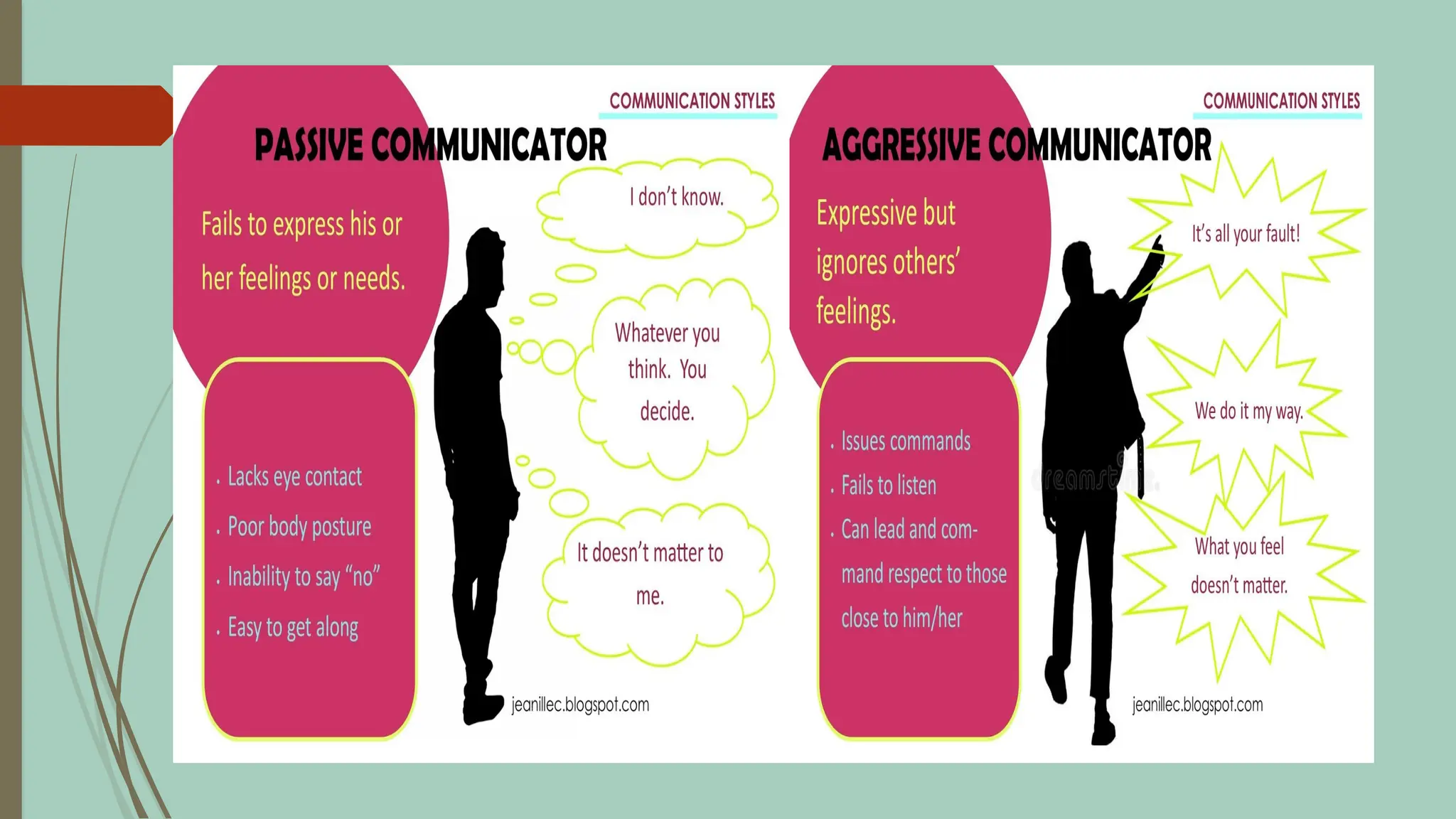
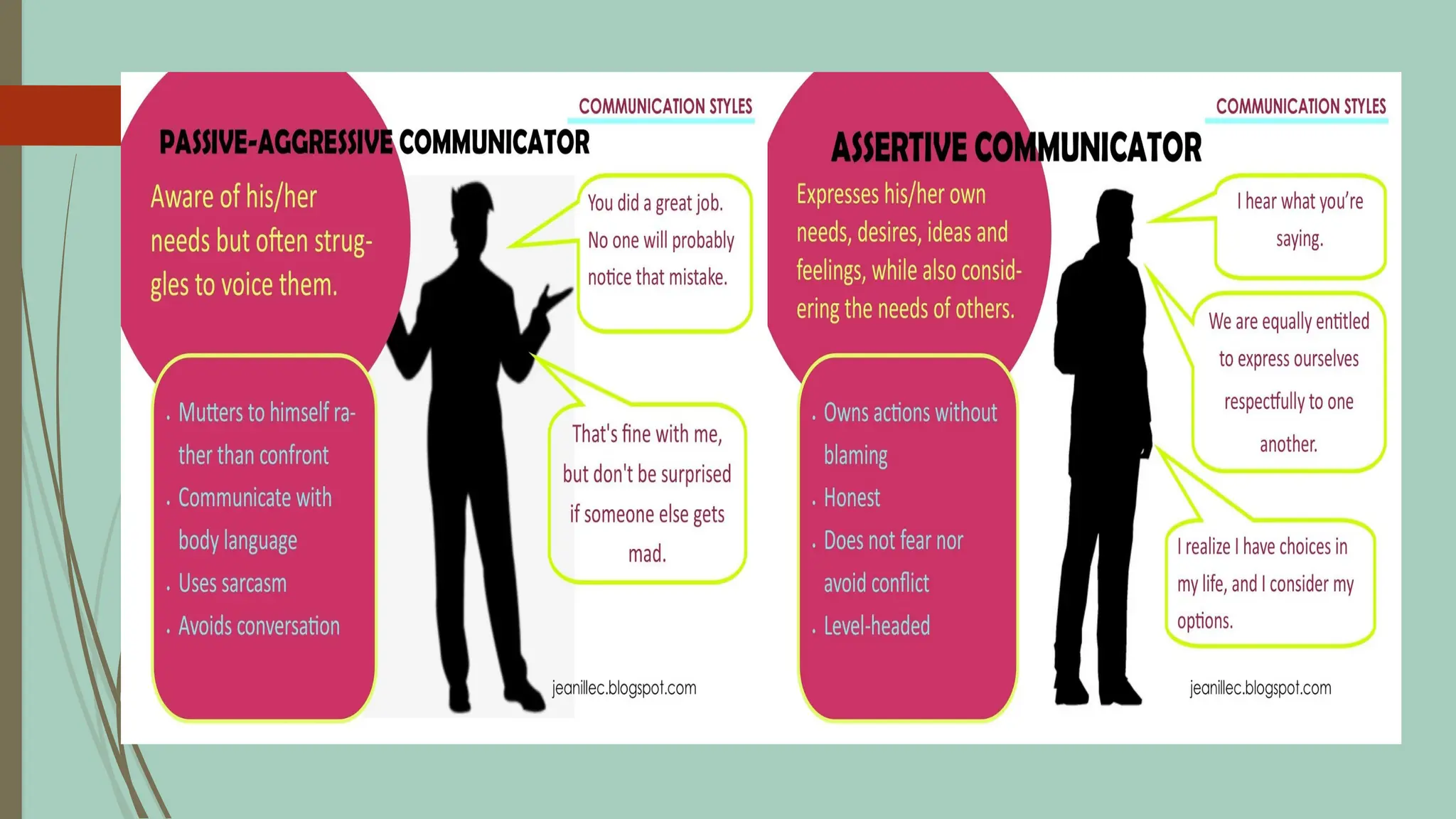
 Here are the four basic COMMUNICATION STYLES personified by the
different characteristics of the communicators indicated in the following.
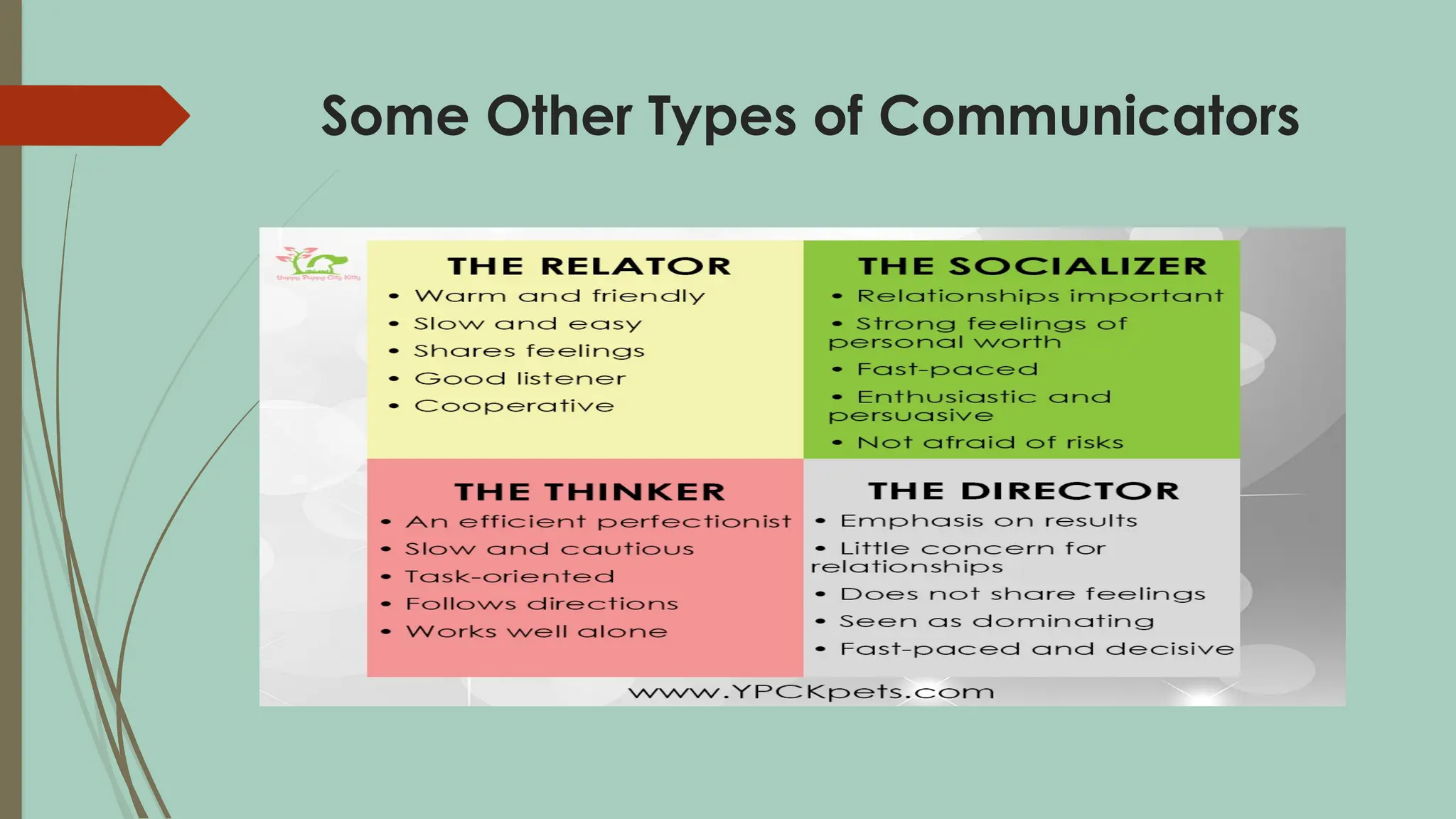
Some Other Types of Communicators
5. Guide to Confidence Building & How Not to Stumble
While Talking
 Practice
 Transform nervous energy into enthusiasm
 Attend other presentations
 Arrive early
 Adjust to your surroundings
 Meet and Greet
 Use positive visualization/ Think positively
 Remember that most audience are sympathetic
 Take deep breath
 Smile 
 Exercise
 Work on your pause
 Do not try to cover too much material
 Actively engage with the audience
 Be entertaining
 Admit you do not know everything
 Use a power stance
 Drink water
 Join different workshops to boost confidence
 Do not fight the fear- You will focus on the fear

vnd.openxmlformats-officedocument.presentationml.presentation&rendition=1.pptx

  • 1.
  • 2.
    Overview Introduction of EffectiveCommunication Active Listening & Responding Elements of Effective Communication Traits of a Good Communicator Types of Communicators (What kind of a communicator are you?) Guide to confidence building & How not to Stumble while Talking
  • 4.
    1. Introduction ofEffective Communication
  • 5.
    2. Active Listening An active listener encourages communication in verbal and non-verbal ways. This can be done by reiterating the speaker’s words, asking questions for clarification or providing feedback, and through facial expressions, posture, and gestures.  Unlike active listening, passive listening can cause communication to shut down, resulting in a one-sided conversation. When a person is only passively listening, the speaker does not feel heard and will ultimately be unwilling to engage in further communication.
  • 7.
  • 10.
    Barriers to ActiveListening Internal Barriers  Engaging in non-specific responses  Thinking of a reply before the other person has finished speaking  Interrupting  Refusing to accept what the speaker is saying  Feeling a sense of superiority  Lack of empathy  Daydreaming or thinking about something else  Losing concentration  Anxiety  Being influenced by personal prejudices. External Barriers  Objects (such as a cellphone or an item one can fidget with like a pen)  Noise (people talking loudly nearby)  Environment (perhaps the room is scorching)  Visual distractions (staring out the window)  The speaker (they may have a loud voice or make lots of hand gestures).
  • 12.
    Other Strategies forImproving Active Listening  Practice mindfulness – be focused and present in the moment.  Remove distractions – create an environment conducive to listening.  Avoid passive listening – it should not be a one-sided conversation.  Seek clarification – ask questions if something is unclear.  Show empathy and respect – be understanding of the other person’s feelings and perspective.  Be genuine – this fosters trust and open communication.  Reserve judgment – set aside personal prejudices.  Take notes – this will help with information retention.  Process non-verbal cues – observe facial expressions, posture, and gestures.  Show engagement – use positive body language such as, making eye contact and nodding.  Self-awareness – reflect on and assess our listening skills.
  • 13.
    3. Elements ofEffective Communication 1. Participant(who) 2. Messages ( what) 3. Context ( where) 4. Channels (how) 5. Feedback (reaction)
  • 14.
    1. Participants  1.Senders form and transmit messages using verbal symbols, visual image, and non-verbal behaviors.  2. Receivers interpret the messages.
  • 15.
    2. Messages Messages arethe key ideas that the sender wants to communicate. It includes, verbal utterances , visual images and non-verbal behaviors.
  • 16.
    Types of Messages  Meanings-Thoughts in our minds and interpretations of others’ messages.  Symbols- words, sounds, and actions that are generally understood to represent ideas and feelings.  Encoding- Process of putting our thoughts and feelings into words and feelings.  Decoding- The process of interpreting another’s message.
  • 17.
    Careful Creation ofthe Message Give your audience a framework for understanding the ideas you communicate To make your message memorable: Use words that evoke a physical, sensory impression. Use telling statistics. The key to brevity is to limit the number of ideas. Keep your message short and to the point. Tie the message to your audience’s frame of reference (how new idea connects with the already existing idea). By highlighting and summarizing key points, you help your audience understand and remember the message. Minimize NOISE!!
  • 19.
    Types of Context Physical Context Location, environmental condition, distance between communicators, seating arrangements, and time and day.  Social Context The nature of the relationship between the participants.  Historical Context The background provided by previous communication between the participants generates an understanding of the current encounter.  Psychological Context The mood and the feelings that each participant brings into the conversation.  Cultural Context The values, attitudes, beliefs, and underlying assumptions prevalent amongst people of the society.
  • 22.
    Make feedback moreuseful by: • Planning how and when to accept it. • Being receptive to your audience’s responses. • Encouraging frankness. • Using it to communicate. • Listen to comments with objective mindset. Your goal is to find out whether the people in your audience have understood and accepted your message. Understanding of these aspects will help you to improve your communication.
  • 23.
    4. Traits ofa Good Communicator  Perception: Communicators can predict how you will receive their message. They anticipate your reaction and shape the message accordingly. They read your response correctly and constantly adjust to correct any misunderstanding.  Precision: Communicators create a ‘meeting of the minds. When they finish expressing themselves, they share the same mental picture.  Credibility: They are believable. They have faith in the substance of their message. You trust their information and their intentions.
  • 24.
     Control: They shapeyour response. Depending on their purpose, they can make you laugh or cry, calm down, change your mind, or act.  Congeniality They maintain friendly, pleasurable relations with you, whether you agree with them. Good communicators command your response and good will. You are willing to work with them again, despite their differences.
  • 25.
    4. Types ofCommunicators What Kind of a Communicator are You?  The way we communicate reflects our personality and of the kind of relationship we can establish.  How we interact with strangers and the people we know and how we present ourselves to those around us is basically governed by communication.  Here are the four basic COMMUNICATION STYLES personified by the different characteristics of the communicators indicated in the following.
  • 28.
    Some Other Typesof Communicators
  • 29.
    5. Guide toConfidence Building & How Not to Stumble While Talking
  • 30.
     Practice  Transformnervous energy into enthusiasm  Attend other presentations  Arrive early  Adjust to your surroundings  Meet and Greet  Use positive visualization/ Think positively  Remember that most audience are sympathetic  Take deep breath  Smile 
  • 31.
     Exercise  Workon your pause  Do not try to cover too much material  Actively engage with the audience  Be entertaining  Admit you do not know everything  Use a power stance  Drink water  Join different workshops to boost confidence  Do not fight the fear- You will focus on the fear