Blood Pressure
Chapter 3: Salt
Created and Narrated by
Liz Peters, RN, BS, ACSM EP-C
Salt/Sodium – What’s the Difference?
Sodium is a component of salt.
Salt is made up of sodium and chloride.
It is an essential mineral, which the body needs every day.
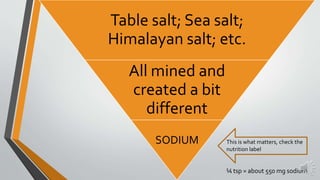
Table salt; Sea salt;
Himalayan salt; etc.
All mined and
created a bit
different
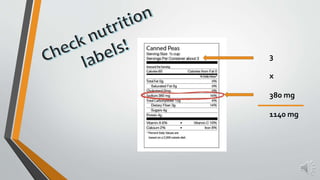
SODIUM This is what matters, check the
nutrition label
¼ tsp = about 550 mg sodium
Sodium: Essential in small amounts
•Helps maintain the right balance of fluids in your body
•Helps transmit nerve impulses
•Influences the contraction and relaxation of muscles
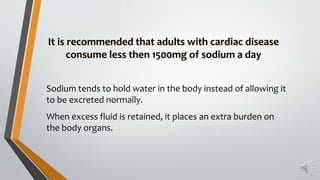
Sodium tends to hold water in the body instead of allowing it
to be excreted normally.
When excess fluid is retained, it places an extra burden on
the body organs.
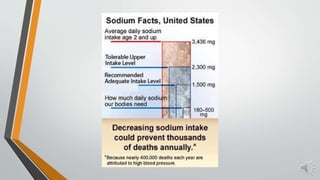
It is recommended that adults with cardiac disease
consume less then 1500mg of sodium a day
3
x
380 mg
1140 mg
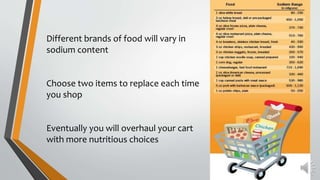
Different brands of food will vary in
sodium content
Choose two items to replace each time
you shop
Eventually you will overhaul your cart
with more nutritious choices
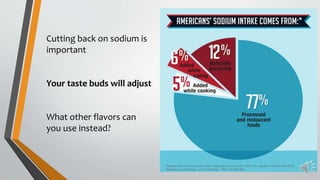
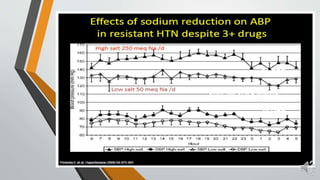
Cutting back on sodium is
important
Your taste buds will adjust
What other flavors can
you use instead?
Flavor alternatives
• Herbs –fresh or dried
• Oils – flavored or original
• Vinegars – flavored or original
• Citrus
• Baking/grilling/broiling for flavor extraction

Chapter 3 Salt

  • 1.
    Blood Pressure Chapter 3:Salt Created and Narrated by Liz Peters, RN, BS, ACSM EP-C
  • 2.
    Salt/Sodium – What’sthe Difference? Sodium is a component of salt. Salt is made up of sodium and chloride. It is an essential mineral, which the body needs every day.
  • 3.
    Table salt; Seasalt; Himalayan salt; etc. All mined and created a bit different SODIUM This is what matters, check the nutrition label ¼ tsp = about 550 mg sodium
  • 4.
    Sodium: Essential insmall amounts •Helps maintain the right balance of fluids in your body •Helps transmit nerve impulses •Influences the contraction and relaxation of muscles
  • 5.
    Sodium tends tohold water in the body instead of allowing it to be excreted normally. When excess fluid is retained, it places an extra burden on the body organs. It is recommended that adults with cardiac disease consume less then 1500mg of sodium a day
  • 7.
  • 8.
    Different brands offood will vary in sodium content Choose two items to replace each time you shop Eventually you will overhaul your cart with more nutritious choices
  • 9.
    Cutting back onsodium is important Your taste buds will adjust What other flavors can you use instead?
  • 11.
    Flavor alternatives • Herbs–fresh or dried • Oils – flavored or original • Vinegars – flavored or original • Citrus • Baking/grilling/broiling for flavor extraction