(continued)
Lifestyle + Risk Reduction
High Blood Pressure
What’s bad about sodium?
Too much sodium in your system causes your body to
retain (hold onto) water. This puts an extra burden on
your heart and blood vessels. In some people, this may
lead to or raise high blood pressure. Having less sodium
in your diet may help you lower or avoid high blood
pressure. People with high blood pressure are more likely
to develop heart disease or have a stroke.
How much sodium do I need?
Most people eat too much sodium, often without knowing
it. One teaspoon of salt contains about 2,300 mg of
sodium.Your body only needs 200 mg of sodium per day.
• The averageAmerican eats about 3,000 to 3,600 mg of
sodium a day.
•AllAmericans should reduce the amount of sodium in
their diet to less than 1,500 mg a day.
•Your doctor may tell you to cut salt out completely.
What are sources of sodium?
Most of the sodium in our diets comes from adding it
when food is being prepared. Pay attention to food labels,
because they tell how much sodium is in food products.
For example: foods with less than 140 mg or 5 percent of
the DailyValue (DV) per serving are low in sodium.
Here’s a list of sodium compounds to limit in your diet:
• Salt (sodium chloride or NaCl)
• Monosodium glutamate (MSG)
• Baking soda
• Baking powder
• Disodium phosphate
•Any compound that has “sodium” or “Na” in its name
Some over-the-counter and prescription medicines also
contain lots of sodium. Make it a habit of reading the
labels of all over-the-counter drugs, too.
What foods should I limit?
The best way to reduce sodium is to avoid prepackaged,
processed and fast foods, which tend to be high in
sodium. Here are a few suggestions on what to limit.
• Salted snacks
• Fish that’s frozen, pre-breaded, pre-fried or smoked;
also some fish that’s canned in oil or brine like tuna,
sardines or shellfish
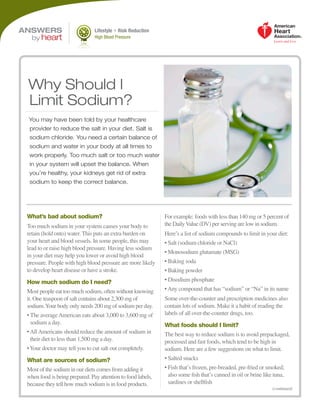
You may have been told by your healthcare
provider to reduce the salt in your diet. Salt is
sodium chloride. You need a certain balance of
sodium and water in your body at all times to
work properly. Too much salt or too much water
in your system will upset the balance. When
you’re healthy, your kidneys get rid of extra
sodium to keep the correct balance.
Why Should I
Limit Sodium?
ANSWERS
by heart
• Ham, bacon, corned beef, luncheon meats, sausages and
hot dogs
• Canned foods and juices containing salt
• Commercially made main dishes like hash, meat
pies and frozen dinners with more than 700 mg of
sodium per serving
• Cheeses and buttermilk
• Seasoned salts, meat tenderizers and MSG
• Ketchup, mayonnaise, sauces and salad dressings
How can I cook with less salt
and more flavor?
• Avoid adding table salt to foods.
• Use herbs and spices to add flavor to foods. Fresh
herbs provide more flavor than dried.
• Eat fresh lean meats, skinless poultry, fish, egg whites
and tuna canned in water.
• Choose unsalted nuts and low-sodium or no salt added
canned foods. Cook dried peas and beans.
• Use products made without added salt; try low-sodium
bouillon and soups and
unsalted, fat-free broth.
• Rinse canned vegetables,
beans and shellfish
to reduce salt.
• Sprinkle vinegar or
citrus juice on foods just
before eating. Vinegar is
great on vegetables like
spinach.
What about eating out?
Controlling your sodium intake doesn’t mean spoiling
the pleasure of eating out. But order carefully. Consider
these tips for meals away from home:
• Select fresh greens and fruits when available.
• Be specific about what you want and how you
want your food prepared. Request that your dish be
prepared without added salt.
• Remember portion control. When you know you’re
going to eat something that’s higher in sodium, eat less!
Why Should I Limit Sodium?
Lifestyle + Risk Reduction
High Blood Pressure
ANSWERS
by heart
Take a few minutes to
write your questions for
the next time you see
your healthcare provider.
For example:
Talk to your doctor, nurse or other
healthcare professionals. If you have
heart disease or have had a stroke,
members of your family also may be at
higher risk. It’s very important for them
to make changes now to lower their risk.
Call 1-800-AHA-USA1
(1-800-242-8721), or visit heart.org
to learn more about heart disease.
For information on stroke, call
1-888-4-STROKE (1-888-478-7653)
or visit us at StrokeAssociation.org.
We have many other fact sheets to help you make healthier choices to reduce your risk,
manage disease or care for a loved one. Visit heart.org/answersbyheart to learn more.
Knowledge is power, so Learn and Live!
HOW CAN I LEARN MORE? Do you have
questions for the
doctor or nurse?
My Questions:
©2012, American Heart Association
What’s my daily
sodium limit?
Is there sodium in the
medicine I take?

Sodium

  • 1.
    (continued) Lifestyle + RiskReduction High Blood Pressure What’s bad about sodium? Too much sodium in your system causes your body to retain (hold onto) water. This puts an extra burden on your heart and blood vessels. In some people, this may lead to or raise high blood pressure. Having less sodium in your diet may help you lower or avoid high blood pressure. People with high blood pressure are more likely to develop heart disease or have a stroke. How much sodium do I need? Most people eat too much sodium, often without knowing it. One teaspoon of salt contains about 2,300 mg of sodium.Your body only needs 200 mg of sodium per day. • The averageAmerican eats about 3,000 to 3,600 mg of sodium a day. •AllAmericans should reduce the amount of sodium in their diet to less than 1,500 mg a day. •Your doctor may tell you to cut salt out completely. What are sources of sodium? Most of the sodium in our diets comes from adding it when food is being prepared. Pay attention to food labels, because they tell how much sodium is in food products. For example: foods with less than 140 mg or 5 percent of the DailyValue (DV) per serving are low in sodium. Here’s a list of sodium compounds to limit in your diet: • Salt (sodium chloride or NaCl) • Monosodium glutamate (MSG) • Baking soda • Baking powder • Disodium phosphate •Any compound that has “sodium” or “Na” in its name Some over-the-counter and prescription medicines also contain lots of sodium. Make it a habit of reading the labels of all over-the-counter drugs, too. What foods should I limit? The best way to reduce sodium is to avoid prepackaged, processed and fast foods, which tend to be high in sodium. Here are a few suggestions on what to limit. • Salted snacks • Fish that’s frozen, pre-breaded, pre-fried or smoked; also some fish that’s canned in oil or brine like tuna, sardines or shellfish You may have been told by your healthcare provider to reduce the salt in your diet. Salt is sodium chloride. You need a certain balance of sodium and water in your body at all times to work properly. Too much salt or too much water in your system will upset the balance. When you’re healthy, your kidneys get rid of extra sodium to keep the correct balance. Why Should I Limit Sodium? ANSWERS by heart
  • 2.
    • Ham, bacon,corned beef, luncheon meats, sausages and hot dogs • Canned foods and juices containing salt • Commercially made main dishes like hash, meat pies and frozen dinners with more than 700 mg of sodium per serving • Cheeses and buttermilk • Seasoned salts, meat tenderizers and MSG • Ketchup, mayonnaise, sauces and salad dressings How can I cook with less salt and more flavor? • Avoid adding table salt to foods. • Use herbs and spices to add flavor to foods. Fresh herbs provide more flavor than dried. • Eat fresh lean meats, skinless poultry, fish, egg whites and tuna canned in water. • Choose unsalted nuts and low-sodium or no salt added canned foods. Cook dried peas and beans. • Use products made without added salt; try low-sodium bouillon and soups and unsalted, fat-free broth. • Rinse canned vegetables, beans and shellfish to reduce salt. • Sprinkle vinegar or citrus juice on foods just before eating. Vinegar is great on vegetables like spinach. What about eating out? Controlling your sodium intake doesn’t mean spoiling the pleasure of eating out. But order carefully. Consider these tips for meals away from home: • Select fresh greens and fruits when available. • Be specific about what you want and how you want your food prepared. Request that your dish be prepared without added salt. • Remember portion control. When you know you’re going to eat something that’s higher in sodium, eat less! Why Should I Limit Sodium? Lifestyle + Risk Reduction High Blood Pressure ANSWERS by heart Take a few minutes to write your questions for the next time you see your healthcare provider. For example: Talk to your doctor, nurse or other healthcare professionals. If you have heart disease or have had a stroke, members of your family also may be at higher risk. It’s very important for them to make changes now to lower their risk. Call 1-800-AHA-USA1 (1-800-242-8721), or visit heart.org to learn more about heart disease. For information on stroke, call 1-888-4-STROKE (1-888-478-7653) or visit us at StrokeAssociation.org. We have many other fact sheets to help you make healthier choices to reduce your risk, manage disease or care for a loved one. Visit heart.org/answersbyheart to learn more. Knowledge is power, so Learn and Live! HOW CAN I LEARN MORE? Do you have questions for the doctor or nurse? My Questions: ©2012, American Heart Association What’s my daily sodium limit? Is there sodium in the medicine I take?