

HYPERCALCAEMIA NURDALILA SAHIDAN 4th YEAR MEDICAL STUDENT
CONTENTS Definition and Control of Calcium  Epidemiology Signs and symptoms Causes Investigations Management Complications
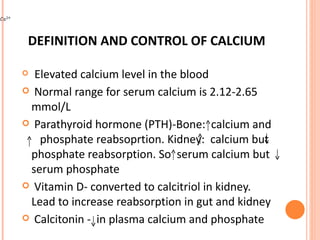
DEFINITION AND CONTROL OF CALCIUM Elevated calcium level in the blood Normal range for serum calcium is 2.12-2.65 mmol/L  Parathyroid hormone (PTH)-Bone:  calcium and  phosphate reabsoprtion. Kidney:  calcium but  phosphate reabsorption. So  serum calcium but  serum phosphate Vitamin D- converted to calcitriol in kidney. Lead to increase reabsorption in gut and kidney Calcitonin -  in plasma calcium and phosphate
EPIDEMIOLOGY An uncommon problem Affect 4 in 100 000 population per year Female > Male = 3:1 Peak age of incidence of 50-60 years old
SIGNS AND SYMPTOMS General mnemonic :  - Bones ( bone pain) - Stones ( kidney stones) - Groans ( constipations) - Psychic moans ( fatigue, depression, confusion) Other symptoms: abdominal pain, vomiting, polyuria, polydipsia, anorexia, weakness, hypertension, pyrexia, renal failure, cardiac arrest
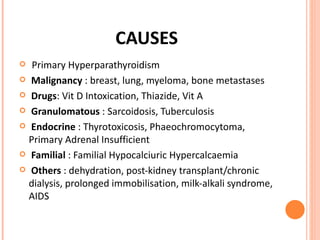
CAUSES Primary Hyperparathyroidism  Malignancy  : breast, lung, myeloma, bone metastases Drugs : Vit D Intoxication, Thiazide, Vit A Granulomatous  : Sarcoidosis, Tuberculosis Endocrine  : Thyrotoxicosis, Phaeochromocytoma, Primary Adrenal Insufficient Familial  : Familial Hypocalciuric Hypercalcaemia Others  : dehydration, post-kidney transplant/chronic dialysis, prolonged immobilisation, milk-alkali syndrome, AIDS
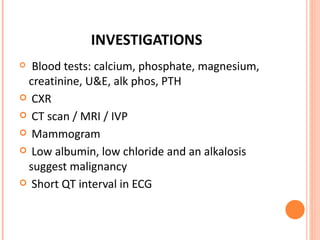
INVESTIGATIONS Blood tests: calcium, phosphate, magnesium, creatinine, U&E, alk phos, PTH CXR CT scan / MRI / IVP Mammogram Low albumin, low chloride and an alkalosis suggest malignancy Short QT interval in ECG
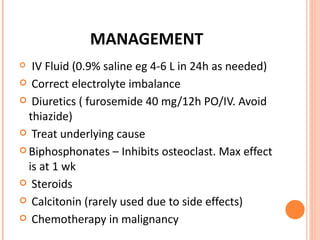
MANAGEMENT IV Fluid (0.9% saline eg 4-6 L in 24h as needed) Correct electrolyte imbalance Diuretics ( furosemide 40 mg/12h PO/IV. Avoid thiazide) Treat underlying cause Biphosphonates – Inhibits osteoclast. Max effect is at 1 wk Steroids Calcitonin (rarely used due to side effects) Chemotherapy in malignancy
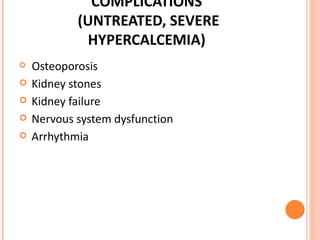
COMPLICATIONS  (UNTREATED, SEVERE HYPERCALCEMIA) Osteoporosis Kidney stones Kidney failure Nervous system dysfunction Arrhythmia

Hypercalcaemia

  • 1.
    HYPERCALCAEMIA NURDALILA SAHIDAN4th YEAR MEDICAL STUDENT
  • 2.
    CONTENTS Definition andControl of Calcium Epidemiology Signs and symptoms Causes Investigations Management Complications
  • 3.
    DEFINITION AND CONTROLOF CALCIUM Elevated calcium level in the blood Normal range for serum calcium is 2.12-2.65 mmol/L Parathyroid hormone (PTH)-Bone: calcium and phosphate reabsoprtion. Kidney: calcium but phosphate reabsorption. So serum calcium but serum phosphate Vitamin D- converted to calcitriol in kidney. Lead to increase reabsorption in gut and kidney Calcitonin - in plasma calcium and phosphate
  • 4.
    EPIDEMIOLOGY An uncommonproblem Affect 4 in 100 000 population per year Female > Male = 3:1 Peak age of incidence of 50-60 years old
  • 5.
    SIGNS AND SYMPTOMSGeneral mnemonic : - Bones ( bone pain) - Stones ( kidney stones) - Groans ( constipations) - Psychic moans ( fatigue, depression, confusion) Other symptoms: abdominal pain, vomiting, polyuria, polydipsia, anorexia, weakness, hypertension, pyrexia, renal failure, cardiac arrest
  • 6.
    CAUSES Primary Hyperparathyroidism Malignancy : breast, lung, myeloma, bone metastases Drugs : Vit D Intoxication, Thiazide, Vit A Granulomatous : Sarcoidosis, Tuberculosis Endocrine : Thyrotoxicosis, Phaeochromocytoma, Primary Adrenal Insufficient Familial : Familial Hypocalciuric Hypercalcaemia Others : dehydration, post-kidney transplant/chronic dialysis, prolonged immobilisation, milk-alkali syndrome, AIDS
  • 7.
    INVESTIGATIONS Blood tests:calcium, phosphate, magnesium, creatinine, U&E, alk phos, PTH CXR CT scan / MRI / IVP Mammogram Low albumin, low chloride and an alkalosis suggest malignancy Short QT interval in ECG
  • 8.
    MANAGEMENT IV Fluid(0.9% saline eg 4-6 L in 24h as needed) Correct electrolyte imbalance Diuretics ( furosemide 40 mg/12h PO/IV. Avoid thiazide) Treat underlying cause Biphosphonates – Inhibits osteoclast. Max effect is at 1 wk Steroids Calcitonin (rarely used due to side effects) Chemotherapy in malignancy
  • 9.
    COMPLICATIONS (UNTREATED,SEVERE HYPERCALCEMIA) Osteoporosis Kidney stones Kidney failure Nervous system dysfunction Arrhythmia